


Note: This is the sixth in a series of posts about Italy’s Adriatic Coast. The itinerary begins here.
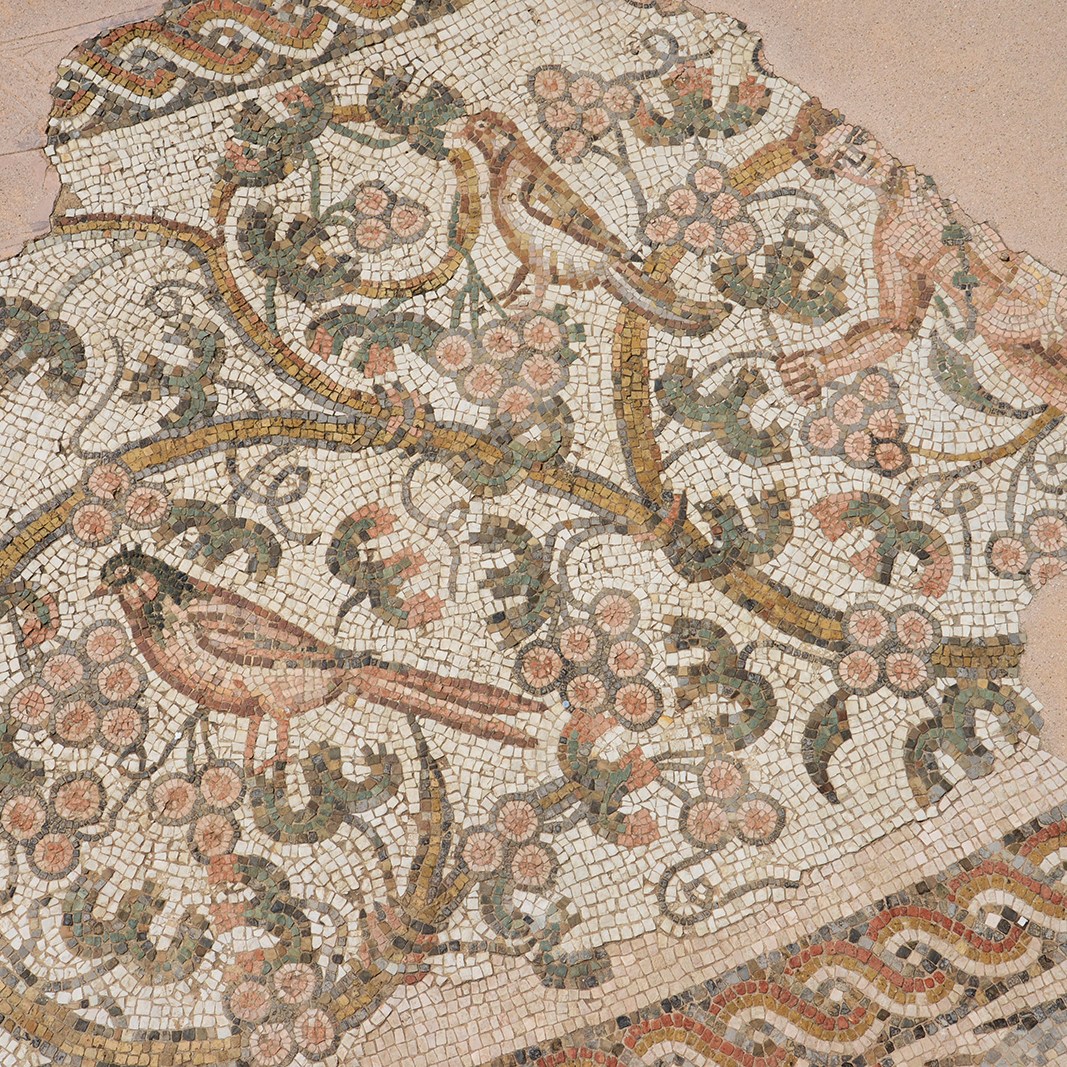
If visiting Ravenna felt like being enshrined in mosaics—structured, metric, luminous—then the road away from it, now bending our long-held northwesterly course due north, acted as a release into a different kind of luminosity. The afternoon sun lit the lagoons and marshlands that leaned seaward to our right as we rolled toward our next town, nicknamed “Little Venice” for its lagoon setting and reliance on canals, although further similarities were somewhat limited, and in a refreshing way.
COMACCHIO AND CHIOGGIA
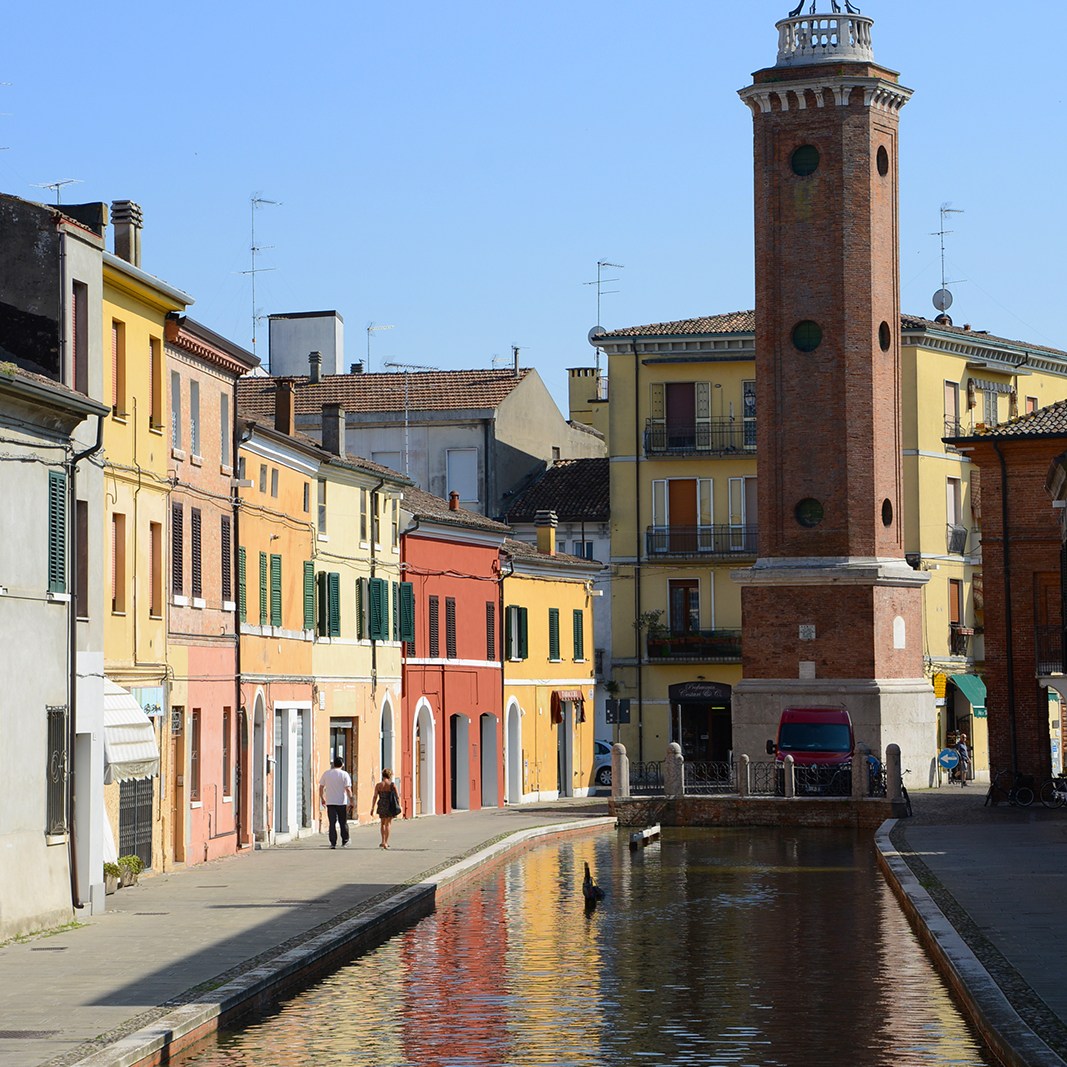
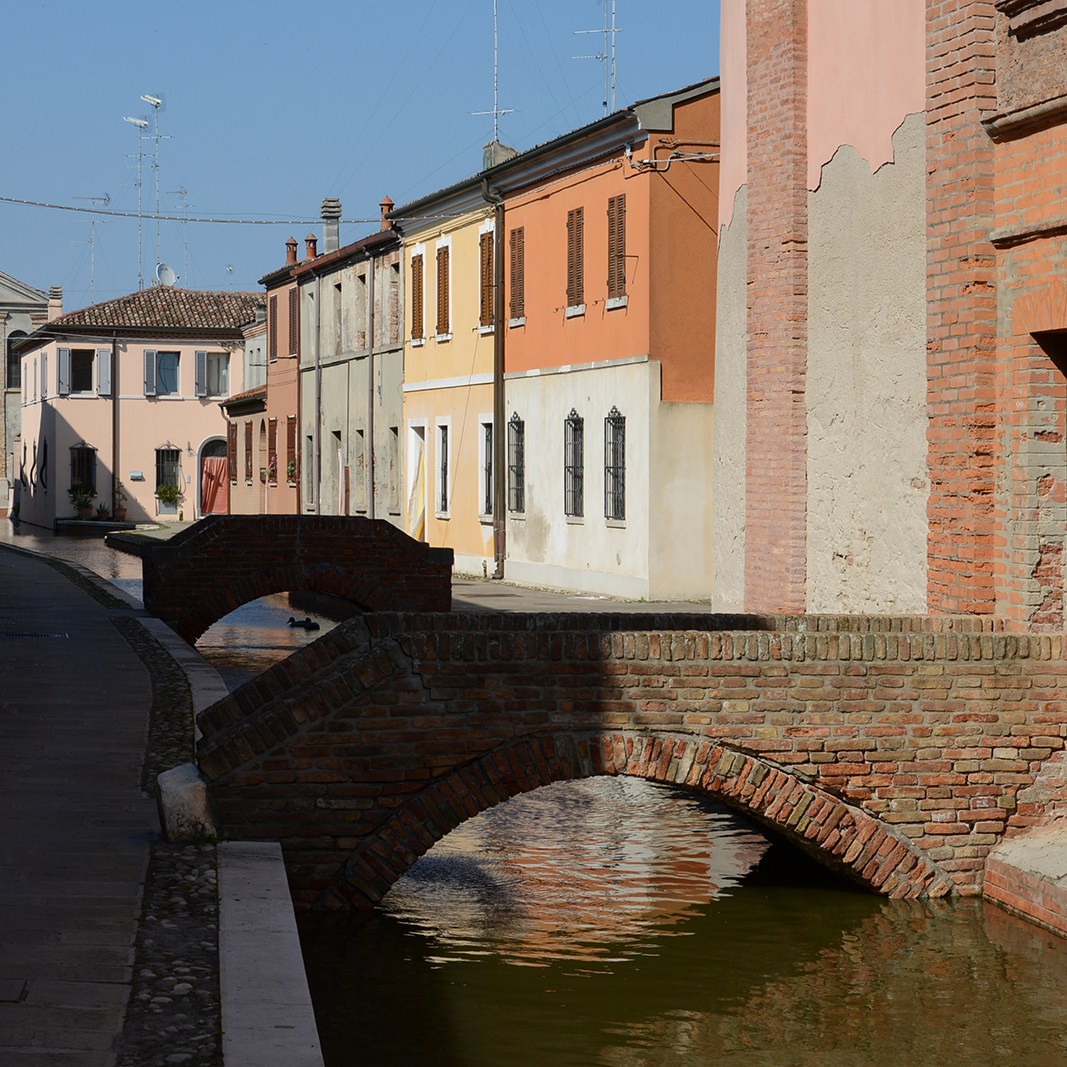
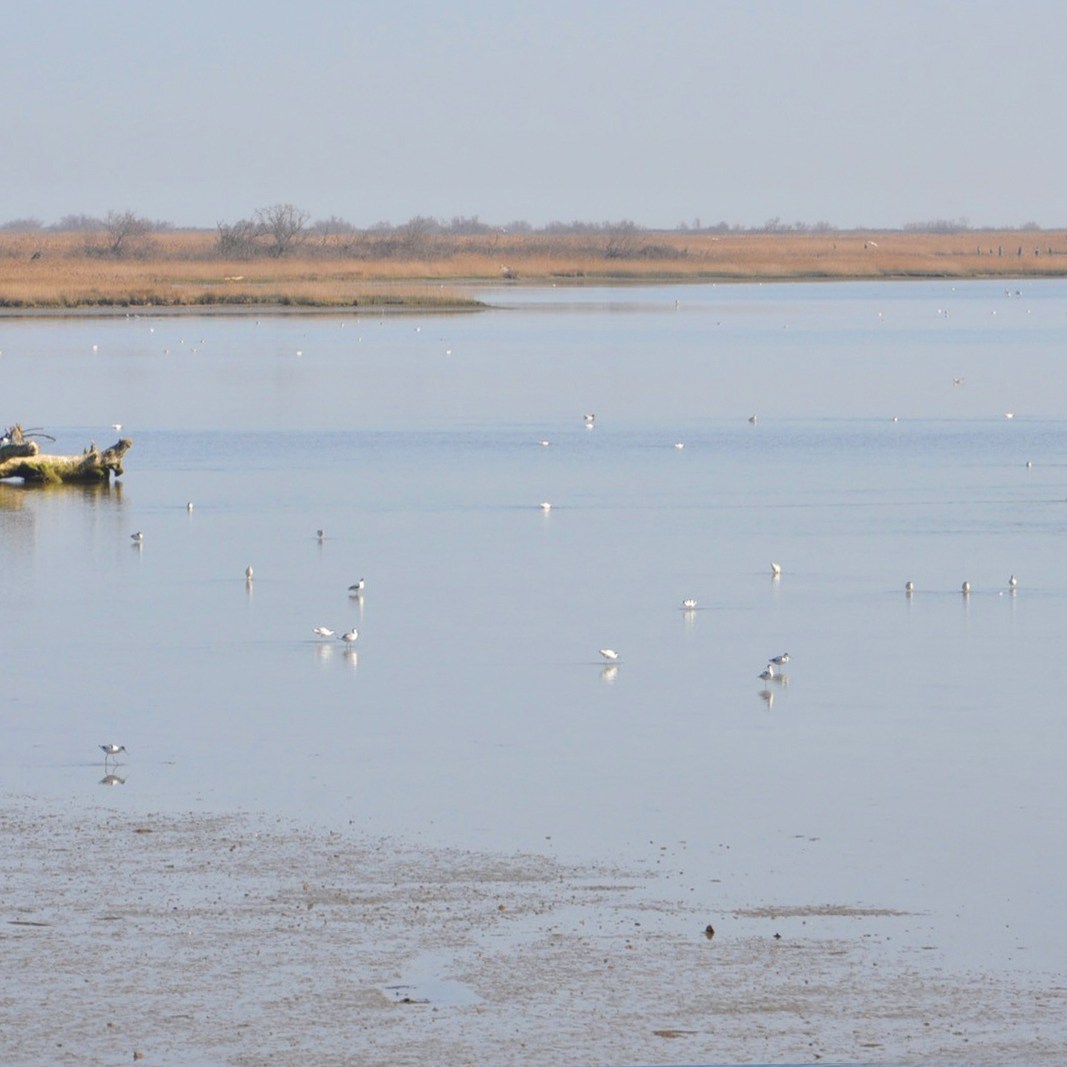
Comacchio, which spans thirteen small islands, is a place even seasoned Italy travelers might struggle to locate on a map, which is part of its appeal. The northeasternmost town of consequence in Emilia-Romagna, it feels almost deliberately hidden, built and placed inconspicuously—at the northern end of its lush entryway, the Valli di Comacchio nature preserve—to avoid detection. Its comparison to Venice is both useful and misleading: helpful because its lattice of canals and bridges does indeed echo its famous northern cousin, misleading because it suggests an ambition that simply isn’t there. And this restraint is precisely its charm.
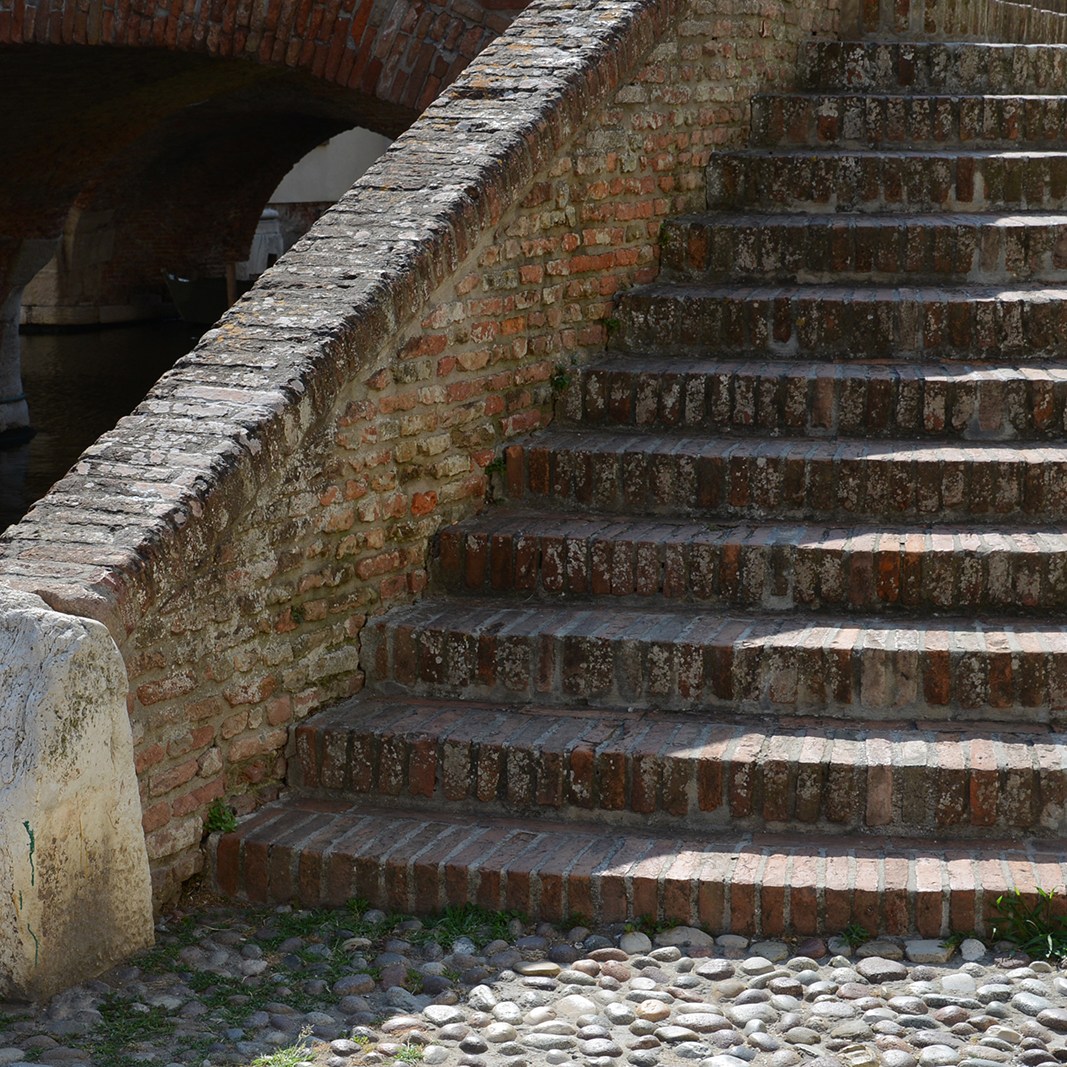
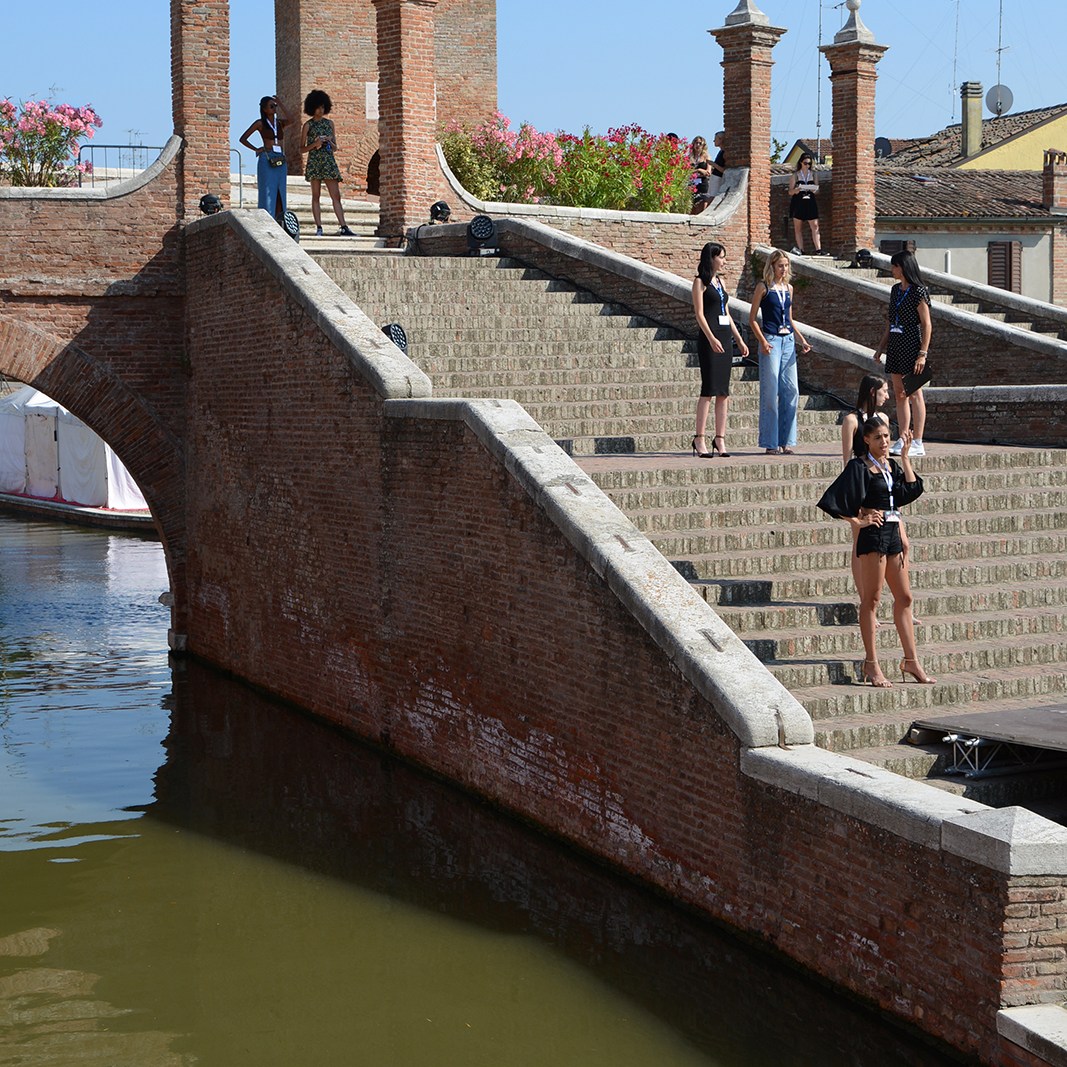
When we arrived, the soft afternoon light sparkled on the water and flattered even the most modest façades. The streets were just this side of empty, and the only cameras in sight were our own and that of a pro assigned to a fashion show rehearsal taking place on the Ponte dei Trepponti, Comacchio’s architectural centerpiece whose five staircases over Canale Pallotta meet in a kind of restrained flourish that seemed perfectly in keeping with the town’s scale. We wandered longer than expected, tracing the canals, crossing and recrossing bridges that appeared almost improvised, as though the town had grown not by plan but by habit. “Hidden gems in Italy” is a phrase that tends to overpromise and underdeliver, but quiet Comacchio comes unusually close to earning it.
The drive from Comacchio to Chioggia, our next stop, takes about an hour—if you manage to avoid the tempting detour out onto the UNESCO-listed Po Delta, which we did not. On this serene, bird-rich wetland—home to ornithologists’ beloved Eurasian Spoonbill, Marsh Harrier and the Adriatic’s largest population of the Greater Flamingo—river, lagoon and sea converge in a setting that feels both wild and cultivated. Here, in areas such as Isola della Donzella and the Sacca di Scardovari, generations of women have played an essential role in the local fishing economy, today managing processing, administration and sustainability efforts that underpin the male-dominated industry.
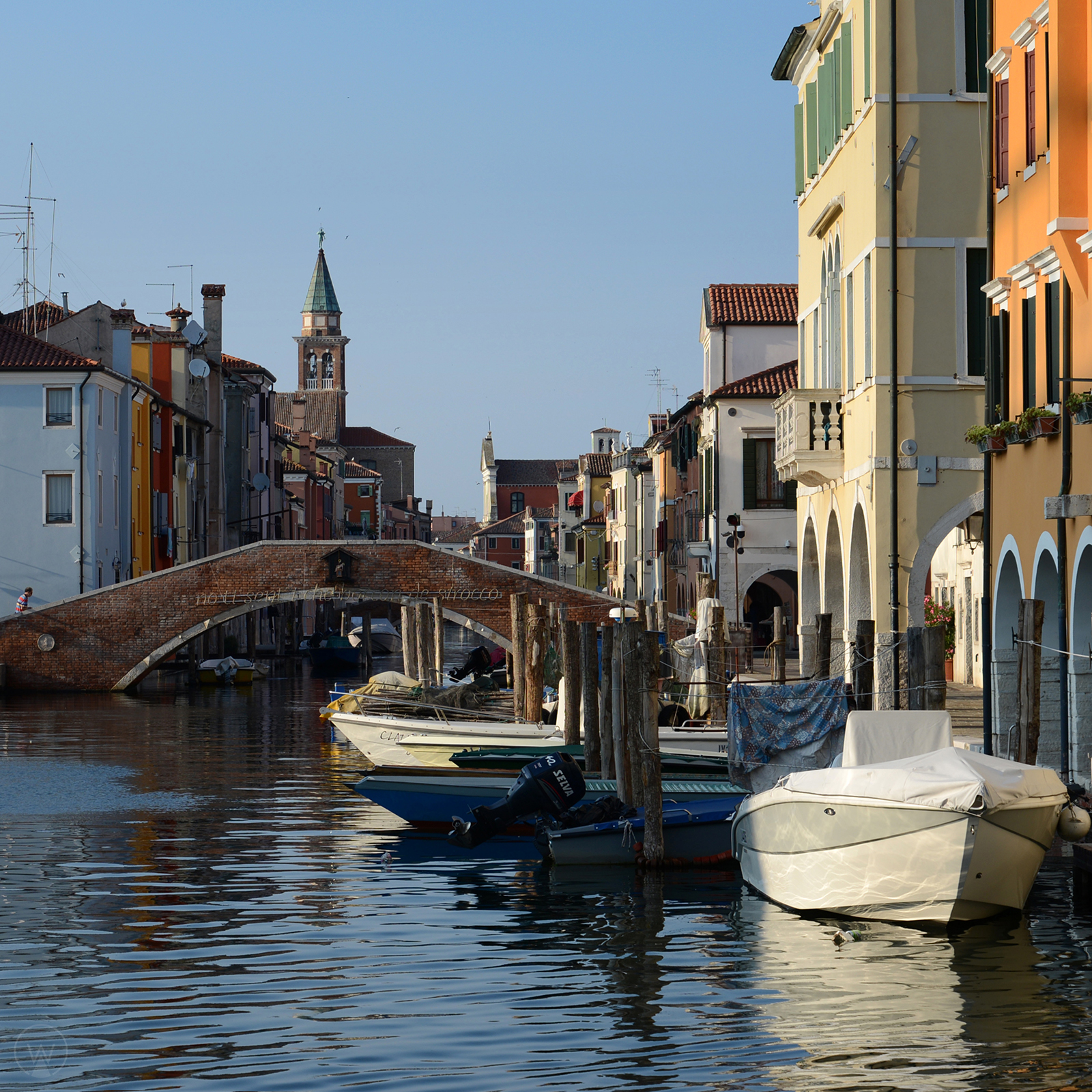
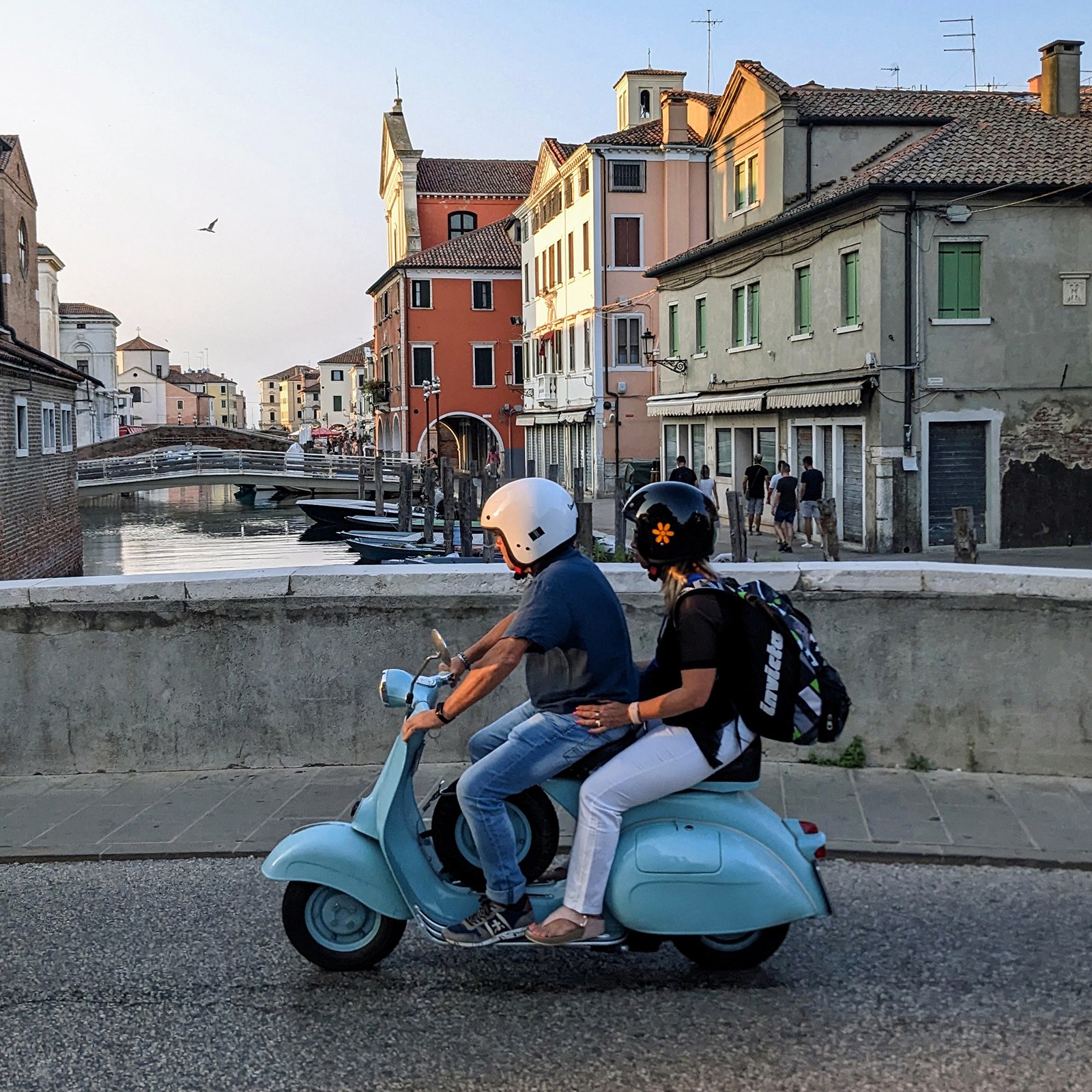
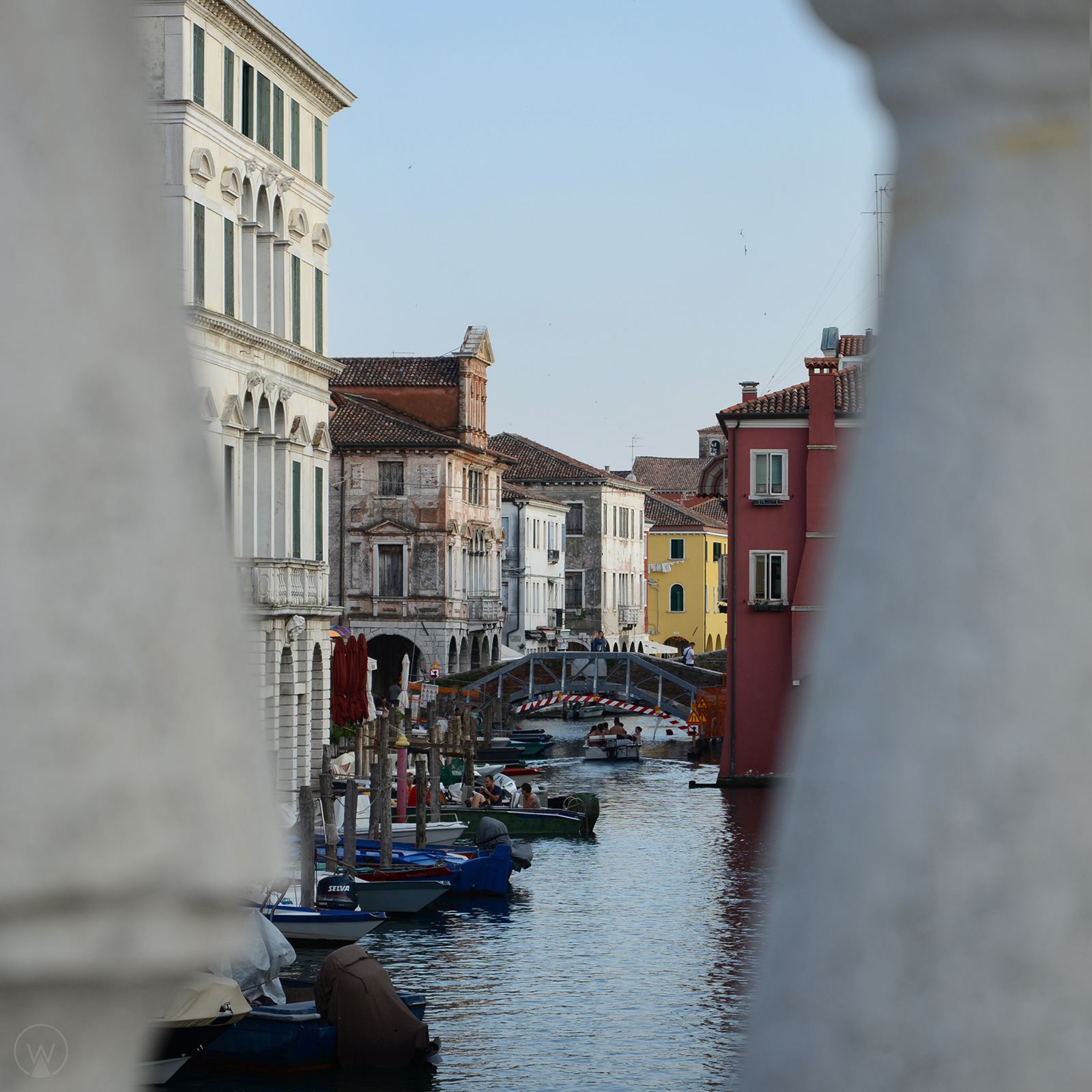
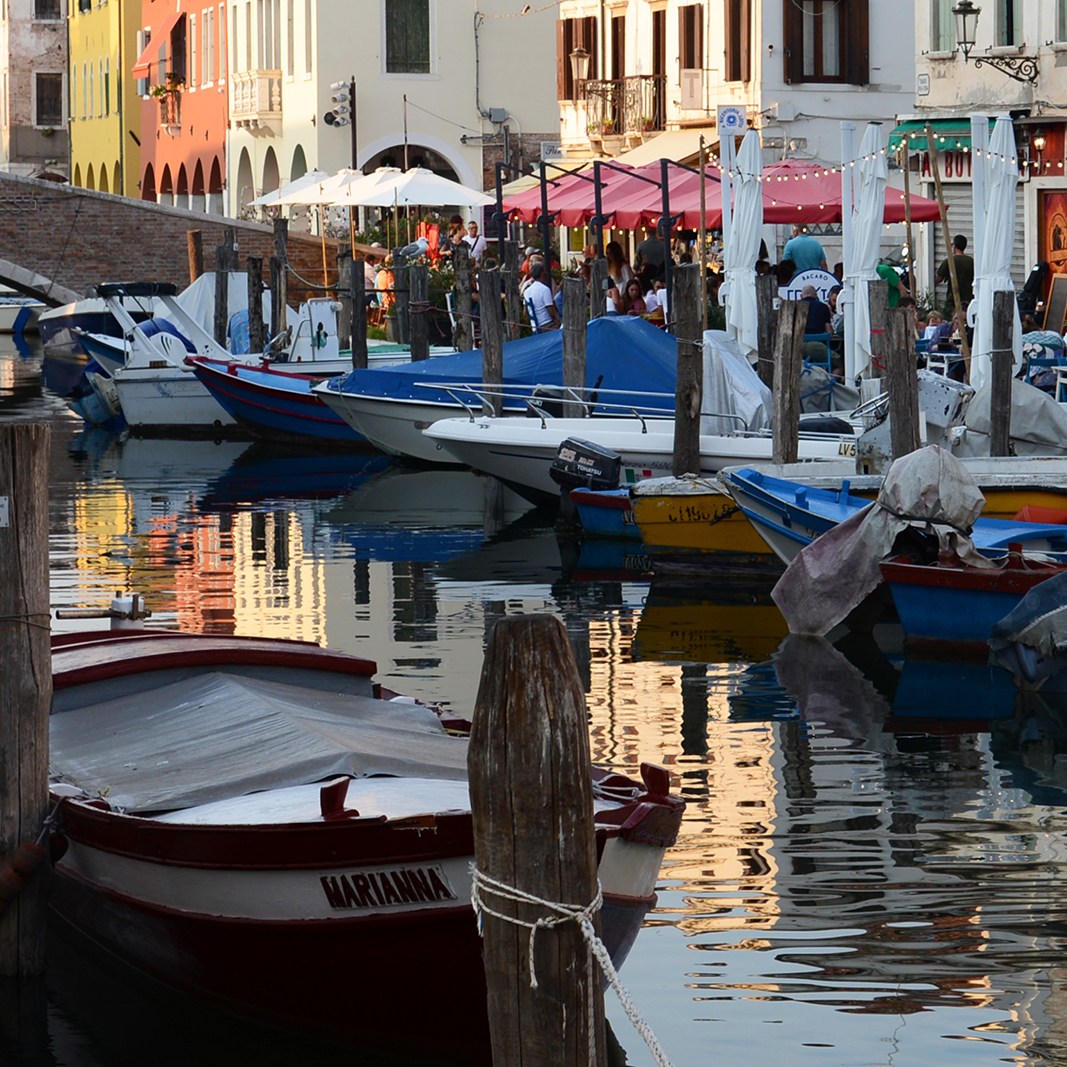
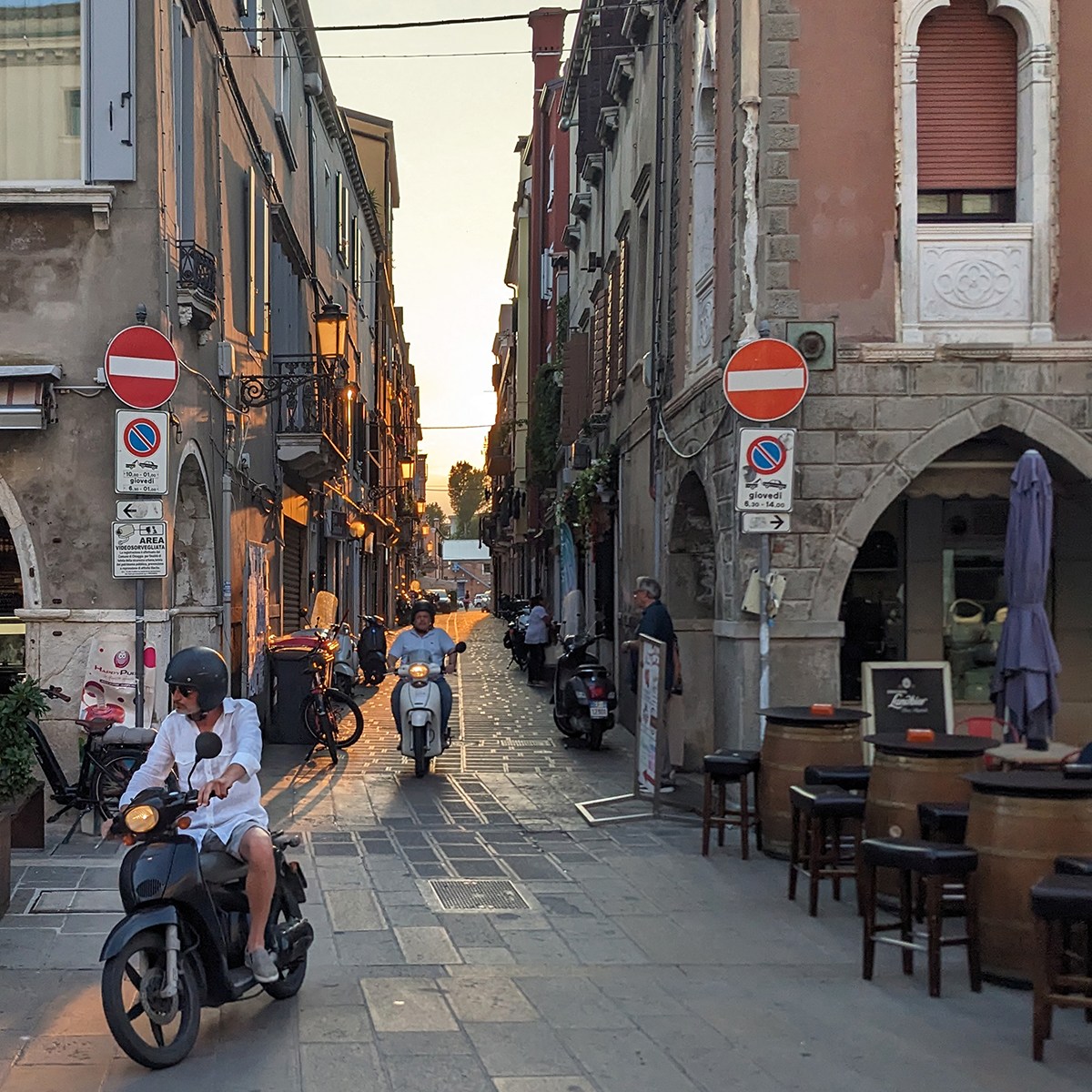
Where the Delta’s northern tip meets the southernmost waters of the Venetian Lagoon, we pulled into Chioggia as evening set in. In contrast to demure Comacchio, vibrant Chioggia announced itself with gusto, through its energetic hustle and the unmistakable scent of a working port. Comaccio had felt like a secret; Chioggia made no such attempt at concealment. Here, canals are wider and streets more active. Along Corso del Popolo, locals moved with urban efficiency—shopping, socializing, negotiating space on foot, bicycle and Vespa with the kind of fluid assertiveness that suggests generations of practice.
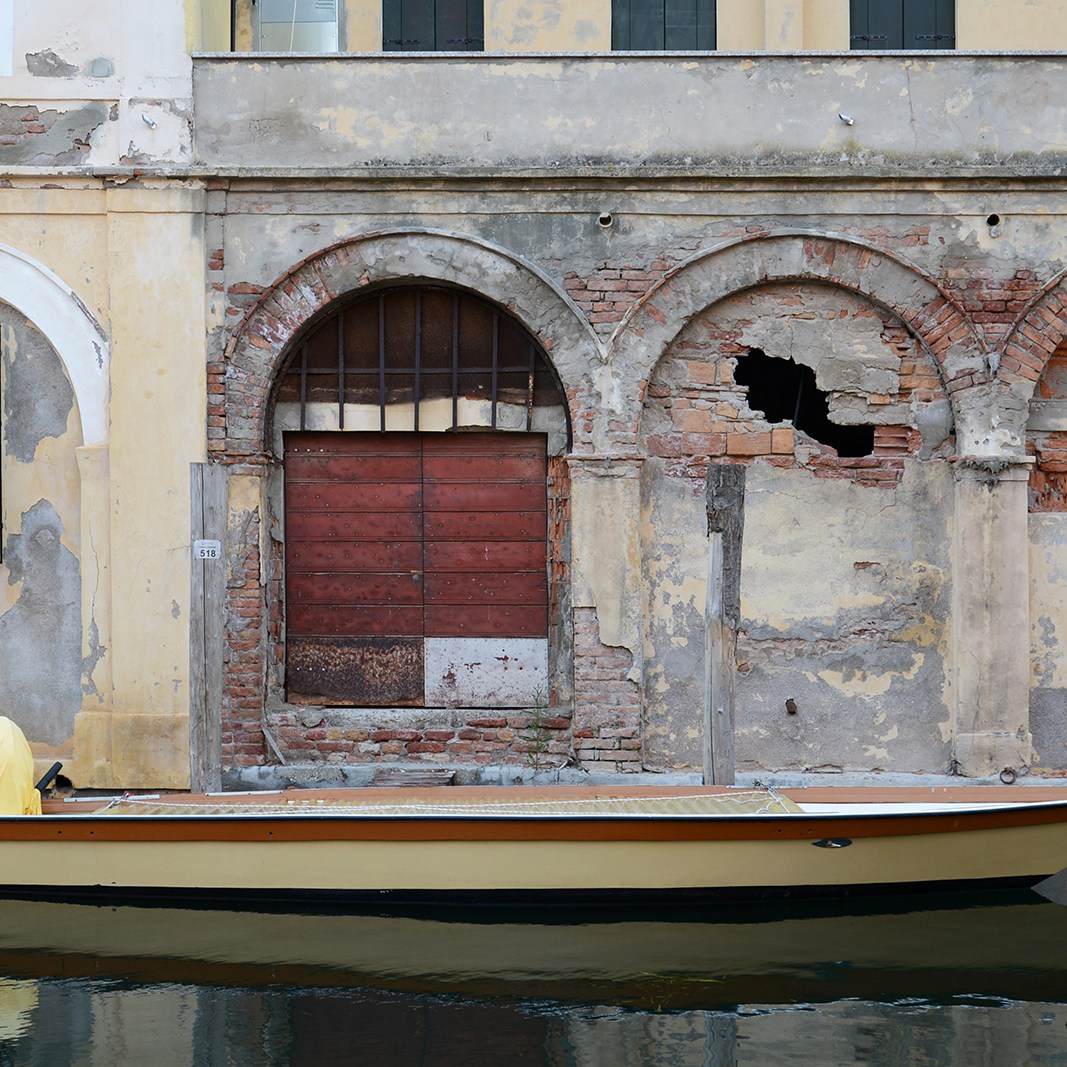
Fishing boats lined the canals, their equipment stacked for the night in pragmatic disarray. Modest speedboats were parked perpendicularly in a proximity to their respective residences that cars occupy elsewhere on the planet. Leisure crafts, some of them ornate, anchored about the town’s perimeter. Restaurants offered seafood, seafood and more seafood. As we crossed bridge after bridge in the charming centro storico without plan or preconception, we agreed that whatever resemblance Chioggia bore to Venice was less aesthetic than genetic and structural, both of them having been built atop thousands of wood pylons. This was a city—handsome in its own right, to be sure—that worked for a living.
MURANO AND BURANO
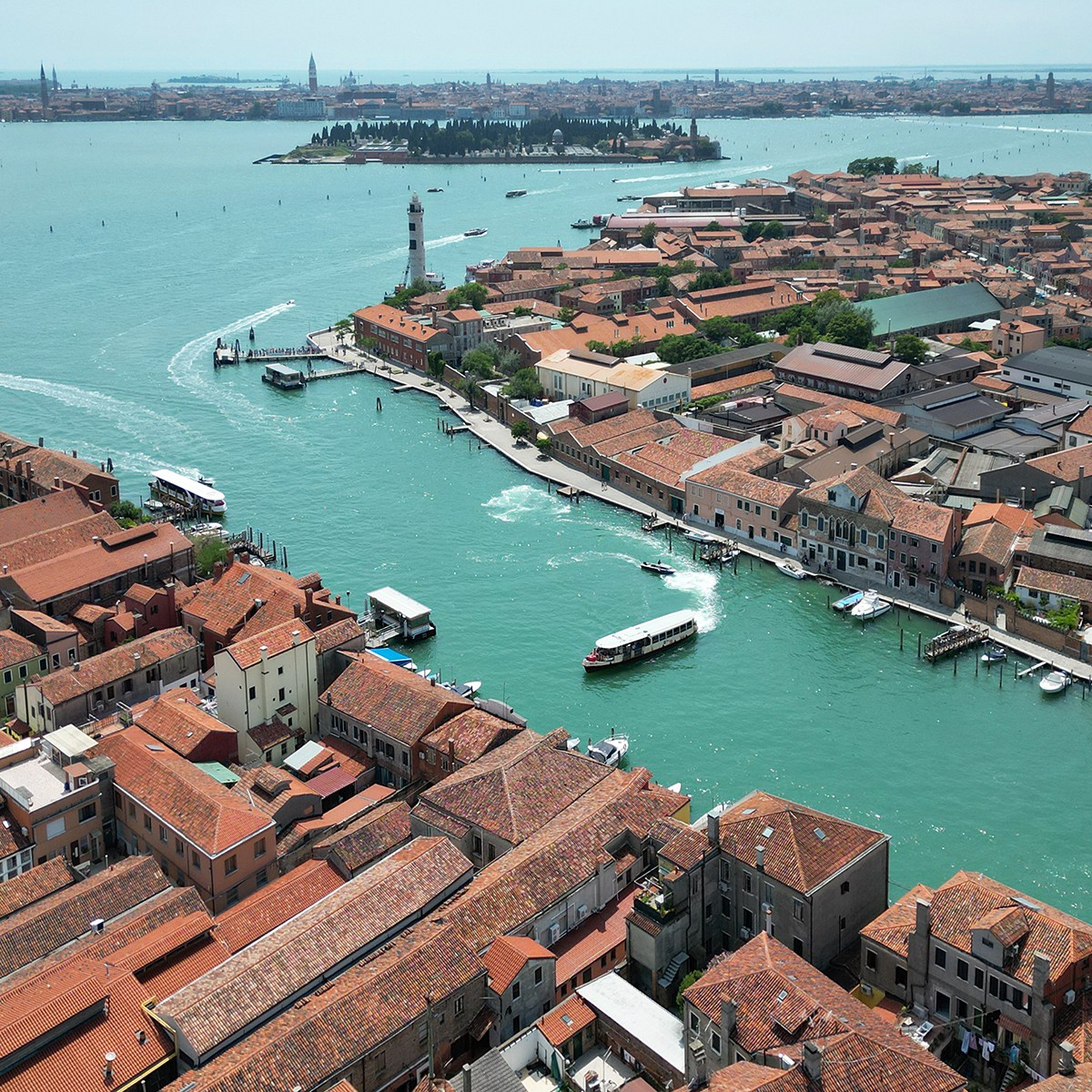
The next morning, we drove to Venice, though not for Venice itself—at least not yet. Piazzale Roma, that utterly unglamorous yet wholly indispensable gateway to the Queen of the Adriatic, served as our departure point for a different kind of exploration: a clockwise vaporetto (water taxi) loop through the Lagoon, beginning with Murano and continuing to Burano before circling back. The transport itself takes about 20 minutes from Piazzale Roma to Murano, another 30 minutes onward to Burano, and roughly 45 minutes for the return leg, depending on the specific line and stops. (Venice has several vaporetto departure points to Murano and Burano, including Piazzale Roma.)
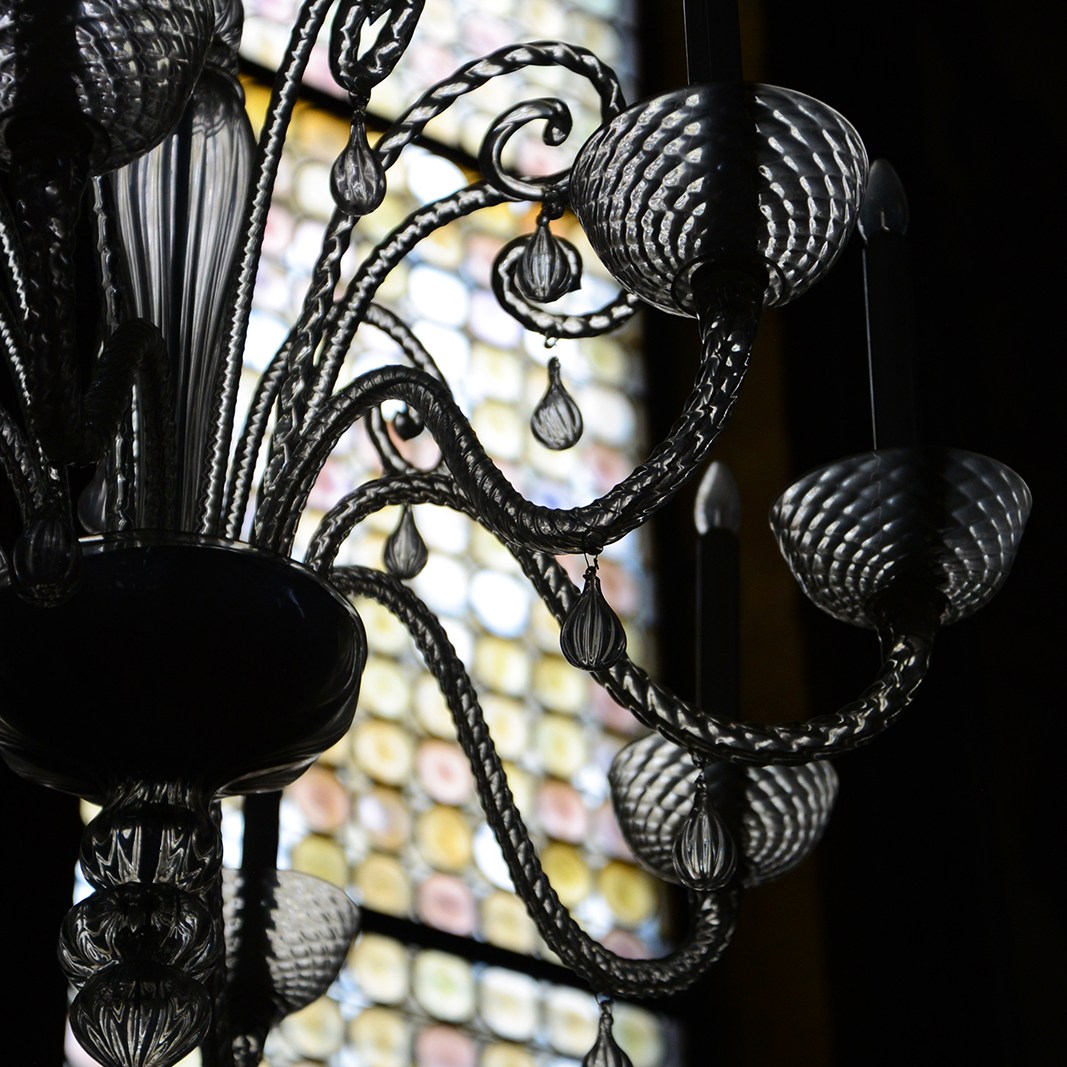
Consistent with the town’s industrial fame, the approach to Murano suggests an almost workaday community: a line of uniformly low, brownish-reddish structures broken by the occasional spire or painted façade, its novelty being its topography. But then glints of glass appear in shop windows and an identity begins to take shape. This identity, of course, is that of being the historic home of the Venetian glassmaking practice lauded internationally since medieval times.
This legacy is both Murano’s greatest asset and, at times, its most complicated inheritance. It’s not difficult to find exquisite craftsmanship here—pieces that seem to hold light rather than merely reflect it—but neither is it difficult to stumble into shops offering mass-produced imitations that have traveled considerably farther than you have to reach the island. The distinction matters, and it both requires and rewards a bit of patience, pivoting on the Latin origin of the word “manufacture,” a combination of facere (to make) and manu (by hand). While authorities regularly inspect shops to fight counterfeiting—the pressures of peers and civic pride play a mitigating role as well—some sellers still skirt the rules by using misleading labels such as “Murano Style,” “Venetian Glass,” or the vaguely accommodating “Made in Italy.” Your best tool to avoid being scammed is to check for the Vetro Artistico® Murano seal, and look closely for imperfections: Authentic Murano glass is hand-blown, so it will often feature tiny, unique irregularities, while counterfeits, particularly from Asia, are usually machine-made and perfectly uniform and/or noticeably heavier.
We spent the morning drifting among workshops and showrooms, pausing occasionally to watch artisans at work, their movements so practiced as to appear almost indifferent to the searing heat and the fragility of their materials. At Calle Angelo dal Mistro 3, Murano Gelateria Artigianale served us some of the best gelato of our entire trip, while La Perla ai Bisatei—operated by the same family since 1987—allowed us to skip the line by boxing up cold cuts and marinated fagioli di Lamon (Lamon beans, a large legume native to Veneto), which we savored on a shaded bench there on pleasant Campo San Bernardo. It was on this same morning in Murano that I heard my twentieth person speaking anything other than Italian, Spanish or German along our entire itinerary from the south. (Yes, I had started counting when, on the second or third day in Puglia, I realized I had heard only Italian, and wondered how long the streak would last.)
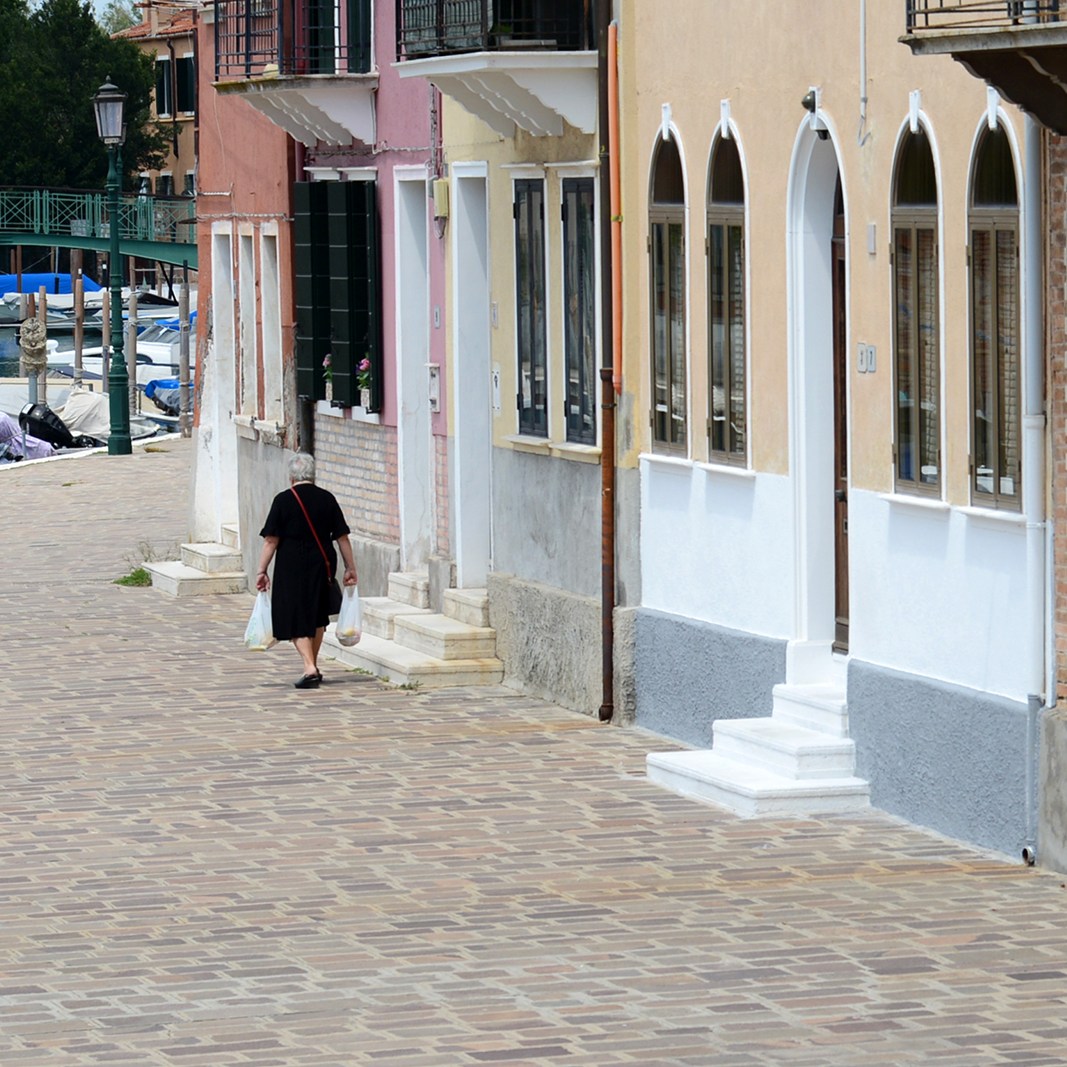
Murano was noticeably busy, but even at its most crowded—namely on the shop-lined fondamenta walkways that flank the Rio dei Vetrai—it felt manageable, a fraction of Venice’s intensity with enough space left over to observe rather than merely endure. It’s easy to understand why Murano appears on so many “best day trips from Venice” lists, though its proximity risks making it feel less like a destination than an extension. That would be a mistake.
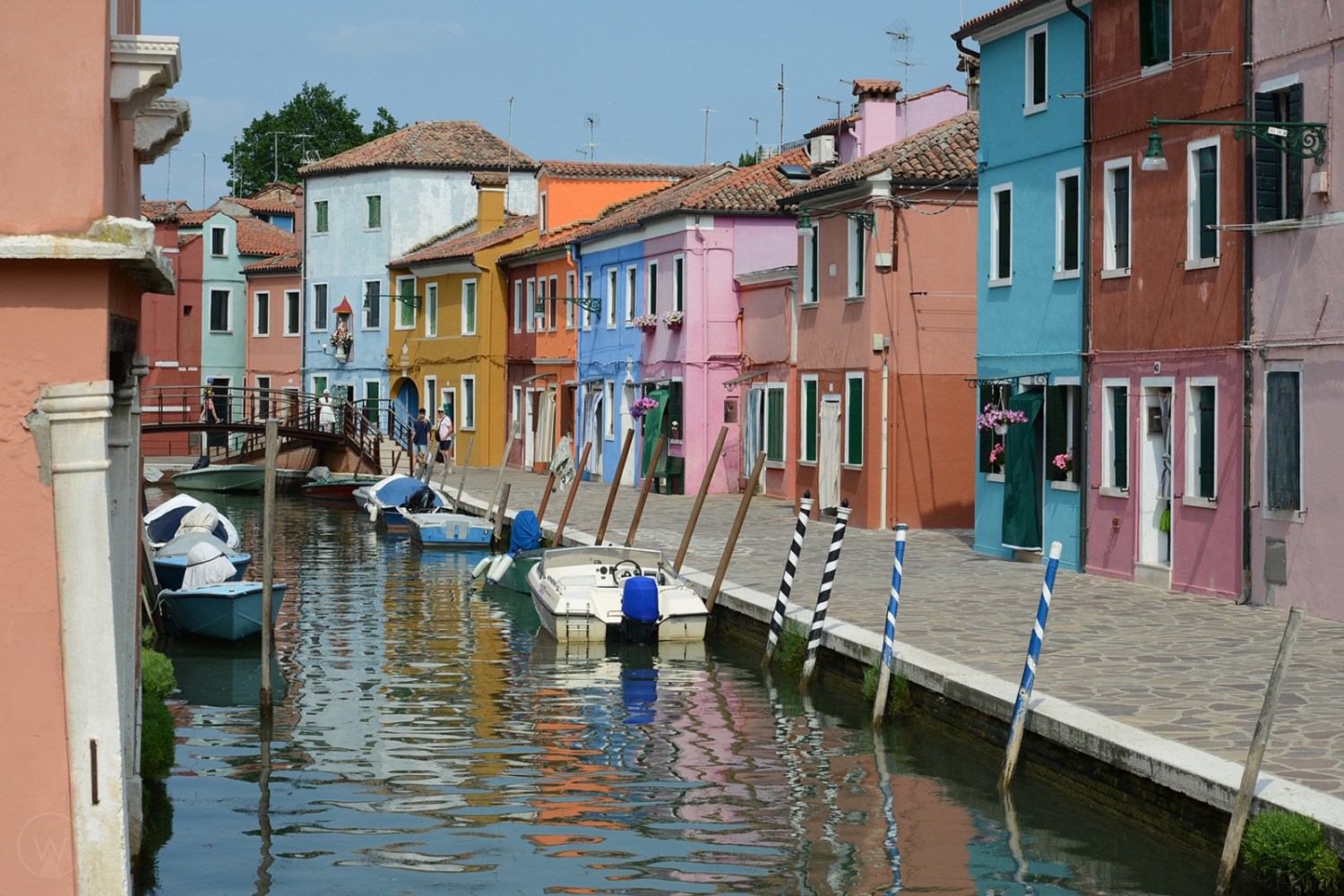
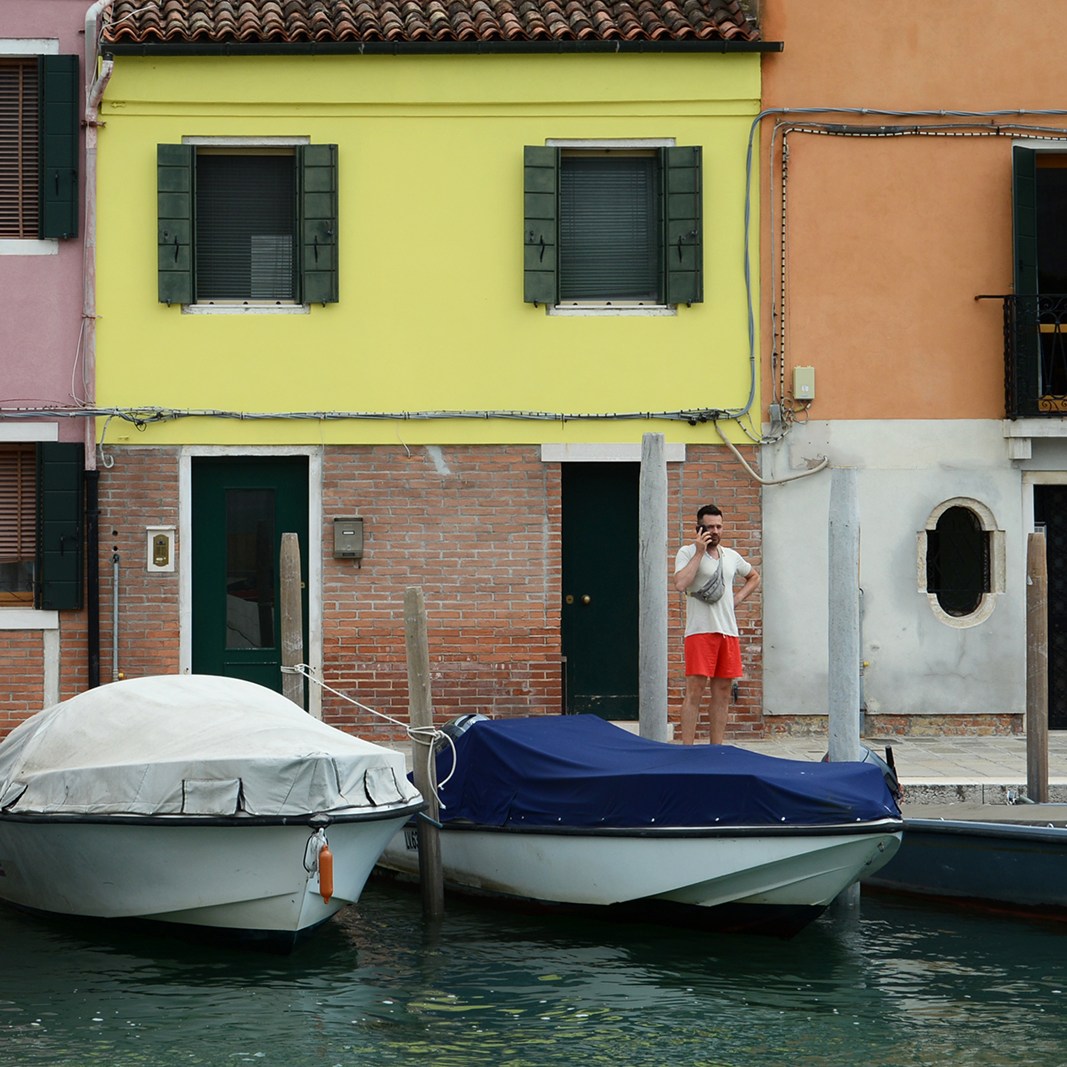
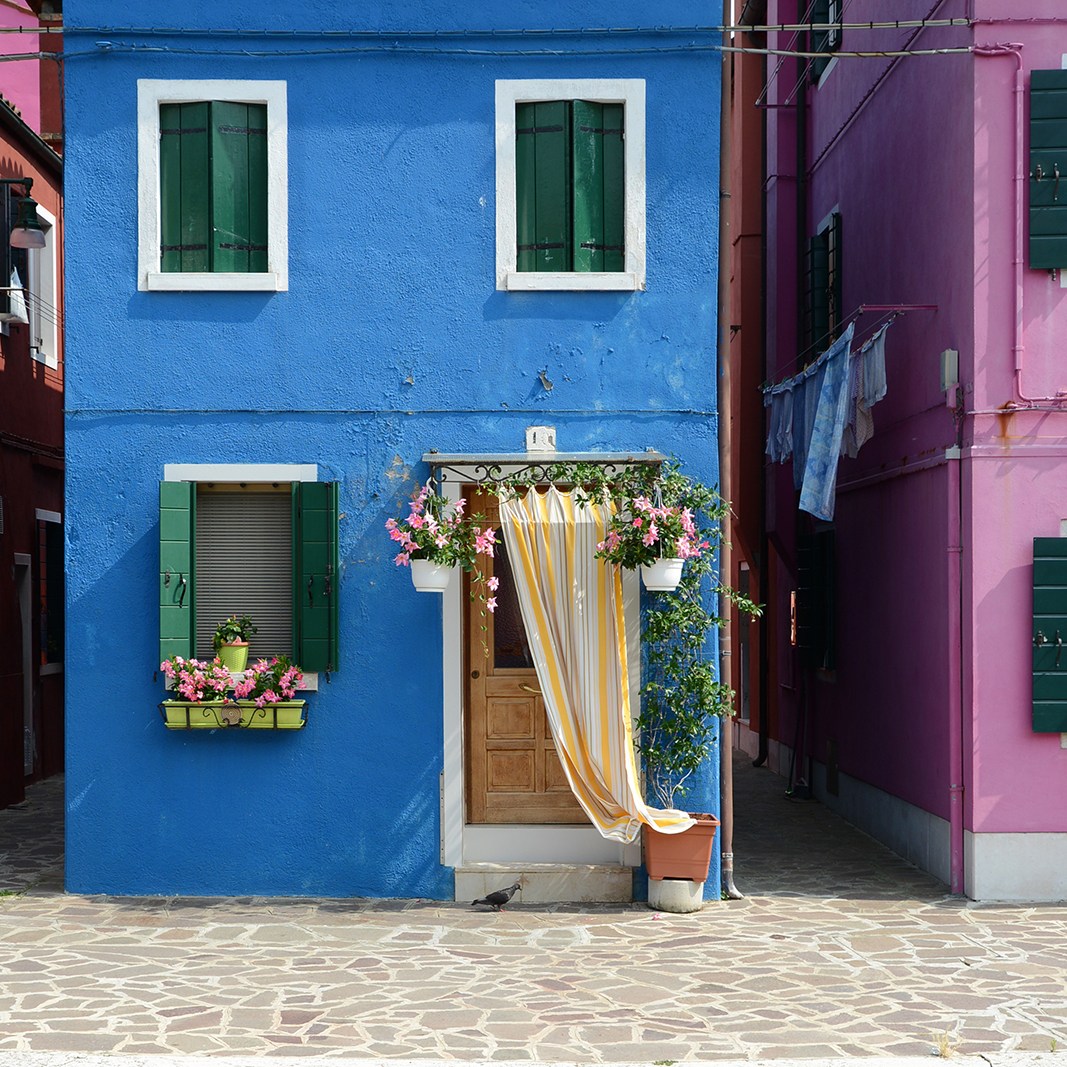
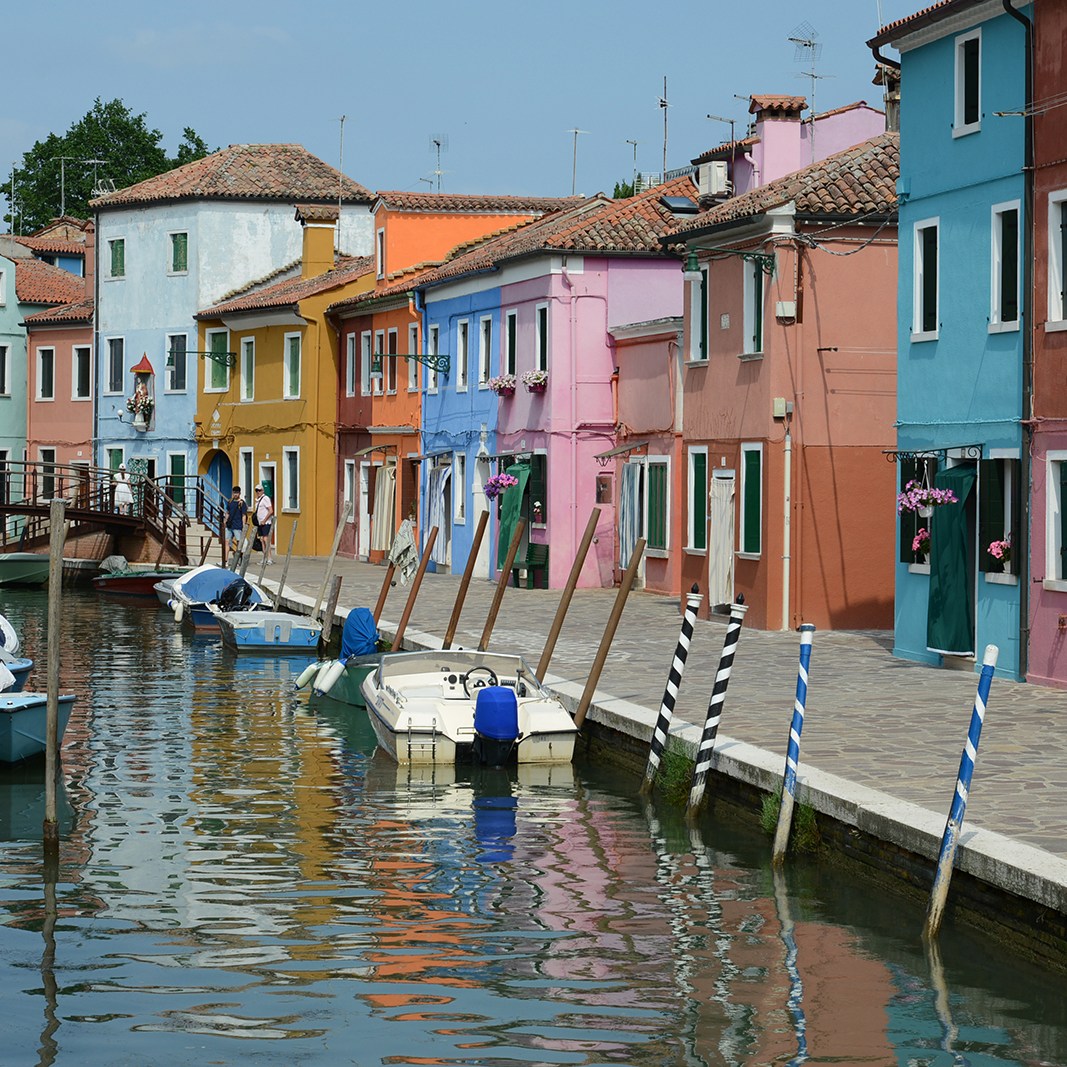
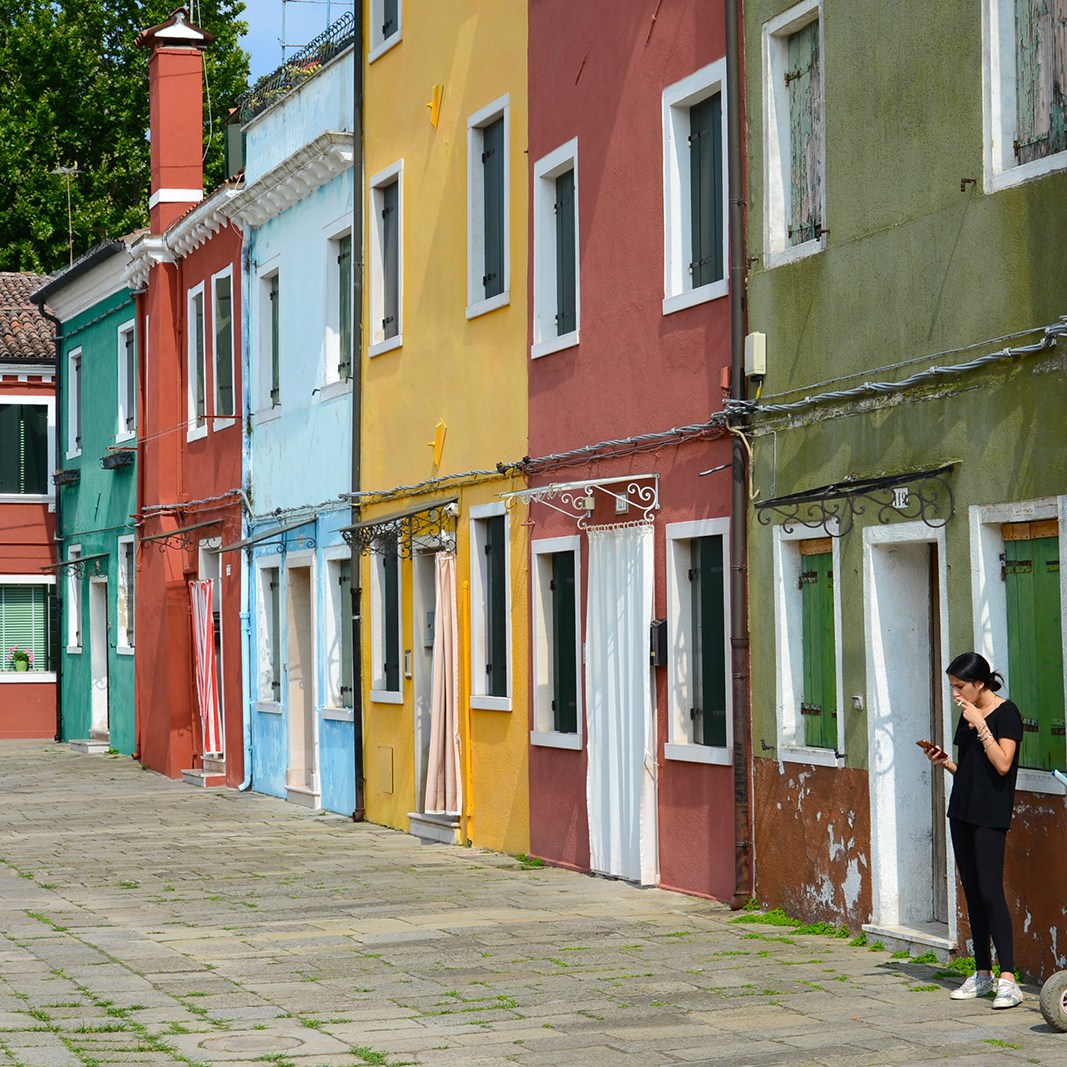
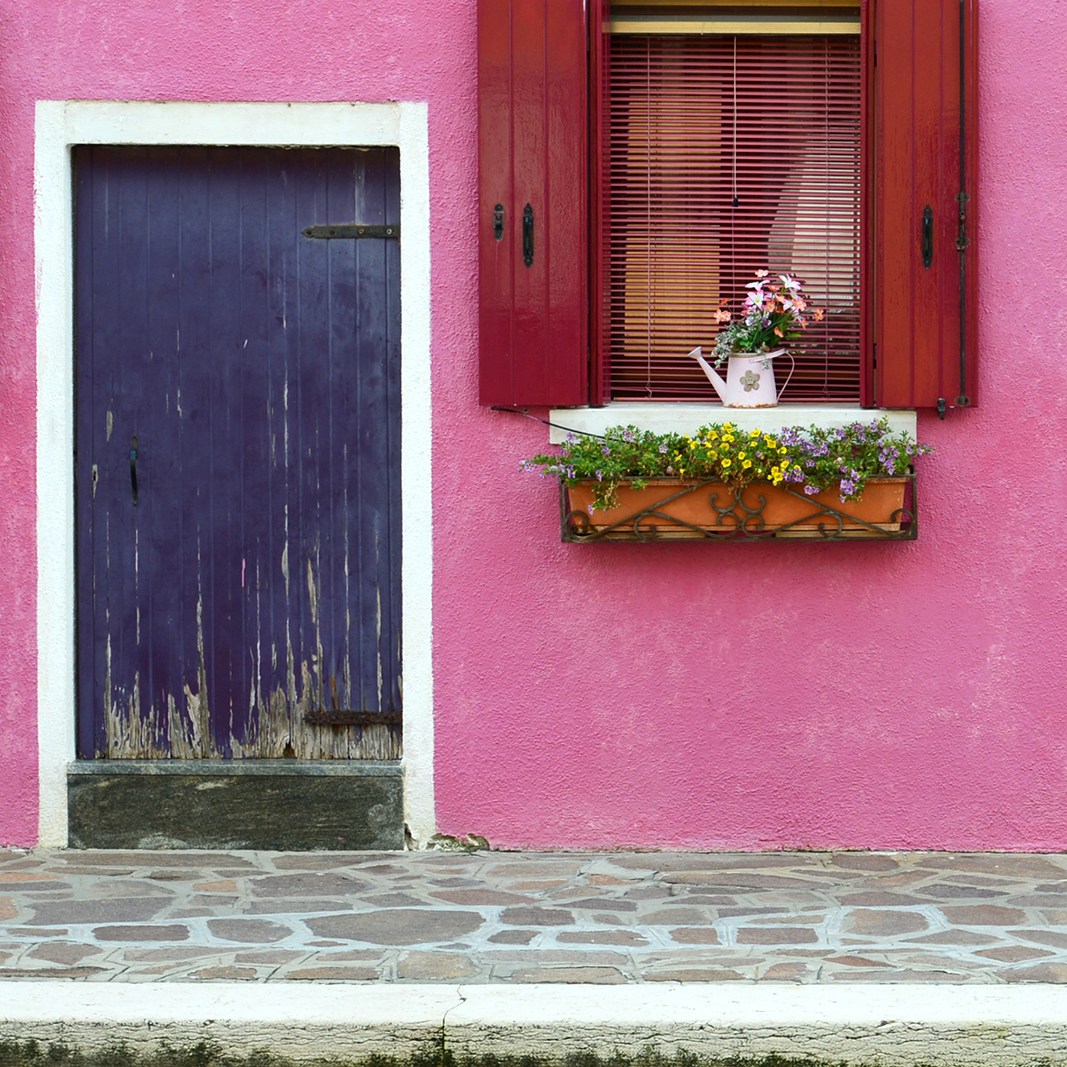
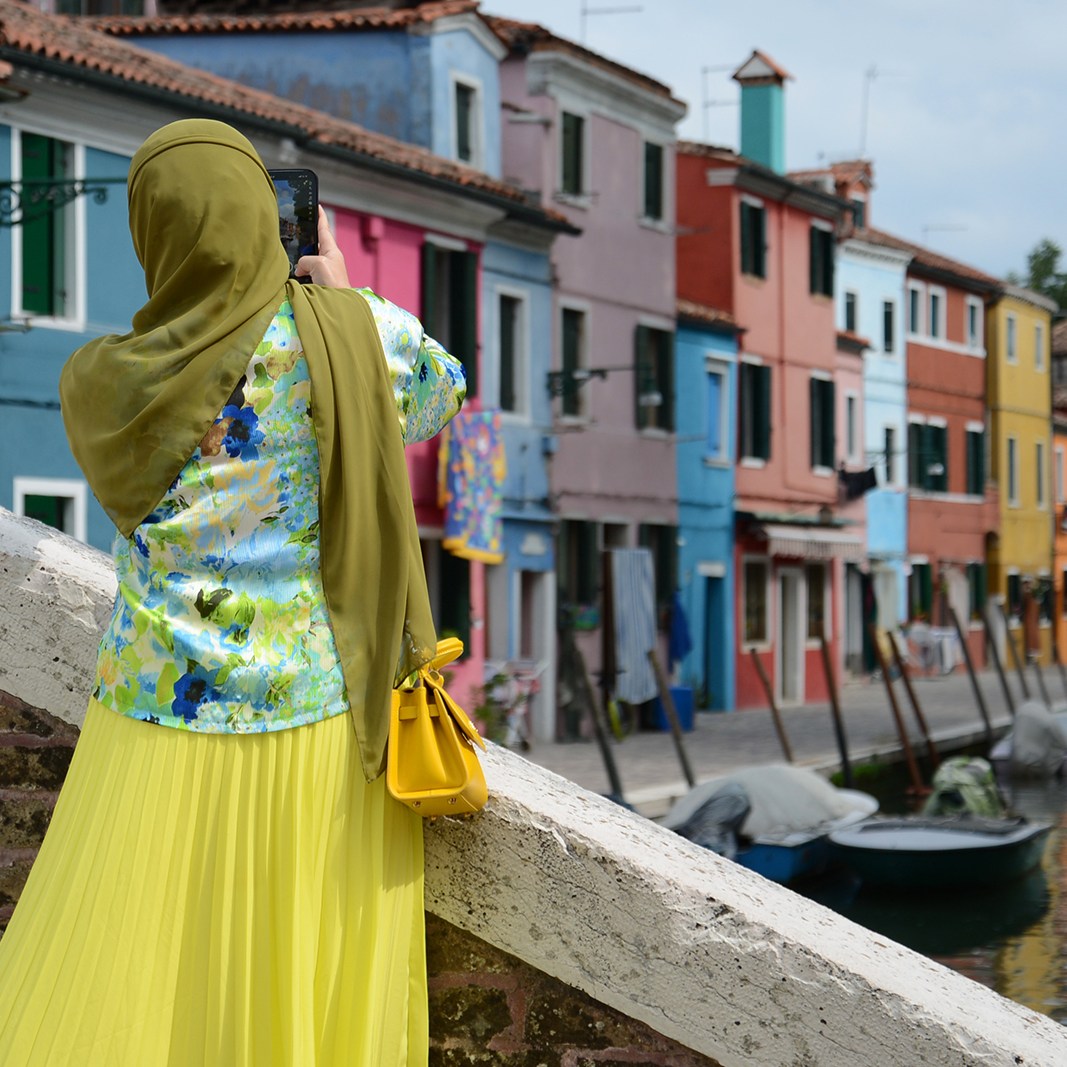
Murano is known for the brilliant colors of its glass. Its little sister, Burano, beckons with the similarly brilliant colors of her façades. Convincing-enough legend says that Burano’s fishermen painted their houses in bright, distinct colors so they could find them in the impenetrable fog that often blankets the lagoon. Whatever their origin, practical or whimsical, the neighborhood’s palettes are enforced with such strictness today that residents wanting to repaint their homes must submit an official request to the town council, which dictates exactly which colors are permitted for that specific property. (And you thought your HOA was unbudging.) Accordingly, as your vaporetto approaches the island, you’ll be forgiven for mistaking the dockside dwellings for the paint-chip display at Lowe’s.
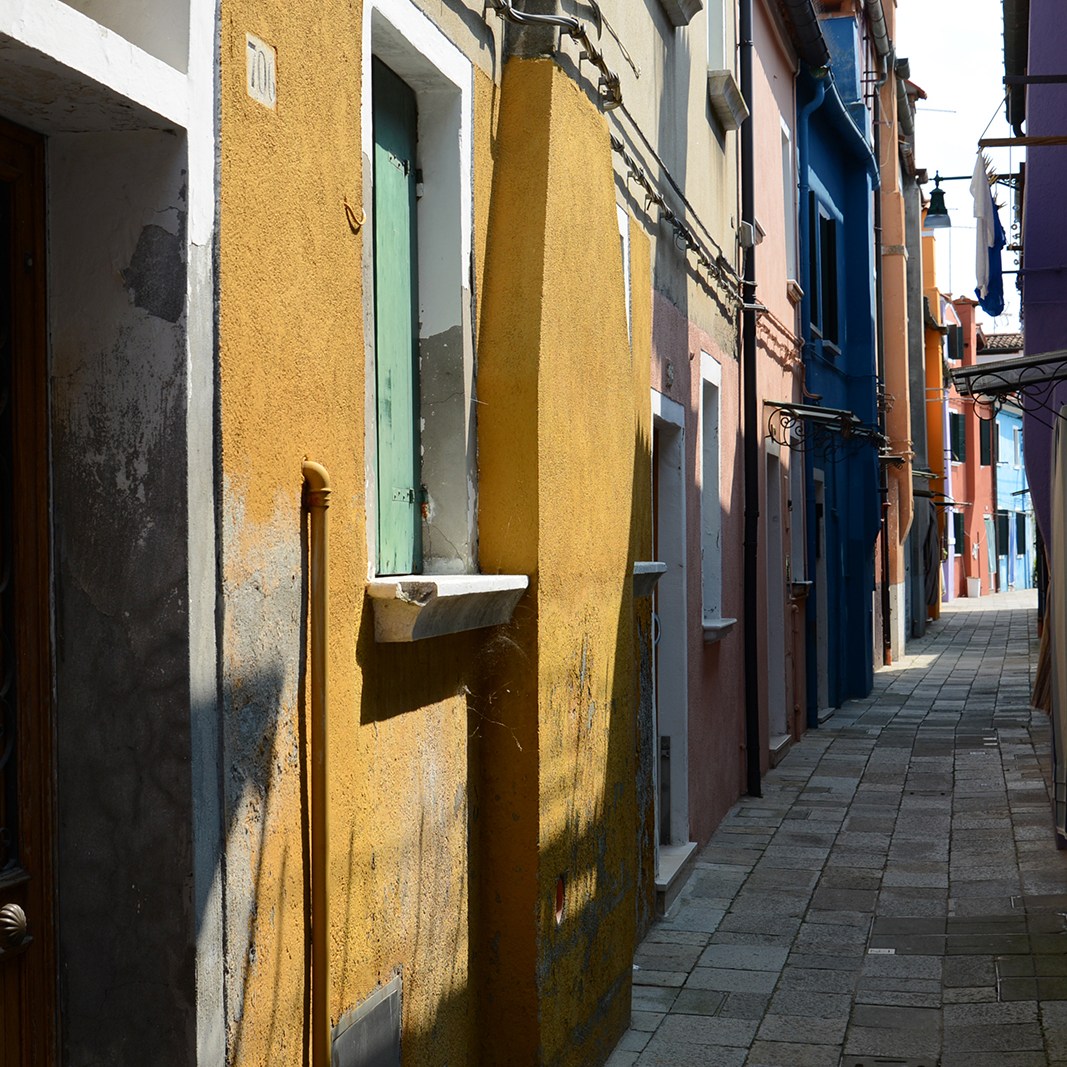
Burano is immediately engaging, and swiftly taxing—in the best possible way—on one’s optical rods and cones. Here we wandered without map or destination, along narrow lanes and canals whose gently undulating reflections multiplied the surrounding walls of color. An especially lovely stretch was along Rio Terranova, from Ponte della Vigna to Piazza Galuppi: To round that bend at the intersection with Calle Tacchi and see Il Campanile Storto (The Leaning Belltower) reflecting in the canal, knowing that the miracle of Venice lies directly beyond, is a moment to be remembered. Burano’s diminutive size makes a visit of a few hours entirely satisfactory, and yet we were still surprised to find so many quiet nooks in such a compact and thoroughly inviting place.
Lace is Burano’s answer to Murano’s glass. For centuries, the island’s artisans have used needles and thread—i.e., only needles and thread—to create intricate punto in aria (point in the air) designs. This fine embroidery, achieved without the support of underlying fabric, became such a highly coveted status symbol among European nobility that Catherine de Medici (Florentine noblewoman turned Queen of France in 1547) brought Buranese lacemakers to the French court, and residential windows and several shops proudly showcase this tradition today. Unfortunately, as with Murano glass, Burano lace is not immune to corrupting motives. As you peruse, ask whether a given item is handmade using the traditional technique (“Fatto a mano, punto in aria?”), and inspect—you guessed it—for tiny irregularities and slight variations in tension, as machine-made lace tends to look and feel very uniform. Patronize shops that can identify which of the roughly half-dozen remaining artisanal workshops in town produced the piece, and don’t be deceived by labels such as “Italian Made” or “Designed in Italy.” Finally, educate yourself on relative values before you transact so you can recognize the red flag of an unusually low price, because genuine Burano lace can take many hours or even days to make.
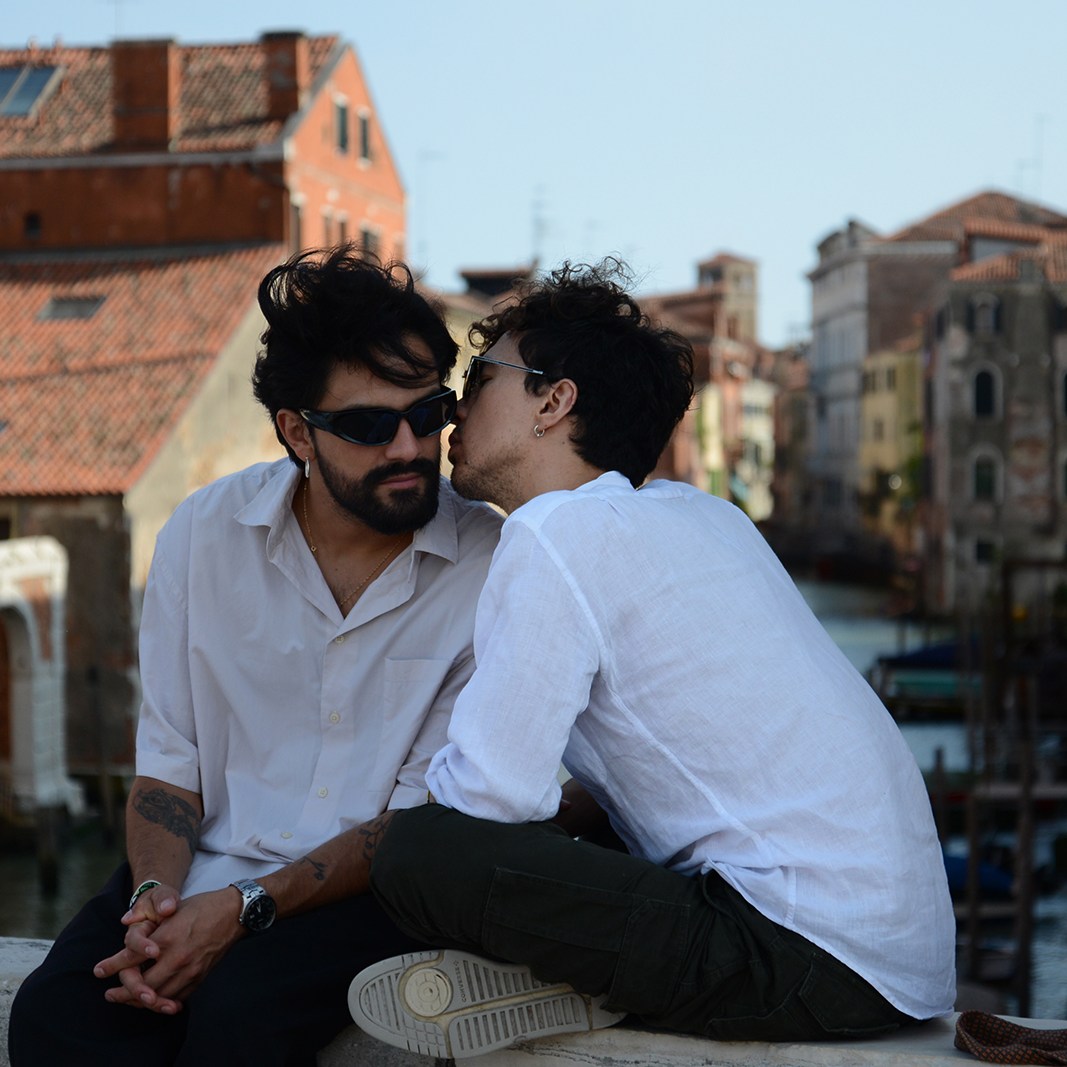
As the sun relaxed behind The Leaning Belltower and golden hour coaxed Burano’s façades into a realm of impossible saturation, our vaporetto carried us past Murano and the Cimiterio di San Michele back to Venice, the Queen now transformed as much by the setting sun and cooling temperature as by the complete disappearance of throngs from everywhere other than Piazza San Marco and Ponte di Rialto—which continued to bustle, yes, but at no more than half the density of noontime. To claim that Venice by night is “unrecognizable” from Venice by day would be to mischaracterize the difference, but those relatively few who have experienced that difference might best describe the former as the softer, calmer, more equanimous version of the two. The resoundingly ironic, age-old complaint of the city’s visitors is “the crowds!” The surest solution—although not the sole solution—is to begin, not end, your visit with dinner.
TREVISO
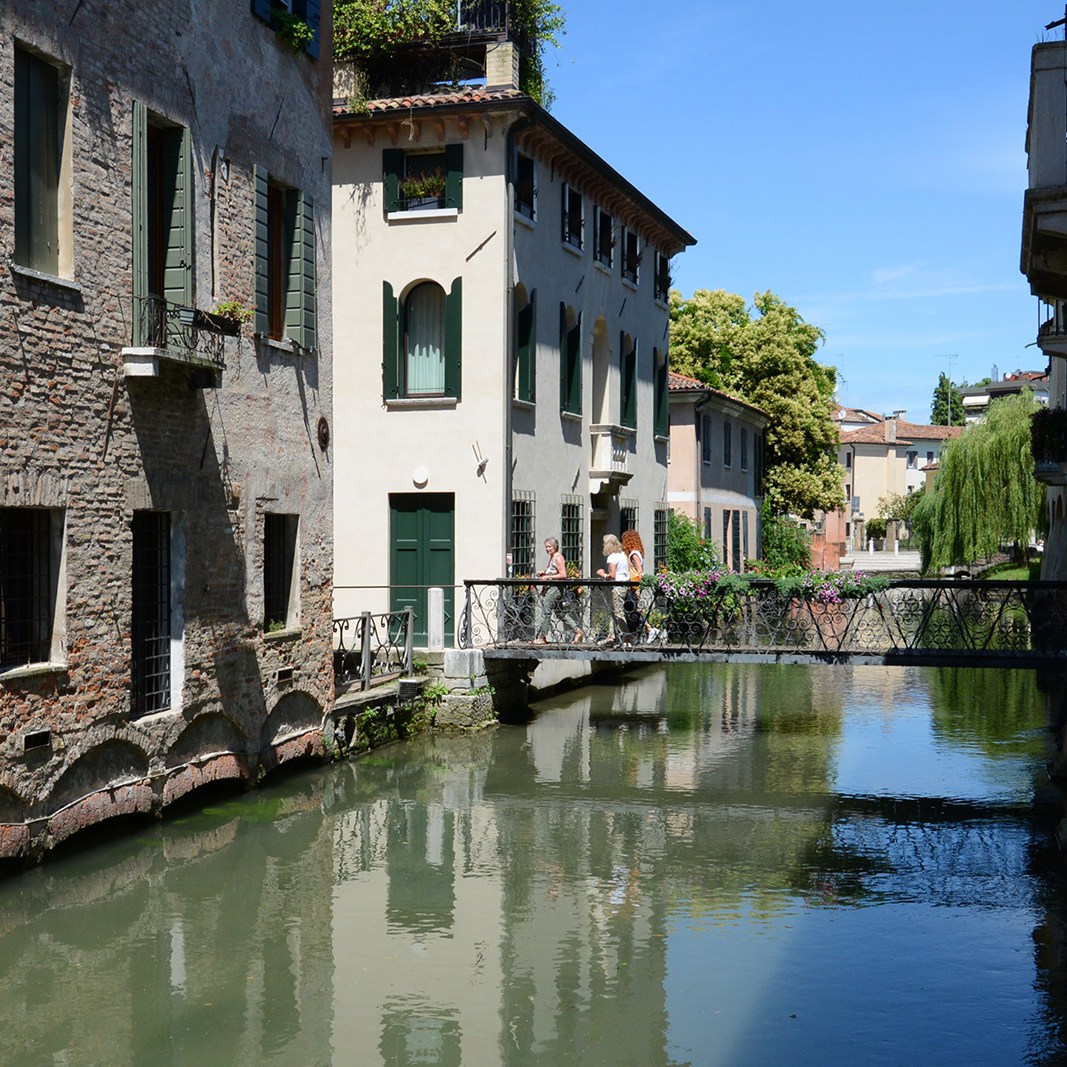
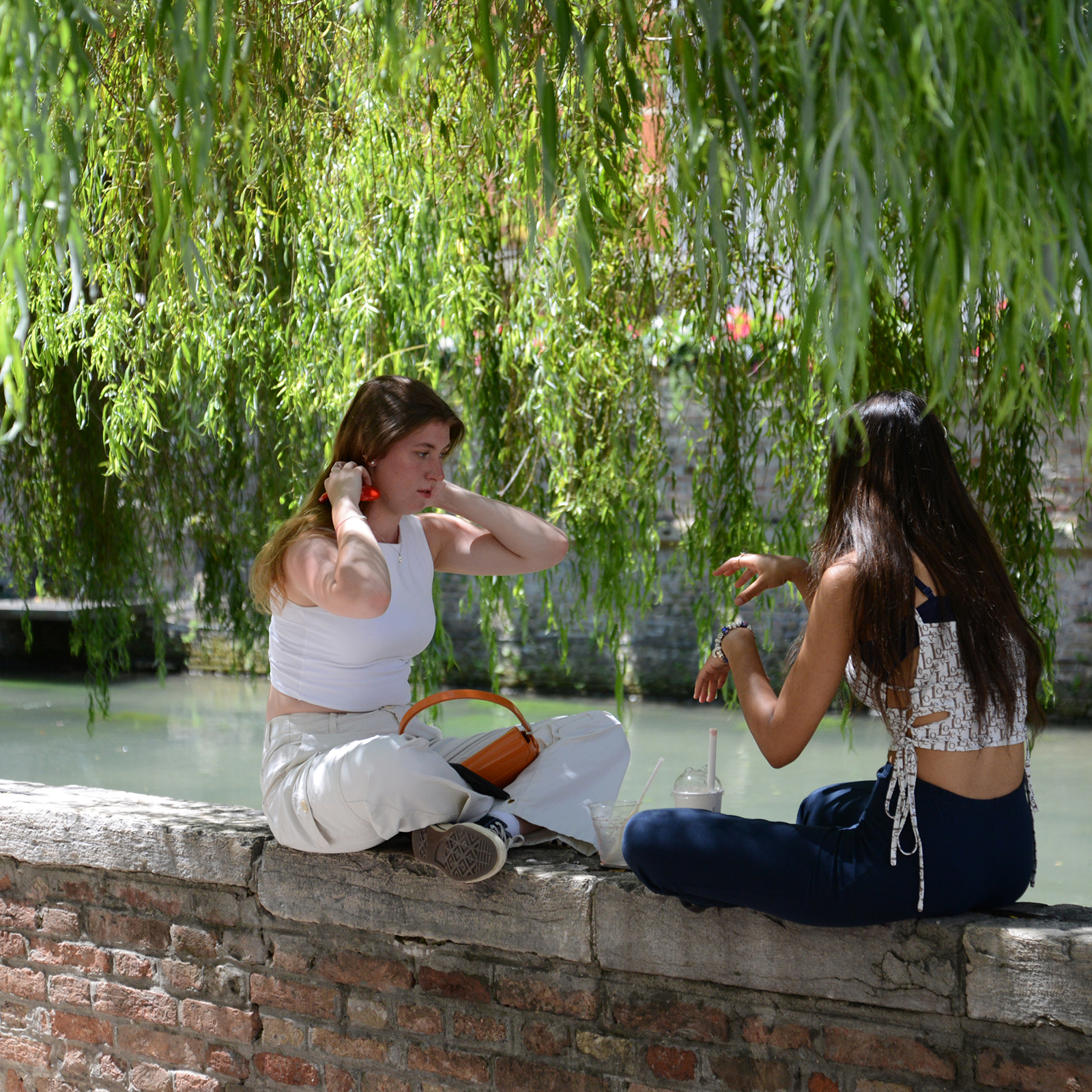
The next morning took us inland to Treviso. While this city doesn’t shape its identity around canals to the same degree that these others do, its network of five canals quietly shapes the city’s character, threading through it with a muted confidence that says, much like the classic jeans commercial, “We won’t try to be noticed, but we refuse to be ignored.”
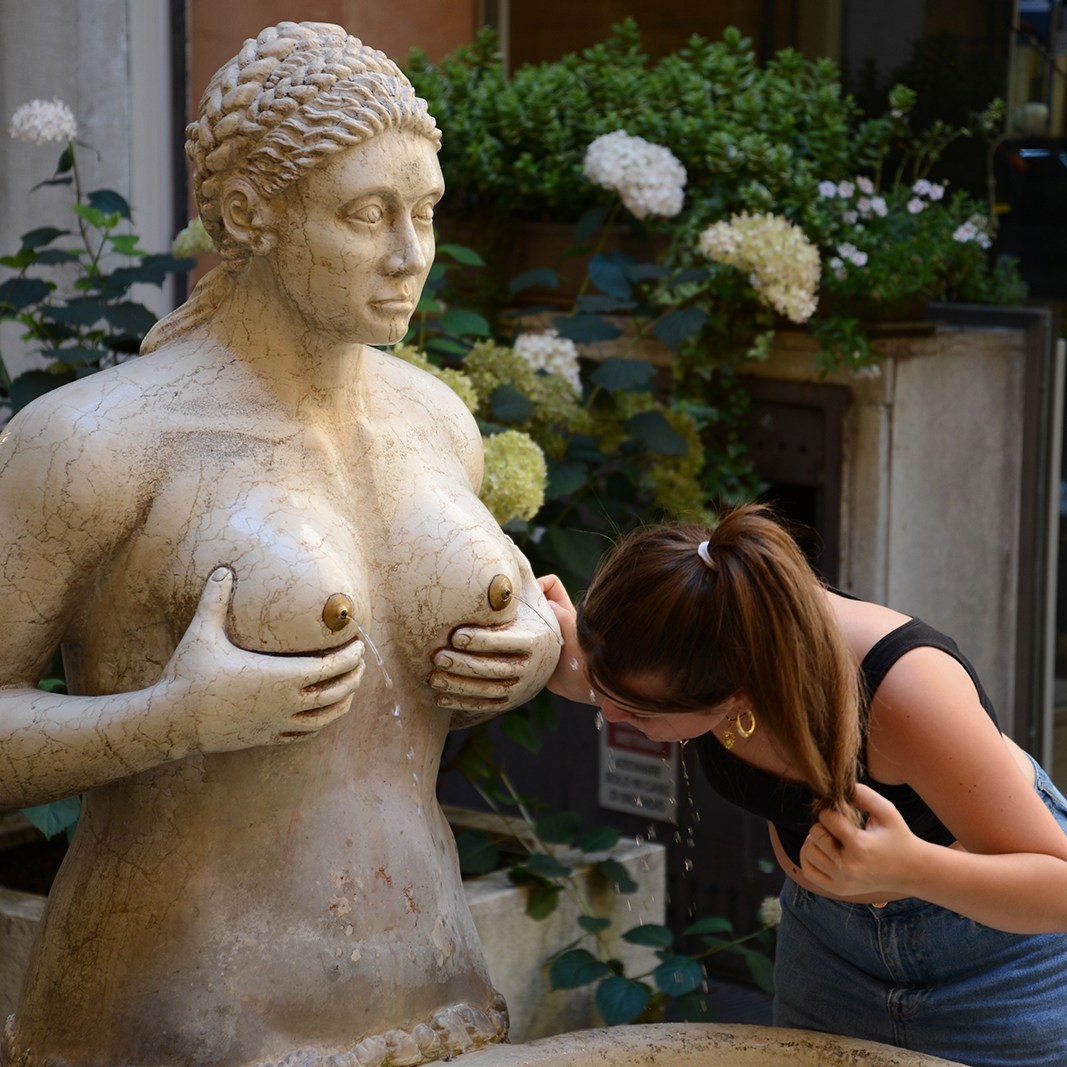
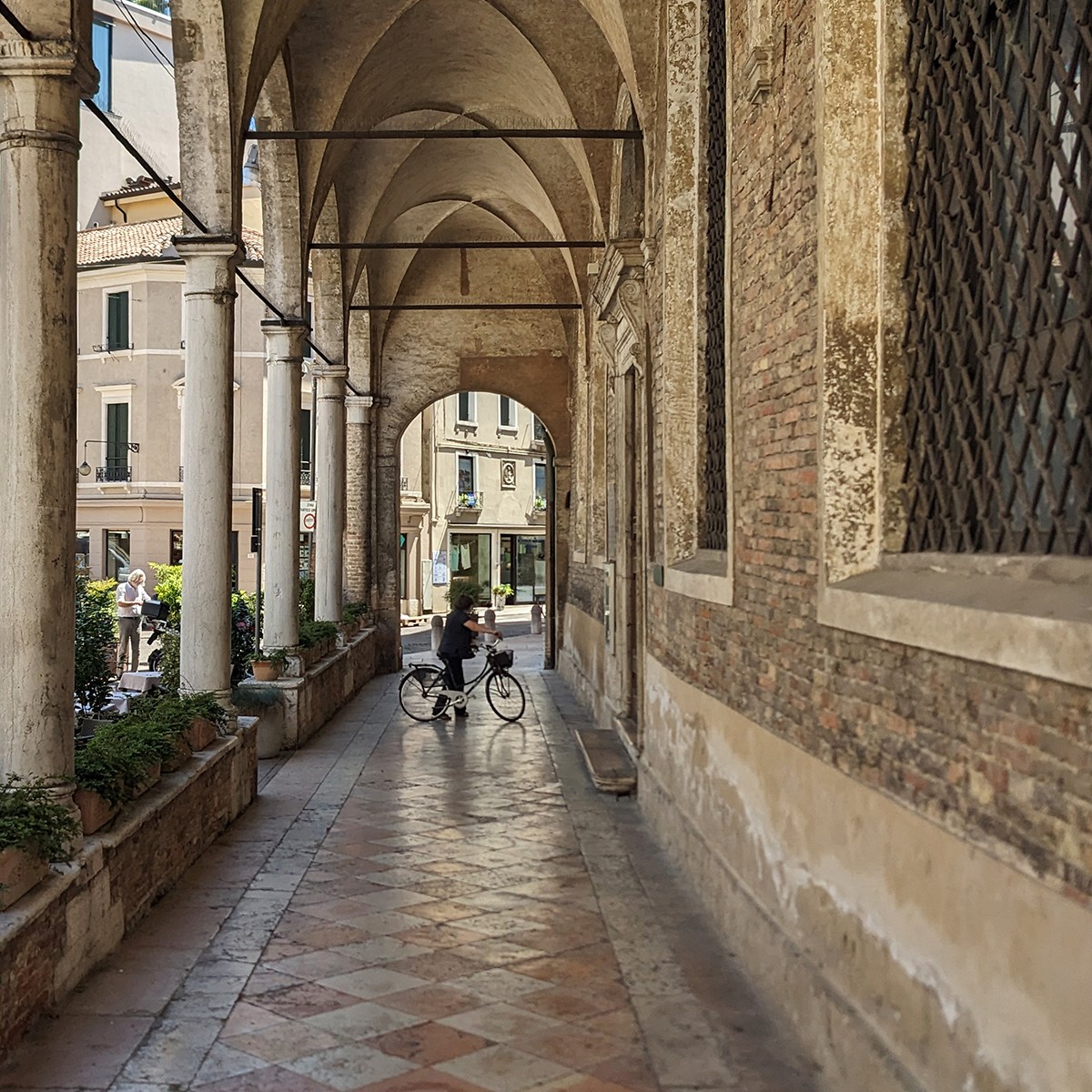
If Venice is grandly theatrical and Comacchio quaint, Treviso—to risk an overused word—is romantic. We found ourselves particularly taken with the arcaded promenade along Via Buranelli, where water slips beneath bridges and even buildings in a way that feels both deliberate and effortless, as though the city had negotiated a long-standing accord with its terrain. Perhaps less romantic than inevitable, a few blocks away is Fontana delle Tette, the replica of a 16th century fountain of a woman’s bare torso from whose breasts was said to flow both red and white wine following the election of a new Venetian ruler. The original, commissioned after a drought to symbolize renewed abundance, is housed nearby in the Loggia dei Cavalieri. (Whether its extensive damage and protective enclosure are related to the local legend that touching both tette brings good luck remains rather hotly debated among scholars.) Adding to Treviso’s attractiveness are sites such as the stately Piazza dei Signiori and Isola della Pescheria, an elegant island in the Cagnan canal that hosts a lively morning fish market Tuesdays through Saturdays.
Treviso is the birthplace of a pope (Benedict XI, who during his one-year papacy tried to reconcile Rome with France, at a time of mounting tension that would soon culminate in the Great Schism) and a neoclassical master-sculptor (Antonio Canova, whose tomb you may have seen in Venice’s Frari basilica and whose Psyche Revived by Cupid’s Kiss you may have seen at either the Louvre or, with some variation from the Paris version, the Hermitage). More importantly, Treviso is also the birthplace of tiramisù. So in an obligatory nod to stuff like “local culture,” we made time—and room—for lunch at Osteria alla Grotta. Our young waiter, Zeno, and his instructive mother offered unfussy hospitality, serving us improbably tender duck ragù gnocchi alongside a local specialty: a dense, savory purée of pasta and beans known simply as pasta e fagioli, which anchored this meal in memory. When Zeno asked if we would care for some of his grandmother’s tiramisù for dessert, we shrugged the universal gesture for, “Well, since we’re here anyway…” Thus sated, we headed north into the mountains, bringing our Adriatic journey to an end.
AFTERWORD
Treviso aptly embodied what might be the throughline of this entire Adriatic drive that had begun more than a thousand kilometers earlier in Santa Maria de Leuca: places—with the possible exception of monumental Ravenna and rapturous Loreto—that reward attention rather than demand it, revealing themselves not in grand gestures but in accumulated details. For travelers who have already checked Italy’s canonical boxes—Rome, Florence, Milan, Venice, Cinque Terre, Pisa, Amalfi—this route offers something both rarer and, in its way, more enduring, which is that sense not of having arrived somewhere important, but of having stumbled upon something that was never particularly fixated on being important.
QUESTIONS FOR READERS
- Other than those mentioned here, which are your favorite cities in Veneto?
- How do you distinguish authentic craftsmanship from performance (or even forgery) when traveling?
- Which cities elsewhere in the world that include extensive canal networks (Suzhou, Amsterdam, Bangkok, etc.) have you visited, and in what ways are they similar to and different from Venice?
- When a place is compared to a more famous neighbor, does it lose identity or gain clarity?
- Which destinations have rewarded your attention quietly rather than demanded it, and did their memory stay with you longer than the must-sees?

