



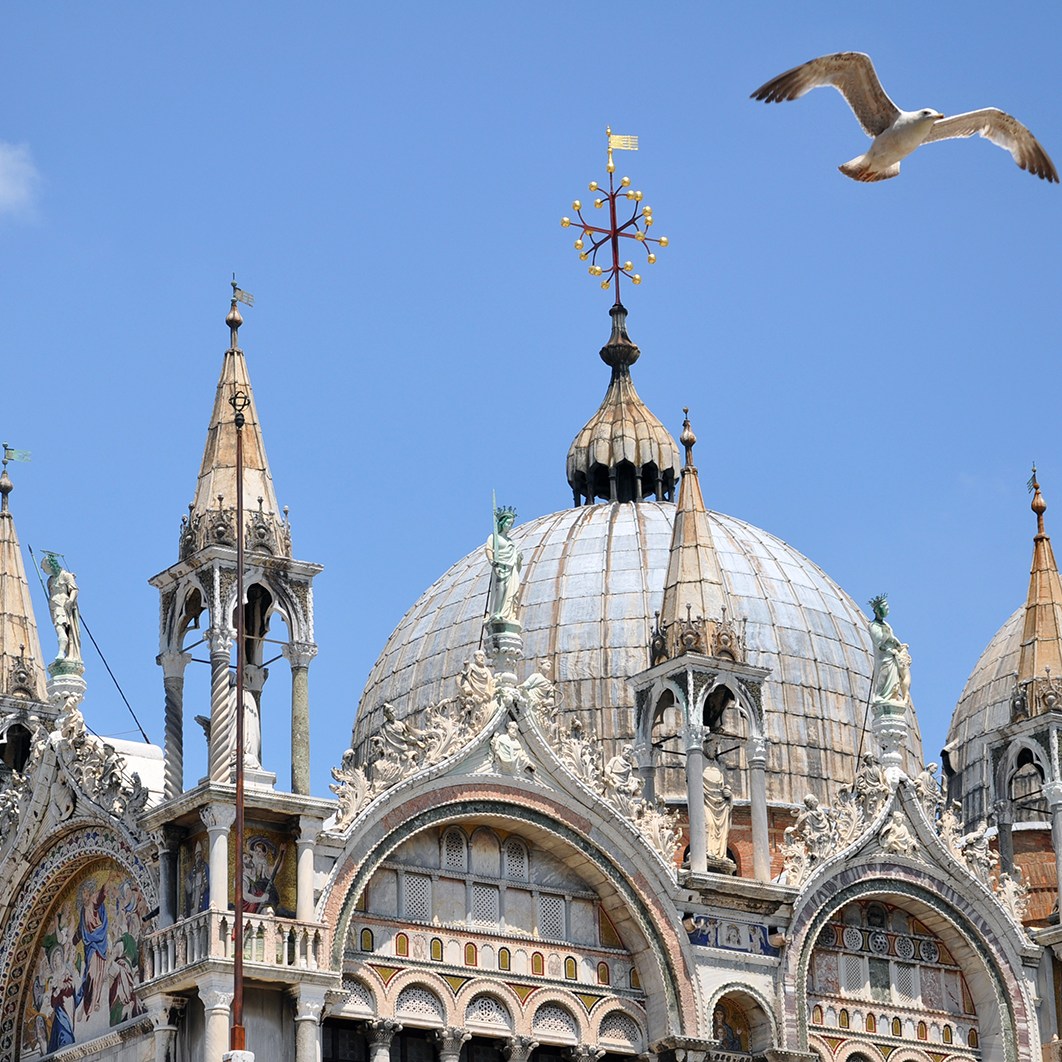
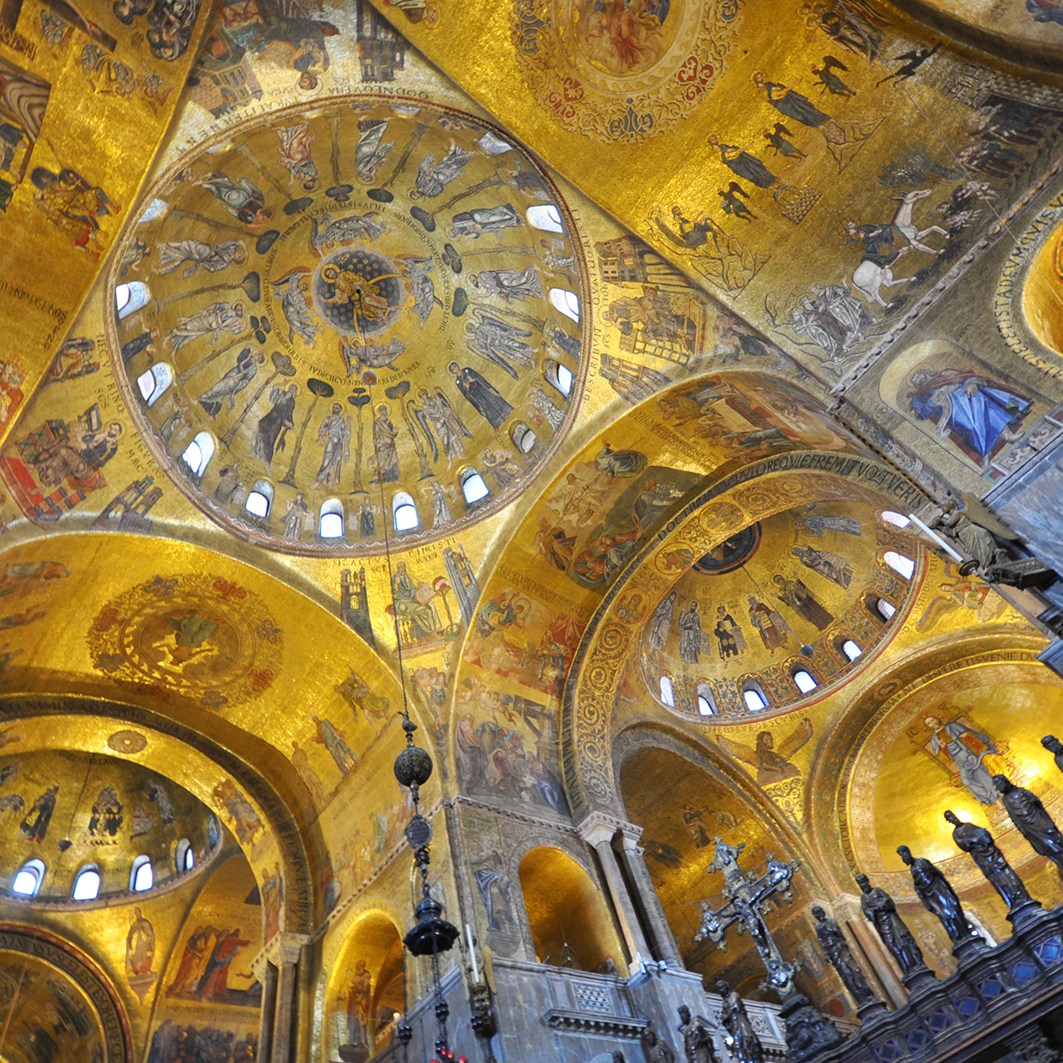
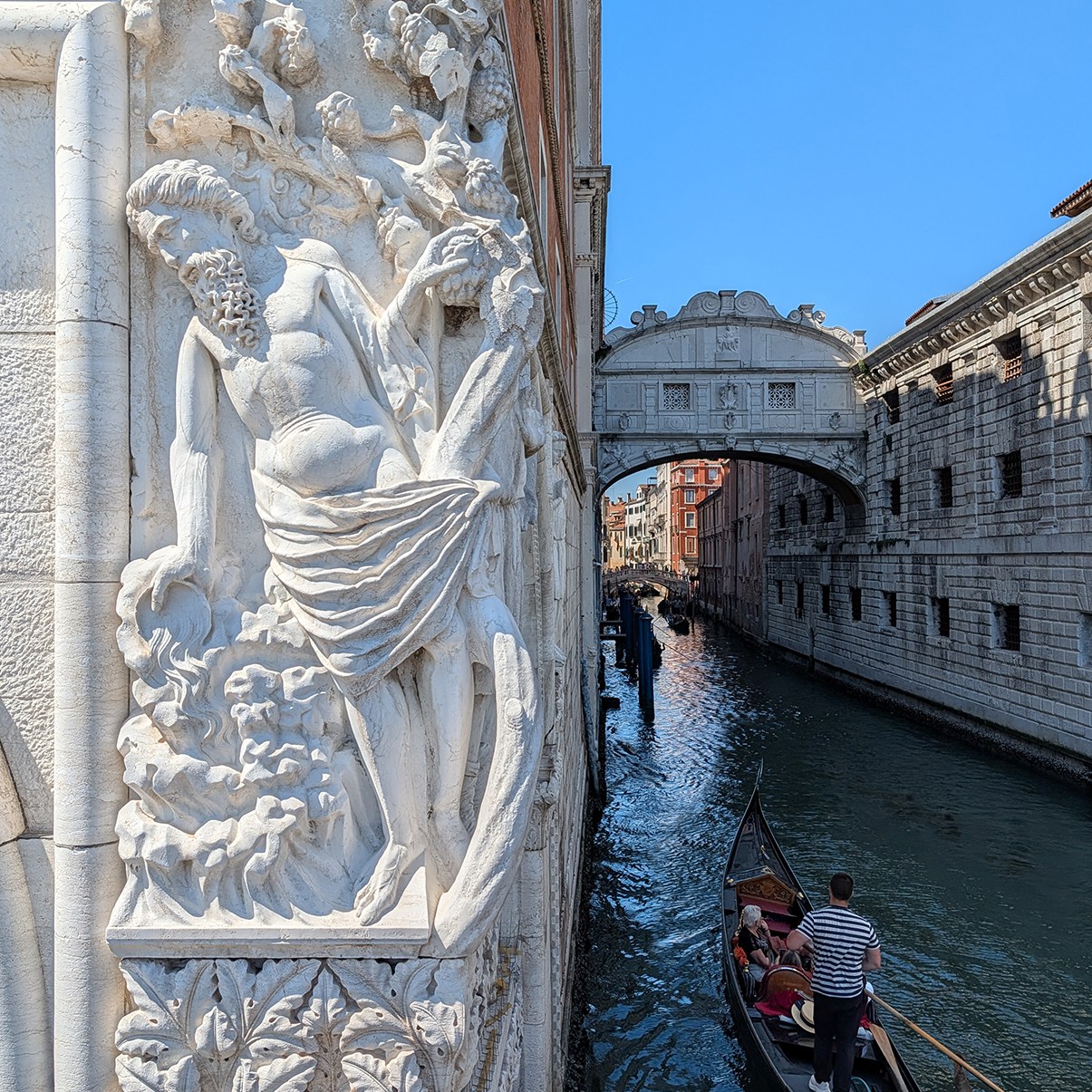


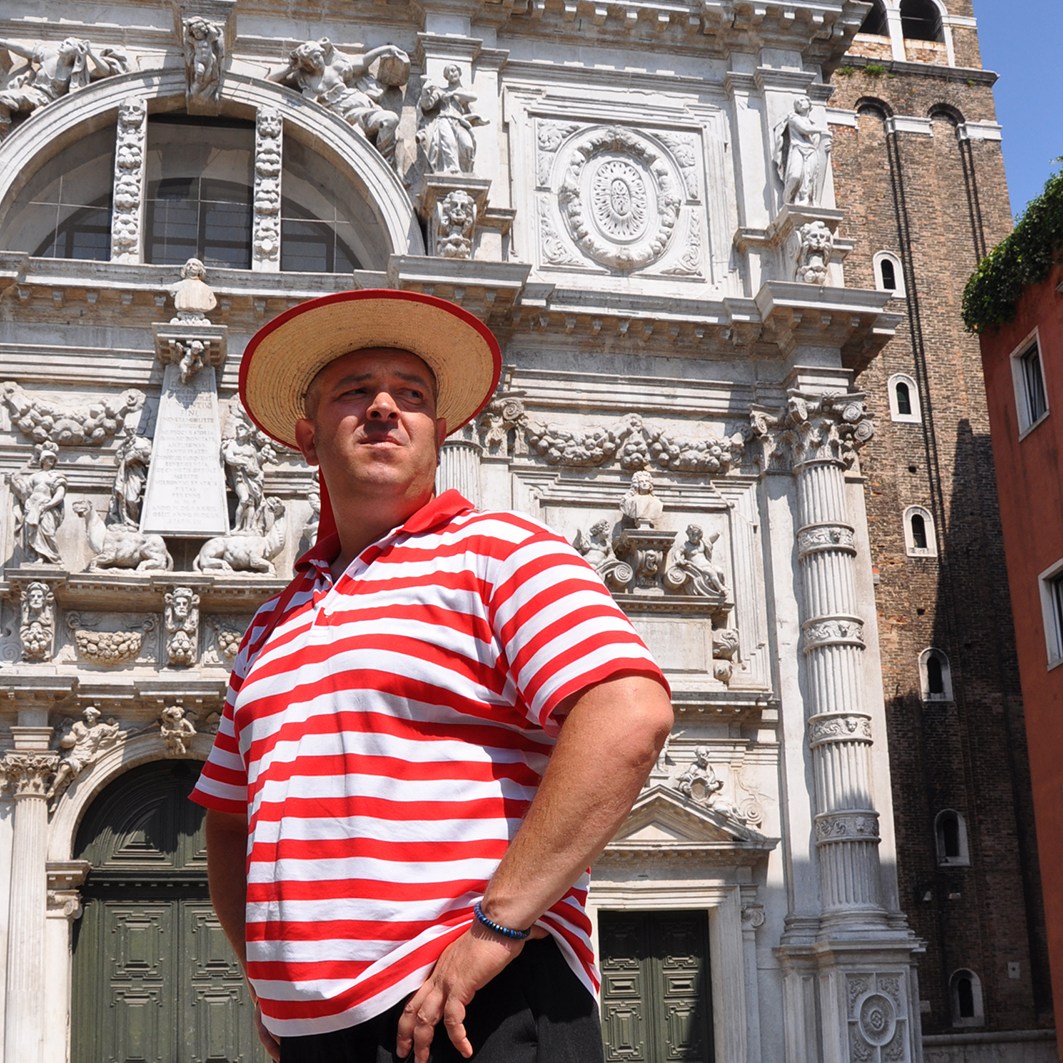

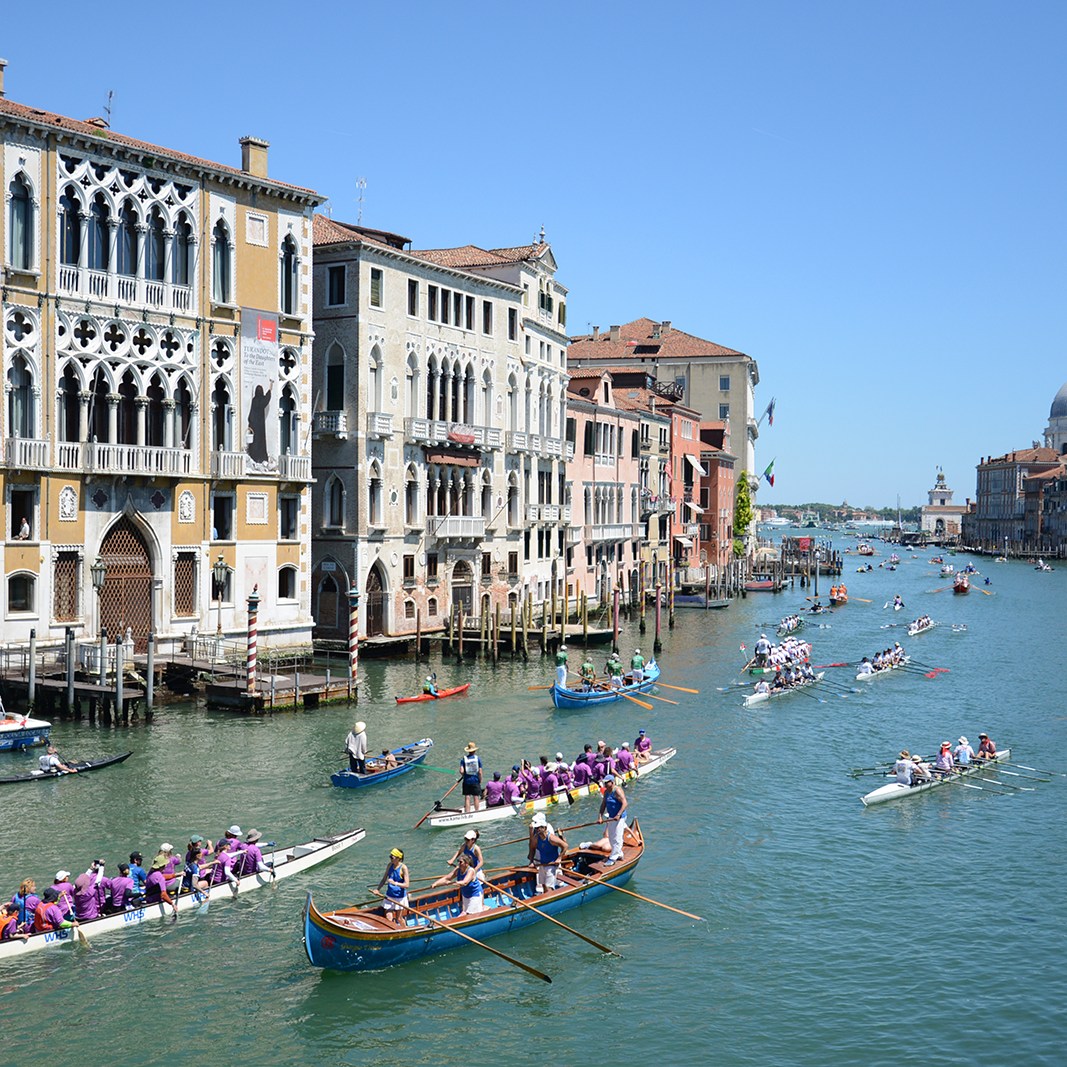
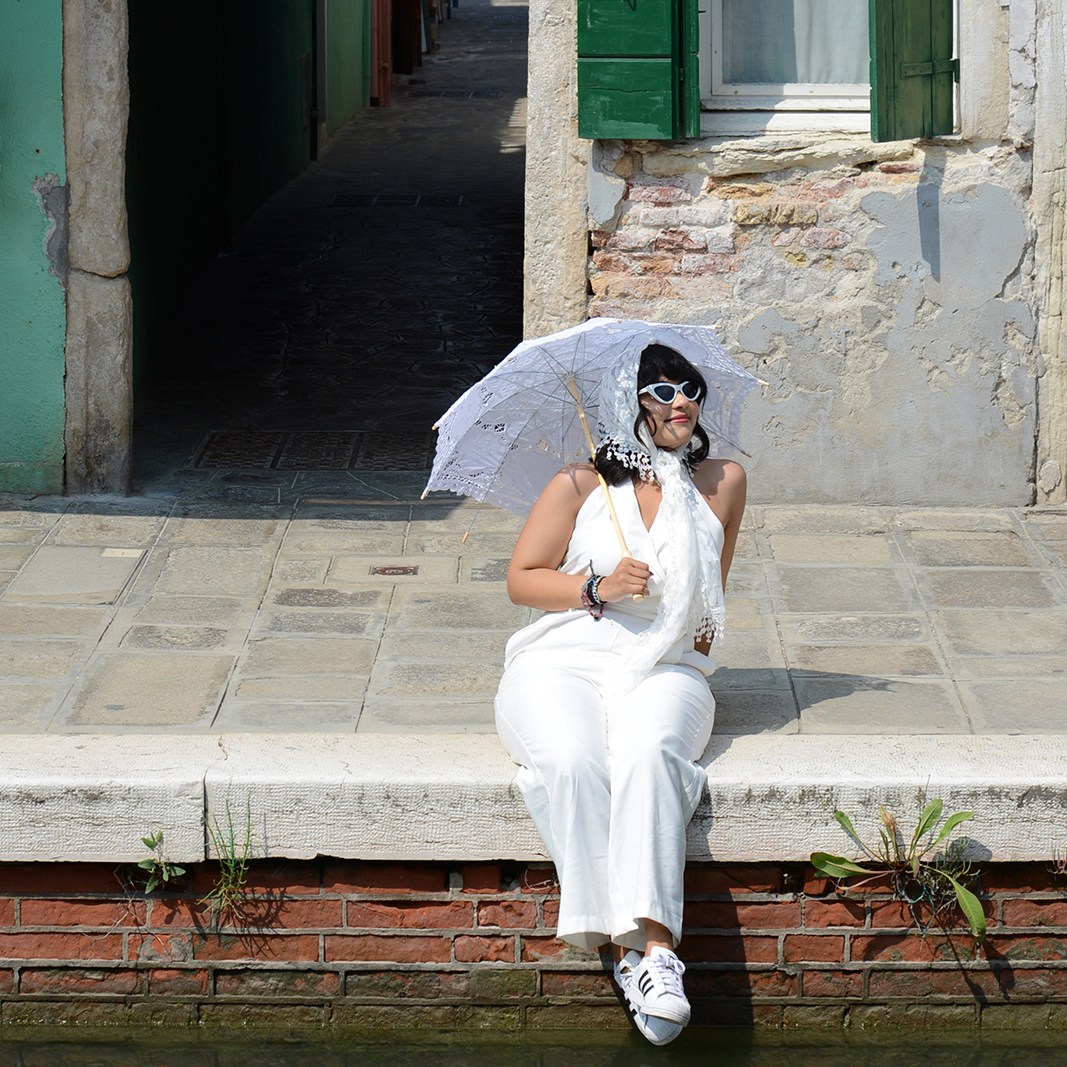

The Floating City had humble 5th century beginnings as a defensive refuge built on wooden piles driven into the mud of the northern Adriatic. As the years progressed, so did the city, which would eventually become the seat of one of the medieval world’s greatest powers. Splendor would follow power, prompting one visitor to observe, “To build a city where it is impossible to build a city is madness in itself, but to build there one of the most elegant and grandest of cities is the madness of genius.”
And yet even those who during Venice’s ascendency planned its conspicuous display of might, wealth and refinement as attractors to visitors the world over, would have struggled to envision the human traffic jam that occurs daily along the primary corridor between Stazione Santa Lucia and Piazza San Marco. This procession can at times be so brutal that the most jaded travelers may advise you to avoid Venice altogether. Ignore them, and instead seek out these eight sanctuaries from the mob.
1. GHETTO EBRAICO & GHETTO NUOVO
Venice was not the first city to ostracize Jews, but the term “ghetto” was coined when fiat segregation occurred here in the 16th century, at the time when Shakespeare set The Merchant of Venice. Today, hundreds of Jewish Venetians live among their ancient synagogues, temples, yeshivas and shops in this quiet neighborhood just a few blocks northeast of Santa Lucia.
2. LA FRARI
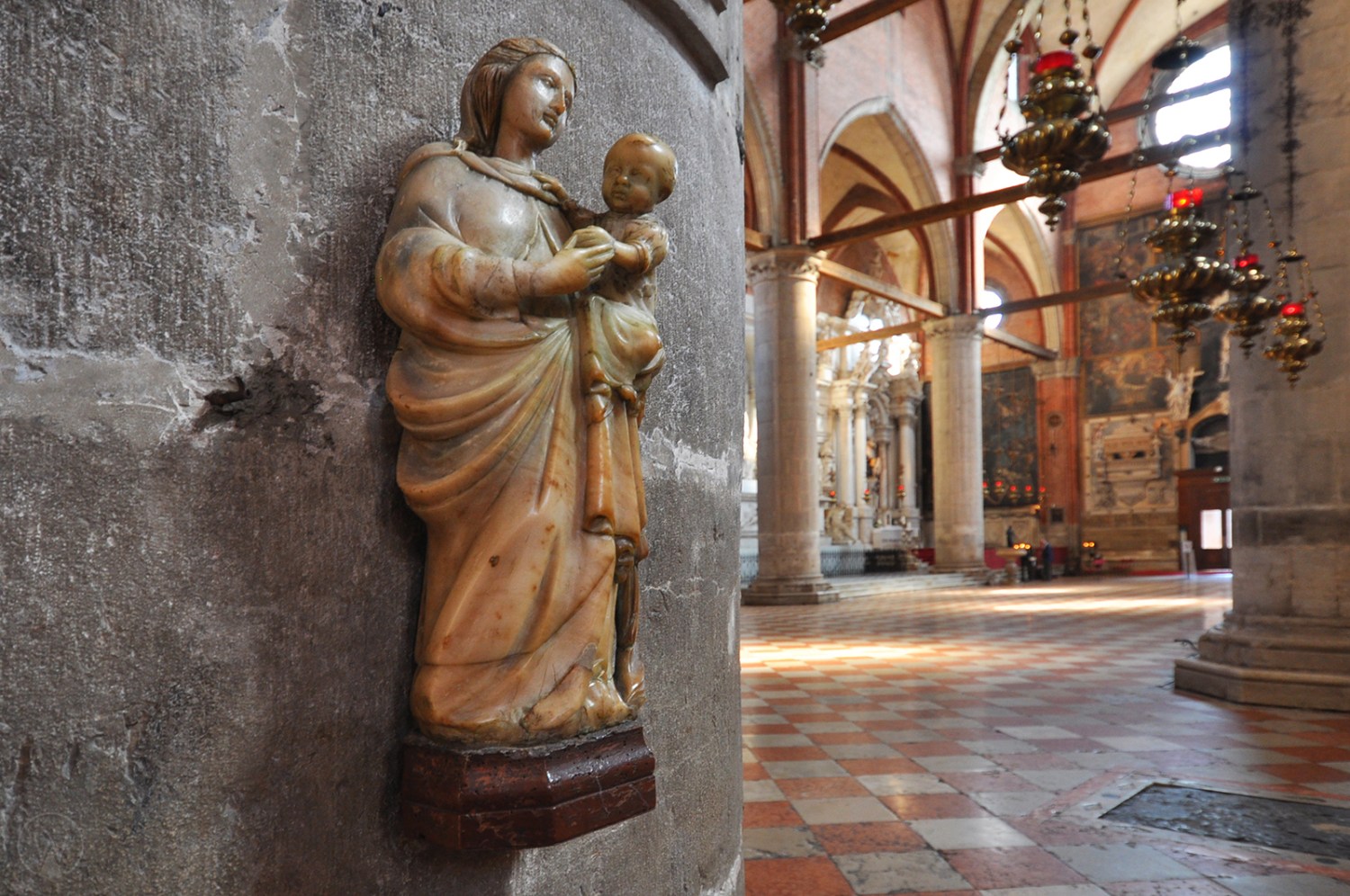
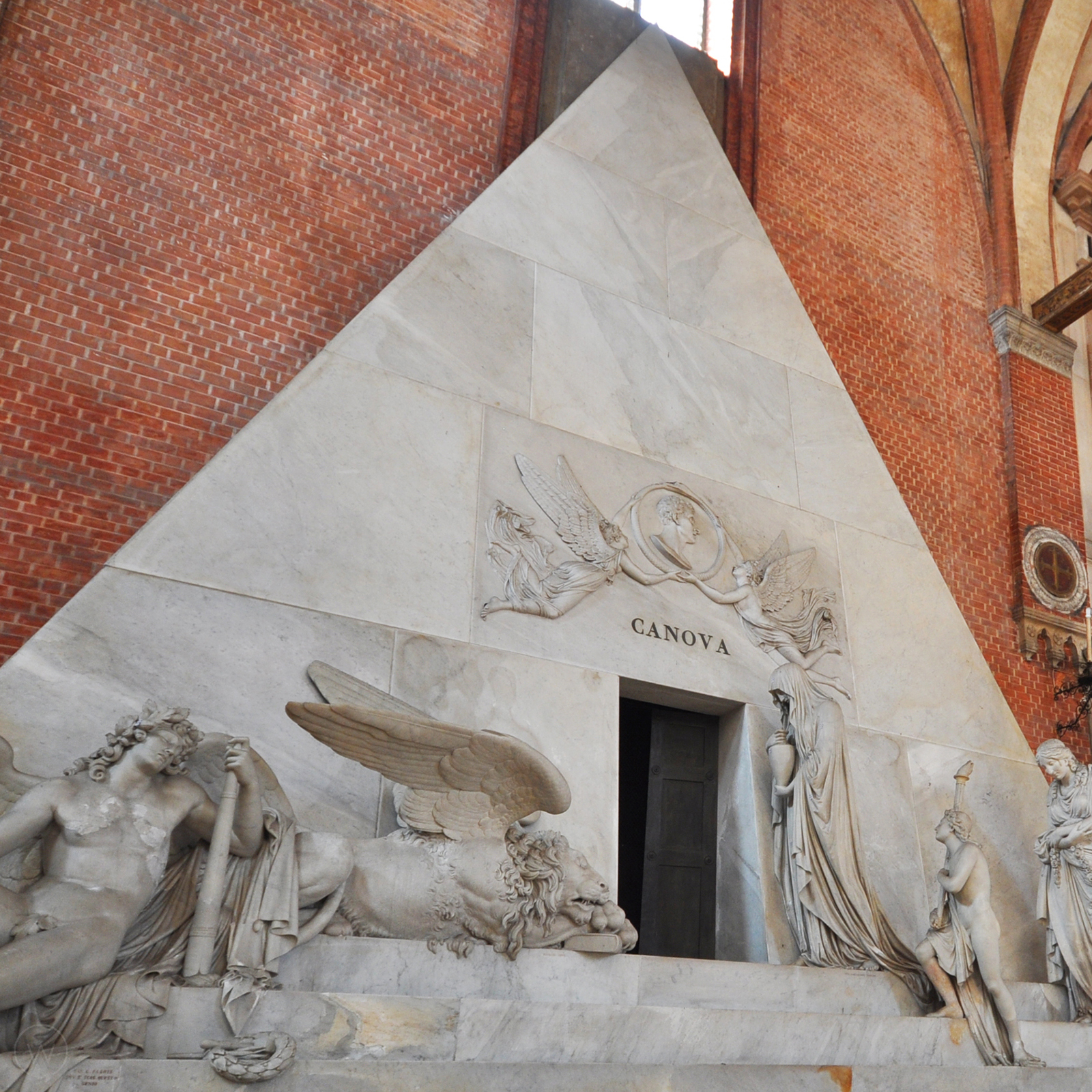
Stepping into almost any church not named “St. Mark’s” will provide a break from the crowds and the heat, but there’s only one Basilica di Santa Maria Gloriosa dei Frari, also known, in true diva fashion, simply as La Frari. Flanked on either side by the glorioso tombs of two renowned artists (Renaissance painter Titian, and neoclassical sculptor Canova), the nave’s spaciousness takes on heroic proportions contrasted against the cramped passageways just beyond the portal. The setting is so coolly serene, and the light so gently diffused through the modest clerestory windows, that one might be tempted to take Venice’s Best Nap in one of the dozens of empty pews at the foot of Titian’s incomparable “L’Assunta” (Assumption of the Virgin) altarpiece, but you didn’t hear that here.
3. PALAZZO DEL BOVOLO
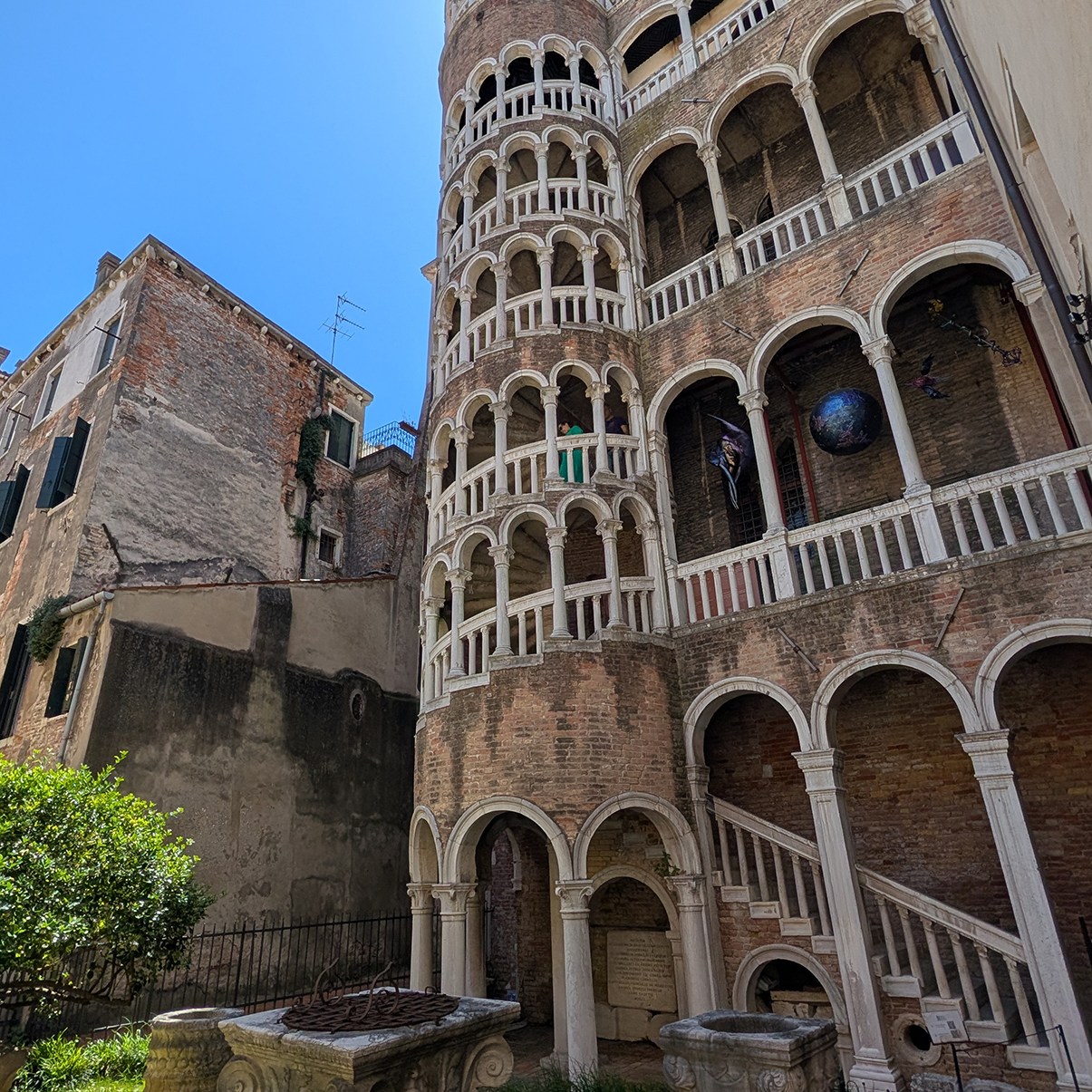
A few hundred meters northwest of Piazza San Marco, in the secluded courtyard of the Palazzo Contarini del Bovolo, is a whimsical spiral staircase rivaled by few you’ll see anywhere else.
4. CAMPI
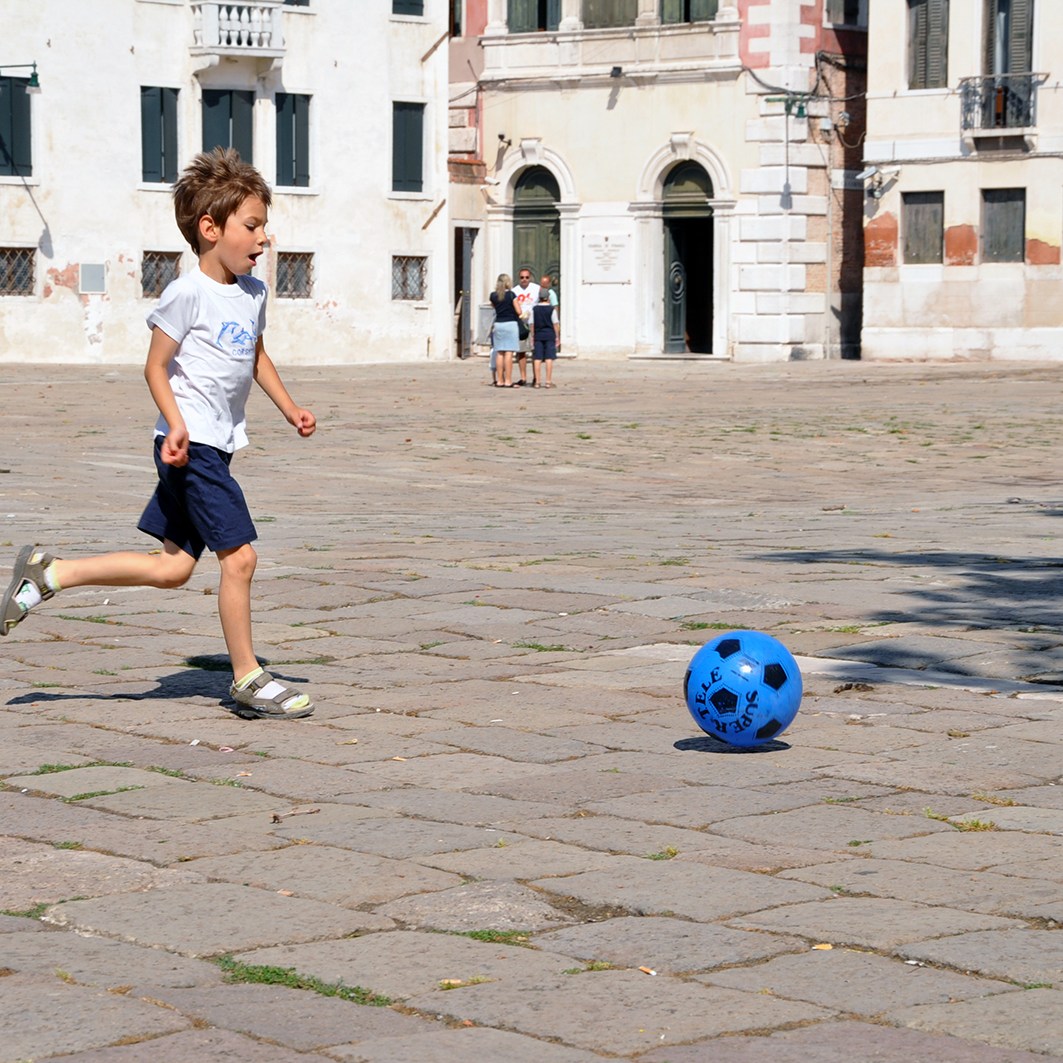
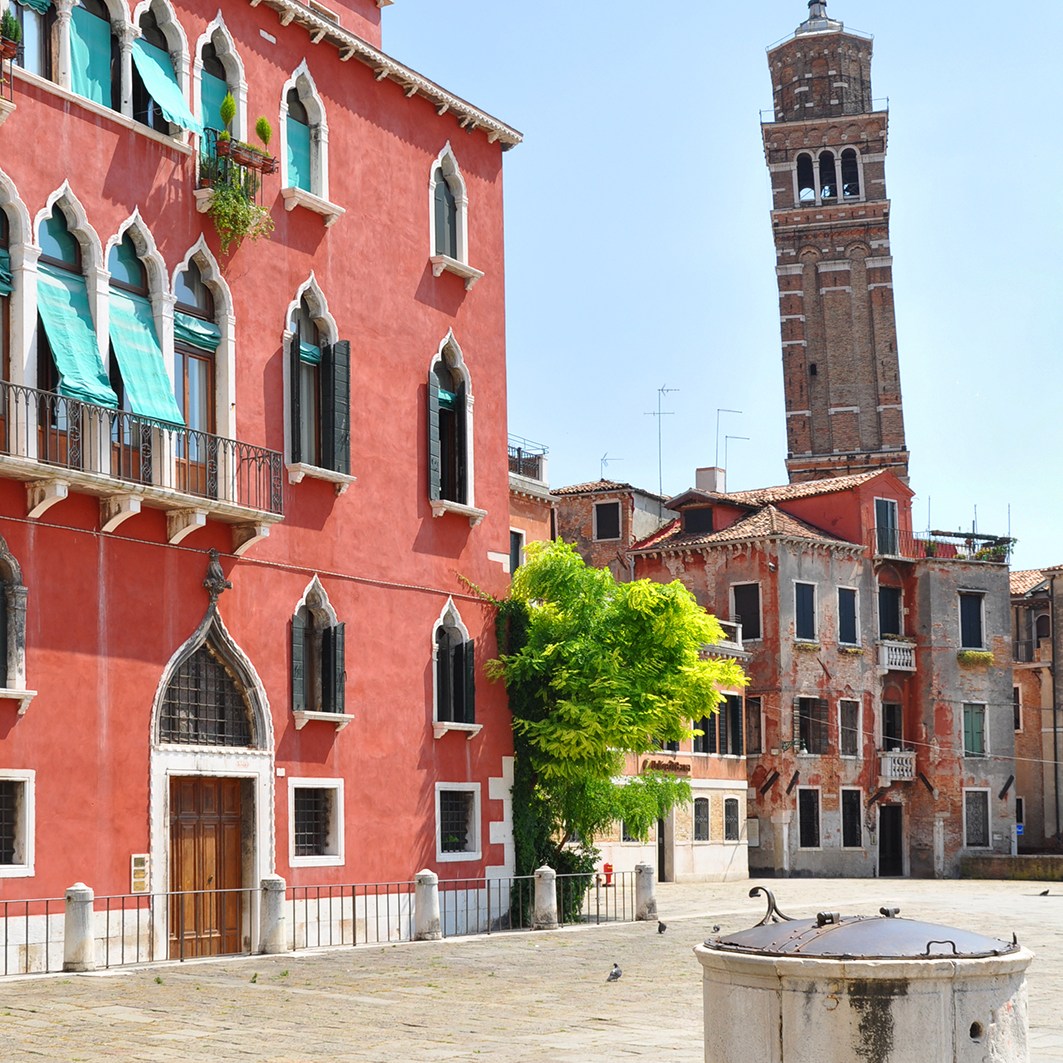
Dotting the neighborhoods west of San Marco are several campi (each a campo, or field), originally plots of soil that were cultivated but today are quaint plazas that attract a mere fraction of the visitors thronging the nearby Piazza. My favorites are Campo San Moisè with the ornate façade of its eponymous church, and Campo San Maurizio with the leaning campanile (bell tower) of Chiesa Santo Stefano serving as its delightfully unnerving backdrop.
5. PALAZZO GRIMANI TRIBUTE ROOM
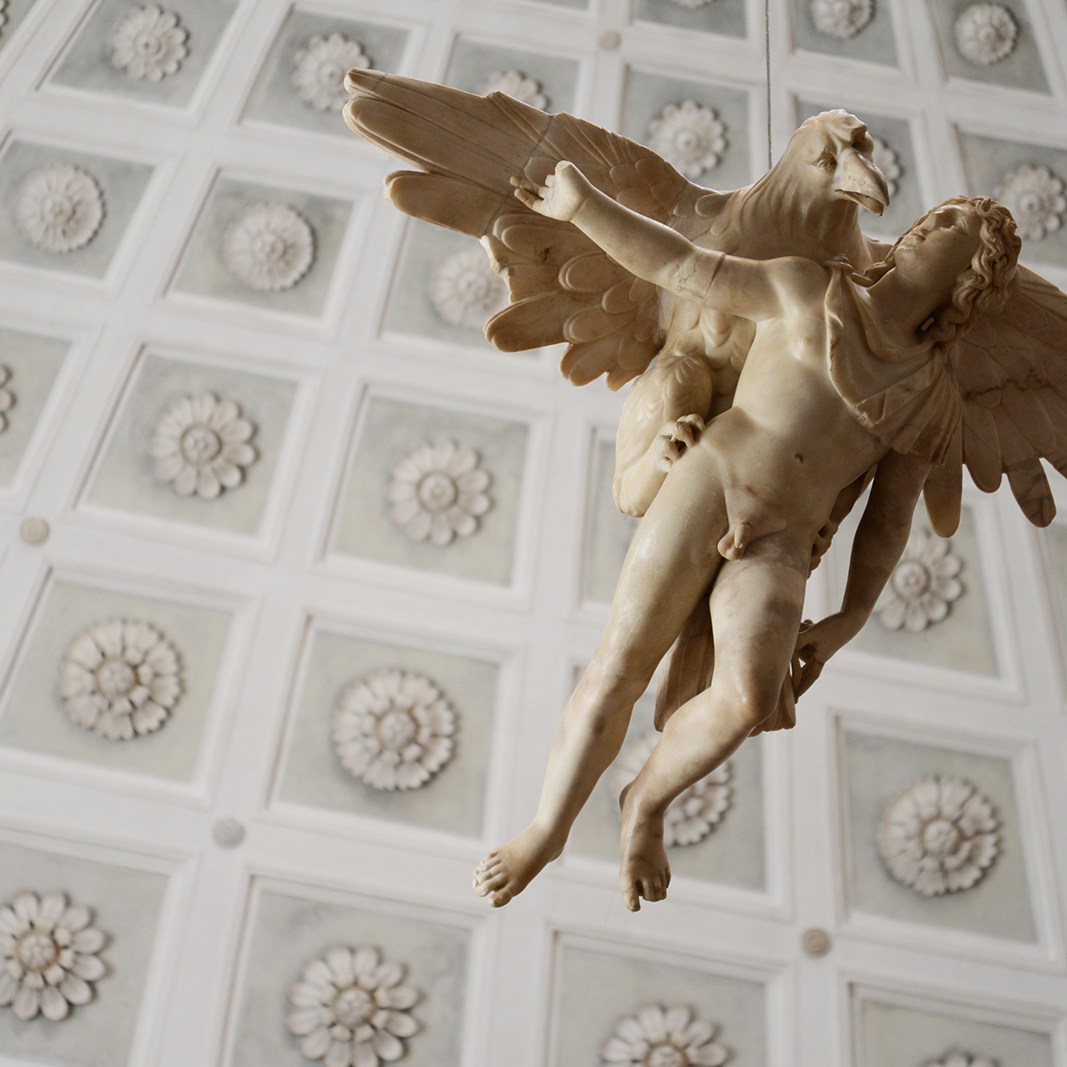
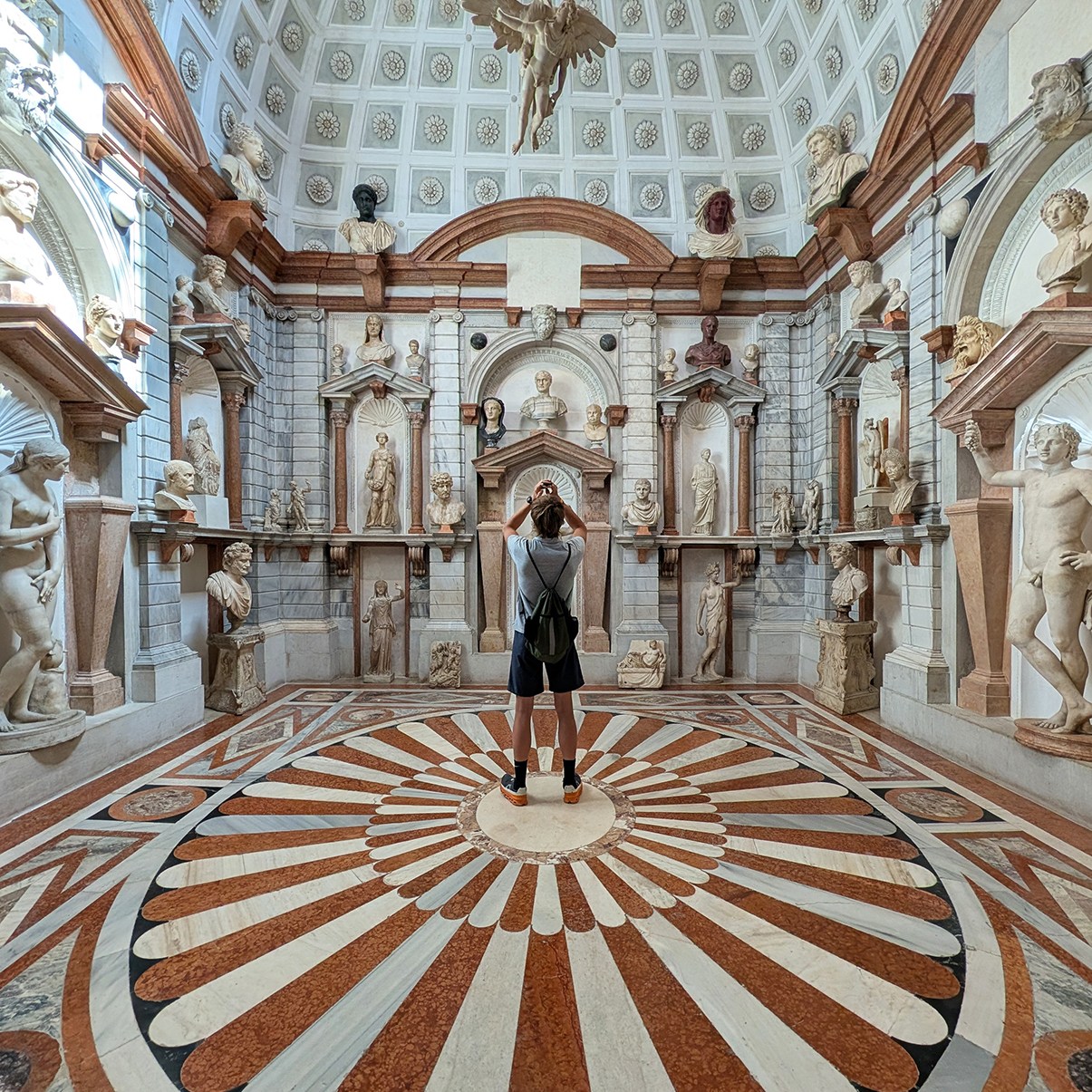
Part Renaissance gallery, part Roman fever dream, the Tribuna was designed by Giovanni Grimani within his family’s impressive villa to stage their extensive collection of antique sculpture beneath a dazzling, deeply coffered dome. Under the watch of the suspended Ganymede, even in Venice — a city that has never met an unadorned surface it could tolerate — this is a particularly theatrical exercise in cultivated excess.
6. CHIESA PARROCHHIALE DI SAN PANTALON
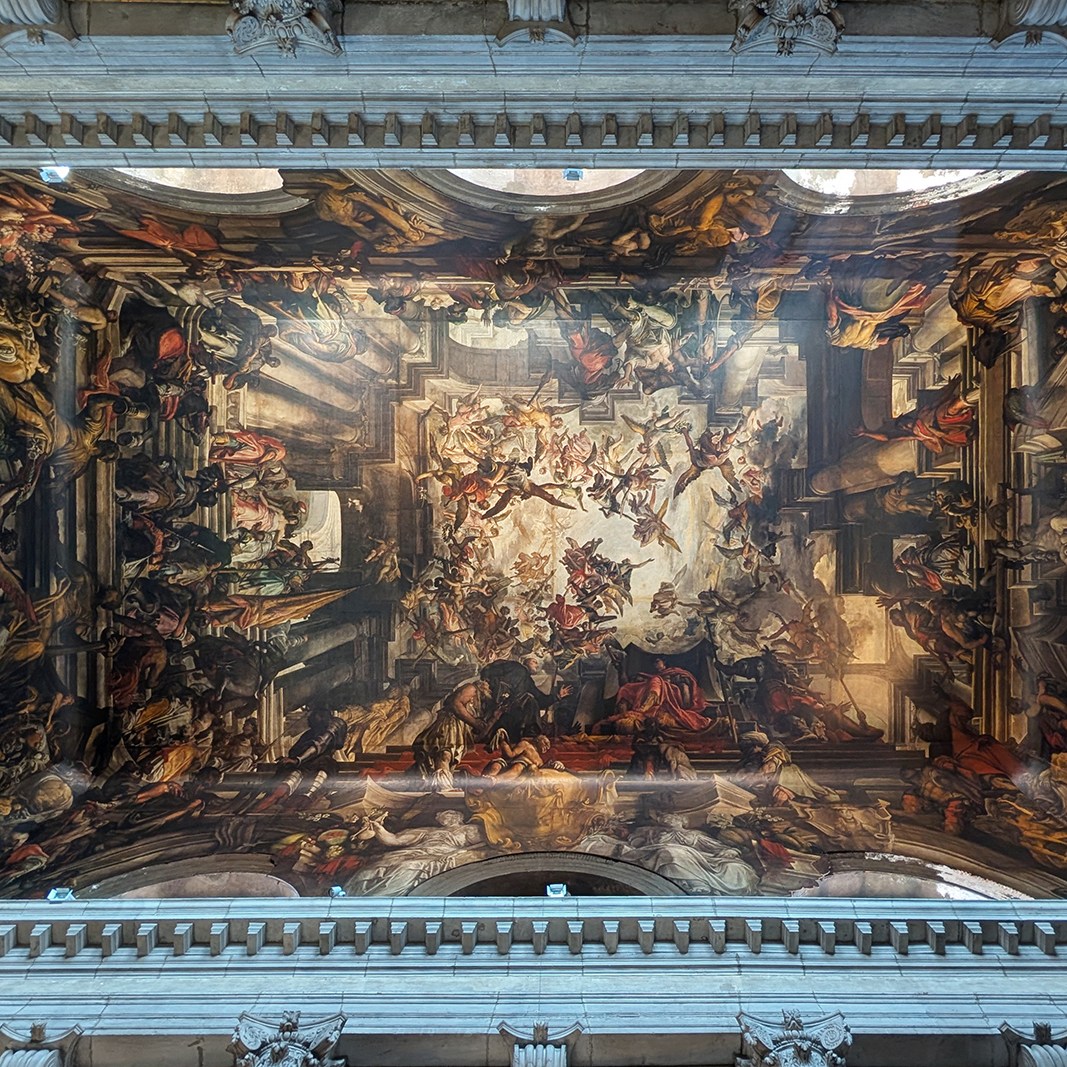
The church’s unassuming brick façade (already in a quietish southwestern part of San Polo) conceals a ceiling so dramatically unhinged that it seems to open directly to heaven: Gian Antonio Fumiani’s “Martyrdom and Apotheosis of Saint Pantaleon,” a trompe l’œil fantasia painted across 40-plus joined canvases in the late 17th century. At nearly 450 square meters, it is widely considered the world’s largest painting on canvas — not a fresco, despite every convincing architectural illusion.
7. DORSODURO
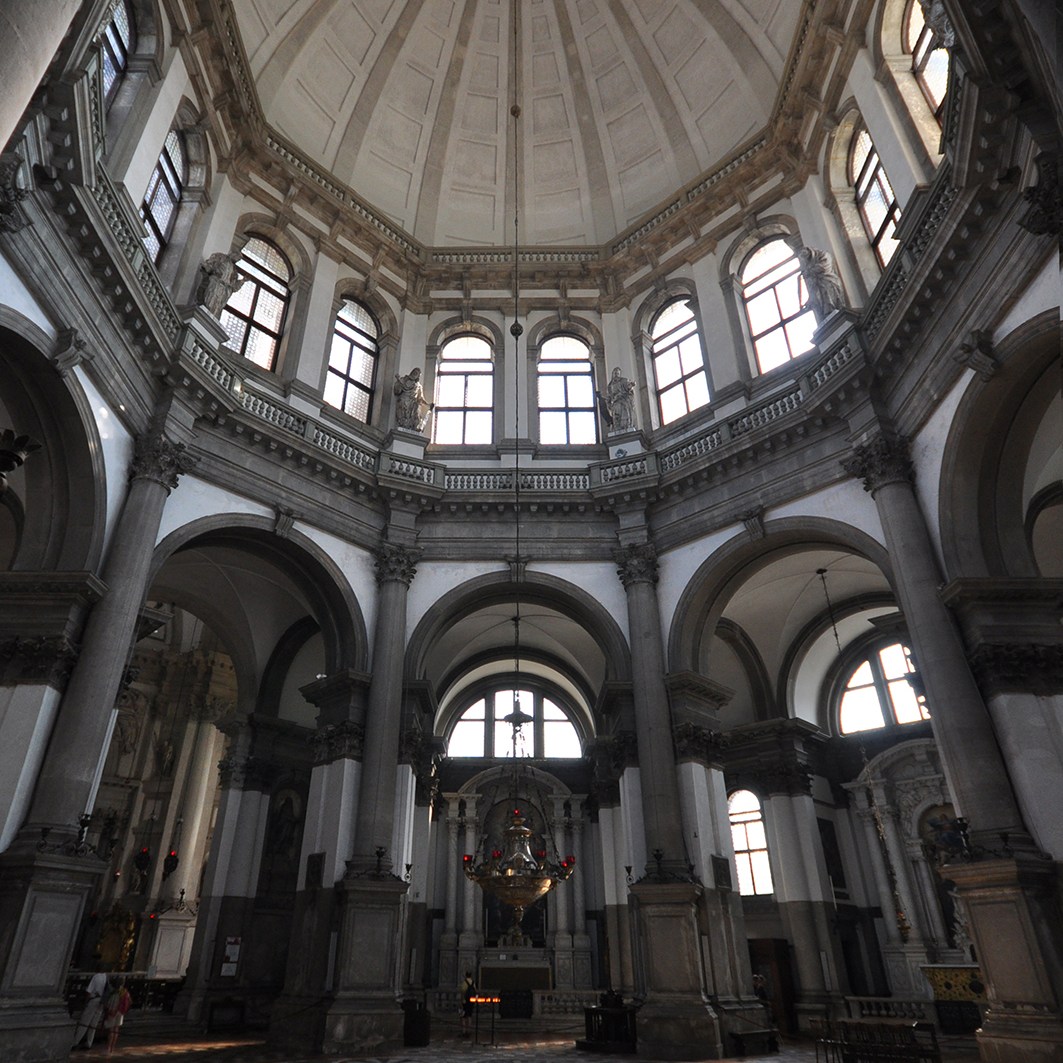
Crossing the Grand Canal at Ponte dell’Accademia – don’t stop to see Leonardo’s “L’uomo Vitruviano” because it’s generally not on display – leads you to the southernmost of Venice’s six sestiere (subdivisions), Dorsoduro, whose name (meaning “hard back”) comes from the relatively sturdy soil on which it was built. The main route from the Accademia to the Basilica di Santa Maria della Salute can become somewhat congested, but even a twenty meter detour south from this path will make you feel as if you’re among the first to explore these nooks.
8. FLEE TO BURANO
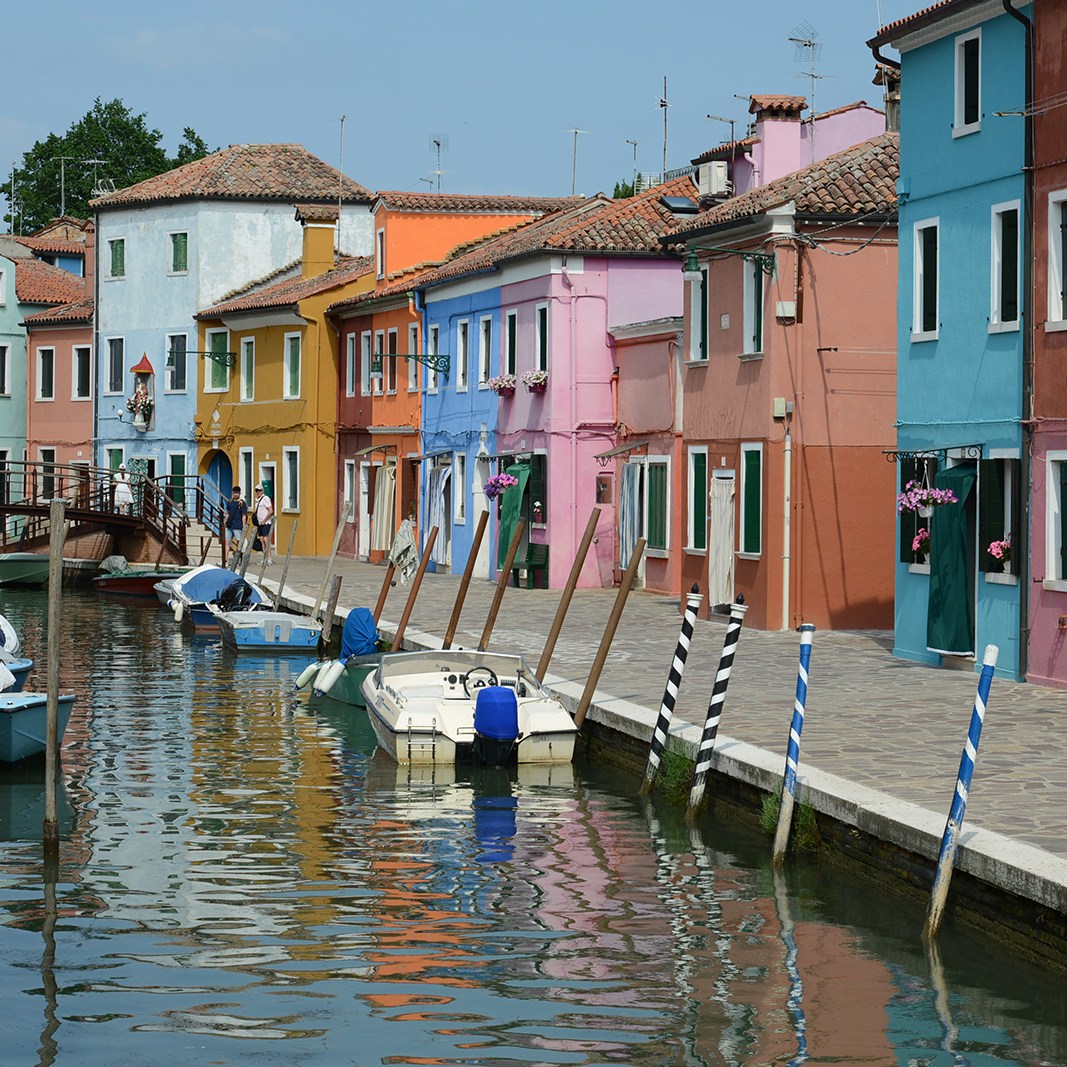
The canals of this fishing village are lined by houses painted so cheerfully that they make the rest of the lagoon look as if it had been shot in sepia. Receiving less traffic than its larger neighbor Murano, Burano’s other claim to fame is exquisitely laborious lace once prized by nobles across Europe and now available to us commoners, but be suspicious of any “handmade” souvenir that costs less than lunch for your entire group. Burano is a pleasant 45-minute vaporetto (water bus) ride on Line 12 from Fondamente Nove, which can be reached by foot or by other vaporetti connections originating at San Marco, Rialto, Piazzale Roma and elsewhere. (Any vaporetto ride in or around Venice can be a nice escape in its own right. Even when at capacity, it feels at least incrementally more civilized than stampeding shoulder to shoulder through a selfie-stick gauntlet.)
OR…
Visit Venice at night and support the locals who have welcomed-slash-tolerated us for centuries, by staying in a Casa (home), a family-owned inn whose name is usually Ca’ followed by a given name or surname of an ancestral proprietor.
QUESTIONS FOR READERS
- When is the best time of year to visit Venice?
- What other cities might you compare to Venice?
- Any suggestions for other quiet places to pause during a visit here?
Resources: Wikipedia.org, Livitaly.com, Basilicadeifrari.it

