
















(Note: This is the third in a series of posts describing a two-week, 3,710-mile road trip going clockwise from the Boston area up to Quebec, out through the Canadian Maritimes, then back down the New England coastline. The series begins here.)
Having spent most of our energy stores on the shores of Lake Champlain that morning, we approached Montréal with a quiet sense of anticipation, the fields stretching from the border toward the city like a long, informal welcome. By the time we parked in Vieux-Montréal, that anticipation had settled into something more tangible. This is a place that wears its history plainly but not heavily. The stone façades, iron balconies and narrow streets feel intact rather than preserved, as if the city never saw a reason to abandon them.
VIEUX-MONTREAL
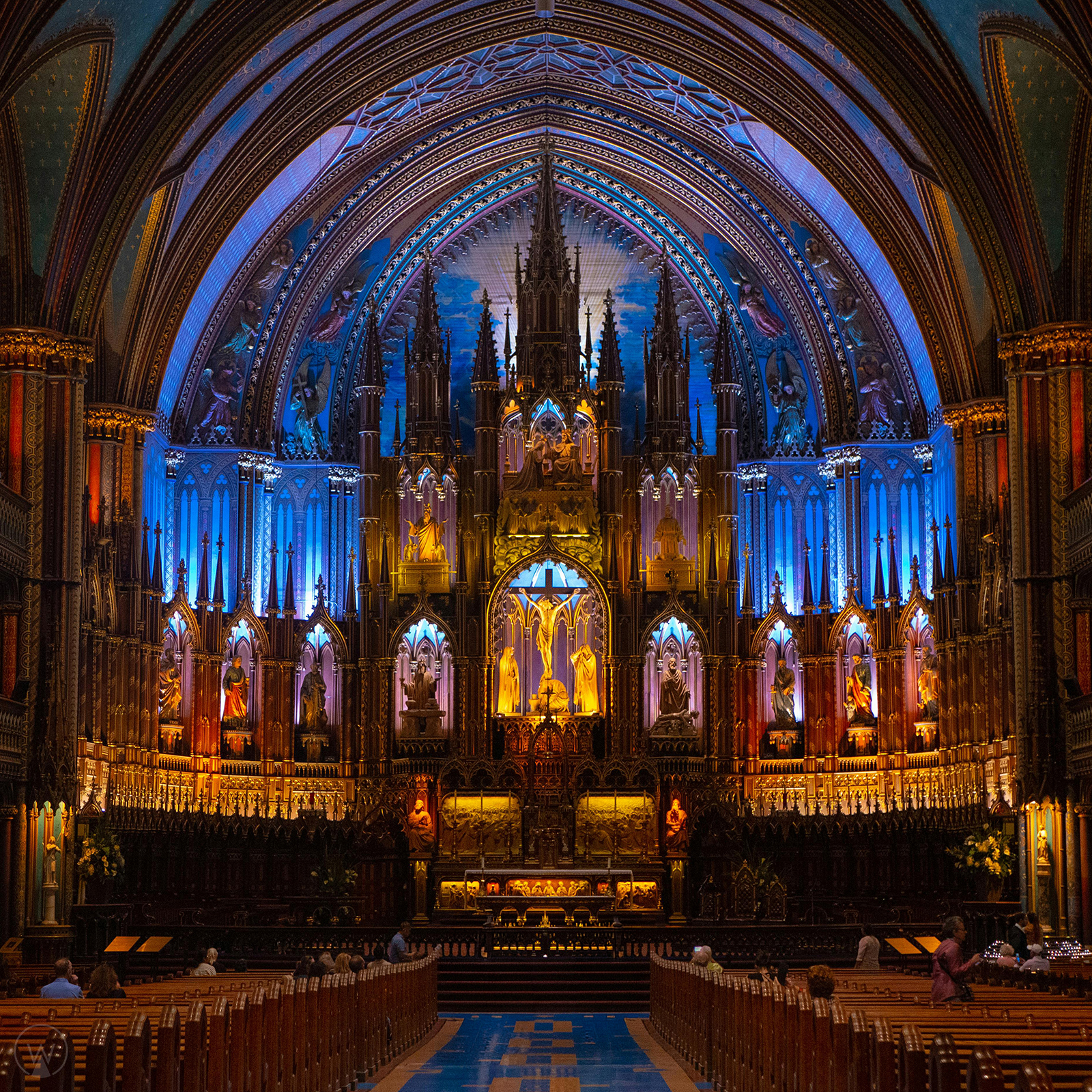
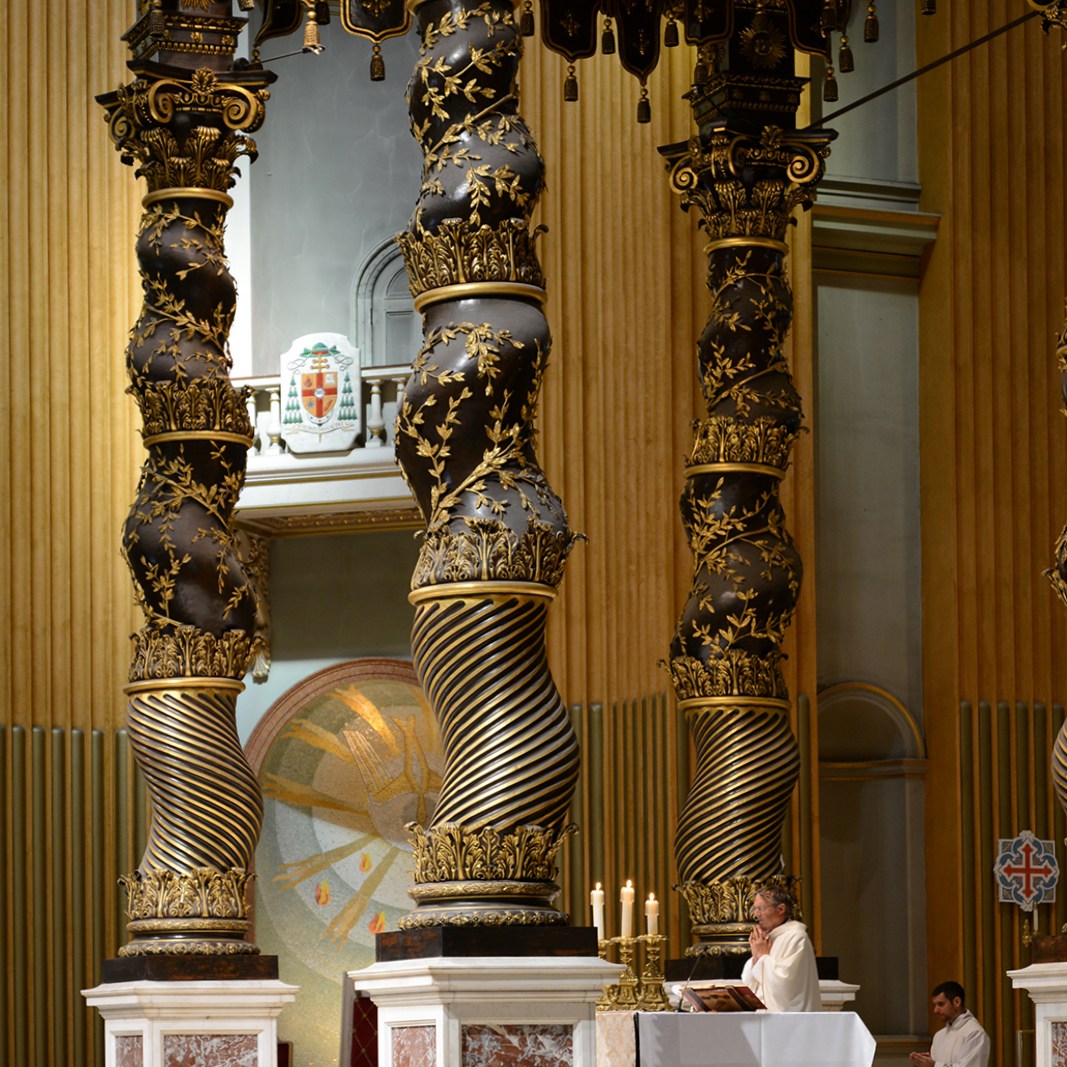
We began, as most visitors do, at Basilique Notre-Dame, whose Gothic Revival interior delivers on its reputation without feeling overrun. A short walk brought us to Marie-Reine-du-Monde, more restrained but equally worth a look, its dome a nod to St. Peter’s in Rome. My boys took to the side streets—arcades leading toward the Old Port, alleyways lined with rough-hewn warehouses repurposed into cafés and ateliers—asking when we were going to find those “poo-teens” their aunt had recommended.
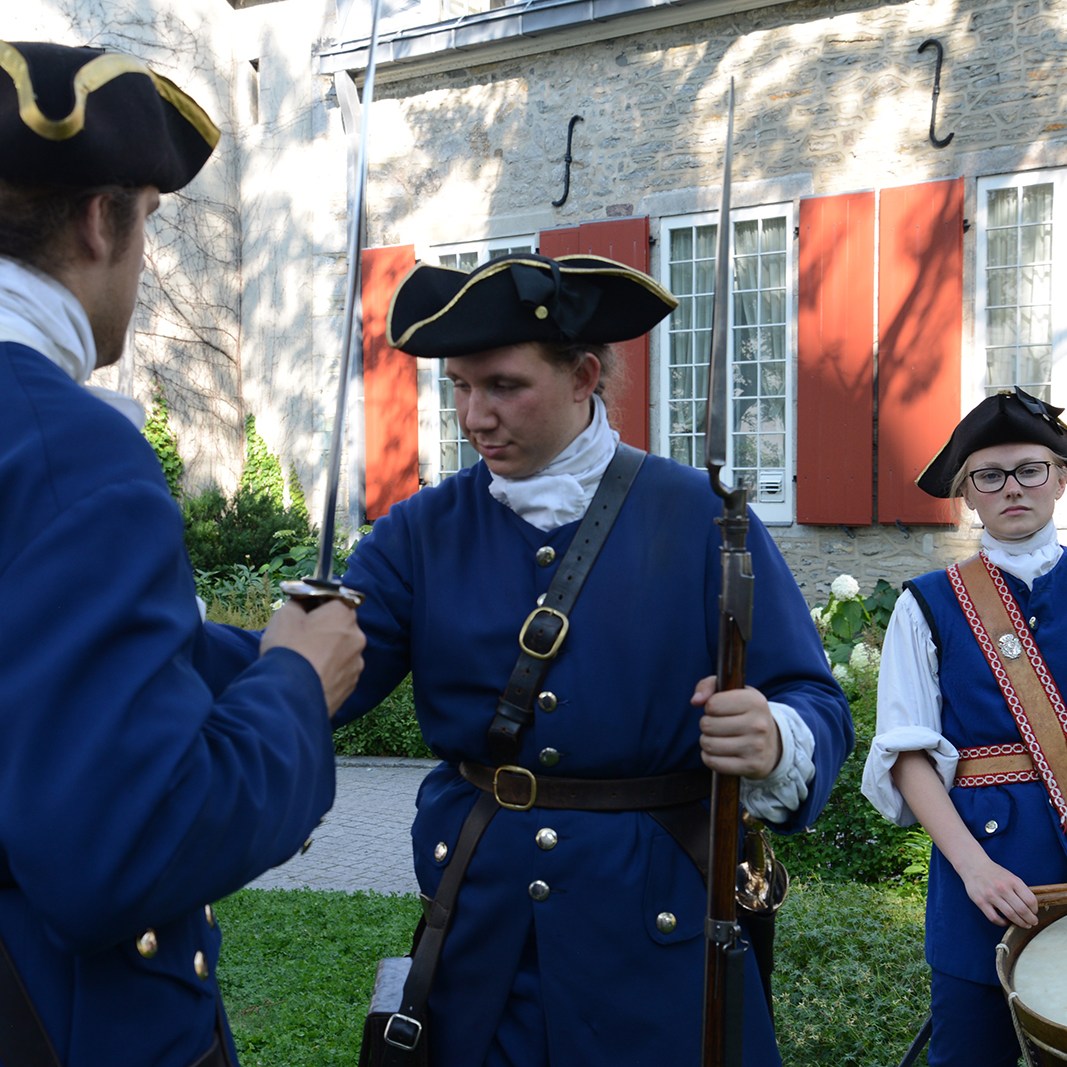
After ducking into Les Moulins La Fayette to try their famous forêt noire (chocolate sponge cake and ganache topped with whipped cream, sour cherries and chocolate shavings), we went in search of poutines. Anyone who has been to Québec will know that this search didn’t take long, and we soon found our hands, and then our bellies, full of this regional specialty consisting of crispy fries, squeaky cheese curds and brown gravy, all of it gloriously messy and deeply comforting. No sooner had we licked (and licked and licked) our fingers than we happened upon a reenactment by Les Anciennes troupes militaires de Montréal (The Old Troops of Montréal), costumed interpreters portraying 18th-century soldiers, complete with drums and muskets, a tradition that recalls the area’s colonial military history at sites such as Place d’Armes or Pointe-à-Callière.
From there we wandered through Marché Bonsecours, a mix of eateries and boutiques showcasing Québec-made goods, all of it leaning more artisanal than touristy. Its terrace offers a useful vantage point: the Old Port at river’s edge in one direction, the modern skyline in the other. It’s a good place to pause long enough to notice how comfortably Montréal holds those two identities together.
CHEMIN DU ROY
The river would become our constant companion for the rest of the day, as we left the city and joined the storied Chemin du Roy where it traces the north bank of the St. Lawrence. The transition is gradual. Urban edges give way to farmland, the road narrowing slightly as the river begins to assert itself—not dramatically, but persistently. The St. Lawrence here is wide and steady, and the landscape follows suit: fields, low rises, and clusters of homes that seem oriented as much toward the water as toward the road. A few towns slipped by with church spires and red-brick façades; others vanished behind stands of maples and pines.
The Chemin du Roy (King’s Road) took its name from the commission by Louis XV to connect the growing cities of Montréal and Québec in Nouvelle-France (New France), “roy” being the 18th-century spelling of “roi,” or “king.” The drive doesn’t rely on particularly dramatic scenery or singular attractions, and is not so much about spectacle as it is about letting the land and the river set a tone and encourage a pace. And there are plenty of points of interest along the way.
For example, about an hour out, near Maskinongé, you can stop at Magasin Général Le Brun. It’s part general store, part living-history exhibit, and entirely worth a short stop. The place reconstructs 19th-century rural commerce with enough detail to be informative without becoming theatrical. Trois-Rivières, named after the three channels of the Saint-Maurice River that empties around two islands into the St. Lawrence, warrants the Chemin’s most substantial pause. Historically a hub of the paper industry, the city has leaned into that identity in a way that’s both educational and accessible. Boréalis features exhibits on pulp and paper production, complete with machinery and hands-on demonstrations. La Vieille Prison (The Old Prison) tours visitors through cells and corridors while recounting the realities of 19th-century incarceration—immersive without being gratuitous, and will hold the attention of young travelers in a way few historical sites manage. The nearby Musée POP adds a more contemporary counterpoint, examining Québec society through a mix of pop culture and social commentary, while my boys agreed that the waterfront area is the ideal place to pause for some pouding chômeur (maple pudding, literally “poor man’s pudding”) before continuing downstream.
Back on the road, the stretch between Trois-Rivières and Québec City proved to be the most quietly rewarding. This isn’t a breathtaking landscape, but it doesn’t need to be. The farmland slopes gently toward the river, rows of poplars lining long, straight roads, with occasional rises that open to broader views. A detour inland will bring you to Domaine de la Forêt Perdue, where shaded trails offer a welcome change of pace. Vallée Rocanigan provides a more rugged contrast to the region’s topography—rockier terrain, wider views, and a sense of the river carving its way through the land. Near Cap-Santé, the river widens again and the villages feel almost deliberately placed for effect. Farther along, Parc Cartier-Roberval at Cap-Rouge delivers one of the best overlooks of the St. Lawrence. These stops, none of them especially time-consuming, shape the rhythm of the drive. Each offers a slight shift in perspective—historical, geographical or simply visual—and keeps the route from becoming a beeline exercise.
QUÉBEC CITY
Arguably the “most French” city outside of France (or western Switzerland), Québec City announces itself gradually, then all at once. The modern outskirts give little indication of what’s ahead, but as you approach the old fortifications, the transition becomes clear. Within the walls of Vieux-Québec (Old Québec), the city feels cohesive in a way few historic districts do.
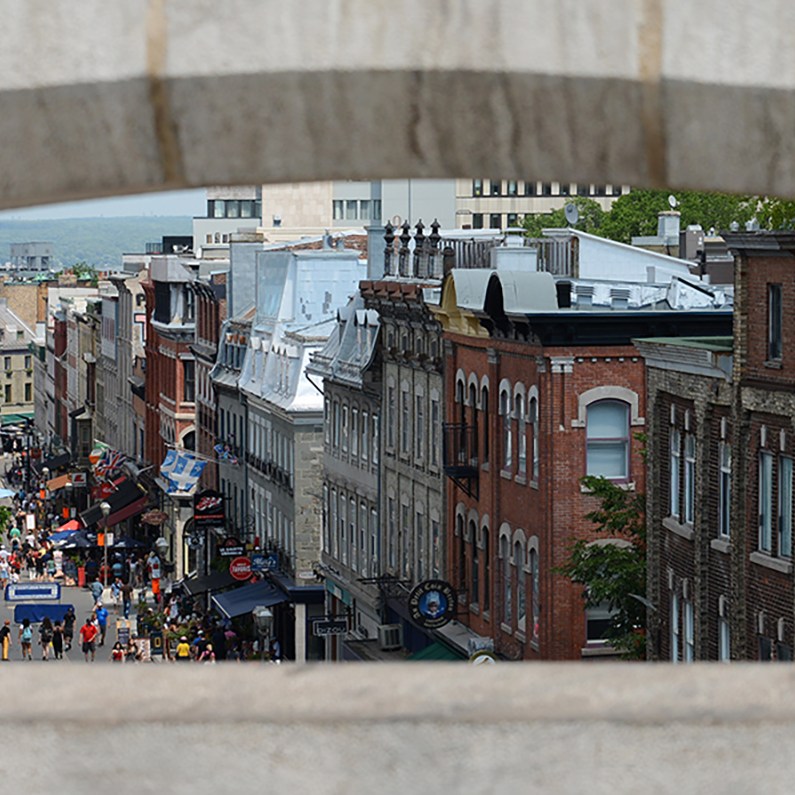
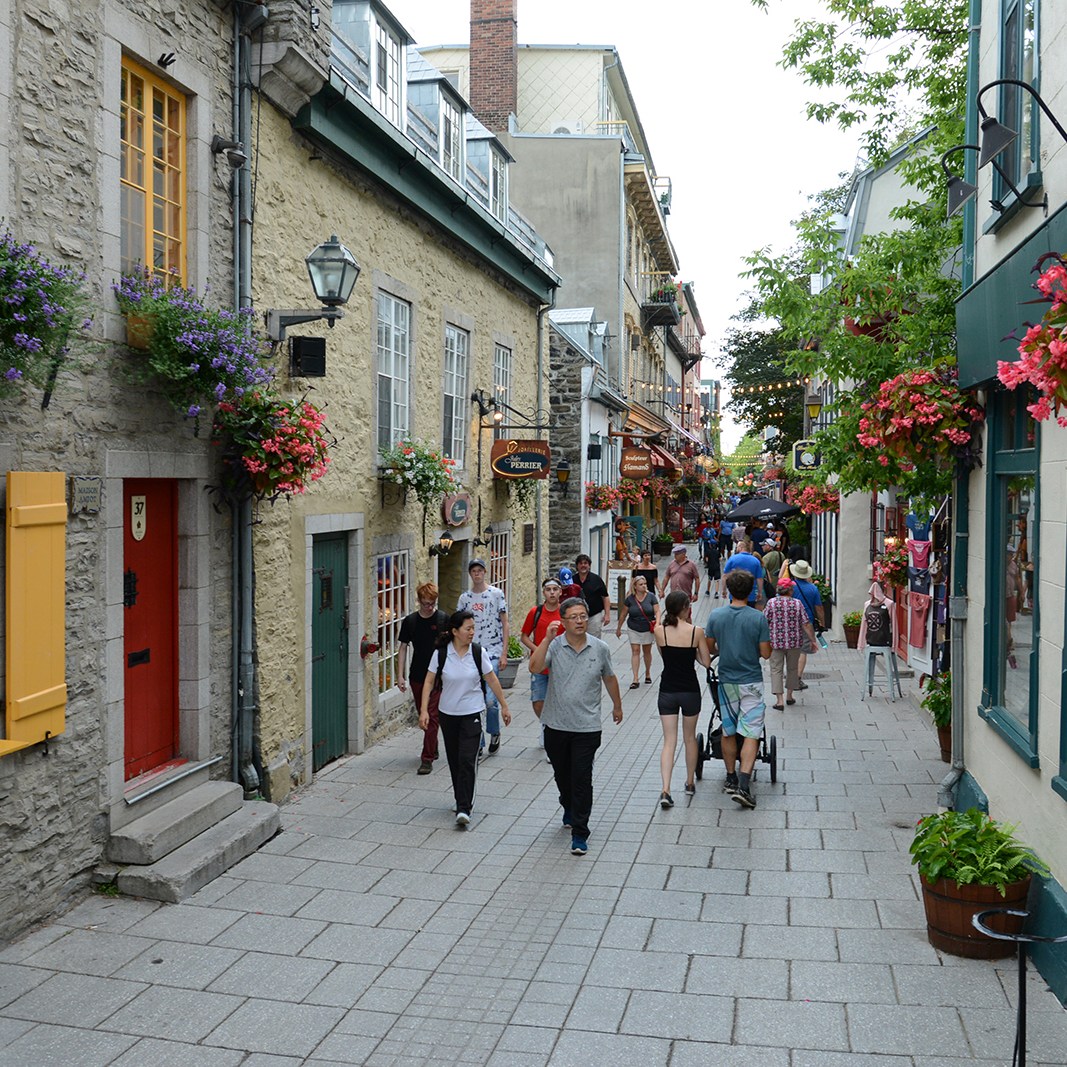
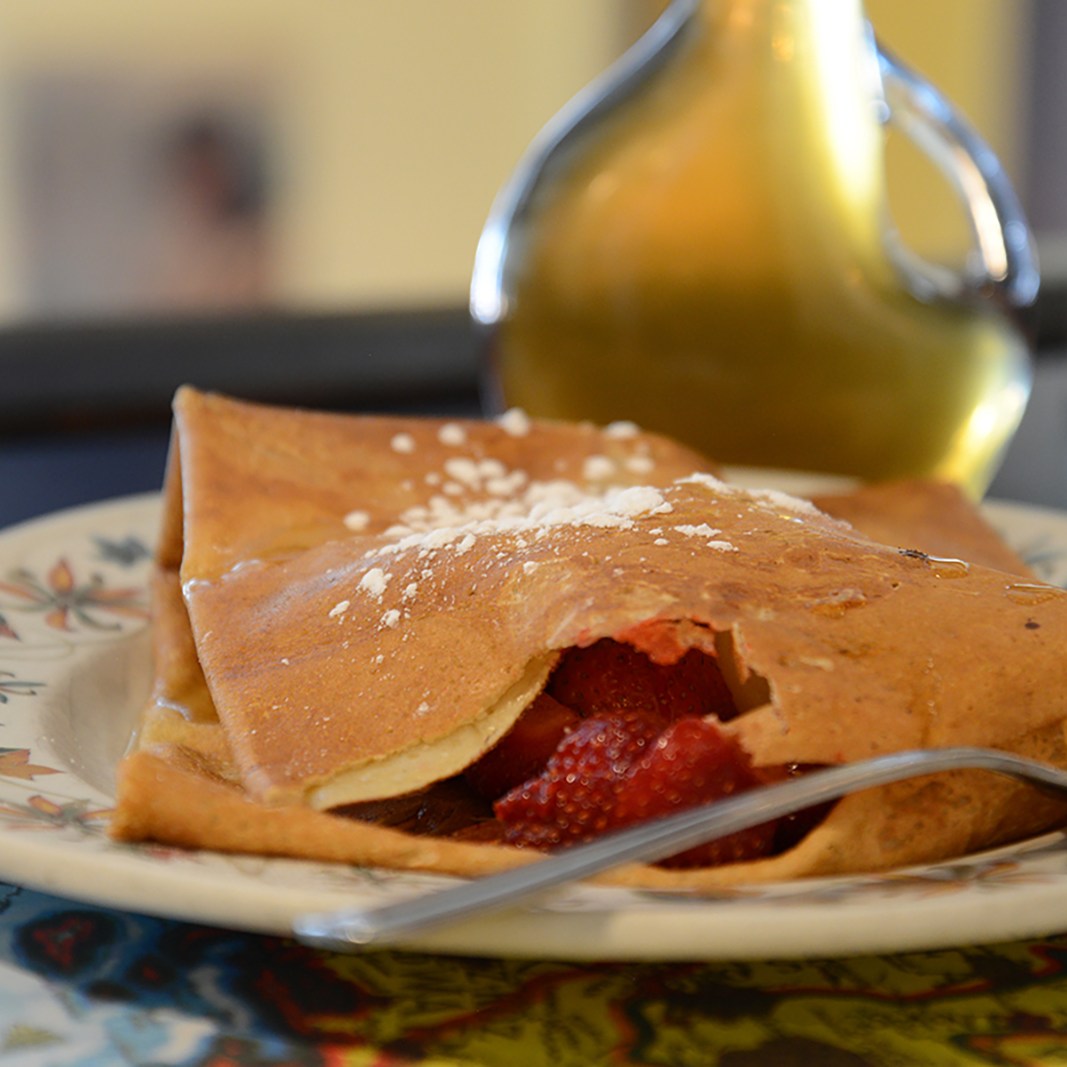
UNESCO-listed Vieux-Québec has two main sections: Haute-Ville (the Upper Town) and Basse-Ville (the Lower Town). We began our visit in the latter, feeling both time-traveled and tele-ported as we explored both the larger streets (Petit-Champlain, Saint-Pierre) and smaller lanes (Cul-de-Sac, Sous-le-Fort) that surround Place Royale and its modest yet attractive church, Notre-Dame-des-Victoires. Here, the stone buildings house shops and restaurants that manage to strike a careful balance between local character and visitor appeal, tradition and contemporary edge. It’s easy to linger here, and we did—pausing for crêpes in a courtyard, posing in front of La Fresque des Québécois (a massive trompe l’oeil mural), or snail-pacing along other streets that seemed to have been designed in the 17th century, and meticulously restored in the 20th, for no purpose other than to be pleasant. It’s not hard to imagine these lanes teeming with the traders, trappers, soldiers, bankers, cartographers and settlers who made this place a hinge between Europe and North America.
More for novelty than necessity, the short funicular carried us up to Haute-Ville, where we walked along the ramparts that frame its historic core, inspecting the cannons at Dufferin Terrace while the Château Frontenac stood as sentinel. Outside and in, the hotel is as grand as advertised, but what’s more interesting is how naturally it fits into the city. Despite unapologetically dominating the skyline, it’s less an aloof landmark than one integrated into daily life, with people passing through, sitting nearby, using its space.
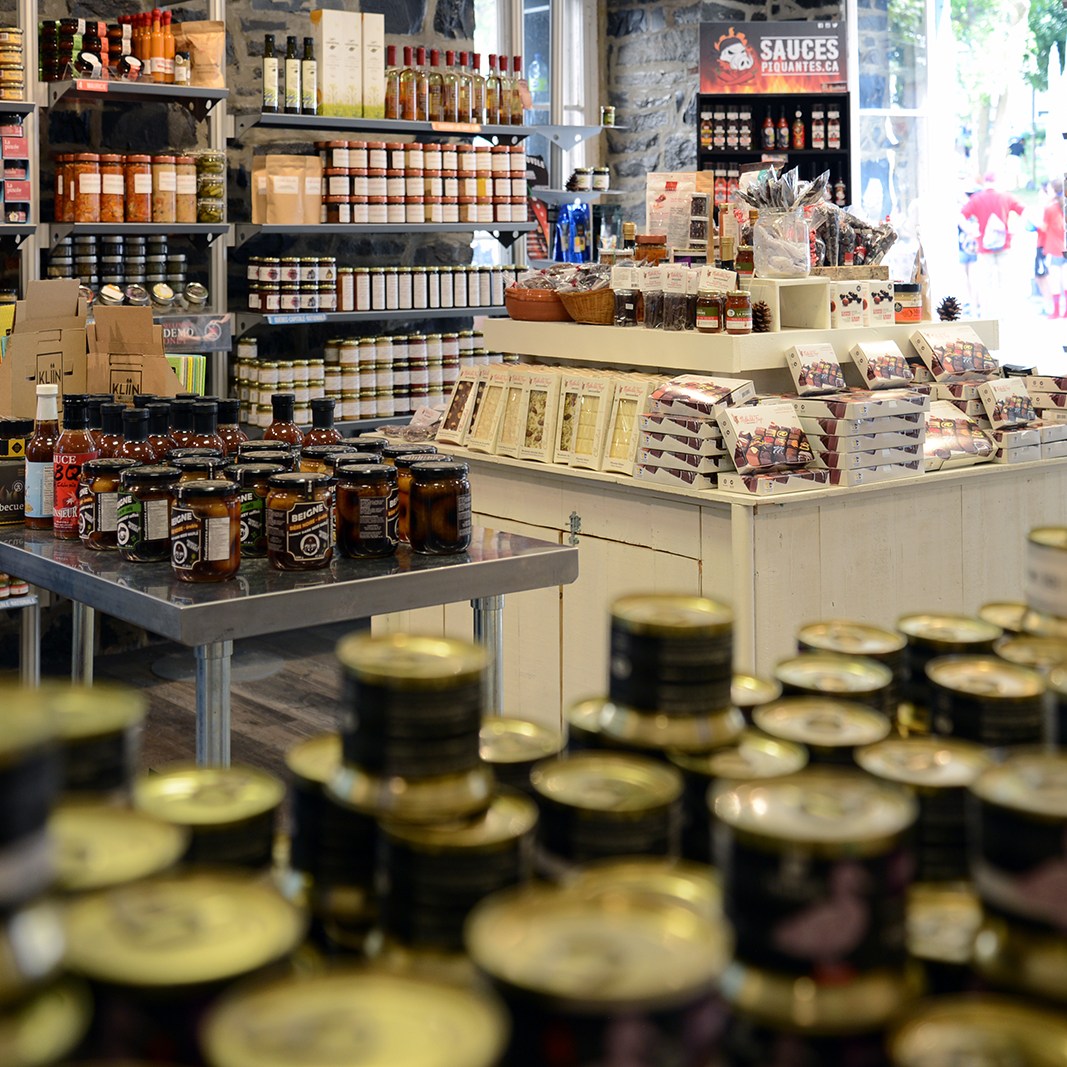
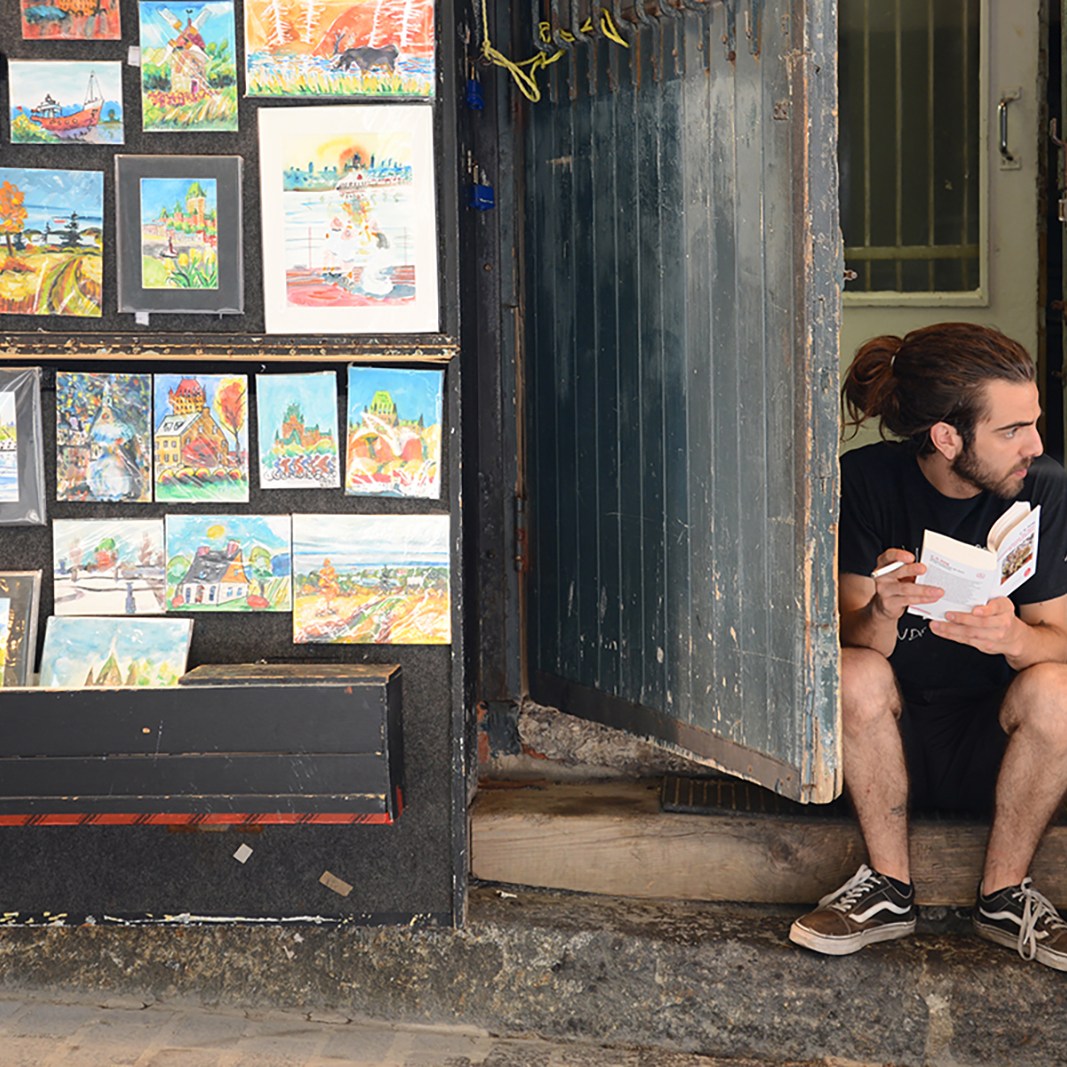
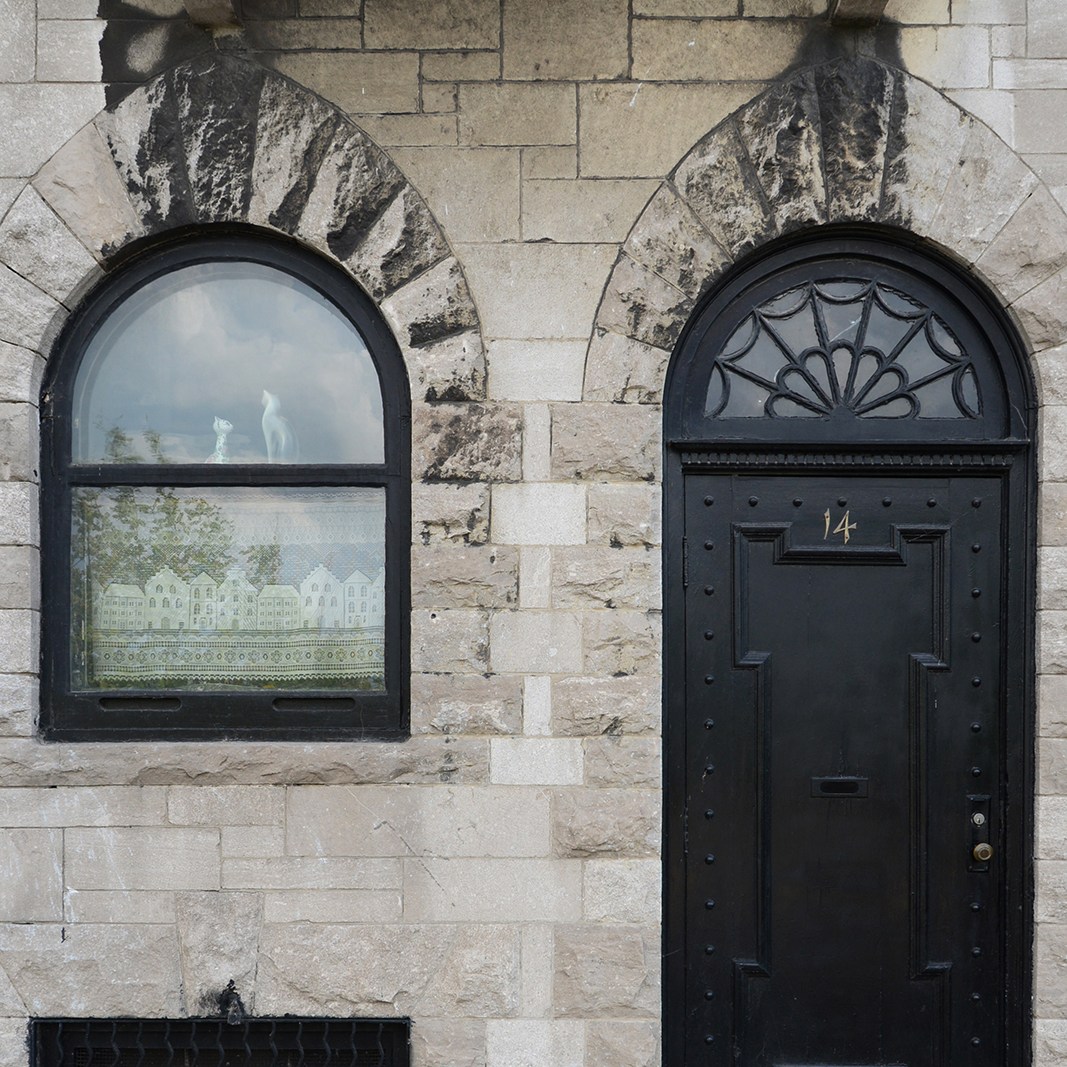
Rue du Trésor carried us by several treasures including the Anglican Cathédrale de la Sainte-Trinité, the handsome Place d’Armes, and Les Trouvailles de Jules (a deli purveying all manner of deliciousness, at 22 Rue Sainte-Anne), before narrowing and ramping downward through a gauntlet of artist’s stalls toward the basilica of Notre-Dame. We made time to wander aimlessly along some of the residential streets connecting the lower city to the upper, specifically those, such as Sainte-Famille, Saint-Louis and Saint-Jean, perhaps not as preened for primetime as their counterparts in the Petit-Champlain neighborhood. These struck us as comparable to certain parts of Lyon, Colmar or even quieter corners of Paris: polished but not overly so, historic but still lived-in, and attractive in their own right rather than as derivatives.
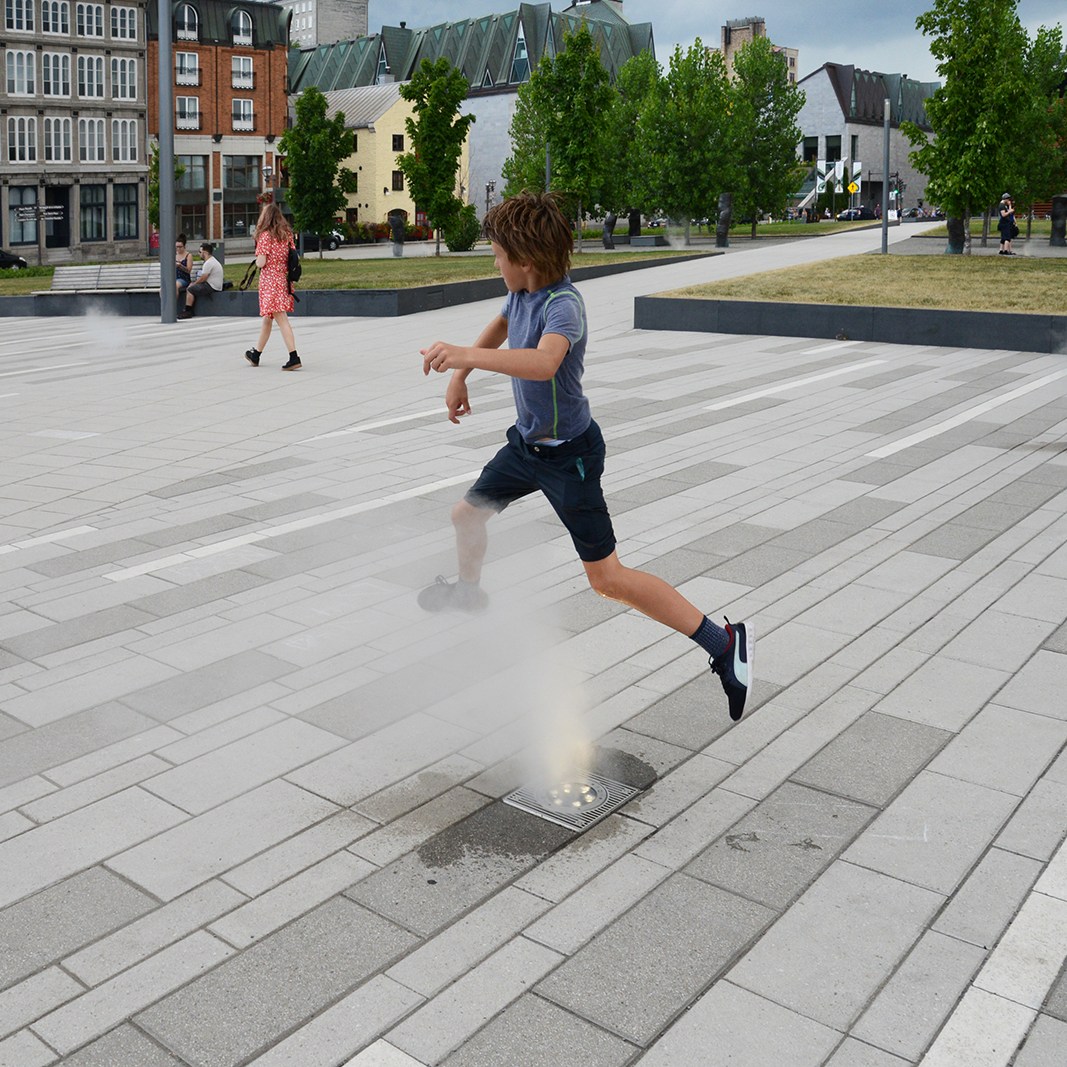
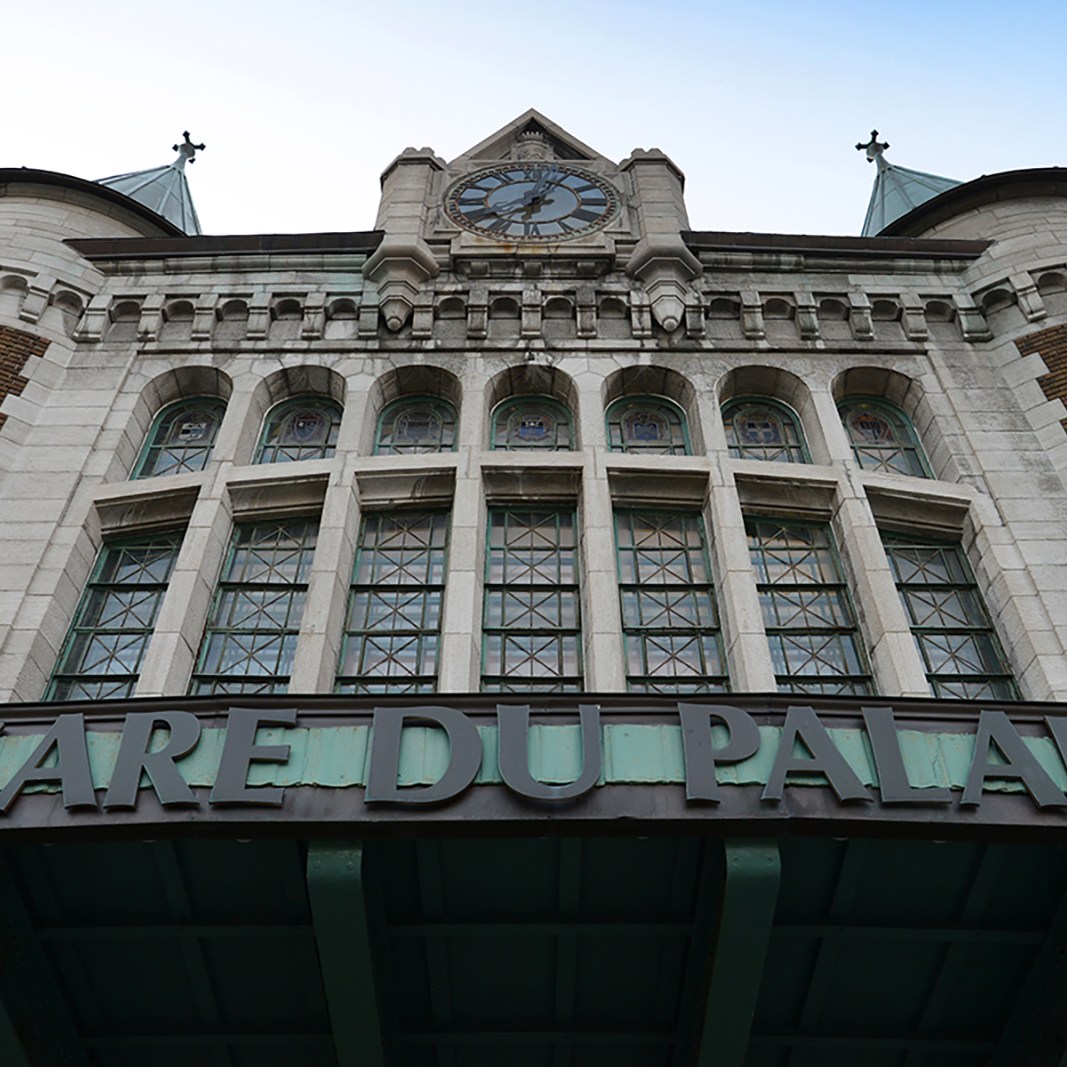
In late afternoon, we walked the Basse-Ville’s waterfront perimeter clockwise, from Gare du Palais and Place Jean-Pelletier, skipping through Place des Canotiers’ mist geysers, to La Cale du Port, a lively, family-friendly watering hole that is half bar, half pool—a perfect spot to cool down while the muggy air remained resistant. By evening, we found ourselves back above the river to watch the lights of farther-flung neighborhoods flicker on over the water, then paid another visit to the Basse-Ville, where its Petite-Champlain lanes glowed under lamplight and its bars and cafés buzzed with a quiet refinement that suited the city’s poise.
A WATERFALL, AN ISLAND, AND A GOAT NAMED BATISSE
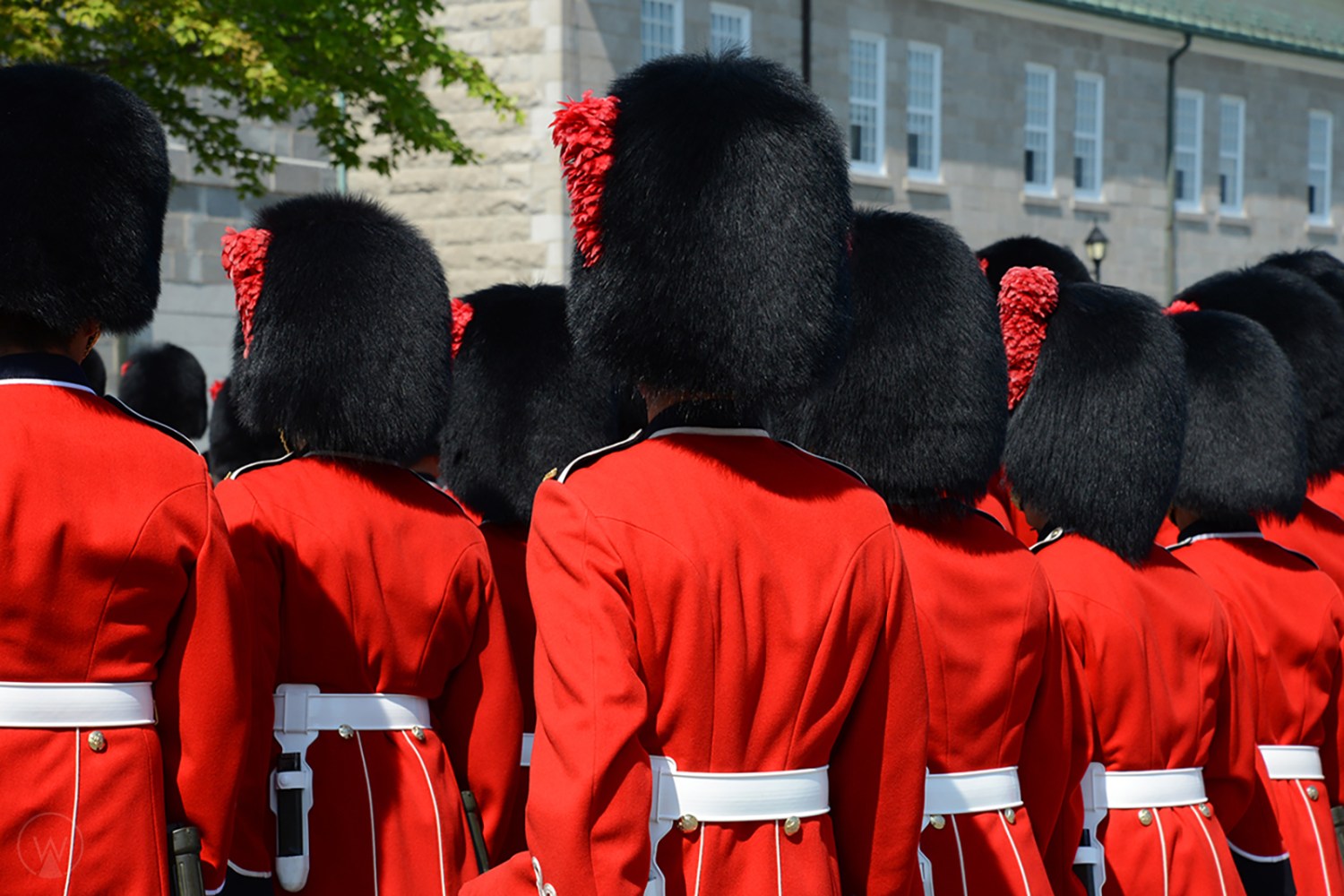
The next day, we were sure to attend the changing of the guard of the Royal 22e Régiment at La Citadelle de Québec, which added a bit of martial flair to our morning. The regimental goat—yes, an actual goat, named Batisse—was the highlight for the boys, and I found the ceremony considerably more enjoyable than its cousin at Buckingham Palace. Just north of the city, Montmorency Falls offered a different kind of spectacle: Taller than Niagara but less crowded and less commercialized, it’s accessible by footbridge and provides a useful counterpoint to the more urban experiences. We crossed from Montmorency to Île Saint-Laurent-d’Orléans, a short drive that reset us into a more agricultural rhythm, as we drove among the fields, orchards and farm stands along the single, quiet road that circles the island. We stocked up on berries and artisanal cheeses for our drive that would continue downstream toward New Brunswick.
It would be unfair to compare the Chemin to the cities that bookend it and say it lacks a certain je ne sais Québéquois. And yet, unfortunately, travel is a zero-sum proposition, in that a minute spent in one place is a minute unavailable to another place, and after our time in magnifique Québec City, I wished that we’d moved even a little more briskly along the Chemin. Besides, we still had 3,179 miles to go. That said, the Chemin’s appeal is cumulative: The towns, the river, the small detours—they work together to create a sense of continuity that’s easy to miss if you rush through. Taken at a measured pace, the route offers a trip that feels coherent from start to finish, with just enough variation to keep it interesting.
QUESTIONS FOR READERS
- What are your favorite stopping points along the Chemin du Roy?
- What are your thoughts on Trois-Rivières as a cultural waypoint: more industrial vibe or riverside charm?
- How would you pace a weekend in Quebec City to feel unrushed yet satisfied?
- Which North American cities make you feel as if you’re overseas?

