







Note: This is the fourth in a series of posts about Italy’s Adriatic Coast. The itinerary begins here and continues here.
Whether you’re drawn toward rustic villages or dramatic landscapes, Abruzzo offers something unforgettable at every turn and is perfect for travelers seeking to explore Italy beyond its well-trodden paths. This route through what is arguably Italy’s most underrated region is a journey through history, culture, nature and flavor that will leave you longing to return again and again to explore every hidden corner. While the Abruzzo road-trip itinerary we describe here can be enjoyed in two brisk days, as we did, three or more will allow you to better appreciate the many subtle charms you’ll encounter along the way as you explore the prettiest villages in Abruzzo.
Day 1
With our morning departure from Torremaggiore, we left behind Foggia province and the rolling plains of Puglia, setting our sights on the rugged, mountainous landscapes of Abruzzo. Here the topography itself would come to play a more prominent role than it had in Puglia, our first hint of its dramatic variety coming when we teased the Adriatic coastline briefly near Pescara before turning inland and plunging immediately into the alpine heart of what might be Italy’s most underrated region. (Note: If we’d had a few more hours, we would have approached Sulmona not from Pescara, but from Ortona via Lanciano and Guardiagrele, stopping at all three.)
THE SWEETHEART OF ABRUZZO AND THE MATERIAL GIRL’S ROOTS
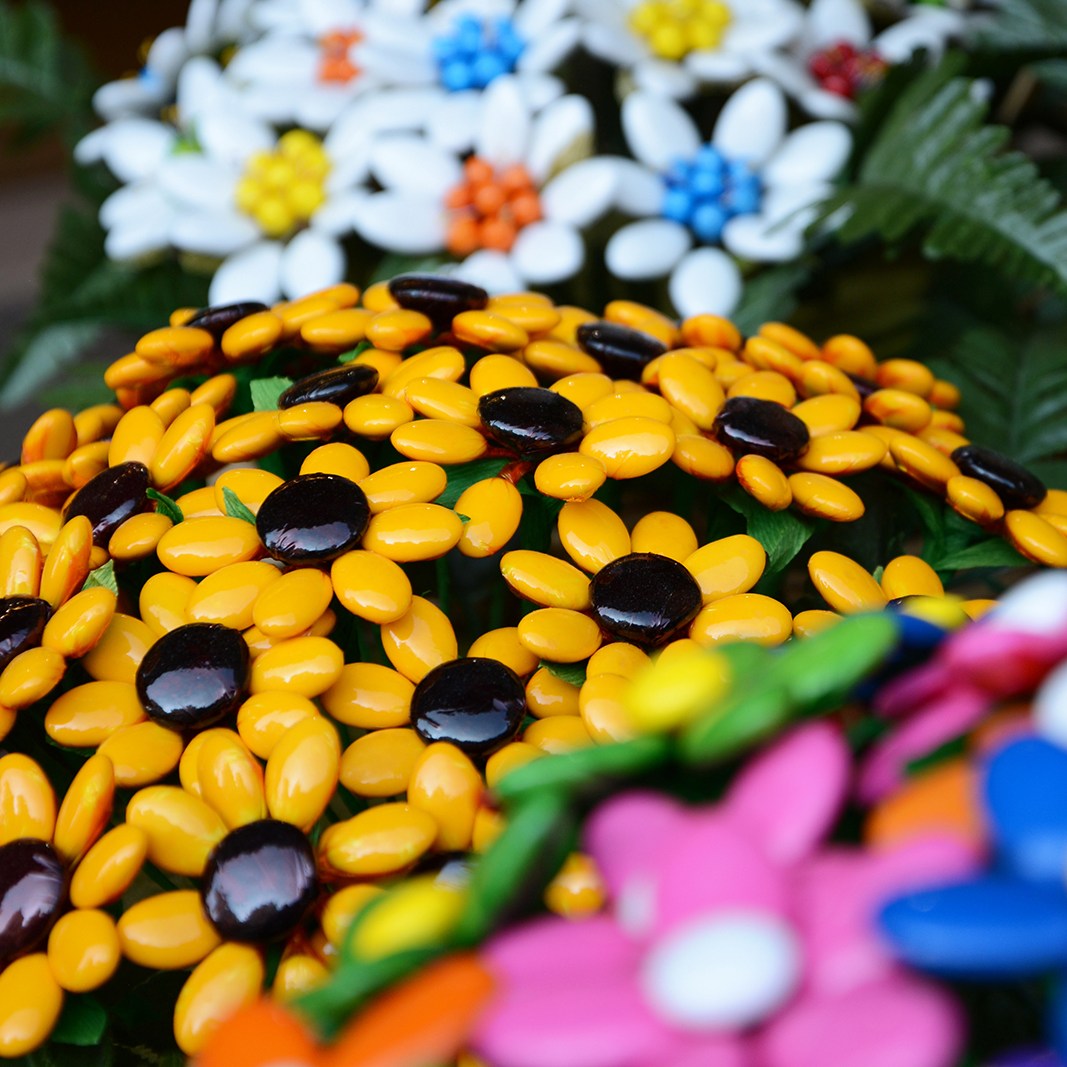
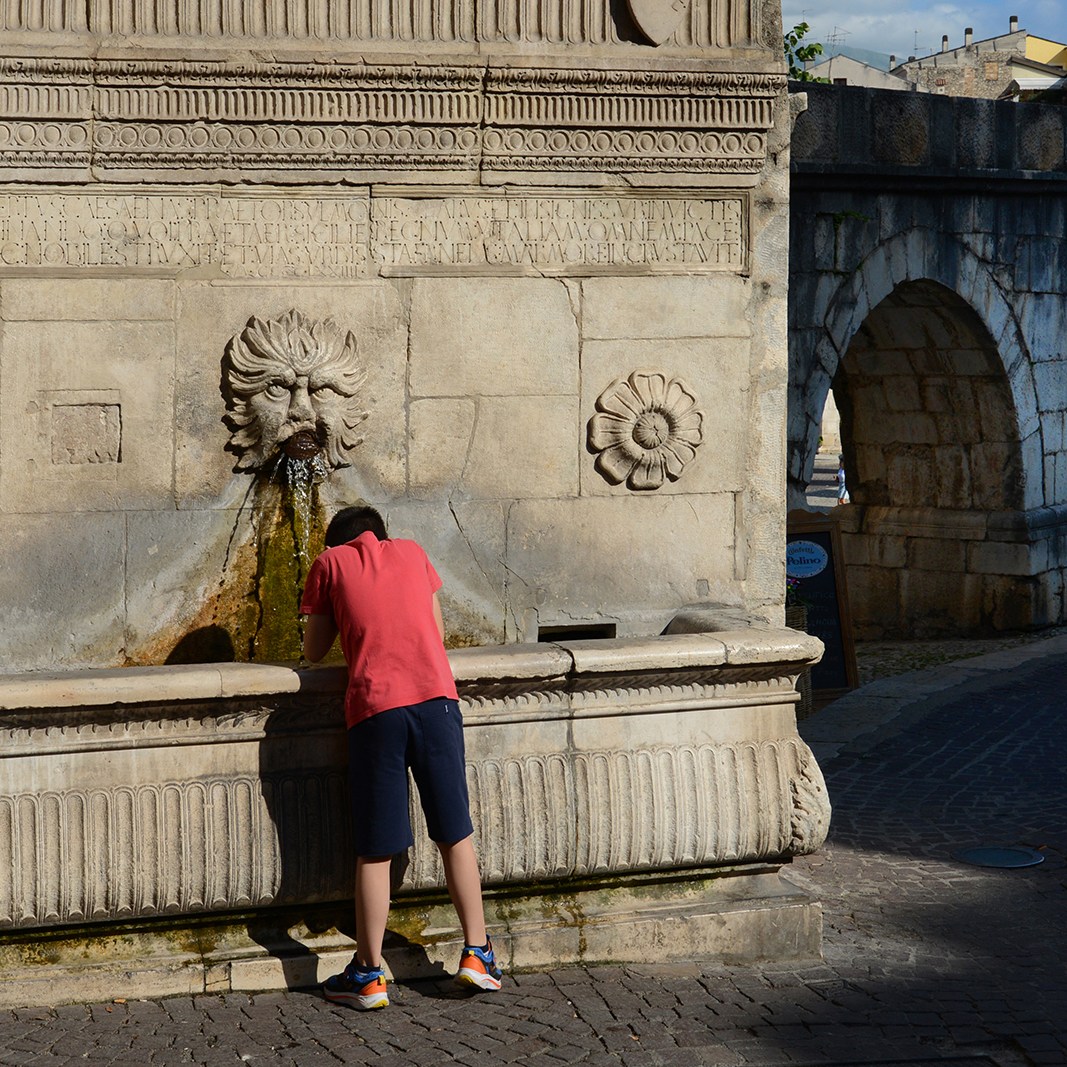
Just before our first town, Sulmona, consider the short hike to Eremo di Sant’Onofrio al Morrone (Hermitage of Sant’Onofrio al Morrone), which features a 15th-century ceiling and 13th-century frescoes. Sulmona itself feels like stepping into a Renaissance townscape, and is known as the world capital of confetti (sugar-coated almonds) as well as the birthplace of Ovid, the Roman poet best known for his Ars Amatoria, a lighthearted guide to the romantic arts. Appropriately, Sulmona has been called “The Sweetheart of Abruzzo” and “instantly seductive,” and is a feast for heart, eyes, mind and palate alike. Corso Ovidio, the town’s main artery, is the starting point of any visit, as it connects the primary historical sites and hosts the passeggiata, an evening ritual during which locals strolling arm-in-arm, chatting and laughing as they enjoy gelato from Gelateria La Rotonda. If you’re there by day, relax on the Rotonda steps while admiring the medieval aqueduct that frames Piazza Garibaldi. The Piazza itself is a lively hub surrounded by treasures such as Fontana del Vecchio (built in 1474) and the Complesso della Santissima Annunziata, a masterpiece blending Gothic and Baroque styles. At 13th-century Porta Napoli (13th century), architecture enthusiasts can pass through one of the best-preserved medieval gates in Italy, and at the Museo Confetti Pelino (or any of the town’s numerous vendors), confectionery enthusiasts can appreciate the signature local sweet in flavors ranging from pear to limoncello to coconut to tiramisù.
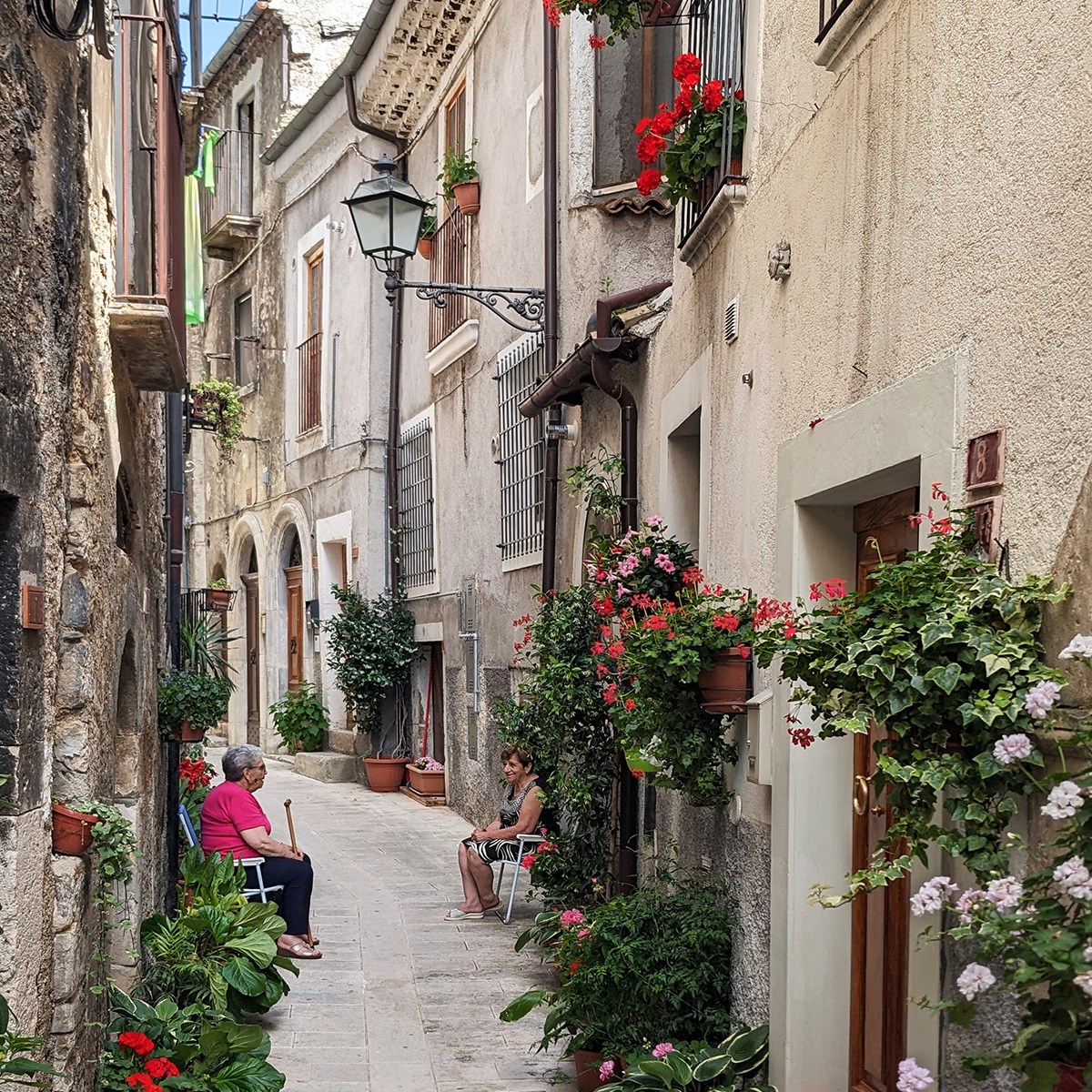
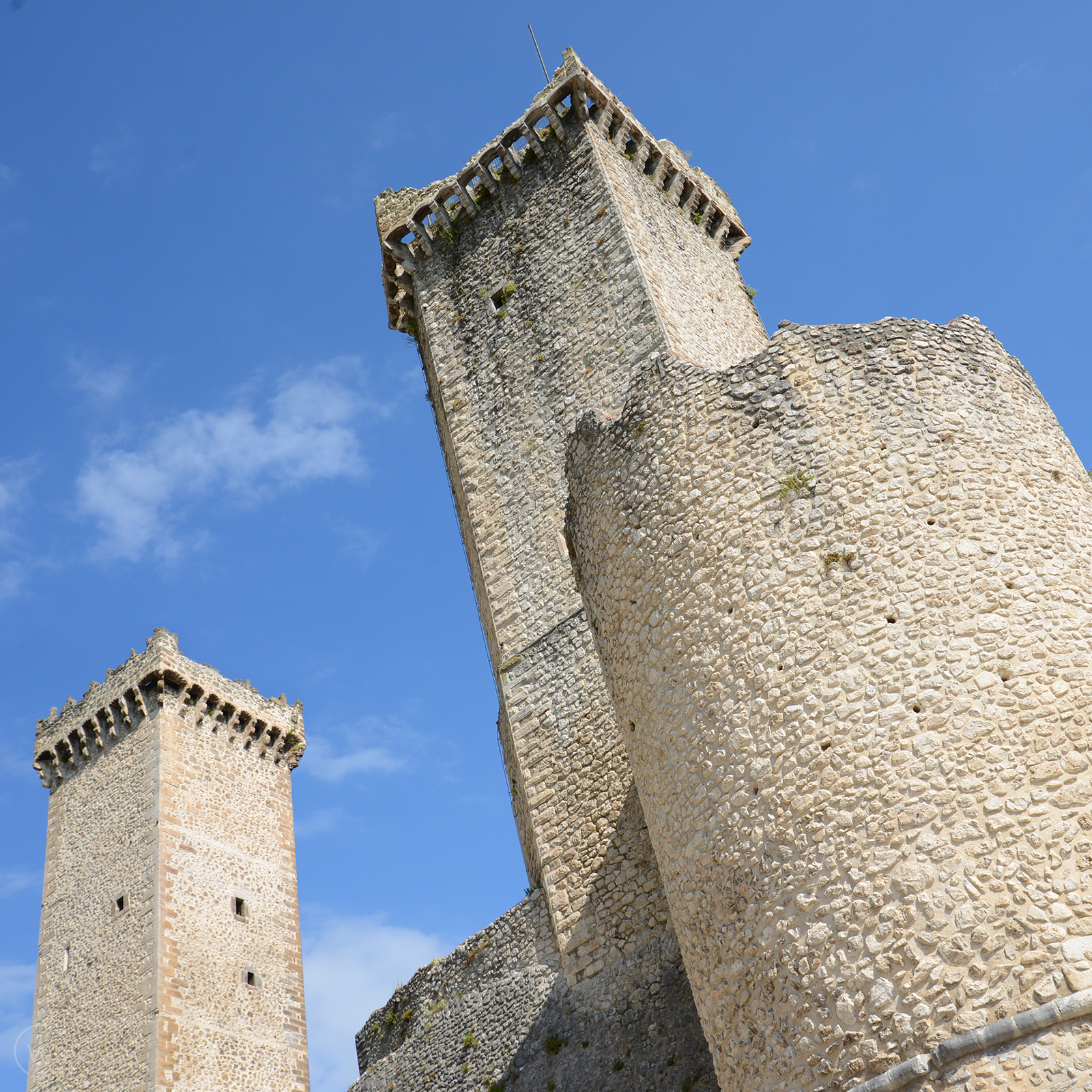
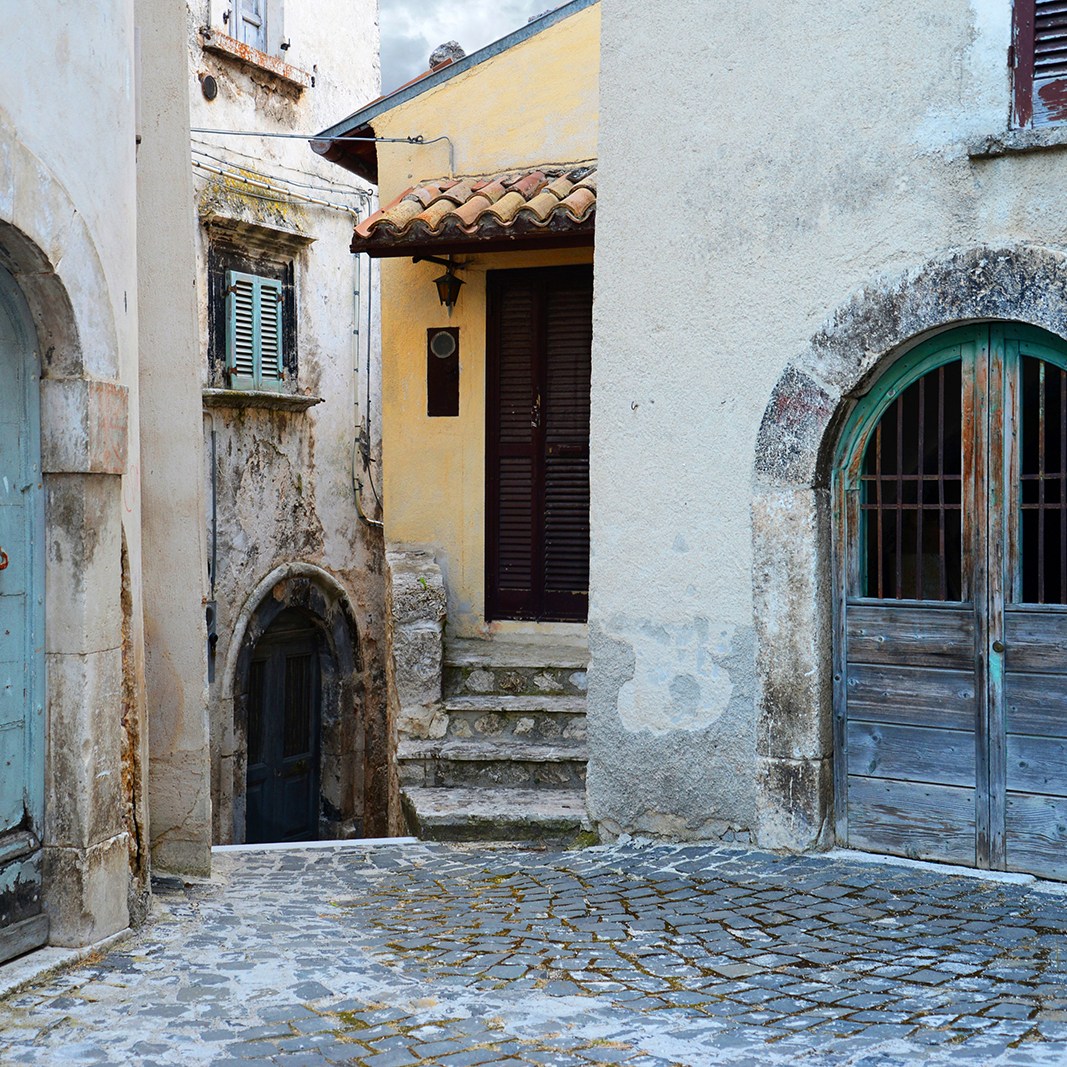
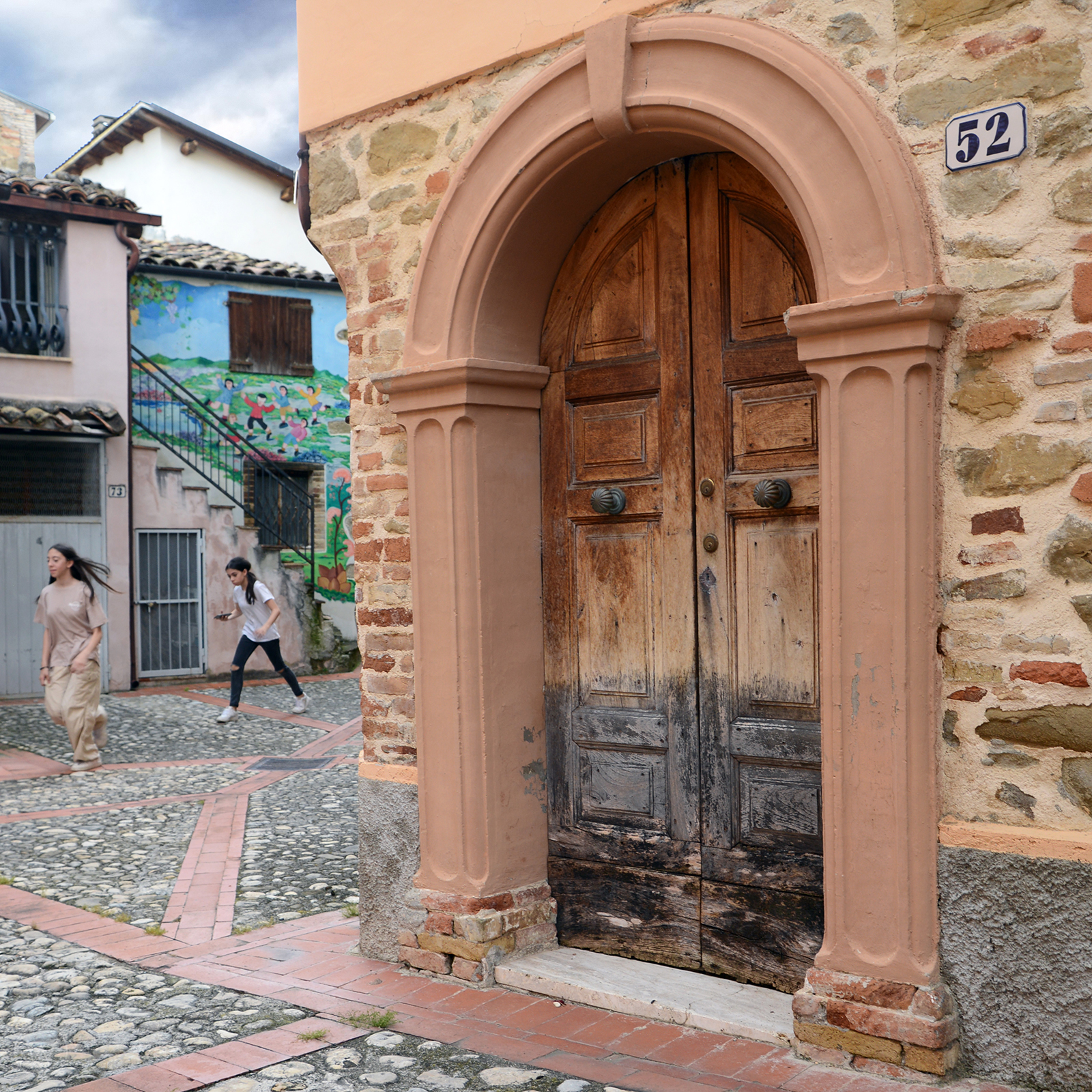
Nestling nearby against the Majella mountains, Pacentro, often hailed as one of Italy’s most beautiful villages, enchants with its narrow cobblestone streets and stone houses. Dominating the skyline of this hamlet is Castello Caldora, a commanding fortress steeped in history and offering panoramic views of the valley below. We were fascinated by the I Canaje, an ancient public bath (or “antico lavatoio pubblico”) fashioned of stone slabs, where the townswomen washed clothes using spring water, pork fat and ash – a vivid reminder of life here in earlier times. Pacentro is also noteworthy as the ancestral home of another poet of Abruzzese extraction whose themes centered on love and seduction, one M. L. Ciccone. Madonna’s paternal grandparents, Michelina and Gaetano, emigrated from here to New York City at the end of World War I. While the subtly monochromatic Baroque interior of Chiesa Madre di Santa Maria della Misericordia may not elicit the excitement (or agitation, depending on one’s perspective) of their descendant’s “Like a Prayer” video, it’s not hard to envision generations of Ciccones being baptized, married and eulogized here under the watchful gaze of La Madonna. If you visit in September, don’t miss the Corsa degli Zingari (Race of the Gypsies), a barefoot race through the town’s narrow alleys. For those with extra time and sturdy boots, a dozen or so switchbacks above Pacentro’s terraced vineyards is an entry point into Parco Nazionale della Maiella, which offers endless outdoor opportunities in the Majella Massif of the Central Apennines.
CLIFFTOP VILLAGES AND AN EXPLOSION OF COLOR
Continuing along winding mountain roads, we reached Anversa degli Abruzzi, a village perched above the Gole del Sagittario (Saggitarius Gorge). This area is a haven for nature lovers, as hiking trails lead along dramatic cliff-lines and through diverse flora to the crystal-clear waters of the Riserva Naturale Gole del Sagittario. Nearby Borgo di Castrovalva clings precariously to a rocky outcrop like the artist’s dreamscape that once inspired an M.C. Escher lithograph. The views alone are worth the detour, best enjoyed with a coffee at Nido d’Aquila.
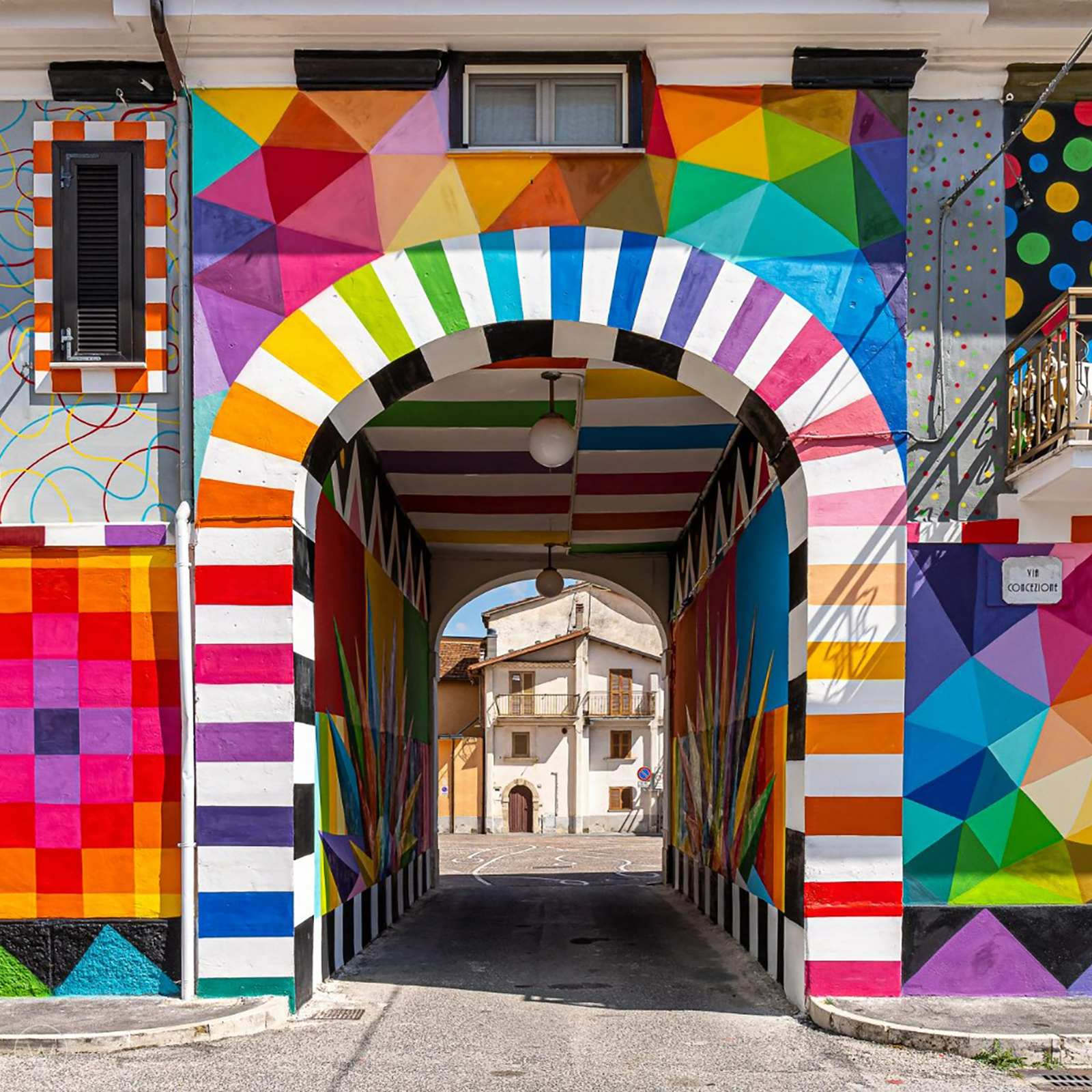
From Anversa, an out-and-back of about half an hour each way takes you to Aielli, which has transformed itself into an open-air gallery billed as “the most colorful village in Italy.” Its numerous painted buildings — murals depicting everything from poetry to local history to social themes, as if Miami’s Wynwood Walls were relocated to the ancient stone and stucco of these mountains — add vibrancy to its quaint streets.
THE CROWN JEWELS OF OUR ABRUZZO DRIVE
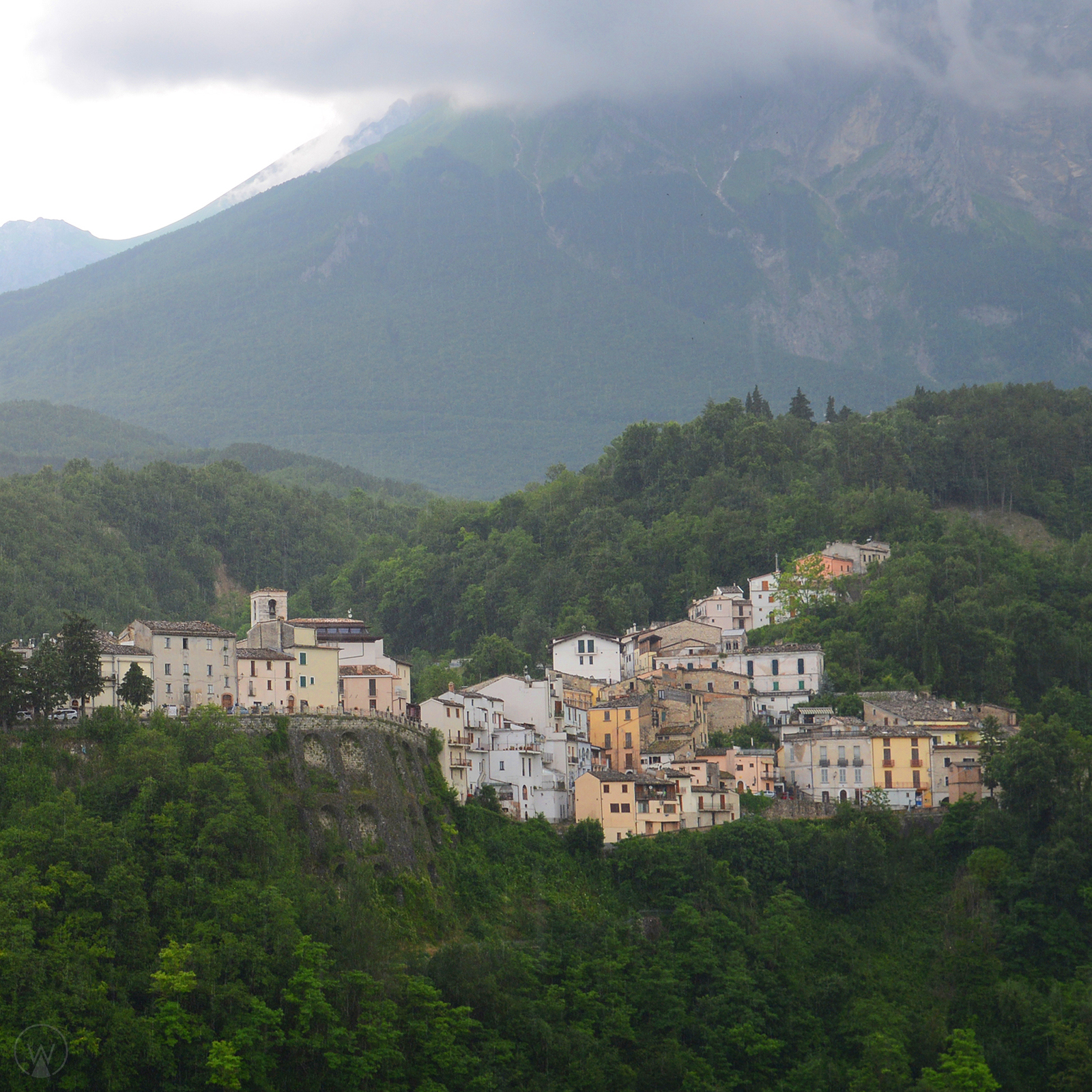
90 idyllic minutes due north of Anversa – the last dozen kilometers above Carrufo on Strada Regionale 17bis assuring you that something singular awaits – is lofty Castel del Monte. Nestled at some 1,350 meters in the Gran Sasso mountain range, this captivating village blends medieval charm with Renaissance elegance, tracing its origins back to ancient settlements and reflecting the later influence of powerful dynasties such as the Medici. Dinner was at Ristorante da Loredana, a no-frills local diner featuring fluorescent mood lighting, toddlers tumbling around in hiking gear still damp from the day’s adventures, and Michelin-worthy miracle workers in the kitchen. We started with surgi, a hearty regional soup made with lentils and wild greens, followed by a calzone so large it could double as a blanket. The flavors were pure Abruzzo: earthy, bold, and unforgettable. Every bite deepened our newfound love for this area, as did our after-dinner stroll through the village’s maze of passageways. Noting several Affittasi (for rent) and Vendesi (for sale) signs in windows, we took about three minutes to go from, “Wow! This town is an unexpected treat,” to, “So…how soon can we move here?” And then on queue, the daily-life-reality of a 4×4 forklift delivering an armoire up an impossibly narrow stairwell put a pause on our relocation plans. Still, we were astonished to consider that Castel del Monte hadn’t even been our primary draw to the area. That primary draw was to realize a dream more than a dozen years in the making.
In the spring of 2010, The New York Times travel section told a tale so fantastical that I struggled to believe it. I marveled at the story of Giancarlo Dall’Ara, an Italian hotel marketing consultant, who during the 1980s visited dozens of Italy’s hundreds of historic villages in disrepair, abandoned by younger generations in favor of urban centers with their career opportunities and lifestyle allure. Convinced that some of these places could be saved through sustainable tourism, Dall’Ara and some like-minded colleagues hatched the simple yet ingenious concept of the albergo diffuso. The article describes a “diffused inn” as one in which “rooms, decorated in a consistently authentic and local style, are scattered throughout different buildings within the town but overseen by one manager. A traditional breakfast might be served at a local café or in the kitchen of one of the local houses, or delivered to your room. Call it a B & B village.”
The benefits of an albergo diffuso to town and tourist alike are many, the article continued. “Like a holiday apartment, an albergo diffuso allows travelers to embed themselves in village life, but the bonus is that it offers the basic services of a hotel. There is a reception or central area to report to — sometimes a café, other times a shop — where a manager is available to help with questions, recommendations or bookings.” These alberghi diffusi are also healthy for the host villages, in that the rooms are built in existing structures, with an emphasis on sourcing products used in the alberghi from local producers, although guest rooms’ sleek, modern fixtures (soaker tubs, bidets, heated towel racks, etc.) would generally come from Italy’s industrial north.
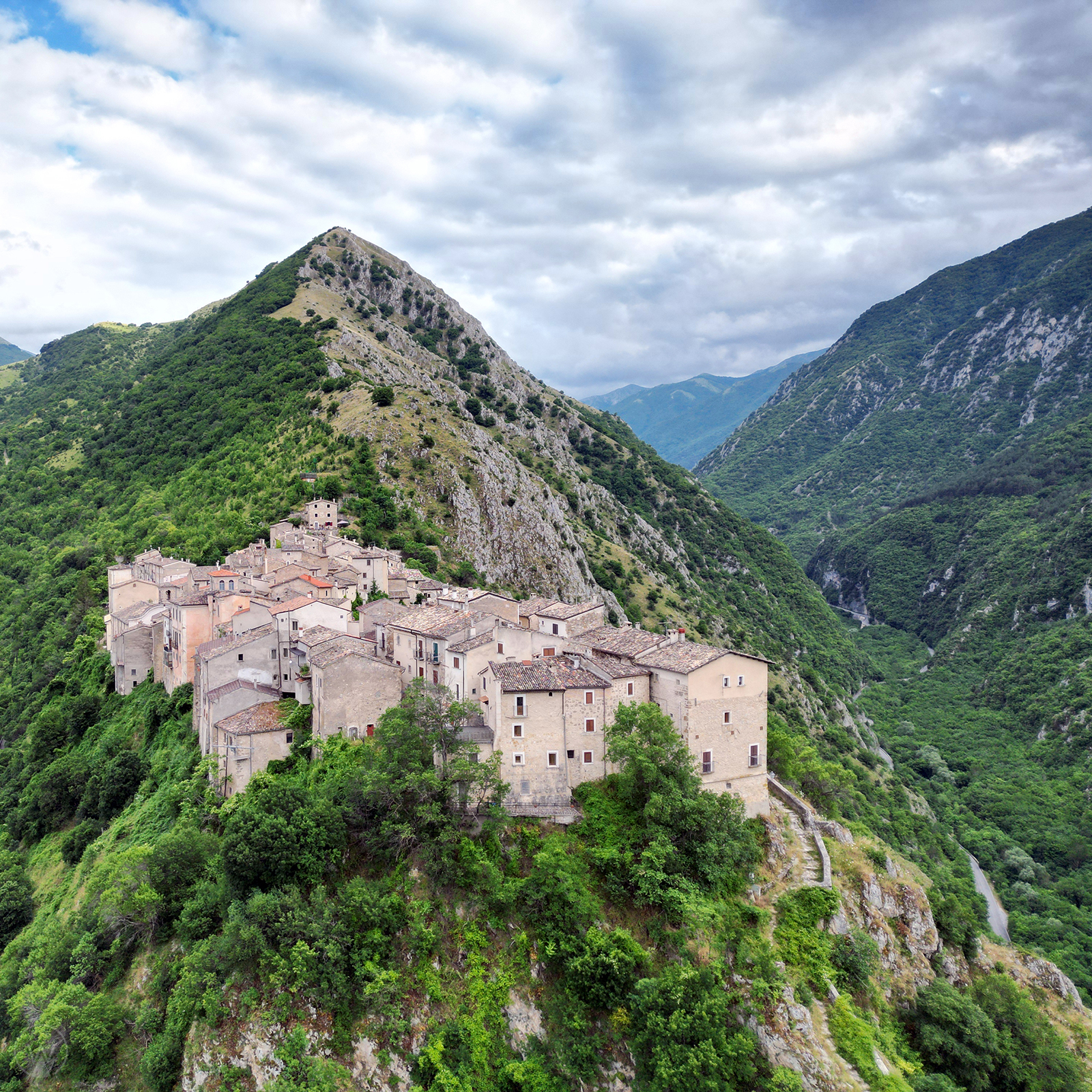
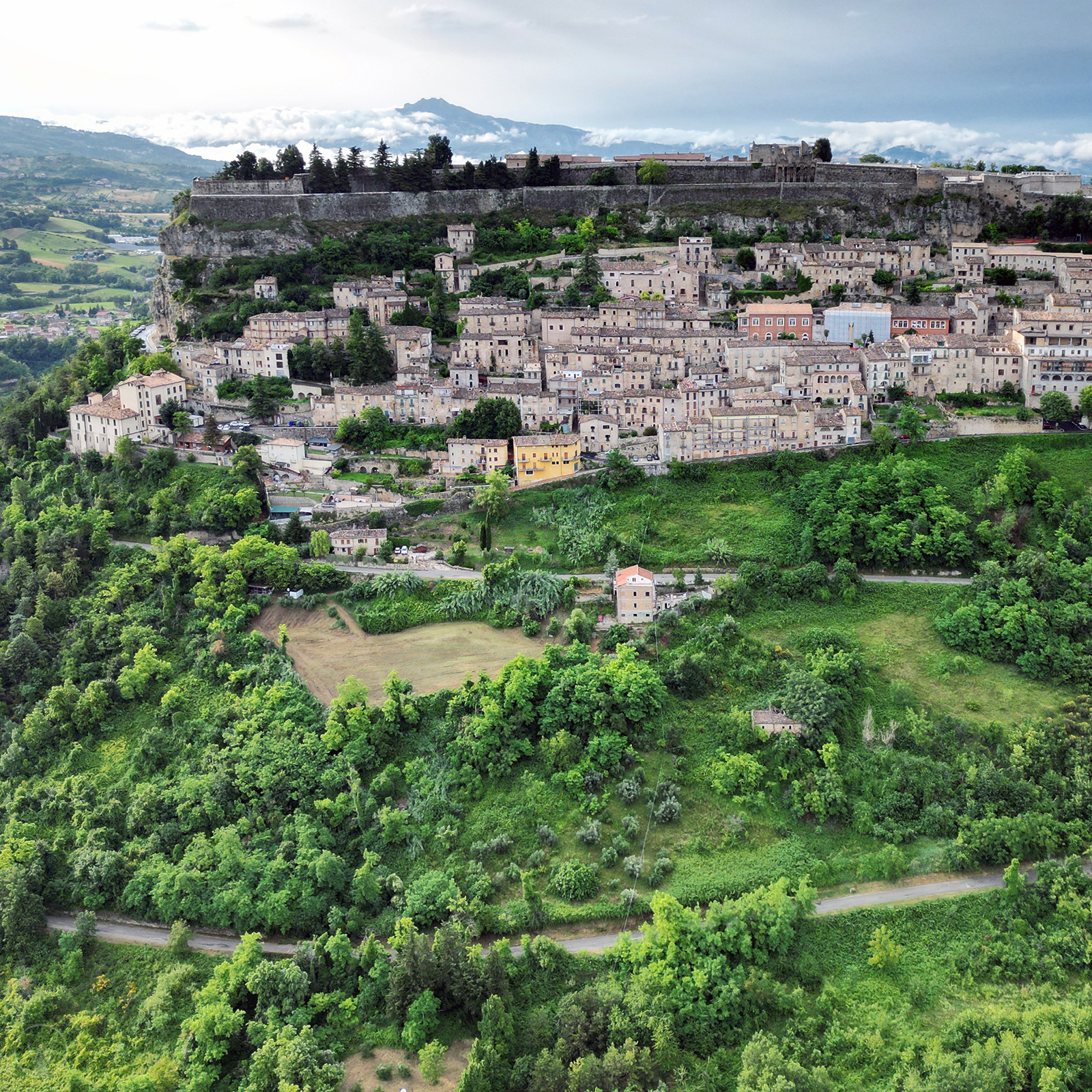
This general overview complete, the article then turned my focus to one of the first such alberghi, named Sextantio and located in Abruzzo’s “poetically aged hilltop town” of Santo Stefano di Sessanio. This fortified medieval hamlet was what we would call “effectively offline” until television arrived in the ’60s, and well into the twentieth century, mothers would walk their children under a series of seven arches over one of the town’s passageways to prevent death by witchcraft. Descriptions of the town’s enduring culinary arts — venison ragù for dinner, breakfast spreads of homemade bread, jams and local cakes laid out on hand-crocheted lace place mats beneath ceilings blackened from centuries of cooking fires — danced in my head, and I resolved to visit Santo Stefano someday.
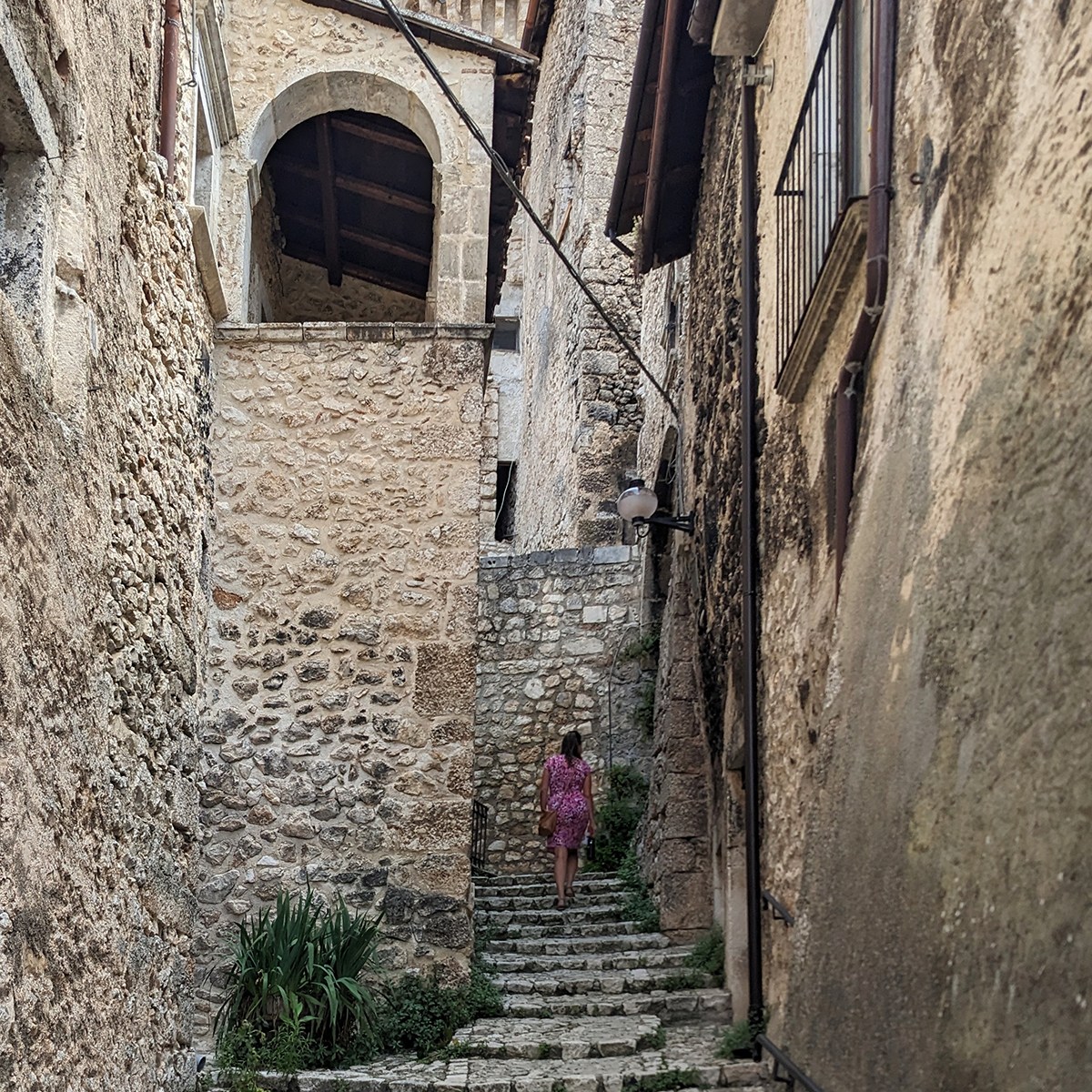
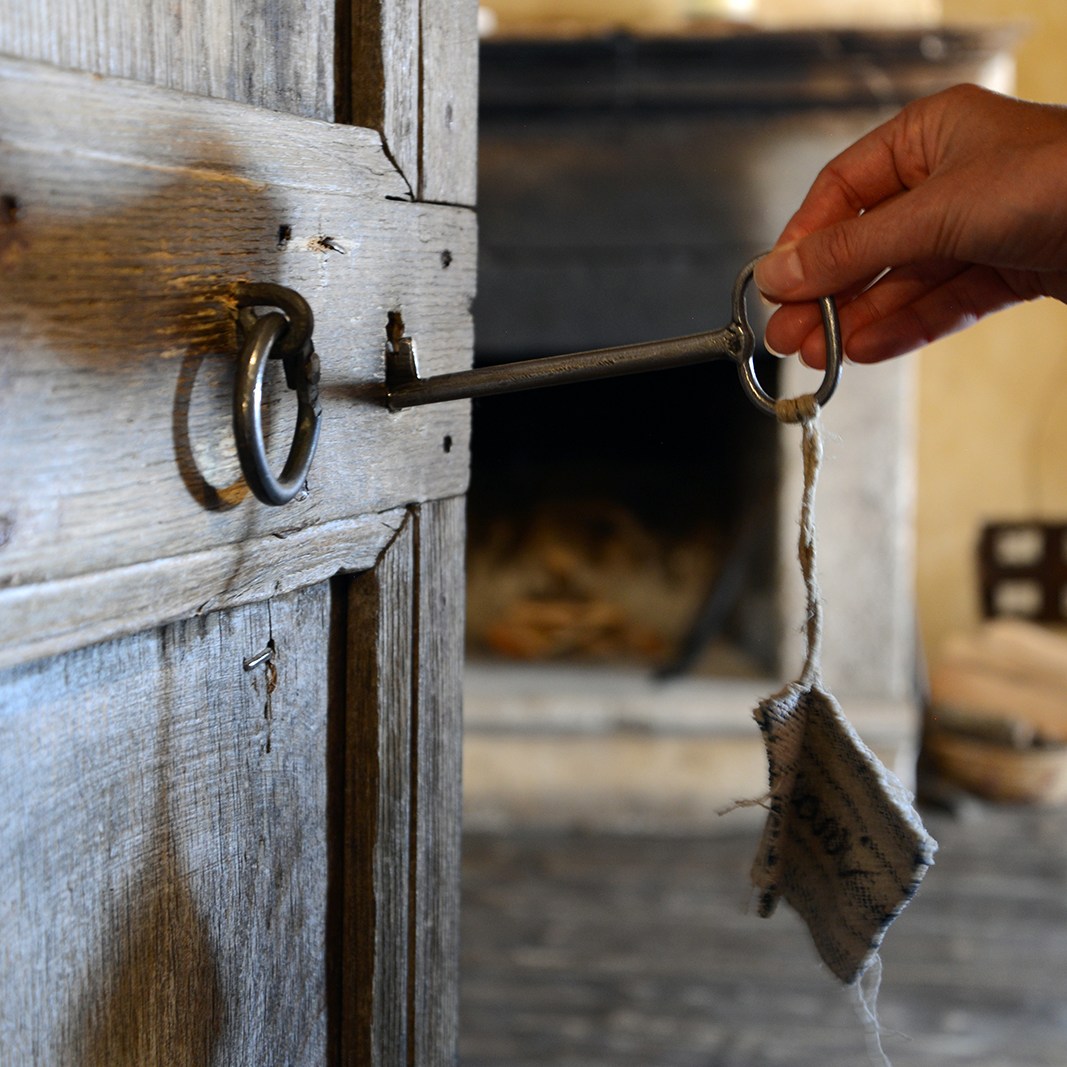
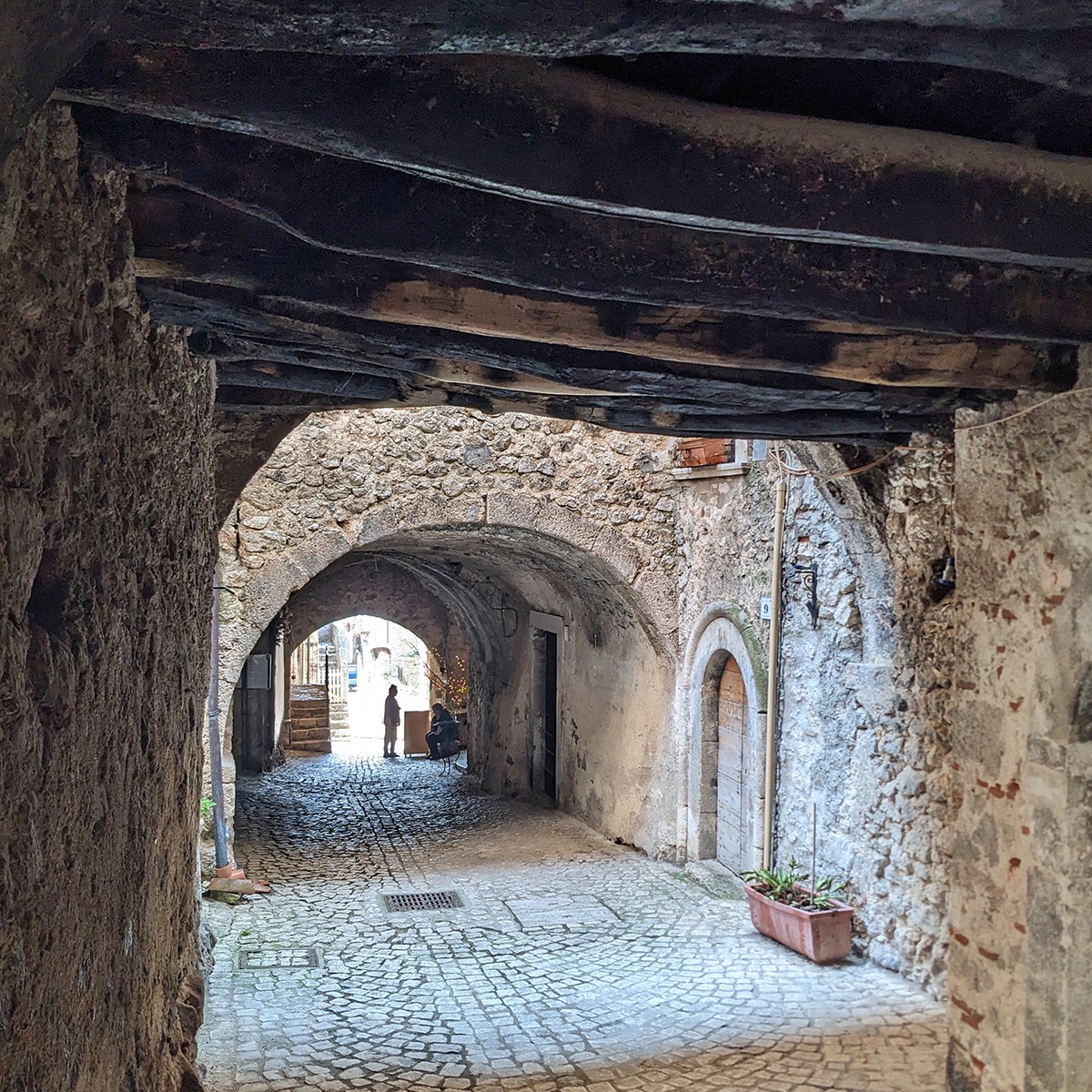
Upon our arrival at the lobby, which I believe had once served as the stables, Alberto checked us in and, turning to a rack of enormous medieval keys that I’d assumed they were strictly decorative, handed us our own iron relic, an affixed tag indicating the name of our room. He then led us along hundred or so meters of cobblestone passageways, around several corners and up a half-flight of stairs to our quarters. As with Sextantio’s other two-dozen rooms (again, all of them scattered throughout the village’s restored structures), we were greeted with ultramodern amenities juxtaposed against the wood-beamed ceiling, beeswax candles, a rickety spinning wheel and skeins of yarn, our (miraculous) wool-stuffed mattress, and other appointments that don’t just feel like relics from another era – most of them were relics. And even mid-summer, the chilly night air at 1,250 meters made us grateful for the fireplace that had provided centuries of warmth.
Day 2
The next morning, a delightful treasure-hunt led us through a warren of stone walkways to a barrel-vaulted tavern in the shadow of the Medici tower, where a breakfast feast of local cheeses, freshly baked bread, honey from nearby hives, and fresh-ground cappuccino set the tone for another day of exploration. Reflecting on our stay in this spellbinding town, and especially our night of silent slumber, I appreciate even more the Times article’s statement: “Sometimes the stone is talking. Just imagine how many people have walked inside these rooms before you.”
A PICTURESQUE CASTLE AND A CERAMICS CAPITAL
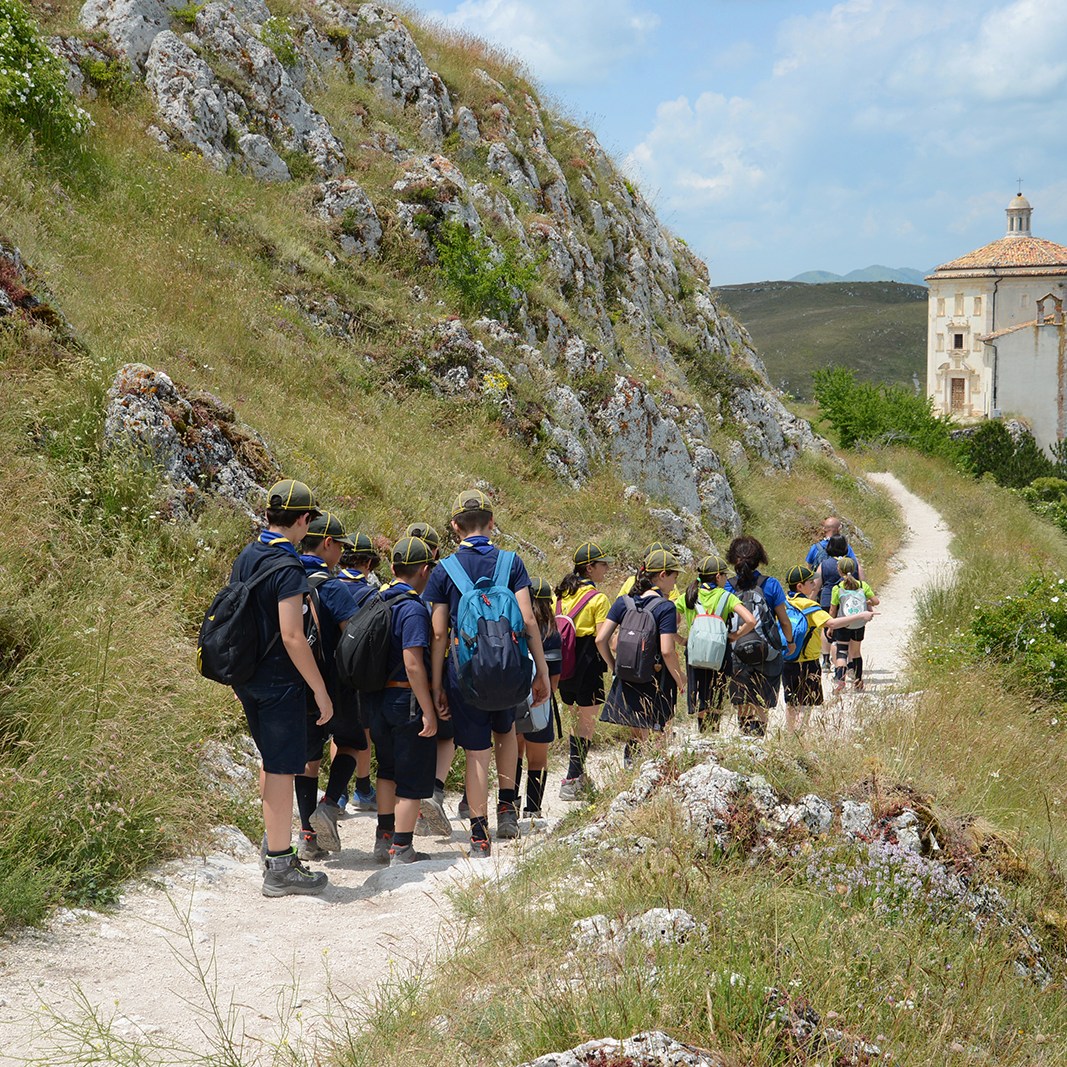
After one last look at Santo Stefano, we set off for one of Abruzzo’s most iconic landmarks, a fortress above the clouds. Rocca Calascio is everything you imagine when you think of medieval Italy, its crumbling stone walls perched nearly 1,500 meters above sea level – making it one of Italy’s highest such fortifications – with sweeping views of the Gran Sasso mountains and surrounding valleys. Indeed, the scene is so cinematic that it has appeared in films such as Ladyhawke and The Name of the Rose. The short hike to the ruins is manageable for most visitors, especially if you stop for a bite and a drink at bottega Pane & Vino in the village, and well worth it for the sense of history and serenity at the top.
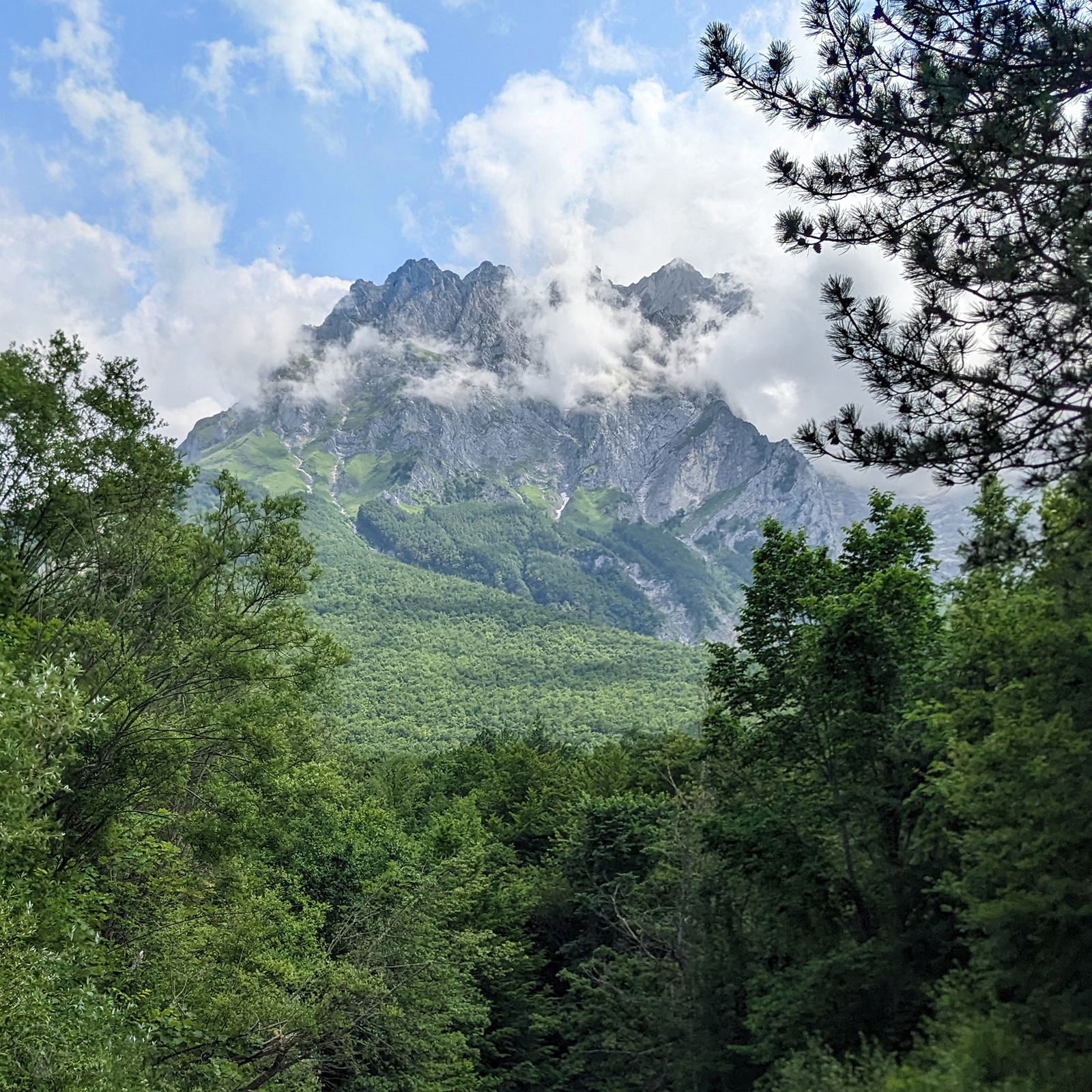
Each region of Italy seems to have its own “ceramics capital,” and each of these (such as Umbria’s Deruta and Campania’s Vietri sul Mare) seems, in turn, to claim to be the country’s ceramics capital. Our next stop, Castelli, is Abruzzo’s contender in this artful rivalry, and the drive there proved to be an unforgettable thrill of our trip. First retracing our route from Rocca Calascio through Castel del Monte, we spent the next hour, jaws fully agape except for occasional “Watch the road!” admonitions, on a serpentine path through landscapes that felt plucked from Norway’s highland tundra, Switzerland’s alpine meadows, and America’s Pacific Northwest.
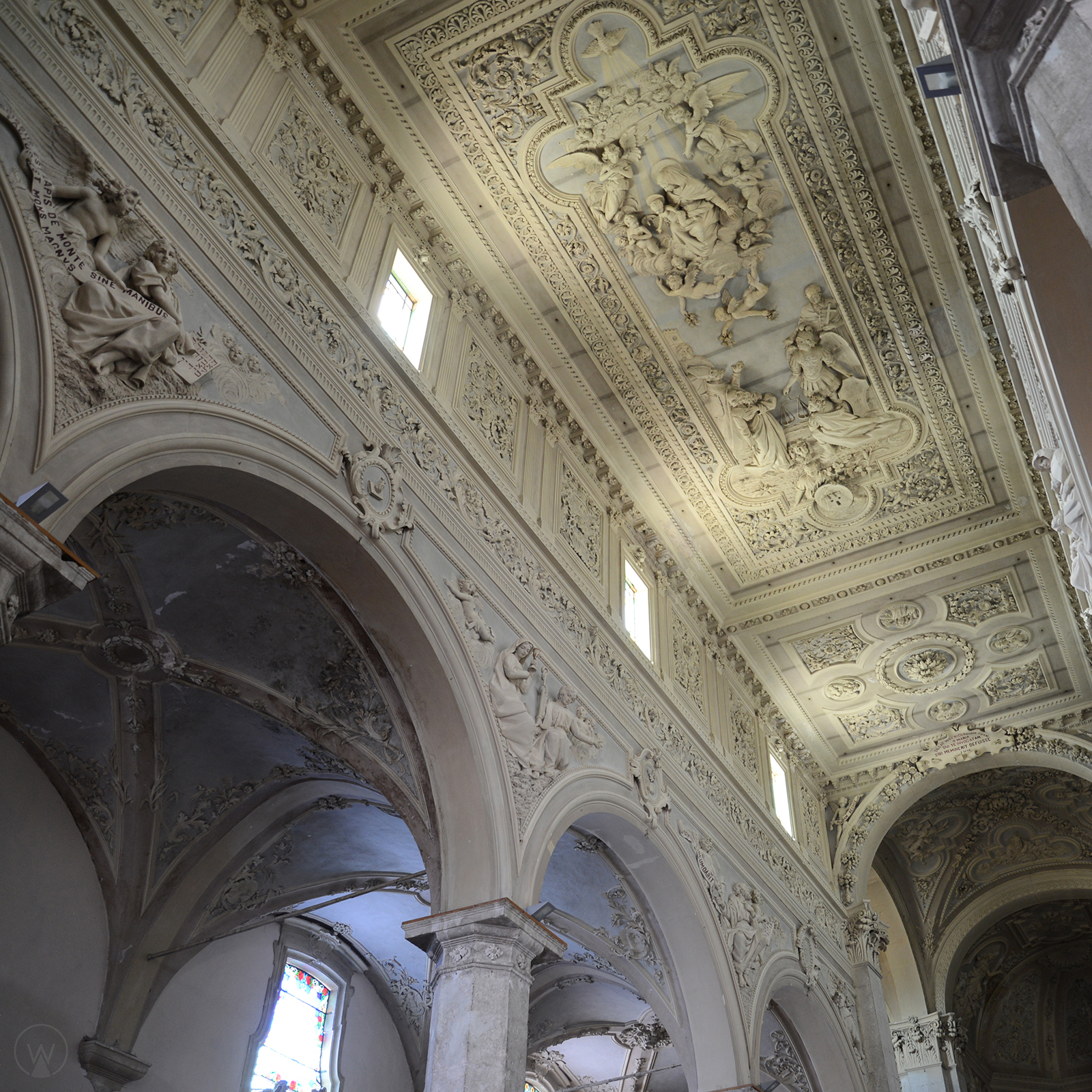
The village of Castelli is renowned for its ceramics since Etruscan times. Nestled beneath Monte Camicia in the Gran Sasso massif, Castelli feels like stepping into another world, packed with workshops where artisans craft exquisite pottery using techniques passed down through the centuries. The boldest statement of this artistic output, the Chiesa di San Donato, is often called the “Sistine Chapel of Majolica” for its stunning ceramic ceiling. Consider taking a pottery workshop to try your hand at shaping clay under the guidance of the masters artisans, and find yourself mesmerized as they transform raw earth into vibrant works of art using techniques that have remained largely unchanged from those honed by their forebears. For lunch, pair some honey with a local cheese such as farindola pecorino, made from raw sheep’s milk and pig’s rennet, which gives it a distinctive aroma and flavor. The women of the Gran Sasso region have produced this cheese for generations, following a recipe known since Roman times.
MUNICIPAL MURALS, URBAN BUSTLE, A FORTRESS TOWN AND A FESTIVAL
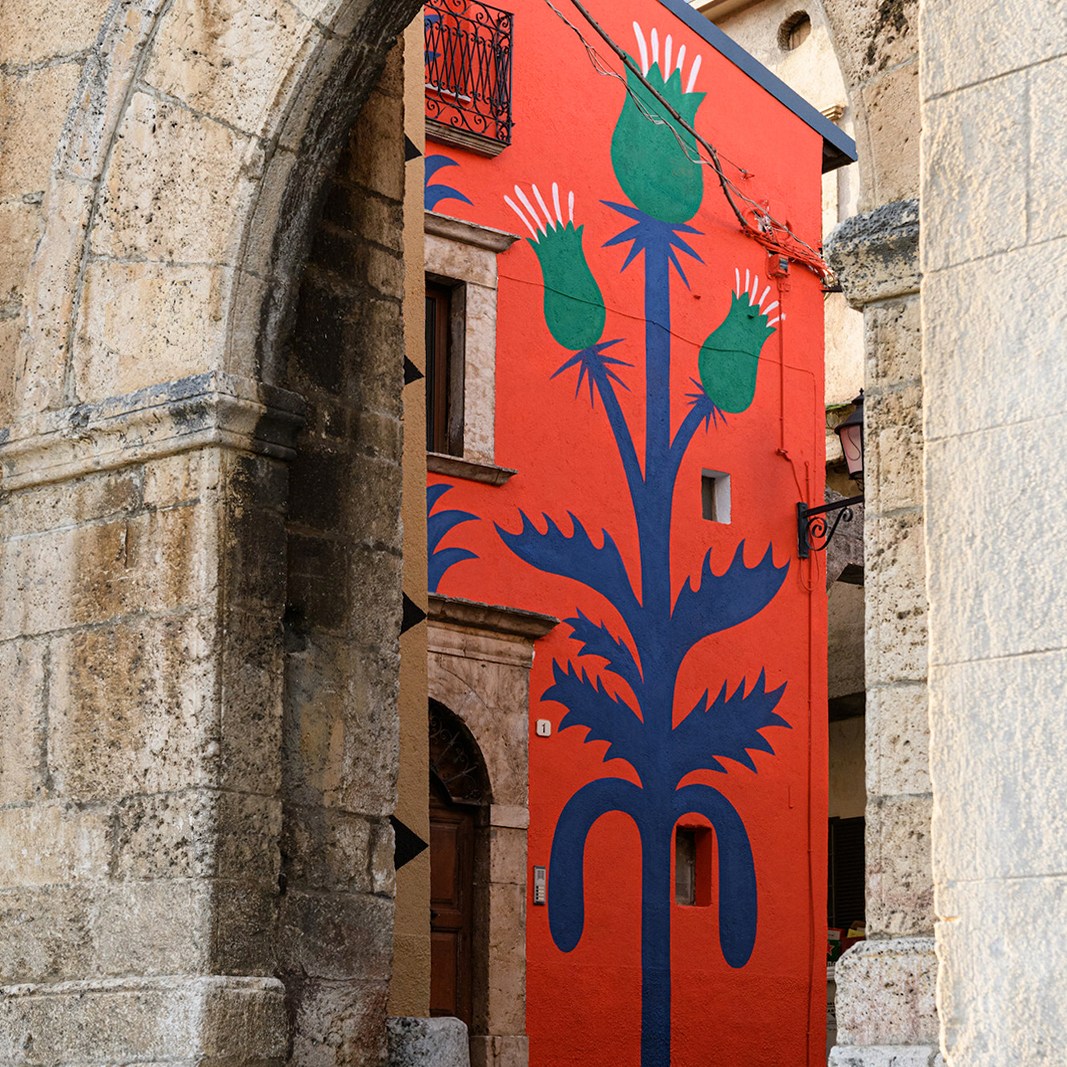
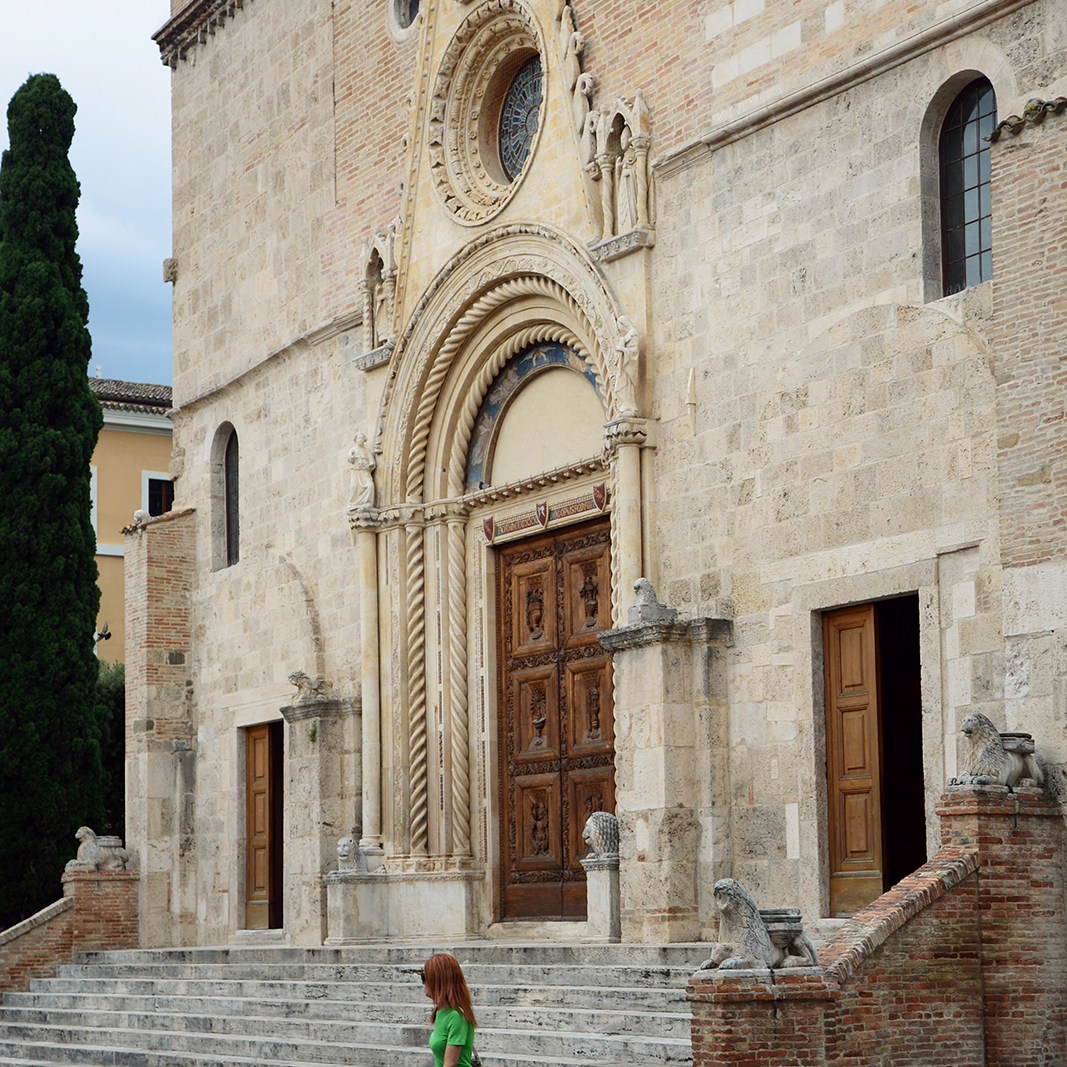
From Castelli, we made a brief stop in Azzinano, a more modern yet still quaint village known for its whimsical murals depicting scenes from rural life. Not as bold in its ambitions or palette as Aielli, the town is still worth a stroll if only to appreciate how art can capture everyday moments with such charm. Next came Teramo, which offered the first “bustling” streets we’d experienced in Abruzzo and was a refreshingly energetic change of pace. With bouquets of pink oleander and fragrant jasmine bursting over the walls of residential gardens at every turn, the city features Roman ruins and other historic landmarks such as Piazza Martiri della Libertà and Cattedrale di Santa Maria Assunta, whose façade is unmistakably Venetian, complete with lion statues symbolizing St. Mark, the empire’s patron, and crenellations embellished with the distinctive curved-V profile typical of the Venetian style. For foodies, Teramo is known for mazzarelle (lamb rolls stuffed with herbs) and timballo teramano, a lasagna-like dish layered with crepes instead of pasta sheets.
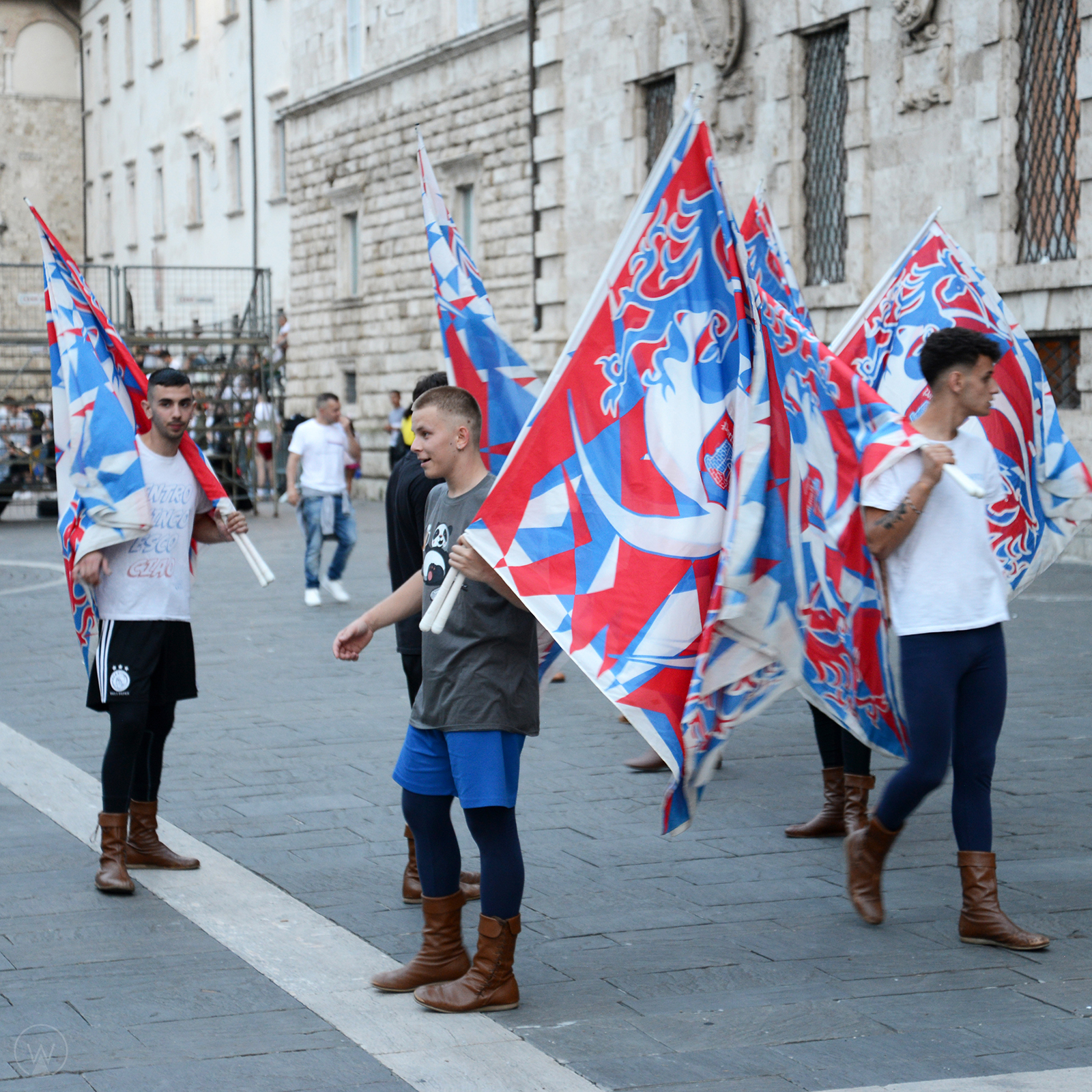
By late afternoon we approached Civitella del Tronto, home to one of Europe’s largest hilltop fortresses. Exploring its labyrinthine corridors felt like stepping back in time to when this stronghold defended against Bourbon invasions. Although we had to move on before any of its Michelin-listed restaurants opened for the evening, we marveled at the fortress itself, a sprawling complex with panoramic views stretching into the neighboring Marche region. Crossing into Marche brought us to Ascoli Piceno, a town that feels – even among all the antiquity we’d experienced – like it belongs in another century, a fitting finale for this leg of our journey. As twilight fell, the travertine-clad Piazza del Popolo seemed to glow while locals practiced flag-twirling routines ahead of the upcoming Quintana festival, held each August. Indulging in olive all’ascolana (meat-stuffed fried olives that are as addictive as they sound) as we basked in the vitality of the centro storico, we considered lodging here and enjoying a bit more of the vibrant nightlife, but with a full day ahead of us we decided to push northward.
This turned out to be lucky meteorology, as a storm moved in quickly and greeted us with a deluge as we reached our B&B in Potenza Picena. The plain façade belied the enthusiastically Baroque interior with ornate ceilings, gilded mirrors and florid paint, while a big, clawfoot tub reigned in one of the most flamboyant bathrooms we’ll ever encounter. The breakfast buffet was arrayed for us alone, beneath a chandelier that might have been on loan from Matera. Morning brought clearer skies, so we climbed a narrow staircase – which revealed the upper ribworks suspending the library’s elongated dome ceiling – to catch our first glimpse of Loreto on the northern horizon, where the next chapter in our coastal adventure awaited.
QUESTIONS FOR READERS
- If you’ve visited any of Abruzzo’s national parks, such as Parco Nazionale del Gran Sasso e Monti della Laga or Majella National Park, what was your experience like?
- What’s your most memorable experience of staying in an albergo diffuso or other unique accommodation in Italy?
- If you’ve tried the local specialties in Abruzzo, such as confetti from Sulmona or olive all’ascolana in Ascoli Piceno, which was your favorite and why?
- What’s your favorite scenic drive in Italy, and how does it compare to the winding roads through Abruzzo’s mountains and gorges?
- If you’ve visited Marche or Abruzzo, what hidden gems or off-the-beaten-path attractions would you recommend adding to this itinerary?
 WANDERLOOSED