


Portugal’s second city boasts a rich historical tapestry, which spans from Roman times through its pivotal role in the Age of Discovery. Having been spared destruction similar to the fire that leveled most of Lisbon in 1755, Porto’s structures date back to medieval times, many nooks of the city seeming unchanged since then, which gives the city a rustic charm that surpasses most of what’s to be experienced in the capital. If you’re looking for what to do in one day in Porto, this walking tour focuses on the UNESCO-listed Ribeira district, also known as O Coração do Porto (Porto’s Heart), while extending briefly into the neighboring Baixa and Bonfim districts.
ONE-DAY WALKING TOUR OF PORTO’S RIBEIRA DISTRICT
Our tour begins near Hotel das Virtudes, a study in modern elegance housed in the reclaimed ruins of a 16th-century stone building that has served purposes as varied as a noble residence and a fish cannery. Partly recessed into the cliff that separates it from Parque das Virtudes, the hotel was opened in 2024 by a northern-Portuguese family with a reputation for respectful modernizations of the region’s abandoned structures, and our stay here was one among many highlights of our visit to the city. But because the route forms a complete (and squishy) loop, you can join it at any point along the way and find yourself back there at the end of the day. The full circuit is approximately five kilometers, which itself takes a bit more than an hour of continuous walking at a moderate pace, yet you should plan on a full day and bring comfortable, hill-friendly shoes plus plenty of water. If you prefer a gentler stroll, you could easily spend two (or more) days on this same route. In any case, check on current opening times for any of the sites you’ll want to enter along the way, because not all of them (such as the churches) have intuitive hours. Visiting some, including Livraria Lello and São Francisco, may either require or at least benefit from reservations.
AZULEJO DEFINED, THE DUORO WATERFRONT AND THE GOLDEN CHURCH
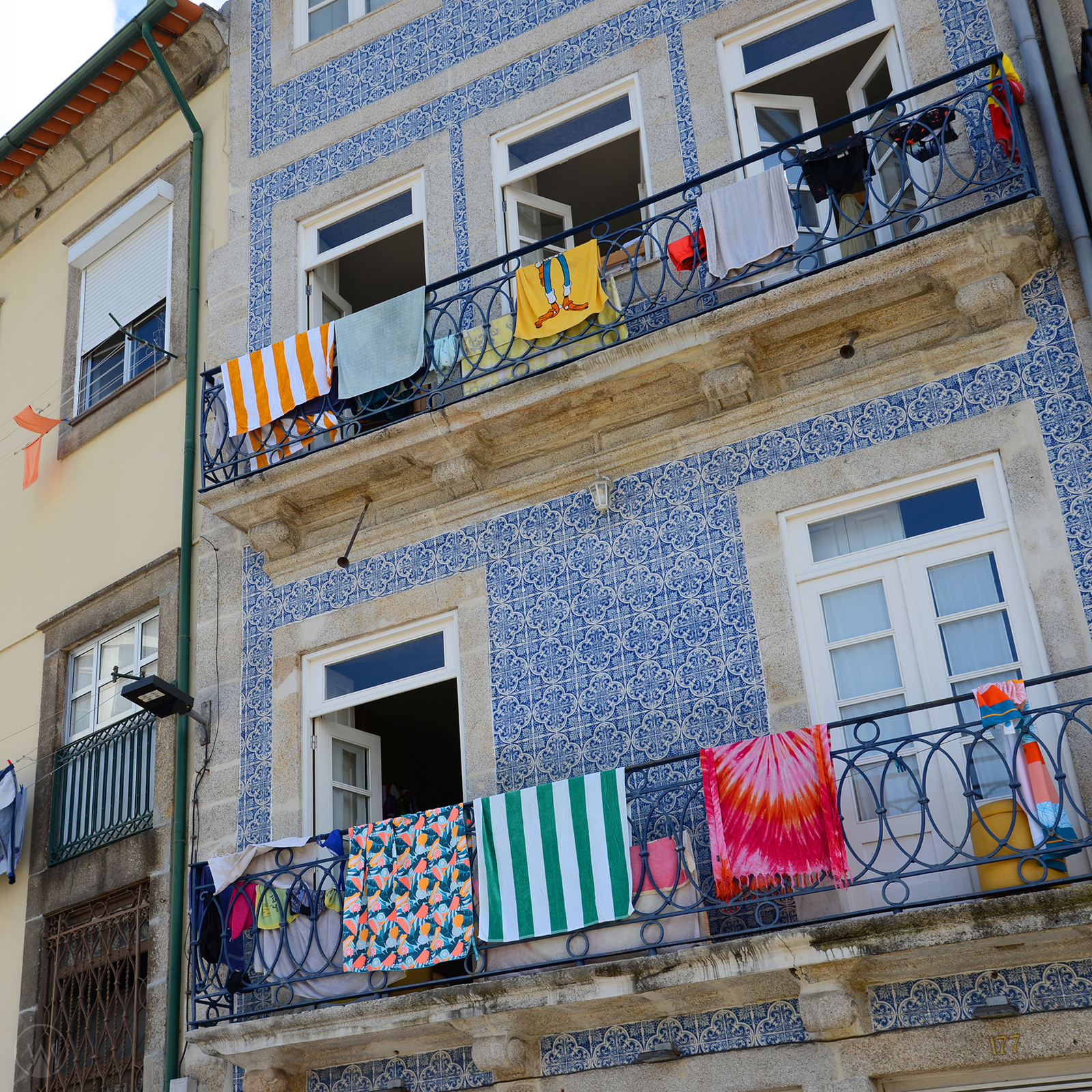
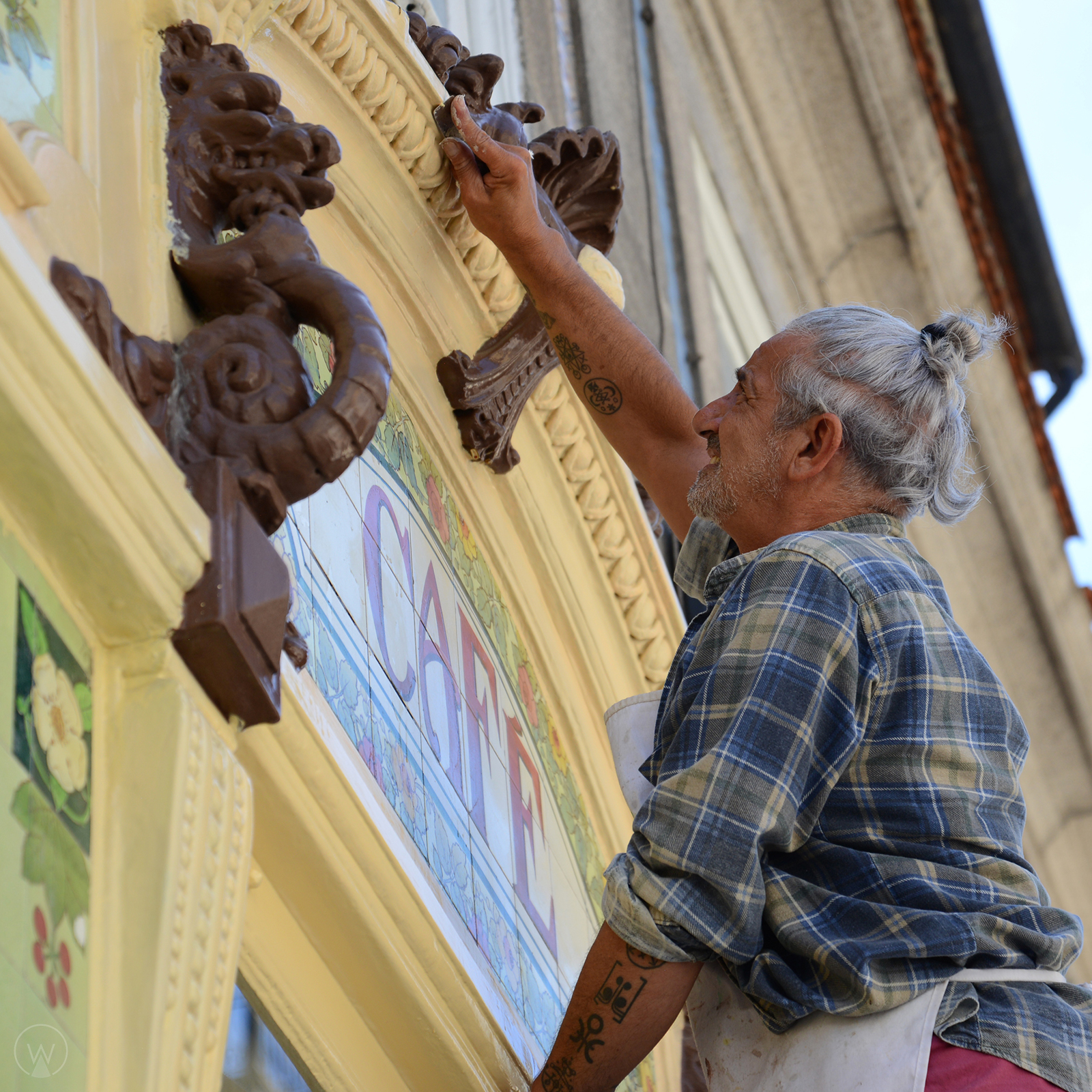
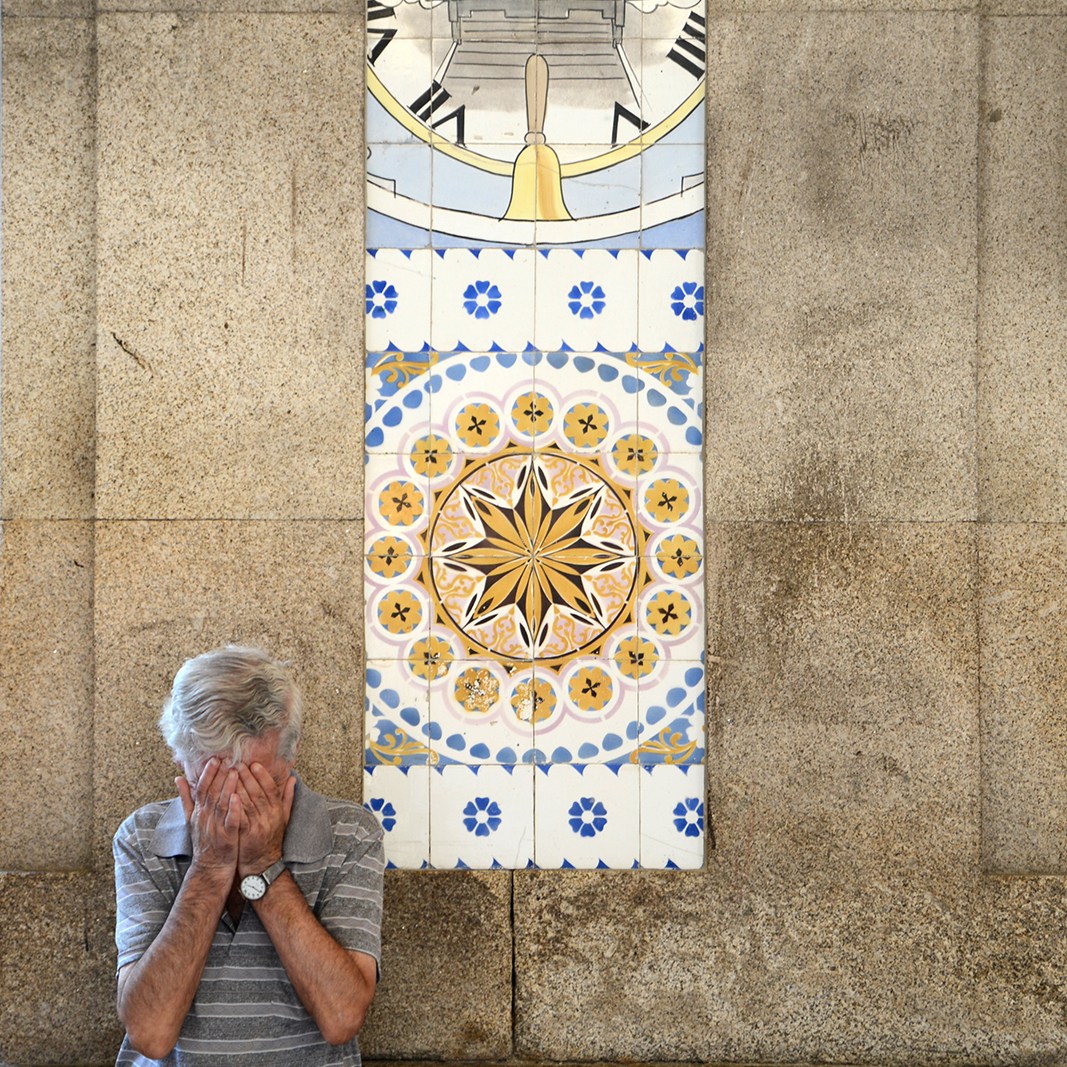
Just beyond the Douro River’s edge, tucked into the historic Miragaia neighborhood, is Igreja de São Pedro de Miragaia, a modest yet charming church that feels like a whisper of Porto’s past. The relative simplicity of its Baroque design owes in part to the church’s location outside of the ancient city walls, its congregants having been primarily sailors, merchants, dock-workers and others of humbler means who supported the maritime trade, and its location in this quiet nook contrasts with the bustle of the broader Ribeira district you’ll encounter shortly, making it a perfect place to begin your day. The façade features the first of many examples you’ll see today of azulejo tiles, the quintessentially southern-Iberian decorative and insulative architectural art form. While the tiles’ predominant – although not exclusive – color combination of blue-on-white might lead foreign speakers of Portuguese or Spanish to naturally assume the “azul” in “azulejo” to mean “blue,” this isn’t the case; rather, “azulejo” means just “(polished) tile” and comes from the Arabic word azzelij (small polished stone) that describes the tiles used to adorn mosques, one of many enduring influences of this region’s ancient rulers.
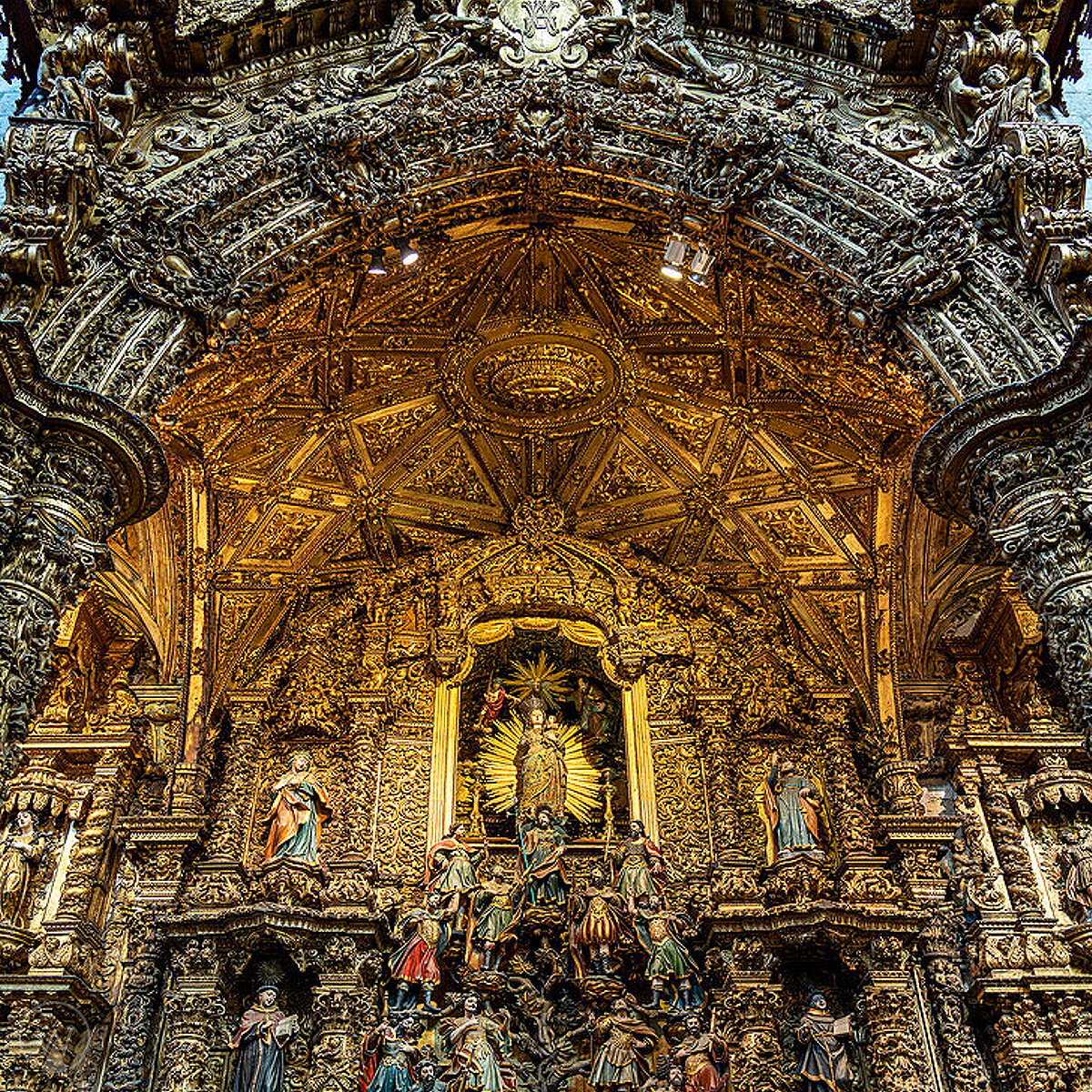
Continue eastward past rows of colorful residences on Rua da Miragaia then Rua Nova da Alfândega (with the Vila Nova de Gaia municipality — and its endless cellars of port wine — across the Duoro River to your right and the Ponte Dom Luís I spanning the river ahead) until you reach Igreja de São Francisco, a Gothic church housing one of the most opulent Baroque interiors in all of Portugal – although perhaps not the most opulent in town, as we’ll observe later. Step inside to find yourself surrounded by gilded wood carvings so intricate and abundant that they seem to swarm you in their ecstatic frenzy. More than 400 kilograms of gold leaf were used to create this dazzling spectacle, a fact that might make you suspect that São Francisco’s nickname, “The Golden Church,” is an understatement. Step into the crypt below, where, tucked beyond the orderly tombs of former Franciscan faithful, a small window overlooks heaps of human bones as a chilling “You can’t take it with you” memento mori beneath all that gold.
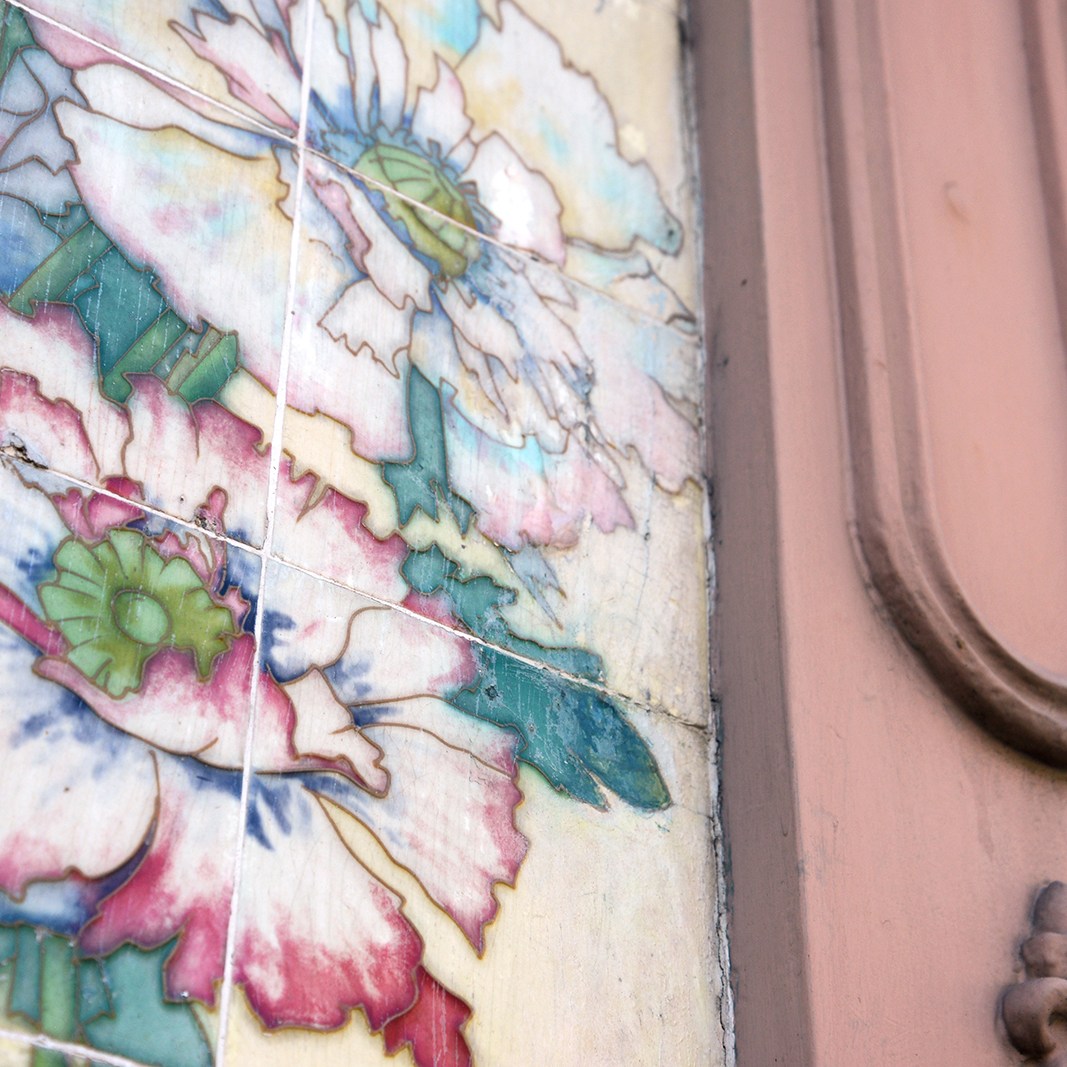
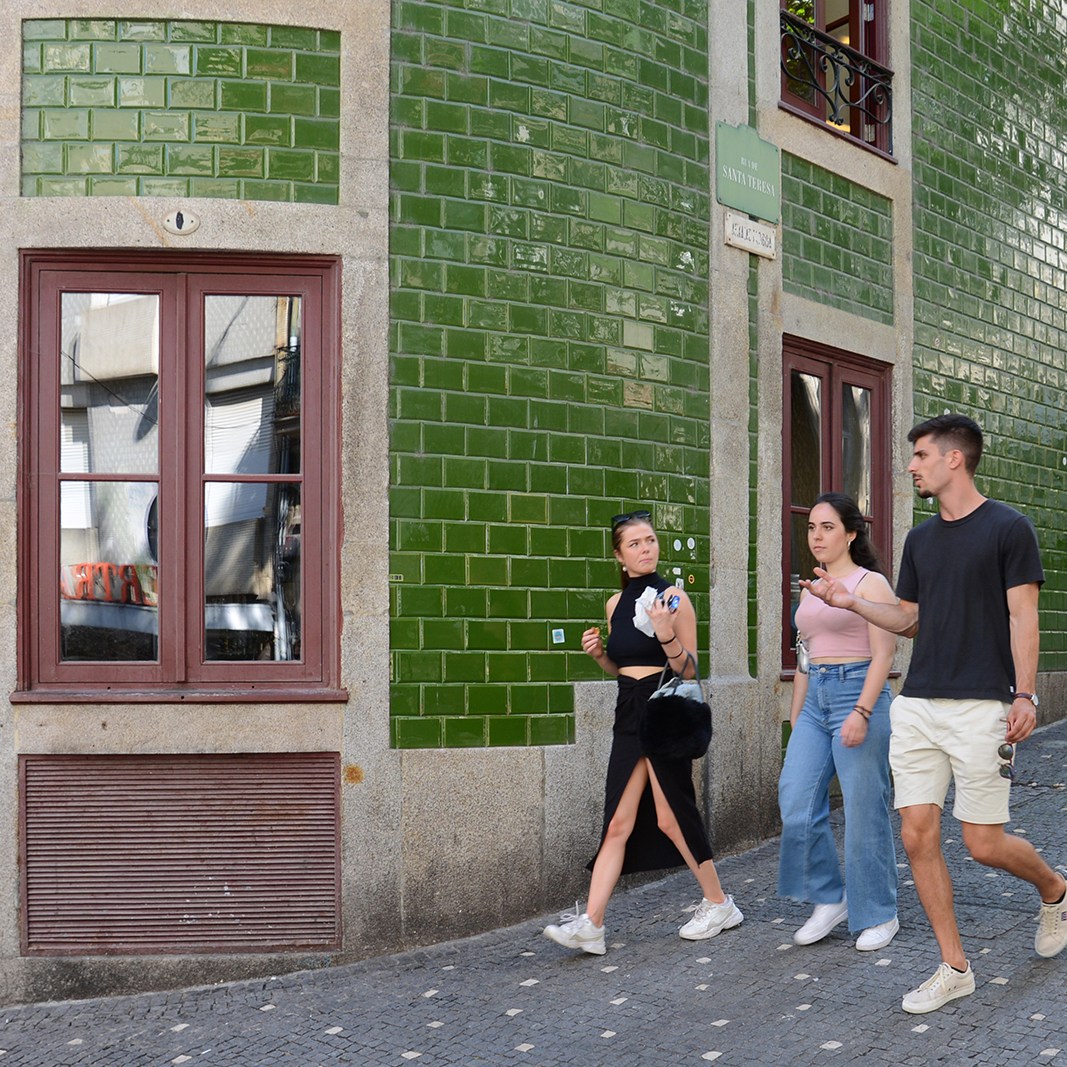
Rather cozily abutting São Francisco’s north wall and facing the Praça Infante D. Henrique is the Palácio da Bolsa (Stock Exchange Palace), whose ornate interior suggests that this temple of commerce might also be numbered among the city’s places of worship. Across the small plaza is the Mercado Ferreira Borges, a former public marketplace with a distinctively eclectic façade made entirely of glass and red wrought iron. Continuing up Rua do Infante D. Henrique, note the azulejo-clad façades of Igreja de São Nicolau and RC Restaurante on your right, the latter’s floral designs departing from the more common blue-and-white palette. At the tunnel, turn left up Rua dos Mercadores, one of Porto’s characteristically narrow – and steep – medieval streets. By the time you meet Rua da Bainharia and turn a sharp right onto (i.e., up) Rua de Sant’Ana, you’ll feel as if you’ve entered a time machine, and you’ll be appreciating your comfy kicks.
TERREIRO DA SÉ, RUA ESCURA AND MURALHA FERNANDINA
At the top of Sant’Ana are the Igreja de São Lourenço and the Convento dos Grilos. With most of the attention here drawn by the adjacent cathedral – more on that in a moment – you’ll likely be able to enjoy the collection of the Museu de Arte Sacra e Arqueologia (Museum of Sacred Art and Archaeology), views of the Duoro from São Lourenço’s towers, and the serenity of the Convento’s courtyard in relative solitude. Up a few more steps is the Paço Episcopal (Episcopal Palace), whose staterooms, halls and grand staircase are masterful examples of the Portuguese Baroque and Rococo styles.
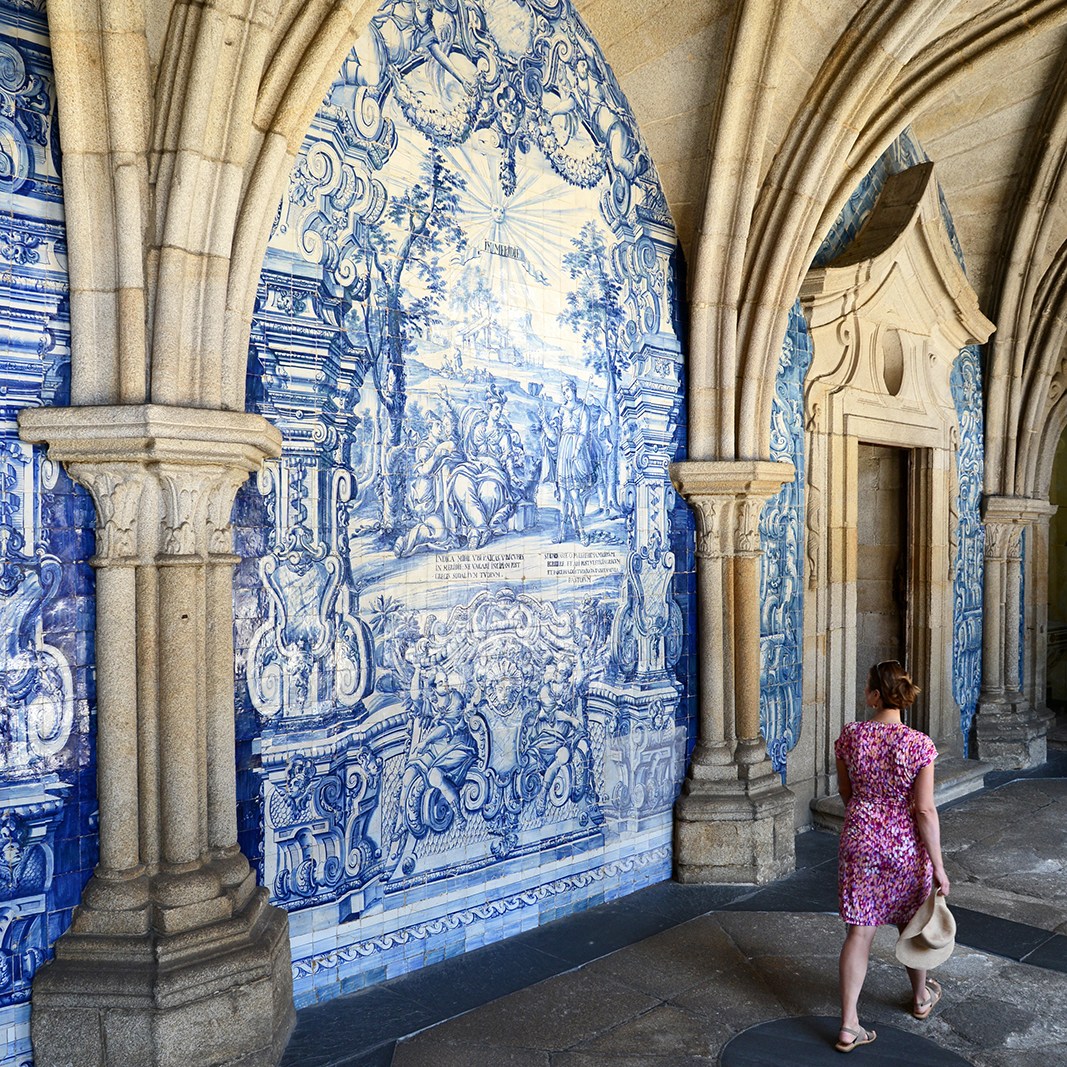
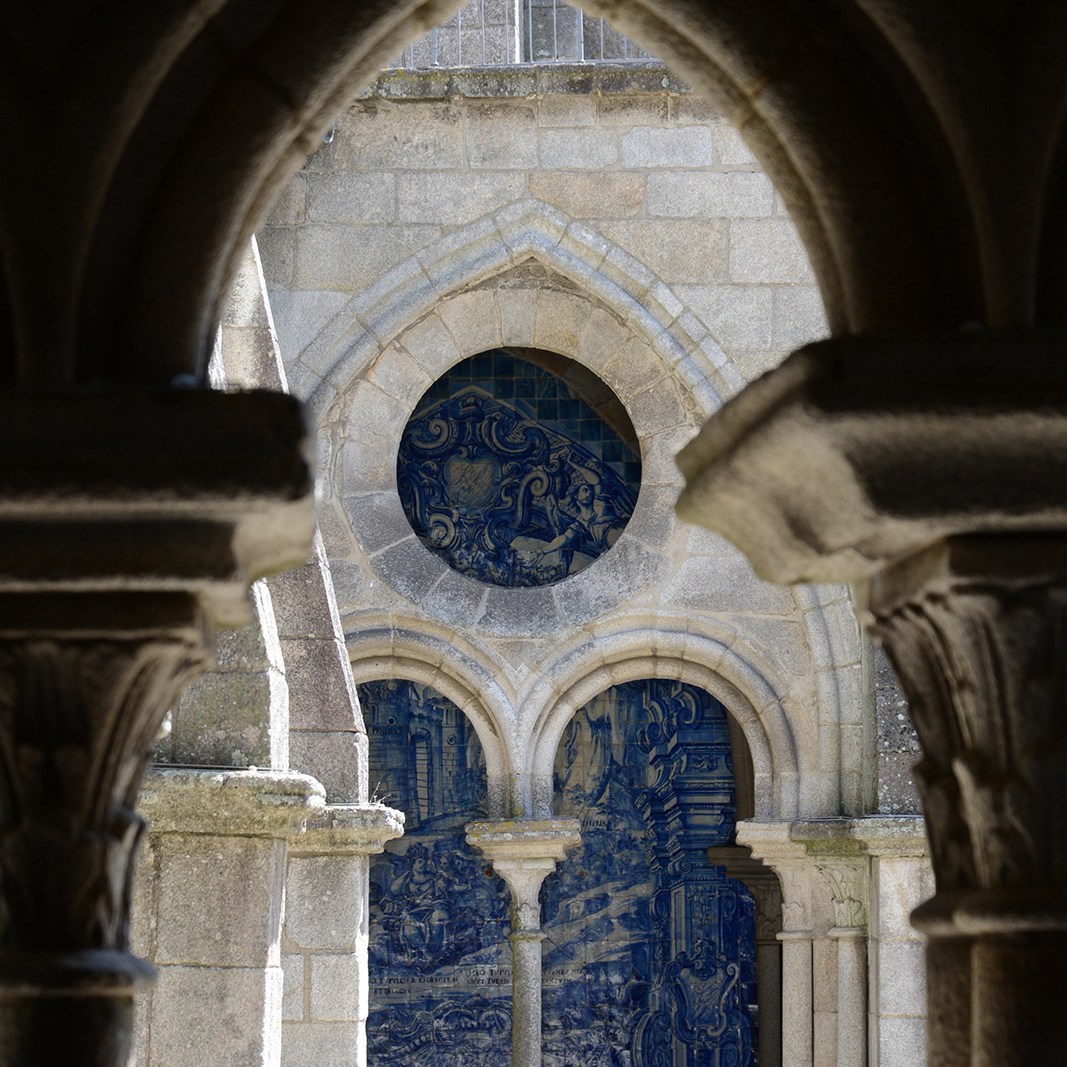
The crown of this hill and of Porto itself is Sé do Porto, the city’s cathedral and one of its oldest monuments. A Romanesque masterpiece with Gothic and Baroque flourishes, the Sé offers panoramic views of Porto from its azulejo-ornamented terrace, and its inner cloisters are decorated with azulejos depicting biblical scenes – ample reward for your uphill efforts.
Before continuing eastward, consider taking even fifteen minutes to descend the steps just north of the cathedral and walk the web of tiny streets that branch from Rua Escura, the “Dark Street” that earned its name from the various forms of illicit activity to which it has played host through the centuries. If you’re interested in other vestiges of Porto’s medieval history, this might also be your best chance to see Muralha Fernandina, a remaining section of Porto’s original medieval wall, by walking a few hundred meters south on Avenida Vimara Perez and continuing onto the pedestrian walkway atop Ponte Dom Luís I. Alternatively, you can also see the wall after our next stop, from the Funicular dos Guindais which takes you back down to the river.
IGREJA DE SANTA CLARA, TEATRO SÃO JOÃO AND IGREJA DE SANTO ILDEFONSO
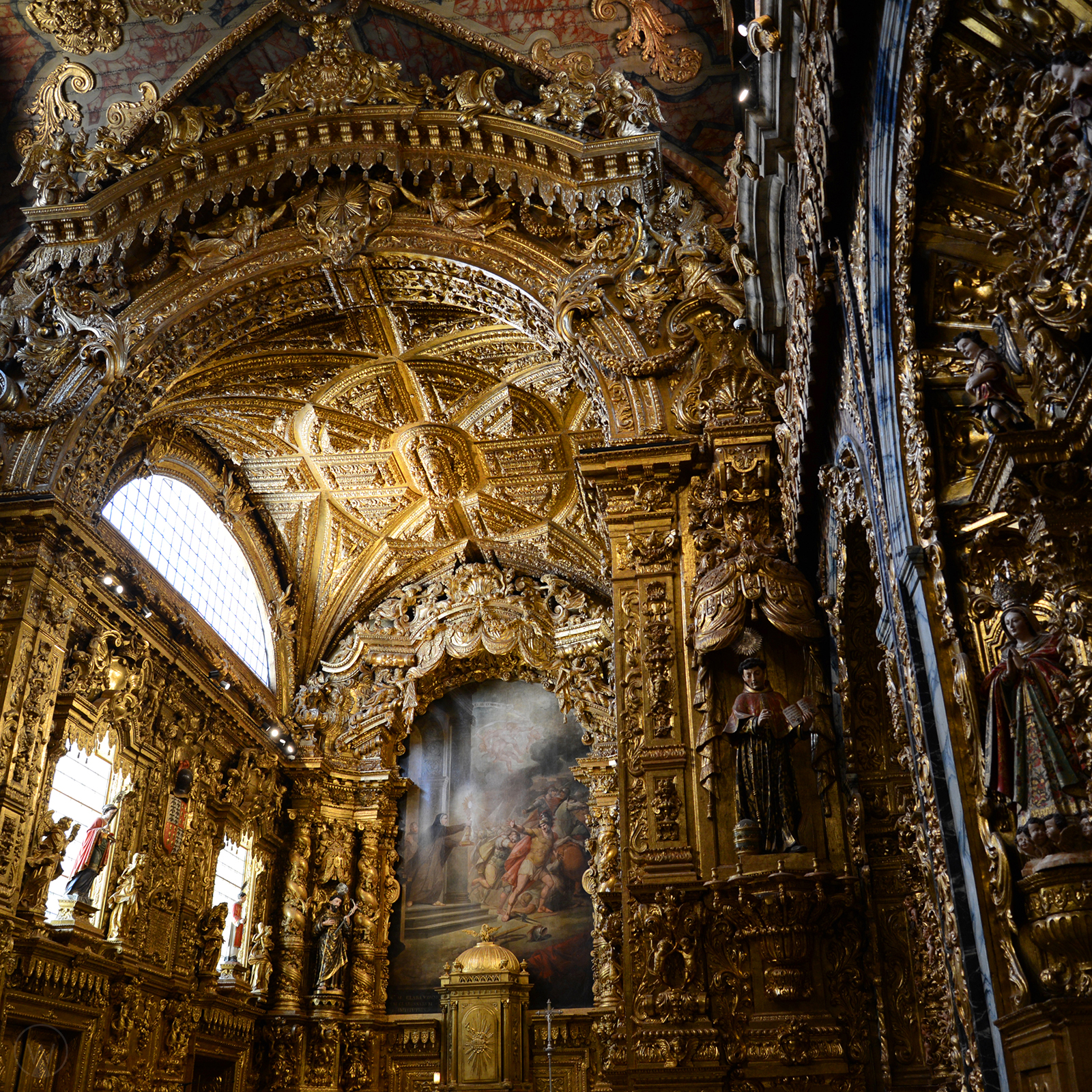
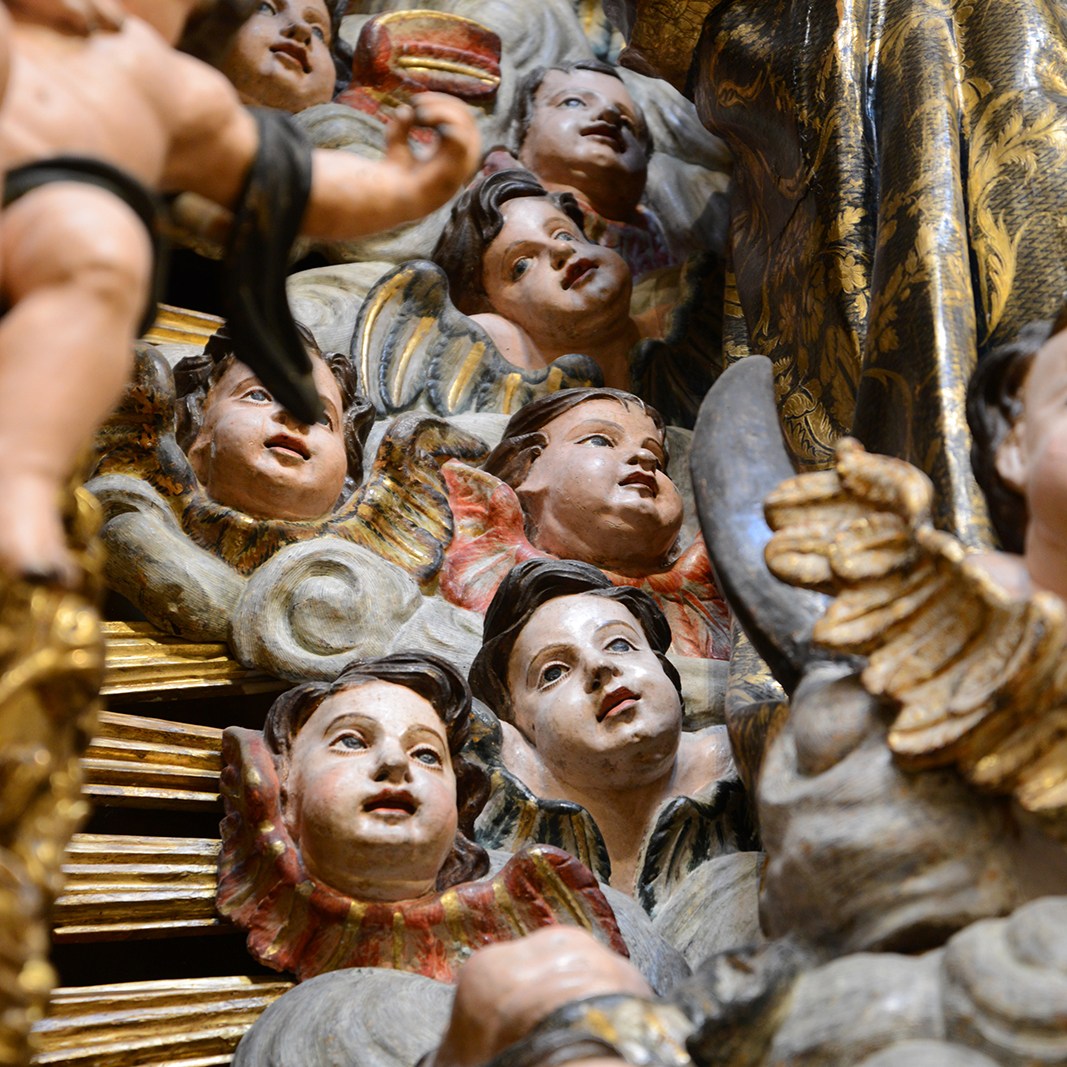
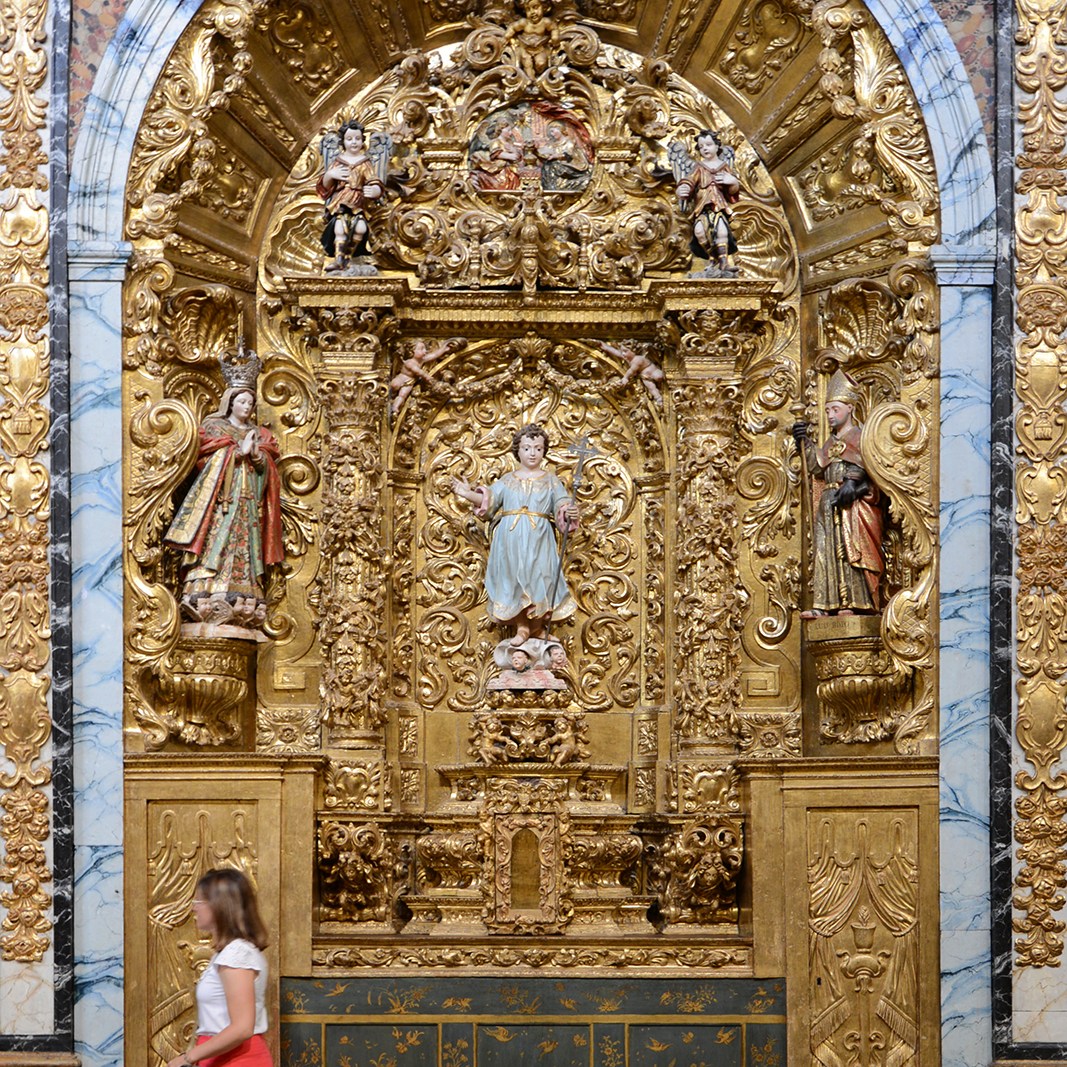
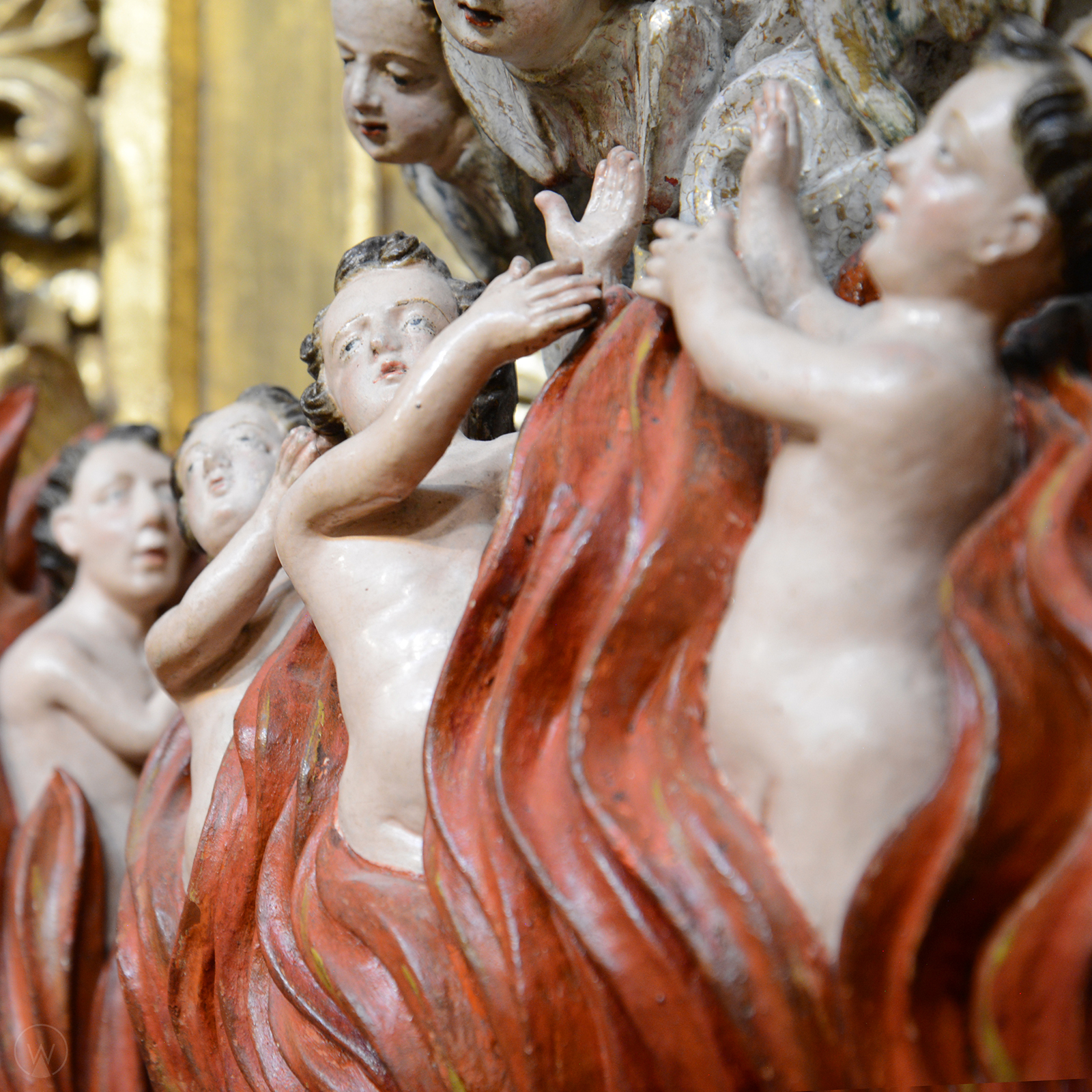
A short distance east of the Sé is Igreja de Santa Clara, a hidden jewel box often overlooked by visitors. Its utterly nondescript exterior gives no hint of the utterly orgiastic Rococo flamboyance within: Gilded carvings cover nearly every available surface, presenting an assemblage of bling so bright, you gotta wear shades. We found the docent Miguel to be particularly helpful (he has been there for many years and will likely be there for your visit), especially in explaining the disconcerting New-World origins of most of the gold as well as the symbolism of the altar tiers that are veiled behind a large painting. We also learned that if you happen to arrive outside of standard visiting hours, you might be allowed inside if you bring a few eggs to place next to the altar as an offering for blessings of romance, fertility, or clear skies on your wedding day.
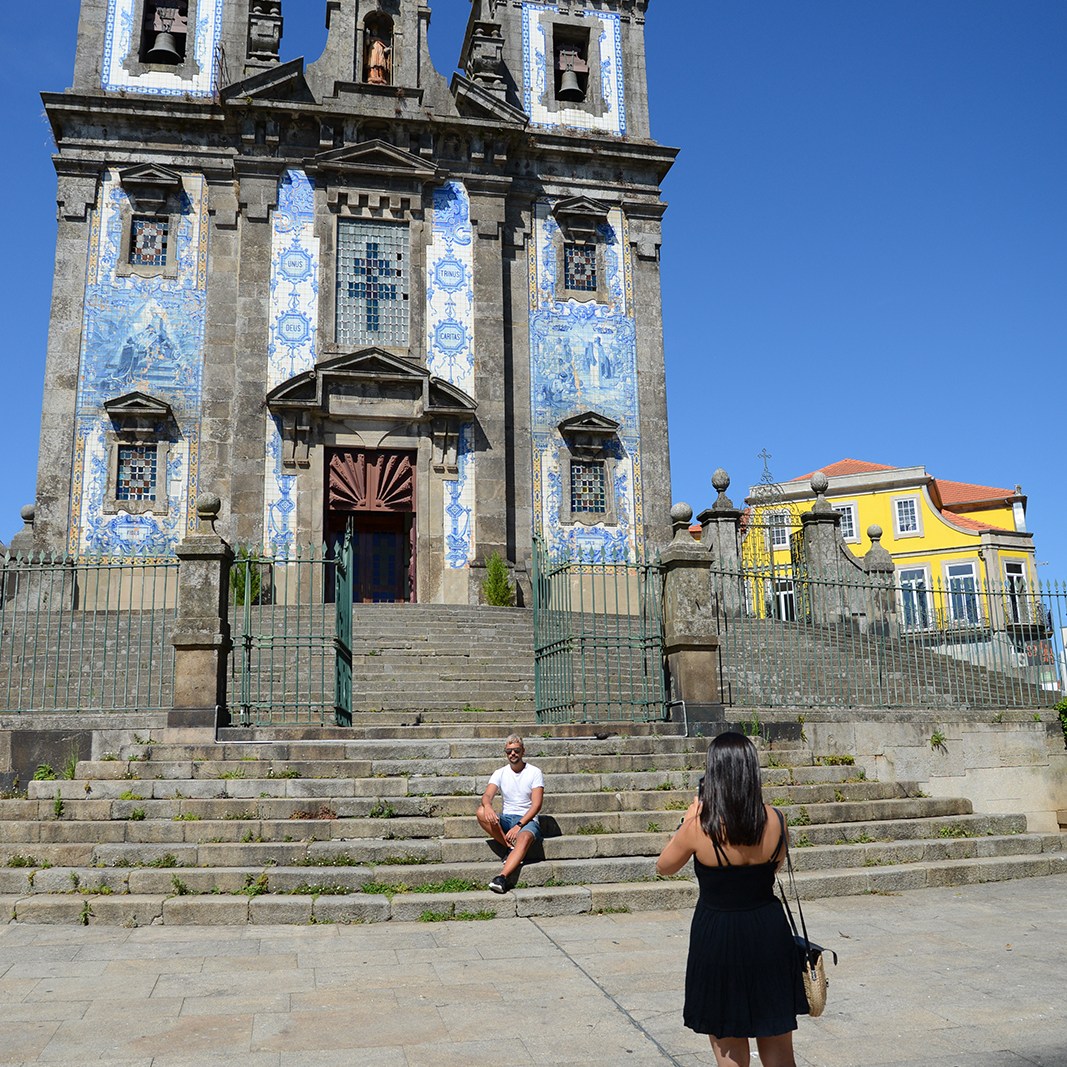
If you’re a fan of the performing arts, consider a tour of Teatro Nacional São João (currently, tours are offered most days at 12:30), perhaps returning for a show in the evening. This beautiful neoclassical landmark, rebuilt after a 1908 fire, combines innovative early 20th-century construction techniques with rich artistic details, such as its horseshoe-shaped concert hall and sculptures representing human emotions, making it a vital piece of Portuguese cultural and architectural heritage. Continuing toward Praça da Batalha brings you to Igreja de Santo Ildefonso, another azulejo-adorned gem. This 18th-century church stands proudly at the top of a stately staircase, its tiles narrating scenes from Saint Ildefonso’s life.
FOOD, SHOPPING AND AN AZULEJO MARVEL ON RUA SANTA CATARINA
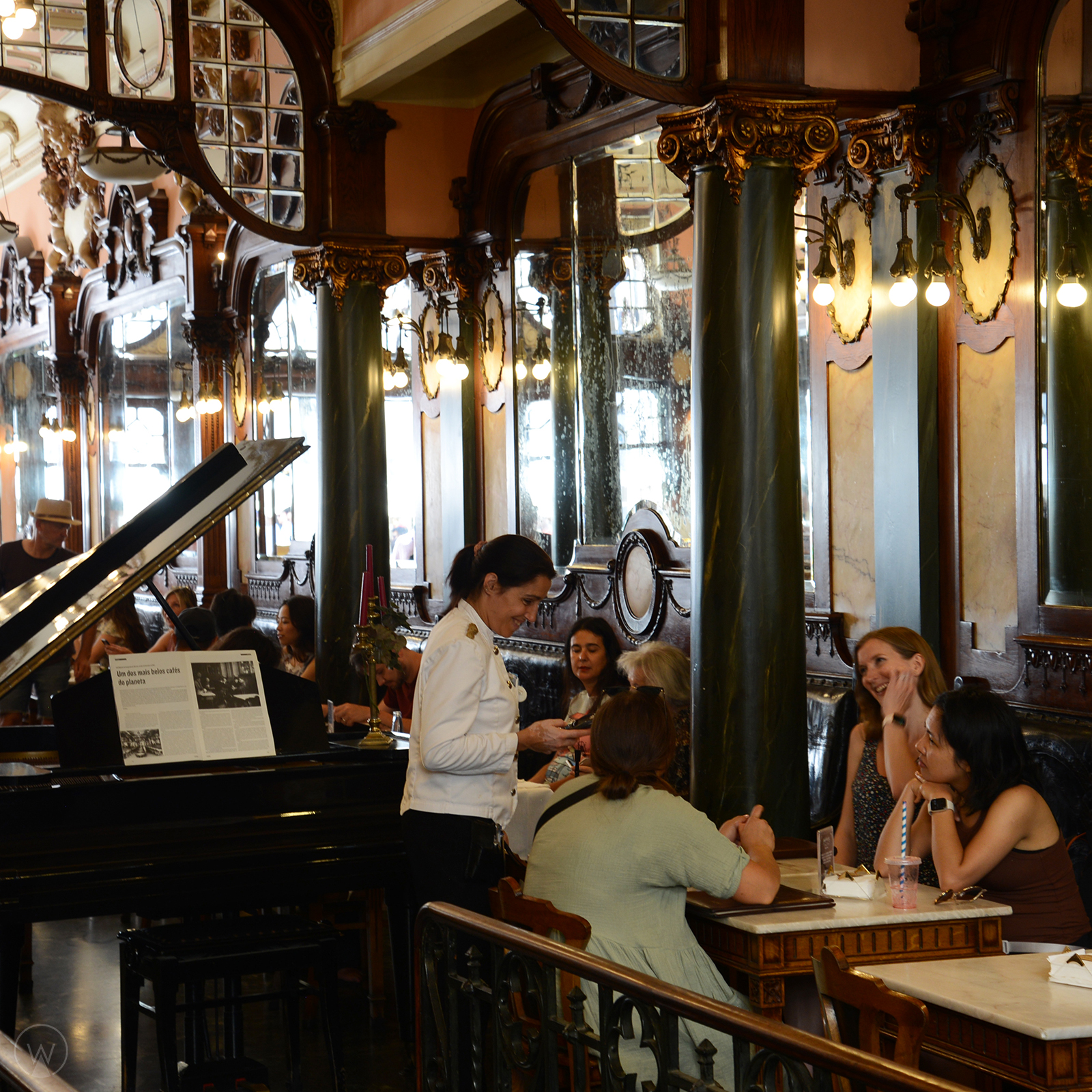
By now, your legs might be calling for a break and your stomach growling for some fuel. A few steps from Ildefonso, you could enjoy a traditional Francesinha sandwich at Café Santiago (Rua de Passos Manuel 226), just across from the Coliseu do Porto, an Art Deco cinema and concert venue. Or you could rest at nearby Majestic Café (Rua de Santa Catarina 112), an Art Nouveau icon that exudes old-world glamour. We chose not to eat here because some claim that its menu has come to favor the palates of curious tourists over those of discerning locals, but you must at the very least step inside if only to appreciate the view of patrons sipping a bica (espresso) and indulging in a pastel de nata (custard tart) beneath florid mirrors and chandeliers.
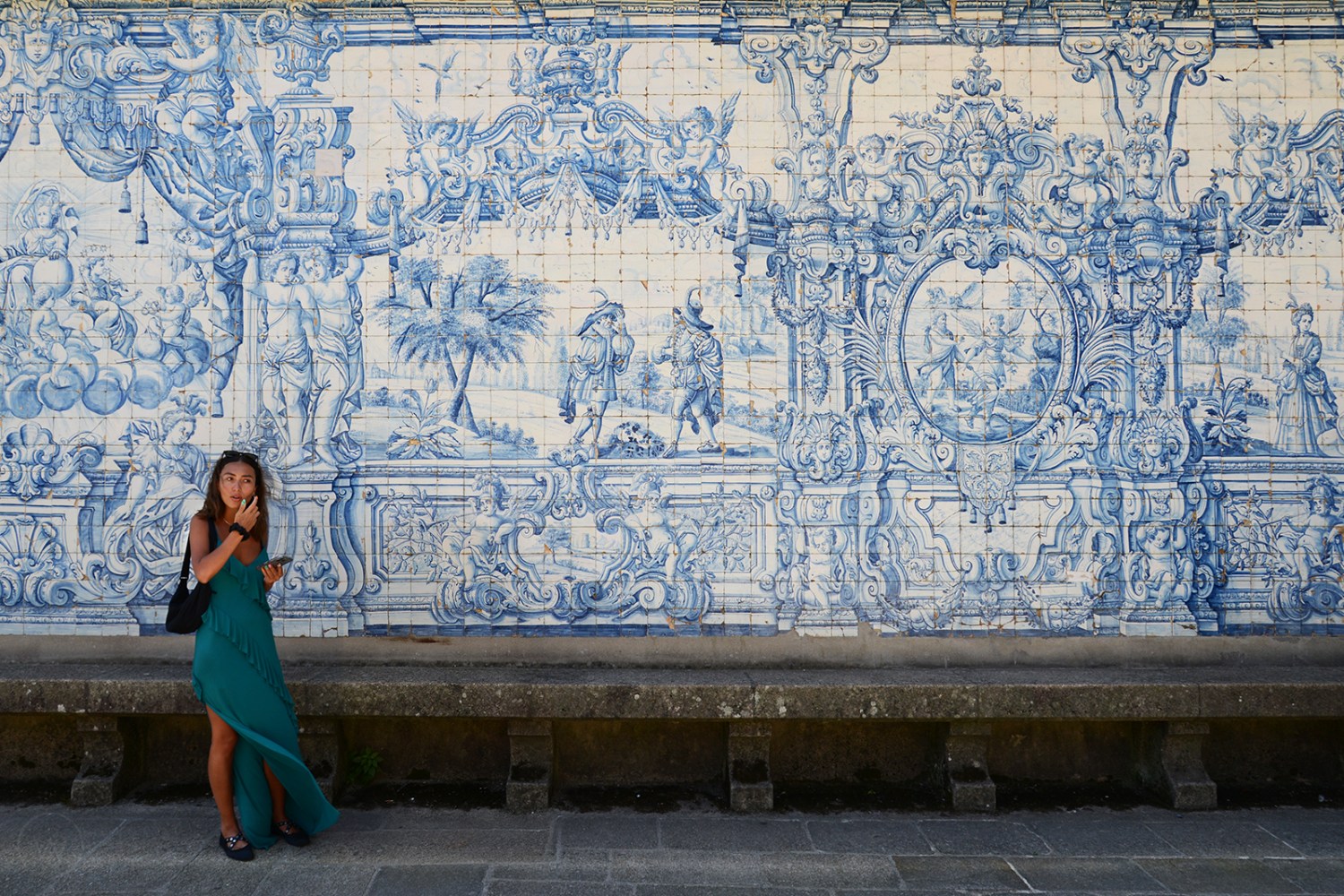
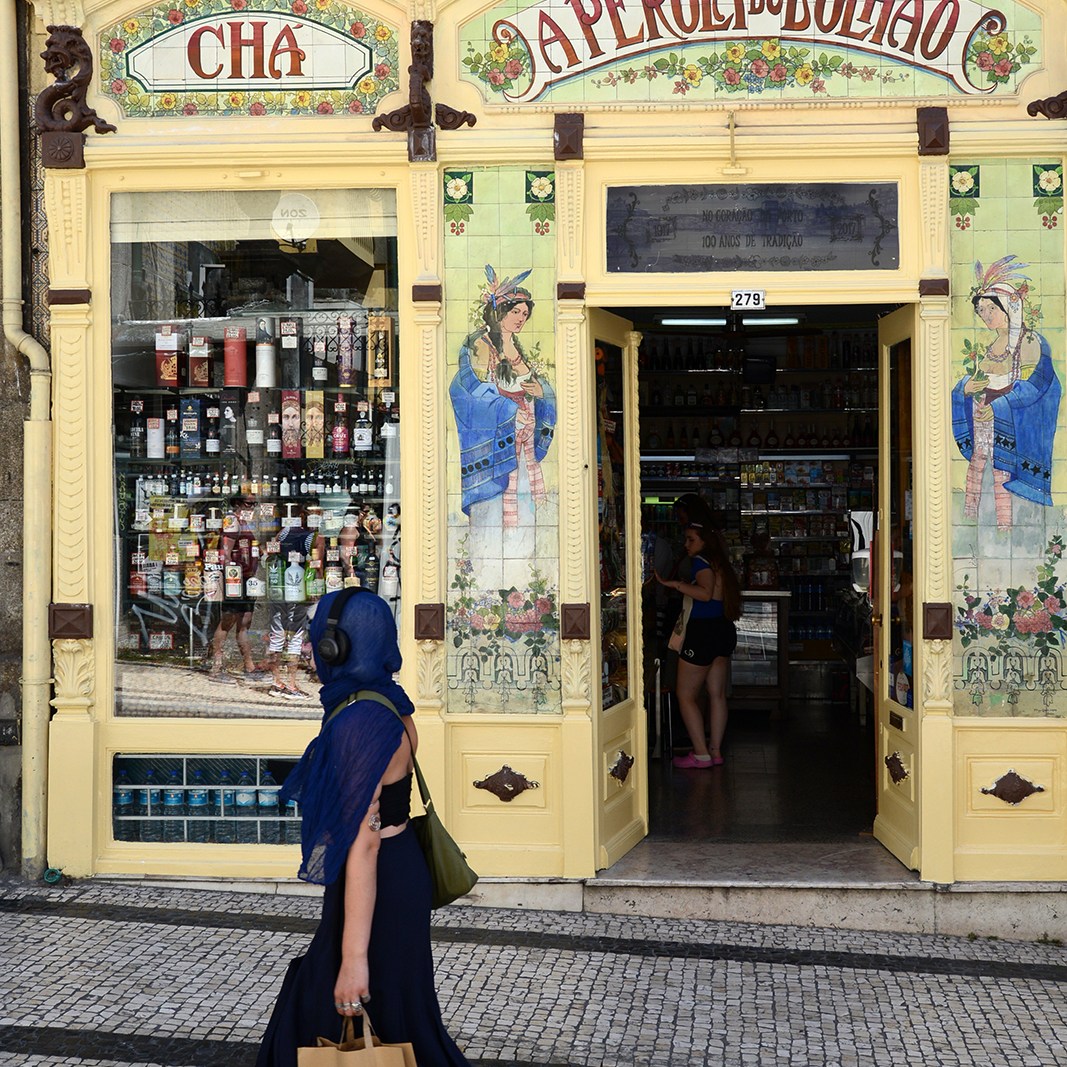
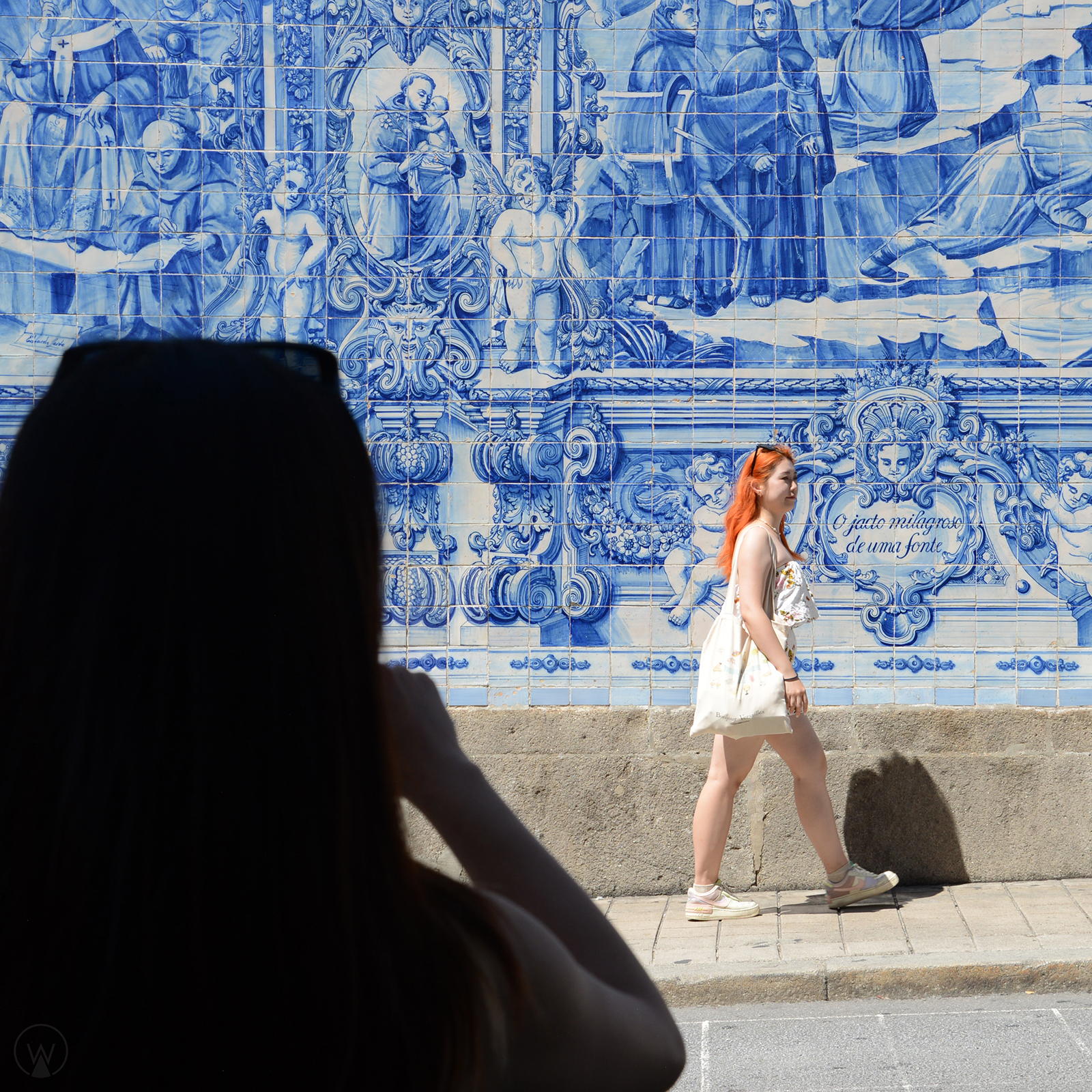
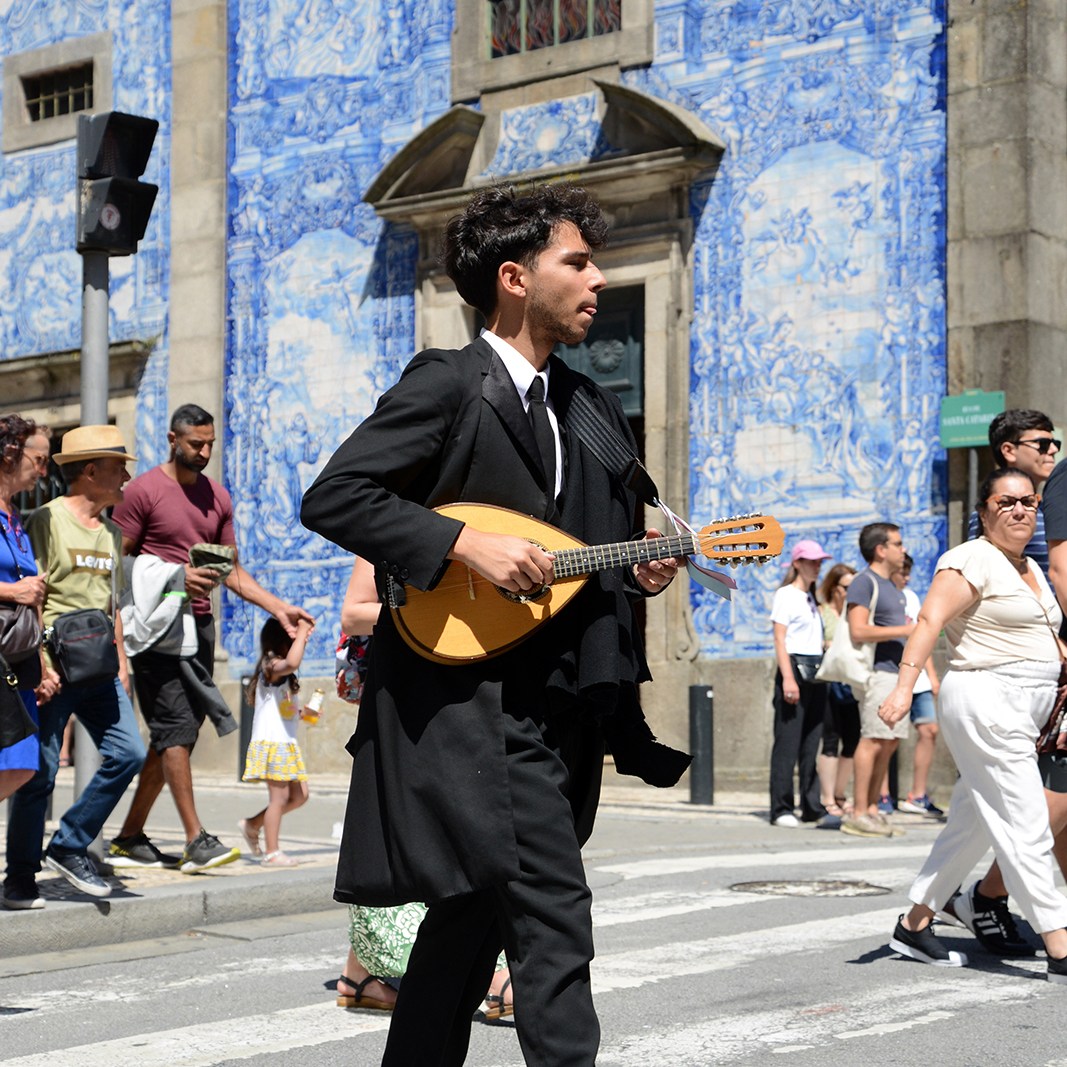
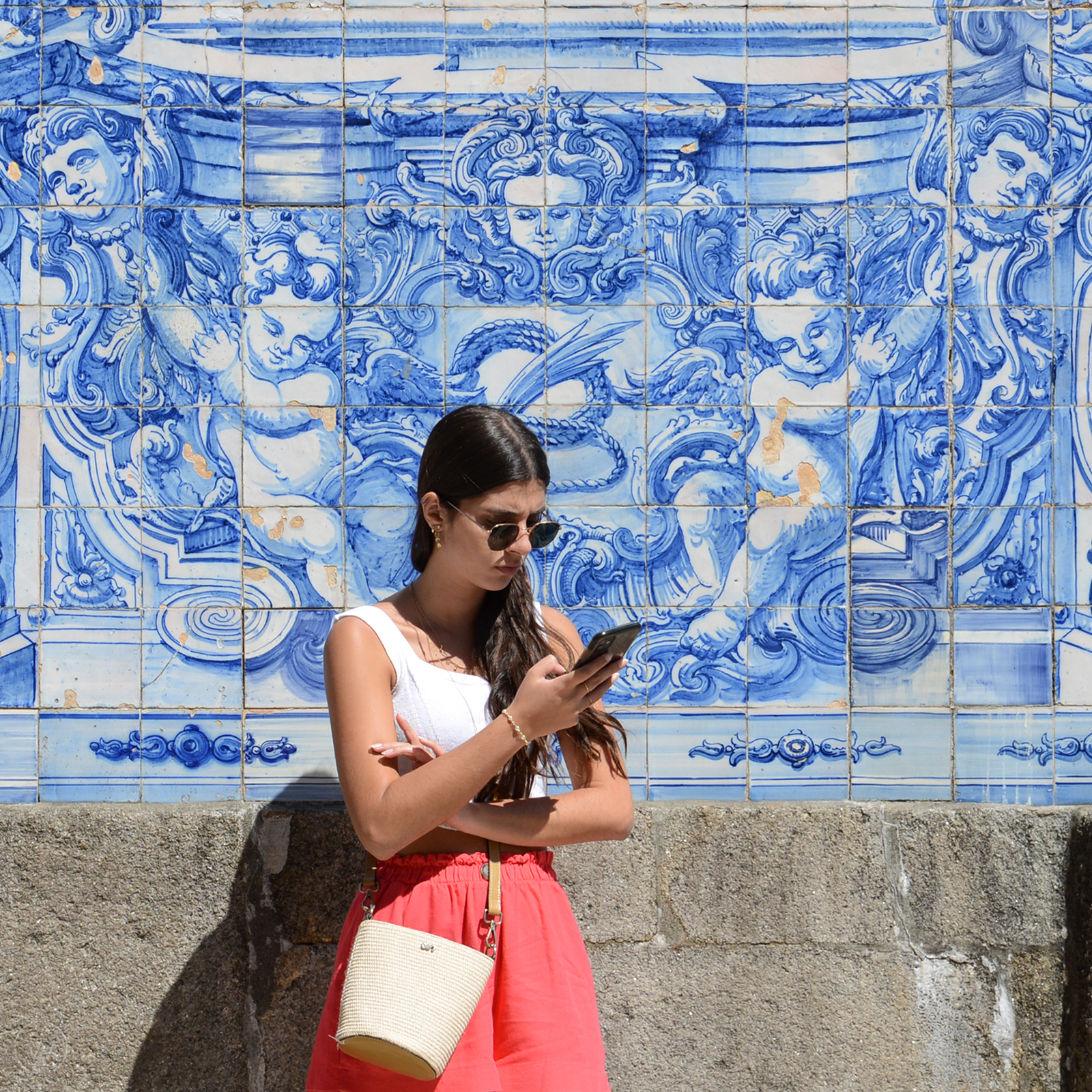
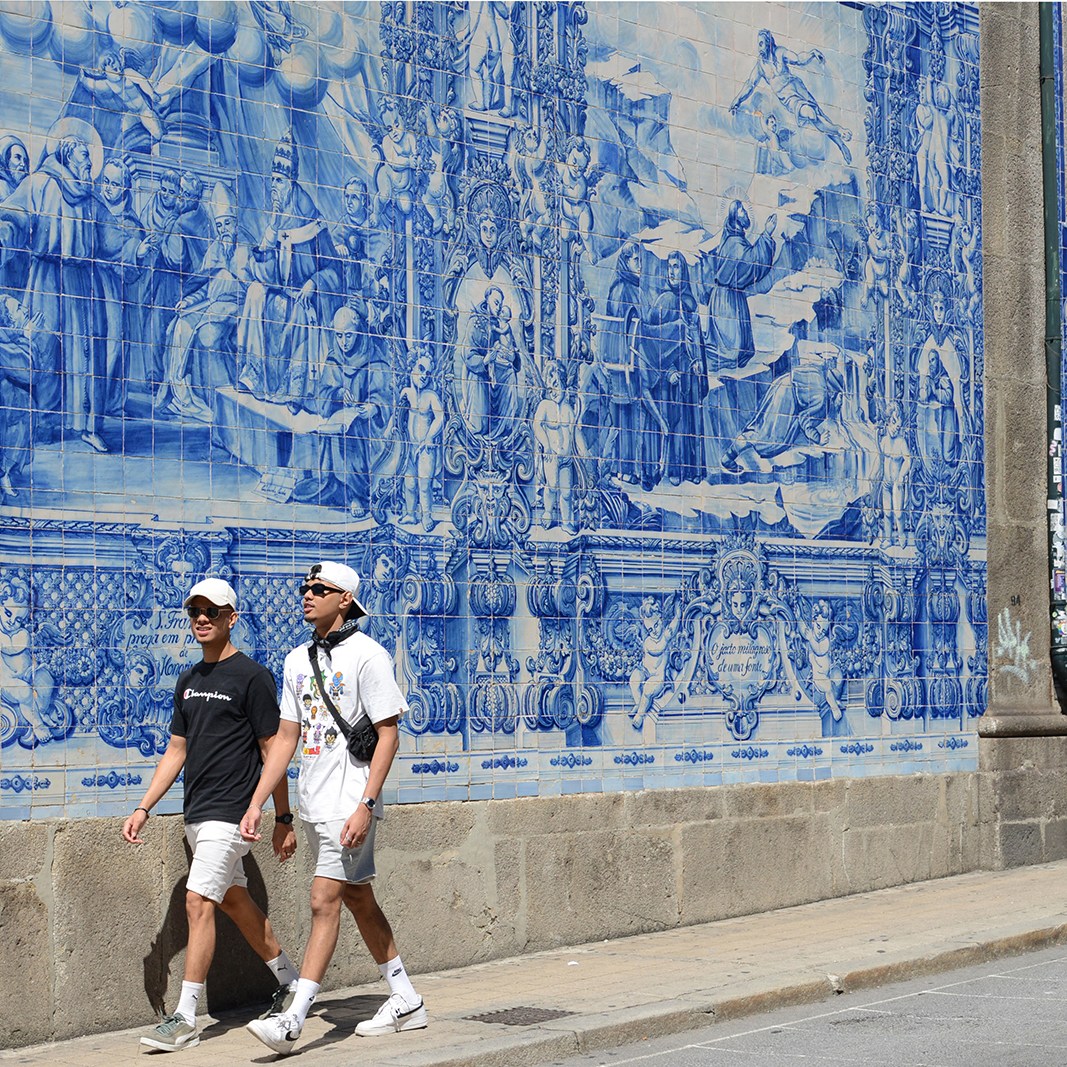
Continue northward on the ornate cobblestones of this pedestrian-only section of Rua Santa Catarina, watching for “tunas,” roaming bands of university-student troubadours who, clad in traditional black robes, wander Portuguese cities singing folk tunes while strumming on mandolins or cavaquinhos (small guitars). When you reach Rua Formosa, take a brief detour a few meters west (this will save you a block of backtracking later) to 279, where the Art Nouveau façade of A Pérola do Bolhão is certain to put a smile on your face. Even if you’re no longer hungry, step inside to marvel at this grocery store’s vintage charm and pick up some local specialties such as cured meats, sardines or port wine. Back on Rua Catarina, halfway up this next block on your right is Shopping Via Catarina, a lively mall of more than 80 stores with a food court replicating traditional Portuguese houses that – for better or worse – feels a bit like Disney does Porto. At the end of this same block is Capela das Almas de Santa Catarina, whose exterior is covered in nearly 16,000 azulejos depicting scenes from the lives of saints, sourced in the early 20th century from the Viúva Lamego ceramic factory in Sintra, near Lisbon. The exterior tiles cover approximately 360 square meters, and the scale of the southern wall in particular, its art panel interrupted only by a few, small windows, is staggering, making for an evidently irresistible selfie backdrop.
MERCADO DO BOLHÃO, ESTAÇÃO DE SÃO BENTO AND GLITZY GOLDEN ARCHES
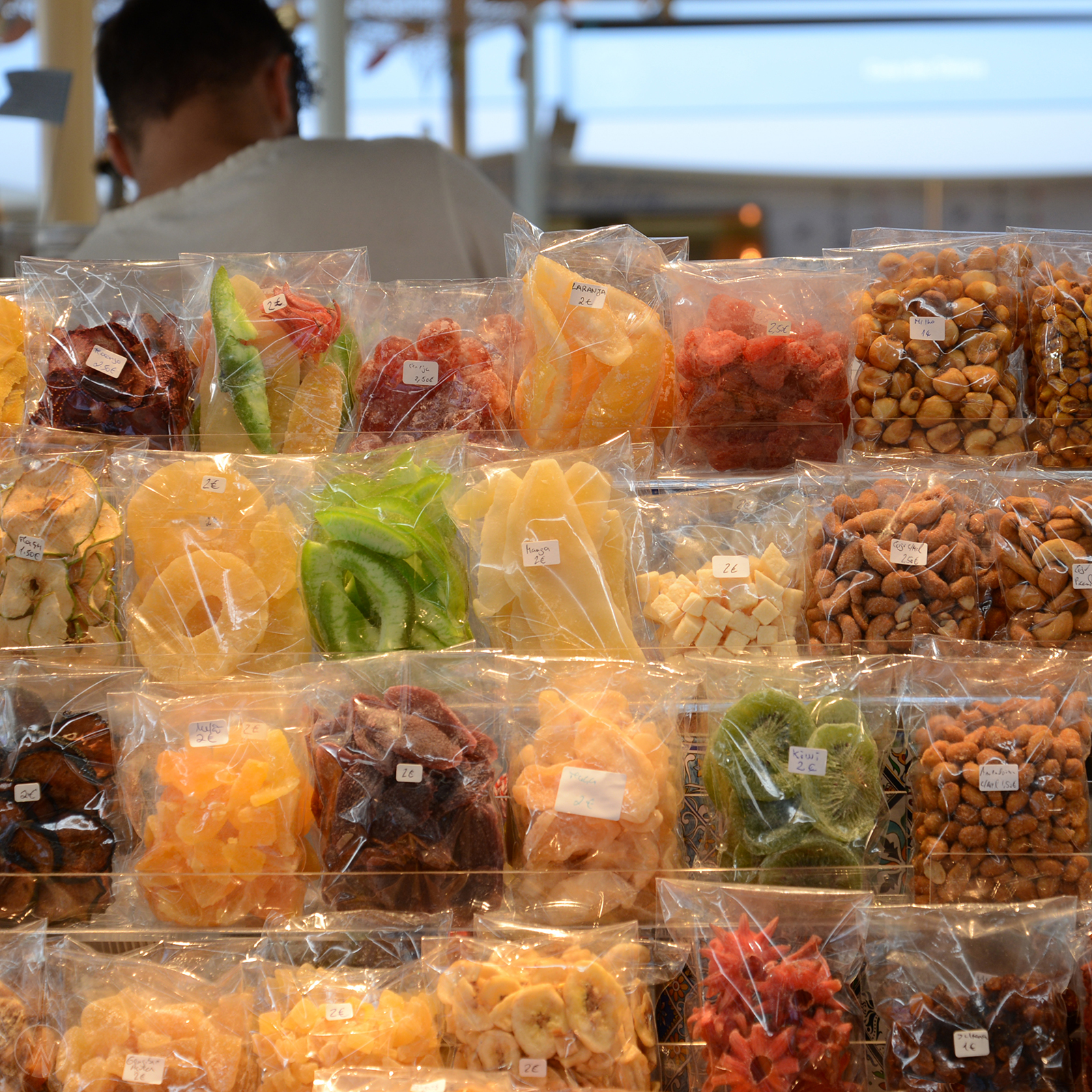
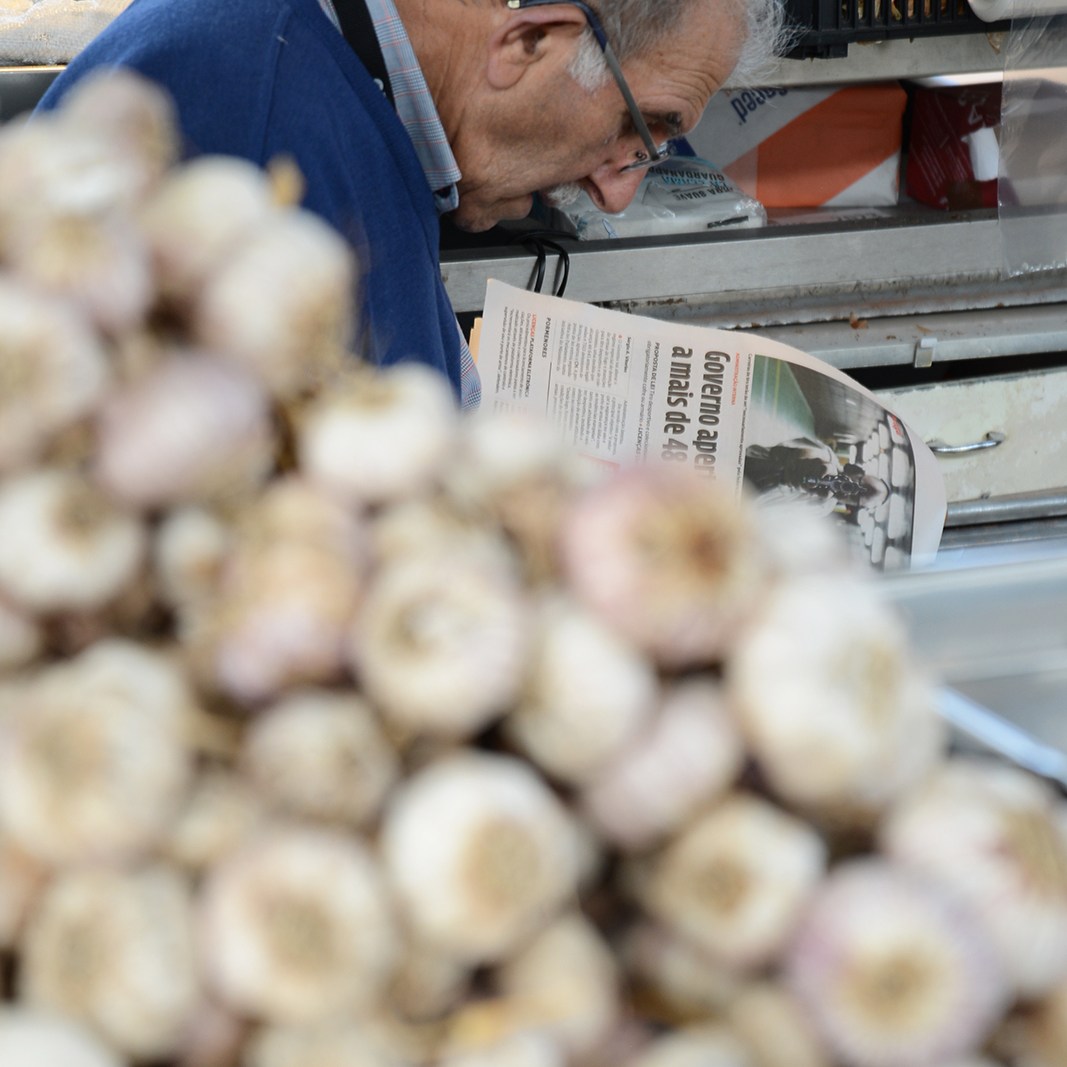
A hundred or so meters west on Rua de Fernandes Tomás is the north entrance to Mercado do Bolhão, Porto’s most famous market. Recently renovated but still brimming with character, it’s a feast for the senses: Vendors shout their wares as stalls overflow with fresh produce, seafood and regional delicacies such as bacalhau (salted cod). If you’re feeling gastronomically adventurous, try some tripas à moda do Porto (tripe stew), a local favorite.
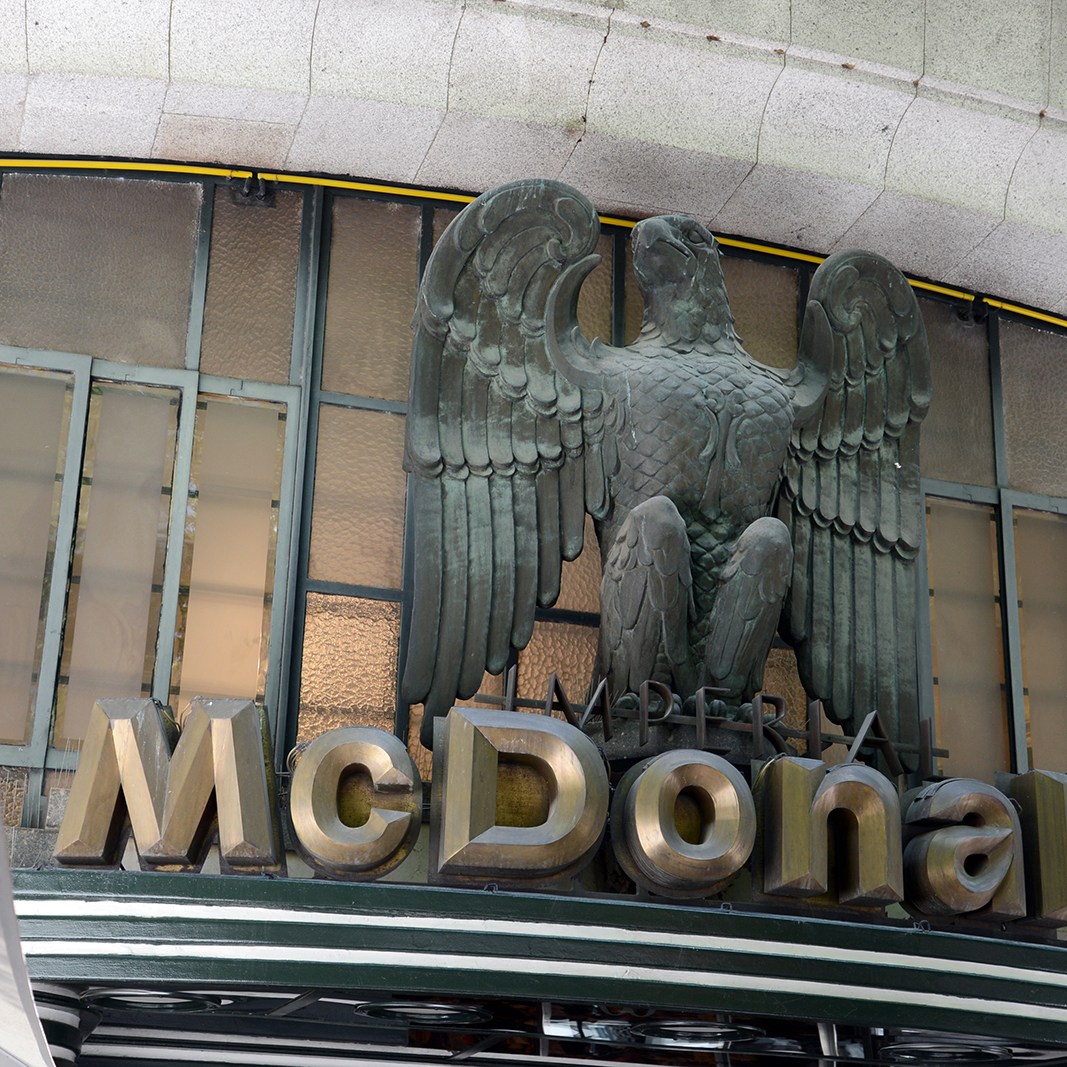
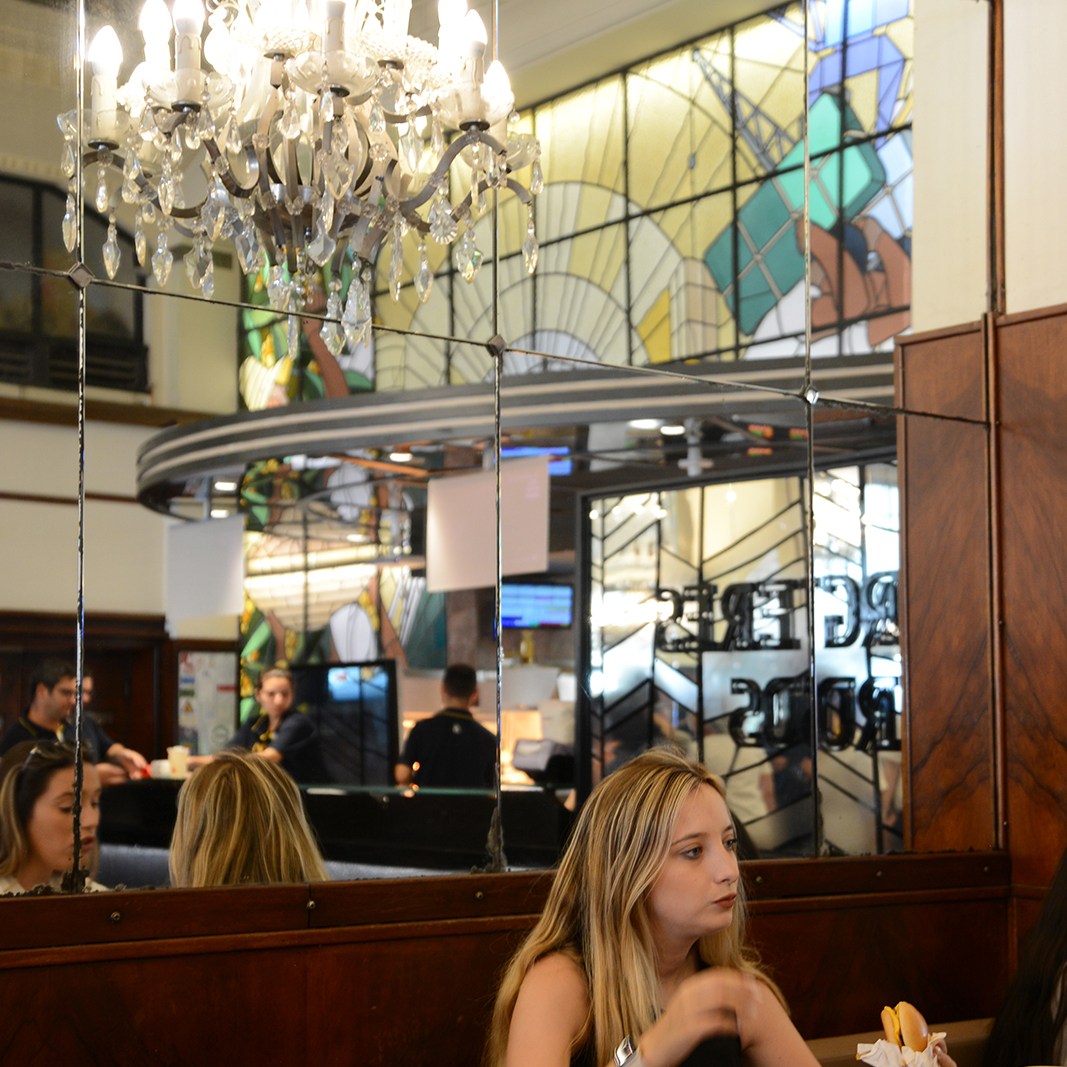
Exit the Mercado’s south portal and go west on Rua Formosa to Avenida dos Aliados, a grand boulevard lined with impressive architecture and hotels, which you’ll follow south two blocks to Praça da Liberdade. You’re here to see one of the city’s half-dozen absolutely, positively mandatory spectacles. No, it’s not the handsome monument to a mounted Pedro IV, who liberated Brazil from Portuguese rule. It’s McDonald’s. There are of course some ridiculous Mickey-Ds around the world – Budapest and the Paris Saint-Lazare location come to mind – and the one occupying Porto’s former Café Imperial, featuring an Art Deco interior complete with chandeliers and stained glass windows, super-sizes ridiculousness.
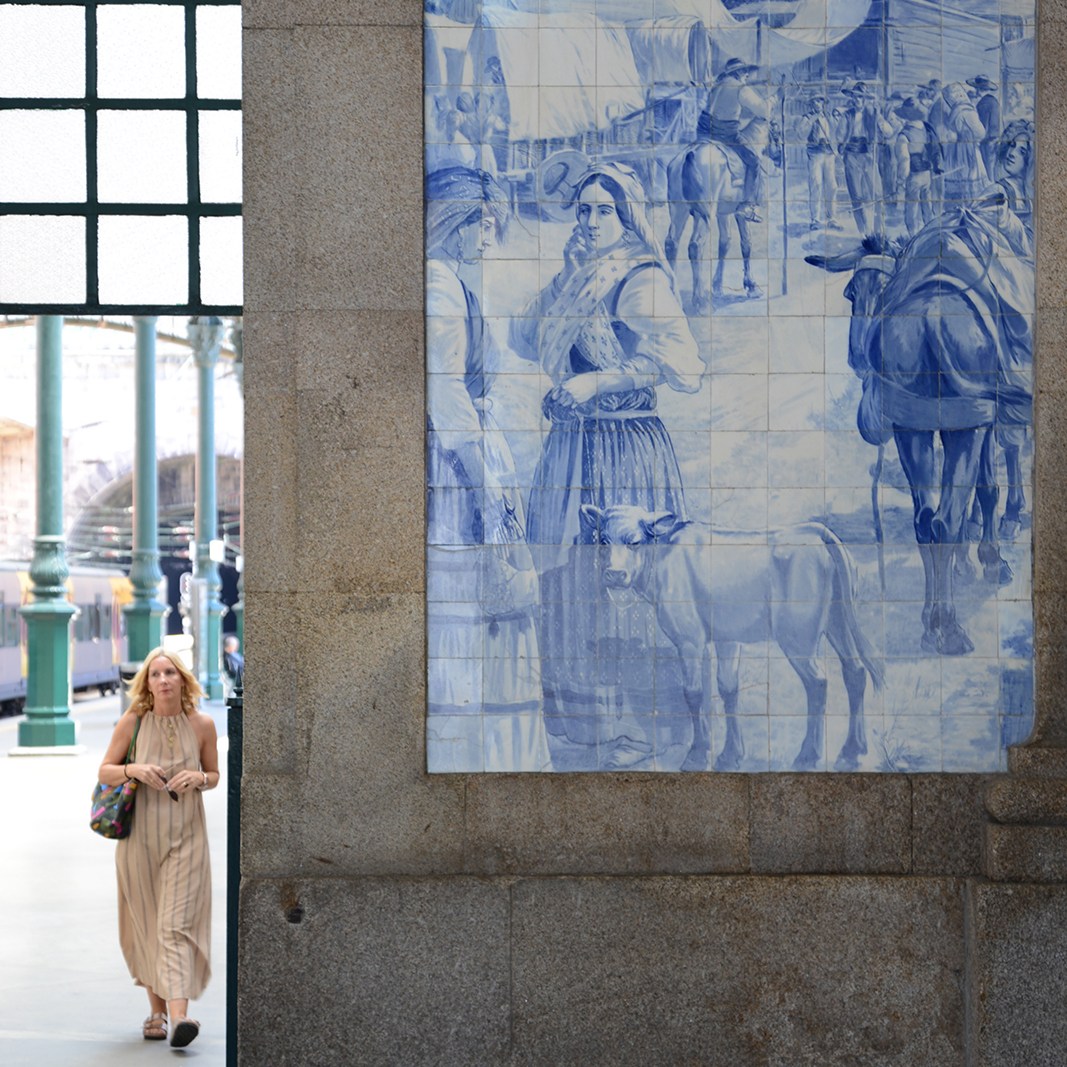
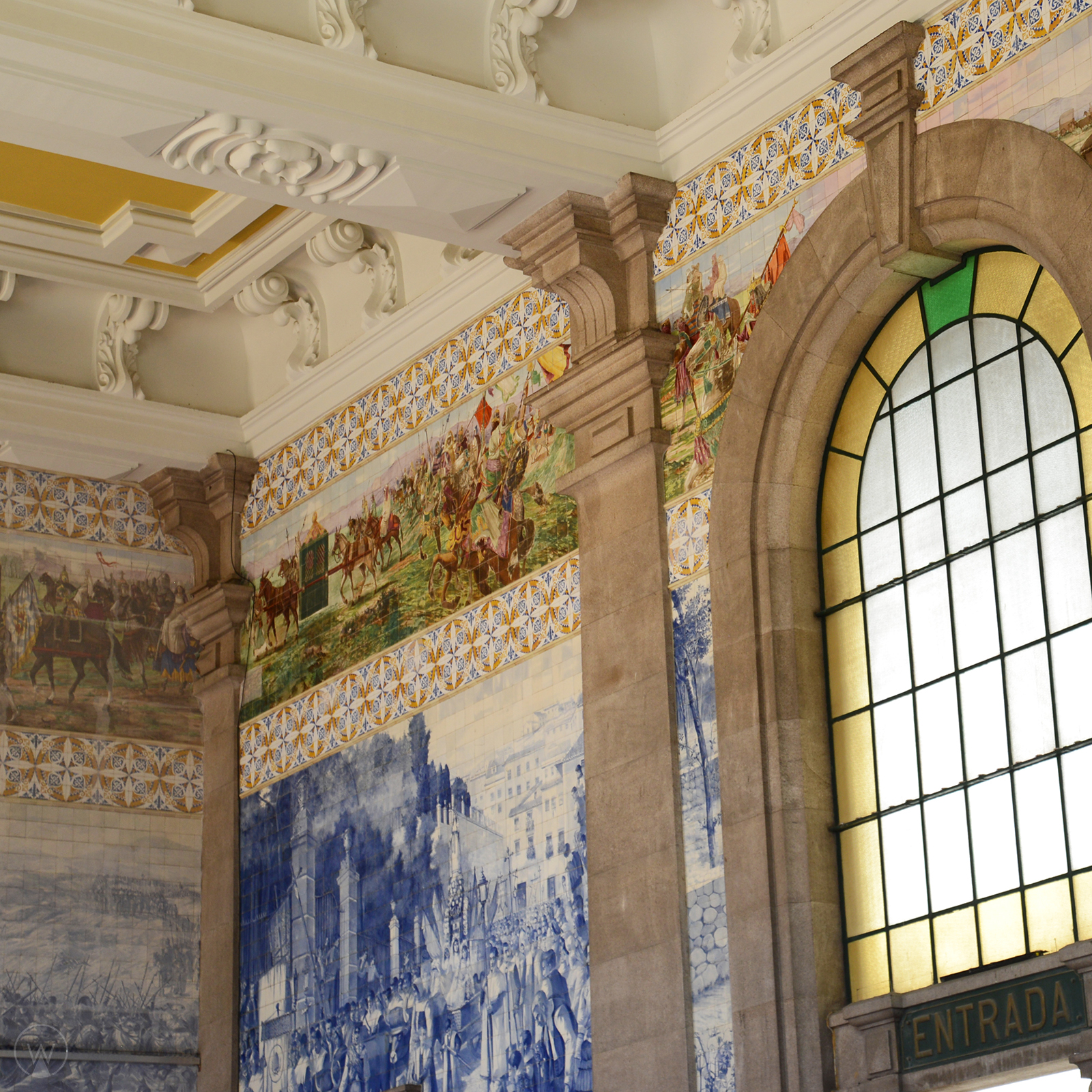
Between McDazzled’s and the train station is Igreja de Santo António dos Congregados, whose striking Baroque façade is adorned with intricate azulejos depicting scenes of Saint Anthony and the Virgin Mary. The similarly intricate interior, featuring magnificent stained glass windows and a striking high altar, feels perhaps more intimate than some of the other churches on our tour. Across the street is Estação de São Bento, Porto’s central train station and an architectural marvel in its own right. The station’s atrium is lined with more than 20,000 tiles depicting scenes from Portugal’s rural life and earlier times, presenting a visual history and civics lesson in ceramic form.
LIVRARIA LELLO, IGREJA DO CARMO AND MIRADOURO DA VITÓRIA
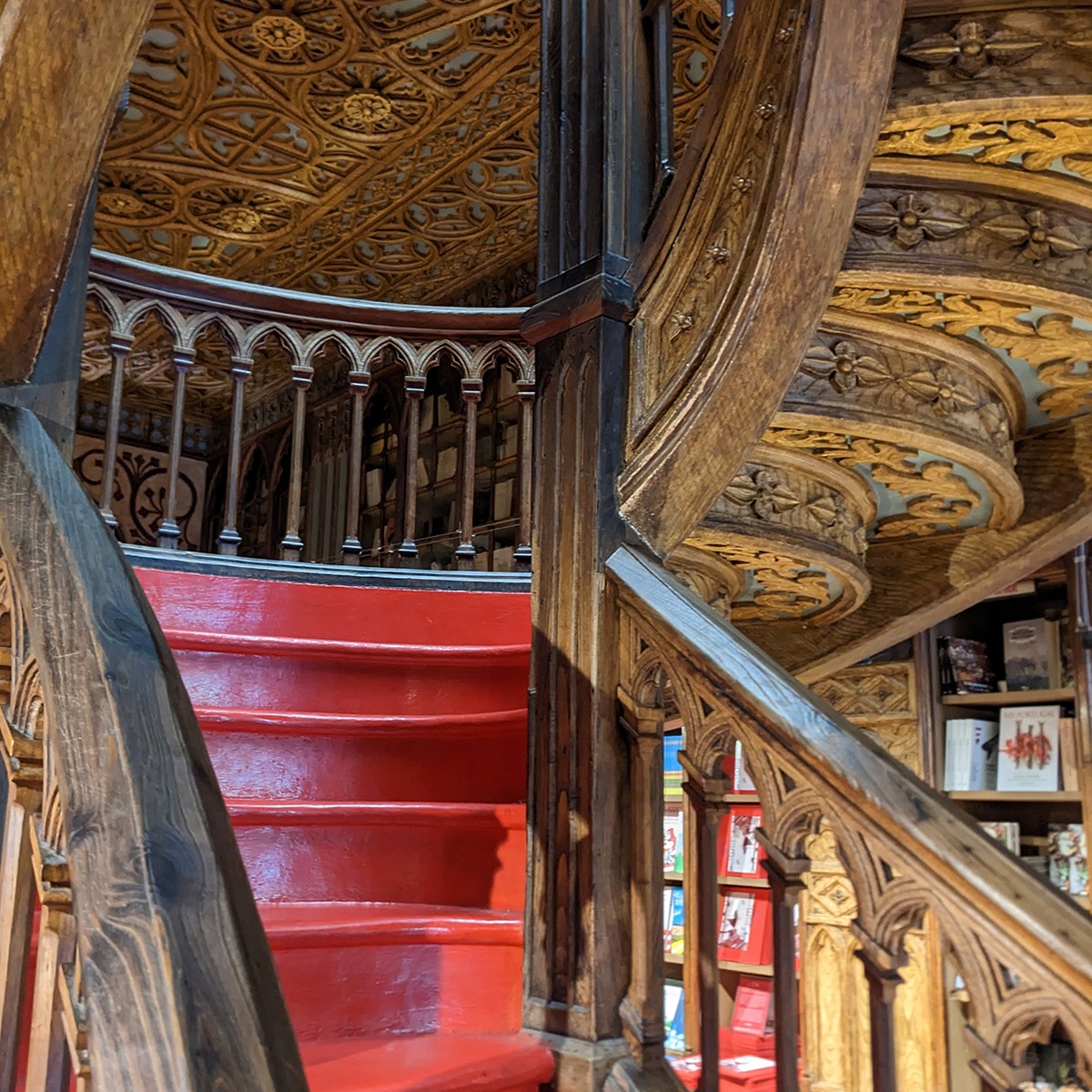
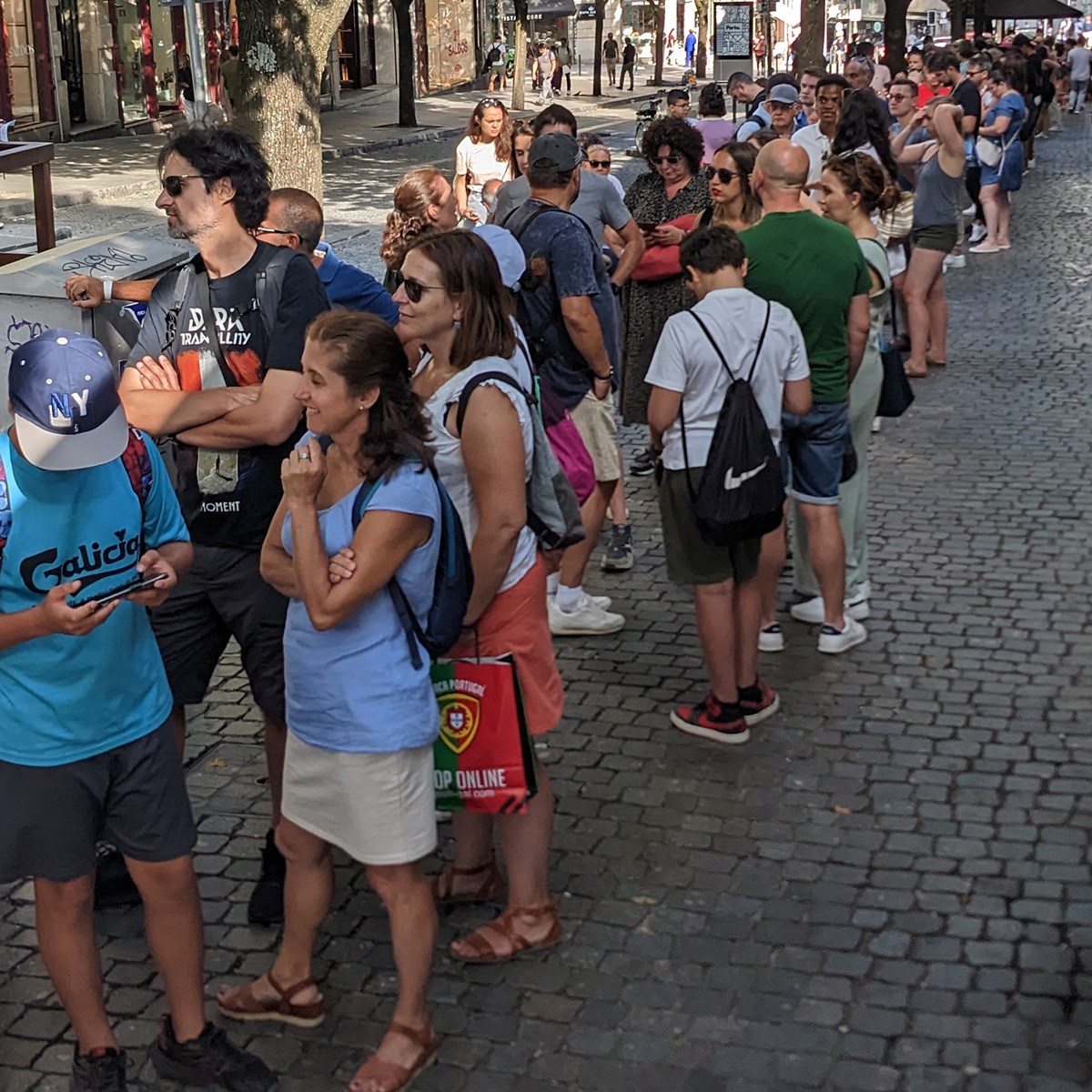
Now heading east on Rua dos Clérigos, no sooner will you pass the iconic Torre dos Clérigos belltower (Italian architect Nicolau Nasoni’s Baroque masterpiece which serves as a navigation landmark and also offers sweeping views atop its 225-step spiral staircase) than you’ll likely see a lengthy queue on Praça de Lisboa and wonder whether Tay-Tay or the Stones are in town. No, these patient people, and their social-media followers, are waiting to see Livraria Lello. While there are certainly more majestic bookstores (such as El Ateneo in Buenos Aires and Dominicanen in Maastricht), Lello is inarguably a bijou, whose neo-Gothic interior with stained-glass skylights and an iconic red staircase is said to have inspired J.K. Rowling during a stay in Porto. Where it ranks among the “world’s most beautiful” is up for debate, but you’re unlikely to see any bookstore anywhere with a longer line outside or less available oxygen inside, so buy your timed-entry ticket in advance. A few steps to the east of Lello’s entrance is Rua da Galeria de Paris, known for its quirky shops, zesty nightlife and enticing restaurants – consider making a dinner reservation while you’re here.
Heading west brings you to Igreja do Carmo, which, together with its sister-church, Igreja dos Carmelitas, dominates Praça de Gomes Teixeira. Not unlike das Almas, this Baroque church is famous for an exterior wall covered in azulejos, here depicting Carmelite saints. But what really steals the show is the tiny “hidden house” wedged between do Carmo and dos Carmelitas. Known as Casa Escondida, this 1.5-meter-wide structure is said to have been built to comply with religious laws that supposedly forbade churches from sharing a common wall. One popular legend, however, says that its purpose was more that of an architectural chastity belt, to discourage defrockable interactions between the nuns of dos Carmelitas and the monks of do Carmo, and yet its many logistical advantages turned it into something of a furtive love shack for the blessed and the restless.
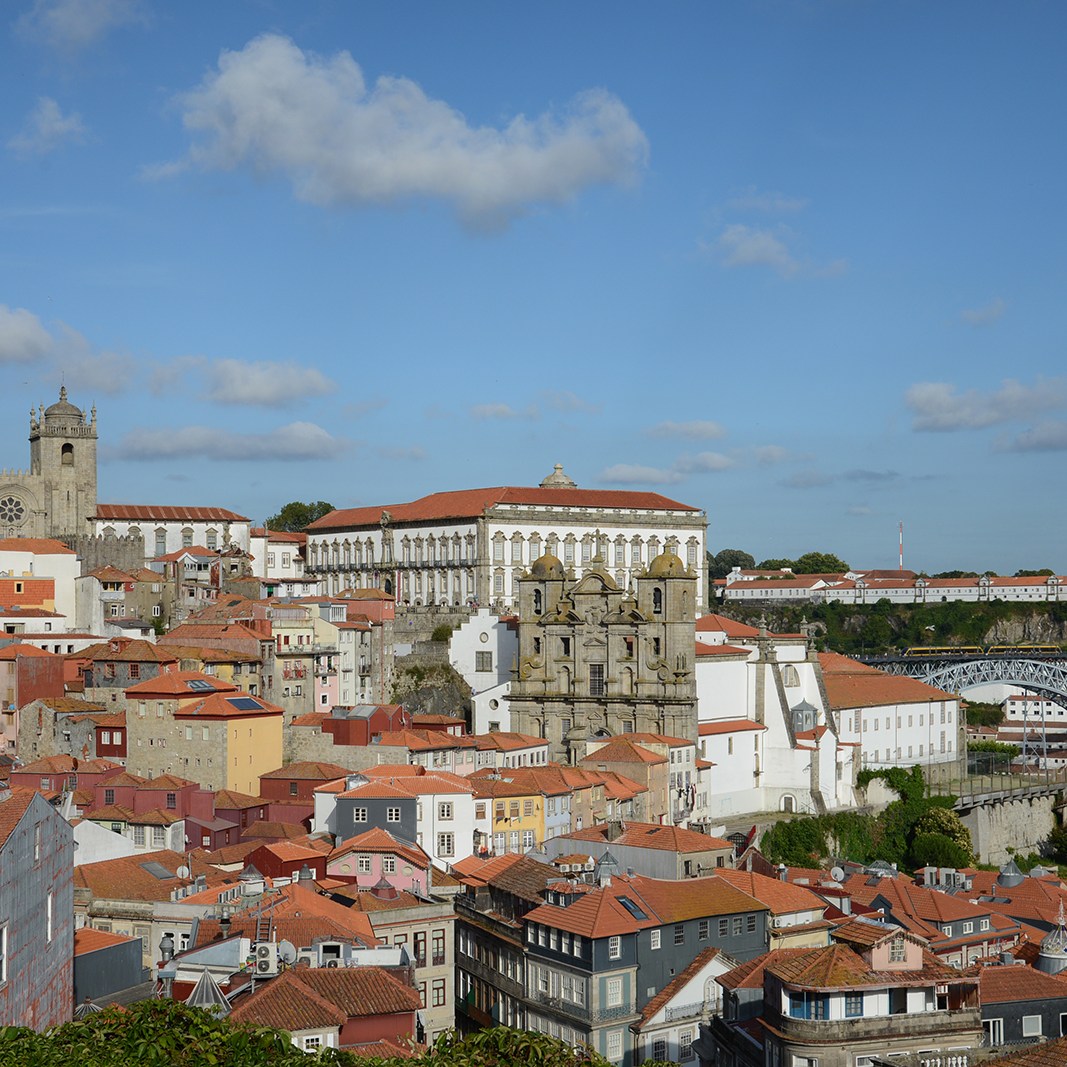
Walk south through pleasant Jardim da Cordoaria and cross Largo Amor de Perdição (Love of Perdition Plaza), named after the novel often called the “Portuguese Romeo & Juliet,” then continue down Rua de Sao Bento da Vitória. Our tour ends at Miradouro da Vitória, an overlook offering an excellent view (albeit with some competition from a couple of lamp posts, a very tall cell tower, and maybe a couple of construction cranes) of terracota rooftops, the Douro River, and Vila Nova de Gaia on the far side of the Dom Luís I bridge. This spot sits in what was once Porto’s Jewish quarter — a fitting place to reflect on your journey through this historic city.
Both Hotel das Virtudes and São Pedro de Miragaia, where we began our tour, are a short walk down several flights of stairs and ramped passageways.
QUESTIONS FOR READERS
- Which of these stops would you prioritize if you had just half a day in Porto?
- In which other Iberian cities do azulejos play as prominent a role as they do here?
- What are your go-to local snacks or drinks when walking around Porto?
- If given the chance to visit Livraria Lello, which book would you buy as a keepsake from this literary landmark?

