









Note: This is the third in a series of four posts about Iceland. The series begins here.
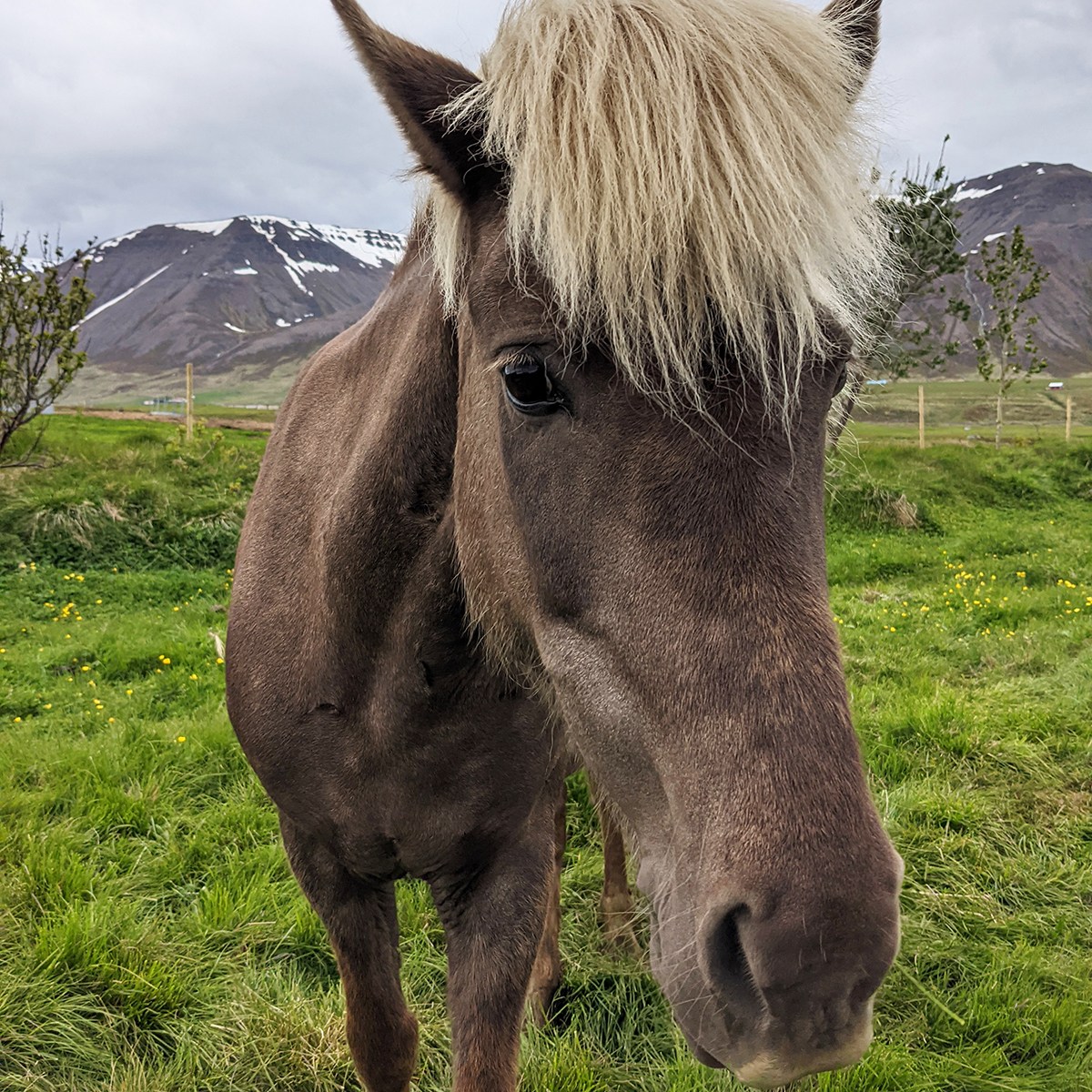
When you went to sleep last night, you thought, “Boy, it’s going to be tough to find anything cuter than today’s puffins on this trip!” Cue the Icelandic horses and their Bon Jovi manes. That and more is in store during this next leg, so let’s get started.
DAY FIVE, MORNING & AFTERNOON: A BASALT-COLUMN CANYON, EUROPE’S MIGHTIEST FALLS AND A MINIATURE YELLOWSTONE
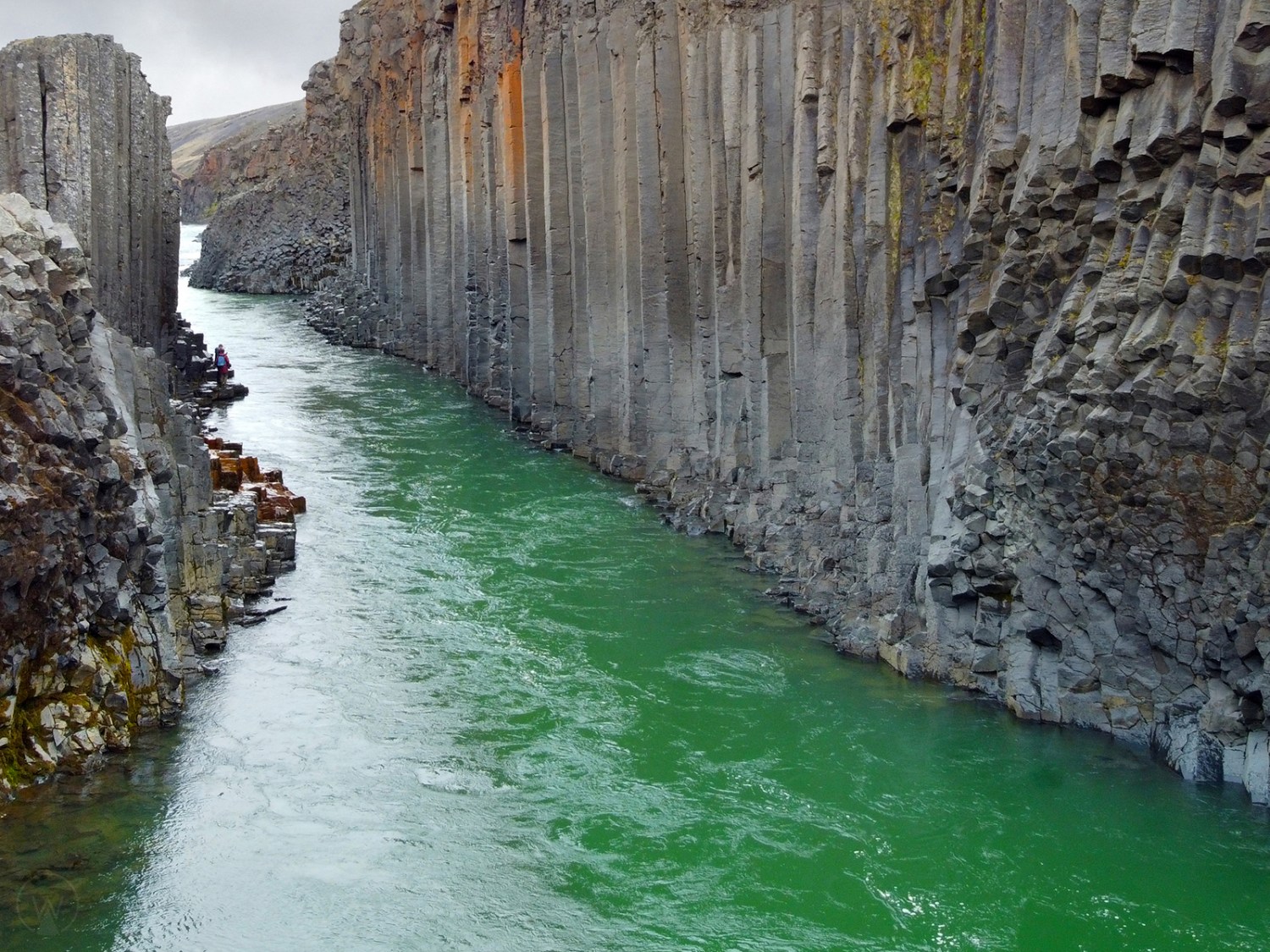
As you start the morning heading northwest on Route 1, your first of two essential detours as you make your way westward toward Mývatn is Stuðlagil Canyon, an Icelandic icon recognizable by its dark, hexagonal basalt columns set against the blue of the Jökulsá á Brú river. Striking vistas are available from several viewpoints both at and away from the parking lot, and consider crossing the bridge that allows you to descend to river level to explore the columns themselves.
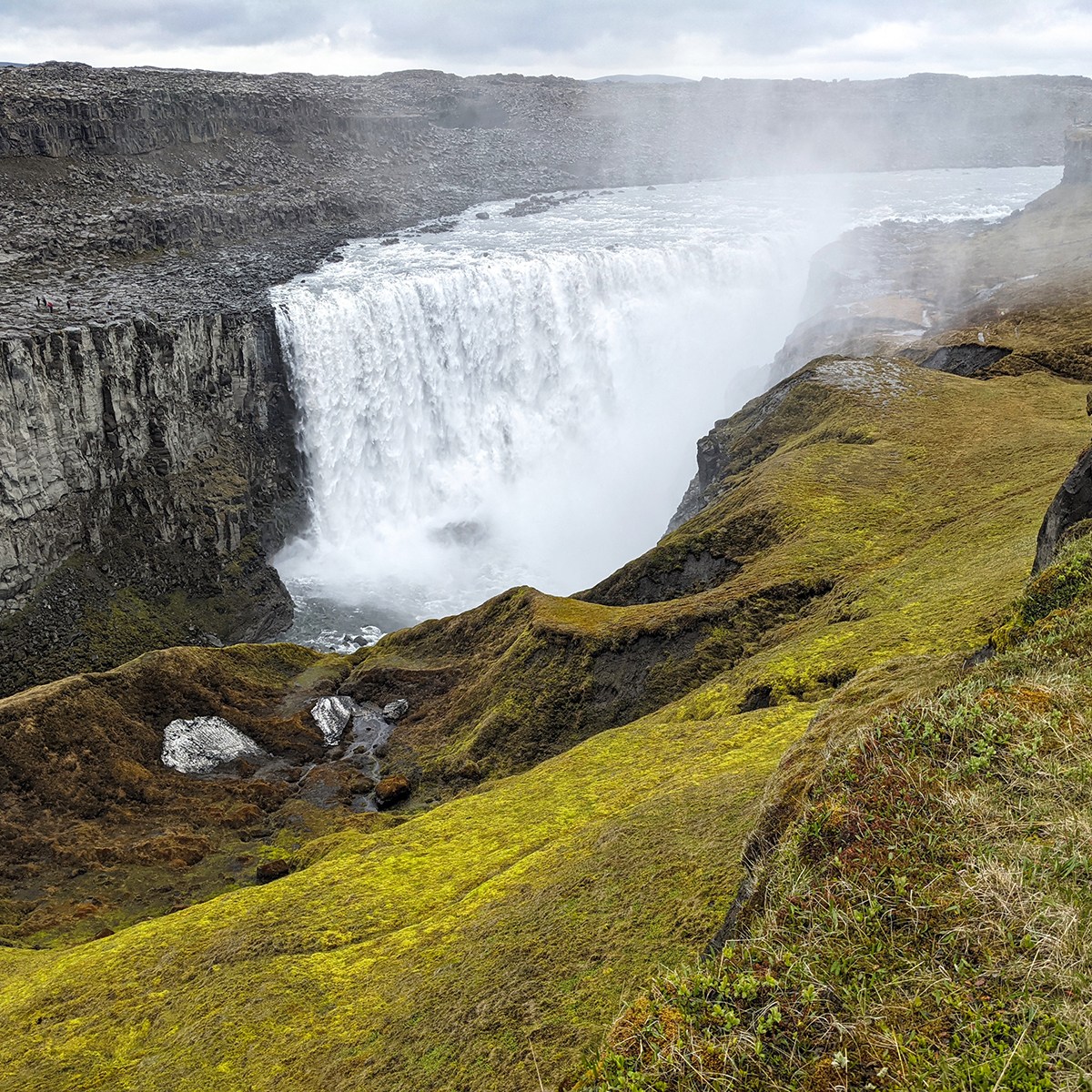
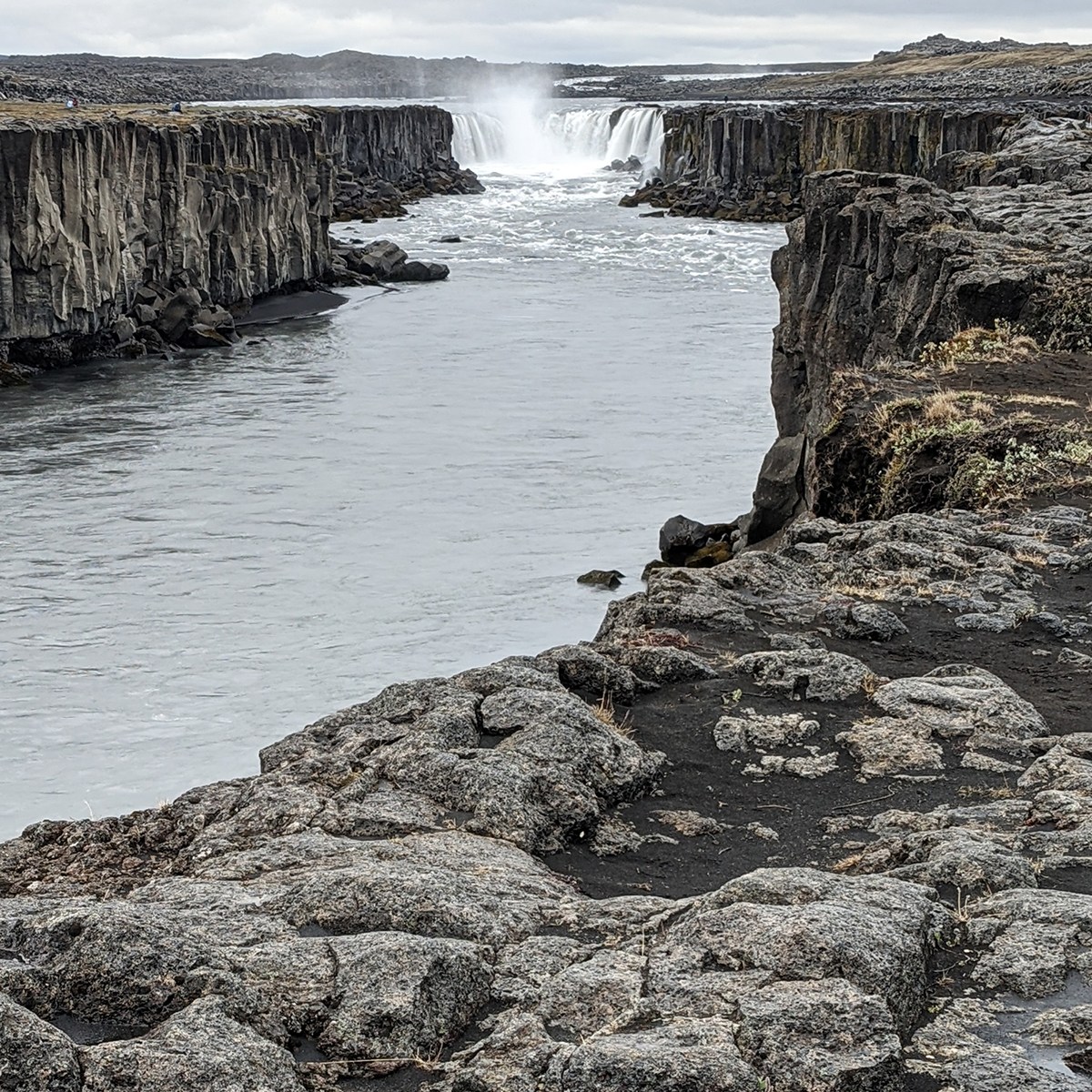
Back on the Ring and continuing through what is inarguably the least scenic section of your entire trip (even for those who love a sparse landscape, the most memorable parts of this stretch are the several rest-stop signs depicting a picnic table under the shade of a big pine, and yet there’s not a single tree to be found anywhere around here), the next stop is Dettifoss, a waterfall that legend says was created by the hoof of Odin’s eight-legged horse. Its claim as Europe’s most powerful waterfall is perhaps most convincingly appreciated by touching the nearby cliffs, which vibrate from the force of the nearly 400,000 liters of water that spill over its edge each second. A flat, twenty-minute walk from the parking lot gets you to the overlook, and do make the ten-minute detour upstream to smaller yet spunky Selfoss.
Three more notes about Dettifoss:
- First, your navigation may direct you to take 864 north to Dettifoss, but a sign at the intersection indicates that it’s a rough road and recommends the next road to the west, 862, which is the road we took so we can’t confirm how rough 864 is.
- Second (optional side excursion), if you have a high-clearance 4×4 and the better part of a day, venture deep into the inner highlands to bathe in the milky, hot waters of Viti Crater next to Lake Askja. You’ll turn south off of the Ring about half an hour before the Dettifoss exits. Some navigation systems may not recognize Iceland’s “F” roads (which indicates gravel or more primitive), but if you set the Vikraborgir car lot as your destination in Google Maps, you should see a route lasting just under three hours that gets you from F910 through the outpost of Dreki and finally to F894, which delivers you to the parking lot.
- Third, Dettifoss is part of a group of towns and cites that an enterprising subcommittee from the Northern Iceland Convention and Visitors’ Bureau has dubbed “The Diamond Circle.” With constrained time, we didn’t visit any of the Diamonds north of Dettifoss (namely Ásbyrgi Canyon, the basalt-column cave at Hljodaklettar and Rauðholar Hills) because they didn’t strike us as particularly more alluring than what we’d already seen either elsewhere in Iceland or in, say, the American Southwest. But we did consider (optional side excursion) a whale watching tour out of Húsavík, the town whose immortality and tourist trade was assured by the Will Ferrell – Rachel McAdams Eurovision movie and especially its memorable ballad so expertly crafted and performed that it transcended common parody. Also, Grimsey Island (accessed by ferry from Húsavík) is the only place in Iceland north of the Arctic Circle, so this might be as good a chance as any to check that – to say nothing of the Northern Lights – off your list.
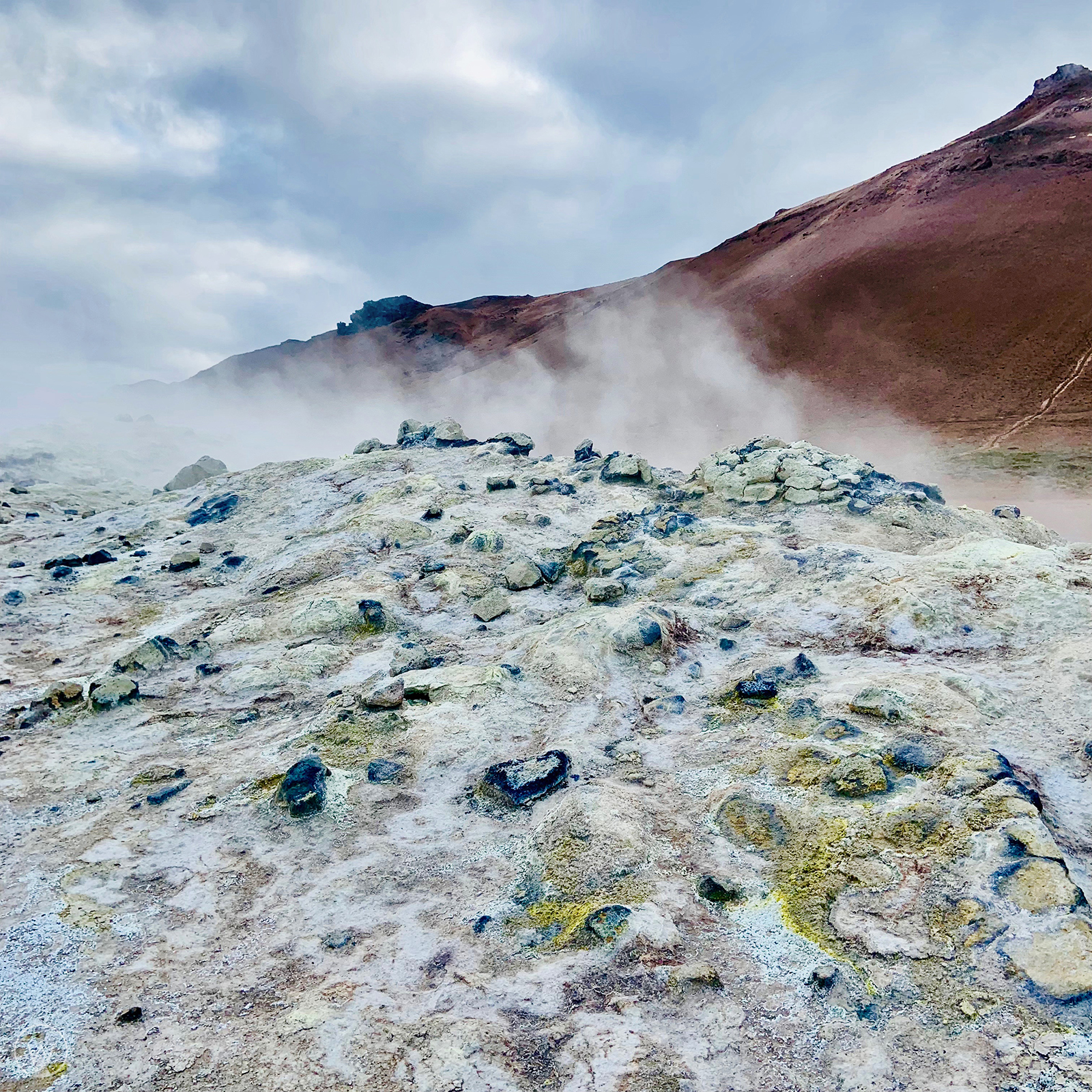
You’ll know you’re nearing Lake Mývatn when the topography gets interesting again, thanks to endless stretches strewn with black, cragged, volcanic rock. Ten minutes before you reach the lake, pull off he road to the left for a brief walk among the geothermal fields known variously as Hverir, Námaskarð and, after the nearby mountain, Namafjall. (It’s all the same place. We were confused, too.) It’s everything you’d expect from a place named, creatively, “hot springs,” an especially interesting feature of which is a conical fumarole a bit over a meter tall and not far from, pumping out nonstop steam like an overachieving sulphuric blowtorch. Because you’re in Iceland, you’ll likely be a bit chilly, so warm up by standing a few paces downwind – but facing away so you don’t get a facial peel. Two or three kilometers southwest of Hvevir on 860 is the Grjótagjá (rock ravine) cave, in which Jon Snow and his wildling ginger, Ygritte, “got” cozy for a Game of Thrones plot twist. Even if you’re not a fan of the show, the blue thermal pool is worth a brief look. Wear sandals and see if you can stand in it for more than ten seconds.
DAY FIVE, EVENING: RELAXING ON THE SHORES OF LAKE MÝVATN
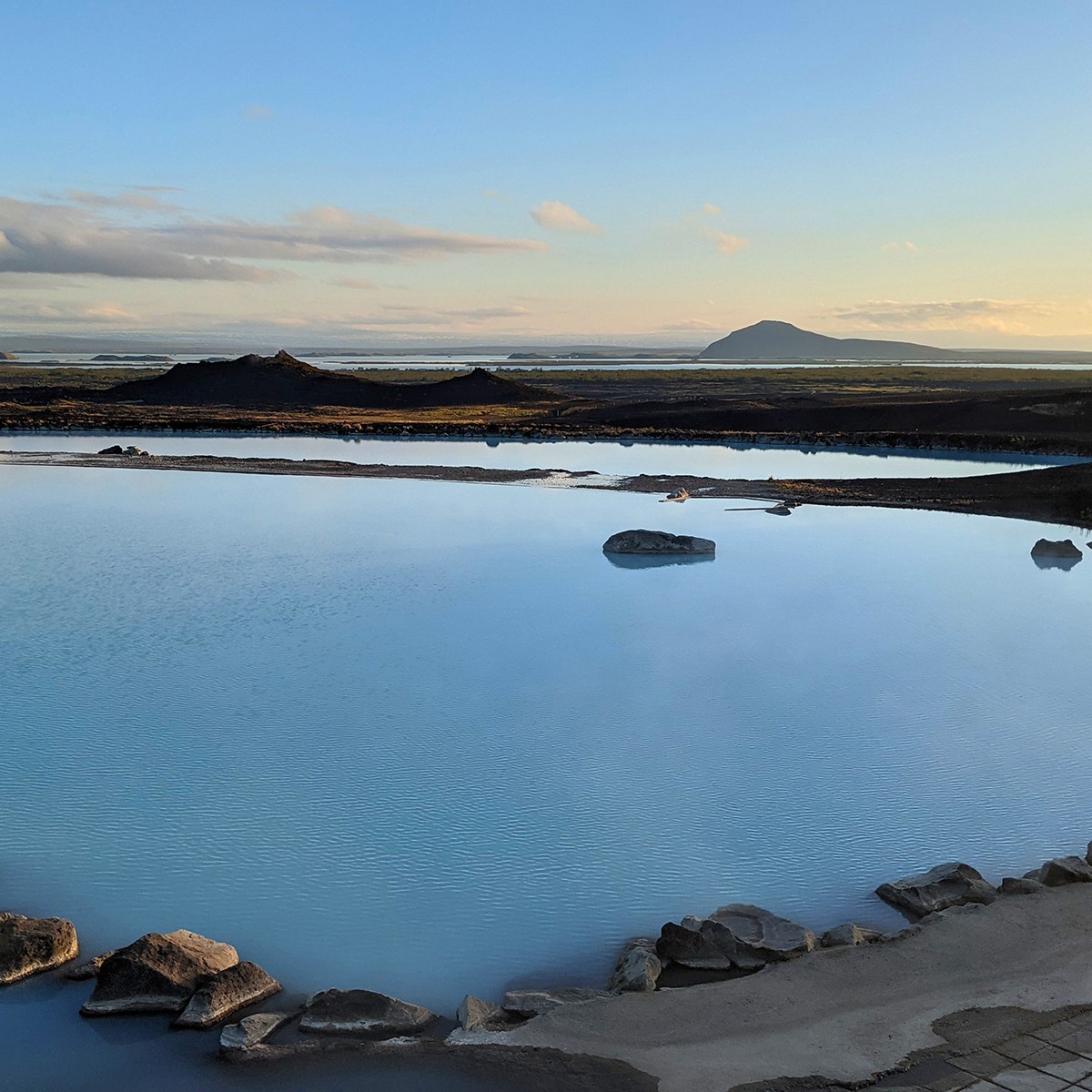
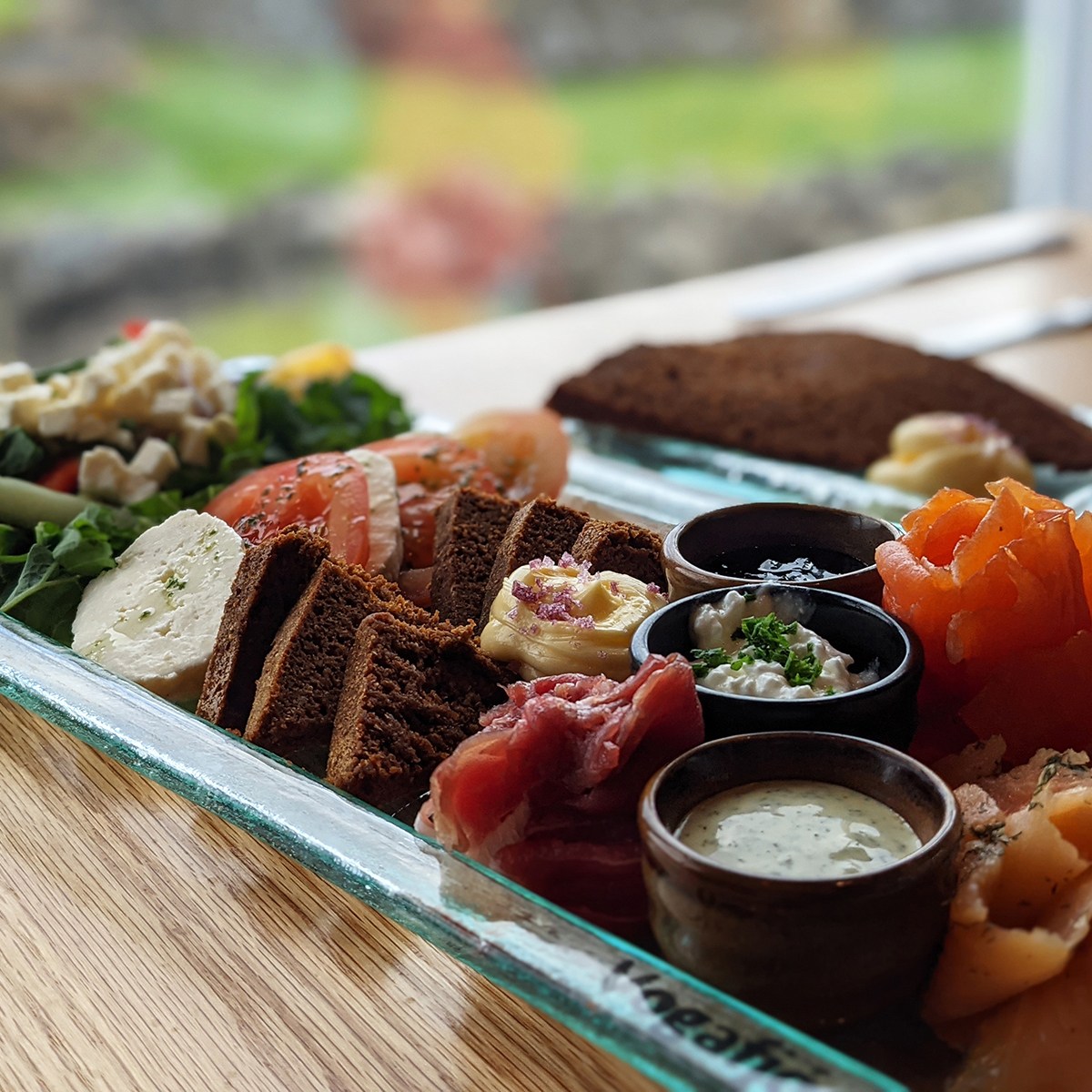
Although we could have spent a week at Lake Mývatn (to explore local sites such as Hverfjall and Dimmuborgir, as well as those farther afield), we spent a single evening, but we spent it very well. The expansive Jardbodin Pools (aka Mývatn Nature Baths) are a more peaceful and considerably less expensive alternative to the Blue Lagoon, with inarguably better views. One of my most memorable dining experiences ever was here at the Vogafjós Farm Resort, which sits directly in the middle of a farm, and not in any abstract sense: one of the dining room’s floor-to-ceiling windowed walls is shared with the cattle stables, and the opposite one overlooks a field dotted with grazing sheep and crisscrossed with stone walls reaching to the shore. Not surprisingly, the exceptionally fresh meat dishes set a new standard for “farm-to-table,” and the fish and lamb appetizer is outstanding.
It’s been a long day, and there are many attractive lodging options near Mývatn (including the Vogafjós Farm Resort itself, or elsewhere around the lake such as nearby Reykjahlíð), but if you can push the additional 80 kilometers to Akureyri and lodge there, it will be to your advantage in the morning. In either case, whether tonight or tomorrow morning, en route from Mývatn to Akureyri stop briefly at impressive Goðafoss, where the Skjálfandafljót rover falls from a height of 12 meters across a half-moon width of 30 meters. We skipped Aldeyjarfoss (optional side excursion), flanked by distinctive basalt column walls, because even the reasonable 90-minute round-trip out-and-back due south of Goðafoss on B42 would have made for too late of a night.
DAY SIX: AKUREYRI AND THE TROLL PENINSULA
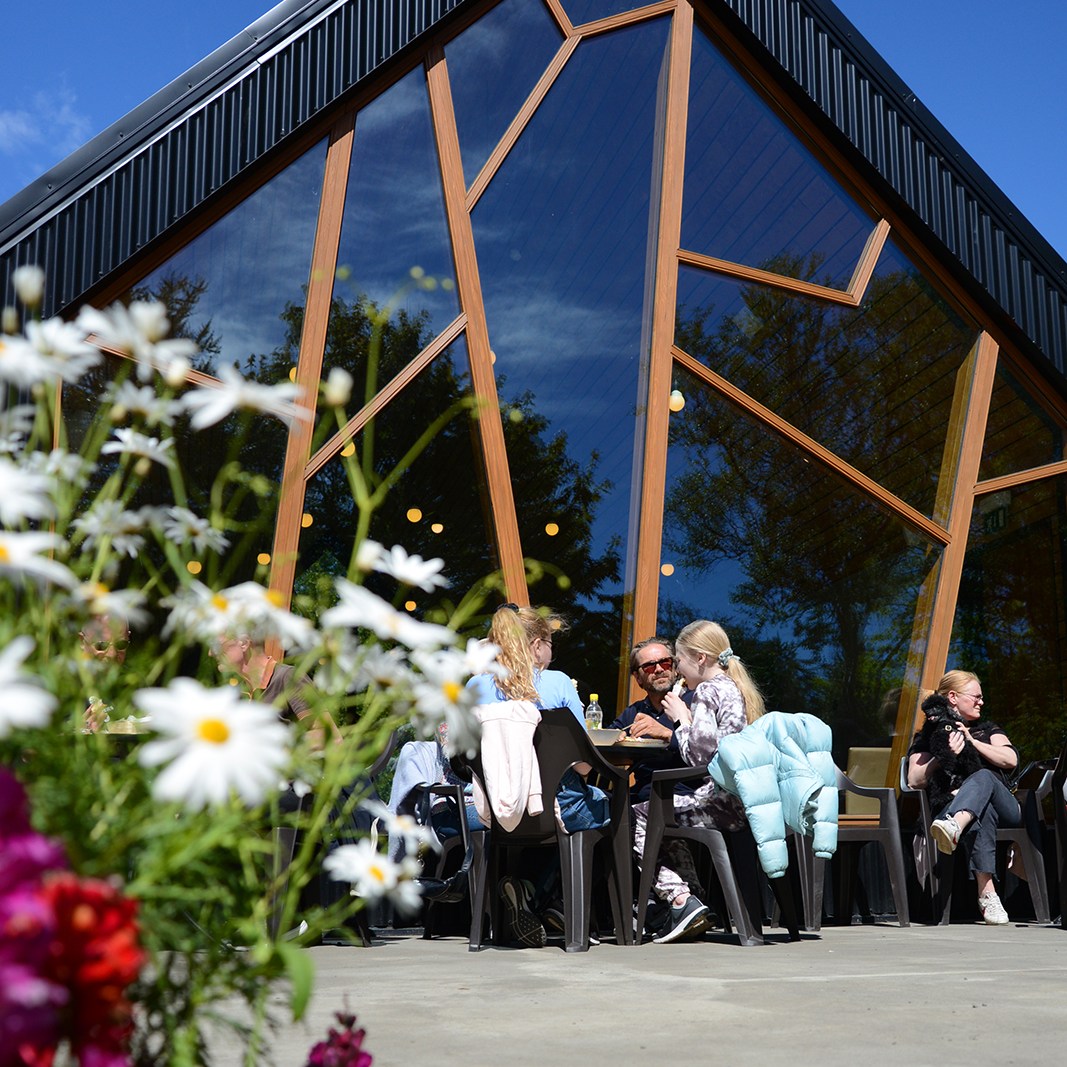
Akureyri is Iceland’s second-largest city and the downtown area (meaning primarily the two or three blocks of Hafnarstræti beginning with the big, Instagram-ready heart at the base of the Akureyrarkirkja stairs) makes for a pleasant, if not extraordinary, stroll. If there’s one must-see here, it’s the botanical gardens, which are the northernmost such municipal gardens in the world. Enjoy the zig-zag path through a lovely neighborhood en route, and pause for a light breakfast with kaffi on the flower-hemmed patio at Café Laut. If you’re in town for the evening, a local recommended Skrikio for its fish and lamb dishes, and Graeni Hatturinn for some of the country’s best live music.
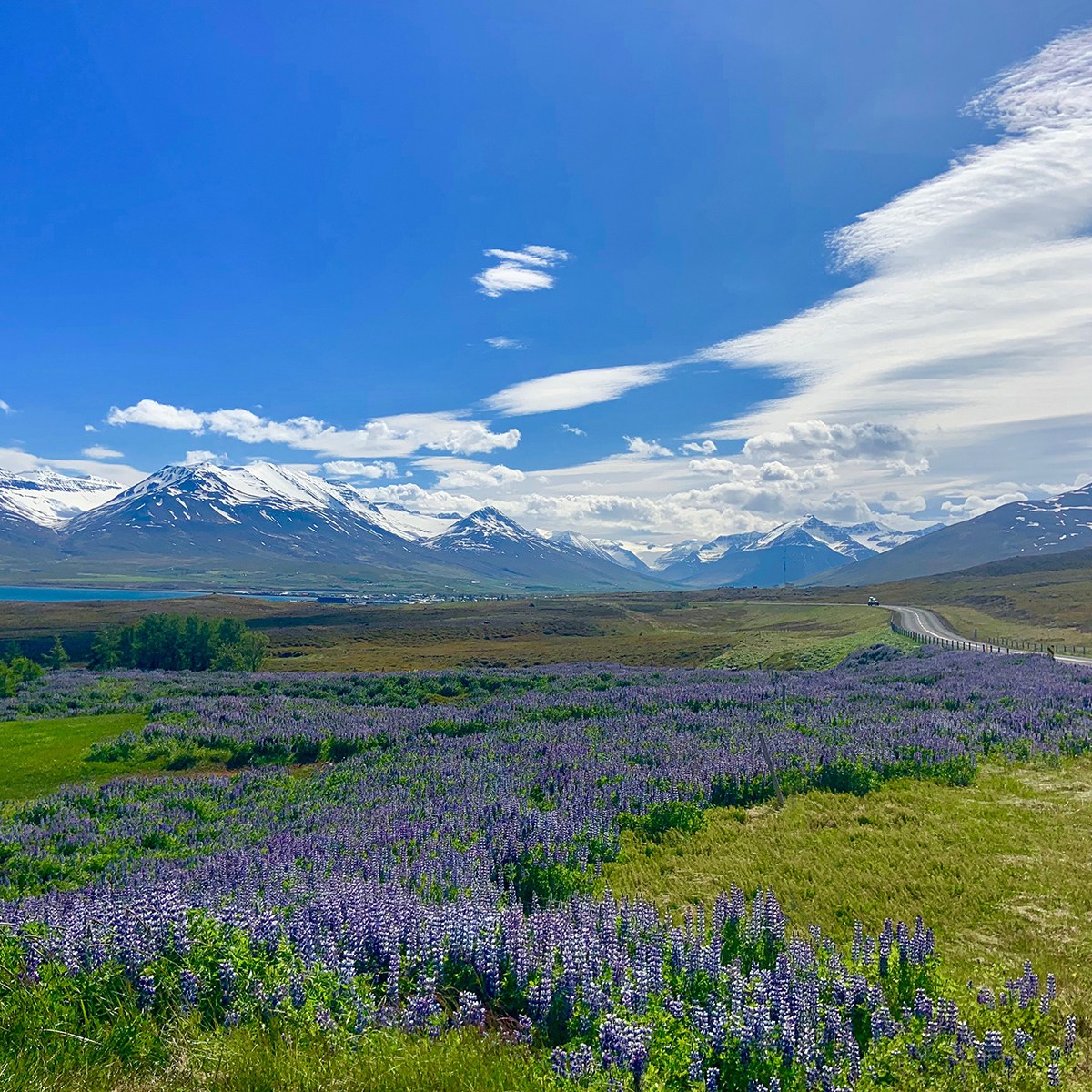
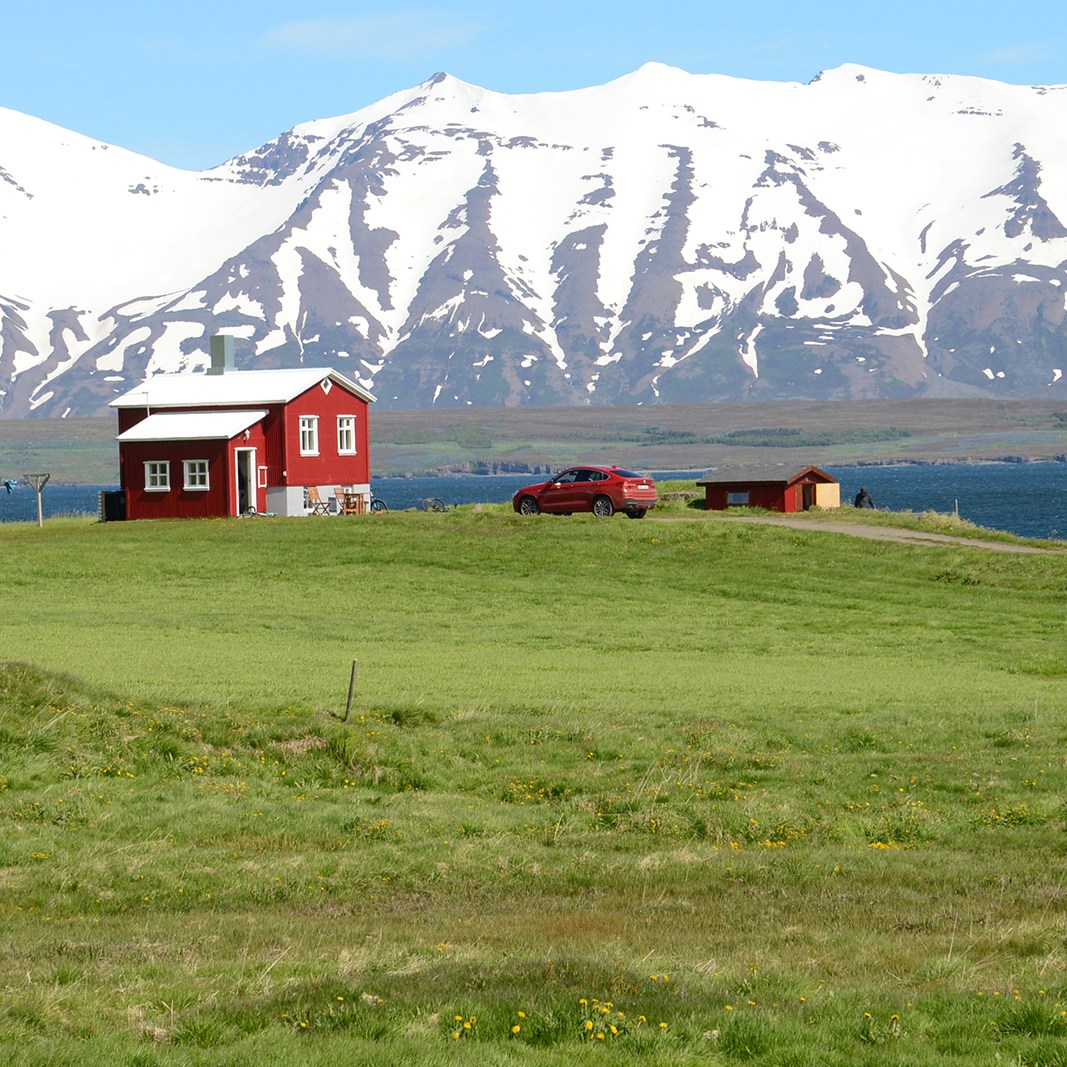
We went to Tröllaskagi (“Troll Peninsula”) for the horses but were struck by the topography alternating between lush, lupine-carpeted meadows and craggy, snow-capped peaks, many of which exceed 1,000 meters above sea level. Jutting into the Greenland Sea between the Eyjafjörður and Skagafjörður fjords, the peninsula feels at once severe and cozy, with terrain that might be mistaken for Norway or Switzerland. Numerous villages such as Ólafsfjörður add charm to the route, while several single-lane tunnels that require cars to tuck into narrow pull-outs at the approach of oncoming headlights add an element of adventure. There are many hiking options such as the Kofi Trail near Davik, and the tiny island of Hrisey can be reached by ferry.
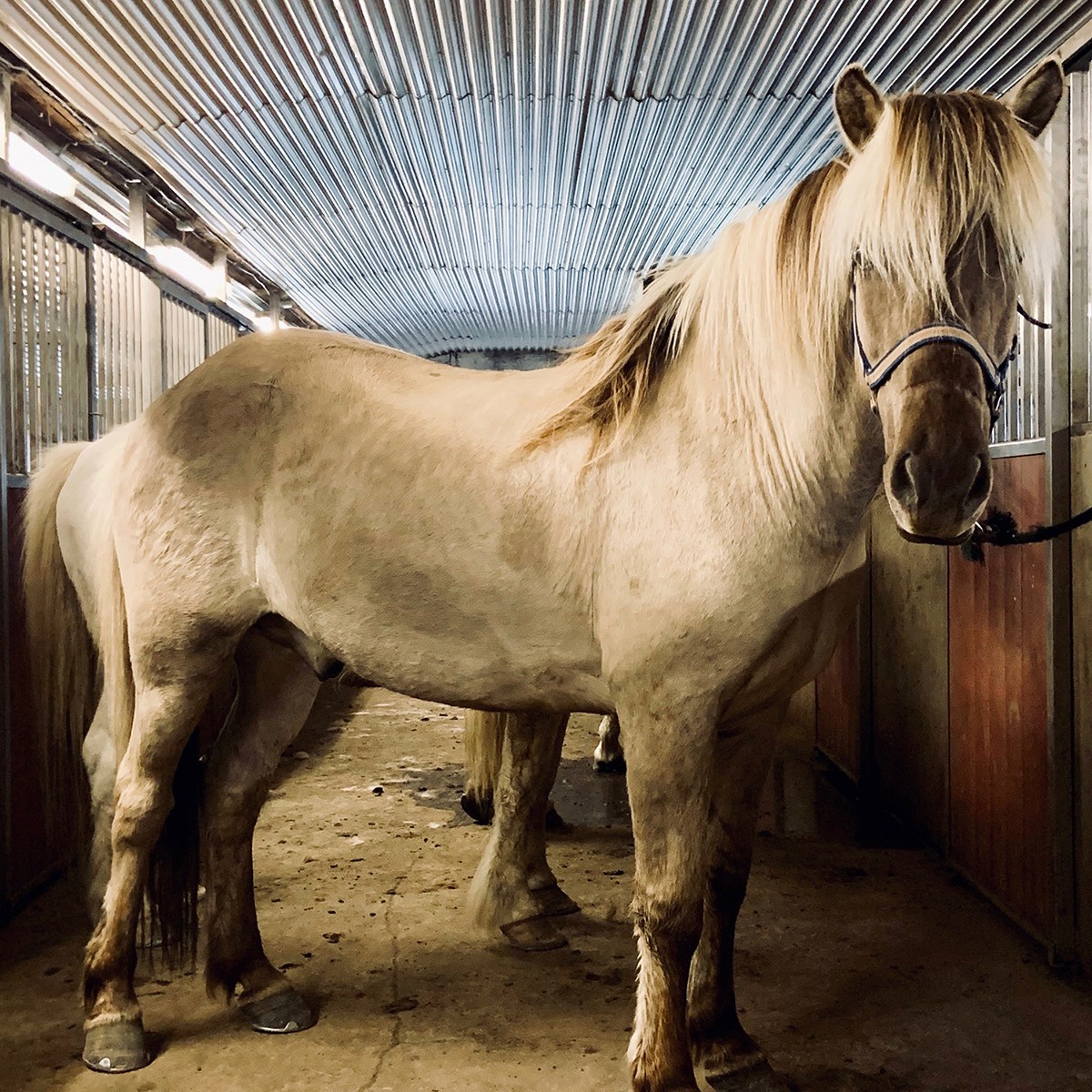
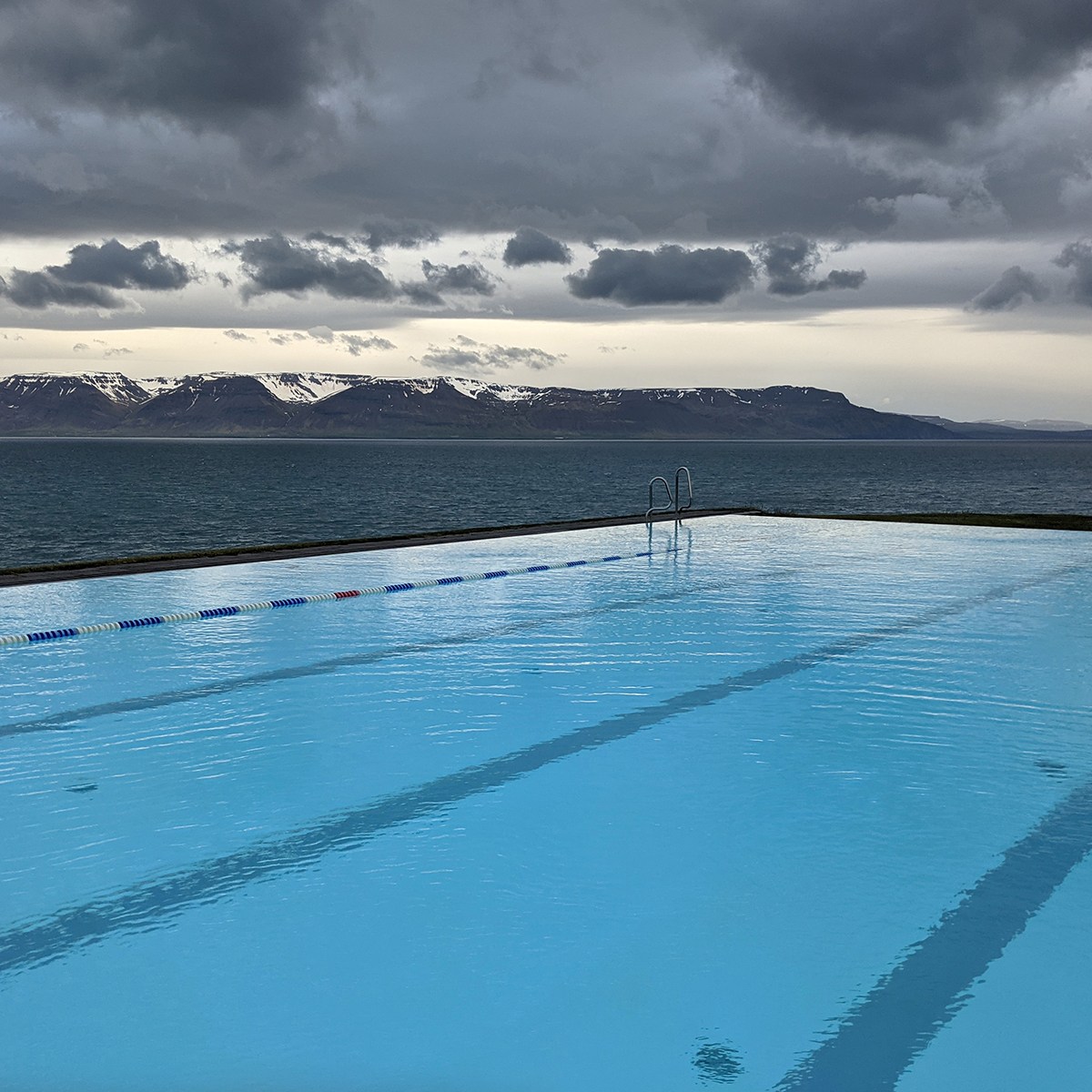
While the region does not lack places to ride horses (including at Mývatn and Sauðarkrókur and elsewhere), our research took us to Langhús, at the peninsula’s northern tip, and it did not disappoint. Our guide, Lukka, went to equestrian university and her primary responsibility is to source Icelandic horses for clients worldwide. Her expertise made our ride a three-hour lesson on these magnificent animals, plus Icelandic culture and history. Riders with limited experience will be pleased that this is not the plodding, dusty, “nose-to-butt” procession typical of most tourist-oriented rides around the world, and advanced riders can have some free rein in the hills and on the sandy beaches. Afterward the ride, we were glad to have opted for the add-on of homemade waffles with rhubarb, blueberry jam and whipped cream, and Lukka gave us a parting gift of cod caught and dried by her friend, emphasizing that the proper way to eat dried fish in Iceland is by slathering it generously with butter. We recovered from our ride at the Hofsós municipal spa, whose thermal-fed infinity pool has a hauntingly austere panoramic backdrop. Just south of Hofsós is the oldest surviving church in Iceland, Grafarkirkja, a turf hut that served for many years as a tool shed.
Once down from the Troll Peninsula, yet still half an hour north of the Ring, we stocked up at Hlíðarkaup, a little grocery store in Sauðarkrókur, and lodged in Steinnes in what would be our favorite bed & breakfast of the trip, a concrete-walled blacksmith shop in the middle of a vast farm that also offers horse rides. The owner described to us that his grandparents used to own all the visible land in every direction, but today he and his siblings only own that which is visible in a couple of directions. We chose Steinnes in hopes of visiting nearby Kolugljúfur Canyon on our southwest the next morning, but waking to a flat tire cost us a few precious hours – which would have been more than “a few,” if not for a swift and generous rescue from the Frumherji garage in Hvammstangi. And I’ll add: If you ever need to kill a little time while your flat’s being fixed, you can find worse places than Hvammstangi, which features an informative center dedicated to seal research as well as an outlet selling some of the finest woolen wares we saw anywhere other than the priciest shops in Reykjavík.
QUESTIONS FOR READERS
- If you’ve ridden horses in Iceland, where was it and how was your experience?
- I’ve mentioned several intriguing places along this route that we did not visit, such as Húsavík, Grimsey Island, Hverfjall, Dimmuborgir, Aldeyjarfoss, and Kolugljúfur Canyon. If you’ve been to any of those, which would you recommend?
- What’s your favorite story of getting a flat tire on a road trip?
 WANDERLOOSED