




Note: This is the first in a series of posts about Italy’s Adriatic Coast. The series continues here.
I had 36 hours to get from the Gulf of Salerno to Salento Peninsula. I considered using some of that to finally see Caserta (the sumptuous baroque palace north of Naples that rivals Versailles in splendor and exceeds it in size), or to linger longer on the Amalfi Coast. What I chose was to peruse some parts of Campania and lightly-visited Basilicata, regions that span the land between the base of Italy’s shin and its instep.
As I headed northeast from Paestrum, I was first struck by how abruptly the coastal traffic dropped off. Next, turning east a short while later and having the southeast flank of Parco Regionale Monte Picentini to my left and the northern edge of Parco Nazionale del Cilento, Vallo di Diano e Alburni to my right, I was surprised at the lushness of the landscape. And then I was surprised by my surprise, which turned to sheepishness at my ignorance. Of course Campania is renowned for the cornucopia (yes, the veritable cornucopia) of fruits, vegetables and wines it summons from its volcanic soil and shares with the world, and yet for some reason I’d expected this stretch to be a bit more arid – perhaps not Accona arid, but maybe inner-Sicily arid. After many miles, I finally recalibrated my vision to the alternation of rolling valleys and majestic peaks of deep green on every horizon, punctuated by the terracotta roofs of hilltop villages.
PIETRAGALLA’S WINE GROTTOES
The first major city along my route was Potenza, Basilicata’s capital since the 19th century. Potenza is understandably not a headliner among the country’s regional capitals, but it’s home to several fine churches and an archaeological museum worth a visit by those interested in the area’s classical and indigenous history.
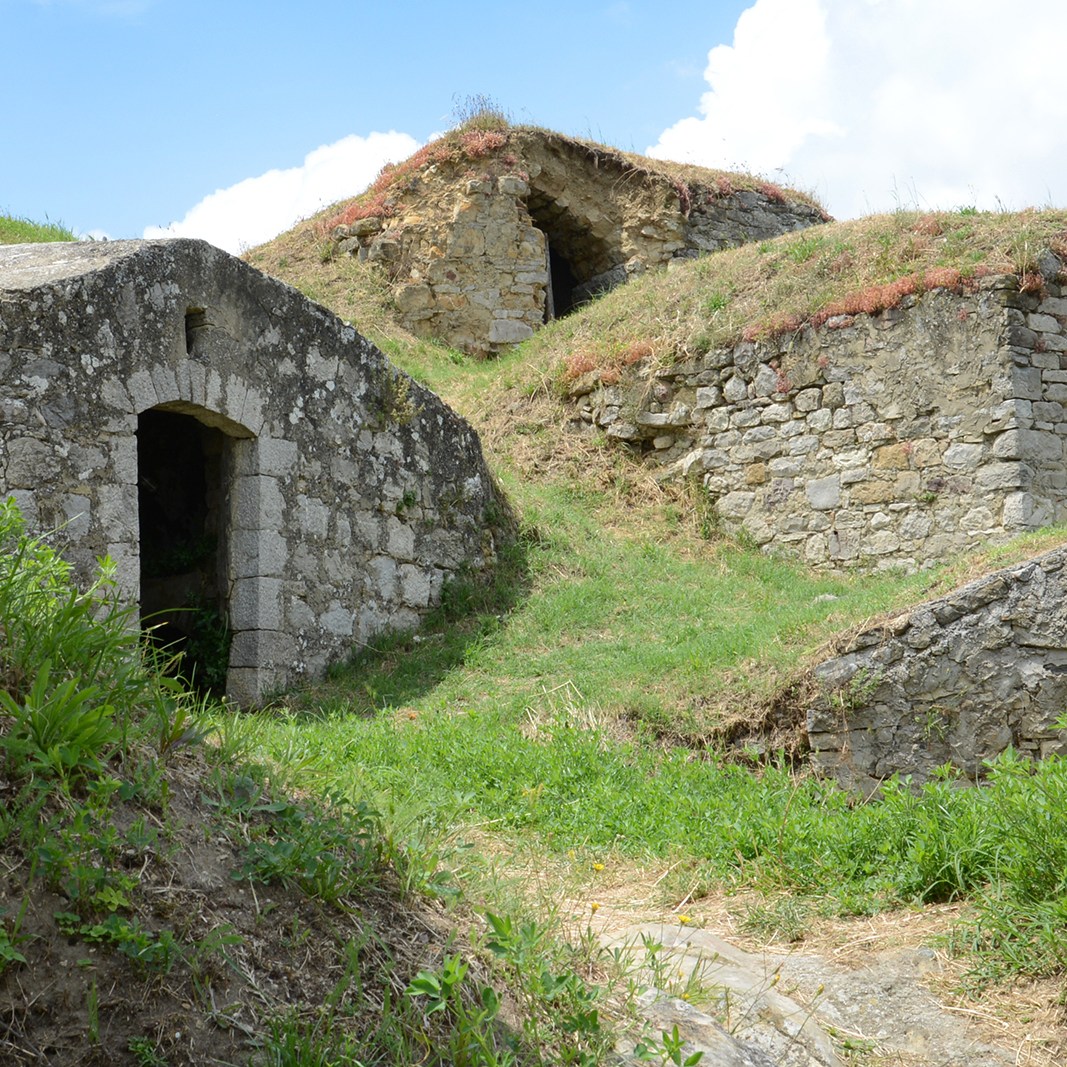
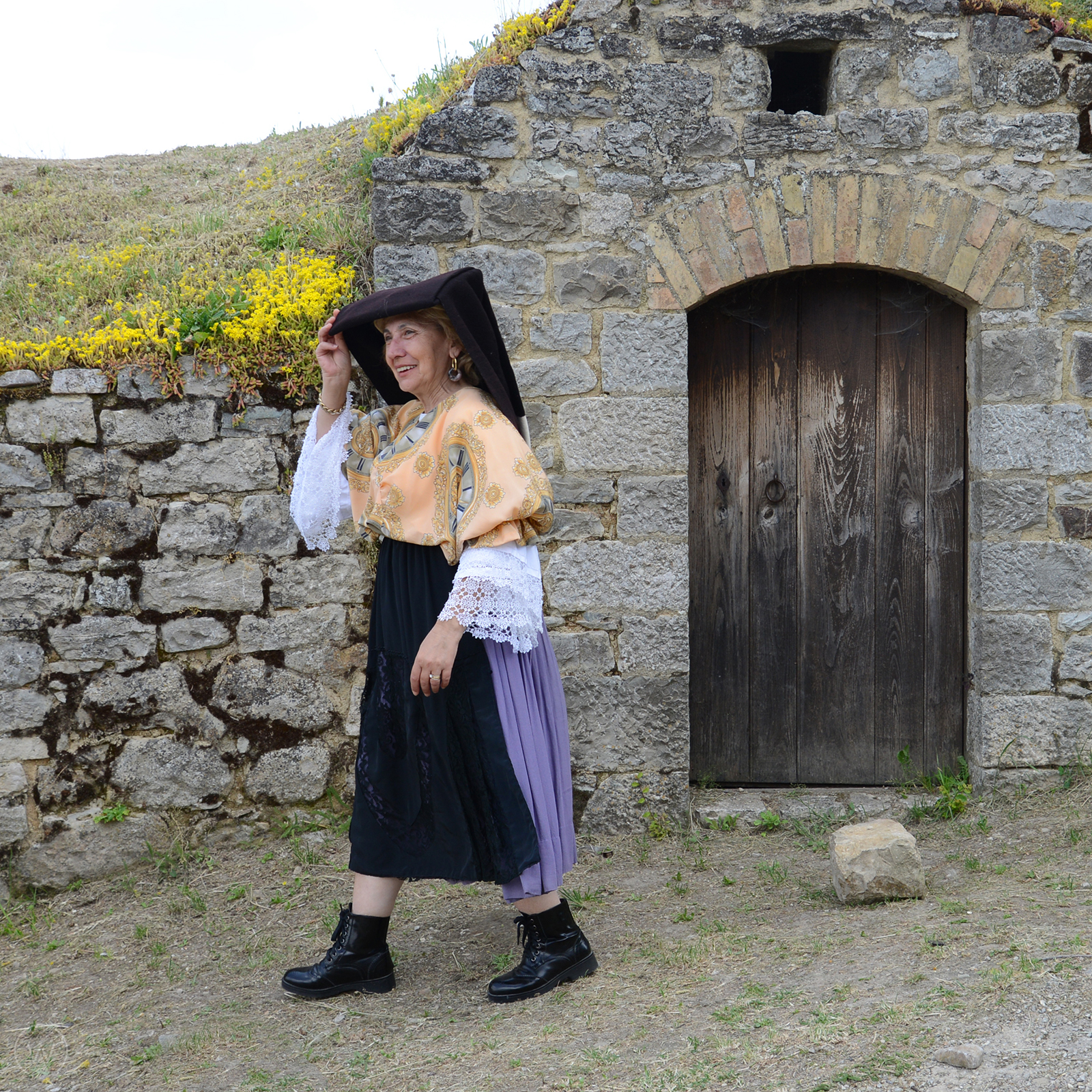
A fascinating detour from the primary eastward route came next: Pietragalla, town of a few thousand people, twenty minutes northeast of Potenza. The signature attraction here is the cluster of approximately two hundred palmenti (wine grottoes) that tumble haphazardly down the hillsides on the east end of town. Operational from the Renaissance through the mid-20th century, these domed, semi-subterranean chambers of quartz sandstone maintained an optimal temperature for wine production as well as the various vats for grape storage, stomping and fermentation. Fireplaces as well as southeast-facing doors provided warmth when needed, and ventilation holes released carbon dioxide.
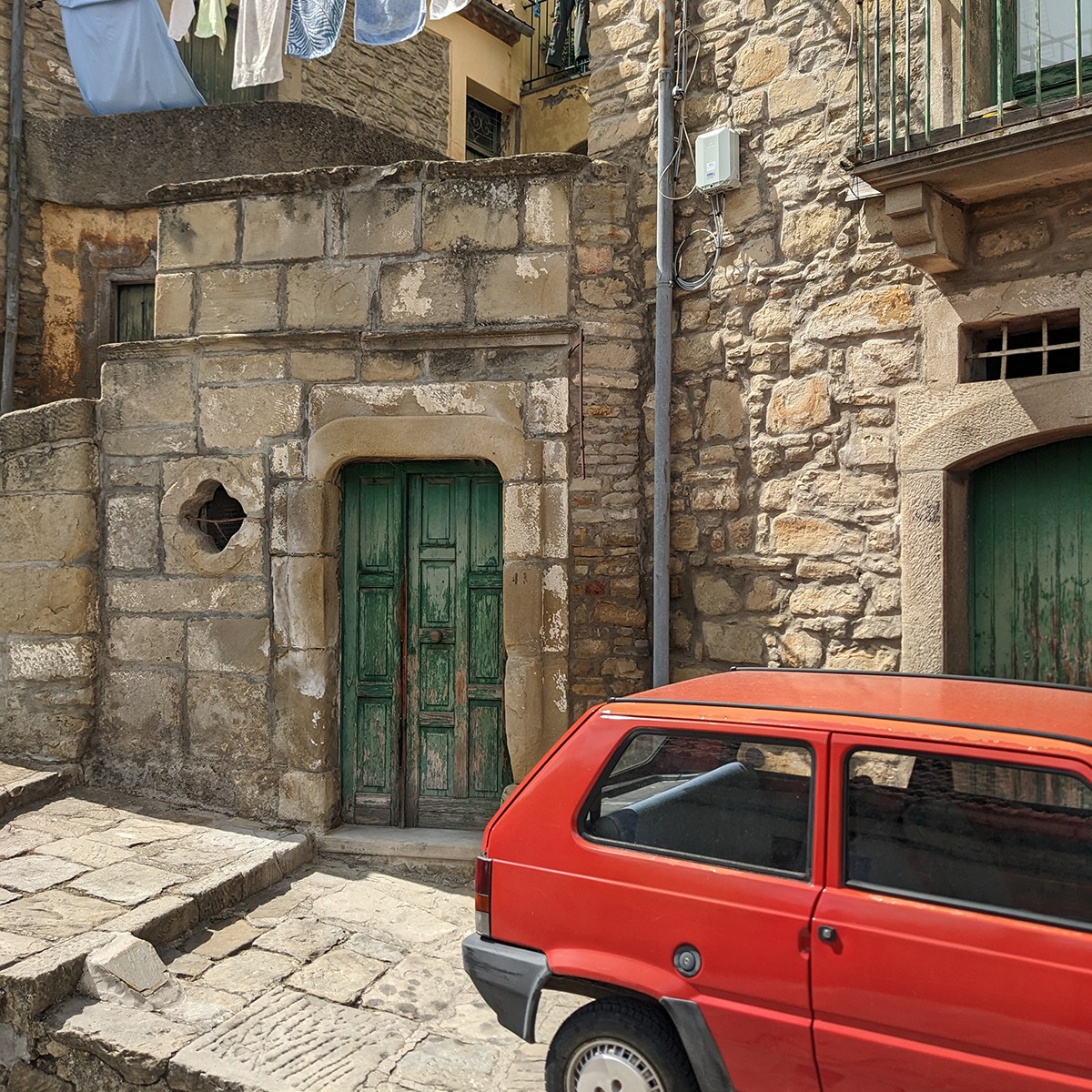
While the palmenti are Pietragalla’s primary draw, the quaint town center is particularly endearing, featuring expansive views from Piazza Via Cannone with its sobering war memorial so grimly typical of most Italian towns, and colorful, arched alleyways surrounding Chiesa di San Nicola di Bari. If you have any (literal) drive left after making your way the short yet amusingly labyrinthine distance from the palmenti to the center of town, consider continuing another twenty minutes to Acarenza, a hilltop hamlet reputedly one of Italy’s most beautiful.
LOFTY CASTELMEZZANO
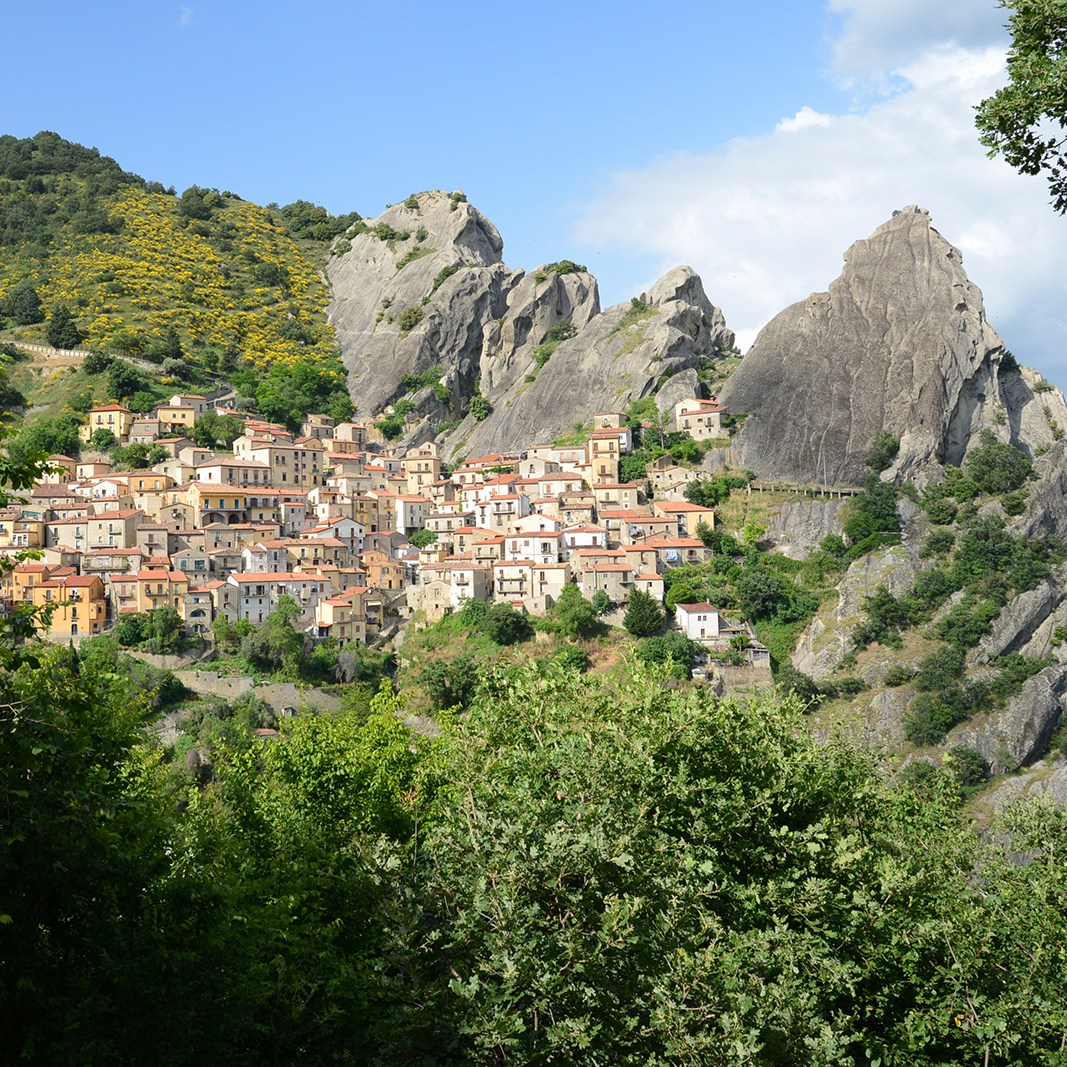
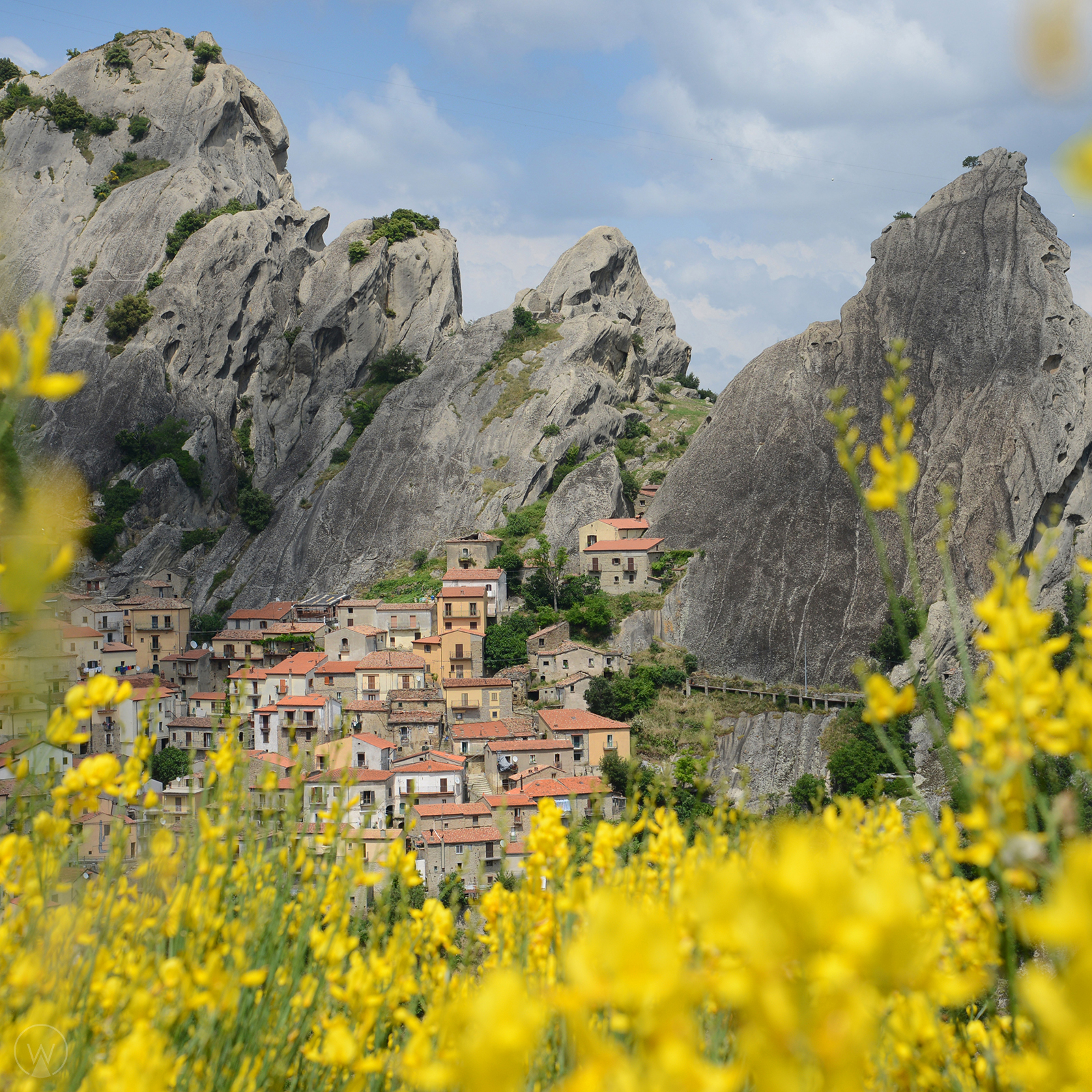
Rejoining E847 east of Potenza, my next out-and-back detour was Castelmezzano, an inconceivably picturesque town hugged by a gentle curve of jagged peaks in the mountain chain known as the Piccole Dolomiti Lucane (Small Lucanian Dolomites) – a name that will surprise those who have long understood there to be only one mountain range bearing the “Dolomites” name. Obscure italophile fact: Owing to the similar appearance of some of its craggier peaks to their northern cousins, and to the high percent of the eponymous mineral in the stone of both, this range in the Southern Apennines borrows its name from that more famous range. Now when friends tell you of their recent visit to the Dolomites, you can reply smugly, “Which Dolomites?”
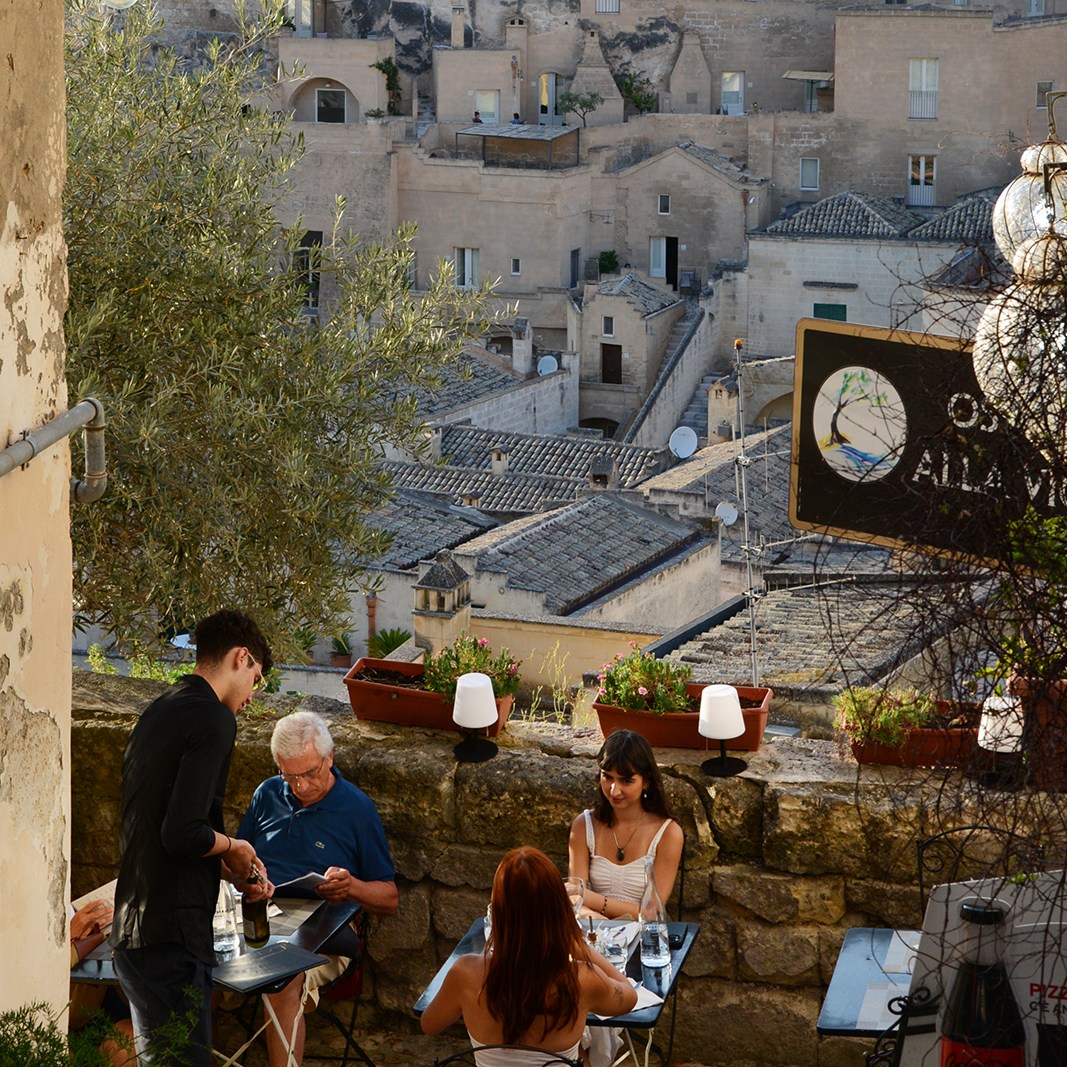
The town dates back to the 6th century BCE, and can serve as a base for exploring the endless trails of Parco Naturale Gallipoli Cognato, including a trek to nearby Pietrapertosa, which overlooks Castelmezzano and is nearly as easy on the eyes. For those interested in something faster than a hike, a zipline, Il Volo dell’Angelo (Flight of the Angel), connects the higher town to the lower one. I skipped the flight and instead relaxed al fresco at my table on Vico Parrella, watching the village’s east end and its majestically menacing backdrop glow under the afternoon sun, as I savored each spoonful of my contadino soup from Ristorante Pepetrusko on Corso Vittorio Emanuele II. My server explained that the humble recipe of fava beans, lentils, chickpeas and dried sweet peppers was a regional speciality, prepared in huge pots on public squares on St. Lucia day (December 13) and then shared among the poor. It’s one one of the most flavorful – not to mention healthful – soups I’ve ever eaten, perhaps surpassed on this occasion by one of the best views I’ve ever enjoyed while dining.
As is often the case when visiting Italy’s remote villages, getting there is half the adventure, and the serpentine road (Strada Interpoderale Santa Croce Camastrato, accessed from E847 via SP32) did not disappoint. My little Cinquecento felt so at home as it leaned into each bend that I admit I got a bit carried away, only to be shocked out of my high-revving reverie by the massive speed bump at the end of the tunnel that deposits Castelmezzano visitors at parking lot 2, Belvedere Giuseppe Padula. Fortunately, there were no carabinieri (police officers) stationed nearby when I touched down, but they showed up moments later, probably summoned by a witness to my launch attempt. (Come si dice “Dukes of Hazzard” en italiano?) In a fortuitous twist, these same civil servants mercifully spotted me two Euros for the meter because I was out of change, which made me feel bad about my carabinieri jokes – which are the only Italian jokes I know.
MATERA, CITY OF STONES
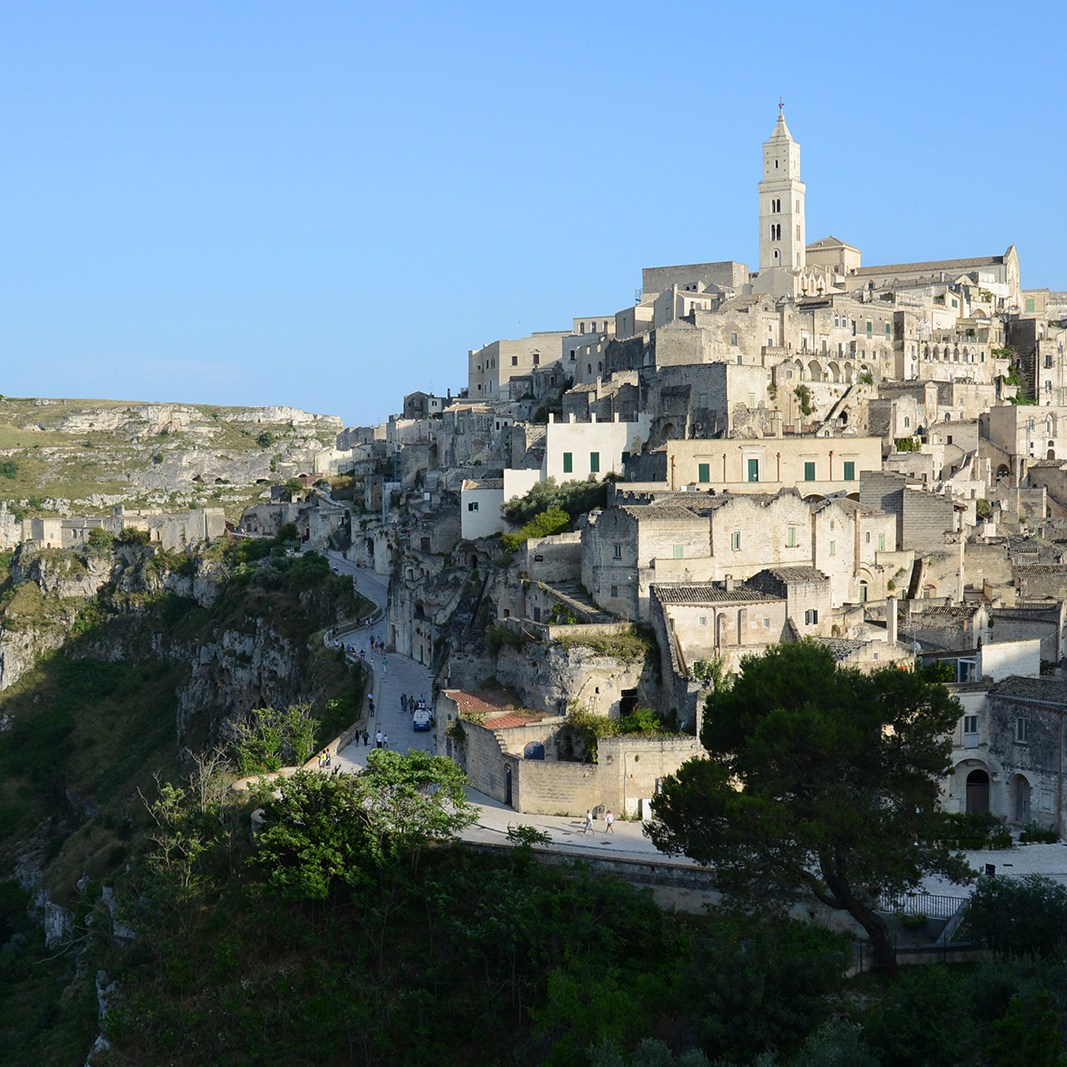
I would never have known about my final stop in Basilicata were it not for James Bond, who had to jump a Triumph Scrambler over one of its biggest walls and into a funeral procession streaming out of its duomo (cathedral), in order to land the city on my itinerary. Turns out Matera isn’t the only whitewashed hilltop town in eastern Basilicata – trusting my eyes, rather than my navigation, I almost exited the road early at nearby Miglionico – and it turns out that No Time to Die isn’t the only movie to have shot here. In fact, the directors of dozens of films (Ben Hur, The Passion of the Christ and Wonder Woman, to name but a few) have felt the tug of Matera’s numerous allures.
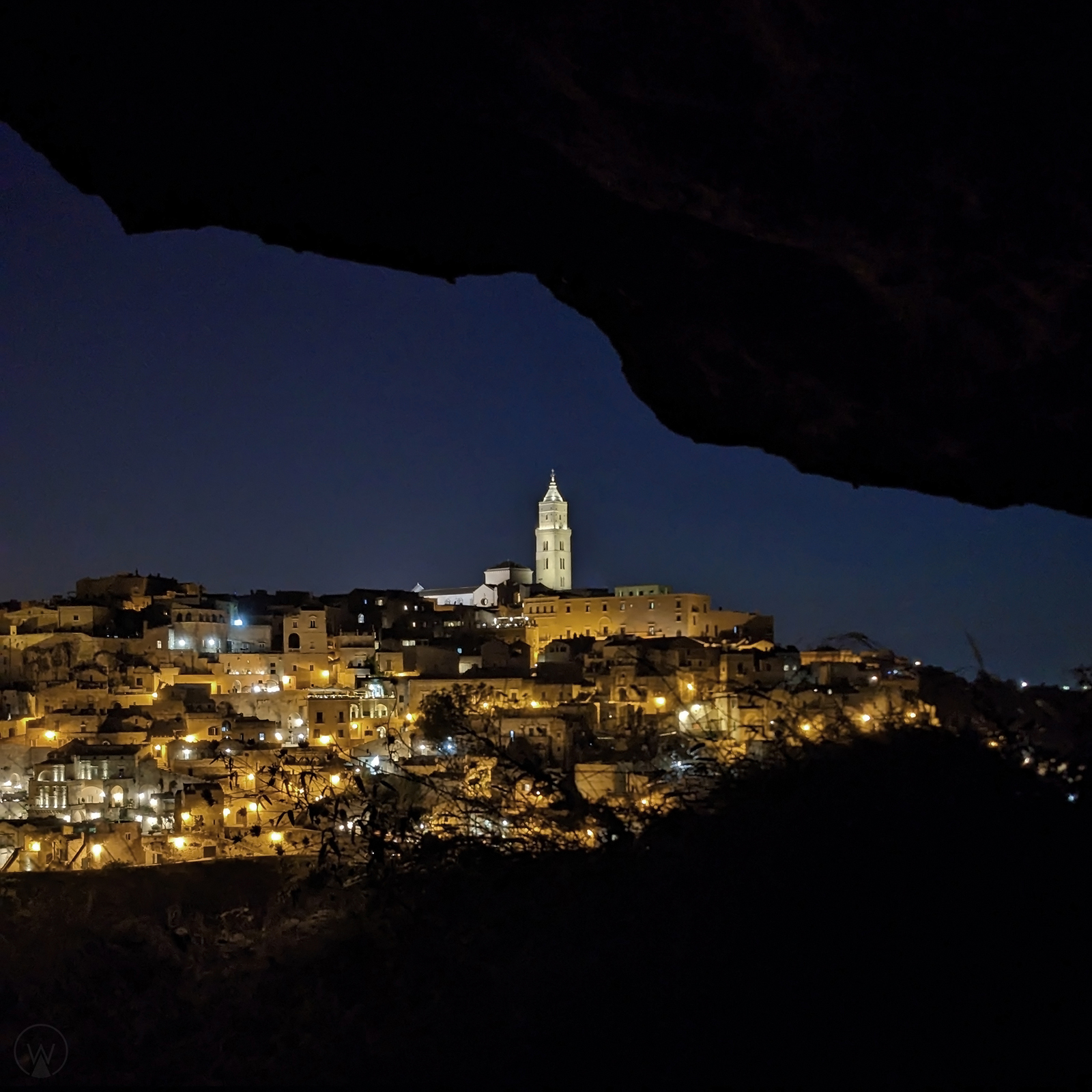
Settled by tool-wielding troglodytes in the Paleolithic era – think wooly mammoths – Matera is believed to be, after Petra, the second-oldest continuously-inhabited city on Earth. For most of its modern history, Matera’s extreme poverty made it the shame of the region. How poor was it? Matera was so poor that, until the mid-20th century, many residents still lived (with their animals but without electricity or plumbing) in the ancient caves of the town’s two Sassi (stones) districts, the Sasso Caveoso to the south and Sasso Barisano to the north. Today, these former slums, their mostly-abandoned dwellings stacked more than eight high in certain spots, feature some white-linen restaurants and luxurious b&bs.
Matera’s soft limestone is also home to an astonishing assortment of cave chapels dating back to the early Middle Ages. These structures, known as the Rupestrian Churches (rupes is Latin for rock), together with the Sassi, earned Matera a UNESCO World Heritage designation, and some of them are still very ornate, especially the Crypt of the Original Sin, known as “the Sistine Chapel of Rupestrian art.” To visit the chapels on the far side of the Gravina Canyon, do not navigate to Parco Regionale della Murgia Materana and follow it to the end, which is in the middle of a nondescript forest. (Based on the frowny faces of the parade of returning drivers I passed on my way out there, I was not alone in this fruitless expedition.) Instead, either follow directions to the Parco delle Chiese Rupestri, stop where other cars are parked roadside and follow the trails to Belvedere di Mugia Timone, or hike to it from the city, from Porta Pistola on Via Madonna delle Virtù.
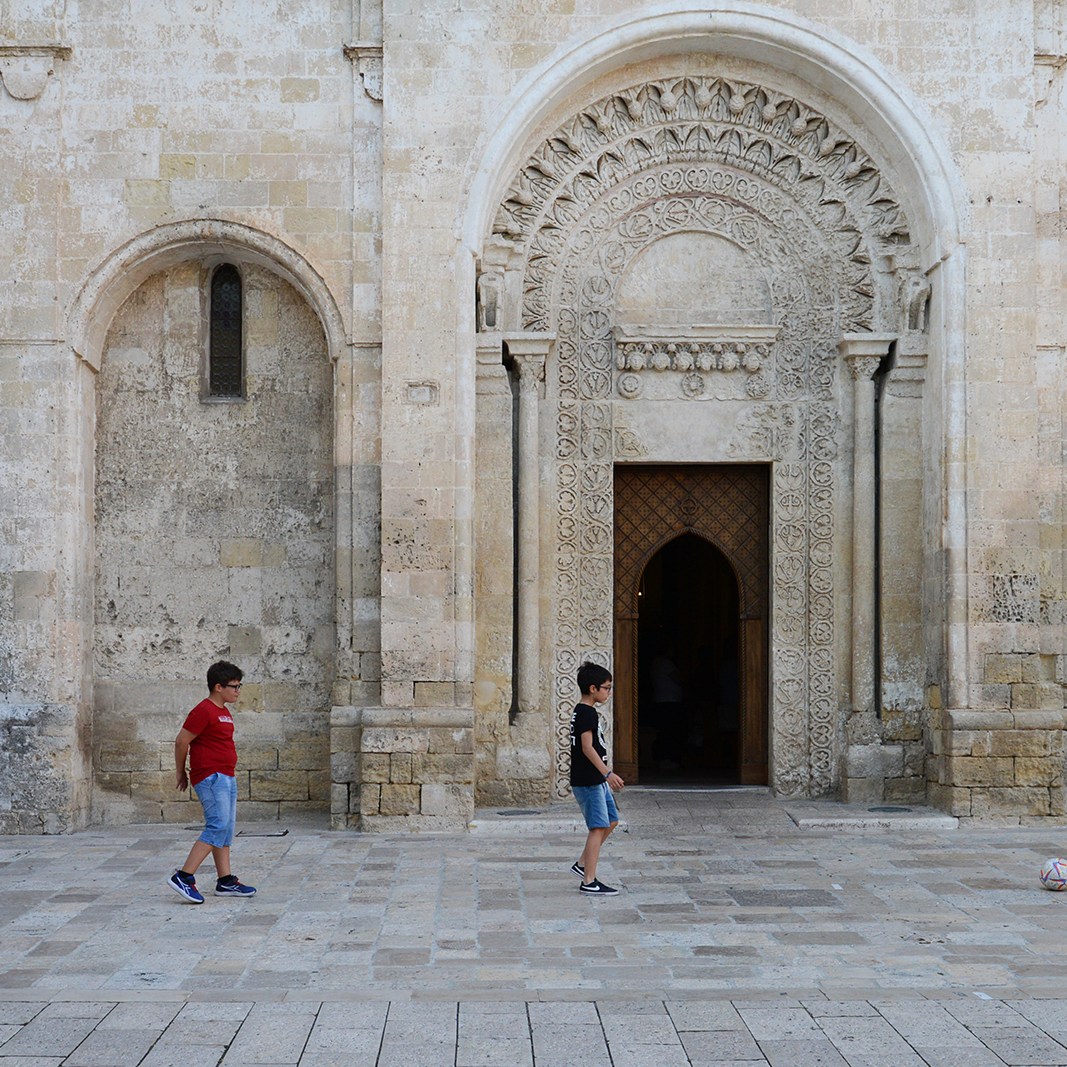
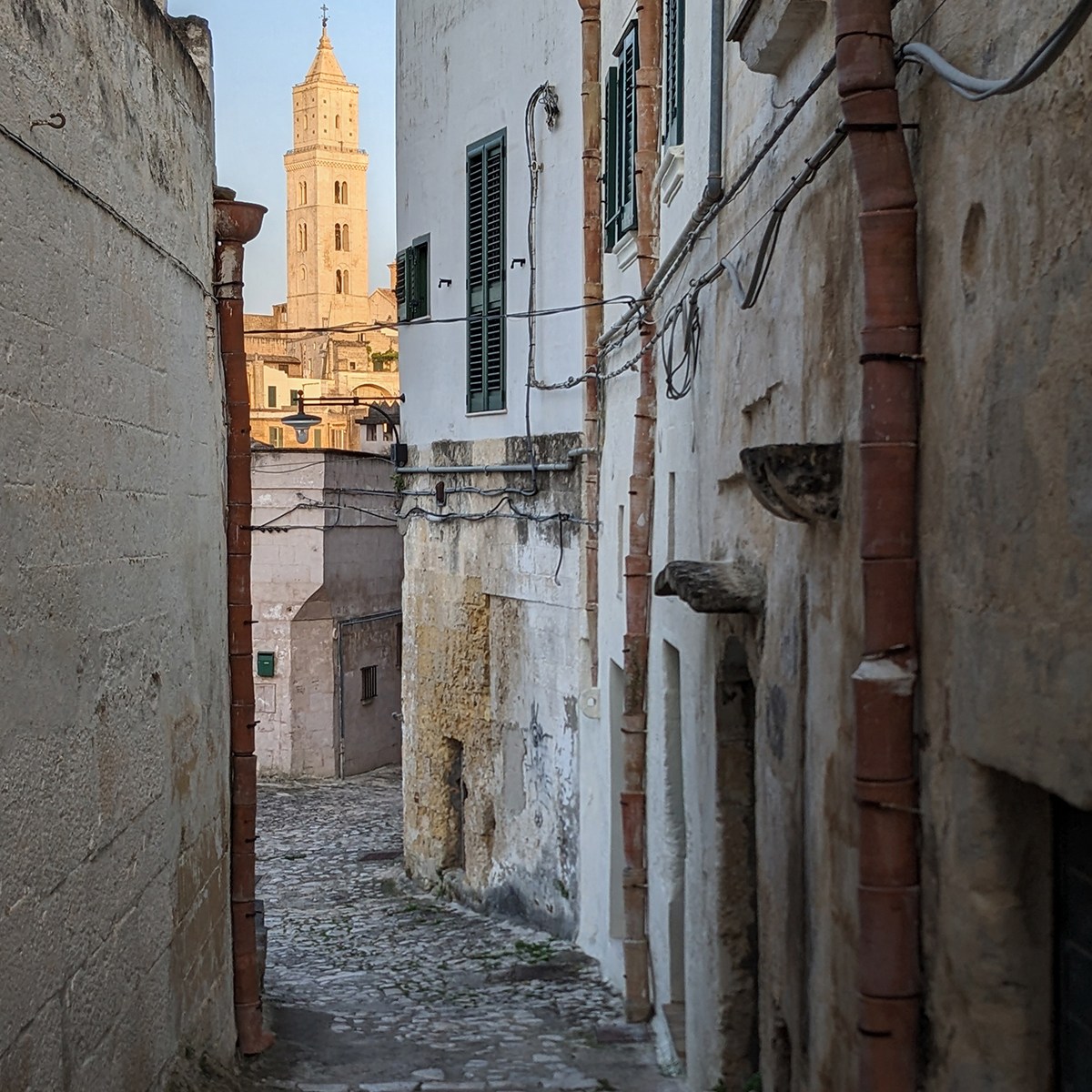
Antiquity isn’t the only reason to visit Matera, which reminds me of a sun-bleached Siena, but much more Romanesque than Renaissance. Browse its lovely palazzos, fine churches and energetic piazzas in the Piano (flat) neighborhood. Enjoy an evening aperitivo on Piazza Pascoli, which is dominated by Palazzo Lanfranchi, the Baroque former home of Matera’s archbishop and now home to the National Museum of Medieval and Modern Art. Below Piazza Vittorio Veneto is Palombaro Lungo, a 16th-century cistern as long as an Olympic pool and navigable by boat. And of course, Bond fans will want to pause on Piazza San Giovanni, site of No Time to Die’s memorable Aston Martin donut scene.
Leaving the City of Stones behind, I crossed into Apulia and leaned south toward the boot’s heel. Passing through Taranto I noted its Castle Aragonese – more scenic perhaps for its waterfront setting than for its sturdy structure – as well as handsome Ponte Girevole, then arrived at my destination for the evening, the quaint town of Grottaglie, known for its ceramics factories.
QUESTIONS FOR READERS
- What other stops along this route do you recommend?
- What’s the most memorable view you’ve ever enjoyed during a meal?
- What are some of your favorite off-the-beaten-path cities known more as cinematic settings than travel destinations?
 WANDERLOOSED