


Note: This is the second in a series of posts about French Polynesia. The series begins here.
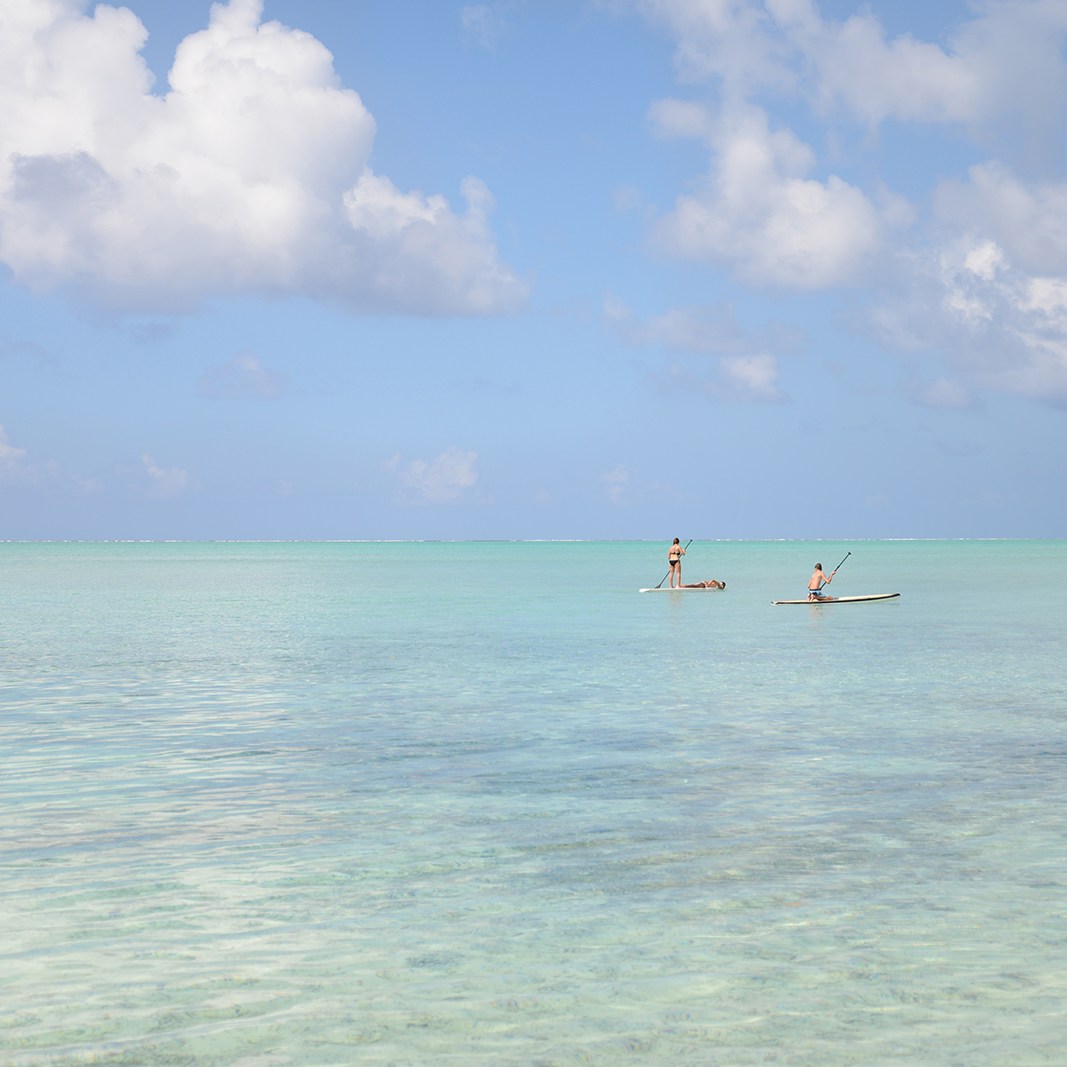
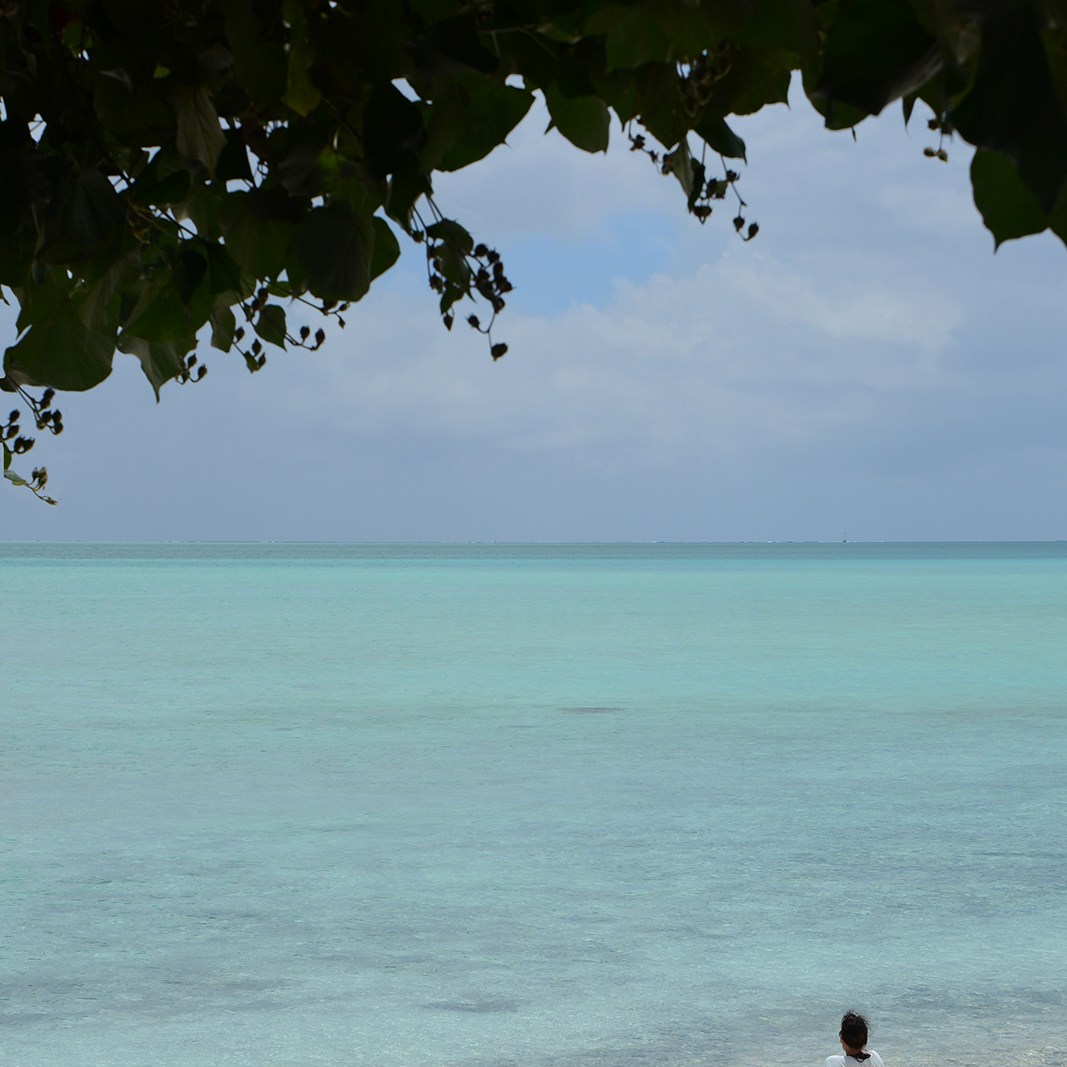
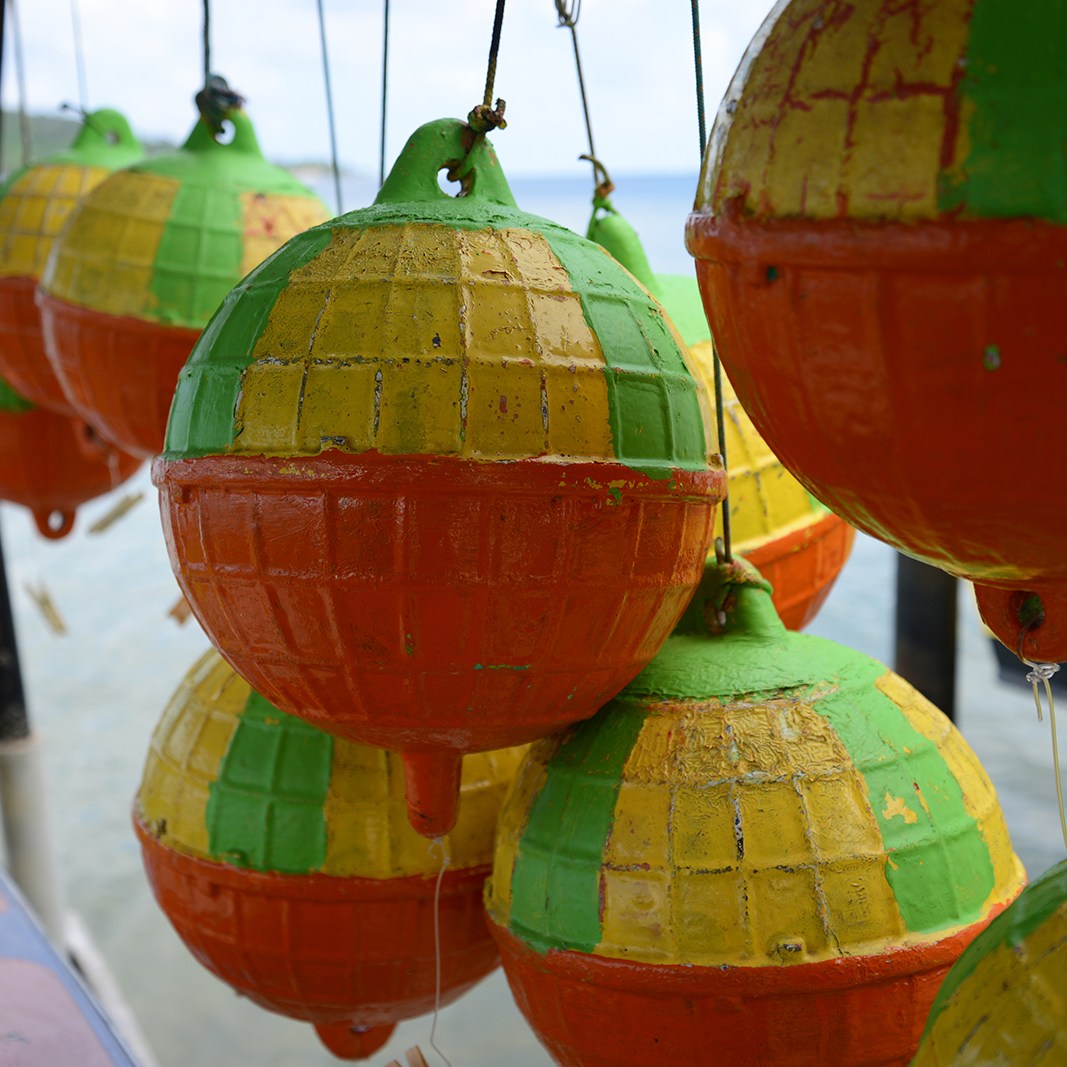

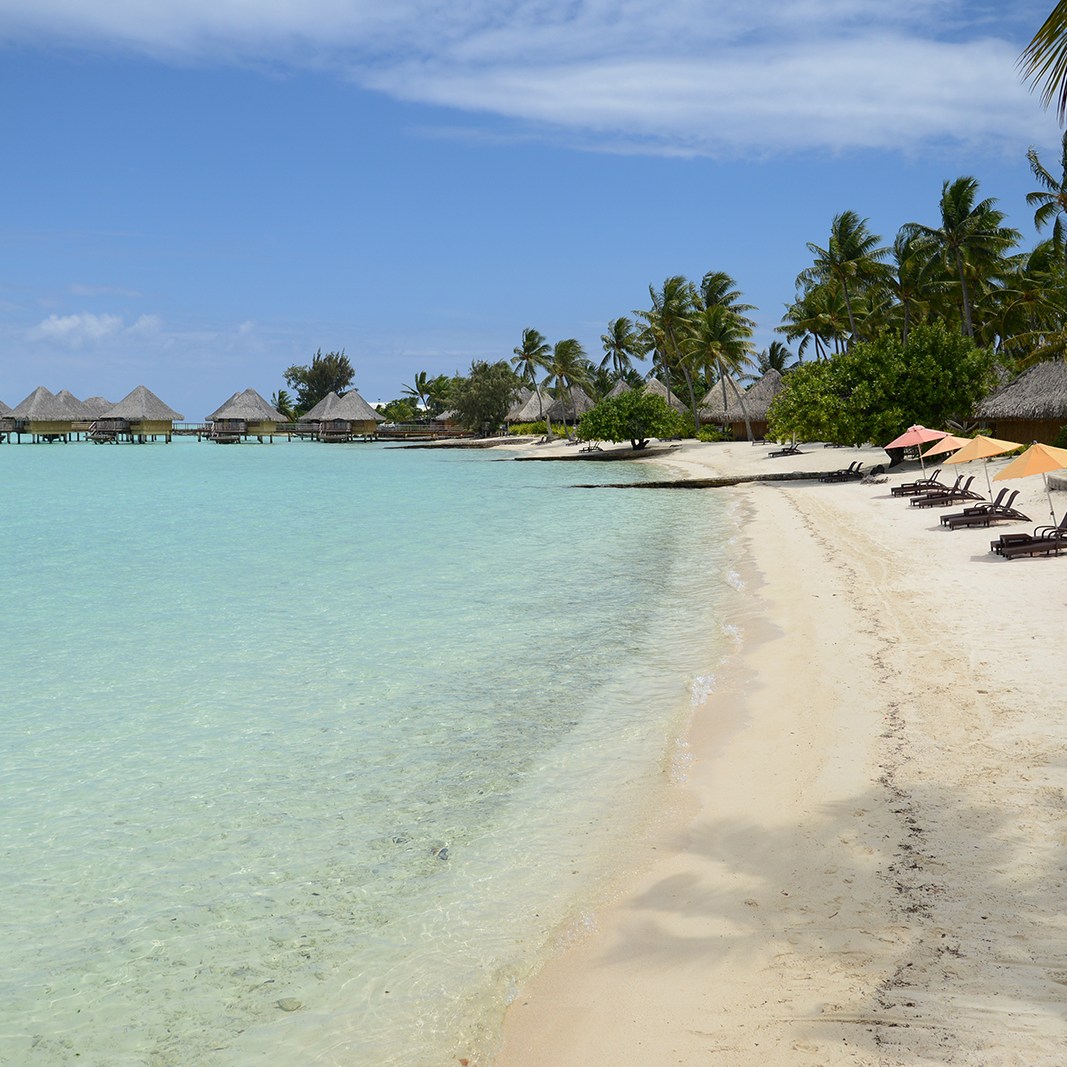
Locals on both Mo’orea and Tahiti had implored me to skip Bora Bora, advising that among their country’s 100+ islands, a great many were more beautiful and much less commercialized than this renowned destination. This recurring counsel led me to shift some of my itinerary from Bora Bora to Maupiti (more on that later), and yet I couldn’t be in the deep South Pacific and not go to Bora Bora, so I went.
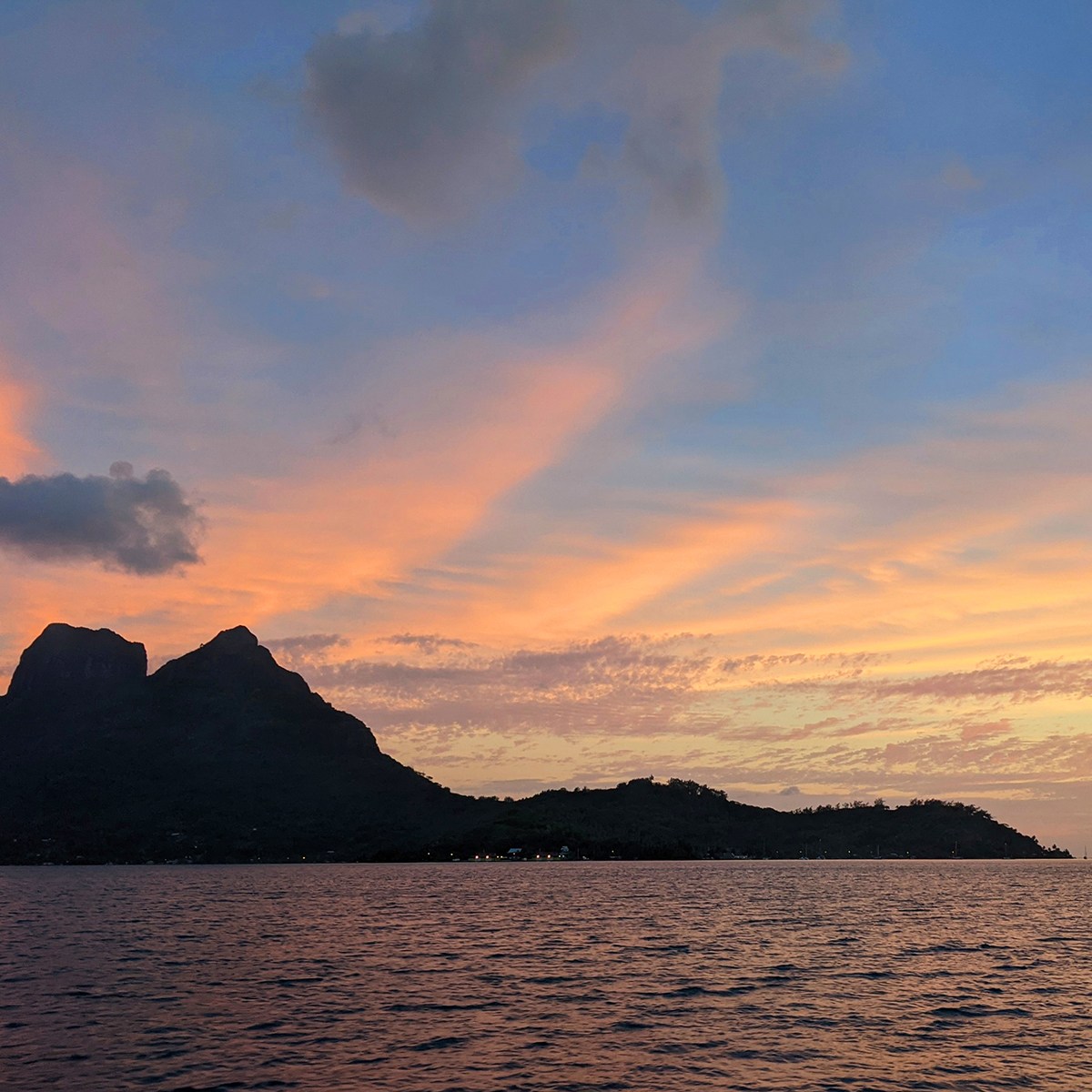
Bora Bora’s airport is on a long stretch of motu, one of a semi-continuous chain of small islets (motus) that commonly encircle the volcanic islands of this region and ensure both especially vibrant aquatic life within their lagoons and calm waters along the inner beaches. Air Tahiti runs a ferry between the airport and the main dock at Vaitape, from which visitors disperse toward their lodgings either on the island or on other motus. By dumb luck, my flight from Papeʻete landed shortly before a sunset so dazzling that I spent the 20-minute passage out on the prow, at one point (it’s true) shouting into the breeze, “I’m the king of the world!”
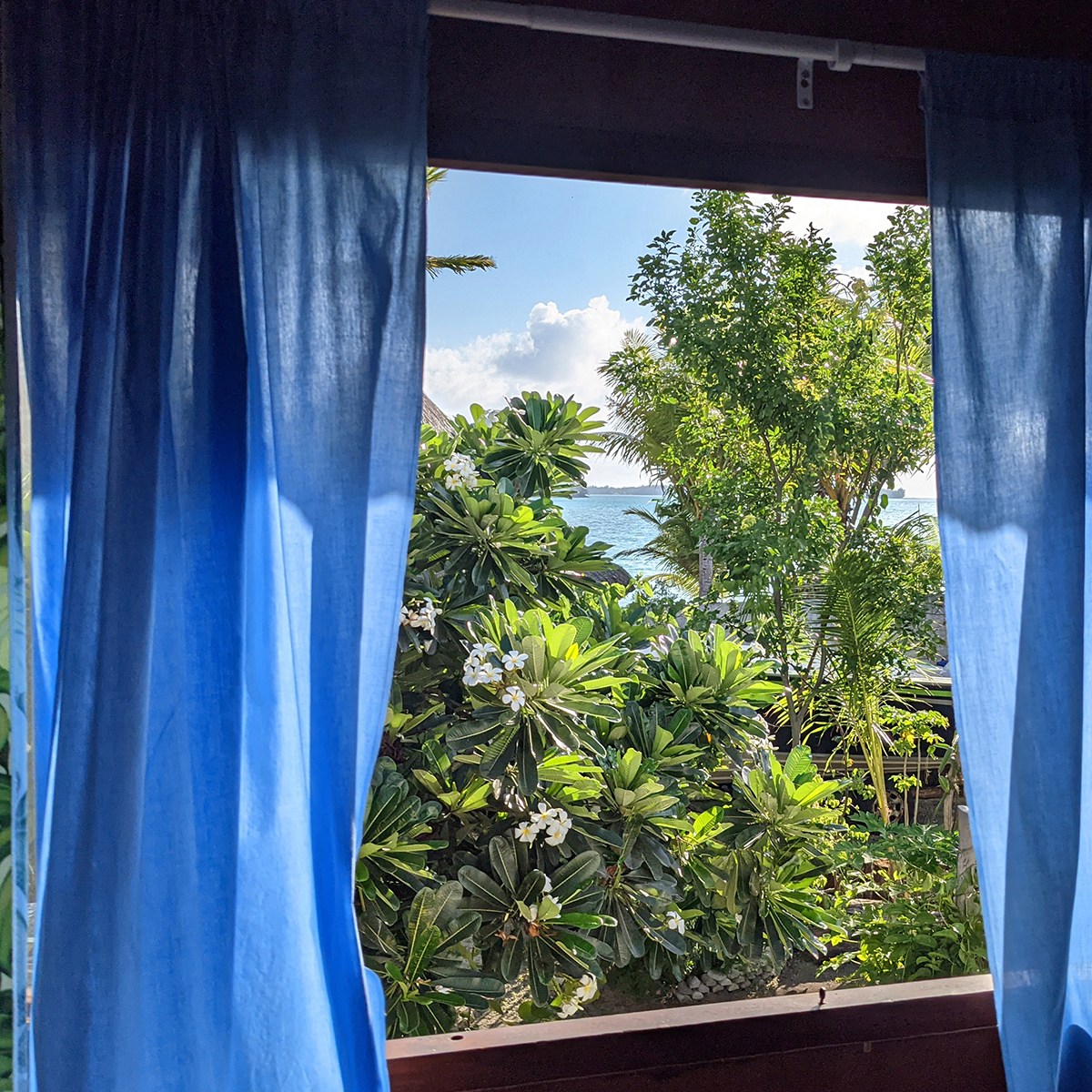
I lodged at Matira House, one of the island’s southernmost lodgings, which abuts the InterContinental property. Choosing this modest B&B over the lavish IC saved me approximately $1,183.17 per night. And although I did miss the opportunity to sleep in one of the IC’s iconic (and, in this nook of the globe, ubiquitous) above-water villas, and did have to strain a bit to see the morning sun sparkle on the water beyond the dense explosion of tropical foliage outside my paneless window, I was consoled by the Matira’s fun outdoor shower.
Having up to this point explored French Polynesia in either a car or an outrigger, on Bora Bora I opted for a bike, I put to good use the morning after my arrival on this scenic and invigorating 10-kilometer loop around the southern section of the island:
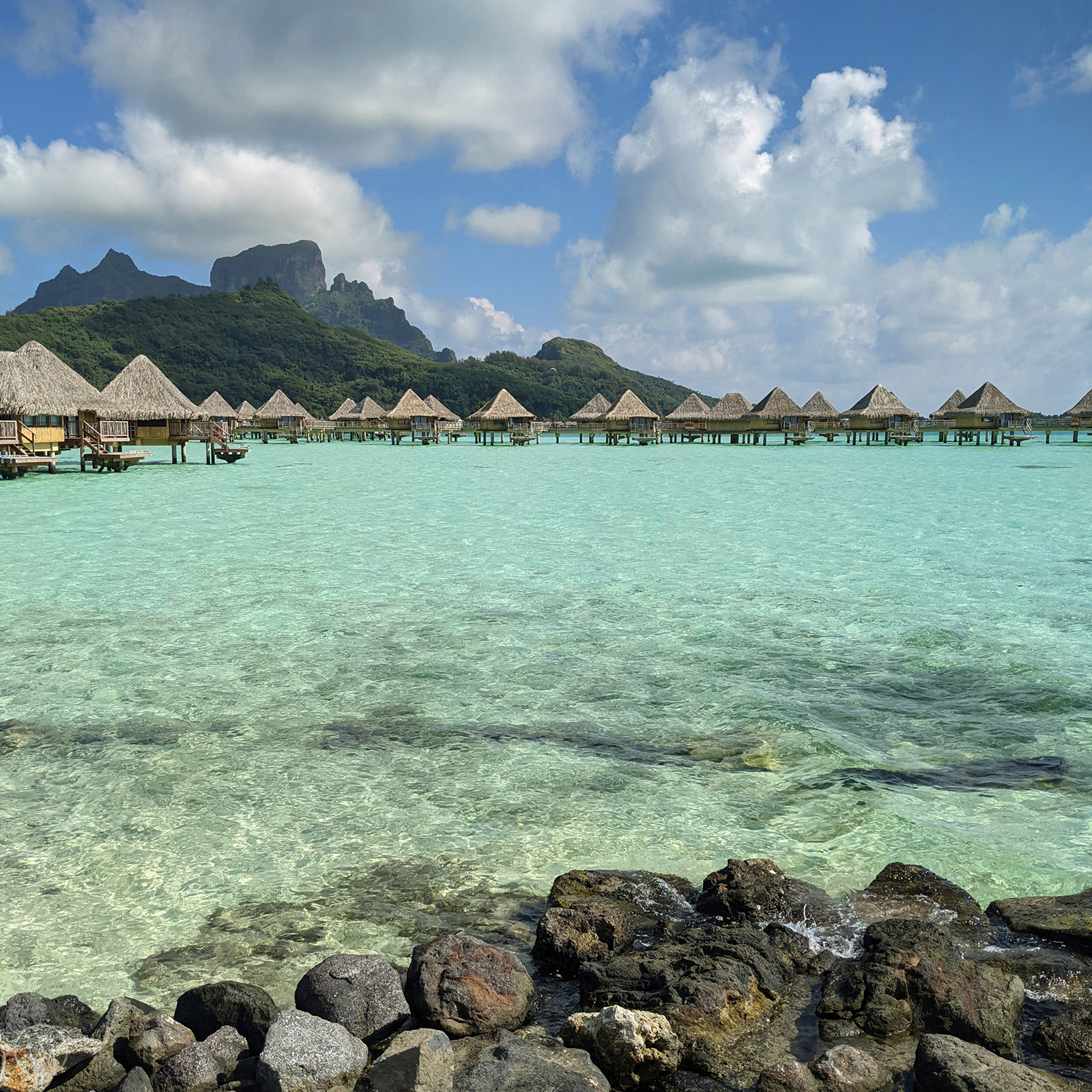
- My first stop was just across the road from Matira House, where I gazed northward beyond the InterContinental’s strings of villas toward the 700+ meter peaks of Mounts Pahia and Otemanu.
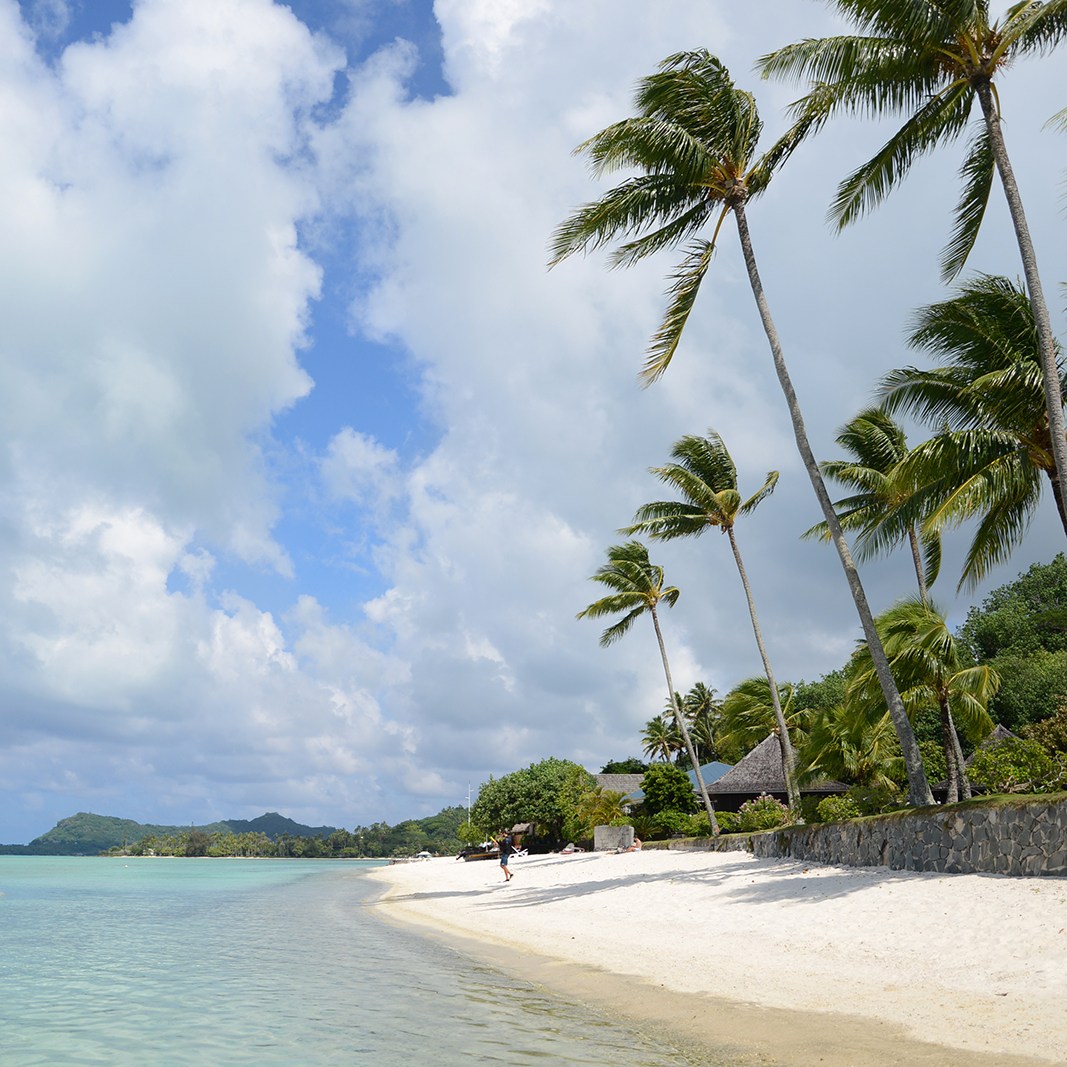
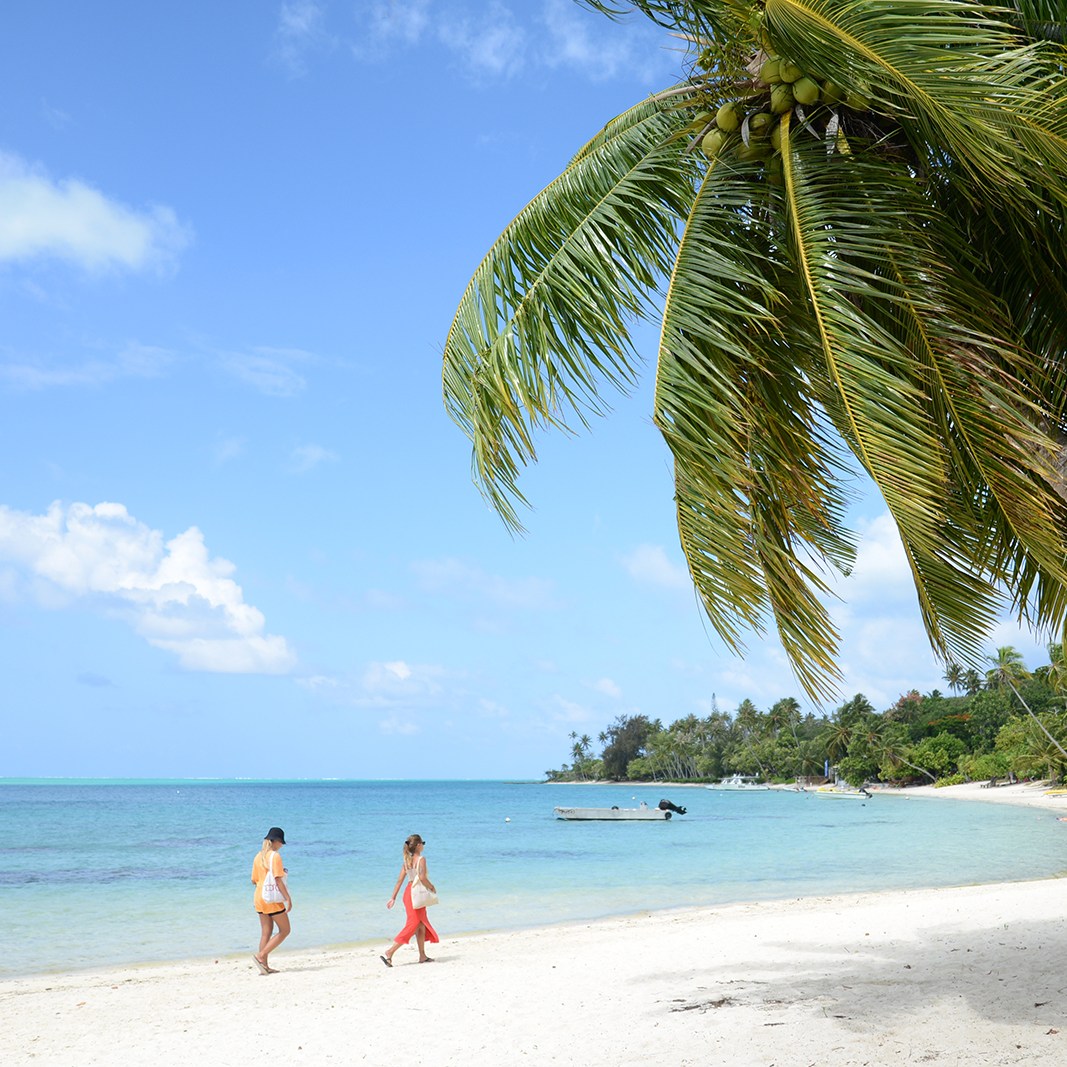
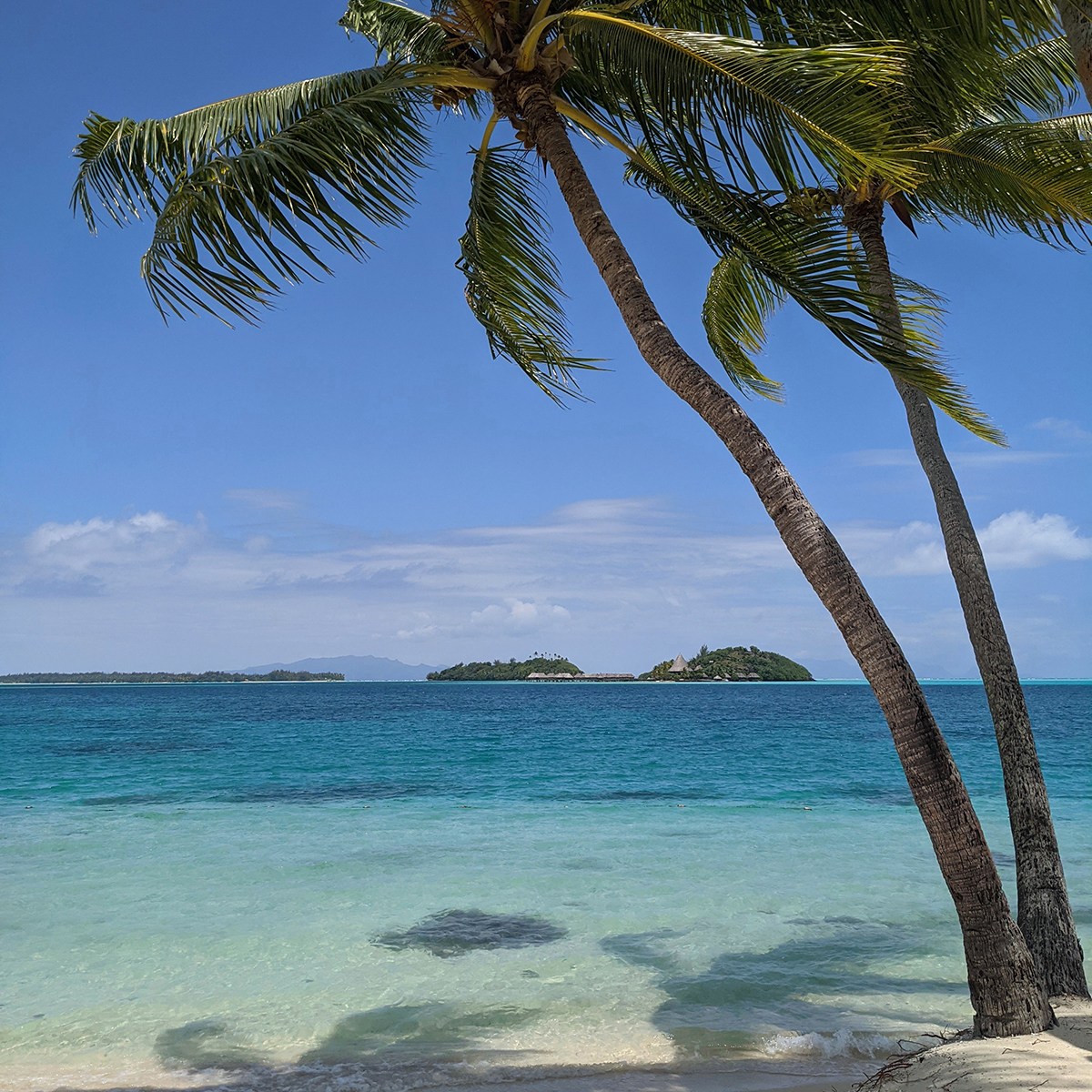
- Before a dozen turns of my pedals, I was passing along palm-lined Matira Beach. Some have dubbed Matira“the world’s most beautiful beach,” and while its worthiness of that superlative may be debatable, it’s certainly a candidate for one of most beautiful public beaches that also features an ultra-modern, immaculately maintained restroom and shower facility within 30 meters of the water. The southern quarter of the island, from about 5 to 8 o’clock, has no motu, so as I continued along Matira and passed the Bora Bora Beach Club, on the western horizon I could see a razor-thin line of whitecaps breaking on the reef, with an underband of brilliant turquoise where the sun cut through the waves.
- Because no point on the main island is more than a few kilometers from either the motu’s islets or the towering peaks that dominate the unmistakable ridgeline, the perceived topography varies dramatically from relatively close viewpoints. I appreciated this fact while continuing clockwise along the Circle Island Road and making stops at both Raititi Point and Pofai Point.
- The two kilometers that followed Pofai Point were perhaps the least scenic of the route. This is relative nitpicking, of course, because one’s memory of the car wash – and a grocery store that, endearingly, does not sell alcohol on Sundays – will fade long before memories of palm-lined Pofai Bay to the left and the looming mountains now straight ahead.
- At a sign labeled “#16: Itinéraire d’évacuation,” where the main road began to curve toward the left, I turned inland, or right, as directed onto a paved but unnamed road. “Itinerary” struck me as a rather leisurely term, and I wondered whether there was time during a tsunami to follow any sort of “itinerary” other than “run like hell,” as the sign’s little cartoon guy appeared to be doing, just a few paces ahead of a claw-like wave, up a 45′ hill – which, it turns out, was about the same grade I’d be huffing up a moment later. This led to ʻĀmanahune Vista Point, which sits atop the saddle of the ridge descending southward from Otemanu and offers views of all parts of Bora Bora not blocked by the mountains themselves.
- The eastward descent down the dirt road from ʻĀmanahuneon required a bit of maneuvering, but the effort was rewarded with views, from Pāopāo Point and Taurere Point, of the nearby islets of Piti U’uta (a private island marked by the Sofitel’s villas) and Piti ‘U’u Tai.
MORE BORA BORA NOTES
- If you’re an experienced hiker and the weather is dry, you can ascend Mount Pahia in about four hours. (As far as I know, Otemanu cannot be hiked.)
- The Vaitape Pearl Market is one of three primary places to shop for pearls in French Polynesia, the other two being in various places Mo’orea and primarily near the waterfront in Papeʻete.
- Snorkel in the famous Coral Garden, which you can reach on a kayak or with a hired outfitter, including as part of an outrigger tour of the lagoon.
- My childhood friend (and current dentist) snorkeled with humpbacks off of Bora Bora and described the experience, not surprisingly, as “unbelievable…you can hear them singing when they are close!”
- Bora Bora Air offers sightseeing flights over Bora Bora and day trips to nearby Taha’a by seaplane.
- Be aware that the airport ferry doesn’t mosey along its scenic route on “island time.” I was two minutes late to the ferry to my departing flight and threw myself at the mercy of my Matira House host, Vehi, who generously enlisted a cousin to take me to the airport in his fishing boat.
QUESTIONS FOR READERS
- What advice would you give someone choosing which islands in French Polynesia to visit?
- How did your visit to Bora Bora deliver on your expectations?
- What’s the most memorable bike ride you’ve taken while visiting somewhere new?
 WANDERLOOSED