







Note: This is the second of three posts about Cancún and the Riviera Maya. The series begins here.
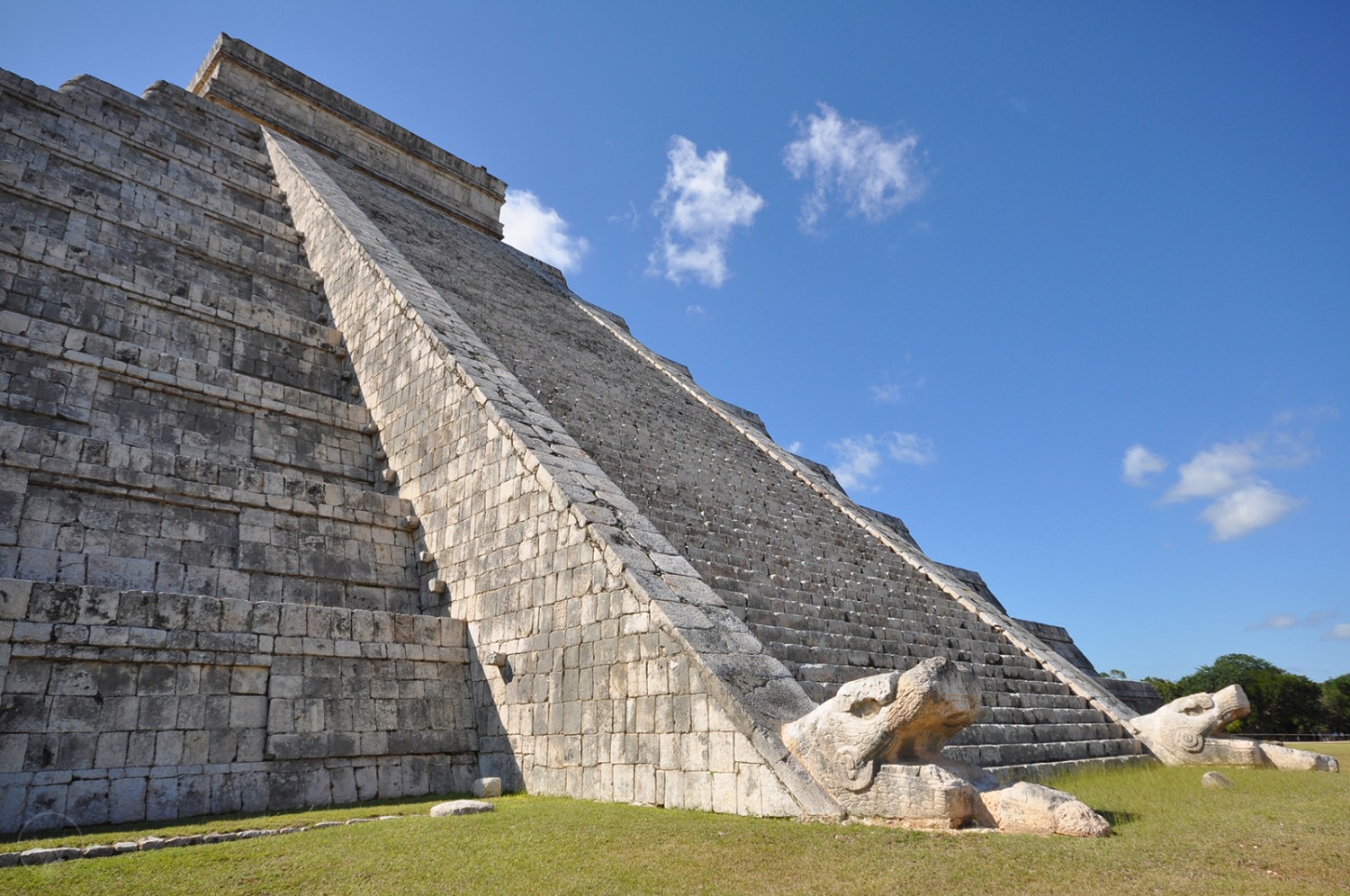
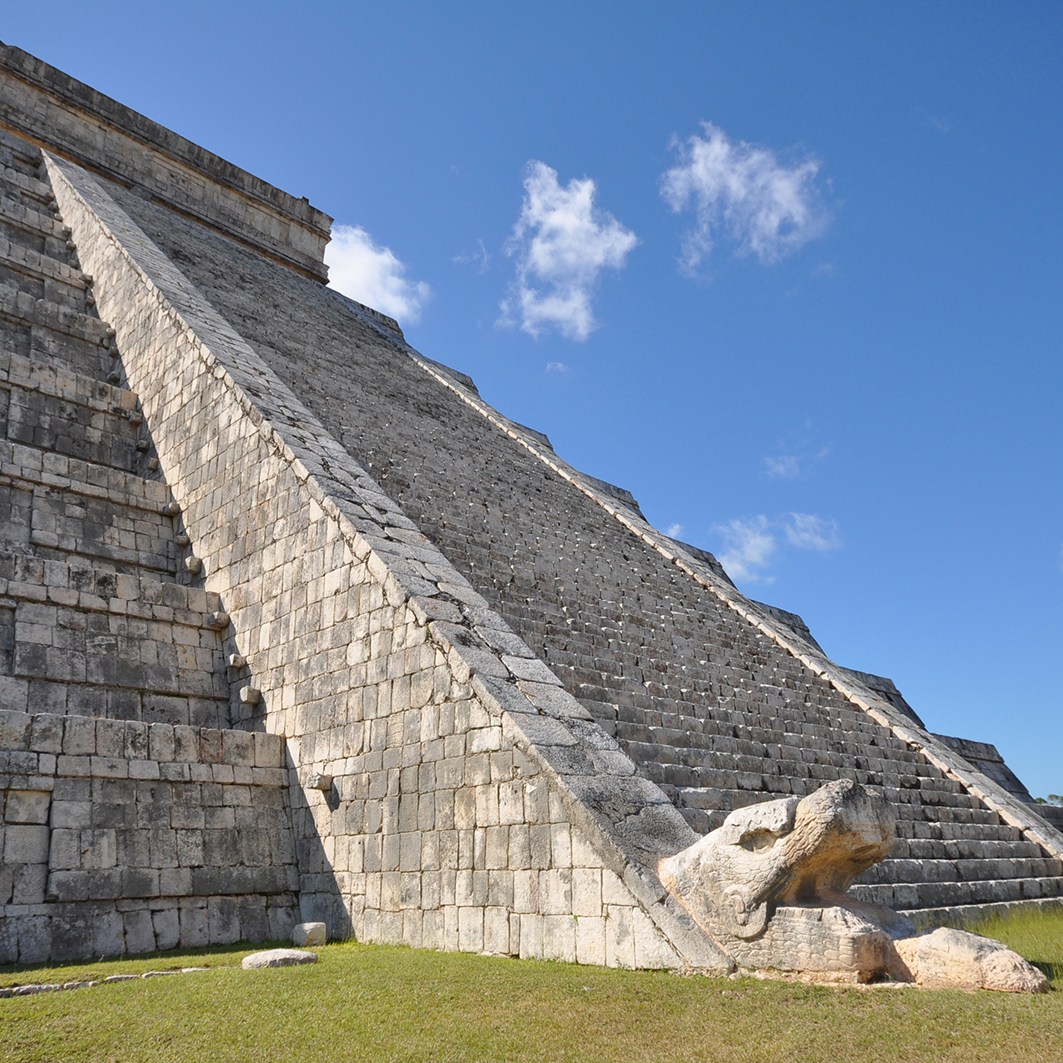
A visit to Chichén Itzá alone is essential to any visit to this region. Our version of this day trip — not intended for those who prefer to saunter — augments your enjoyment with several memory-making stops along the way, and throws in some crafty hacks to save you a little line-waiting time at the main archaeological site.
Understand first that this is a very aggressive day even by my aggressive standards, but definitely doable from anywhere between Cancún and Tulum. (I’ve pulled off more or less this same itinerary twice, and remain on good terms with most people in those groups.) Plus you’re aided by the time change as you cross westbound from Quintana Roo to Yucatán, although the switch back as you return toward the coast does make for a very late return. Your hard stop late in the afternoon is that, at the time of this posting, Ek’ Balam stops selling tickets at 4 and closes at 5, after which you can enjoy a relaxed evening in Valladolid.
The earlier you get started, the better. The caravans of tour buses from the coast are arriving at the Zona Archaeologica in full force by 9, and for strictly logistical reasons if you’re not burning gas by 8, abort, go to the beach, and try again mañana. Unless you’re a ways south of Playa del Carmen, take the cuota toll road, at least on the drive out. For the return leg of my second visit, I opted for the libre (free) highway 180, aka Two-Lane Jungle Deathwish Thrill Ride. I didn’t watch my clock closely (I was too busy watching for topes, the ubiquitous speed bumps that Damien Cave of The New York Times appropriately calls “suspension-killing wonders” that ensure you’ll never make it into fourth gear), but figure that this route added something close to an hour to the drive. In fairness, I’ll note that this was very late at night, so I could only imagine the charm of the towns and the beauty and mystery of the machete-dense jungle that seemed to stretch in every direction beyond the reach of my headlights.
FIRST STOP: CHICHÉN ITZÁ IN A JIFFY
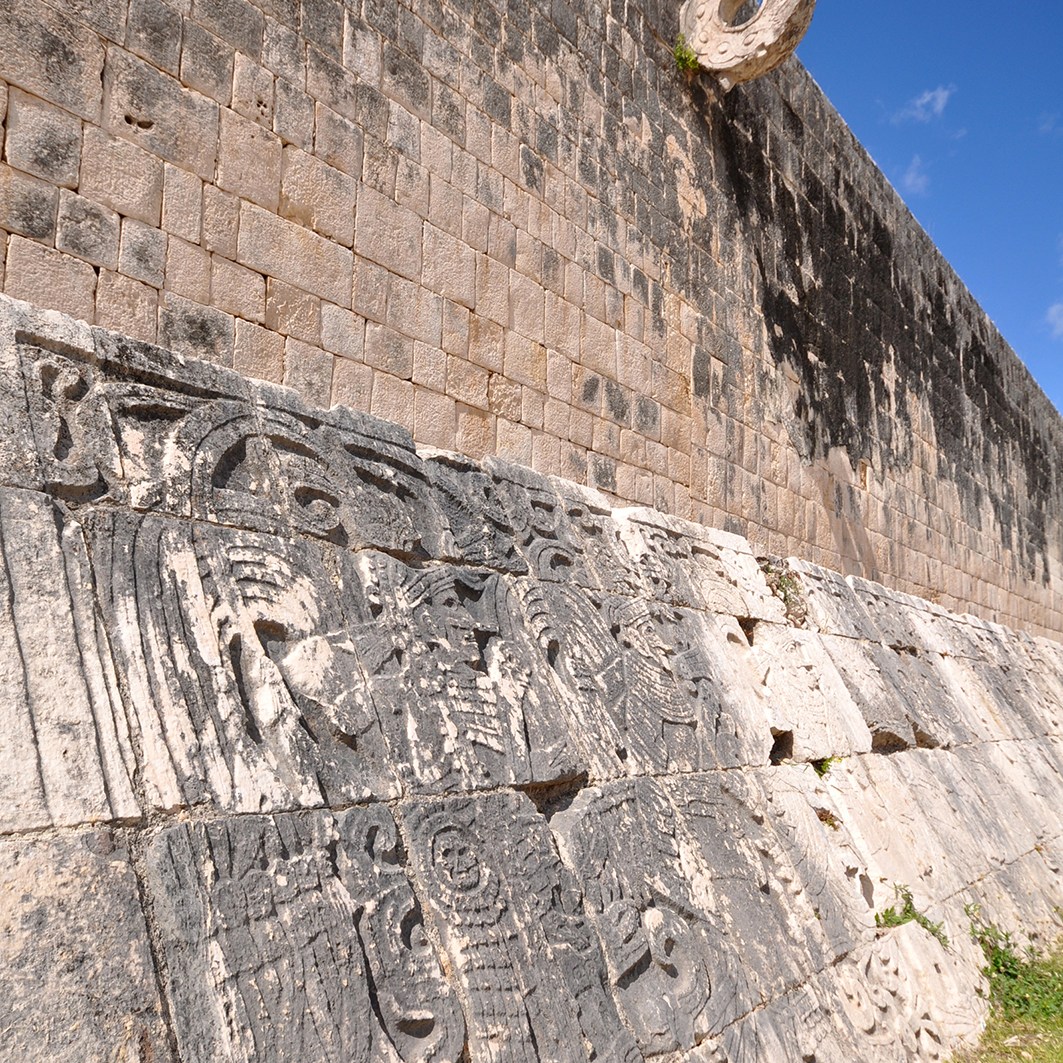
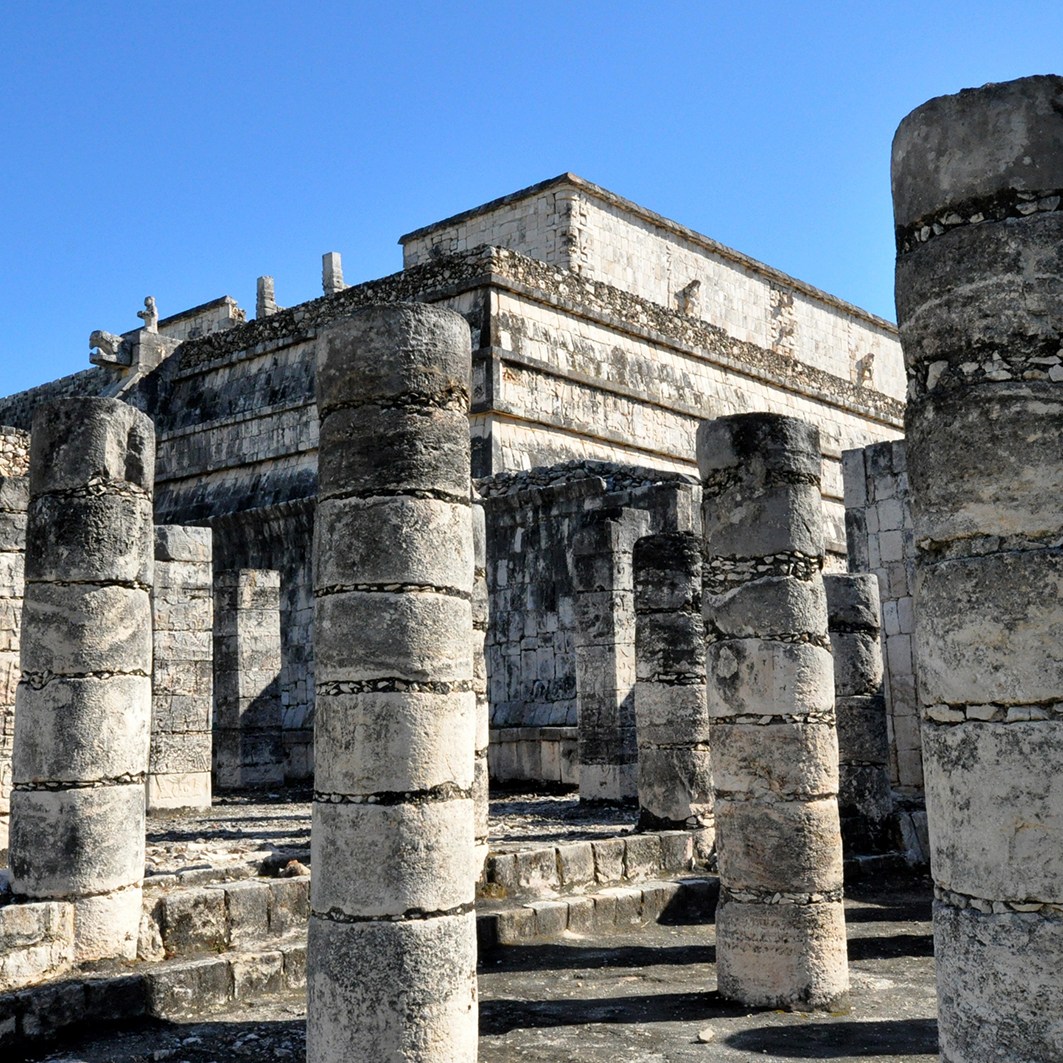
You have two hours or so at Chichén Itzá, which is long enough to see just about everything except probably the Sacred Cenote. (You’ll be glad to trade that for time swimming in profane cenotes later.) In an effort to help move your agenda along, I offer these practical tips:
1. If by the time you reach the dedicated Chichén Itzá road (meaning, after you’re heading southeast from Piste and fork right off of 180) it is gridlocked, don’t cross your fingers and hope the pace will pick up, because it won’t, and you could languish there indefinitely. Either park roadside (directly on that road or back on 180 if necessary) and walk the rest of the way, or continue along 180 for another km or two then turn right into the complex of hotels at the park’s southeast side, park there (you may have to pay to park at a hotel — I don’t know), and go in the southeast entrance. One disclaimer about this second option: I have not actually done this myself, but we stumbled upon this entrance, which had been unknown to me previously, as we were making our way from the unremarkable Cenote Iguana to the Thousand Columns, and surrendered to the siren call of the Choco-Story store that beckons just a few paces outside the park’s perimeter. (The bars are very good and my daughter loves the chocolate shampoo — yes, chocolate shampoo — but don’t stop here; you can ransack their Valladolid location in the evening when your time is at less of a premium.) People appeared to be buying tickets at the small booth and entering the park where we had exited for our choco-fix but didn’t appear to be associated with tour groups, and so I assume that this efficient, effectively lineless option is available to the general public.
2. Another approach, proven to yield amazing results almost instantly: If you use the main, northwest entrance and the line is long (whereas in my first visit in 2010 we walked right up to the ticket windows, this time it was at least 50 meters), leave your group in the regular line as your fallback plan, then proceed alone past the main windows another couple dozen meters, where on the left you’ll see some much shorter lines (i.e., maybe a dozen or so per) of credentialed tour guides buying their group tickets at the windows called Caja Mayoreo (wholesale box office). Discretely and discreetly ask those in line if, for a small propina (tip; I offered 200 pesos / ~$10) in addition to cash for the regular public ticket price, they’ll add your party to their group purchase. It took me four inquiries until I found a willing counterparty, and those who passed did so because they were already facturado (documented) with advance tickets at a certain headcount. The guides win because they get both your tip as well as the difference between your tickets’ retail and wholesale prices (you pay them the retail face price, yet they pay wholesale), and you win because your time here is much more valuable than a few pesos. And as the final piece of indisputable evidence of the pure, unadulterated altruism embodied in this action, everybody who had been behind your group in the regular line wins because you are no longer there. Come to think of it, this maneuver is a gesture of such unfeigned love and perfect charity that it should be tax deductible.
3. As of this posting, it’s still possible to reserve in advance for entry before the official 8 a.m. opening time, either as an individual or as a tour group, which gives you a little time alone with the ruins at sunrise. This is a good option if you’re lodging in Valladolid, or in Cancún and dislike sleep. Check with the park or local agencies.
Also, with my apologies to its creators: Do not be intrigued by the idea of the evening light show. I already suffered through that for you once, so you don’t have to suffer through it for yourself.
SECOND SERIES OF STOPS: CENOTES
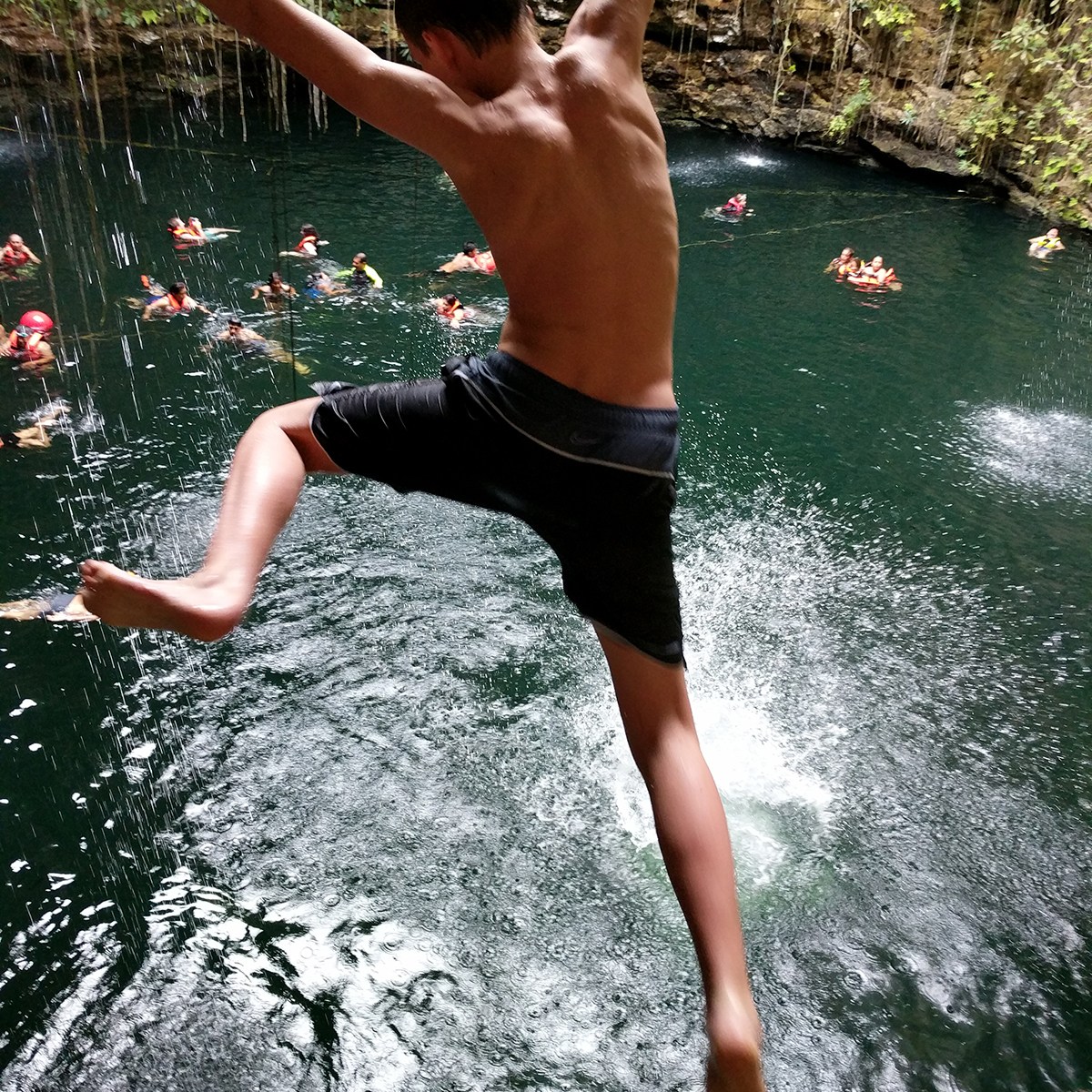
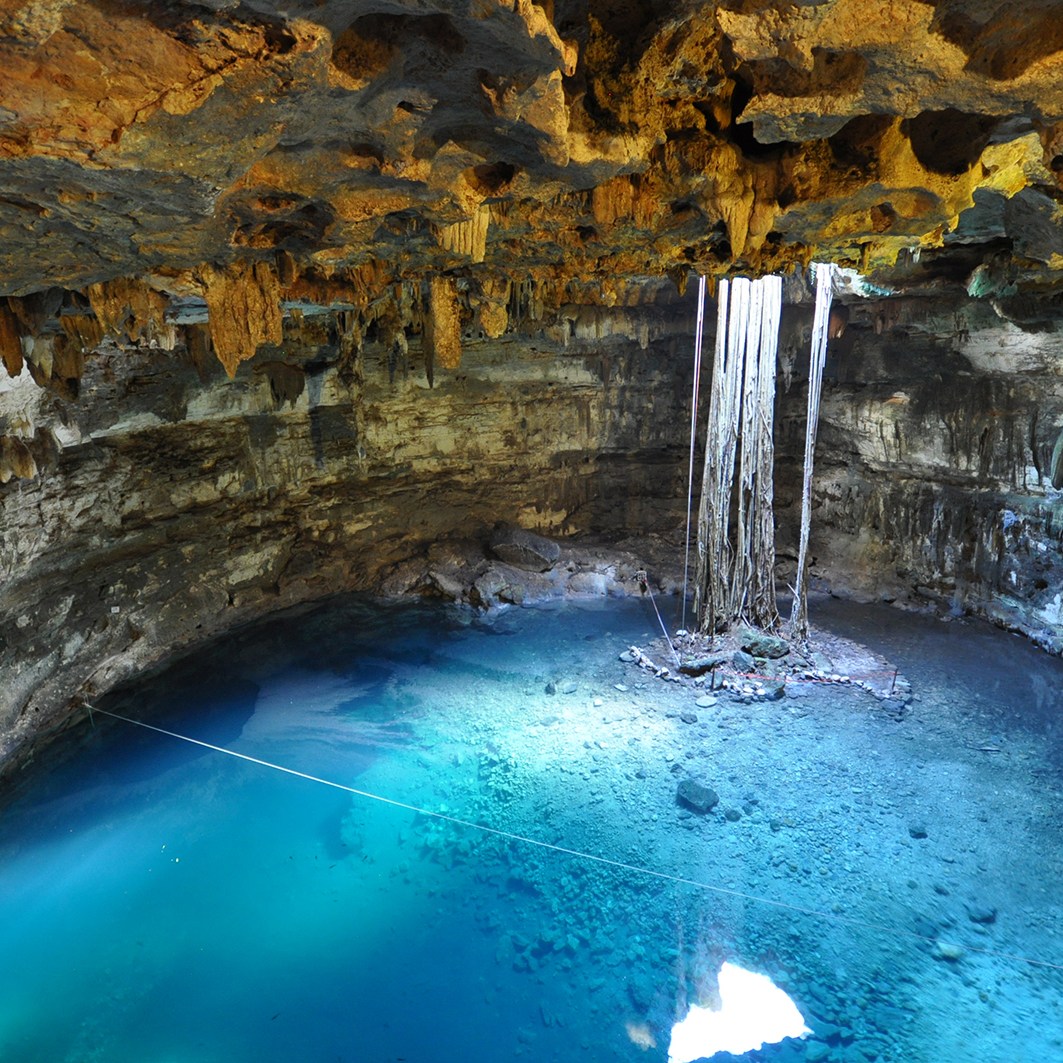
Now you have about three hours to sample three of the area’s cenotes ([say-NO-tays], water-filled sinkholes that riddle the region’s topography). The first, Ik Kil, is just a few kilometers southeast on 180 from Chichén Itzá, and differentiates itself from the other two on our list by being wide open to the sky, having the most extensive and updated surrounding infrastructure (including mandatory showers, options for a quick lunch, etc.) and featuring a jumping / diving platform several meters high. After the breathtaking first glance down into the cenote from above, the platform is the primary attraction here, and after a dozen or so jumps and a bit of dog-paddling you’ll probably be ready to move on to Dzitnup, half an hour east on 180 and home to the pair of cenotes named X’kekén [sh-keh-KEN] and Samula. Buy your ticket(s) at the booth near the parking area, before heading to the entrance(s). If for reasons of time or money or fatigue you can only visit one, it should be X’kekén (on the left as you drive in), whose stalactites and stalagmites make it the more interesting of the two both above and below the water’s surface, especially since the roots or vines that used to hang down through Samula’s oculus appear to have been pruned back. However, Samula will invariably be less crowded and more relaxing, if that’s your preference.
(Note that I haven’t visited two of the area’s other well-known cenotes, Zaci and Maya, which are directly in and northeast of Valladolid, respectively. If you have, please leave a comment about your experience.)
THIRD STOP: EK’ BALAM
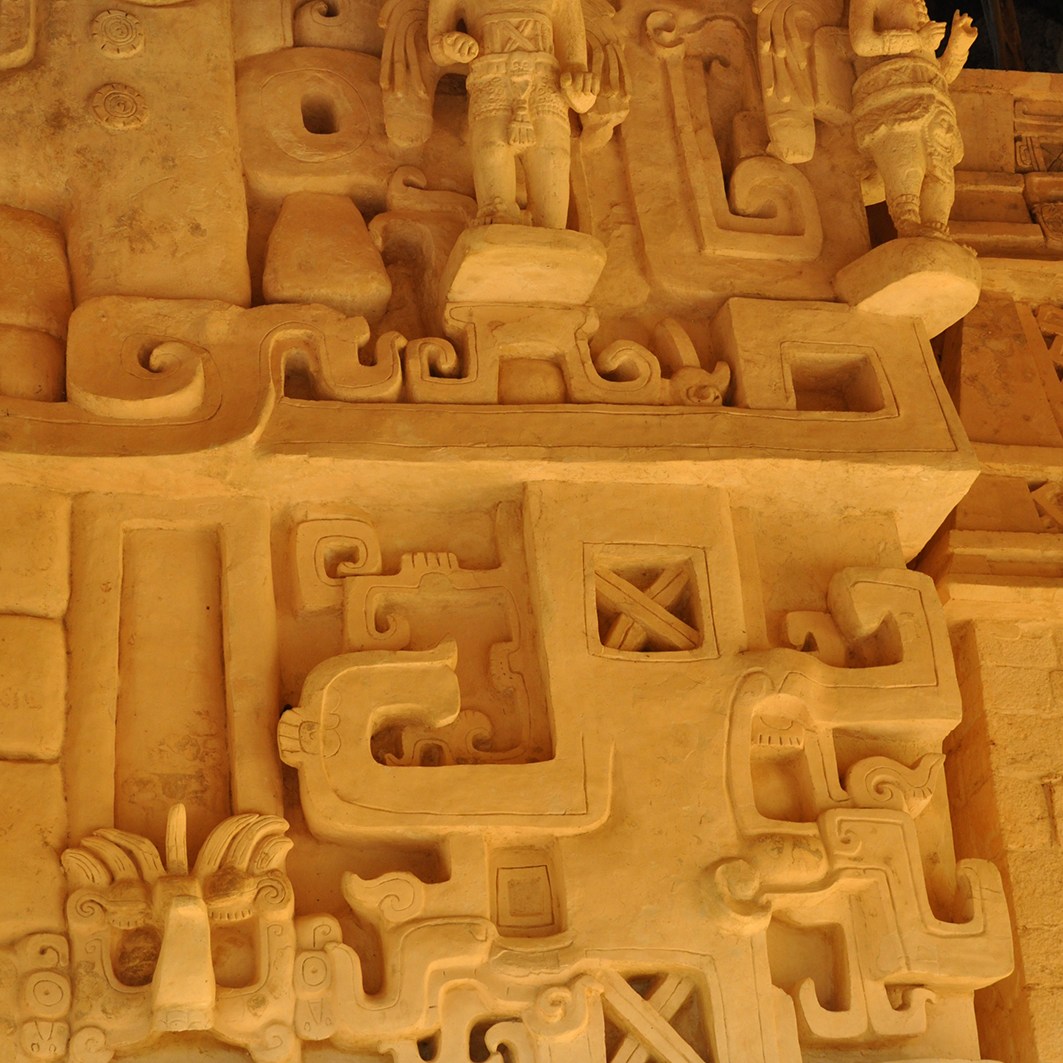
Dry off and head north (looping clockwise around the outskirts of Valladolid) about half an hour to Ek’ Balam, bearing in mind its closing hours, as I mentioned above. Once you’ve made it past the ticket window here, your day’s pace begins at last to slow. On its small, isolated compound, Ek’ Balam offers for your free-ranging perusal a dozen or so major structures, the most prominent of these being the Acropolis, which features the most intricate and best-preserved / restored stucco work I’ve seen at this region’s sites or Tikal. To sit atop the Acropolis as the late-afternoon air cools and the sun drops in the west is to feel a rejuvenation that one might be inclined to attribute to the area’s reputed ancient mystical properties. In two visits to Ek’ Balam — both during holiday seasons — I’ve encountered a total of maybe thirty visitors, including the seven in my groups. If you make it here, it’s certain to be a highlight of your trip.
FOURTH AND FINAL STOP: VALLADOLID
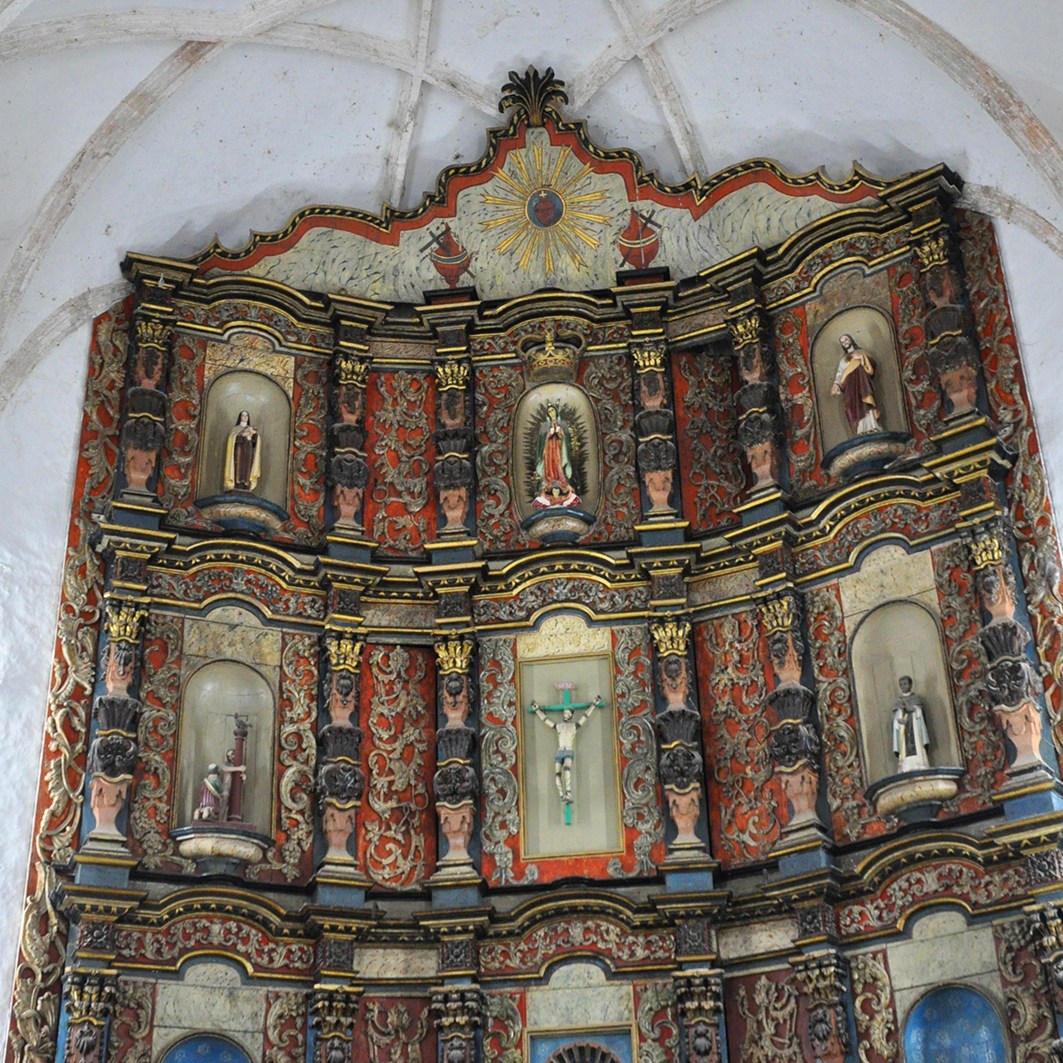
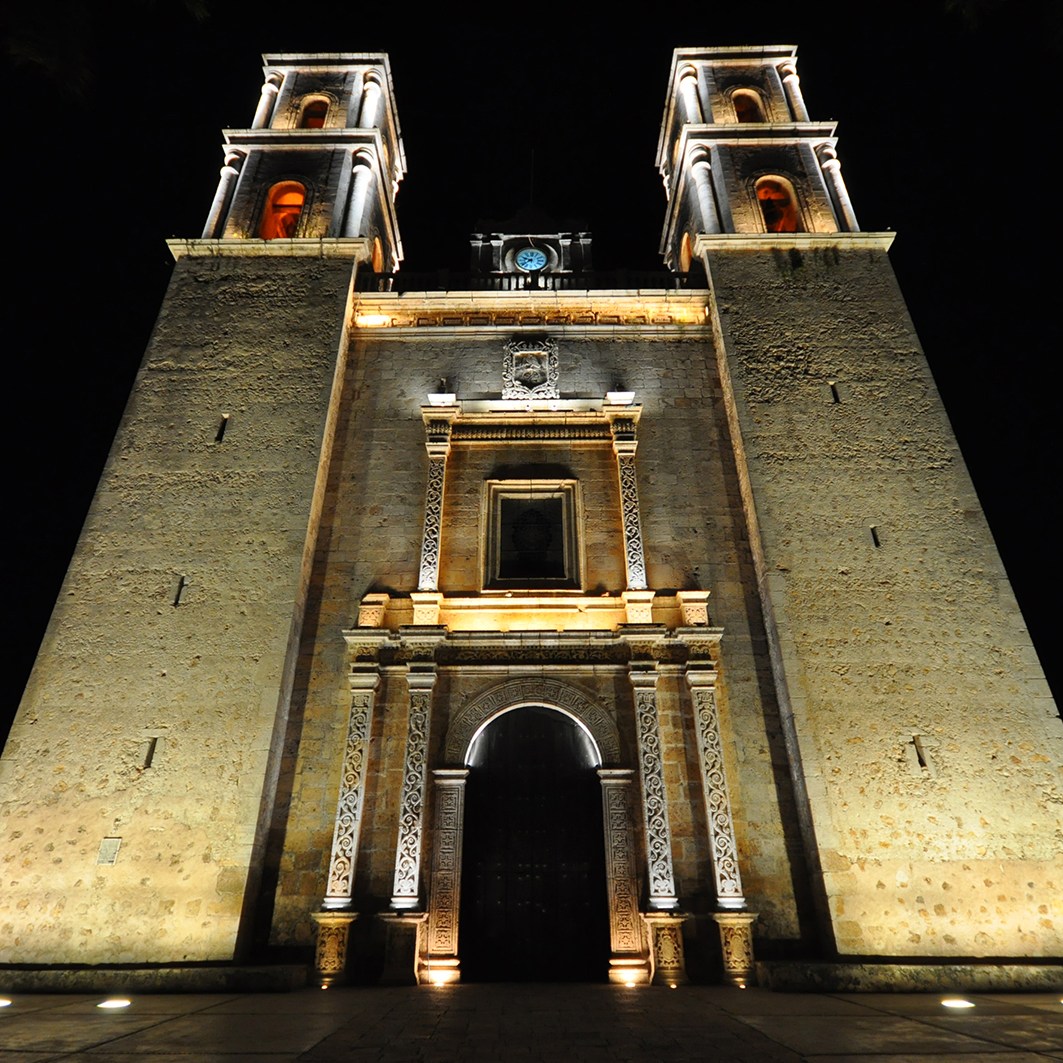
Valladolid is a charming colonial town with a troubling history — not unlike that of most colonial towns — of oppression and subjugation, which a couple of hours spent blithely soaking in the streets surrounding its main plaza, Parque la Mestiza, did wonders in helping me to overlook. The most prominent architectural features facing the plaza are the arcade of the Casa de la Cultura and the imposing facade of San Servacio cathedral, although its interior offers nothing as interesting as the altar at nearby San Bernardino de Sisal, which dates from 1552 as the first convent in the Americas. For dinner, you can try Maria de la Luz (we ate a good lunch there), but I recommend El Mesón del Marqués. I can’t quite tell what they’ve changed from our magical visit in 2010 (Fewer candles and more electric lights? Did they paint it whiter? Are the servers’ uniforms now supplied by Aramark?) but for whatever reason it’s a little more like…I don’t know, Chi-Chi’s Cantina than it used to be. That said, it’s hard to beat the Mesón’s 17th century courtyard setting, and the food (we had shark burritos, arranchera steak and a local twist on chile rellenos) is still very good. Within a few steps on either side of El Mesón are two worthy options for souvenirs: Choco-Story and Librería Dante. The former, mentioned earlier, offers an array of artisan chocolates and chocolate-derived products (it closes at 7), while the latter gives you high-quality yet inexpensive Mayan-themed alternatives (such as dominos, jigsaw puzzles and a groovy 3-D puzzle of Chichén Itzá’s Castillo that my youngest is assembling as I write) to the dust-gathering trinkets typical of vendor stands at the sites. If you’ve lingered too long after dinner in the lovers’ benches that dot the plaza and don’t want to make the drive back to the coast, Valladolid offers many good values for comfortable lodging, including the Mesón itself.
QUESTIONS FOR READERS
- If you’ve been to the three cenotes described here, as well as cenotes Zaci and Maya, how do these two compare?
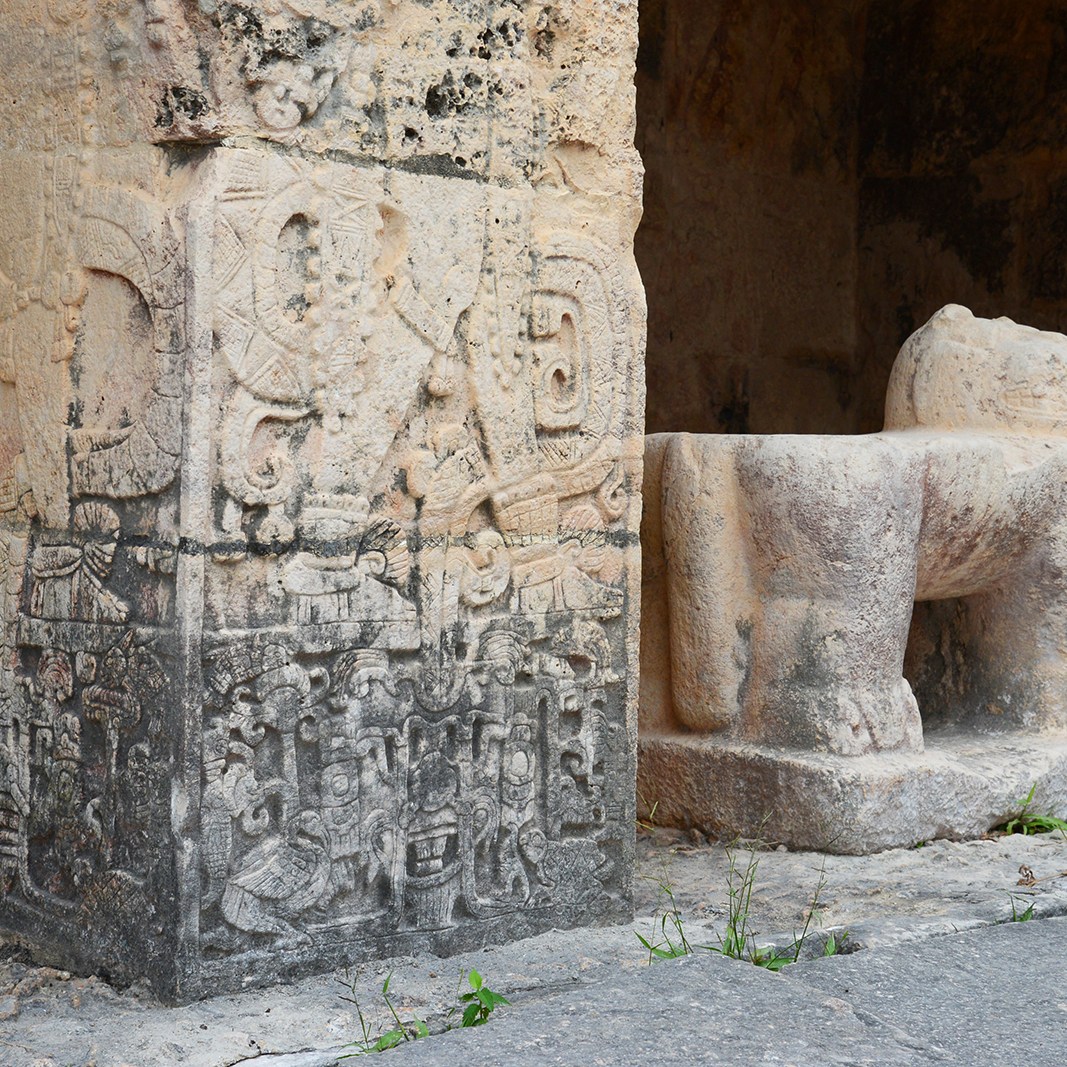
- Am I the only one for whom descriptions of Chacmool’s ancient duties conjure visions of the beating-heart sacrifice scene in Temple of Doom?
- Any thoughts, general or specific, on the western Yucatan cities of Mérida and Campeche, from which some people visit Chichén Itzá?
 WANDERLOOSED