
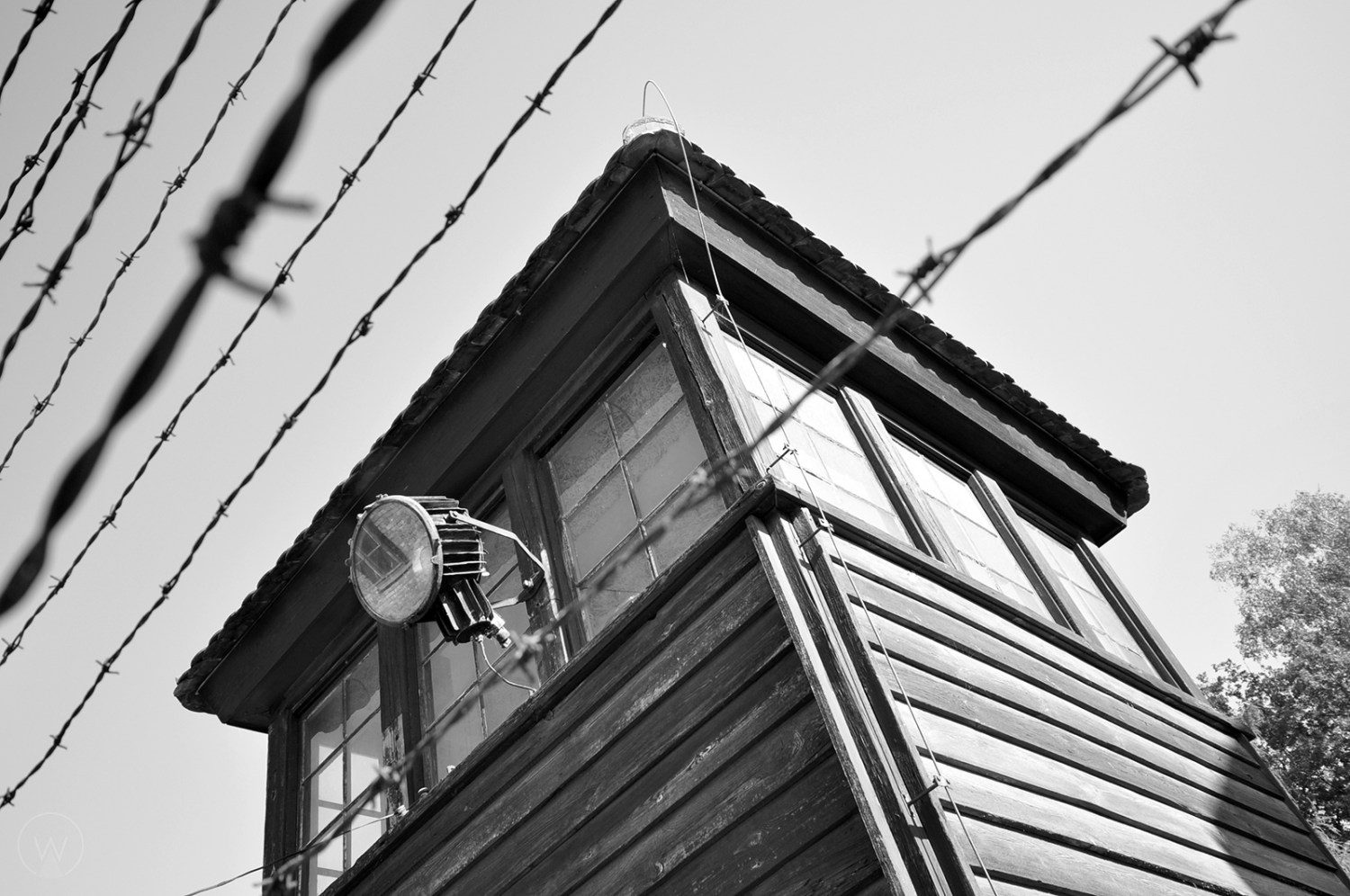

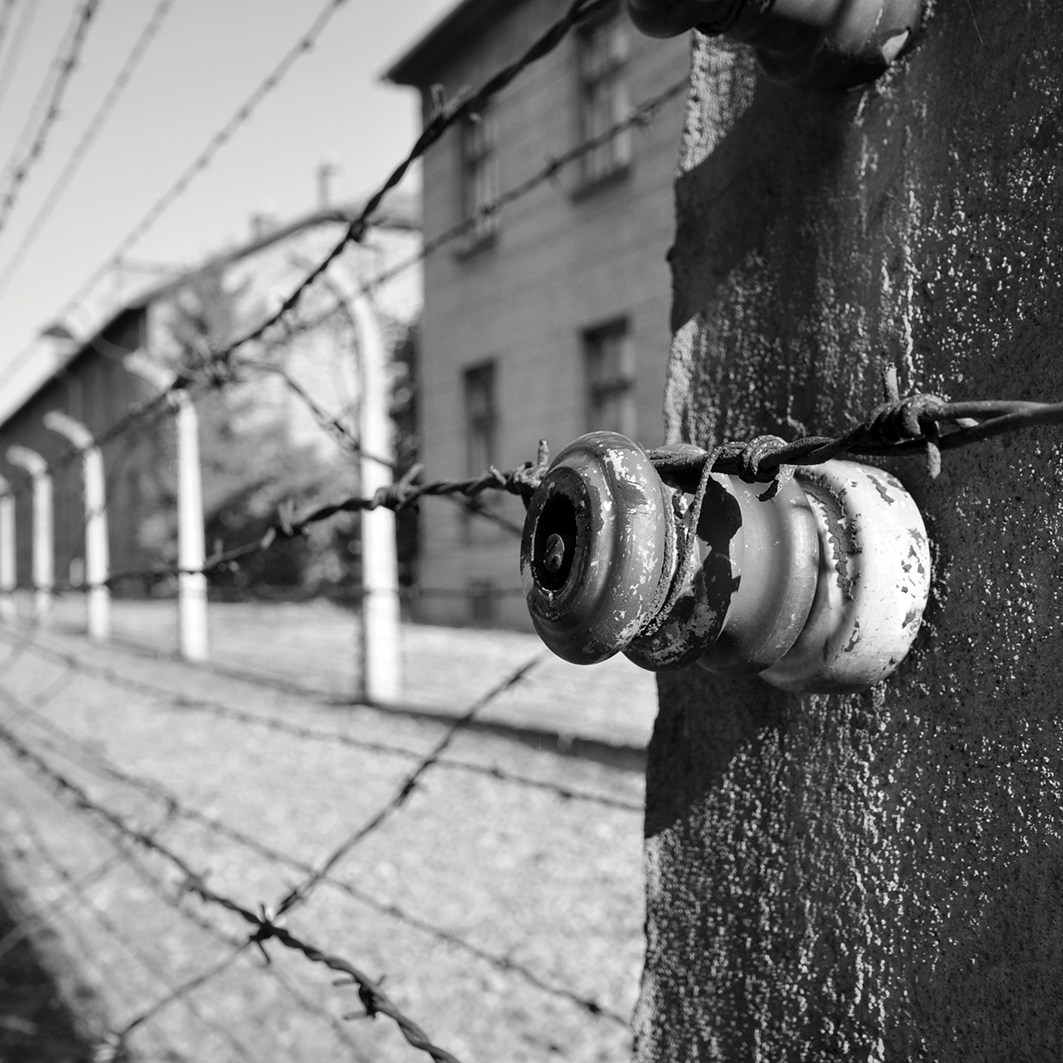



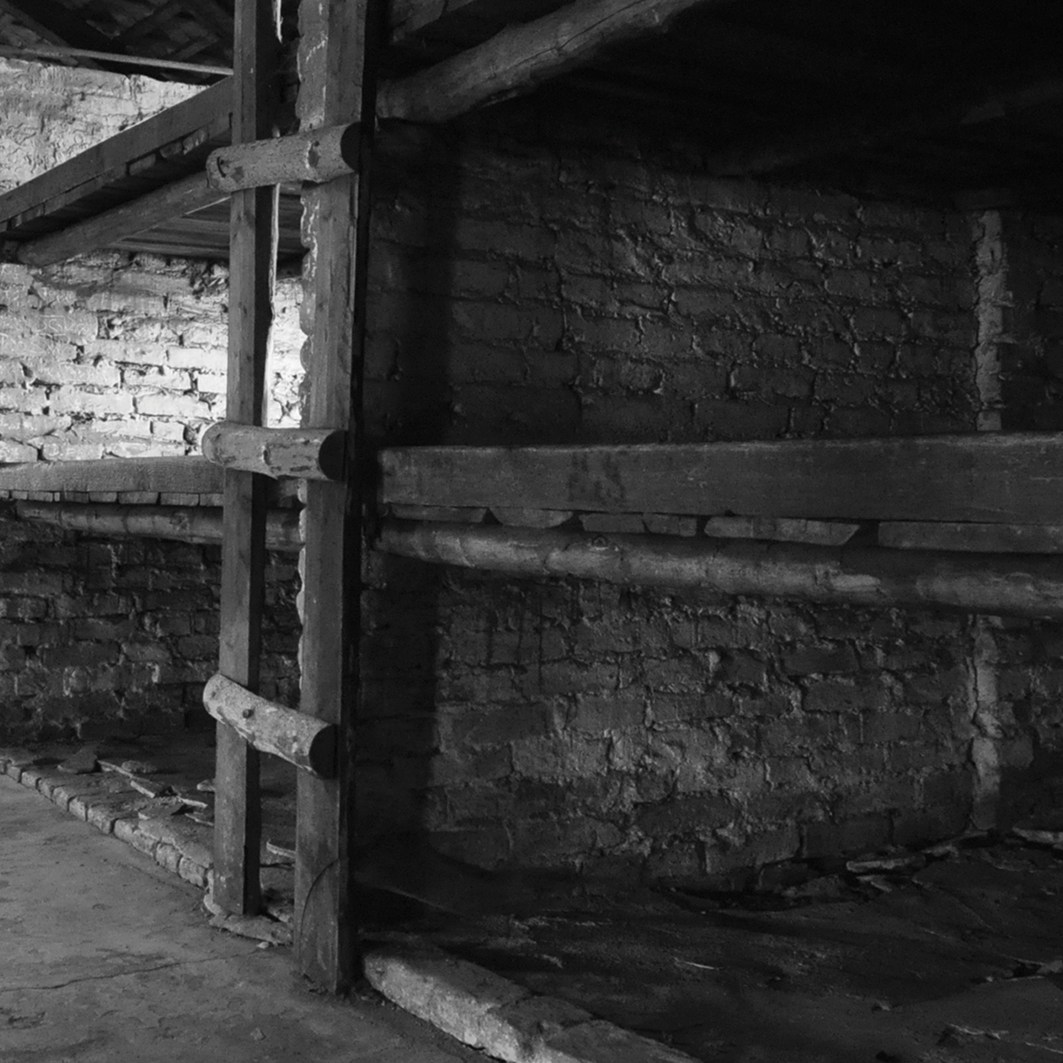
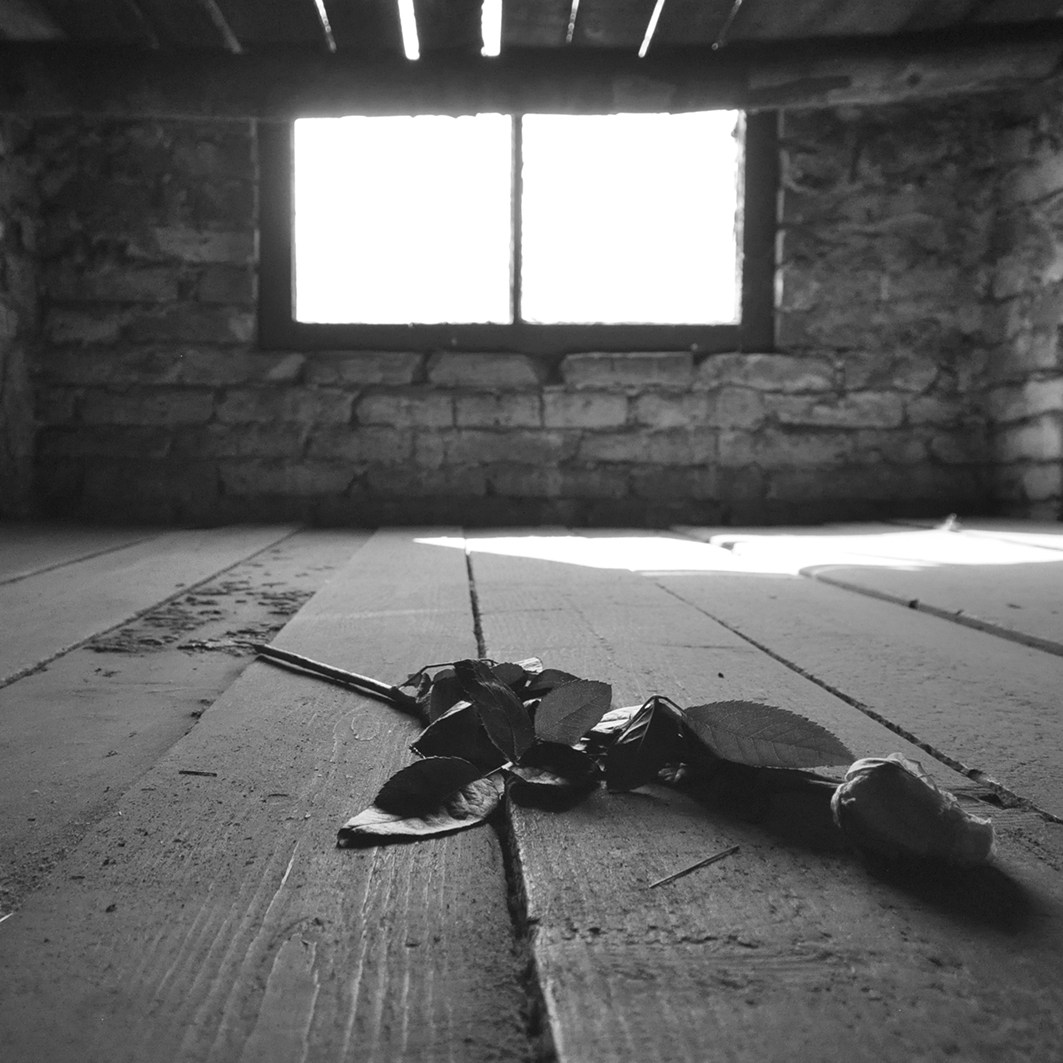


As my train passes through a village about twenty minutes west of Kraków, the thought chills me: “How many of those wretched cattle cars followed this same route, maybe even rolling along these very same tracks?” Those cattle and freight cars, of course, brought some 1.3 million people, from throughout Silesia and as far away as Holland, France and Yugoslavia, to the area’s various camps known collectively as “Auschwitz.”
OŚWIĘCIM
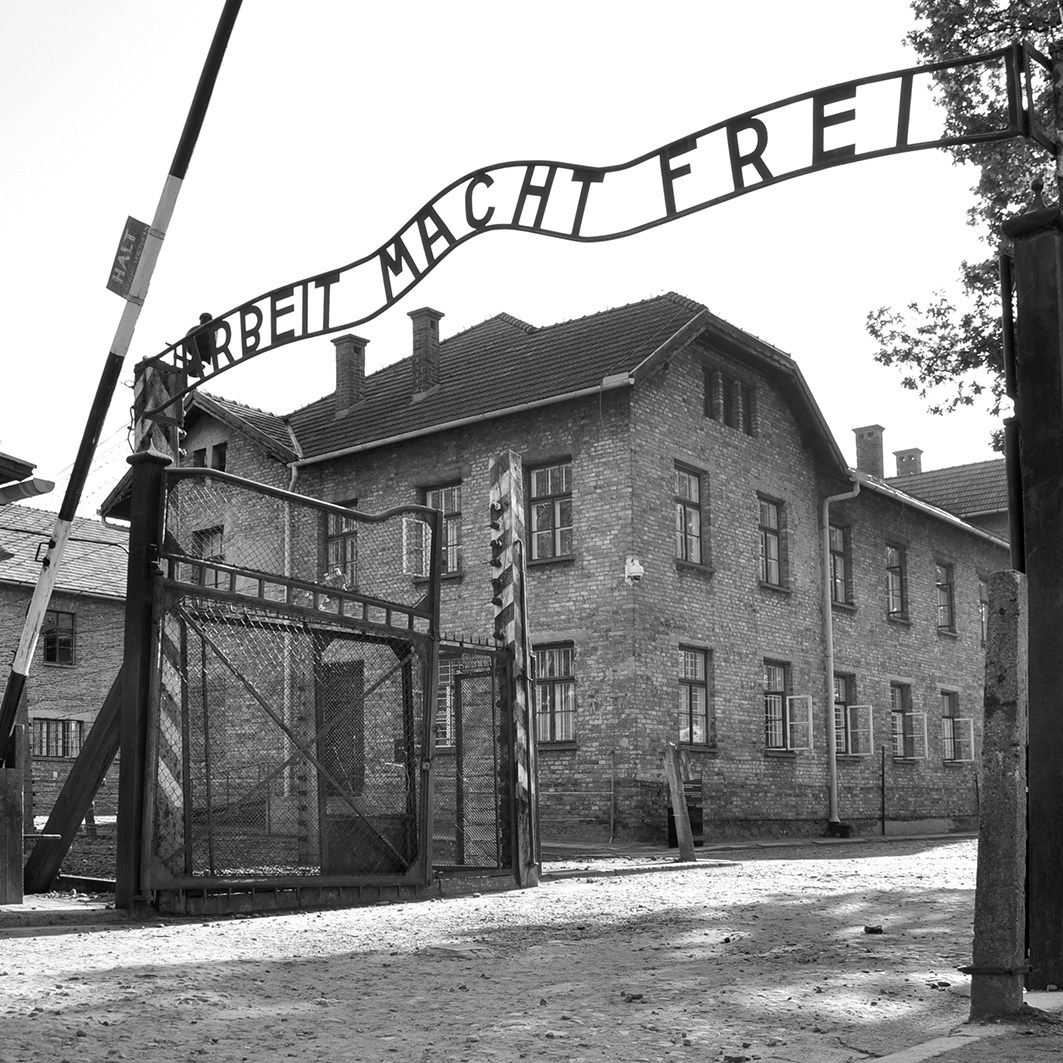
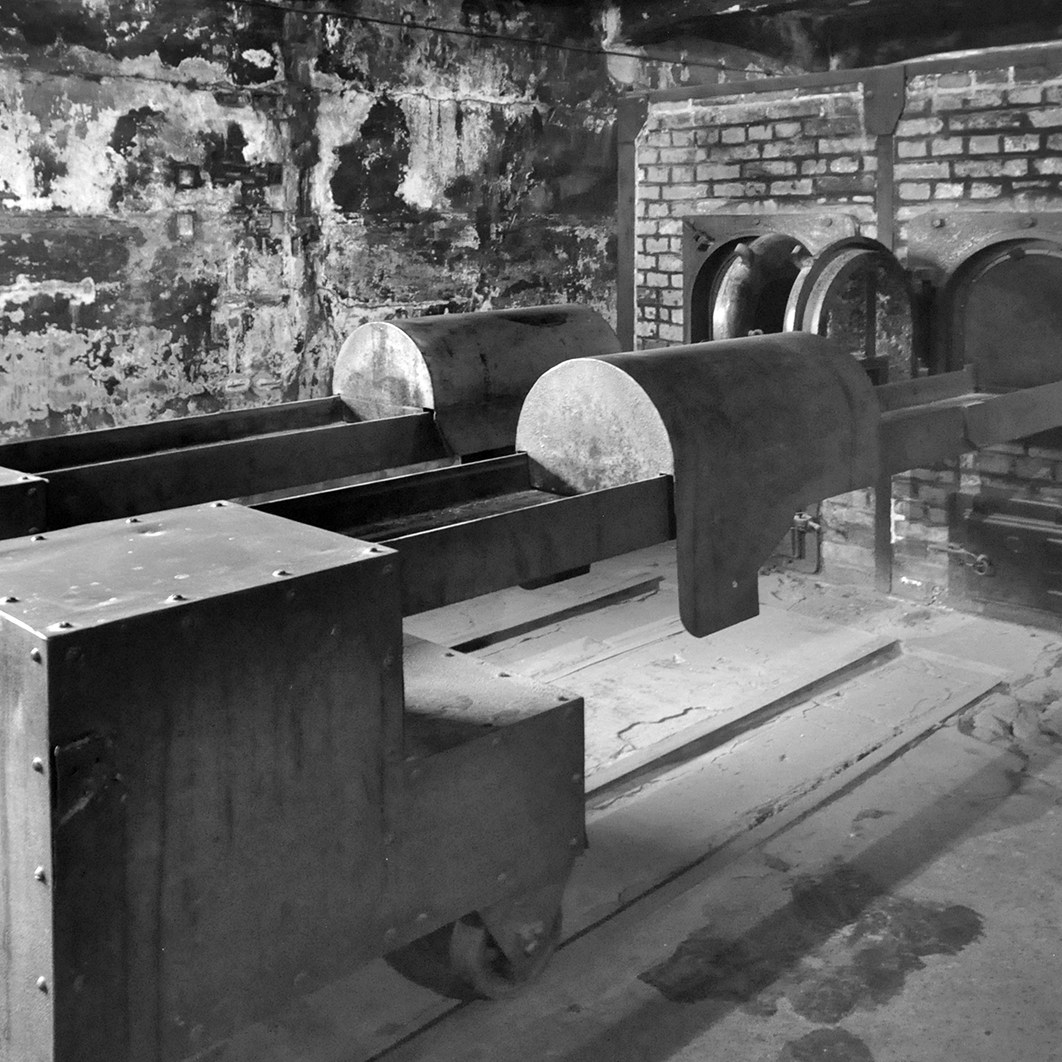
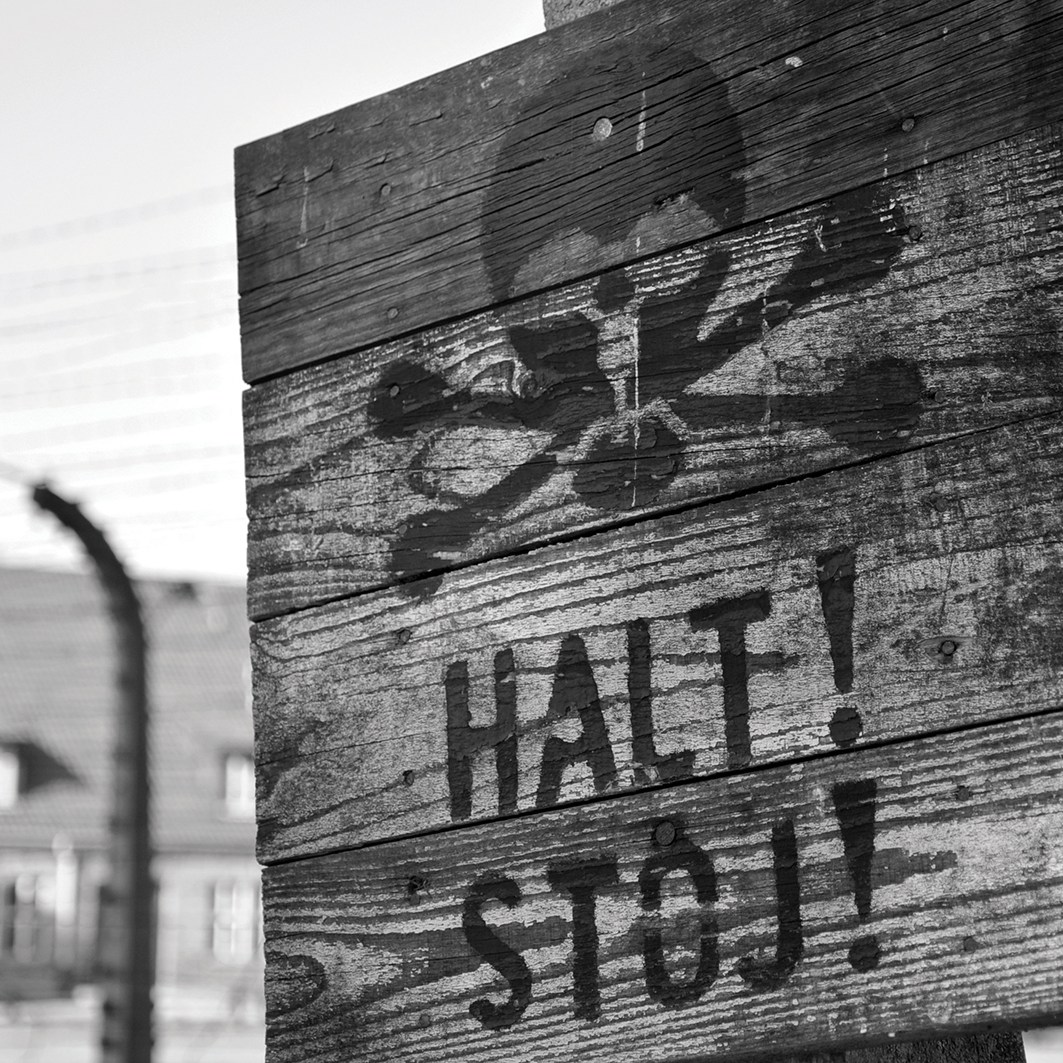
The Auschwitz name derives from Oświęcim, location of the primary camp that served as the Germans’ administrative center over its other nearby camps. This relatively small compound – not half a square kilometer – had served as Polish army barracks but is now most closely associated with the sadistically cynical ARBEIT MACHT FREI (work makes [one] free) admonition above its main gate. It was here that the Nazis operated their first crematorium in the area, but evidently with inadequate efficiency, prompting Heinrich Himmler to order that the camp be expanded. The centerpiece of this expansion would become Birkenau, also known as Auschwitz II, just down the road from Auschwitz I.
One of the most vividly enduring memories from my early childhood is of standing at the base of Mauthausen’s Todesstiege (death steps) while my mother whispered descriptions of horrors that she knew her Kindergartener couldn’t begin to understand but needed to hear. Visits in ensuing decades to Dachau, Treblinka, Stutthof and other camps helped me to better fathom the scale of German efforts toward their “final solution to the Jewish question,” and yet failed to aid comprehension of the incomprehensible, or to prepare me for what I’ll encounter after making the short walk to Birkenau.
BIRKENAU
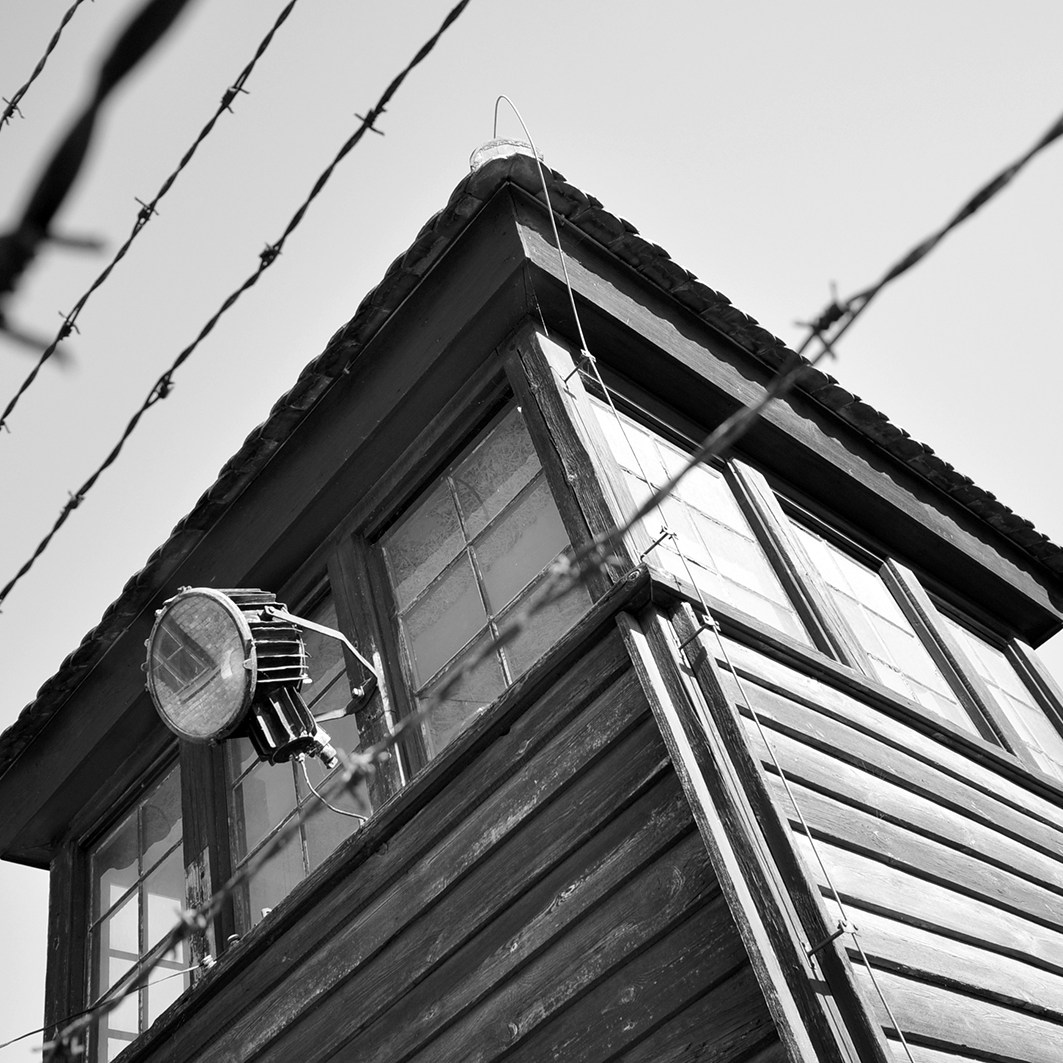
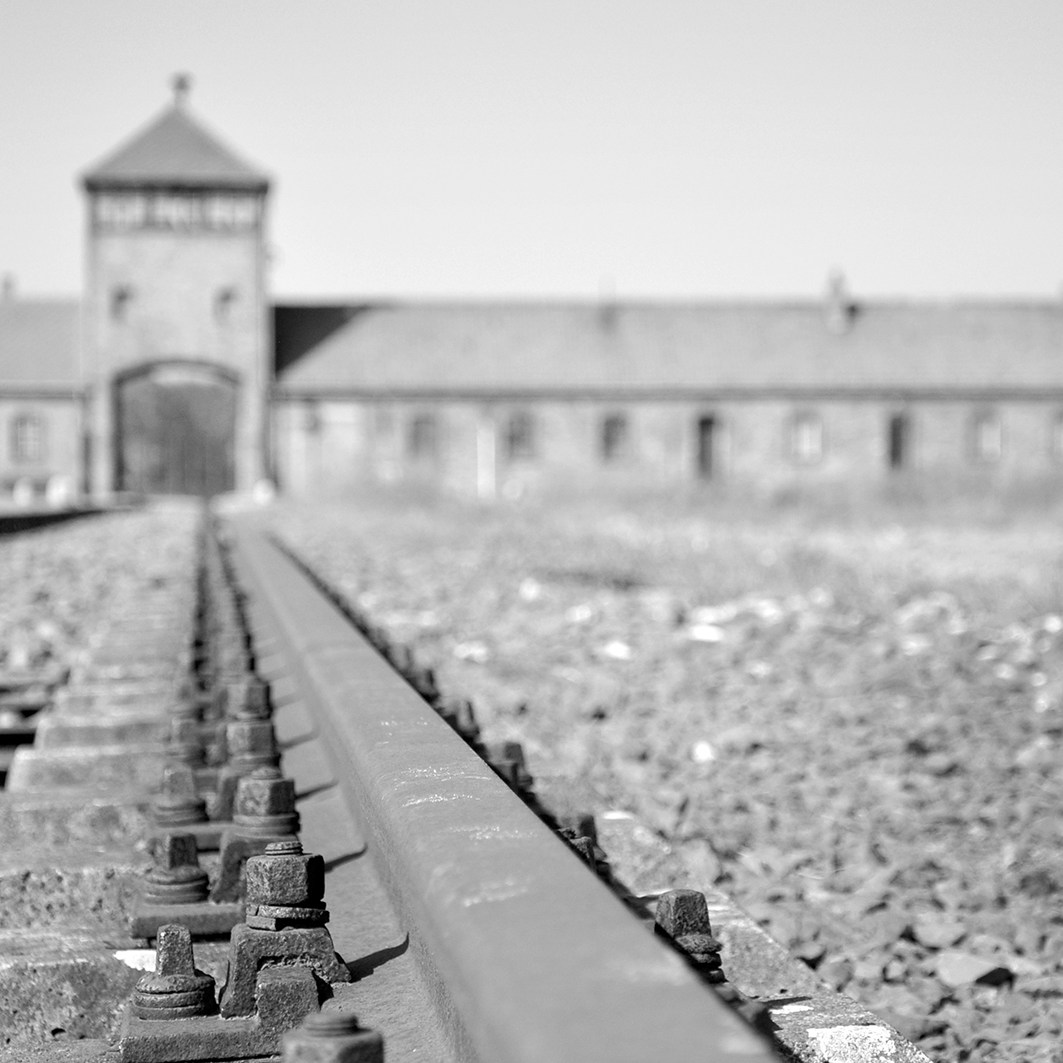
One’s first view of Birkenau is the gatehouse known as the “Gates of Death.” A single pair of tracks passes ominously through a gaping, ravenous archway at its center. Beyond this menacing façade, spreading across nearly two square kilometers, is what remains of the Third Reich’s largest Vernichtungslager (extermination camp). Of the more than one million innocents killed at Auschwitz, the overwhelming majority died at Birkenau, most of this murderous work carried out through gassing (first with carbon monoxide, later with a hydrogen-cyanide compound dubbed “Zyklon B”), as gas required no munitions and simplified disposal of the victims’ bodies.
Disposal had initially occurred in mass graves. But beginning in 1942, after the United States entered the war and the possibility of genocidal charges registered in certain Reich leaders’ minds as at least a theoretical possibility, Sonderaktion 1005 (Special Action 1005) required that camp inmates known as Leichenkommandos (corpse units) exhume and cremate all bodies. At their peak of activity, more than fifty crematorium ovens in the Auschwitz camps were used to burn 6,000 bodies every 24 hours.
CREMATORIUM II
By early 1944, Birkenau’s tracks were extended so that incoming trains could go directly to the gas chambers, thereby dispensing altogether with the toilsome charade of work, rations, barracks, latrines and the like. This newly extended line reached the southeast corner of Crematorium II, in which the Nazis killed and cremated 1,500 victims daily, until January 20, 1945, one week before the camp was liberated by the Allies – by the Red Army, specifically, the irony of which assumes an especially hideous hue at the time of this writing.
On that Jewish Sabbath, as one of its last ignominious acts before retreating, Hitler’s paramilitary Schutzstaffel (commonly known as the “SS”) detonated explosives in an effort to destroy Crematorium II – among other structures – and, with it, evidence of their crimes. Their haste left a large portion of the structure standing, surrounded by rubble. Whether out of financial necessity or historical sensitivity, the Auschwitz Foundation and the Polish Government have left Crematorium II more or less as the Germans did, with only the odd strip of barrier tape strung here or there to discourage desecration, its bright yellow plastic hanging listlessly before its grimly grayed charge.
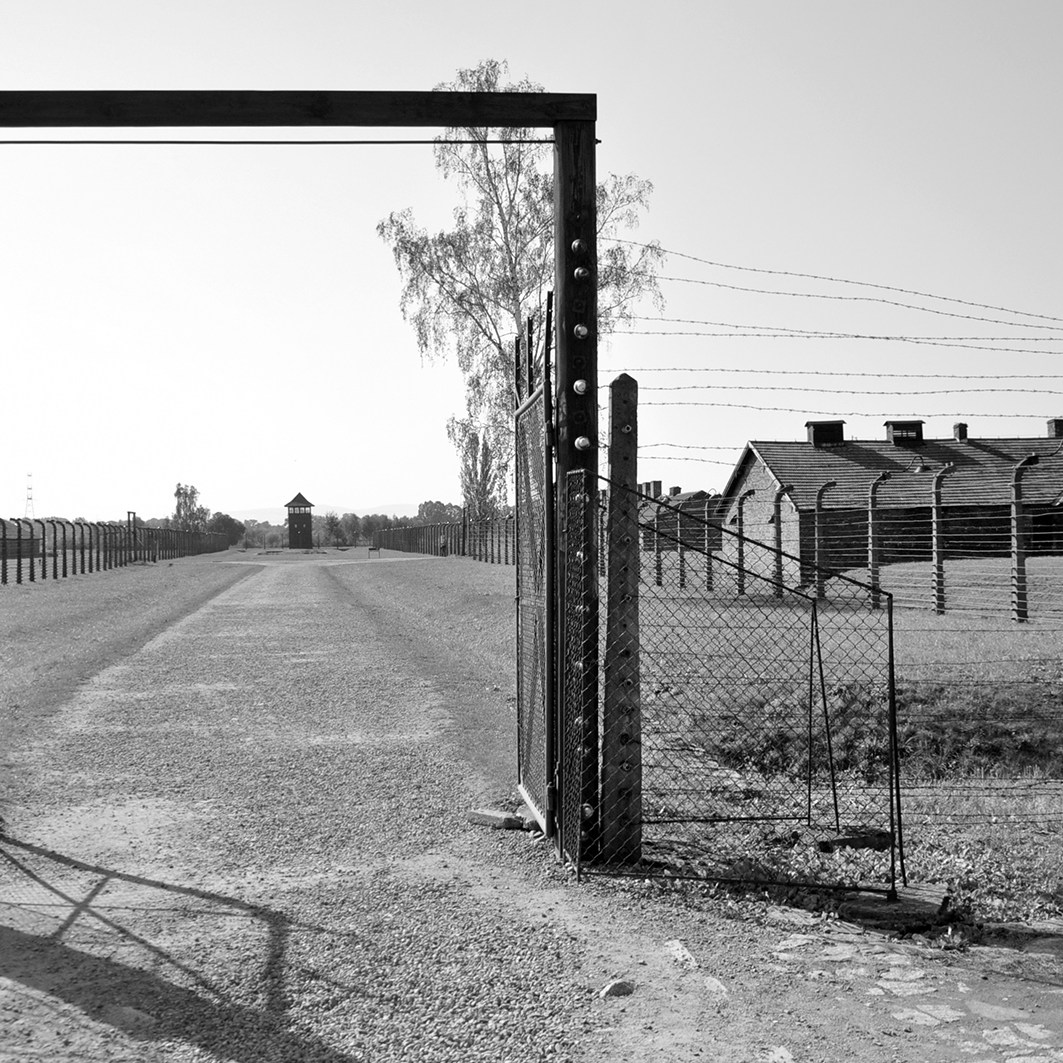
In the ground west of Crematorium II is an area somewhat smaller than a competitive swimming pool and sunken about a meter and a half. Three stone monuments, each unadorned block about waist-tall, read in Polish, English and Hebrew, “To the memory of the men, women, and children who fell victim to the Nazi genocide. Here lie their ashes. May their souls rest in peace.” Perhaps it’s my imagination that perceives the ground in the depressed area a shade or two lighter than that of the surrounding earth. A few paces from here, near the crematorium’s south entrance – which led down several steps to the so-called Umkleideraum (changing room) – is a gate that breaks what remains of the structure’s original perimeter fence. Stepping through it, I shudder to consider who else has passed this way.
QUESTIONS FOR READERS
- If you have visited Auschwitz, could you please share some of what you experienced there?
- Tragically, the world doesn’t lack sites where unspeakable acts have occurred. Which have impacted you the most?
- What, if anything, do you think we have learned from the Holocaust? What of it remains relevant today?
Resources: Auschwitz.org, Wikipedia.org, USHMM.org
 WANDERLOOSED