














Note: This is the second in a series on five Baltic-region capitals, which begins here with Vilnius and continues here with Tallinn.
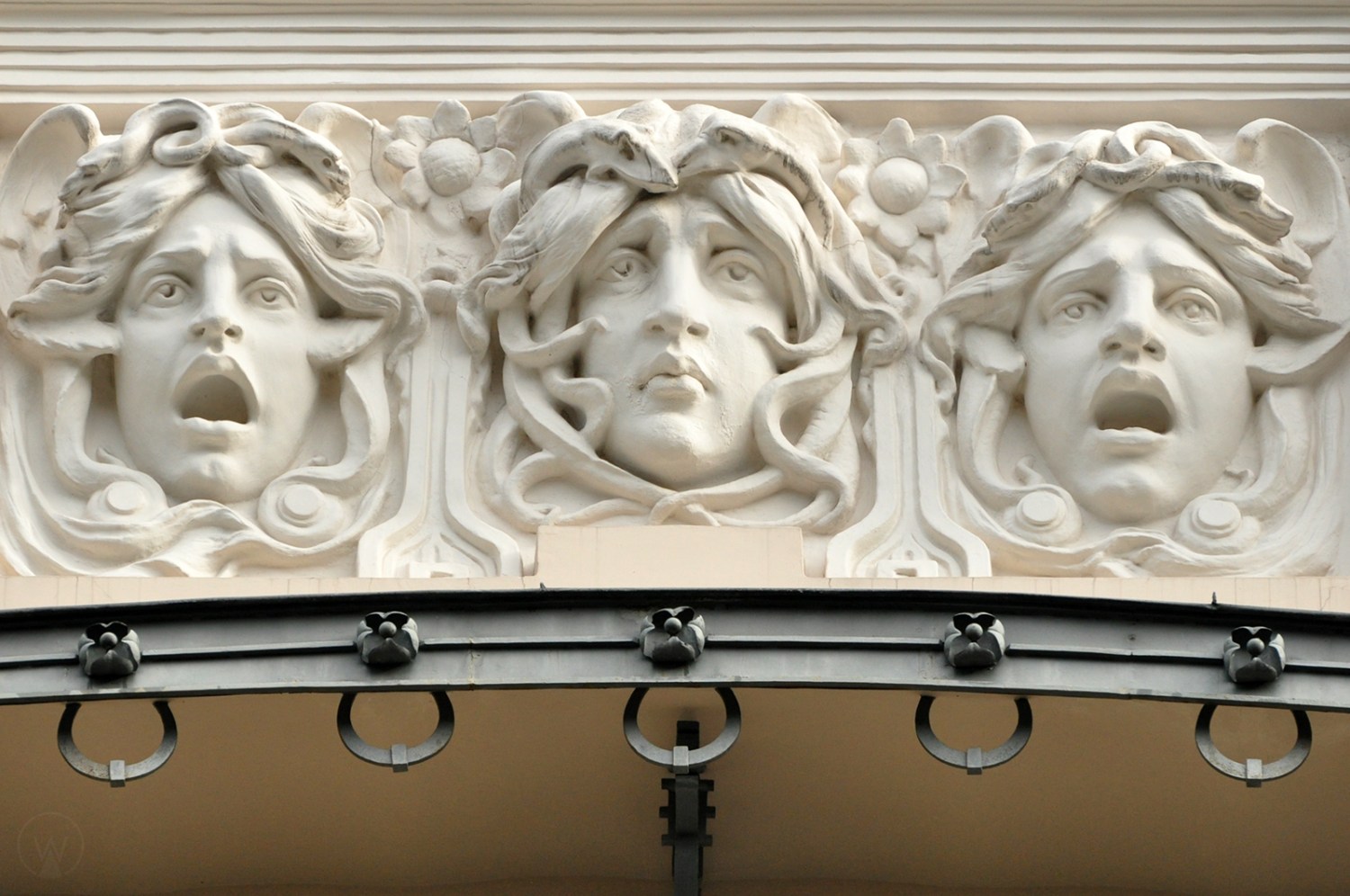
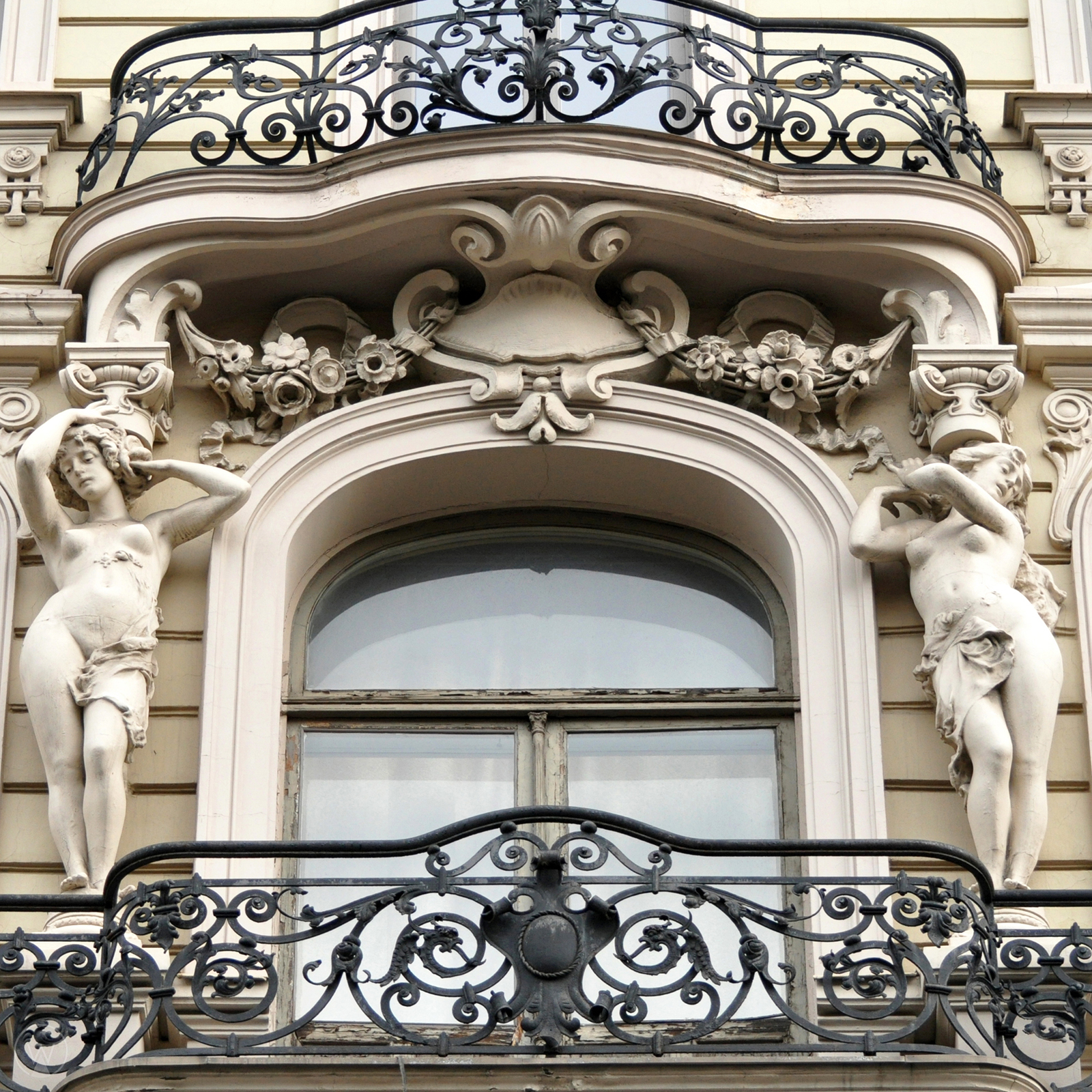
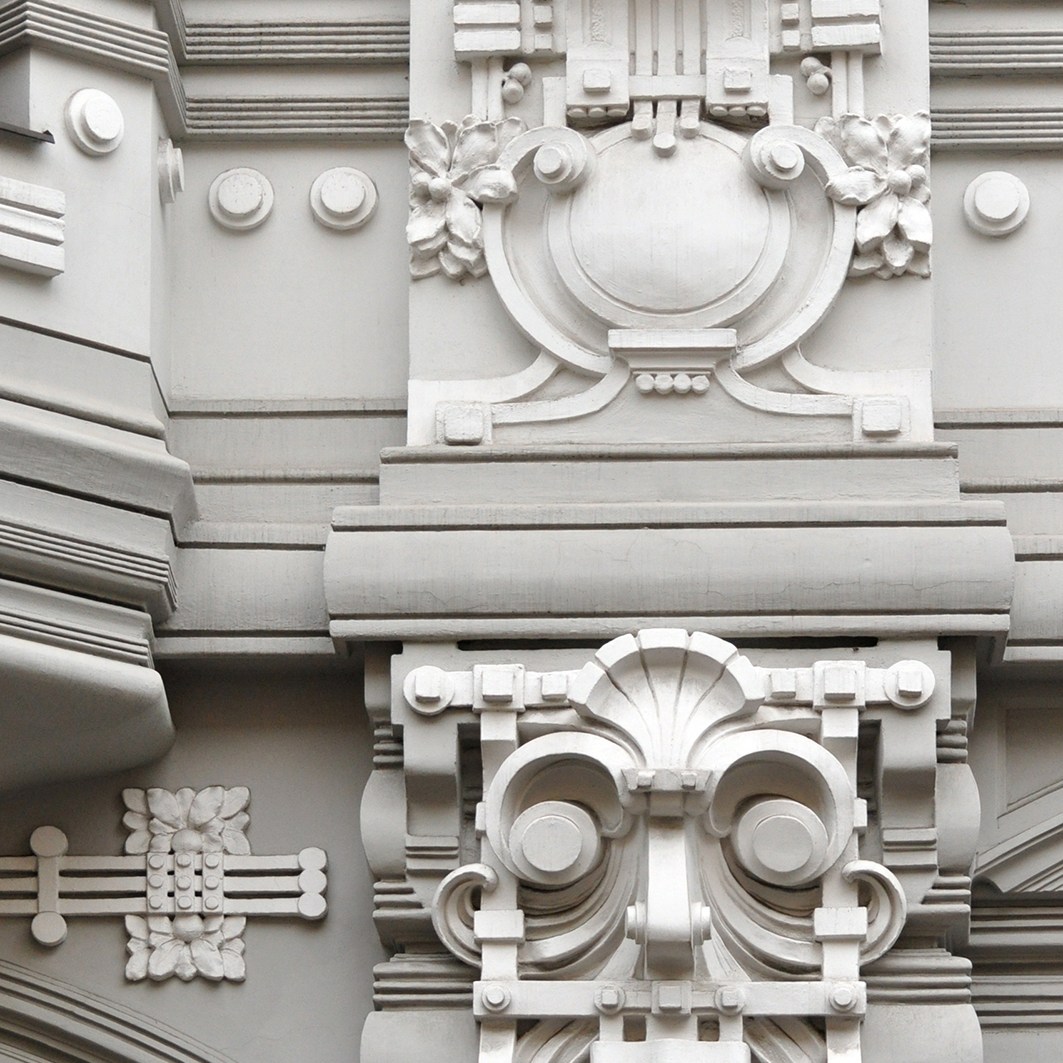
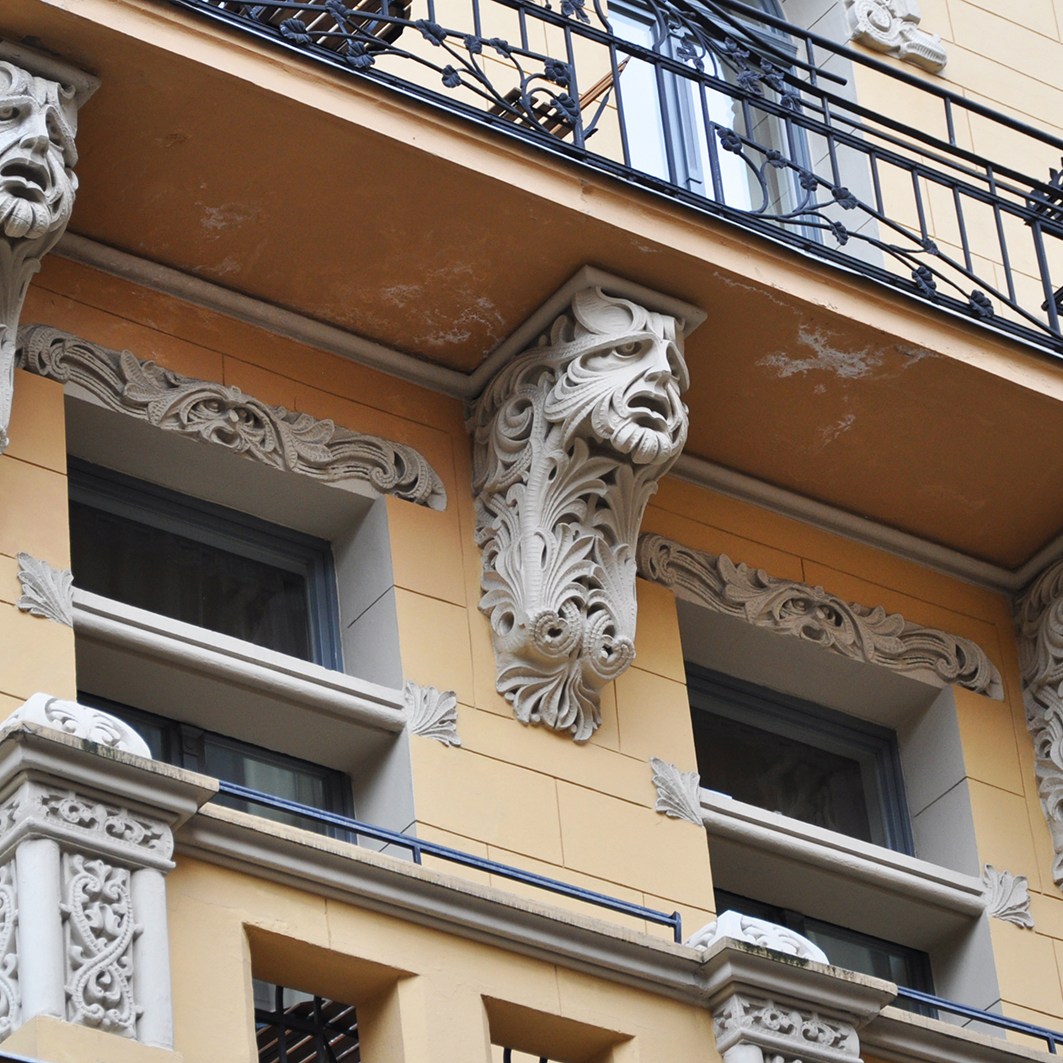
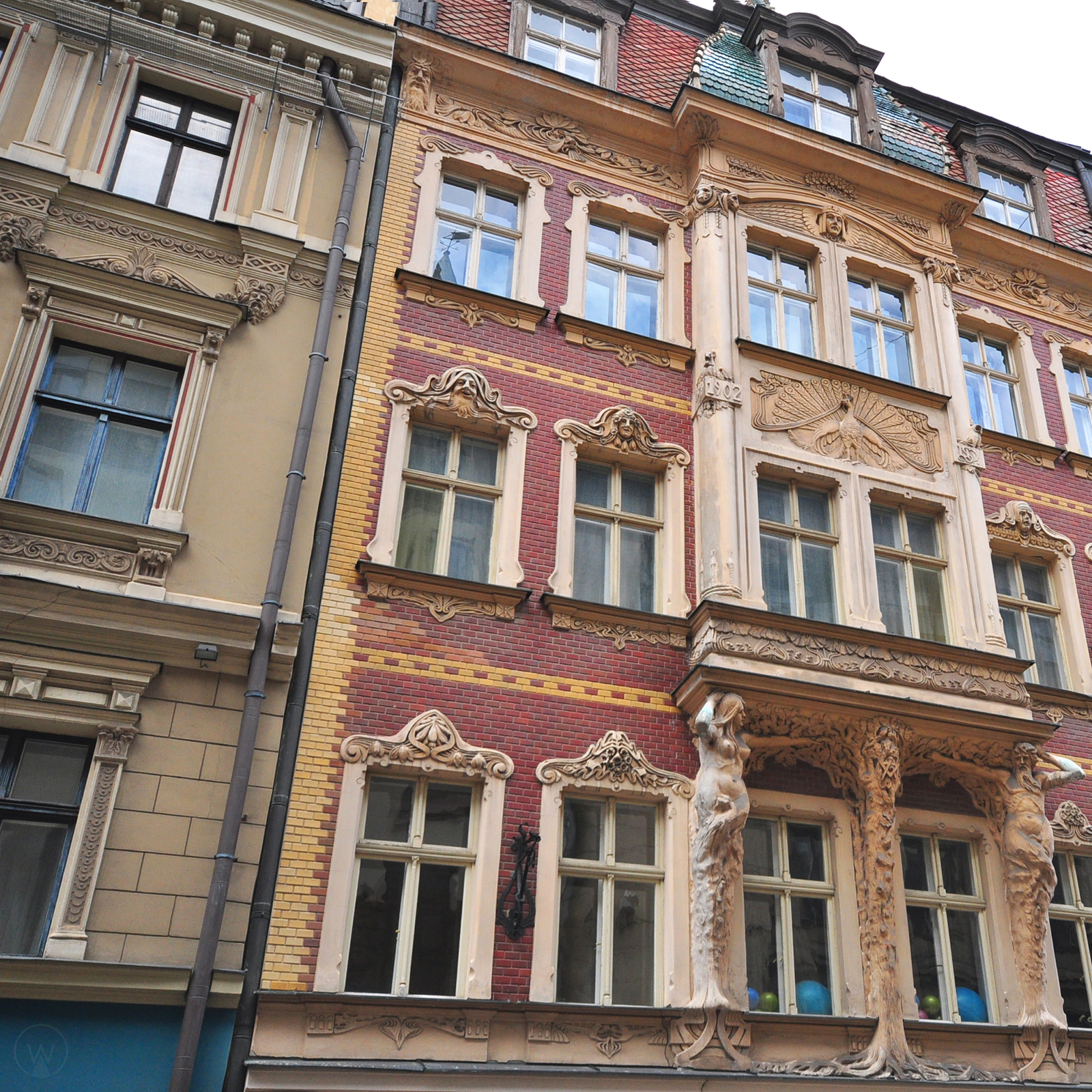
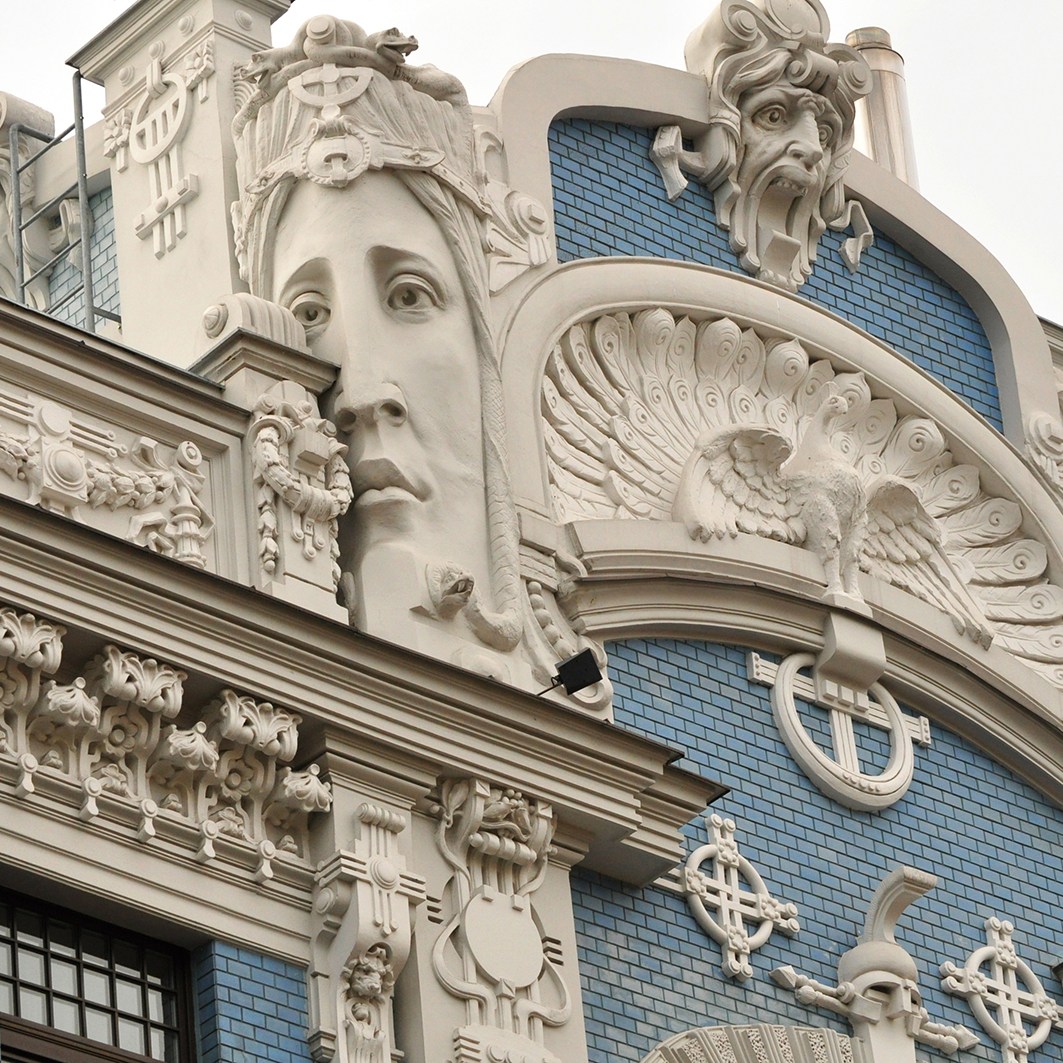
Depending on where you’re enjoying its outputs, the artistic movement known most commonly as Art Nouveau (a name taken from the Maison de l’Art Nouveau gallery in Paris) also goes by Jugedstil (Germany), Modernisme (Catalan), Secession (Vienna), Libertá (Italy) and other names. But one place any fan of the style must visit is Riga. In the case of this fan, I stumbled upon Riga’s astonishing abundance of Nouveau riches as a felicitous surprise during what was already a much-anticipated visit — better than finding the secret toy in a box of Cracker Jacks.
Why all of this in Riga? In the mid-19th century, the development of railways caused significant changes to economies throughout Europe. The resulting urban and industrial growth spawned a need for educated specialists, and technical schools appeared in the Continent’s major cities. Rigan entrepreneurs encouraged the training and hiring of Lavtians over the recruitment of foreigners, and the Riga Polytechnic was founded in 1862 as the first school for advanced technical training in the Baltics. The school soon added an architecture department, and the careers of its early alumni were hitting full stride when Nouveau swept Europe. This presented an opportunity for Latvia to ride the tide of its financial resurgence and show that its best and brightest could keep pace with — and perhaps even outdo, albeit with clear influences from Austria, Germany and, due perhaps more to proximity than to prowess, Finland — the foremost designers in this “new, young style” elsewhere.
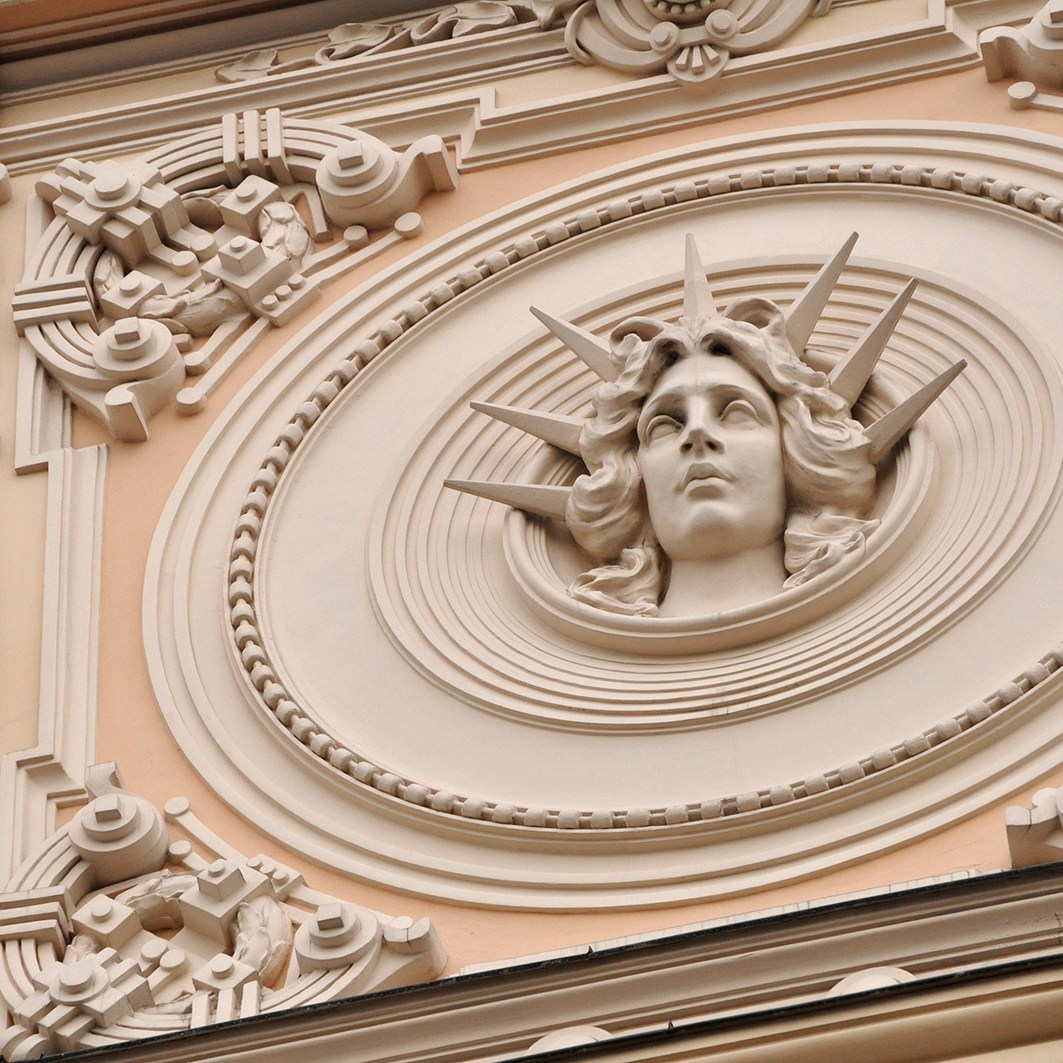
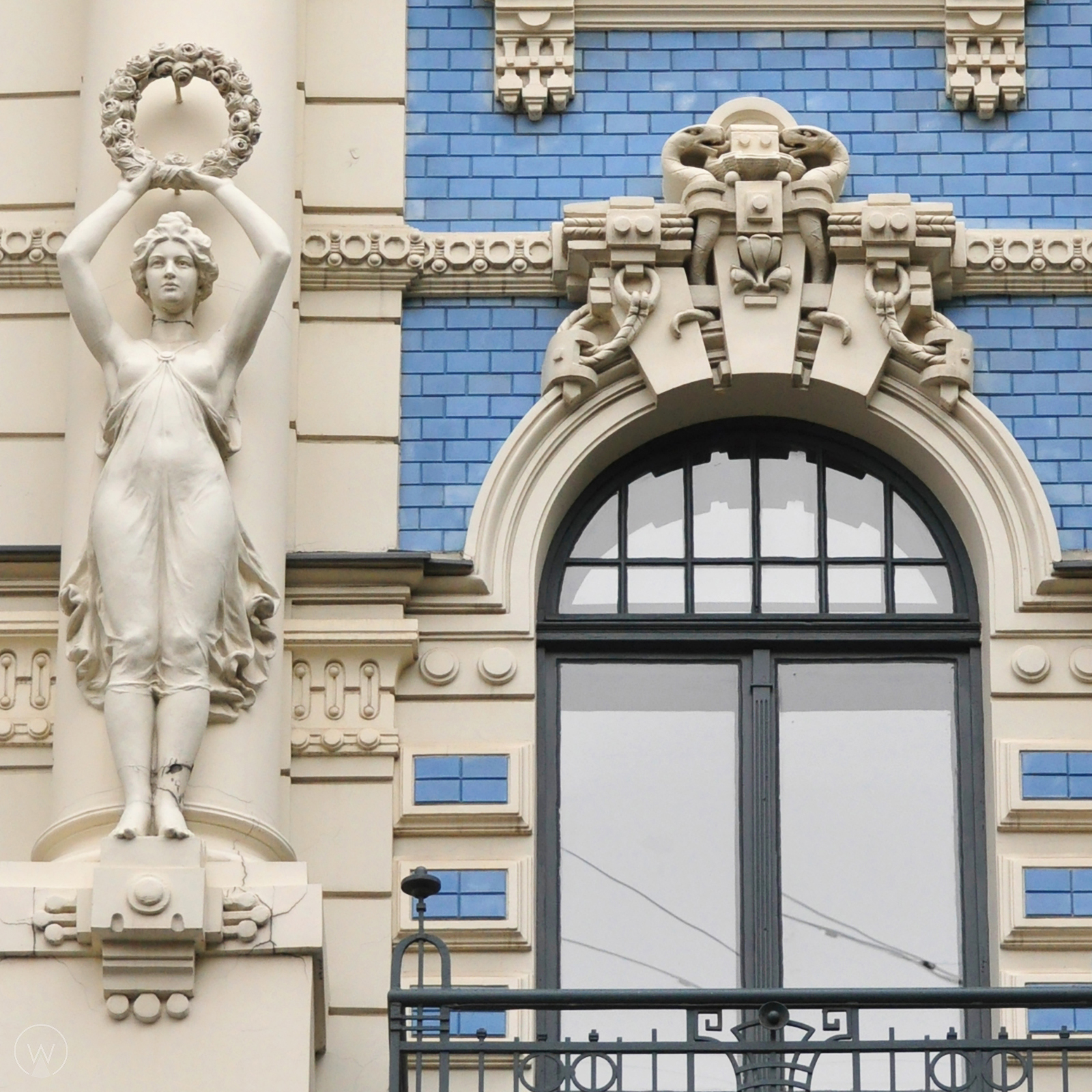
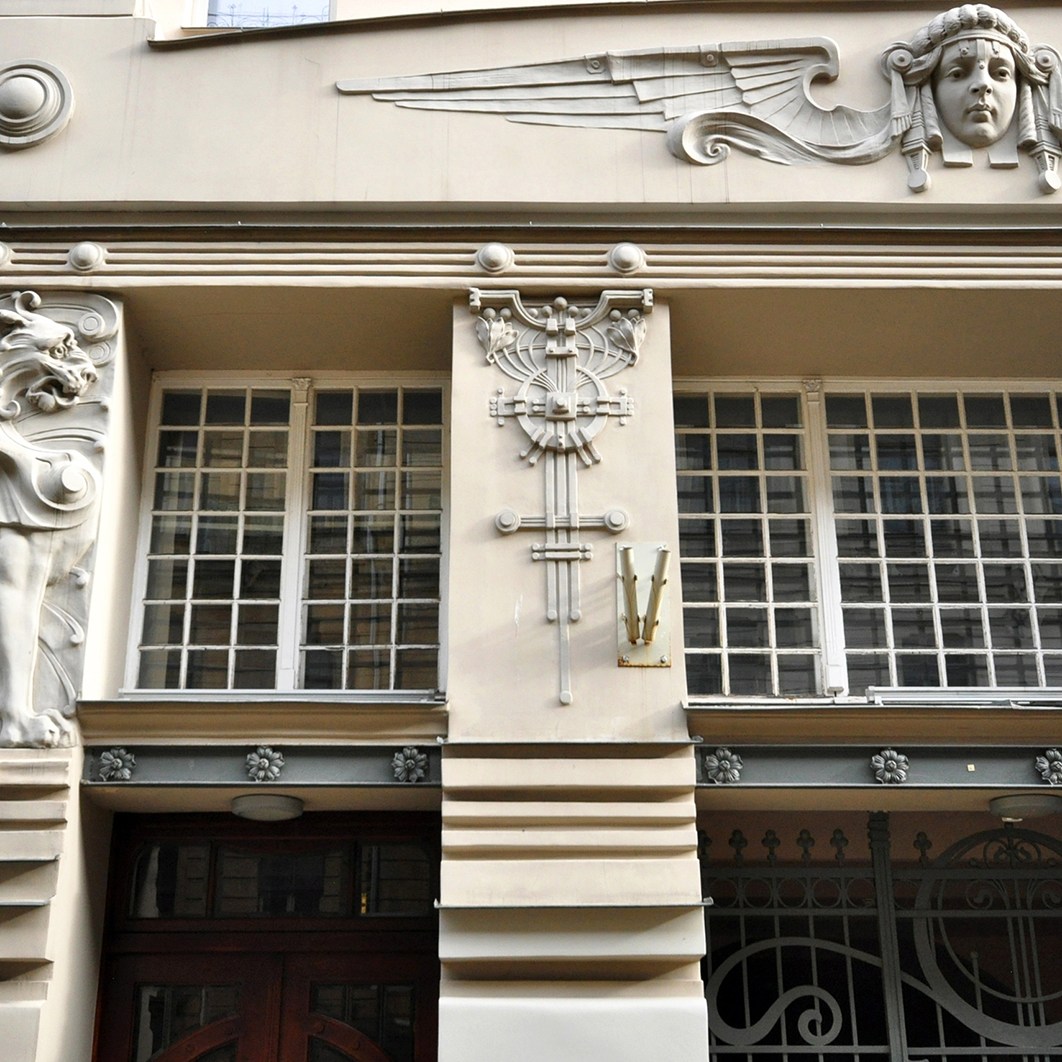
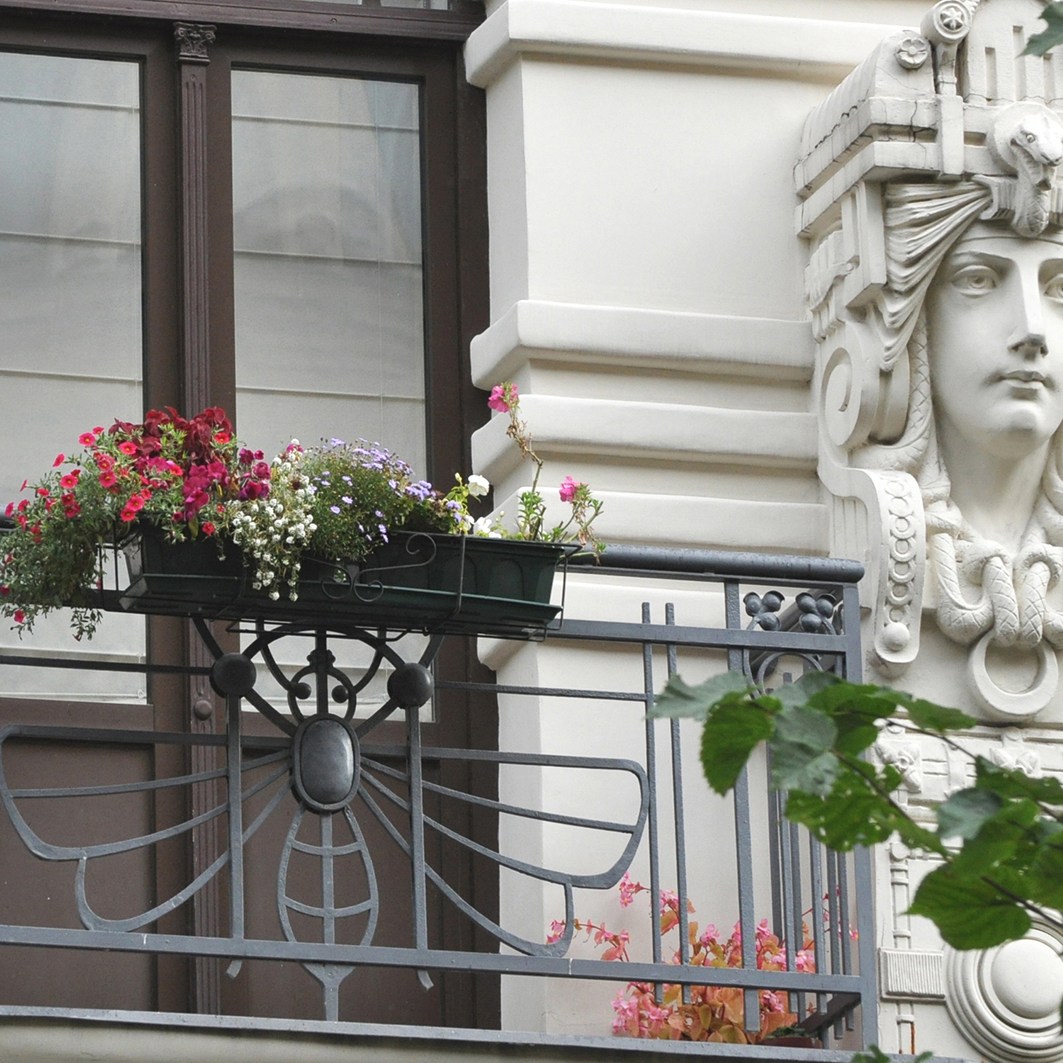
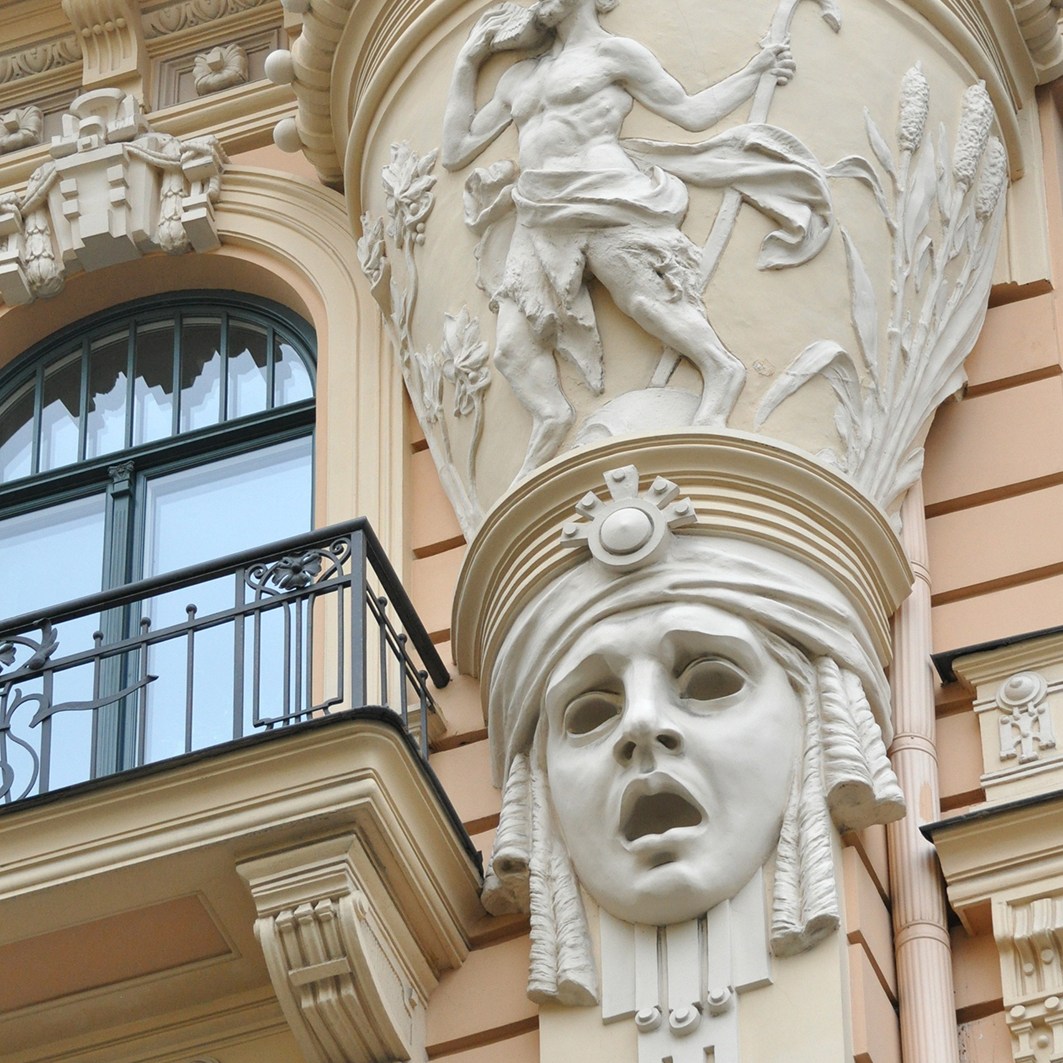
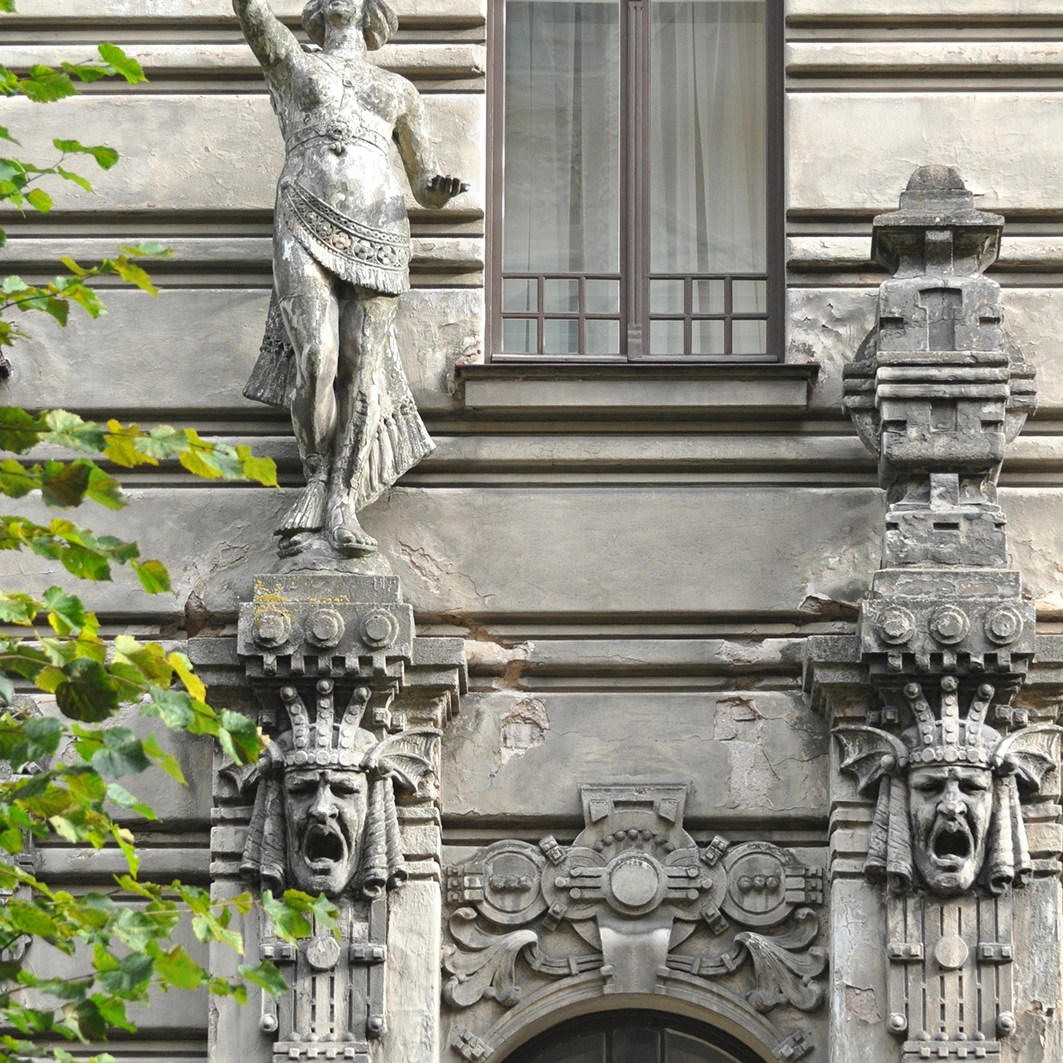
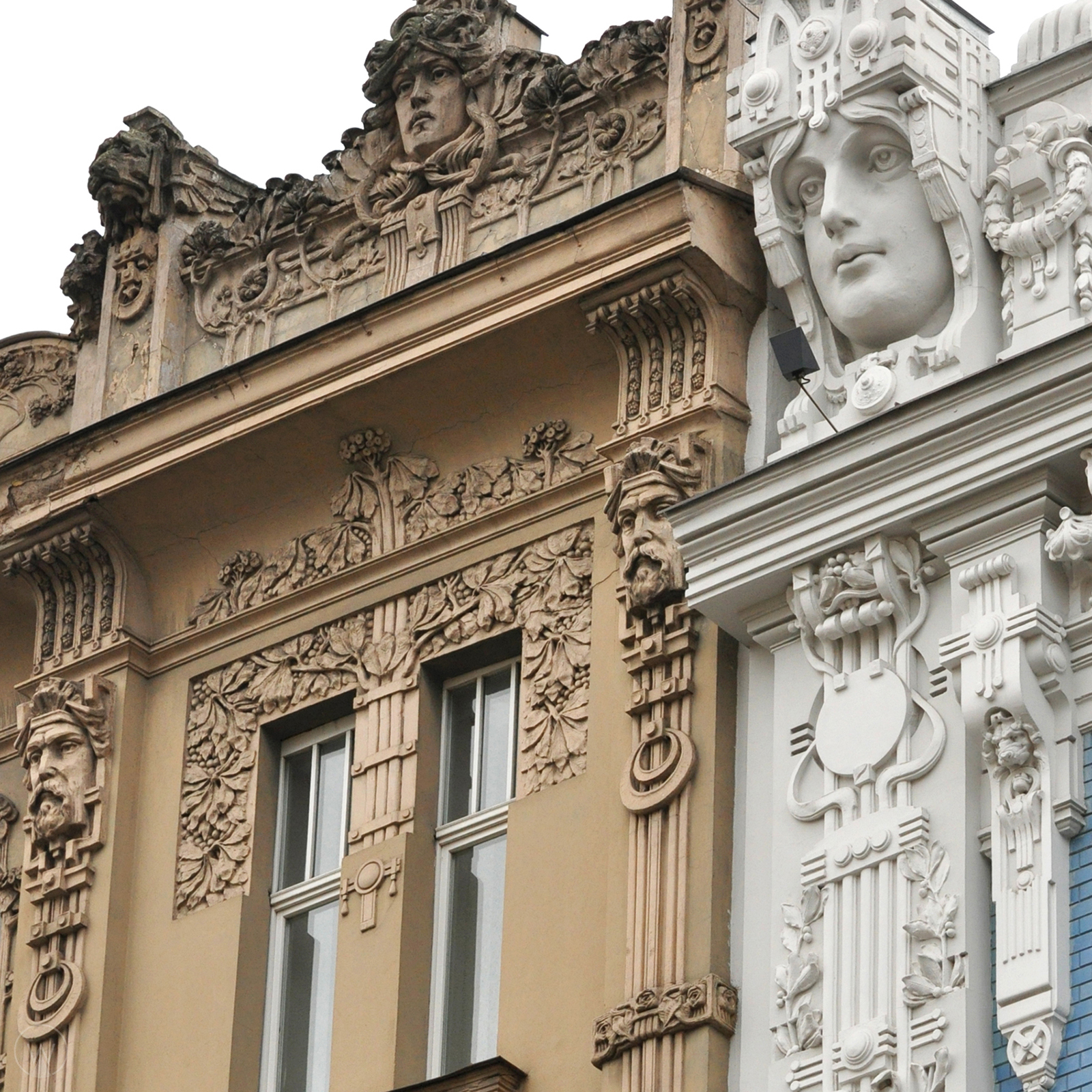
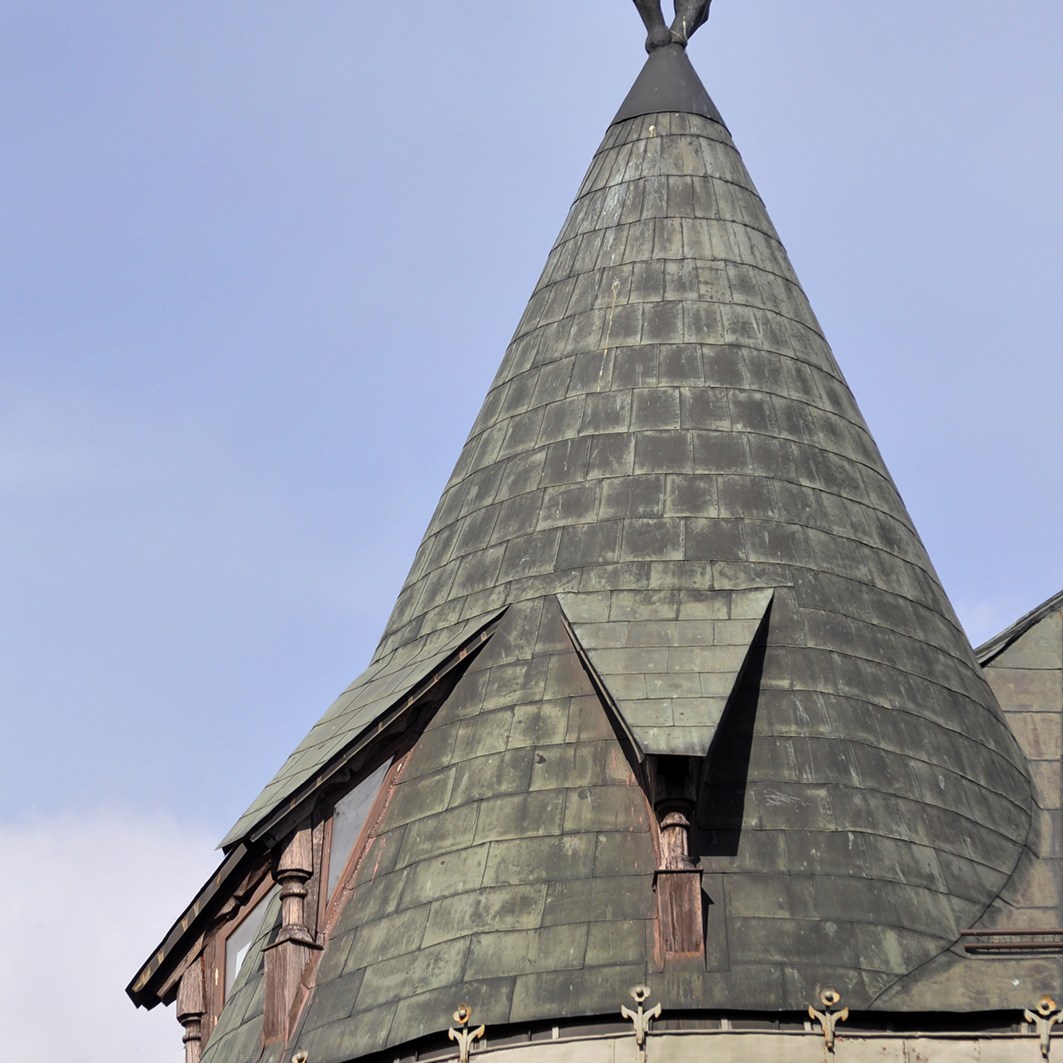
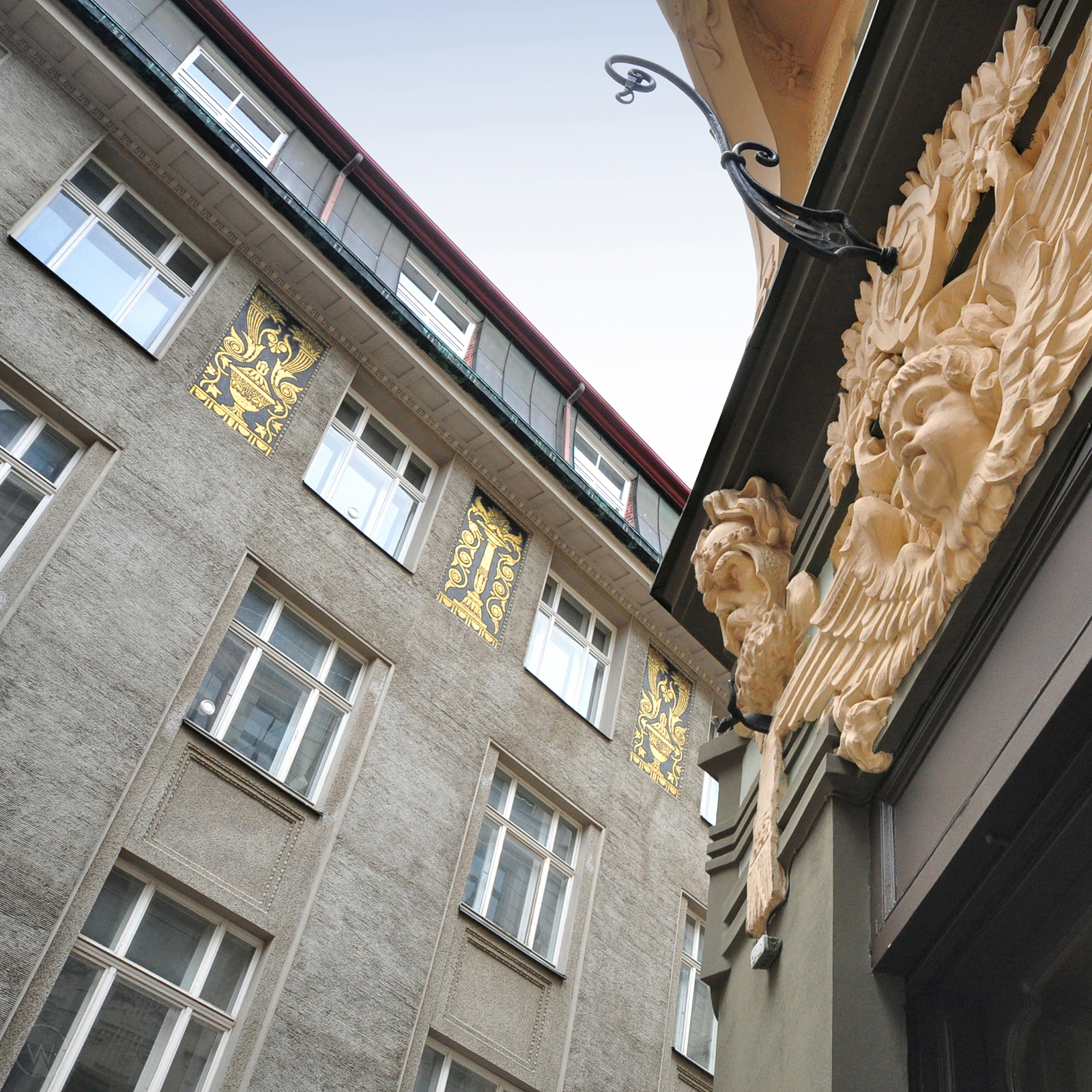
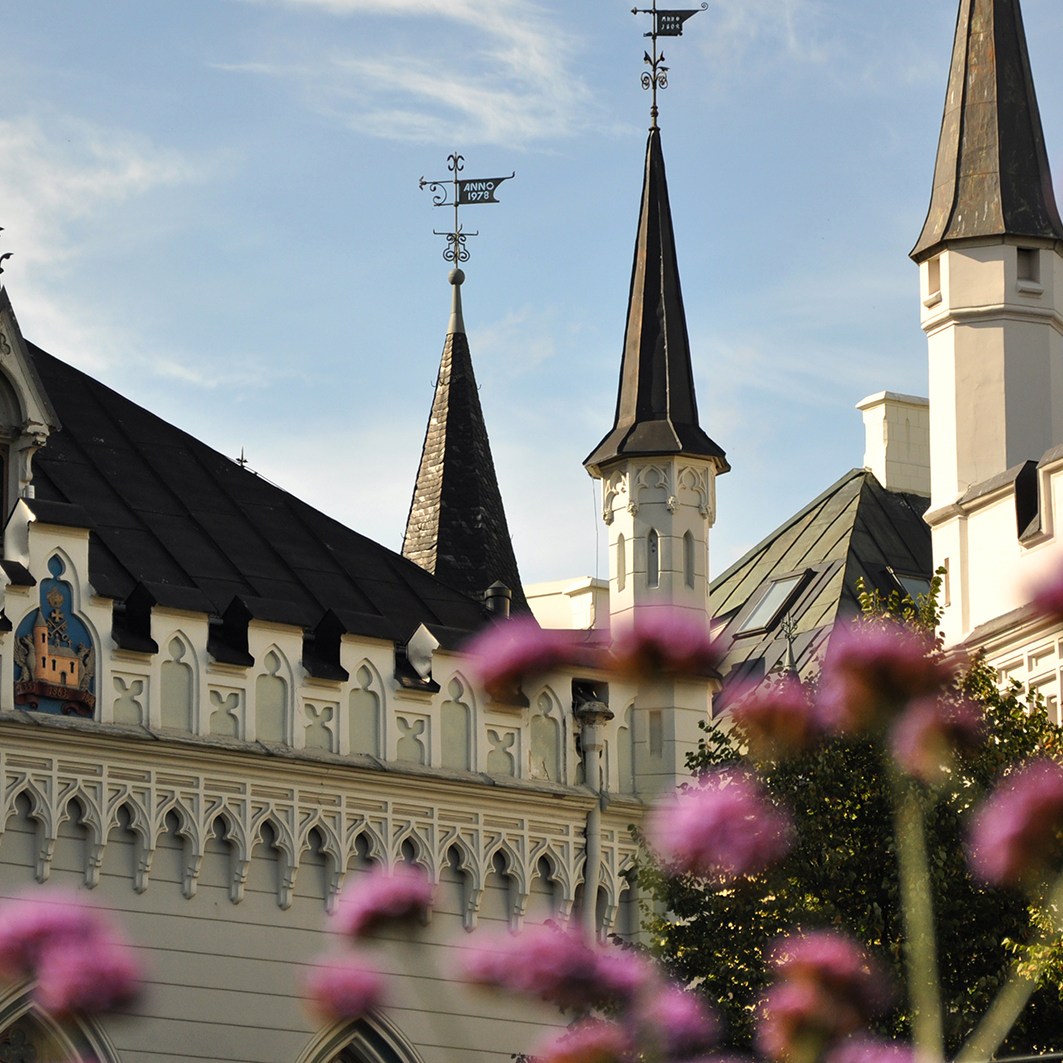
As a result, Europe’s densest concentrations of Nouveau architecture can be found in Riga’s Centra rajons (Central District), where roughly a third of the structures were designed in the style. The Central District developed from what in the early 19th century had been suburbs (these having sprung up beyond what were once the prosperous Hanseatic mercantile town’s medieval walls), but by the early 20th had become decidedly urban. And, from roughly 1900 to 1915, architects applied Nouveau aesthetics to apartment houses, theaters, banks, pubs, retailers and so forth, reflecting within the Nouveau aesthetic an array of influences from eclecticism to functionalism to neoclassicism.
Many of Riga’s Nouveau buildings are found on and around Elizabetes iela (Elizabeth Street), renamed intermittently through the decades according to the tastes of whomever controlled the Latvian territory but today bearing its original name given in honor of the wife of Russian Emperor Alexander I. This two-kilometer street features numerous Nouveau structures, but brilliant examples are also to be found along intersecting and nearby streets such as Brīvības, Ģertrūdes, Krišjāņa Valdemāra, Aleksandrqa Čaka, Smilšu and, of course, Alberta. Among these, and so many others, Alberta is the first stop for Nouveau in Riga, due primarily to the decadently eclectic façades of Mikhail Eizenšteins, and also to the works of two of his prolific contemporaries, Konstantīns Pēkšēns (one of Latvia’s most prominent architects, credited with some 250 buildings in Riga alone) and his protégé Eižens Laube. Since April 2009, Pēkšēns’ former residence at Alberta iela 12 has housed the Riga Art Nouveau Museum.
Maintenance of these structures was not a priority under Sovietism, and most fell into various stages of disrepair. But you’ll find that in recent decades, especially since 1997 (when the Central District was added, on the merits of its Nouveau splendor, to the UNESCO World Heritage list), restoration, while incomplete, has been attentive and extensive.
SOME NOTEWORTHY ART NOUVEAU STRUCTURES IN RIGA
- Alberta 2, 2a, 4, 6, 8, 13
- Blaumaņa 28
- Brivibas 18, 99
- Elizabetes 10a, 10b, 33
- Jauniela 25/29
- Kaļķu 13
- Kalēju 23
- Krišjāņa Barona 39
- Lomonosova 3, 5
- Margrietas 16
- Meistaru 10 (“The Cat House”)
- Šķūņu 10/12
- Smilšu 2, 8
- Sterlnieku 4a, 6, 19
- Strugu 3
- Vīlandes 10, 11
MORE FAVORITES IN RIGA
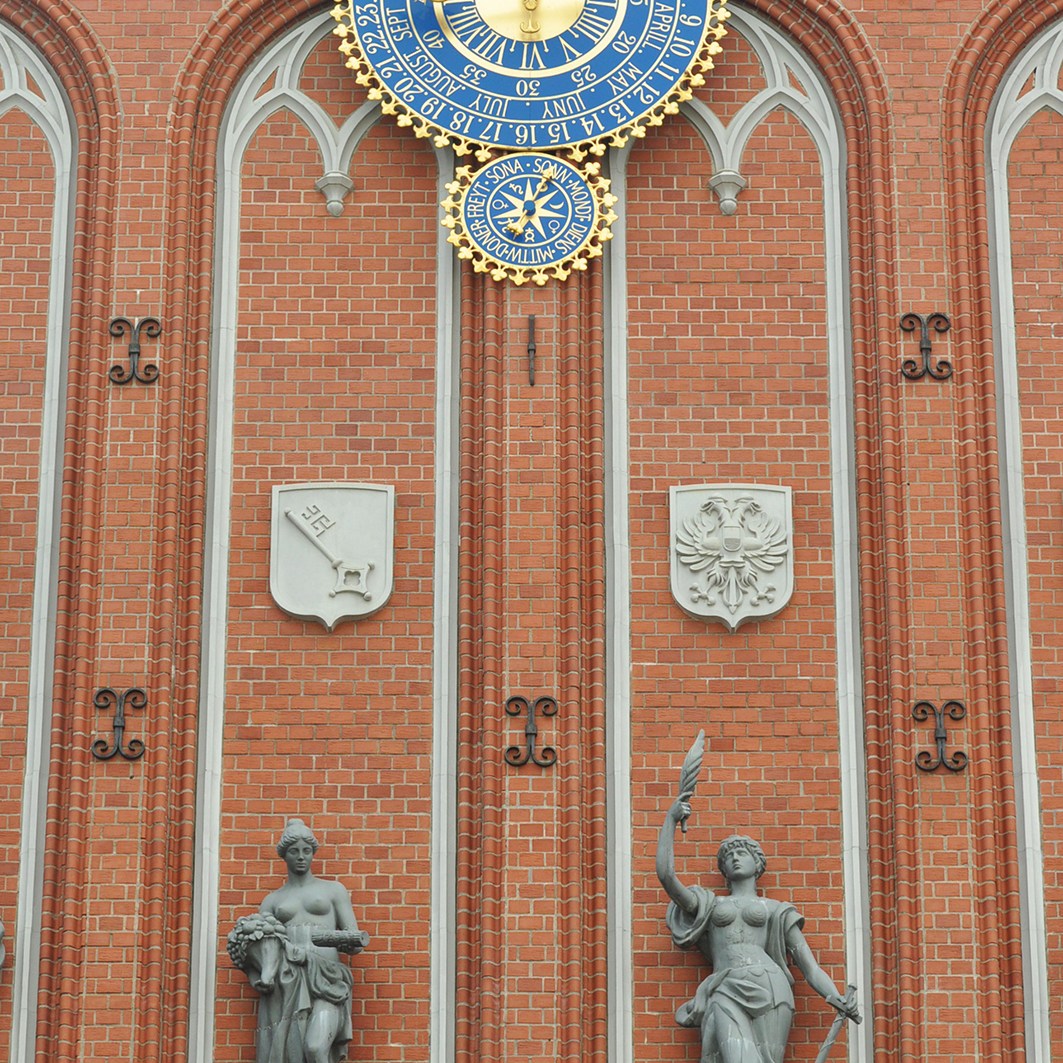
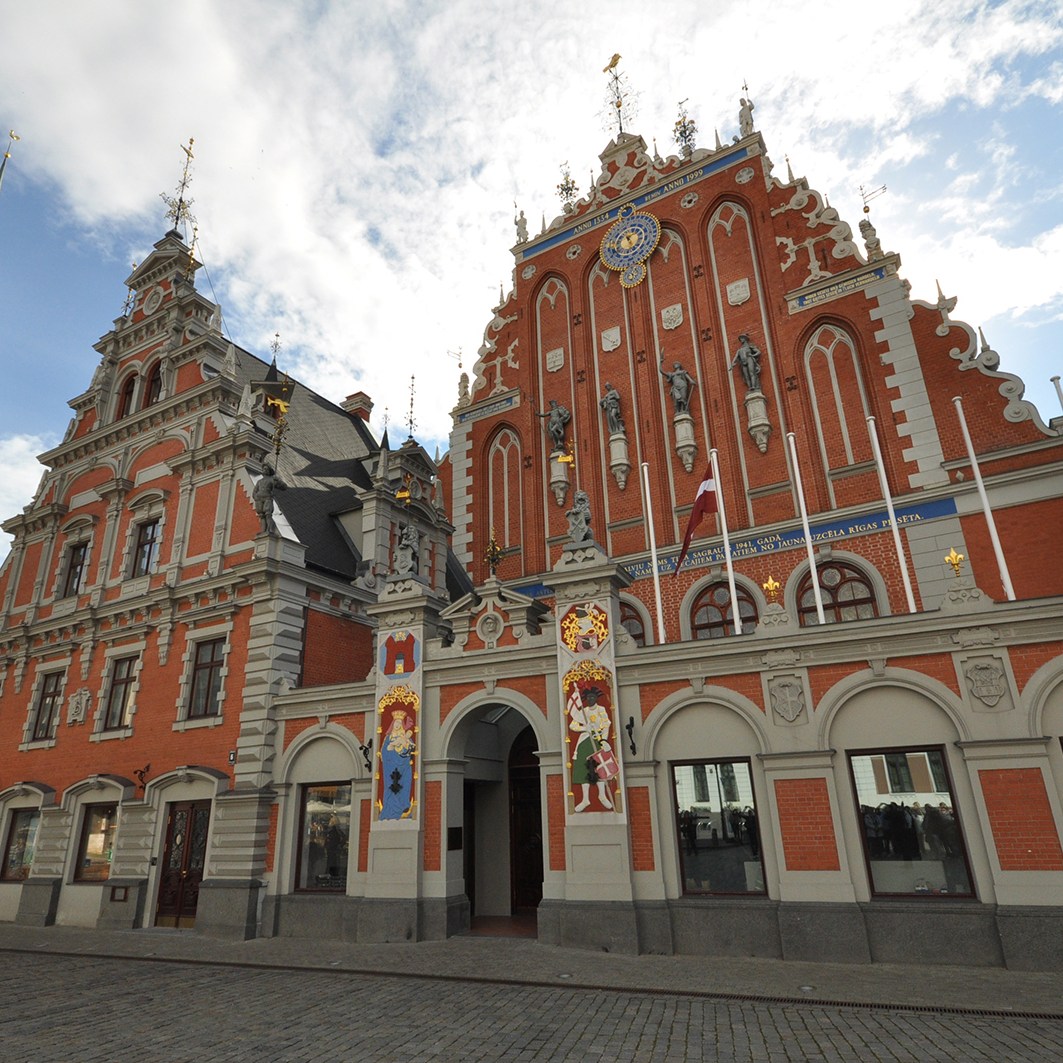
- The Bell Tower of St. Peter’s Church. Climb the stairs for the best panoramic view of the Old Town and the Daugava River. Once back on the ground, walk a few paces to see the handsomely restored façade of the adjacent House of Black Heads.
- The Central Market. After World War I, a market was established in a row of old Zeppelin hangars. Today these renovated structures still house a vibrant and bustling market where fresh local products can be purchased inexpensively from cheerful purveyors. While there, wander the nearby Moscow District (which was the Jewish ghetto during the Nazi occupation and features one of Stalin’s Skyscrapers whose clones are also found in Warsaw and elsewhere), being sure to stop at the Latgale Tirgus flea market, which is open daily.
- Ķīpsala Island. The wooden buildings and stone streets of this quiet neighborhood immediately west of downtown offer a rural-feeling break from the city’s energy, as well as a lovely view of the Old Town skyline.
- The Latvian National Opera and Ballet. Catch a performance on the stage where local son Mikhail Baryshnikov is said to have made his professional debut.
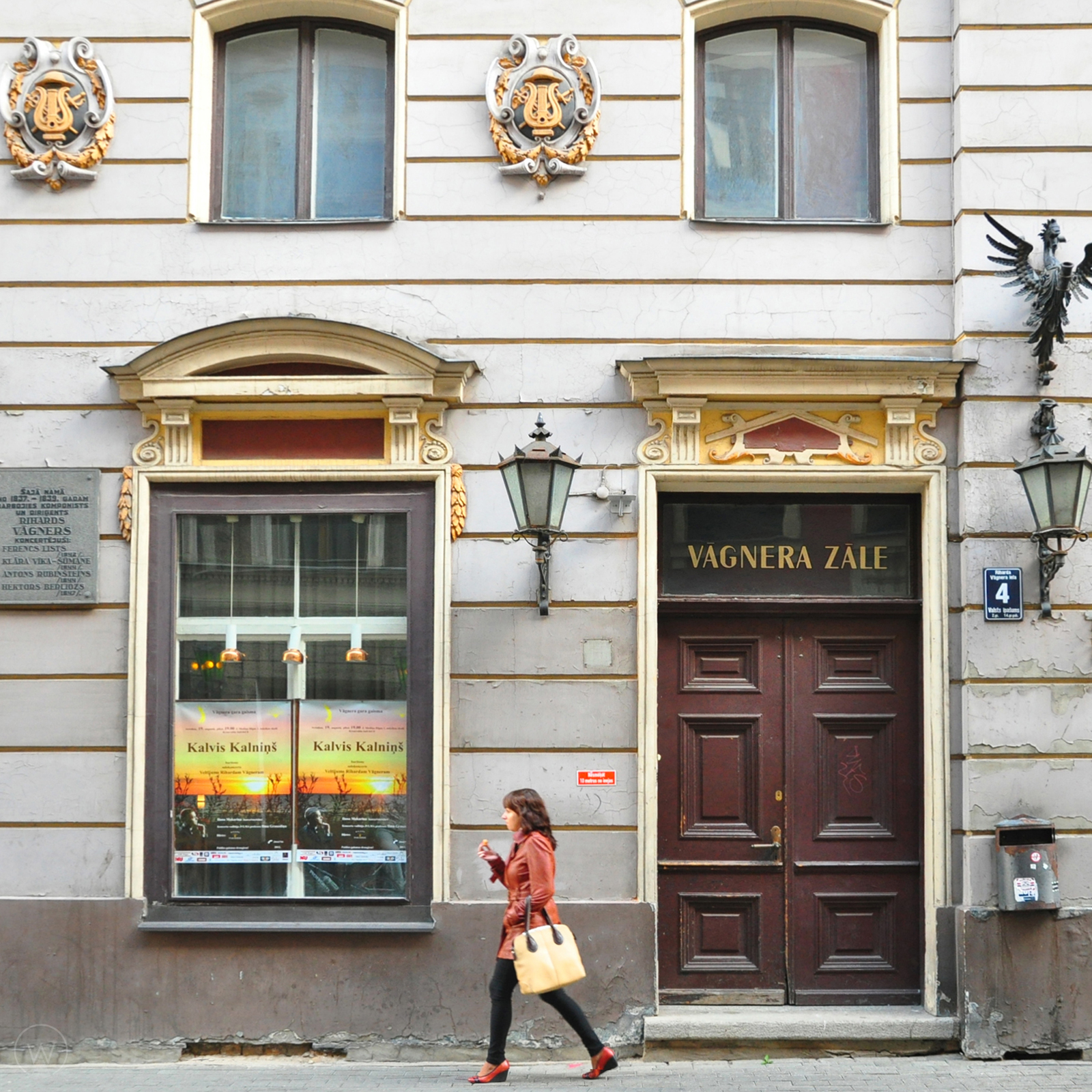
- Vagnera Zale. Operatic titan Richard Wagner (of “It ain’t over ‘til…” fame) was chief conductor at this theater from 1837 until 1839, while reportedly avoiding his creditors back home in Germany.
- Mentsendorff House. Step back into the 17th century in this meticulously restored merchant house.
- The Three Brothers. According to legend, this trio of architecturally distinct houses on Mazā Pils iela was built by different generations of the same family.
- Riga Motor Museum. Along with an eclectic array of European vehicles from various decades, this fascinating museum houses an extensive collection of Soviet-era cars, including a few of Stalin’s armored limousines and a blue ‘67 Lincoln Continental given by Richard Nixon to Leonid Brezhnev.
- The Corner House. Today a museum dedicated to the Soviet occupation of Latvia, this nondescript building served as the local headquarters of the KGB until 1991.
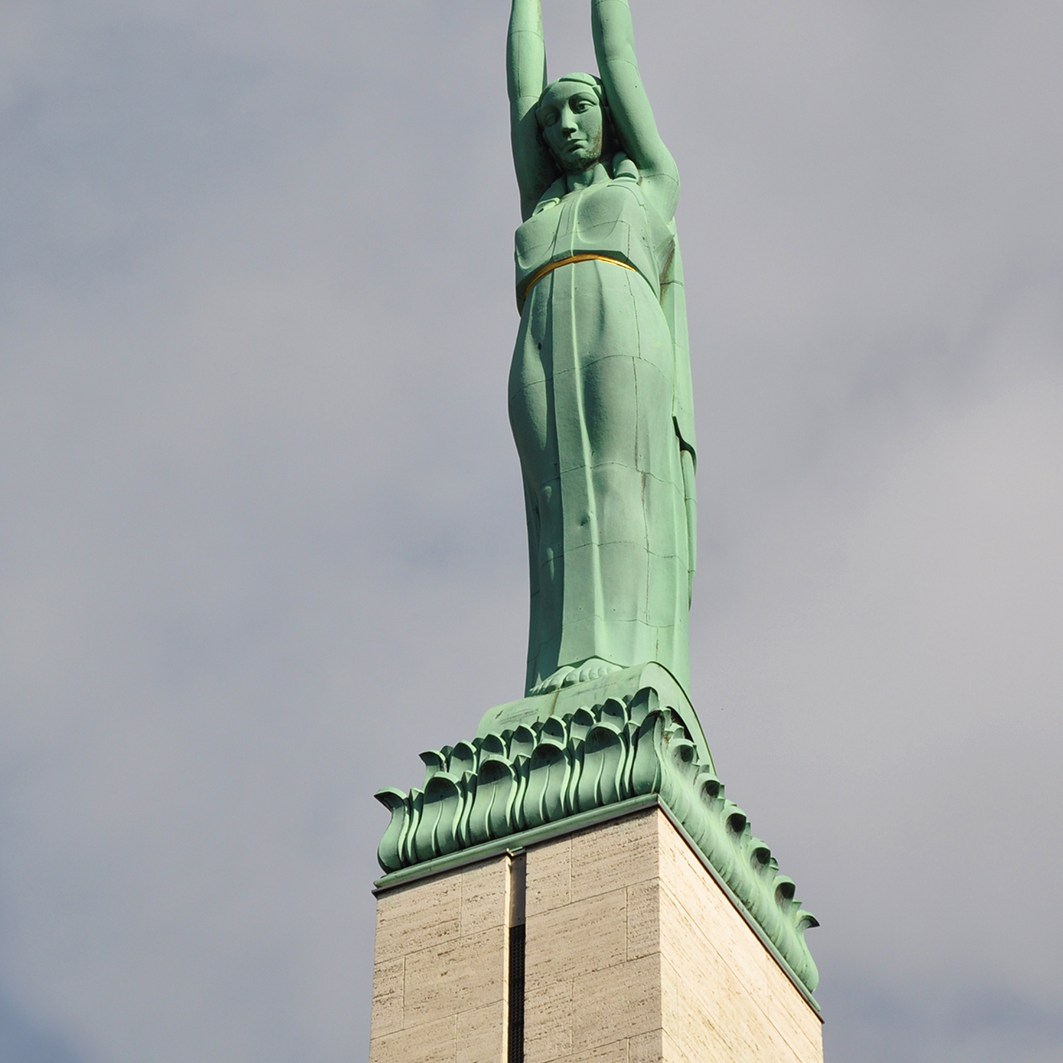
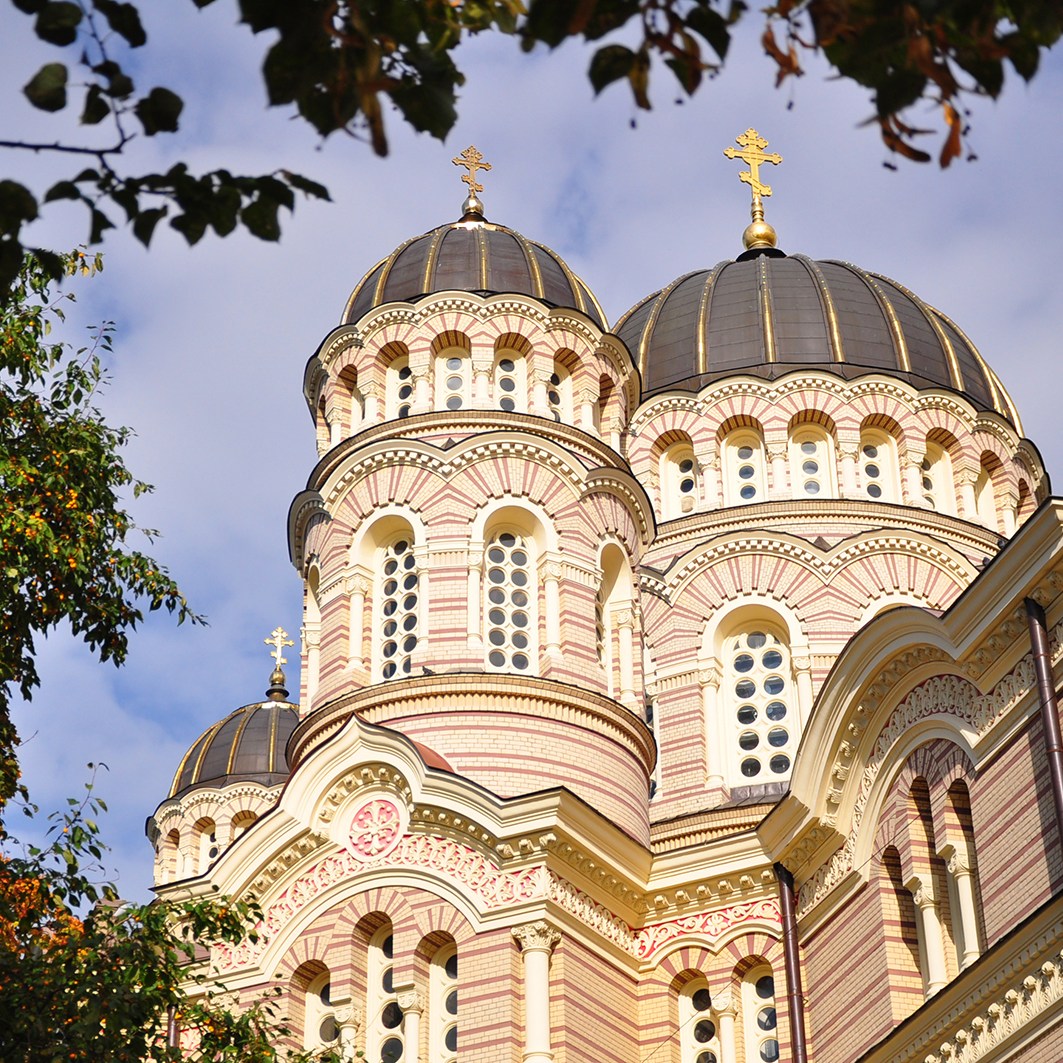
- Freedom Monument. This noble statue, which replaced a bronze of Peter the Great on the same site, honors those who died in the Latvian War of Independence (1918-1920) against invading Russians. Visit the Russian Orthodox cathedral, known as The Nativity of Christ, at the southwest edge of the nearby Esplanāde.
- Day trip to Gauja National Park. An hour northeast of town, the medieval village of Sigulda serves as a charming base for explorations within the Park, starting with a visit to Turaida Castle.
- Day trip to Rundāle Palace. This Baroque palace, sometimes called “The Baltic Versailles,” was built in the mid-18th century for the Dukes of Courland, and lies near the Lithuanian border about an hour south of Riga.
QUESTIONS FOR READERS
- What are some of your favorite examples of Art Nouveau architecture elsewhere in Europe?
- If you had to choose: Nouveau or Deco?
- Can you recommend a walking tour of Riga?
 WANDERLOOSED