














From Marrakesh’s opalescent dusk to the silent grandeur of the Sahara, this four-day journey unveils a route across central Morocco as a living mosaic of scent, sound and story. Guided by locals and grounded in discovery, it traces a path through ancient medinas, mountain passes and desert horizons where time and tradition meet in luminous harmony.
MARRAKESH
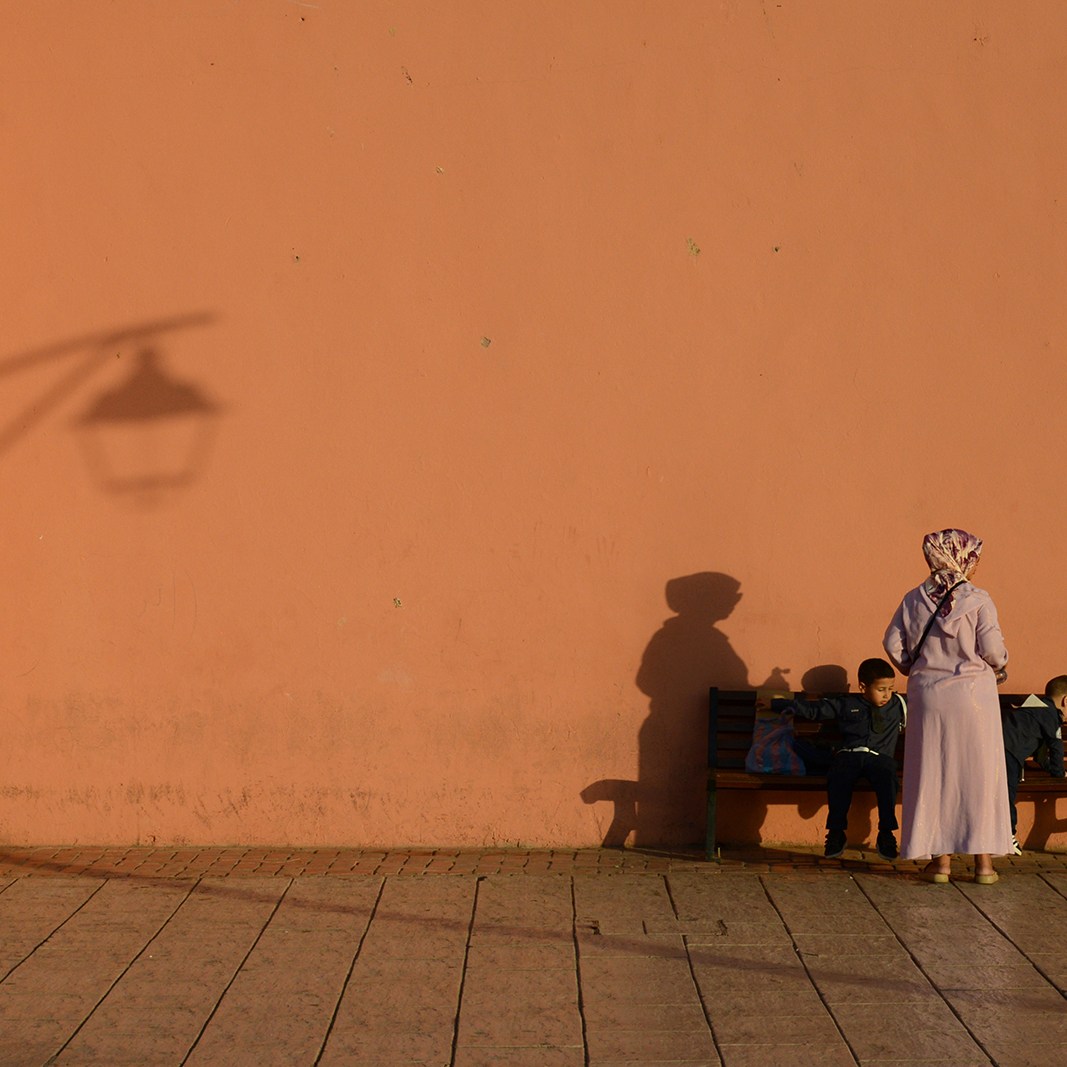
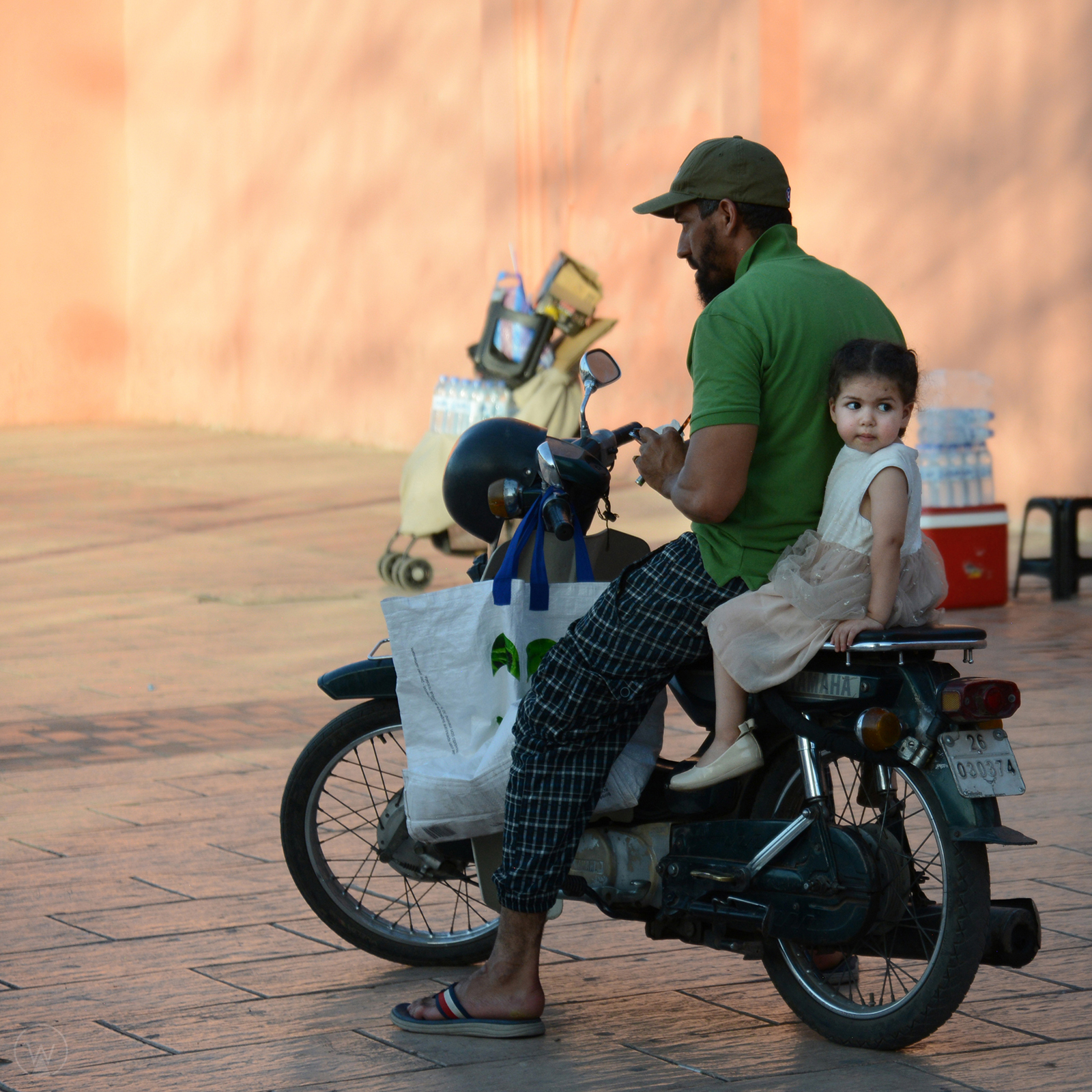
Within the sun-baked ramparts of Marrakesh lies a world whose daytime activity hides among the shadows of ancient, labyrinthine alleys. At dusk, the day’s punishing heat finally abating, this world flickers to life, swirling with flavors, hues and rhythms in an effortless gaiety unlike any elsewhere I’ve visited. Our four-day journey began at the heart of this vibrant city with Redone, a guide whose easy manner and deep knowledge came courtesy of top-rated Abdel Walking Tours. My two teenage sons and I followed Redone as he slipped through the knotted lanes of the medina (the walled old-town center of many Moroccan cities) where commerce unfolds – today very much as it has in centuries past – in a kaleidoscope of colors and clattering trade tools, the air wafting with fragrant arrays of spices.
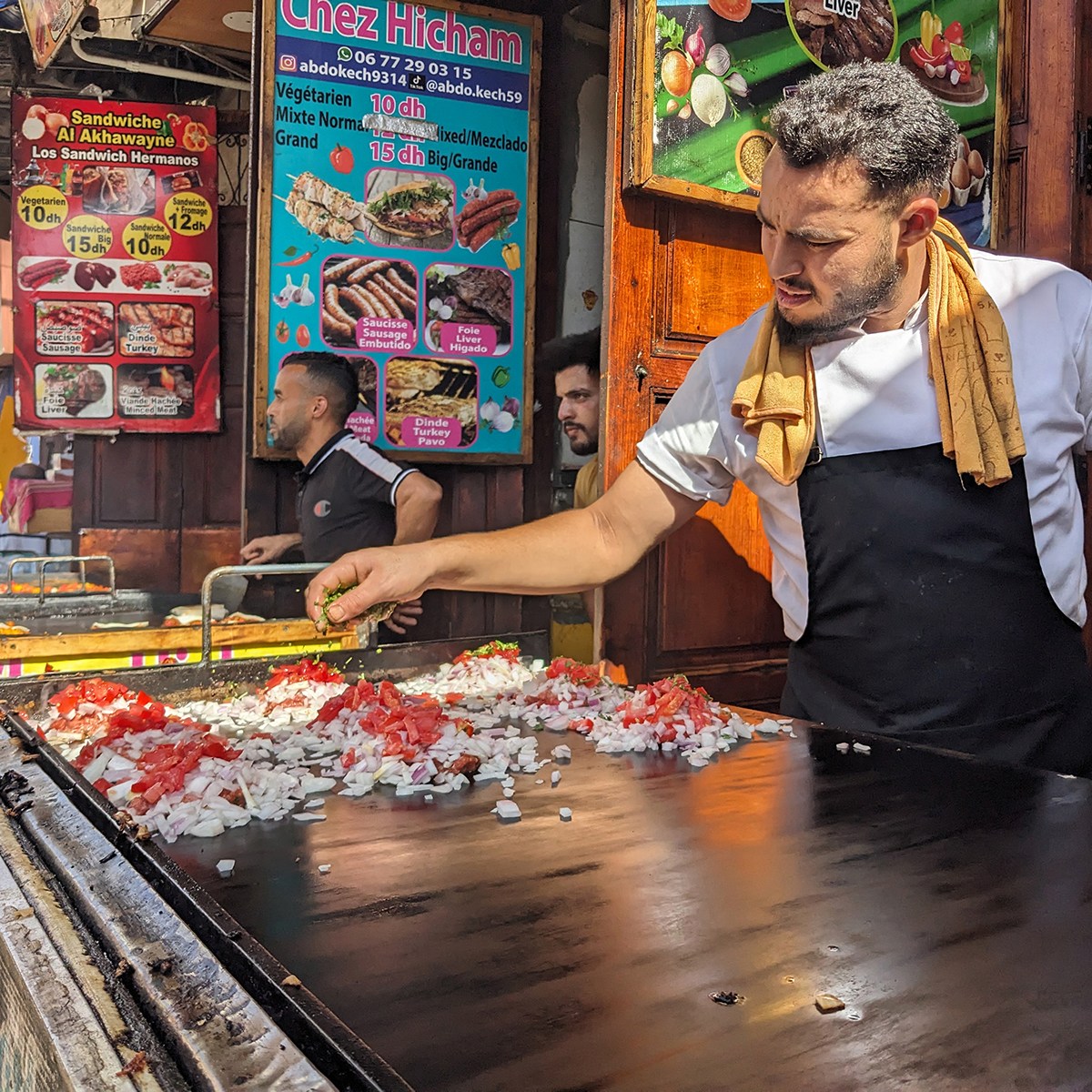
To venture deeply into the medina’s buzzing souks (areas dedicated to specific artisanal trades within a larger traditional Moroccan marketplace, which functions as a whirling hub for commerce and social interaction) is to will upon oneself indelible impressions inscribed by complete sensory overload. Within the length of a few strides, we enjoyed mixte sandwiches (of sausage, chicken and liver grilled with onions, tomato and egg) followed by fresh fruit juice, watched a shoemaker dyeing leather soles and a blacksmith pounding incandescent iron, and speculated on the authenticity of some “Louis Vuitton” soccer balls.
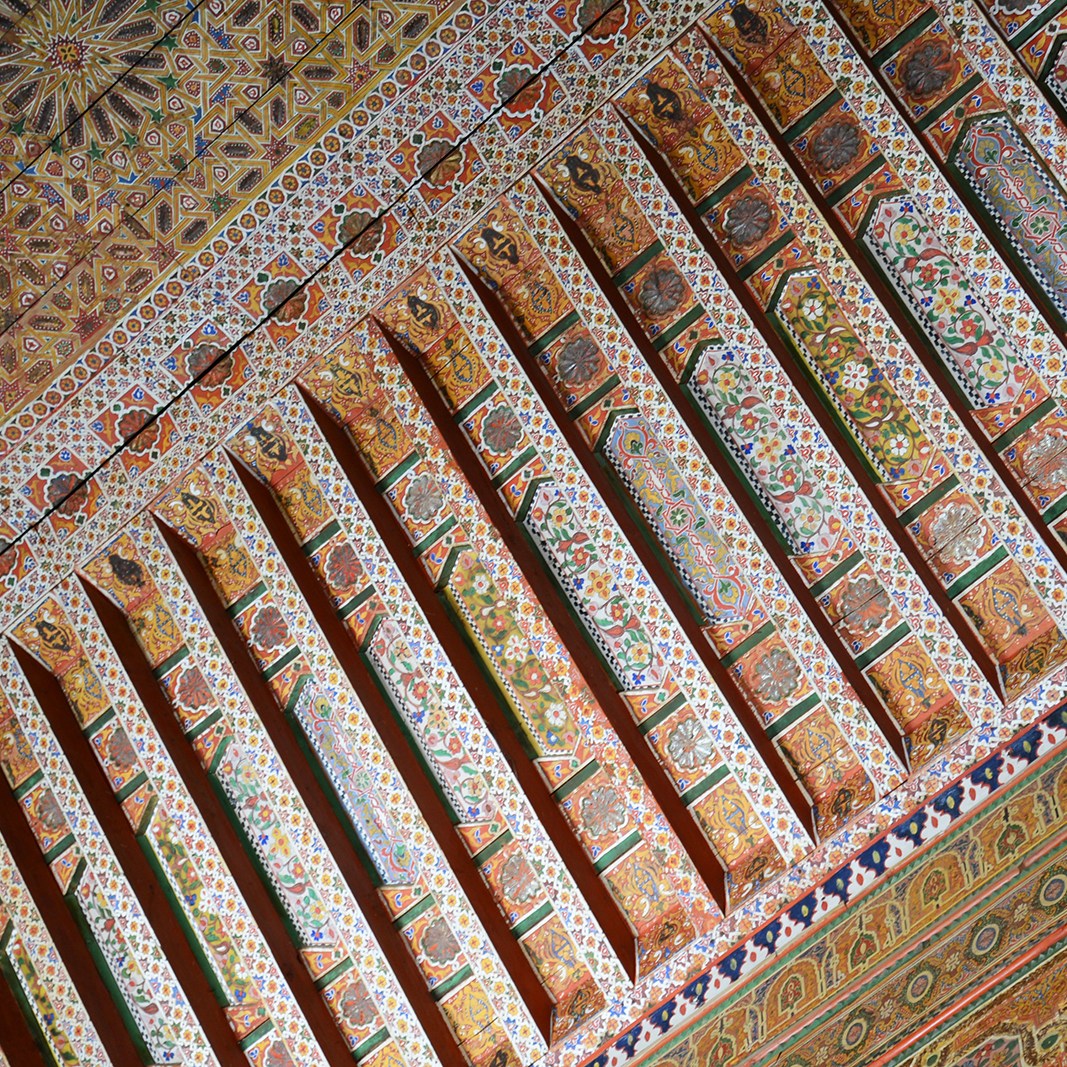
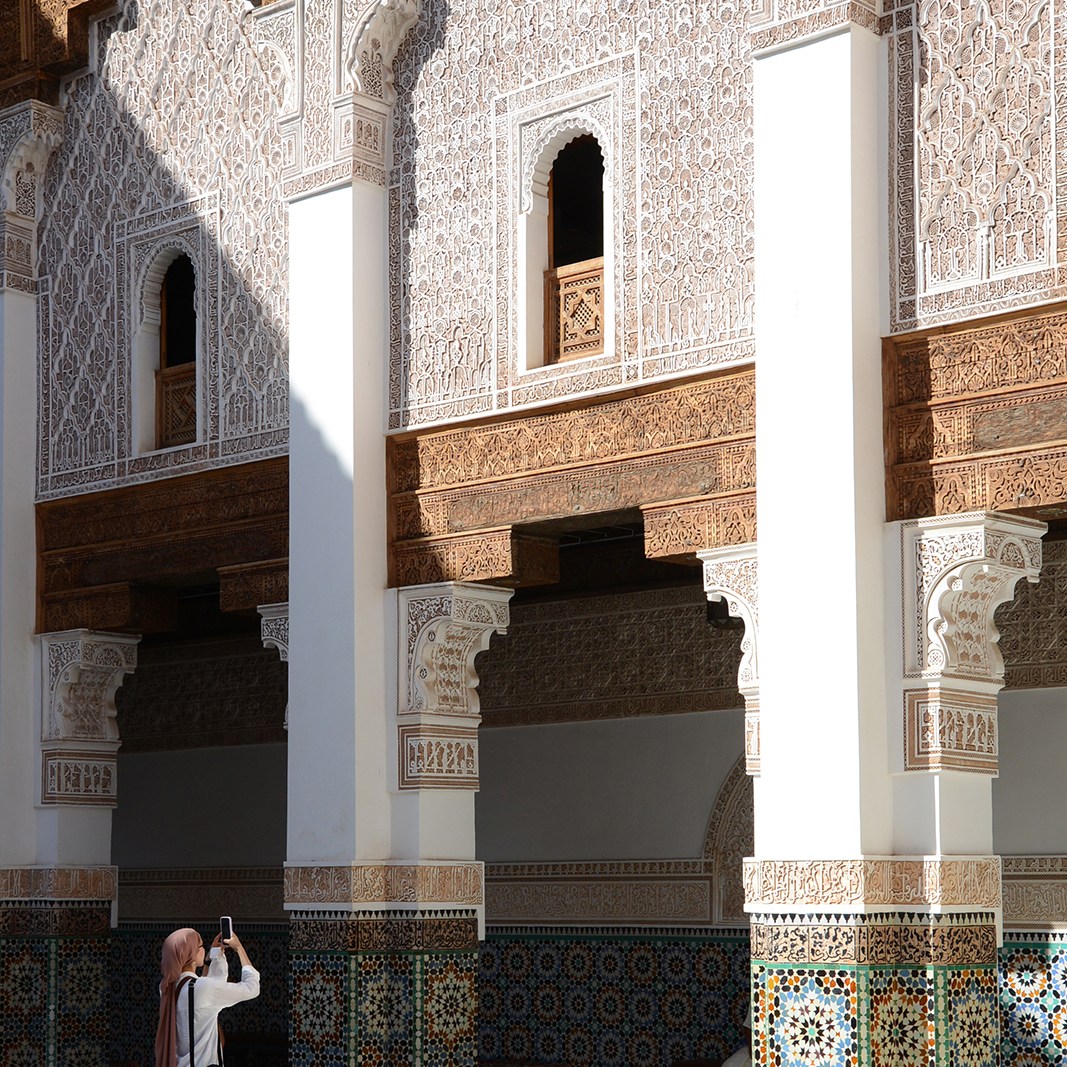
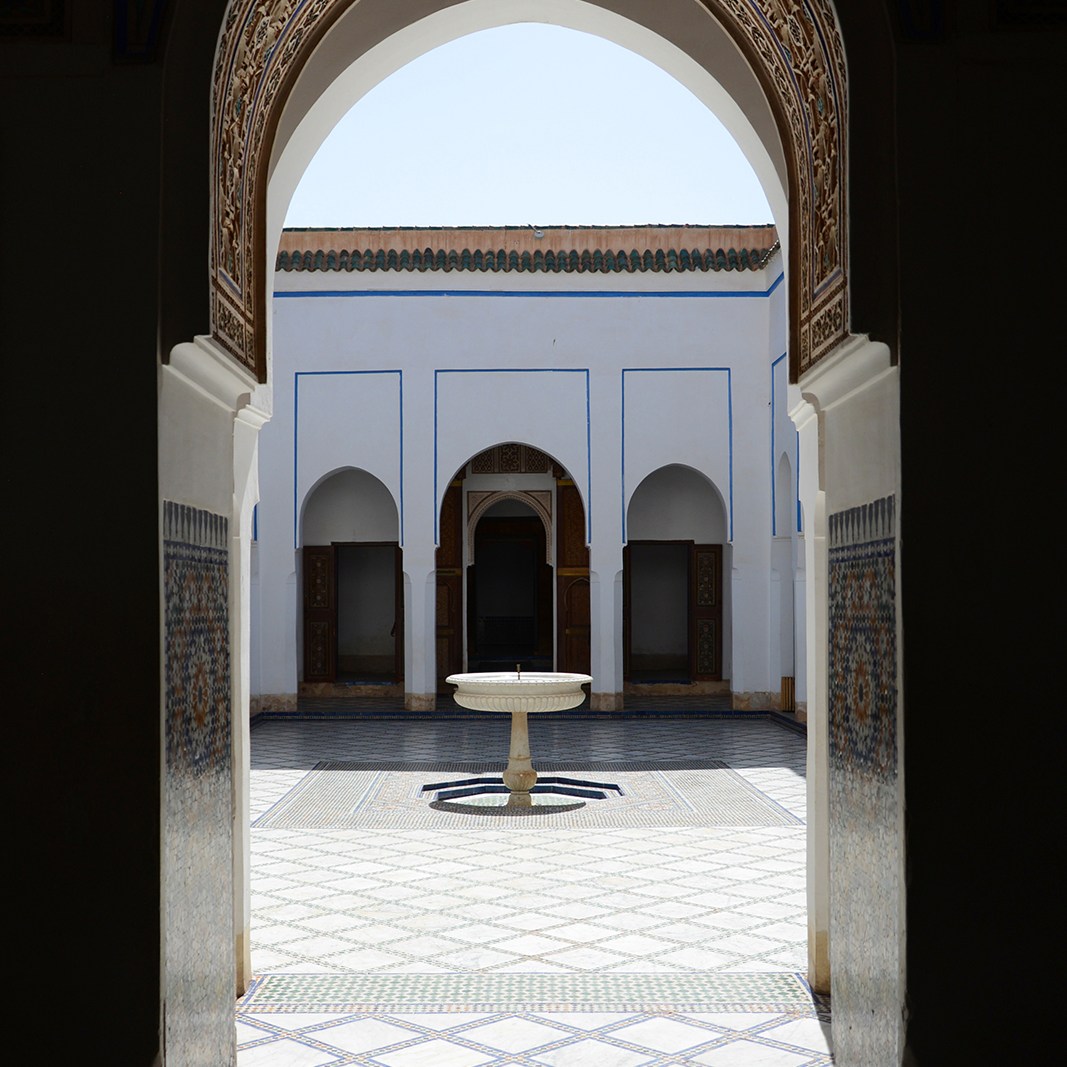
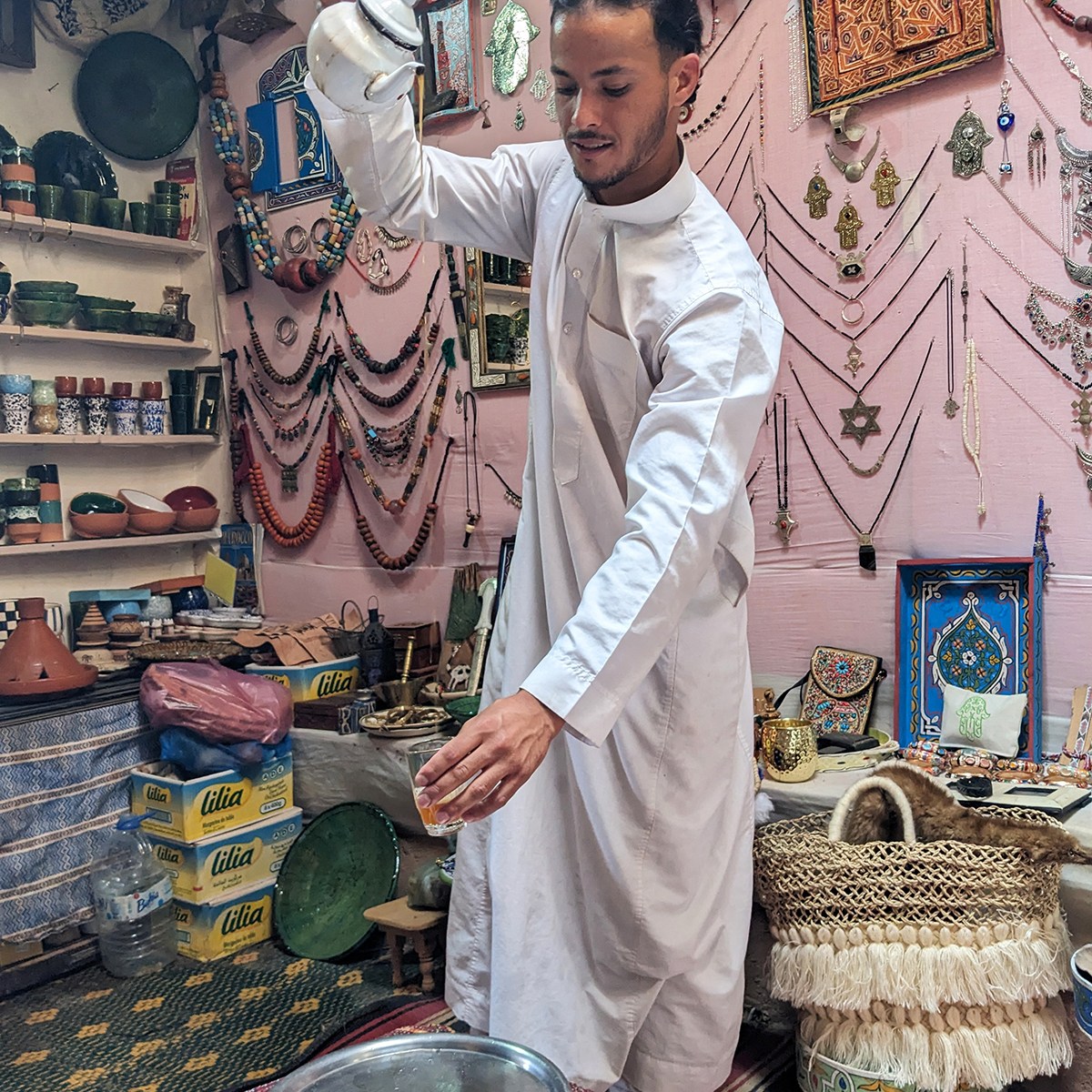
Marrakesh offers balance amid its bustle. The serene Bahia Palace invited us into a world of intricate mosaics and lush gardens, where the day’s haze softened to tranquil whispers and its heat was slightly more merciful. At Ben Youssef Madrasa, a masterpiece of Saadian architecture, we were enveloped by the profound stillness of a centuries-old Islamic college, its tilework intricate enough to recite histories of faith and scholarship. When the hour arrived for dinner, we dined al fresco on rambunctious Rue Kennaria beneath the quiet sky that arched high above the Medina. Here, at Tanija Secrets, my boys learned from its Chef de Rang, Soufiane, not only the art of an unequivocally perfect tagine – a slow-cooked stew made in a distinctive conical clay pot, ours on this occasion featuring beef, chicken and shark – but also the greeting “salaam, zwina” (زوينة سلام, hello, beautiful), which they practiced with both earnestness and adolescent flair, yet failed to put to the test despite encountering innumerable almond-eyed candidates during our trip. Sharpened by sesame sweets and Soufiane’s flamboyantly-poured mint tea, our minds were as full as our bellies as we sauntered around the corner to the main square, the last of the sun’s rays finally retreating to the west.
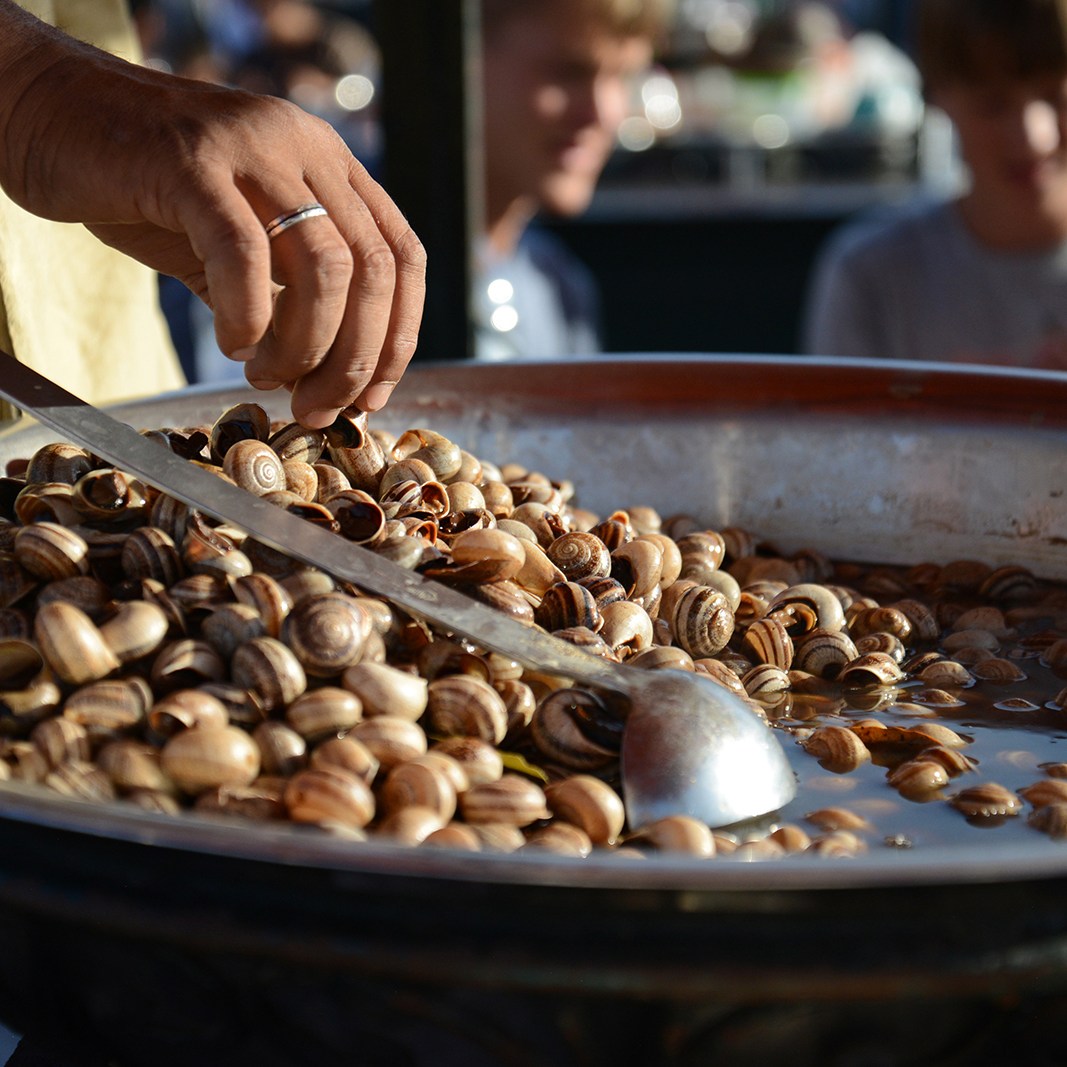
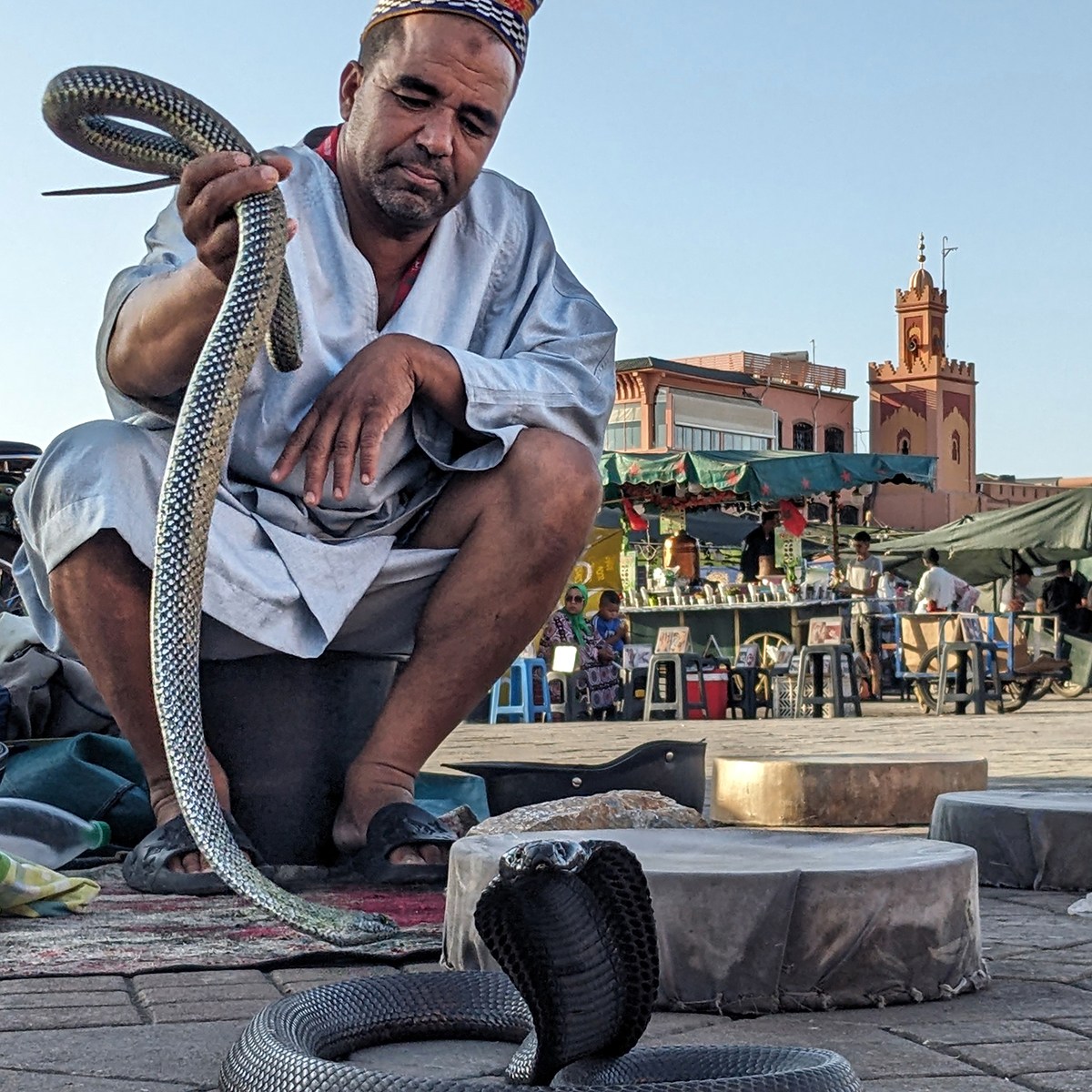
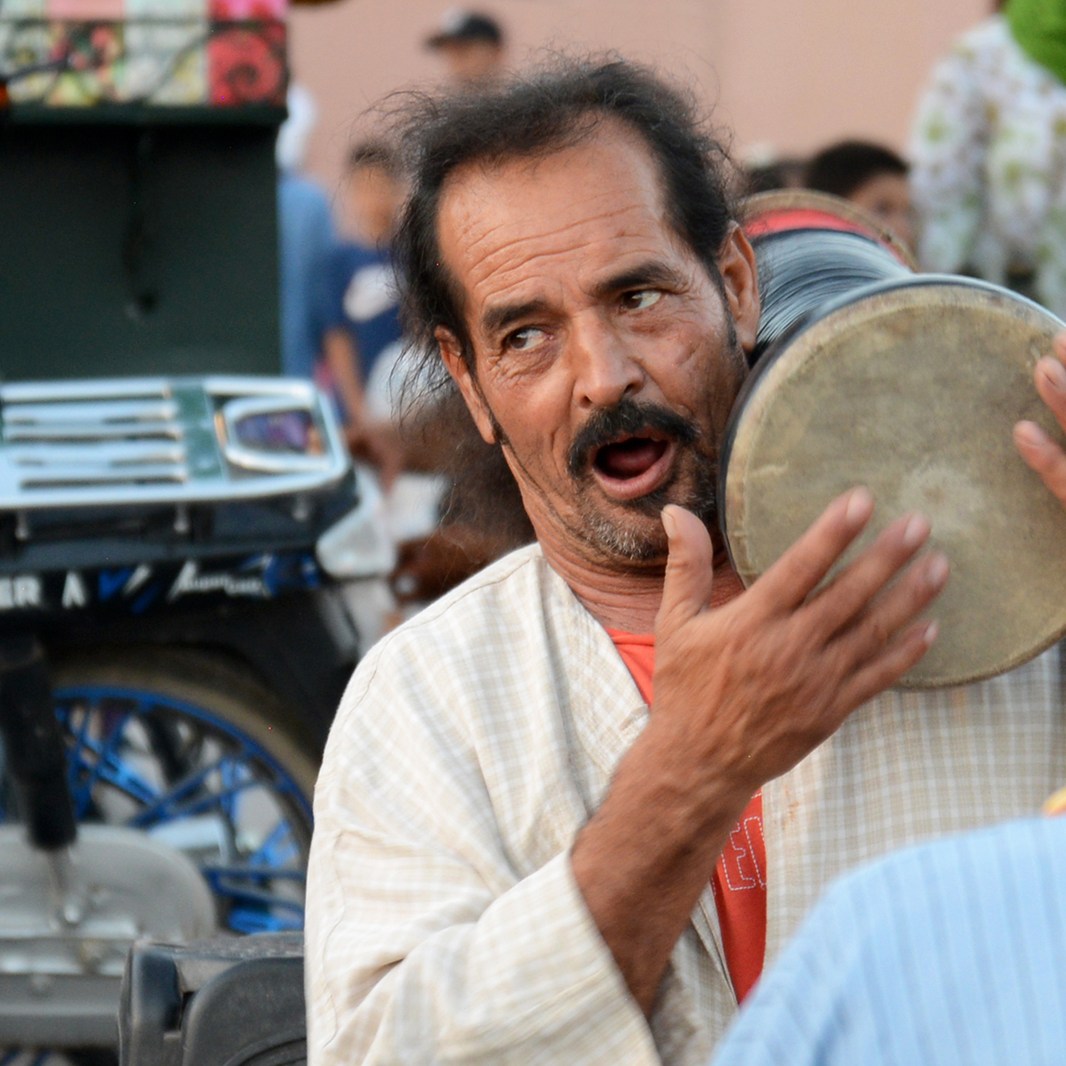
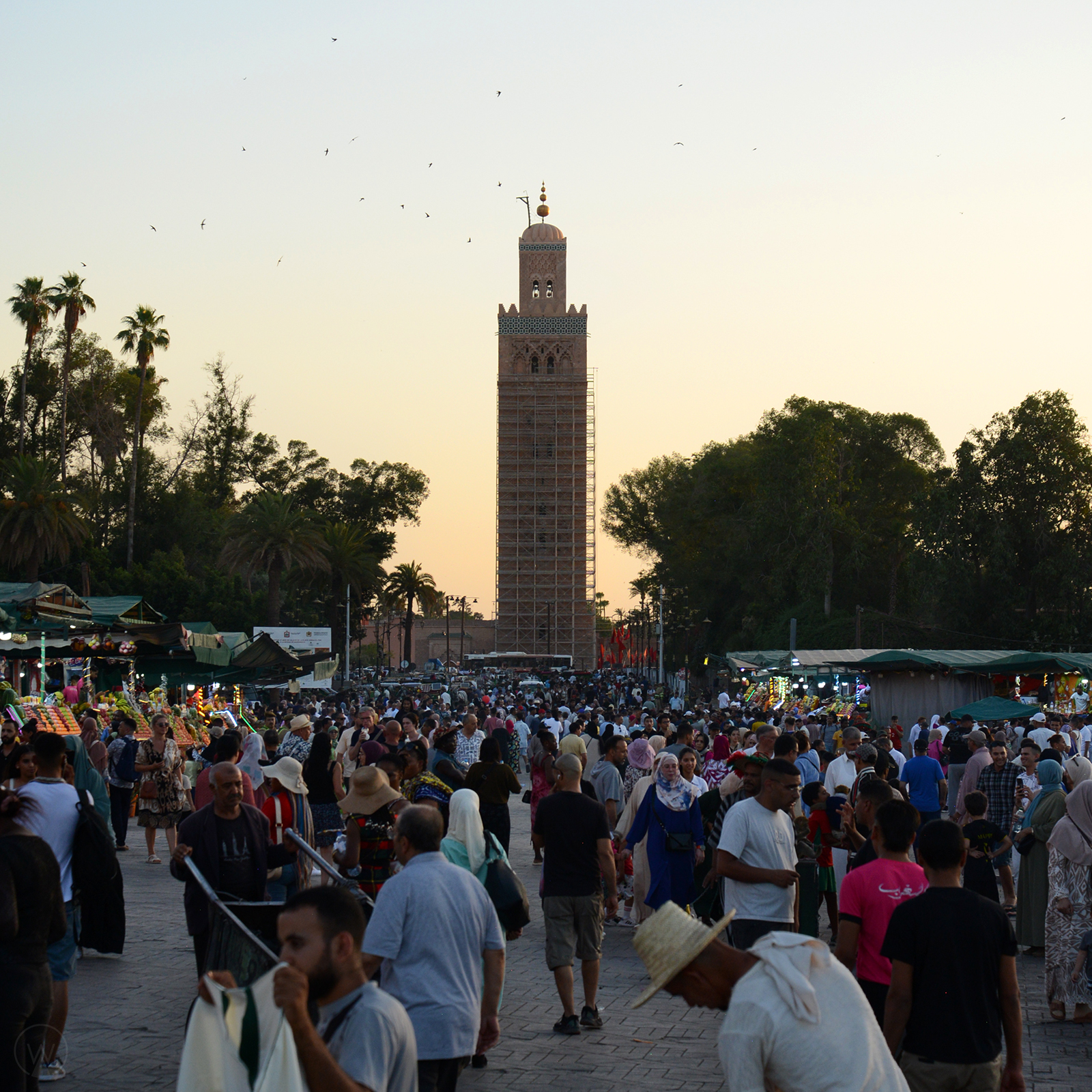
“Of course you will visit Jemaa El-Fnaa,” a Moroccan colleague had advised me. “You’ll find it’s fairly dead mid-day because of the heat, but the market really comes alive at night.” Anyone who’s visited Madrid’s Plaza Mayor, Times Square in New York City, Rynek Główny in Krakow or Rome’s Piazza Navona has an idea of what “really comes alive at night” entails, yet nothing had prepared me for the exuberant explosion of humanity that greeted us here in Marrakesh’s heart. I could discern no specific occasion that had packed this place, seeing instead only continuous, whirling pockets of shoulder-to-shoulder celebrations of — of life itself, amid rhythmic drumbeats, the snake charmers’ hypnotic gaze, and carts offering spiced snails (or babbouche) simmering in a fiery broth. “Don’t dine directly on the square,” further advice we’d heeded from my colleague, “but do try those snails.”
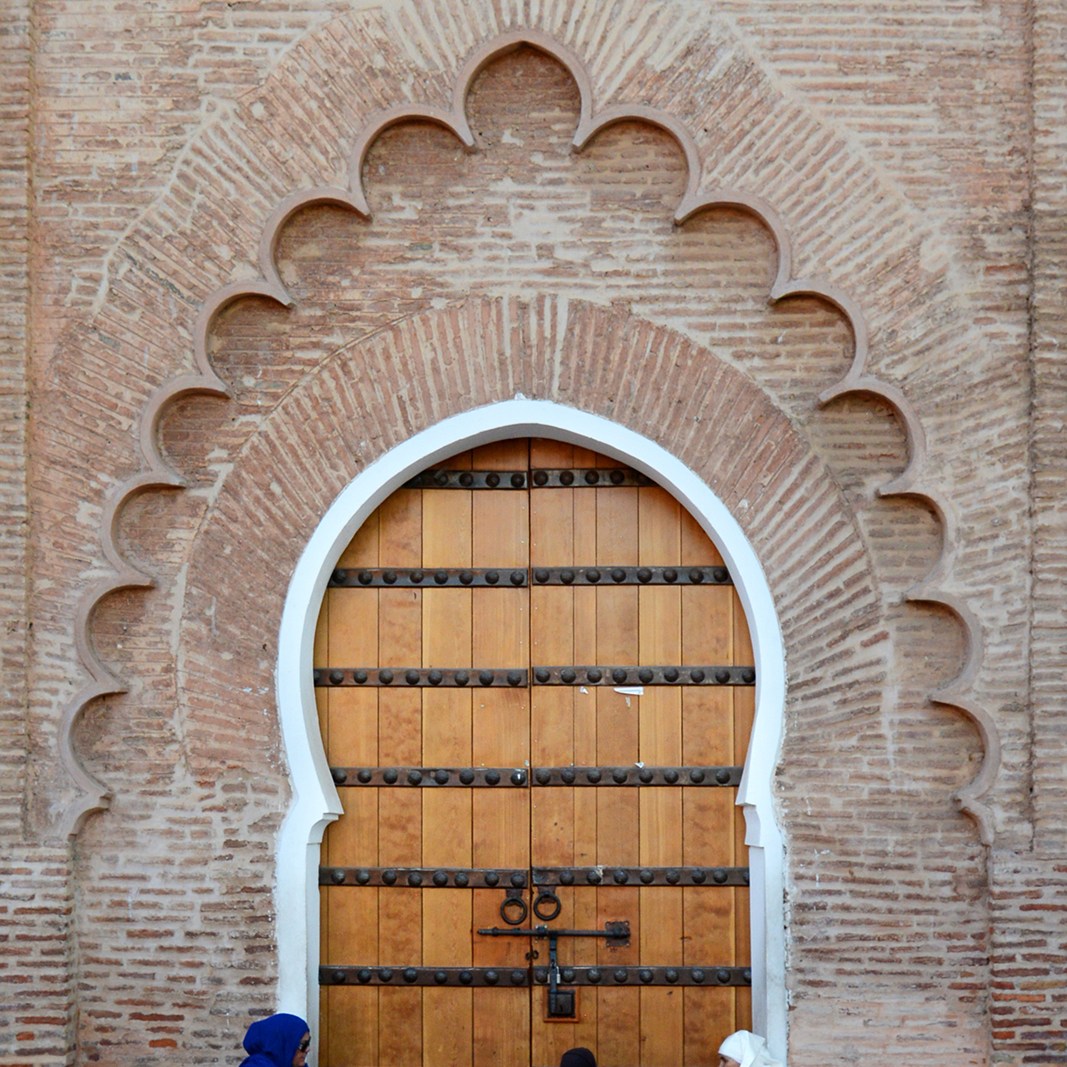
The day’s waning heat seemed to transfer its energy into dancing septuagenarians and their giggling grandchildren alike, as the scene soared into a joyous carnival. To the southwest, the Koutoubia Mosque watched on in quiet dignity, its 12th-century minaret standing as an emblem of Islamic achievement above the city’s palpitations. The square’s gravity pulled at us resolutely, but with an early departure the next morning, we headed reluctantly toward our lodgings, stopping first at the Al Barid ATM (recommended by Redone as having the lowest fees of the country’s banks) and then – alert for pickpockets, as my Moroccan colleague had cautioned – at a shop on nearby Passage Prince Roulay Rachid. Here we outfitted ourselves in djellabas, the region’s traditional outer garments whose linen construction is well-suited to the unforgiving heat of “the countryside” – as the city folk call it – we’d be visiting next.
THE ROAD OF A THOUSAND KASBAHS
Night brought profound sleep, and morning brought rooftop breakfast at immaculate Riad Copah. As the glow waxed in the eastern sky, Mahoumed, whose solicitous care made the quiet charm of this sanctuary all the more palpable, feted us with mint tea, poached eggs and traditional msemen pancakes drizzled with honey. We’d need all the fortitude we could get, as what awaited us on this day was encouraged by some local outfitters as “exciting!” while decried by others as “impossible!”
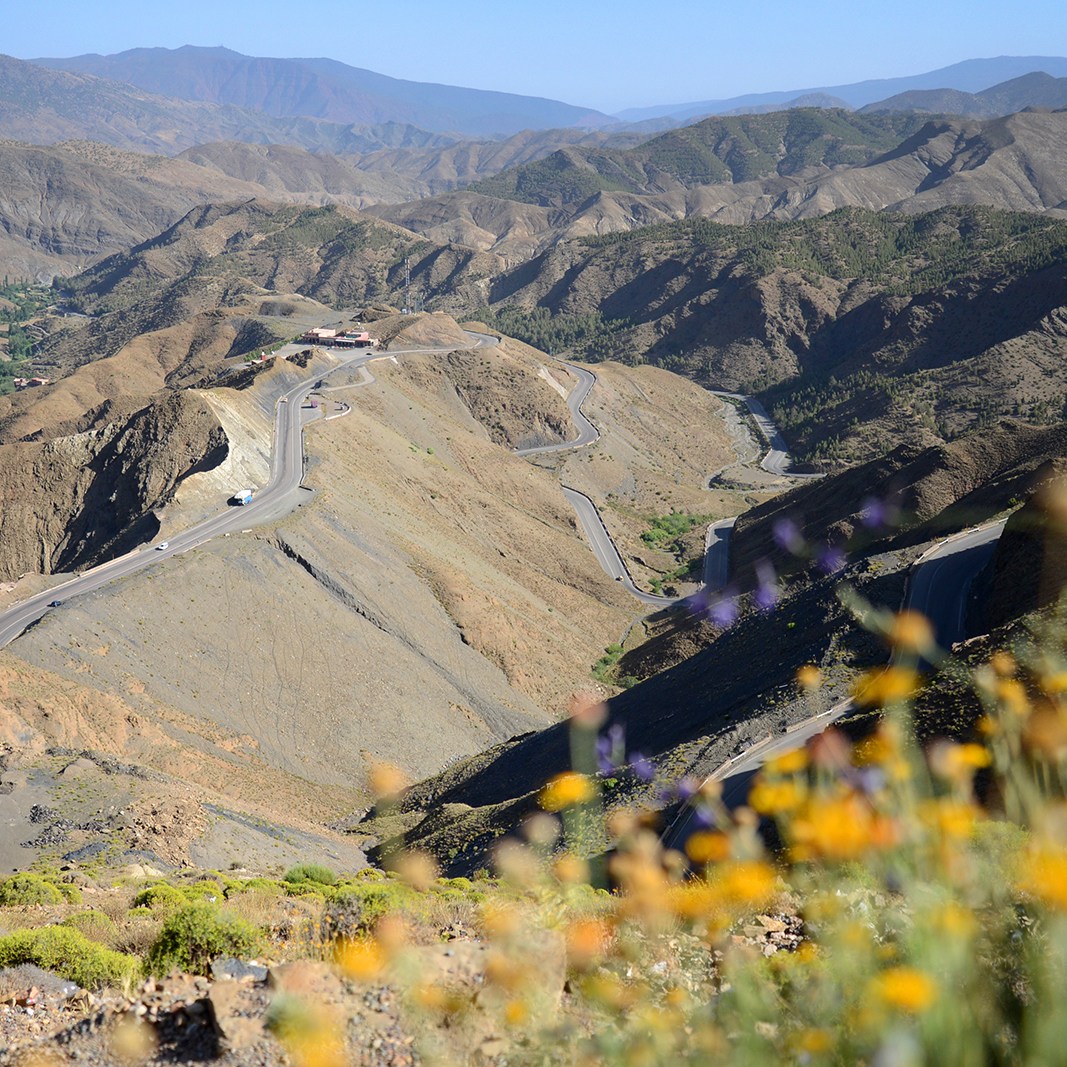
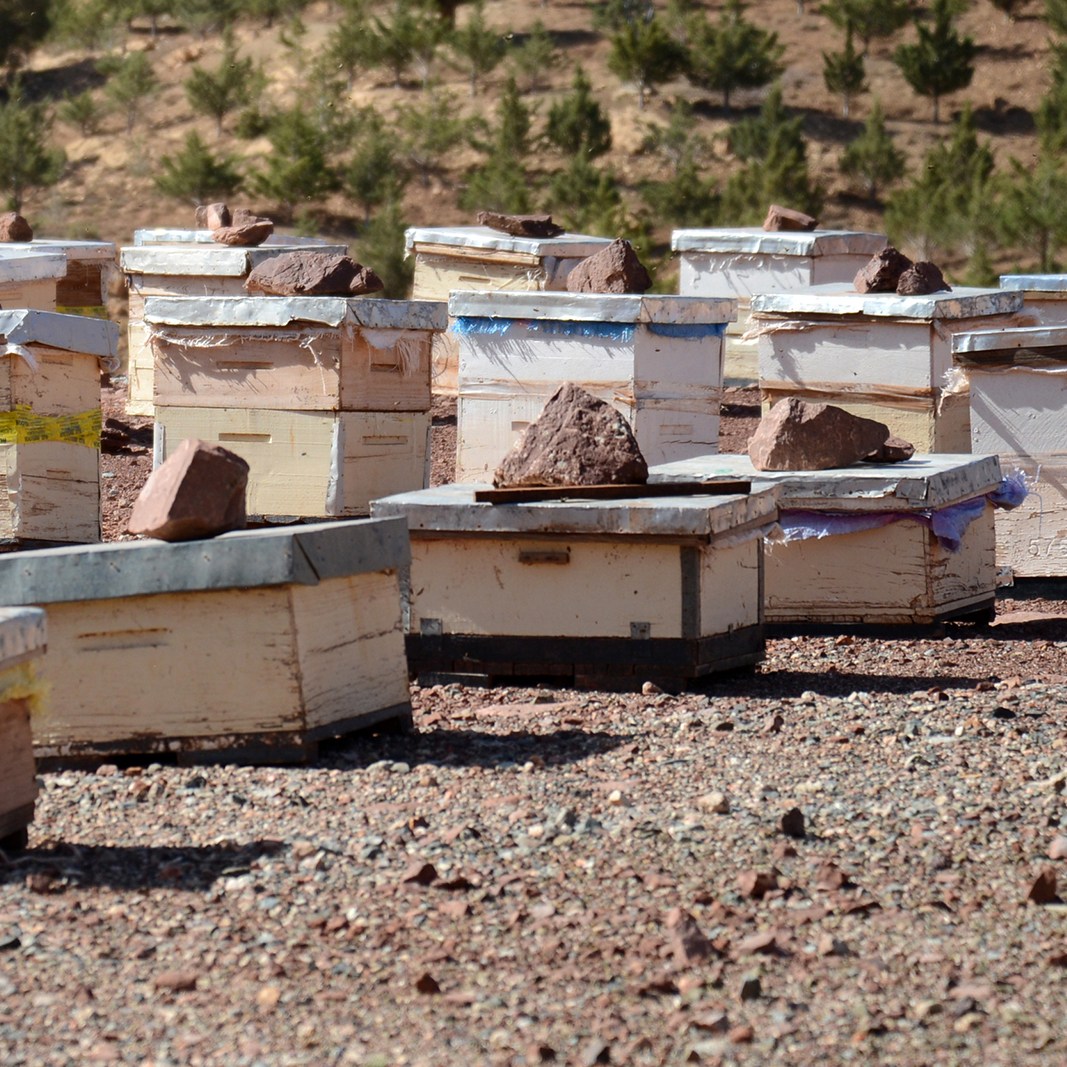
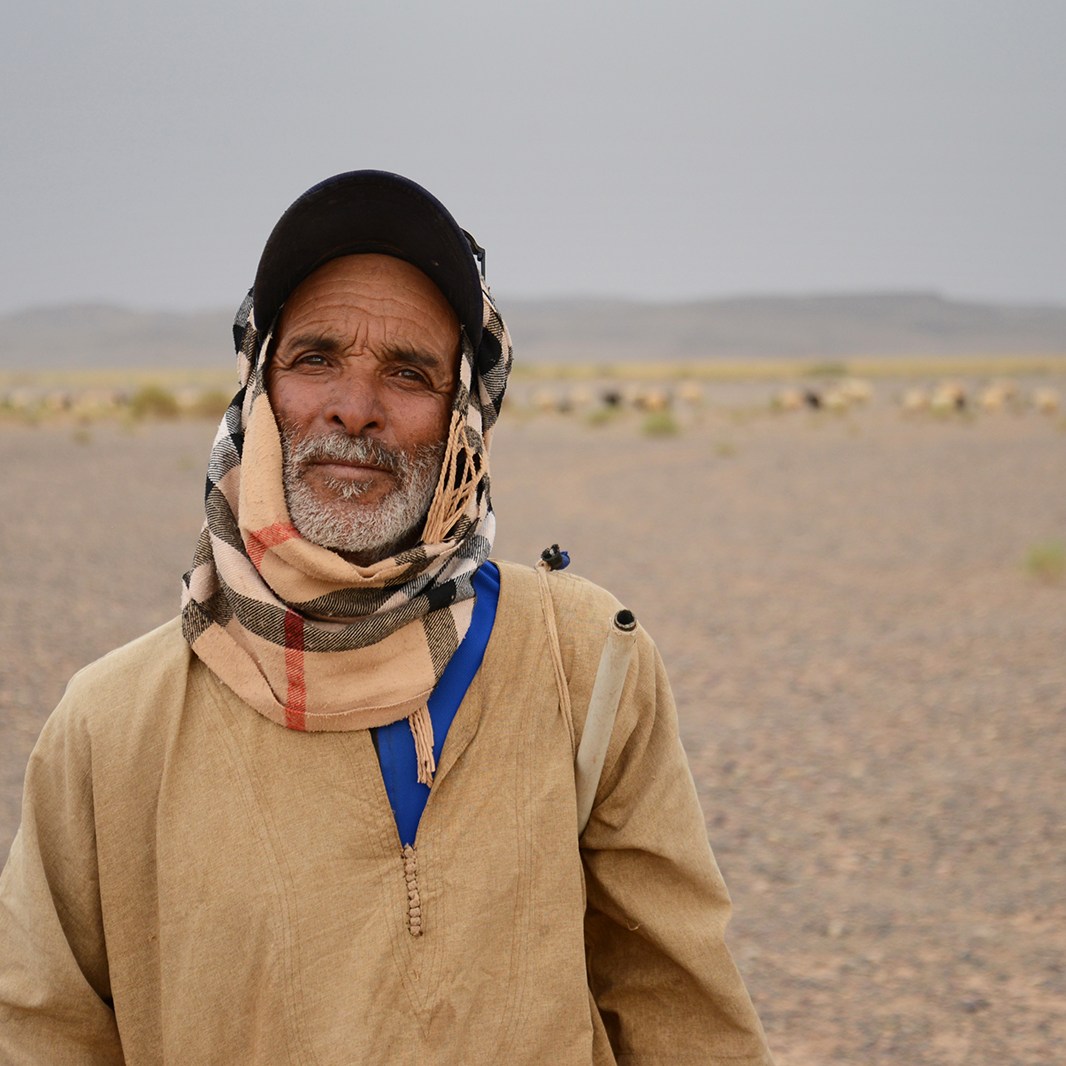
What awaited us was to drive the full length of The Road of a Thousand Kasbahs in a single day, a nine-hour trek excluding stops. This prospect made us further appreciate the pre-dawn punctuality of our driver, Achmed, who met us before the Medina stirred, swinging us away from Marrakesh’s plains and into the craggy expanse of the High Atlas Range. The Tizi n’Tichka pass sliced through mountains – the highest peak, Toubkal, reaches some 4,167 meters (just shy of 14,000 feet) – where snow still clung in late-summer shadows, the air cooler and cupped with silence broken only by the sunrise prayer calls that echoed from valley villages waking from their slumber. To this was soon added the clatter of donkey carts, as locals in their traditional dress of the Amazigh (as they call themselves, “Berber” being derived from the Roman designation “barbarian”) brought the earliest yields of the harvest to market. The region’s argan oil and saffron are coveted the world over, and local honey is sold beside stone-clamped beehives that battle fierce winds.
For the better part of two hours from the time we began our ascent until we neared our first stop, the topography was an ever-alternating series of ravines and thrusting ridgelines, flecked with goatherds tending their flocks. A minaret marked seemingly every hamlet of even a dozen dwelling places, some of these more recent structures colorful and lively, while many were of the rammed-earth construction found throughout this region and dating back centuries. There was the occasional schoolhouse wall muraled merrily with caricatures of students and teachers, while a couple of soccer pitches placed on patches of utter desolation coaxed me to imagine with a smile the unimaginable scene back on Jemaa El-Fnaa when Morocco upset Portugal to advance to the ‘22 World Cup semifinals.
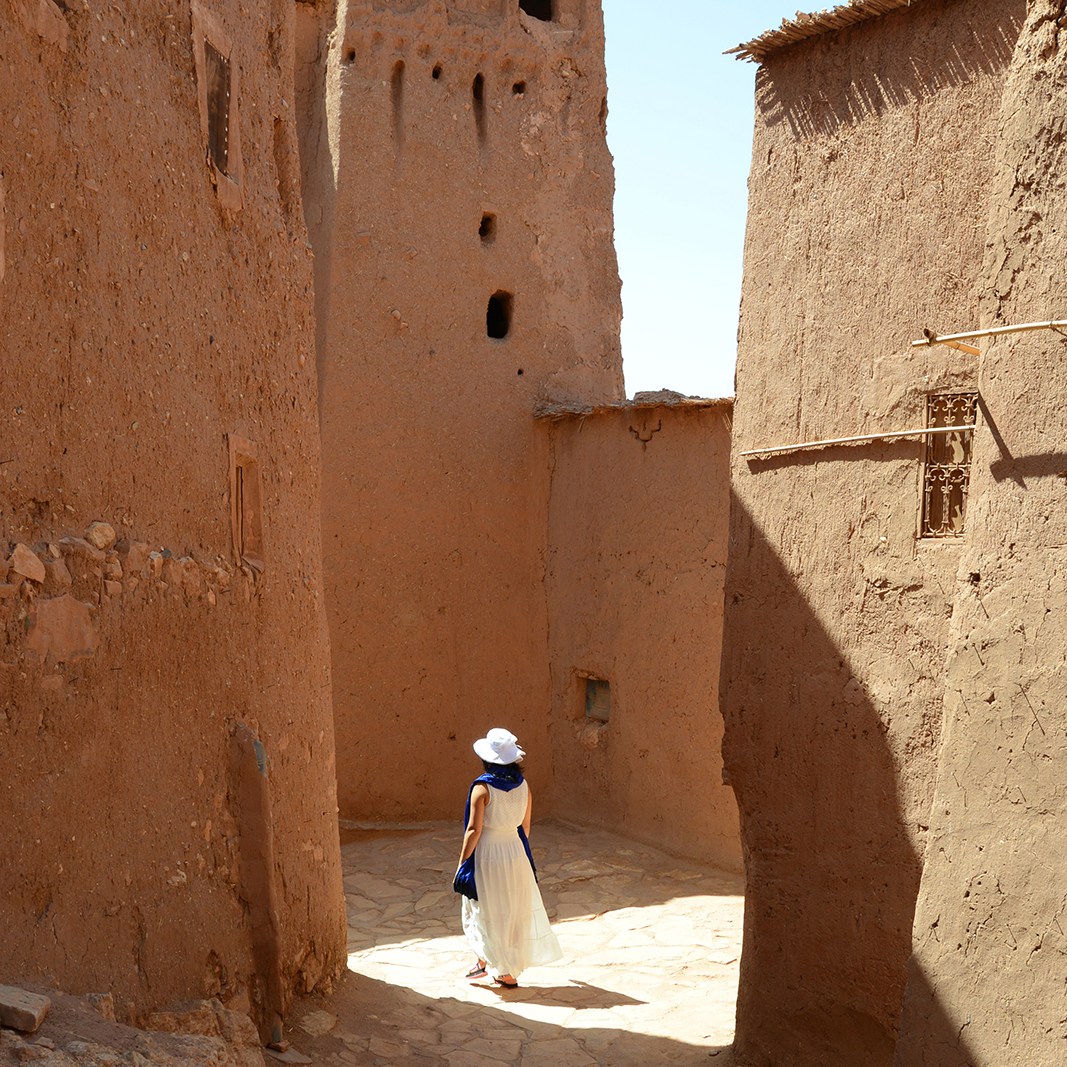
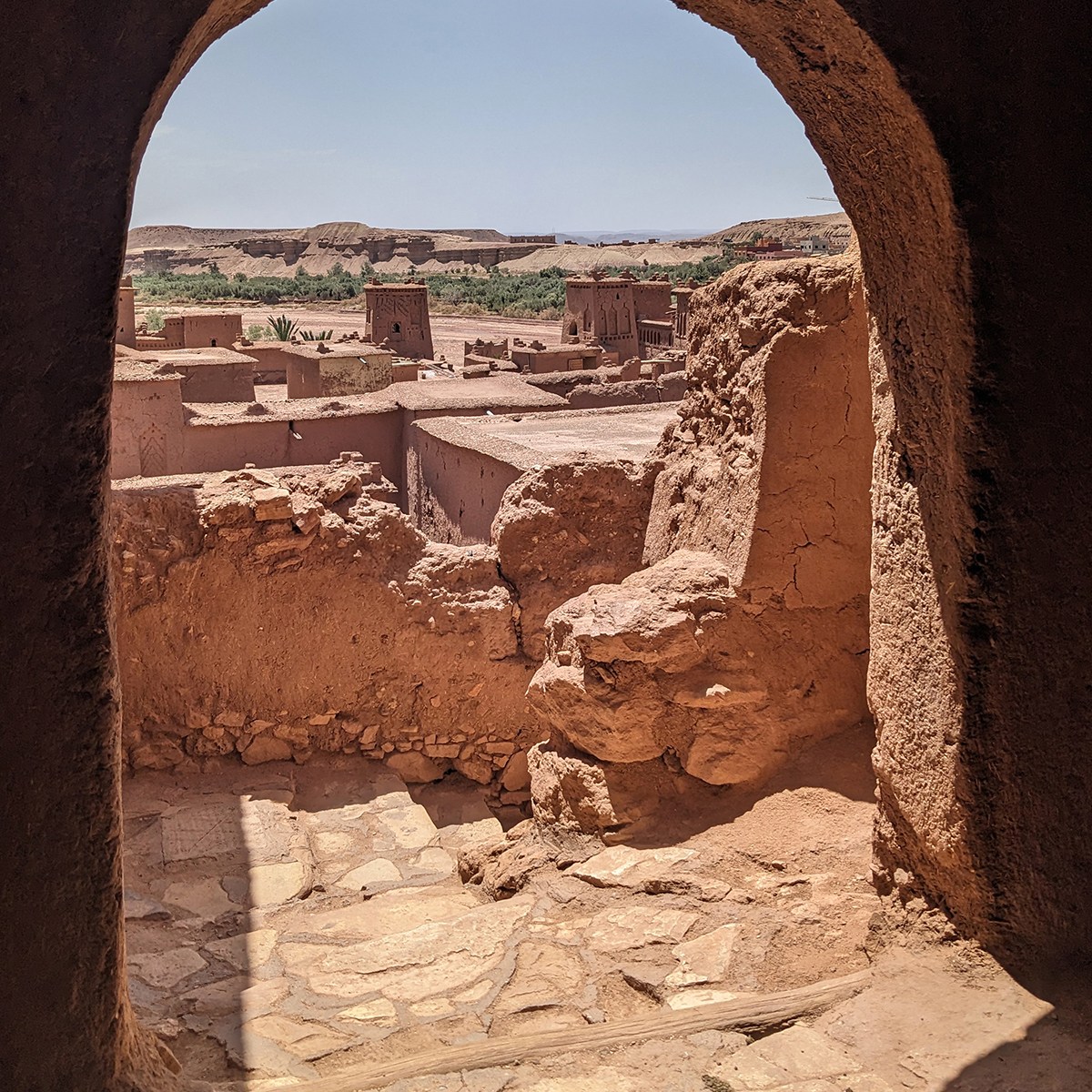
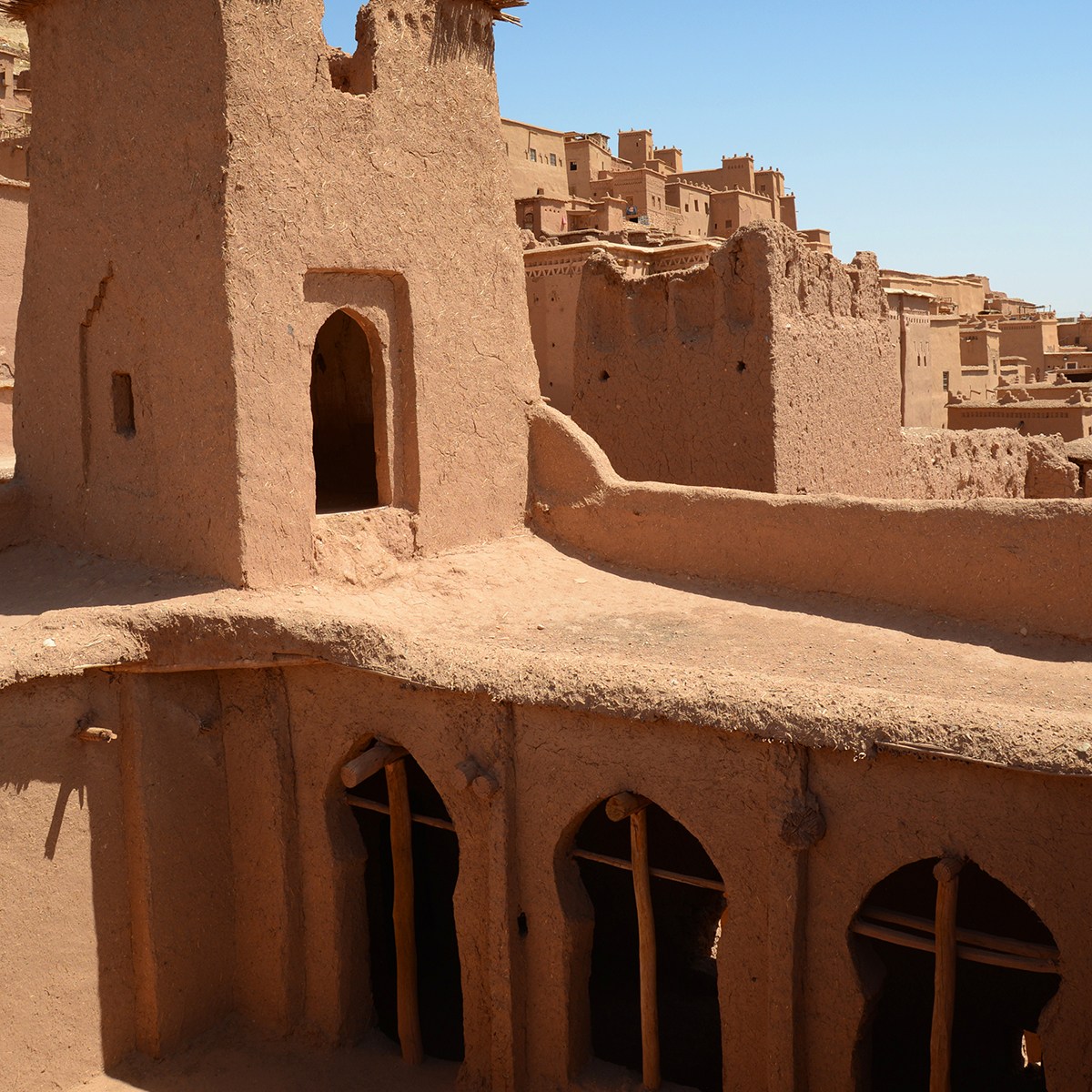
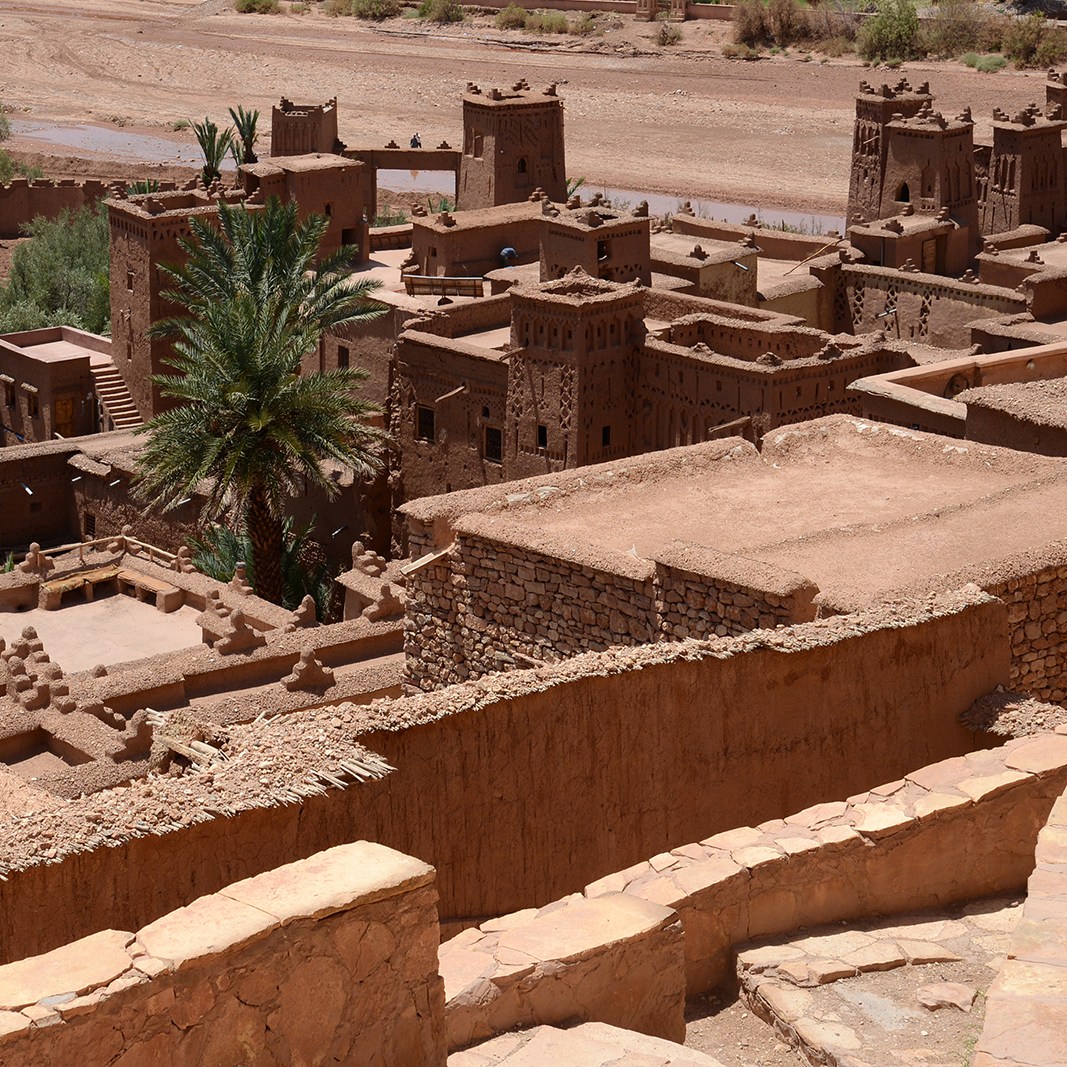
Perched on the Atlas’ southern slope, Aït Ben Haddou was for centuries a vital caravan stop and today is a captivating UNESCO site offering visitors an immersive experience steeped in regional culture. This ancient ksar (a fortified village of earthen buildings surrounded by protective walls and housing multiple kasbahs) dates back over a millennium, its stunning earthen architecture — with towering mudbrick walls and disorienting alleyways — offering a breathtaking glimpse into traditional Moroccan craftsmanship.
Beyond its heritage, Aït Ben Haddou has gained fame as a renowned film location for Lawrence of Arabia, Game of Thrones, Gladiator and others, but our enduring memory relies less on the silver screen than on silver itself. Working our way toward the agadir (a fortified granary on top of the hill), we accepted the invitation to step inside a shop, where Abdel, a third-generation smith of both silver and copper, showed us his handiwork and shared family tales threaded with resilience and faith. His U.S. student visa application had eluded for four consecutive years, but as he scrolled us through the U.S. Department of State e-mails on his phone, he repeated quietly, “God opens doors, bismillah,” giving my boys in twenty minutes a life-long lesson about heritage, craftsmanship, hope and tenacity. Nearby, Abdel’s neighbor Hassoun unlocked a narrow, dust-laden cave he wryly called “Aladdin’s Treasure Closet,” crammed with tribal masks, rusted rifles, and Jewish artifacts, echoing the ksar’s historical role in continental trade and conflict, in addition to serving as a Sephardic refuge during the Spanish Inquisition. I’m no antiquarian but have seen heaps of tourist-targeting knockoffs around the world, and this trove struck me as either authentics or superb fakes.
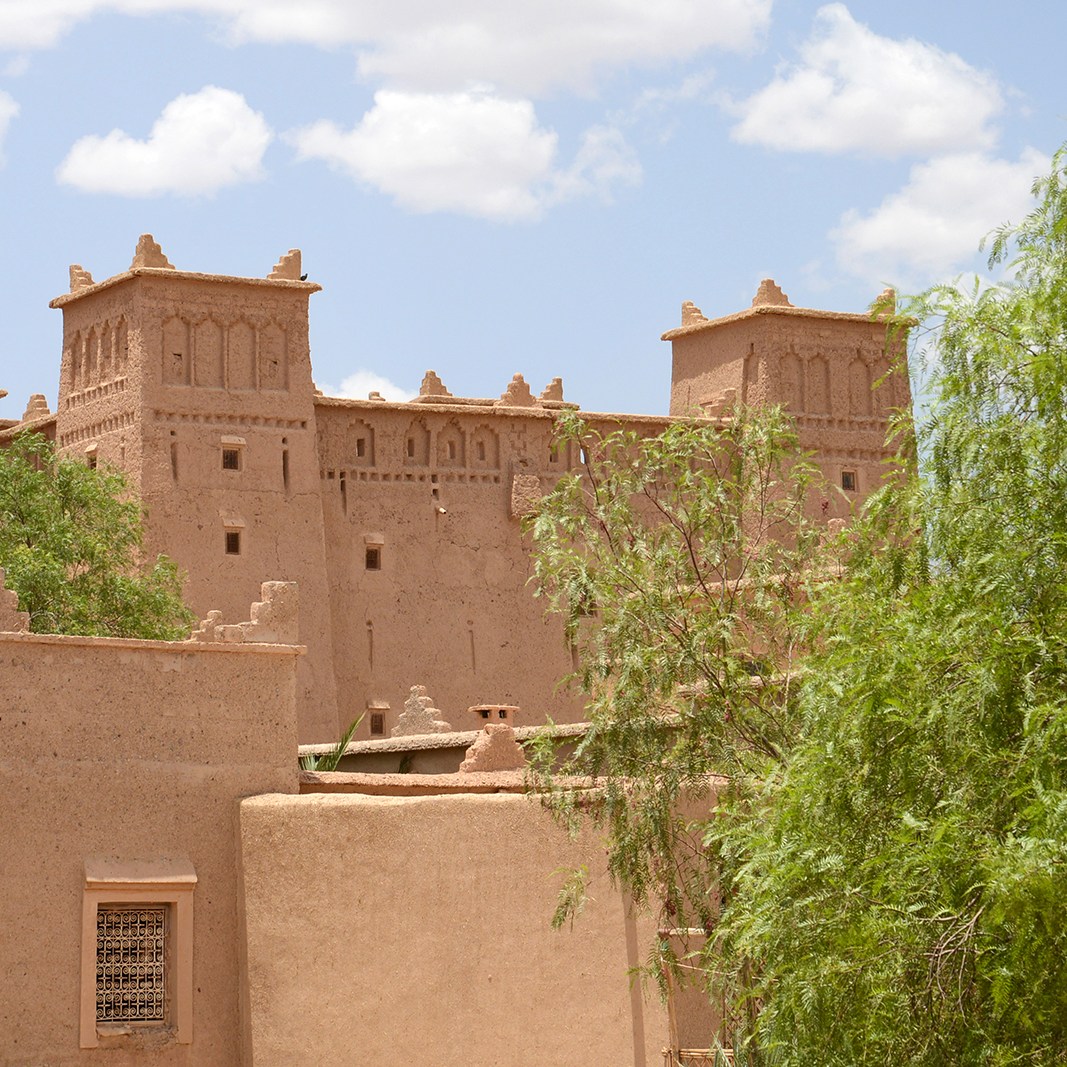
On the western outskirts of Ouarzazate sat Atlas Studios, embodying Morocco’s cinematic allure. One of Africa’s largest film studios, behind its towering gates were dusty props and set remnants from movies such as those named above as well as The Mummy, The Passion of the Christ, The Jewel of the Nile and even Asterix and Obelix: Mission Cleopatra. In the center of town was Kasbah Taourirt, the ancestral residence of the powerful Glaoui family, who controlled trade routes between Marrakech, the Ounila Valley and the Sahara. The intricate design of and within its walls whispered of both defense and dynasty, with about 300 rooms connected by narrow passageways, elaborate plasterwork, painted stucco and mosaics.
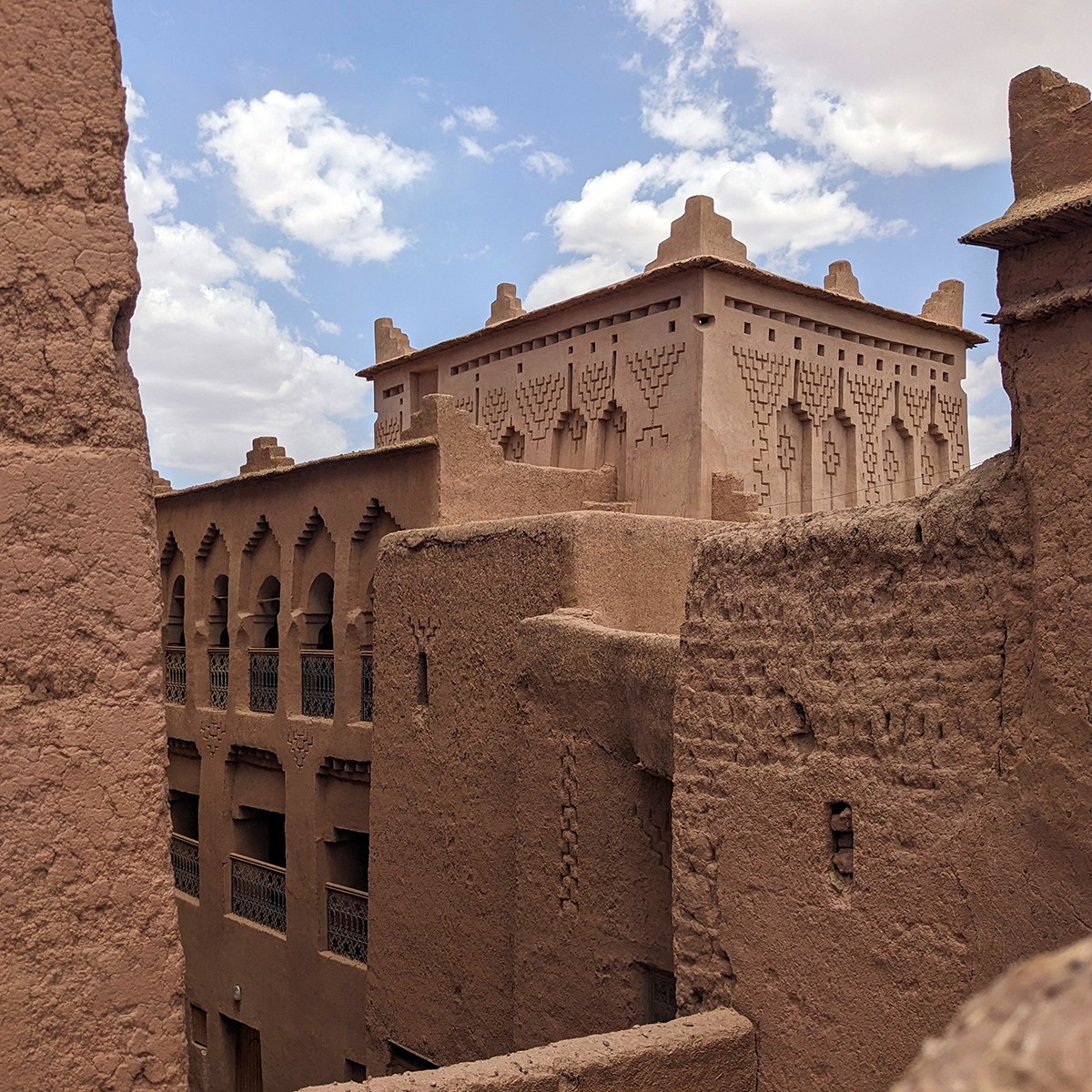
Continuing eastward, the Skoura Oasis stretched beside us, palms swaying across the lush valley that extended more than 15 kilometers and cradled dozens of kasbahs. At Kasbah Amridil, fortified in the 17th century and lovingly restored, the mudbrick walls replete with decorative Amazigh motifs seemed to pulse with stories of scholarly families, robust tribes, and a Morocco resilient to the rise and fall of empires and the shaking of the earth, including the 6.8 quake that devastated this region in 2023.
Though we had missed the fragrant spring harvest in Kelaat M’Gouna (the Valley of Roses), rich images were not difficult to conjure: women handpicking oil-dense damask petals at dawn, their nimble fingers collecting aromas that perfume soaps, lotions, and the rose festival held here each May. A short detour north from the eastward route revealed the serpentine Dadès Valley Switchbacks, a short but spectacular ascent known for its unnerving hairpin turns. As the Dadès Gorges unfolded, their walls rising 200 to 500 meters like the sculpted shoulders of giants, a surreal palette of reds and ochres framed the river that carved its slow, determined course. It was a landscape both raw and cultivated, with trails inviting hikers and dreamers alike.
In Douar Ait M’ghar and other towns along this section of the route, clustered kasbahs bore the marks of daily life in a tight intermingling of tradition with necessity: a laundry line strung between two mighty towers, a Western Union sign affixed near a doorway, an auto mechanics’ workshop shored into mudwalls. As with crystalline waterfalls on Norway’s west coast or powdered-sugary beaches in the Andaman Sea, one might reasonably wonder, “Don’t you get the gist of the Route by, say, kasbah 634?” No sooner had a similar thought tempted my mind than the cresting road turned to reveal a brilliant emerald in our path, and I gasped.
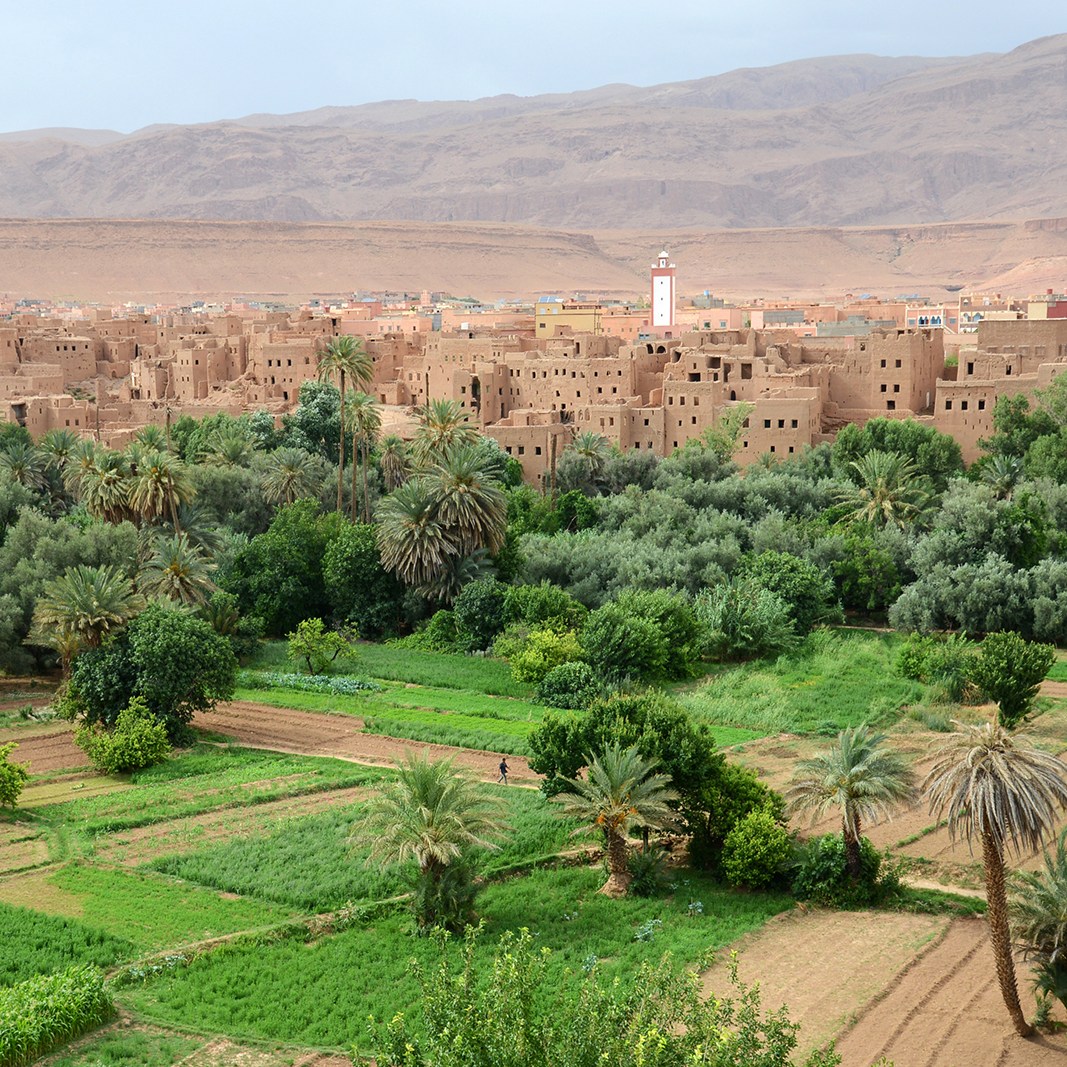
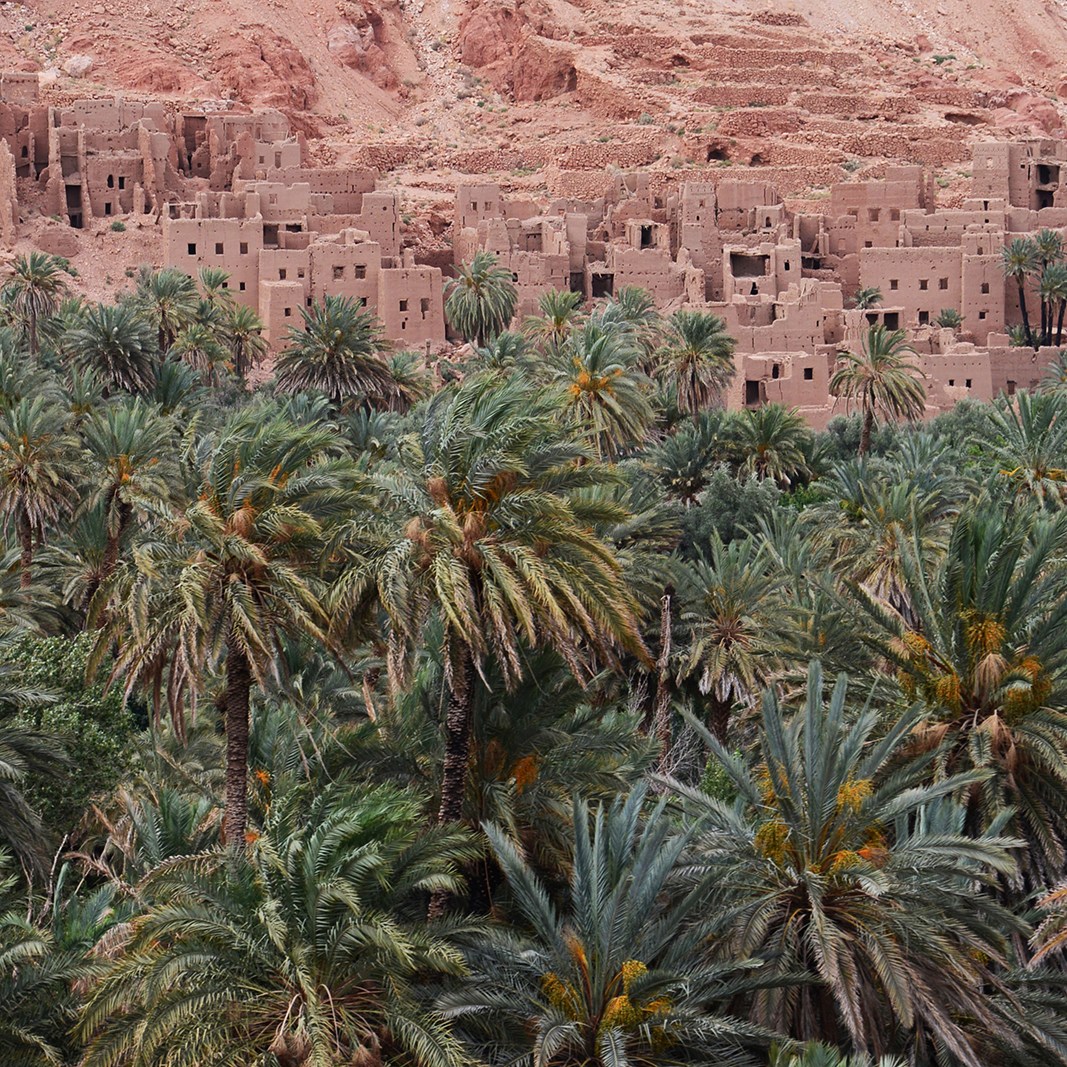
This emerald was Tinghir, comprising a lush river valley some twenty kilometers long and a city serving as the jewel’s foil along either side. The demarcation between nature and civilization could not have been more abrupt than where verdant palm groves collided with the dusty foundations of proliferated ksours (plural for ksar) crowding the valley’s perimeter in an exhibit of high-density housing surviving from antiquity. These reminders of polygamous patriarchs and ancient family legacies added yet another layer of enchantment to our journey.
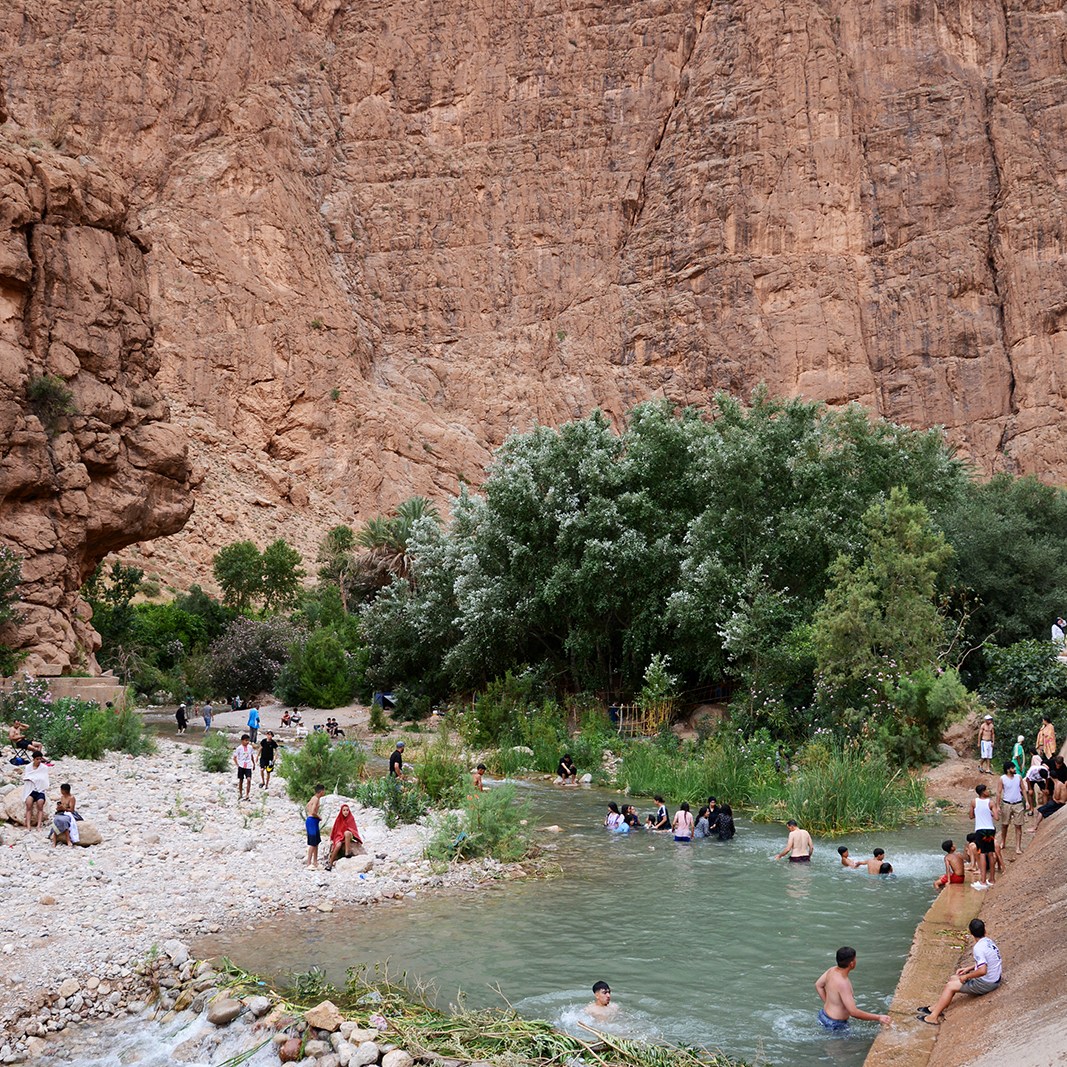
Another short detour brought us to Todra Gorge, where massive 300-meter cliffs soared above a sparkling swimming hole. We watched women take tea in delicate lace hijabs, witnessed a wedding celebration punctuated by thundering tam tams, and felt the vitality of a community deeply connected to its mountains and its river. Over millennia, the Todra River carved its Gorge with powerful volumes of water. Today, its often shallow stream nurtures oases and cradles life of flora and fauna alike, yet, as a recent National Geographic study emphasized, even the ingenious irrigation techniques employed across generations in this arid land are struggling to adapt to the increasing scarcity of both surface and groundwater.
Surprisingly and dishearteningly (the rest of what we’d seen of Morocco was generally pristine), the eastern outskirts of Tinghir were strewn with garbage – a twisted bicycle frame here, the rusty carcass of a refrigerator there – which was both a stark reminder of modern challenges and a sign that this final third of our drive would be perhaps the least scenic. Yet it was not without excitement. No sooner had a cluster of plastic bags swirling in a dust devil appeared through the window to our right, than Achmed pointed toward the horizon ahead and said, without fanfare, “Sandstorm.” He slowed our pace to a crawl and within a minute we were enshrouded in a cloudy glow right out of Hollywood – or Atlas.
I thought this an appropriate opportunity to introduce our driver to “Rock the Casbah,” by British punk-rockers The Clash. He nodded along with a smile, and after a few rounds of the chorus was hum-singing along, “…roque ze kasbah, roque ze kasbah…” It may also be an appropriate opportunity, as we near our tally of one thousand of them, to explain to you what exactly a “kasbah” is. Common to several North African countries, kasbahs (which translates most directly into English as “fortress”) are fortified citadels built from mudbrick, clay and stone to protect communities and trade routes while housing rulers and their families, their high walls, corner towers and shaded alleys balancing defense with desert cooling. Historically, kasbahs anchored political power and caravan trade, blending Amazigh resilience with Islamic artistry; today, they embody the region’s architectural ingenuity and cultural legacy, as we’d come to better appreciate on our (paused) drive.
Once the sandstorm released us, the surrounding world felt renewed yet altered, returned in a sense to its raw, primitive form, our surroundings more monochromatic both inherently and due to the late hour. Aside from our car and the road that led it into the desert dusk, the only evidence of man out here came in the form of signs marking numerous fossil quarries, where creatures from epochs before the dawn of man lay entombed beneath sun-bleached sands, reminding us that this was a land of deepest time.
THE SAHARA
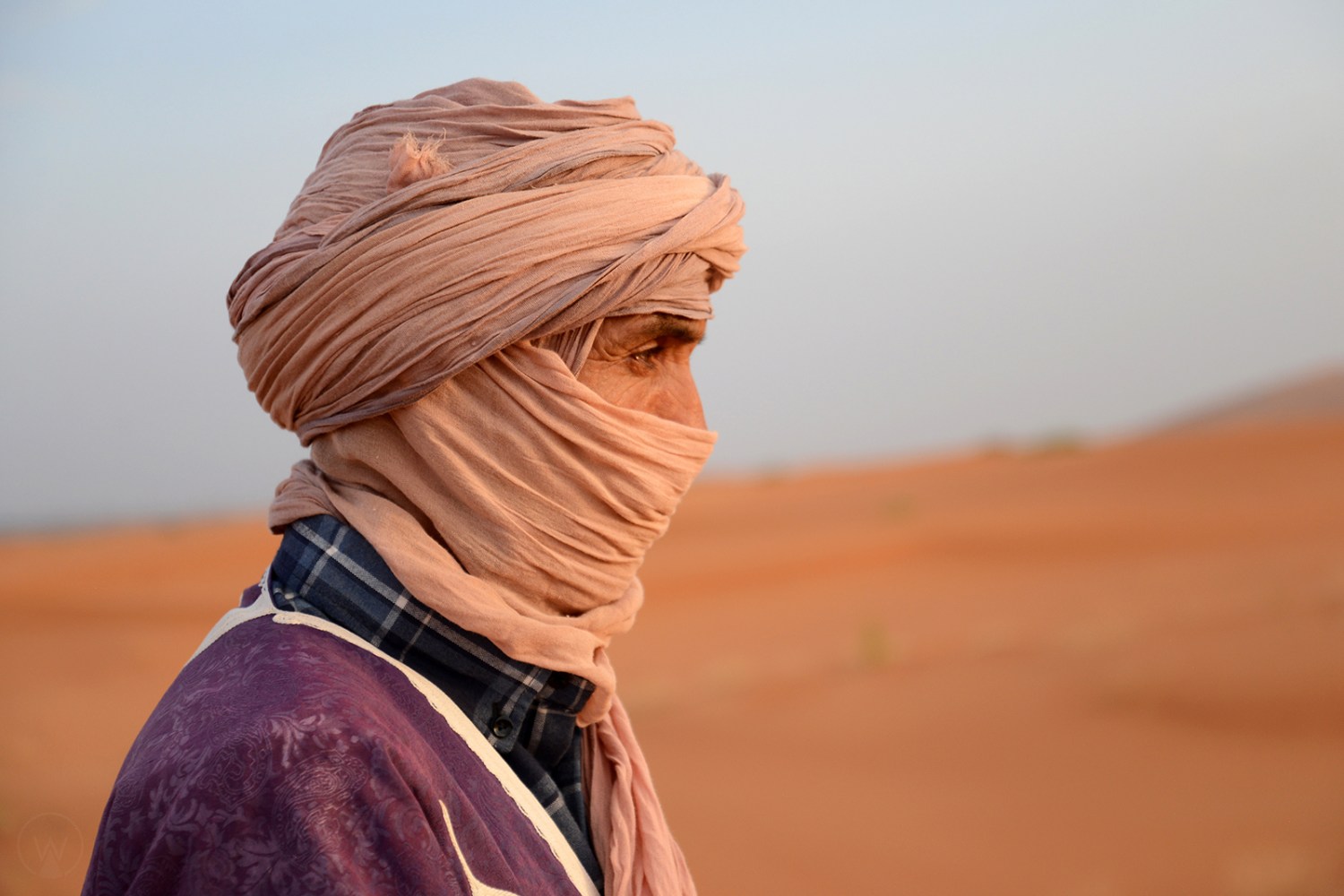
Night fell and a 4×4 spirited us from Merzouga on an unknowable path toward our lodgings at Palmyra Camp, one of several such oases pitched on Erg Chebbi. This “erg” (vast seas of wind-blown sand dunes that form part of the Sahara) is not so deep into the desert that we risked crossing paths with Sir Lawrence’s Aqaba-bound camel cavalry – indeed, Chebbi’s remote sibling to the southwest, Erg Chigaga, is less trafficked due to its near-impossible remoteness deeper into the Sahara – but it is the Sahara nonetheless: Just ask the Merzougans, on whom these dunes encroach at a pace of between tens and hundreds of meters per year.
Tagine was of course the centerpiece of the two dinners we’d enjoy here, the second of which prompted one of my boys to exclaim dreamily, “I’ve never, ever had vegetables this gooooood.” Dreams came hard and fast beneath a bedazzled sky, our tents cooled mercifully by A/C, an acceptable disruption to the desert’s quieter charms.
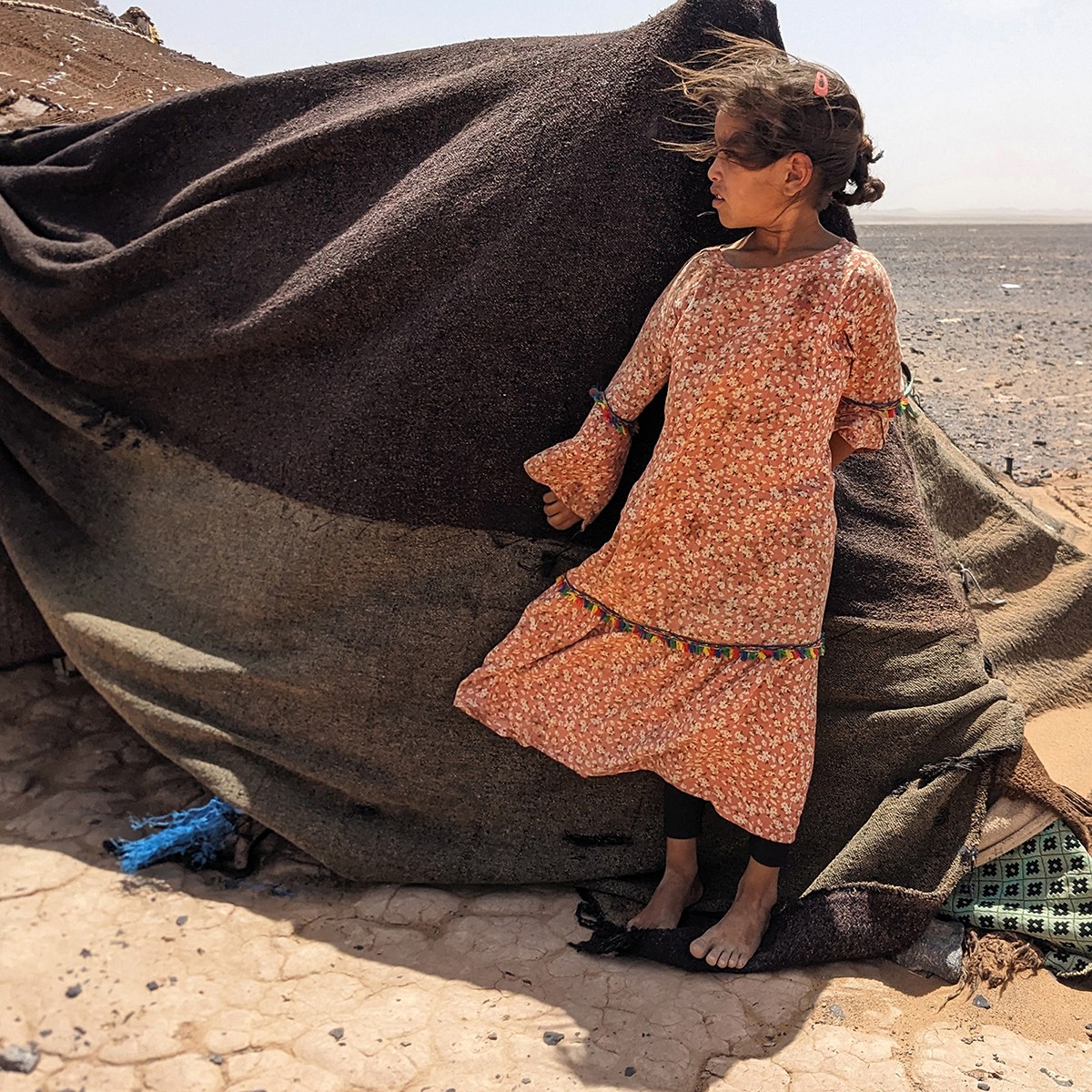
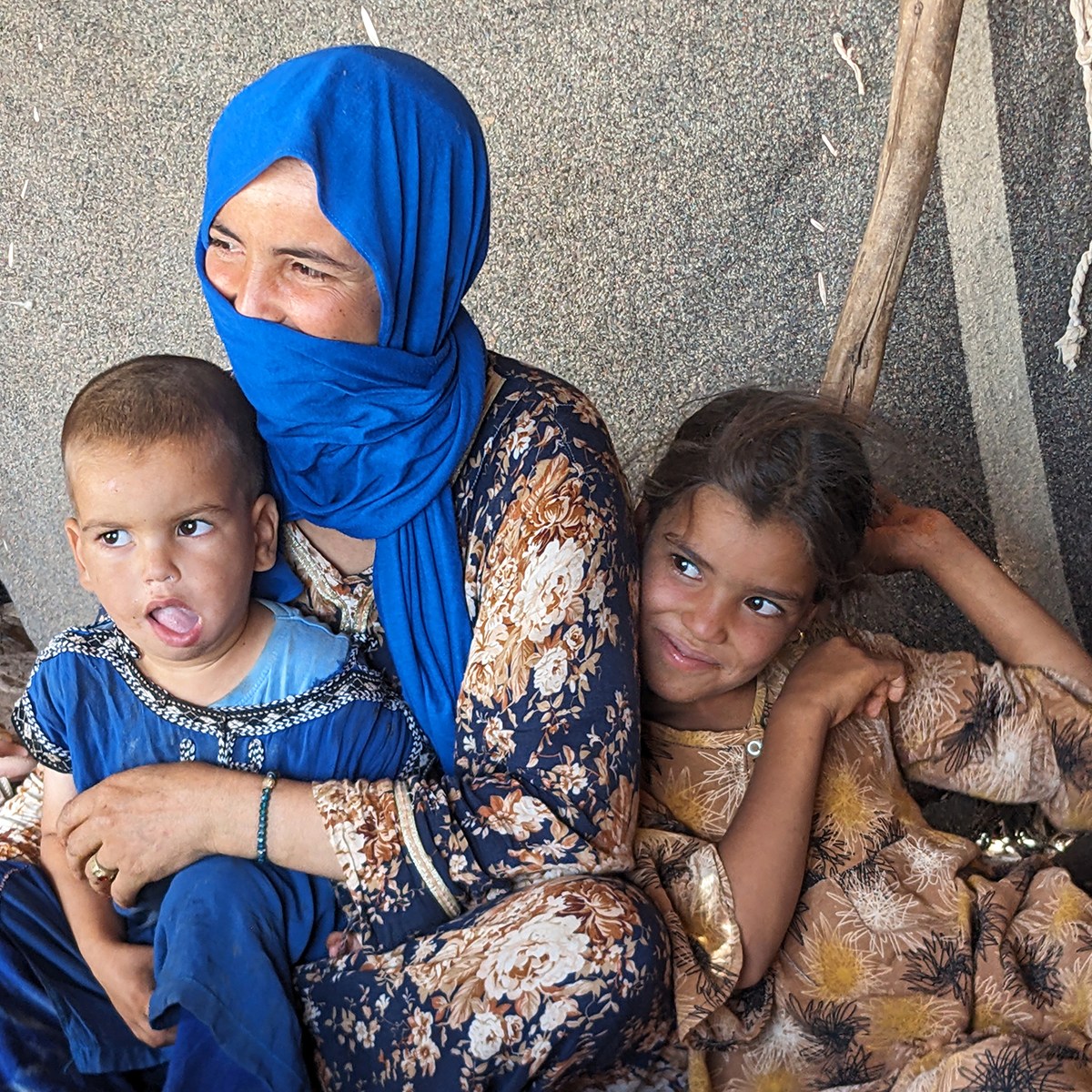
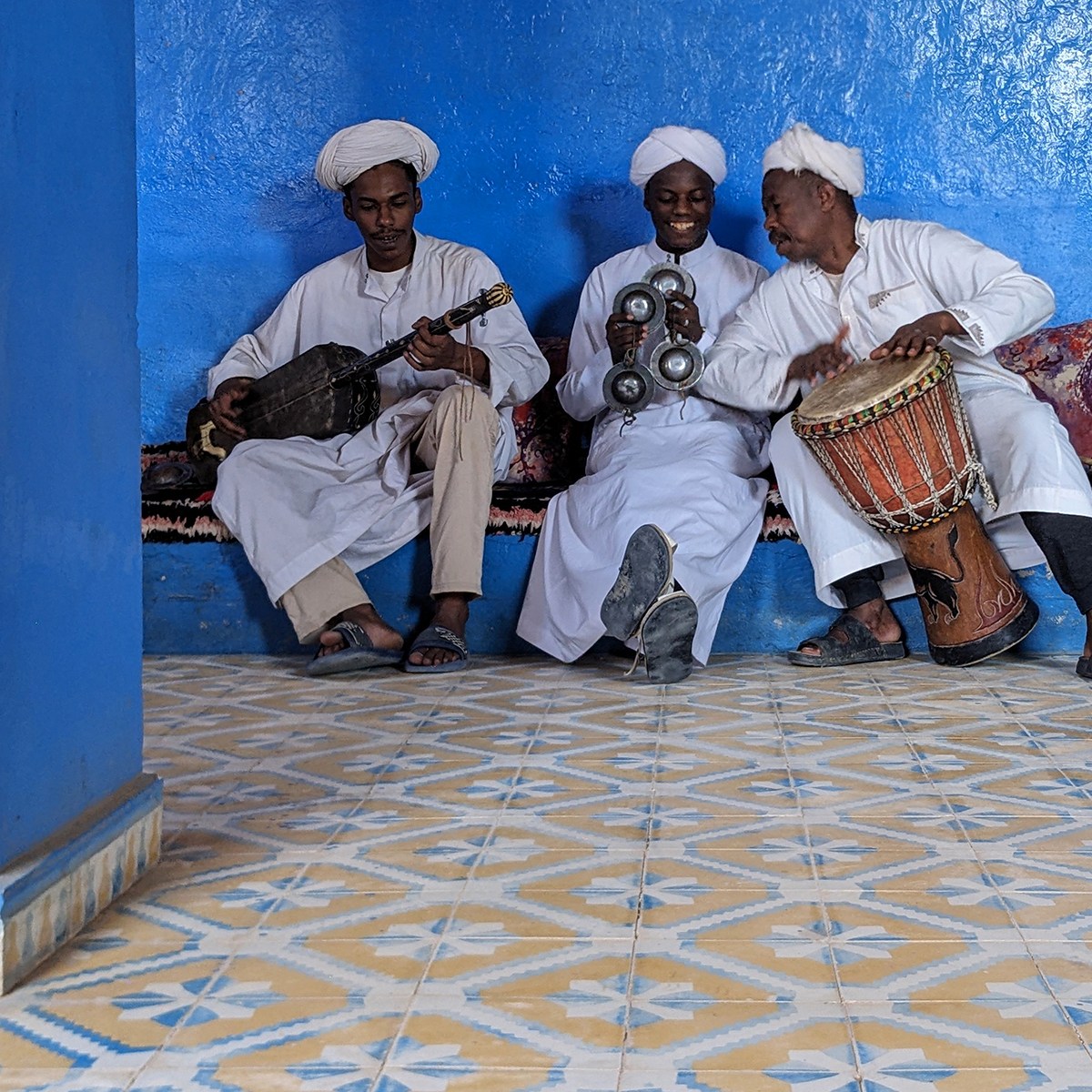
Less quiet was our ride on quads across the dunes, the irreverent roar of engines replacing the solemnity of millennia-old sands while glimpses of the Algerian border just a few kilometers to the east appeared intermittently among the wave-like crests. Yet, it was laughter and exhilaration shared with my boys, rites of passage perhaps just as vital. Our time here passed in a balance of thrills and reflections. We took tea with a nomadic family, their home one of a couple dozen tents spread across Dayet Srji, an ancient lakebed strewn with meteorite pebble too hot for our hands to touch but on which their radiant children walked barefoot. We visited one of those beckoning fossil quarries and, after brief yet obligatory negotiation, took home some silent stories of life before time. The hypnotic rhythms of a private Gnaoua music performance in the village of Khamlia wove a connective thread to North Africa’s rich spiritual heritage.
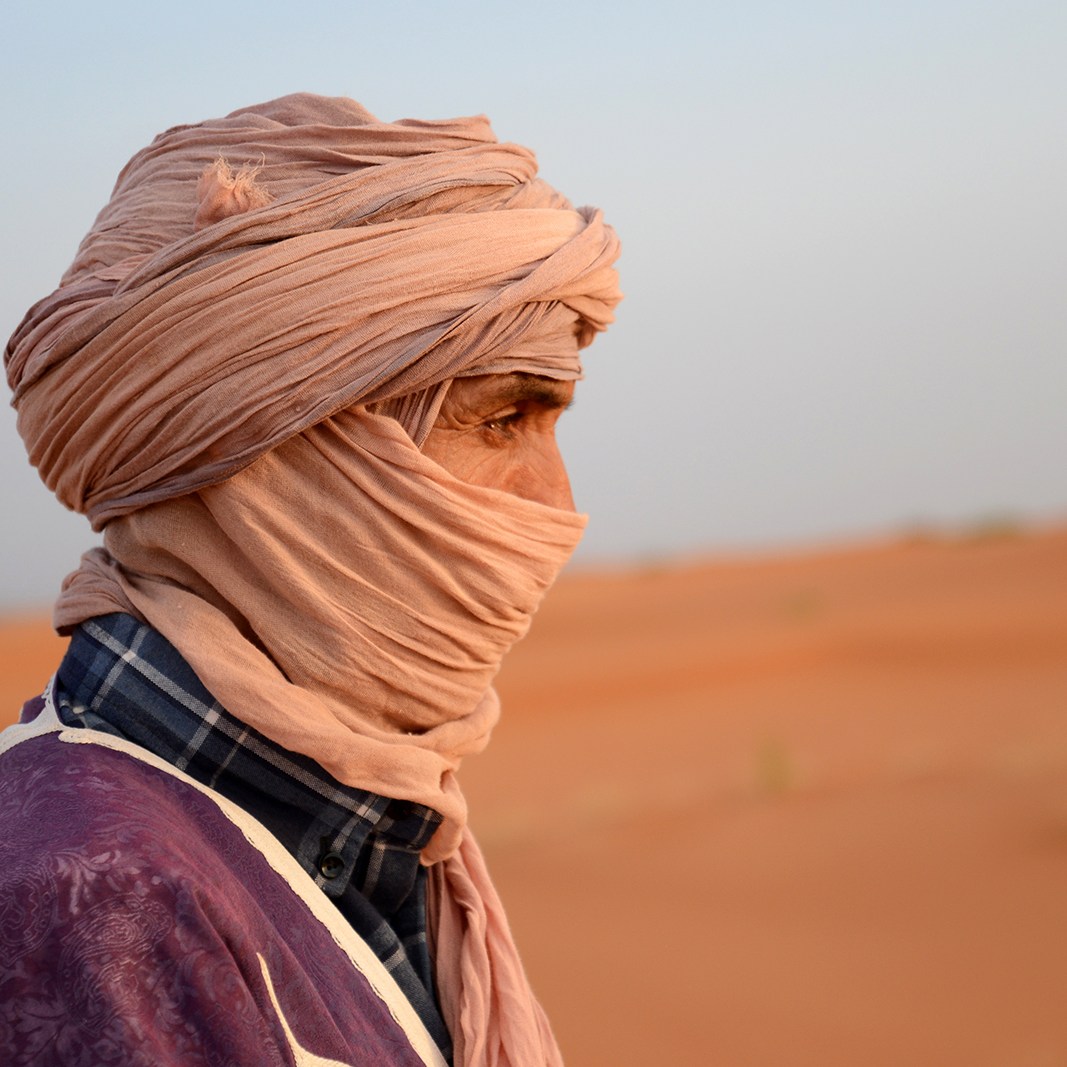
Our visit culminated serenely with a camel ride at sunset. The dunes shimmered a golden rose as the sun dipped in the west, and the desert’s vast silence swathed us: my boys, me, and Brahim, our guide from the Aït Khbach tribe. The quiet of my usually-talkative teens told me that they, like me, were giving in to the soft sway of the animals beneath and Brahim’s meditative steps ahead, stirring in us further reverence for a place we had so thoroughly reveled in.
Along this mythical yet assuredly real route, Morocco revealed itself not as a collection of sights but as a mosaic of stories, flavors and echoes — half-wild and half-domesticated, new and ancient, and, above all, profoundly alive. Travelers curious to cross the Mediterranean divide will experience here a masterclass in legendary Arab hospitality and a warm sample of Africa’s rich embrace, one humming with history, humanity, and the enduring spirit of the Amazigh heartland.
QUESTIONS FOR READERS
- Have you ever traveled a route that revealed a nation’s soul as vividly as this one traces Morocco’s from Marrakesh to the Sahara?
- How do you find balance between immersion and observation when traveling through places where history feels palpably alive?
- In which area along The Road of a Thousand Kasbahs would you most want to linger in: the mountain stillness of Tizi n’Tichka, the silver bustle of Aït Ben Haddou, or the silence of the Sahara dunes?
- Which sensory memory — the scent of saffron, the call to prayer through canyon air, or the glint of hammered silver in a ksar — would stay with you longest?
 WANDERLOOSED