







Note: This is the fifth in a series of posts about Italy’s Adriatic Coast. The itinerary begins here.
As we near the northern bend of the Adriatic, a splendid quartet of towns unfolds along the road, each one focusing a different lens on Italy’s long story of faith, art, struggle and endurance: In Loreto, devotion anchors the hilltop; Renaissance elegance lives on in Urbino; Rimini sets Roman grandeur against seaside merriment; and Ravenna’s mosaics still dazzle after fourteen centuries. Together, they trace a journey both intimate and immense.
LORETO
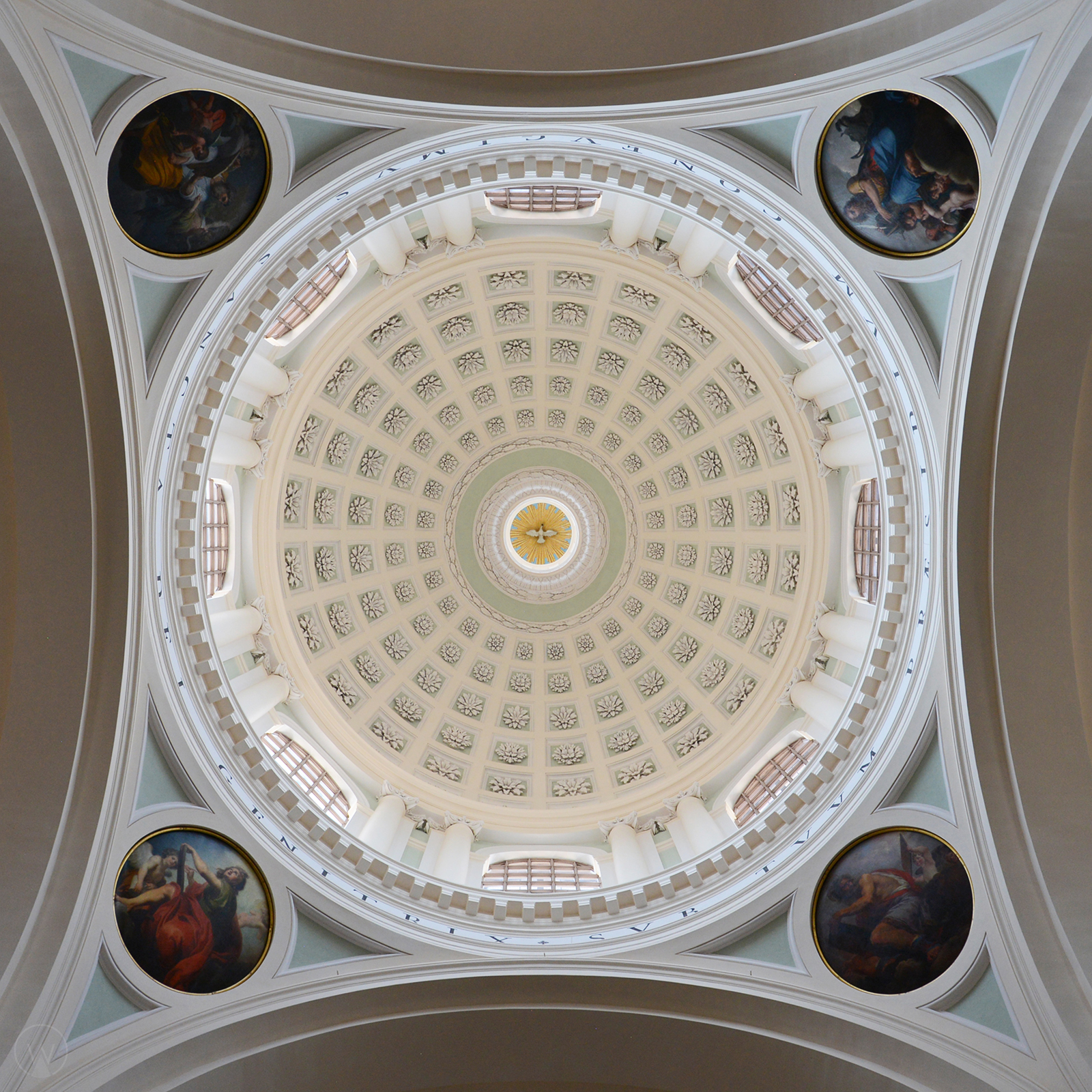
My interest in Loreto was piqued many years ago when I stumbled upon a copper engraving of “The Hilltop Town of Loreto,” tucked inconspicuously into a corner of a quiet wing of whatever museum I was in. I remember nothing else from the exhibit, but I do remember the engraving: a hilltop covered in pleasantly unremarkable buildings, yet in the center, a dome so massive it seemed to dominate the terrain like an occupying alien craft. Even knowing nothing about Loreto beyond that image, I told myself then that I would one day see it in person, though, like so many promises made to ourselves, I had no sense of when. Decades later, this Adriatic itinerary provided the opportunity.
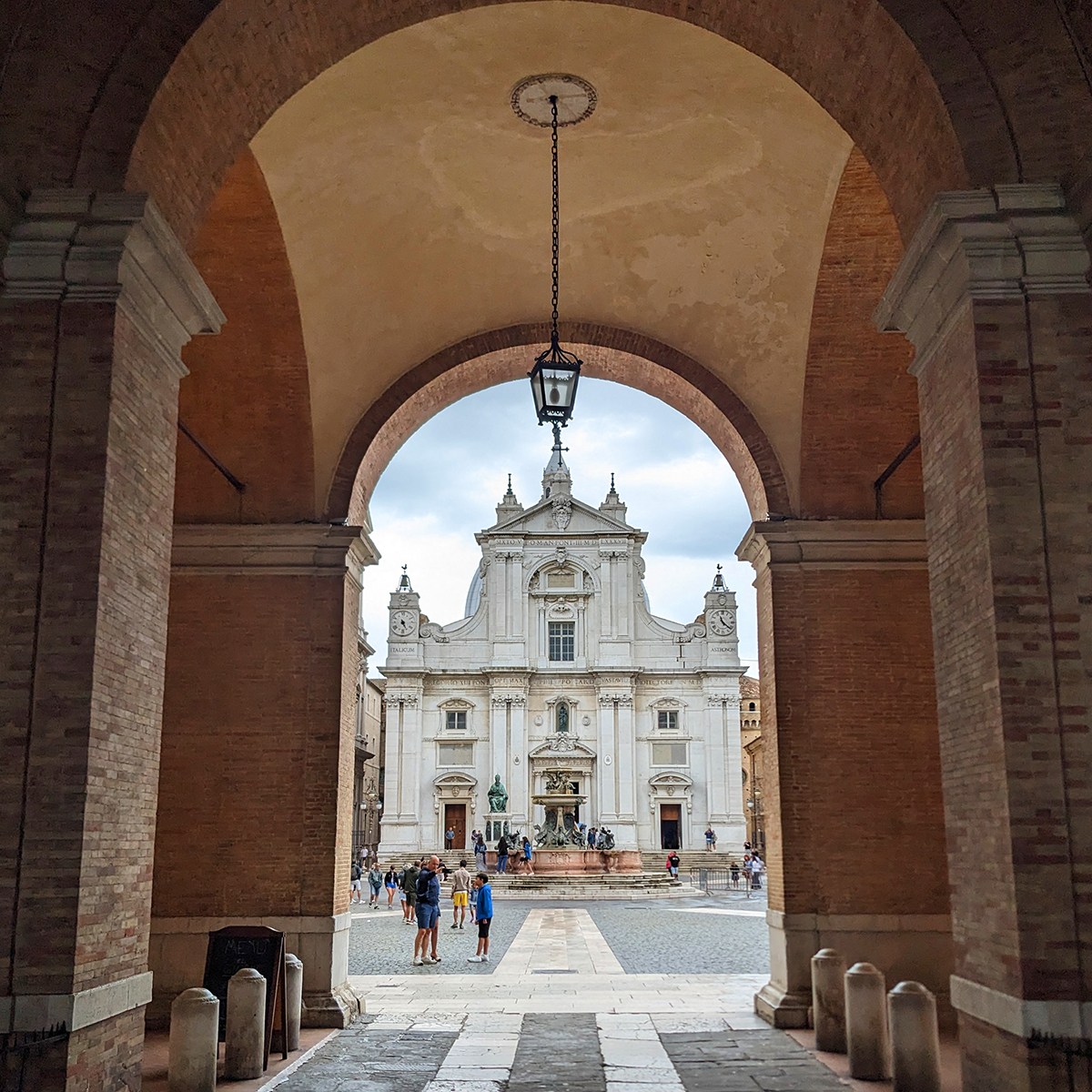
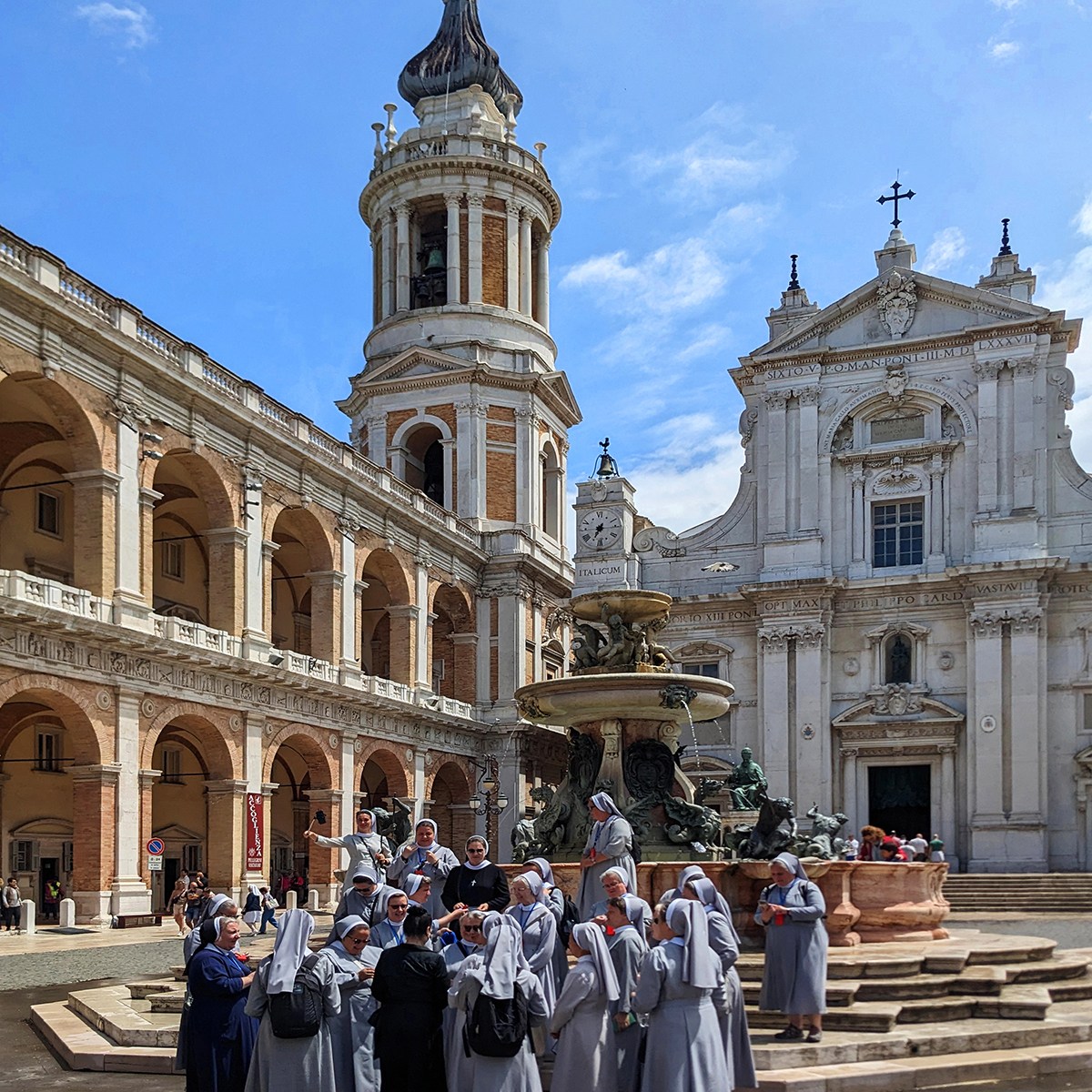
Within minutes of leaving our lodging in Potenza Picena, we parked in the long morning shadow of Loreto’s hill, and the city appeared to us at first like so many towns of the Marche: perched on a crest, its walls punctuated by gateways and its alleys winding upward toward the obligatory piazza principale (main square). But Loreto’s square hums with centuries of pilgrims’ prayers more than its stones clatter from hooves and heels, because the Basilica della Santa Casa rises at its heart, a monument to hope and mystical conviction.
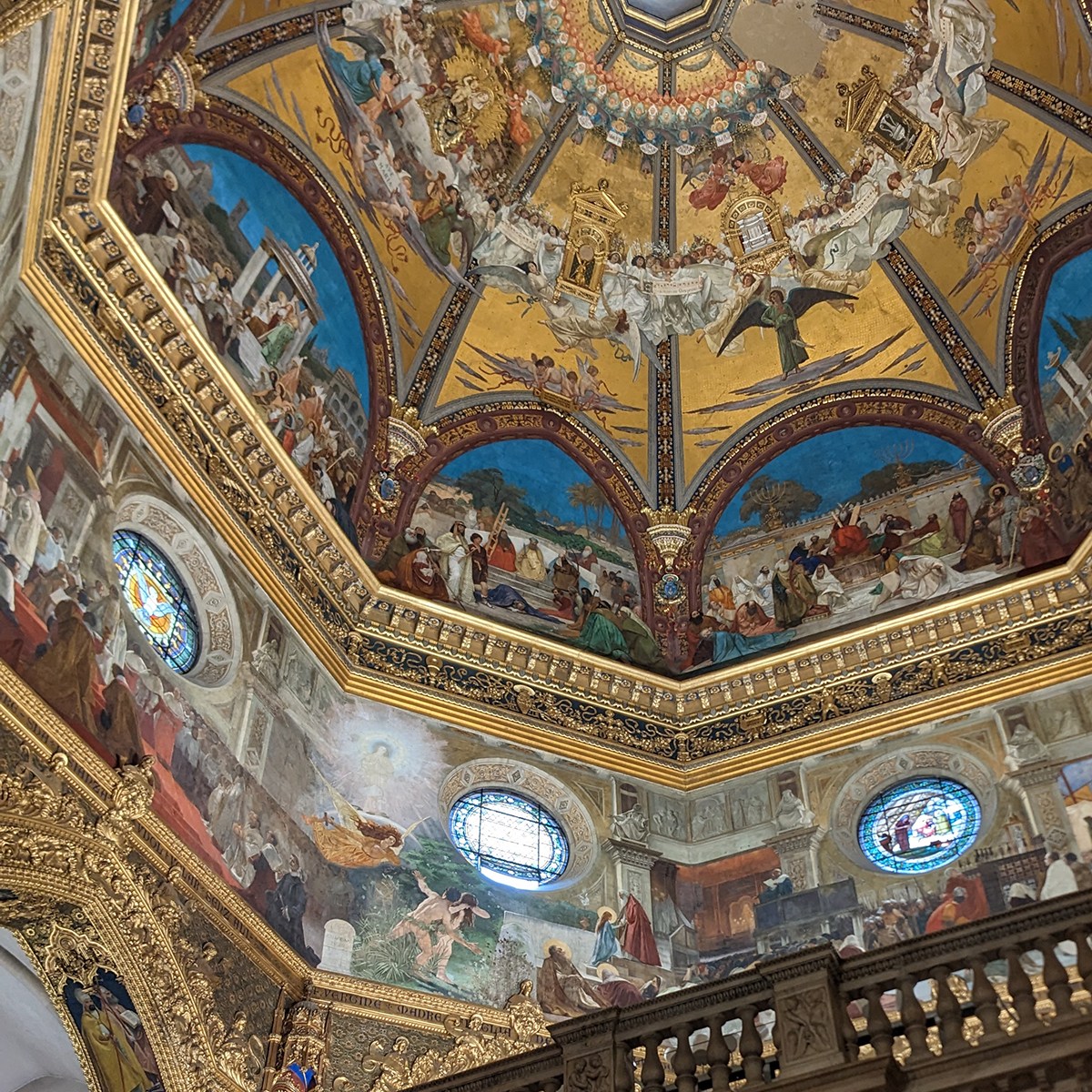
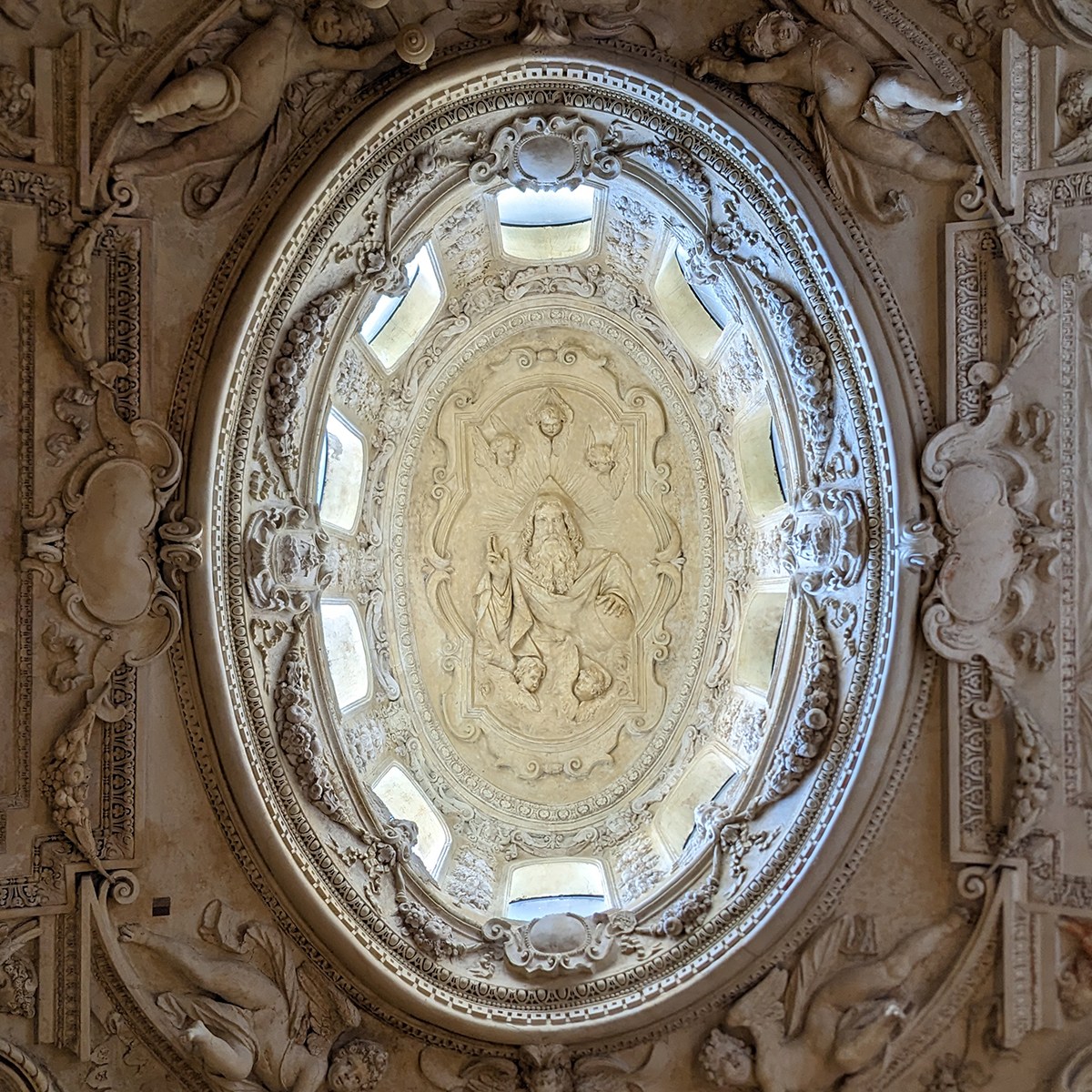
Passing dozens of nuns giddily snapping selfies at the fountain – designed, appropriately, by Giovanni Fontana, or John Fountain – we ascended worn marble steps smoothed by the weary feet of legions of faithful and stepped inside. Thanks to extensive renovations around the turn of the 20th century, the Baroque façade yielded to an eruption of Art Nouveau color and craft for which we were wholly unprepared, this marriage of the two contrasting styles symbolizing perhaps the desire of the faithful to renew sacred vows while preserving foundational traditions. Everything here is grand at first glance: the soaring nave, the frescoed ceilings, the altars heavy with ornament, but these attractions are not the miraculous magnet. For that, we followed the queue into a smaller, hushed space within, a small house encased in layers of marble sculpture, like a reliquary protecting bone and blood.
This Casa Santa (holy house) is said to be the very home where the Virgin Mary lived and received the Annunciation. Legend claims that when Crusaders lost Jerusalem in the late 13th century, angels — or perhaps crusader hands a tad more corporeal and calloused — spirited the house stone by stone and set it here, on this improbable Italian hilltop. Believers come still, crossing themselves and circling its short perimeter, whispering names of loved ones in need. We stood back, waiting for a pause between the clustered groups of pilgrims, and pressed our palms lightly against the worn, patinated stone. It felt worn almost soft, its ordinary appearance stirring hope of divinity in the everyday.
The morning sun had only begun warming the grey stones of Piazza della Madonna as we left the colonnaded square, explored some side streets and picked up some cicerchiata (a regional pastry of baked dough balls mixed with honey and toasted pine nuts or hazelnuts) on our way to the car. The descent from Loreto spiraled through acres of vineyards bending toward the sea, until finally our path slit inland. Urbino, a little more than an hour away – if you’re disciplined enough not to stop every ten minutes for photos of ochre farmhouses – was next.
URBINO
I’d first heard the word “Urbino” decades ago on Saturday Night Live, when Dan Akroyd’s character critiqued Titian’s Venus of Urbino – in customarily bawdy fashion – on his public-access TV show, E. Buzz Miller’s Art Masterpieces. I knew nothing else about the word, didn’t know whether it was a real or mythical location, or even a location at all. But I saw it on the map when planning this trip, and within a few clicks, especially to one article claiming that it had remained “unchanged since the Renaissance,” it landed in my “Mandatory” column.
It’s rare in this country of millennia to find a city whose bones remain so thoroughly of one particular era, but Urbino is exactly this: a Renaissance masterpiece preserved atop an Apennine ridge. We approached the city from the southeast, noting the lack of modern sprawl that surrounds so many of Italy’s ancient places (indeed, with the exception of a 20th-century neighborhood to the northwest of the Renaissance center and no more than a third its size, the immediate environs are predominantly countryside), and wound our way to the main parking area outside the southern wall. Its limited capacity of a few dozen stalls seemed to validate one local’s statement that somebody visiting Urbino “has to really want to come here.”
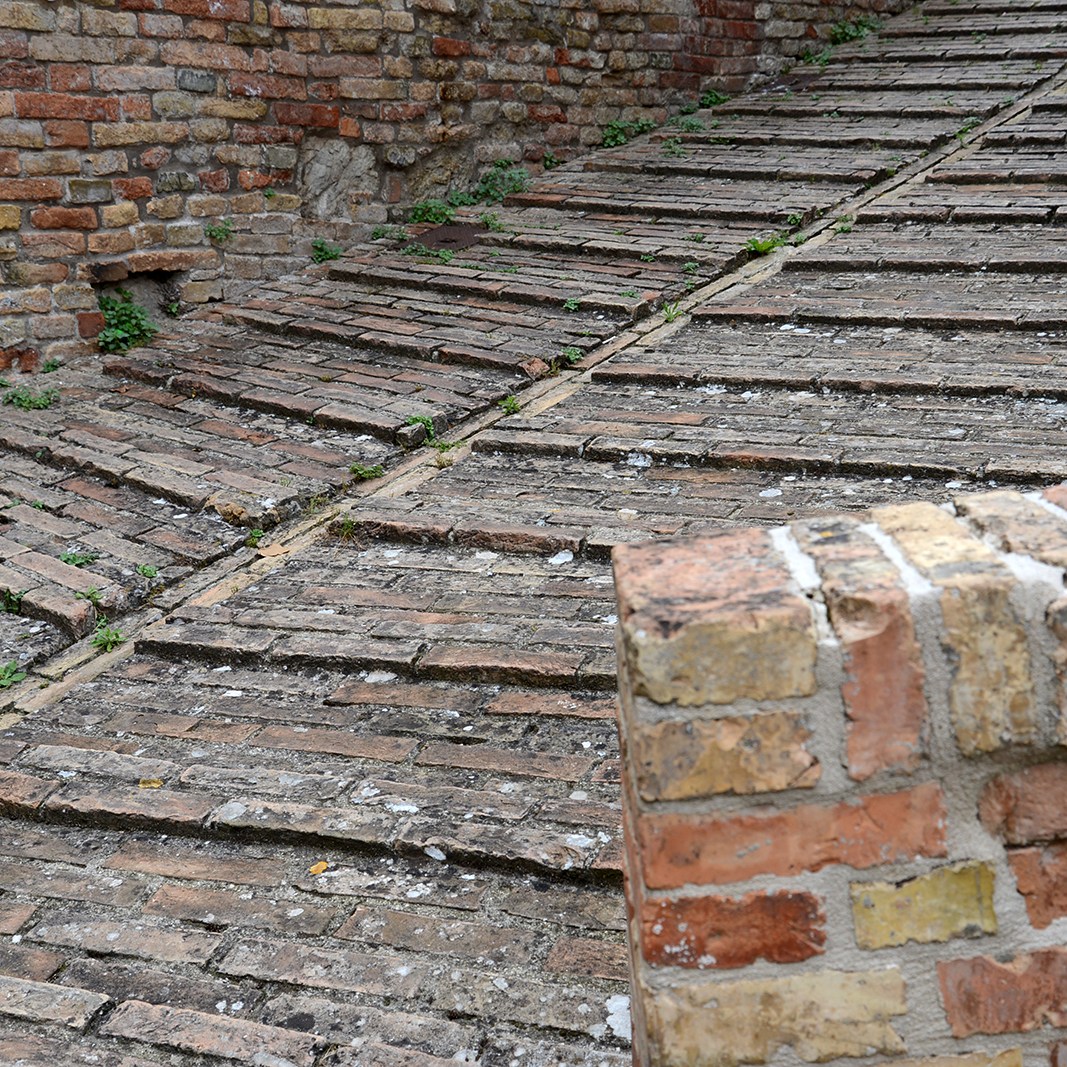
The proper way to enter the city, I had read and we now confirmed, first with our own eyes and then with our own calves, is to ascend the ramp-like Via Aurelio Saffi that climbs unforgivingly from the viewpoint on the southwestern bastion. The street heaved upward with deliberate drama, forcing us into the rhythm of those who for centuries walked here before donkeys and then motorini (scooters) facilitated the hike. Halfway up, we paused, bent more from awe than exertion – although there was some of that, too – as Urbino’s rooftops seemed to spill over themselves, tilted terracotta tiles tumbling toward the horizon, and beyond them, the Apennines in shades of blue haze.
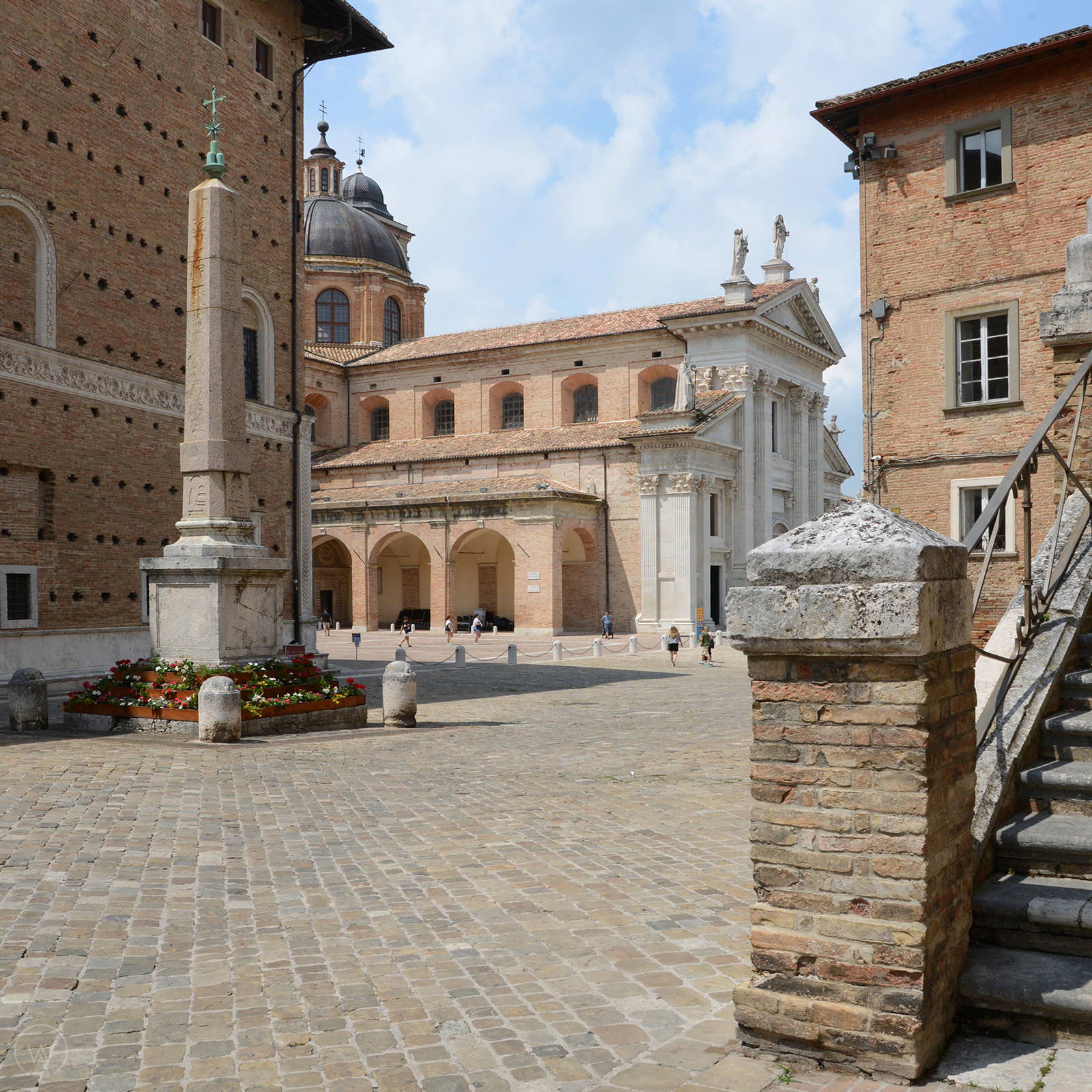
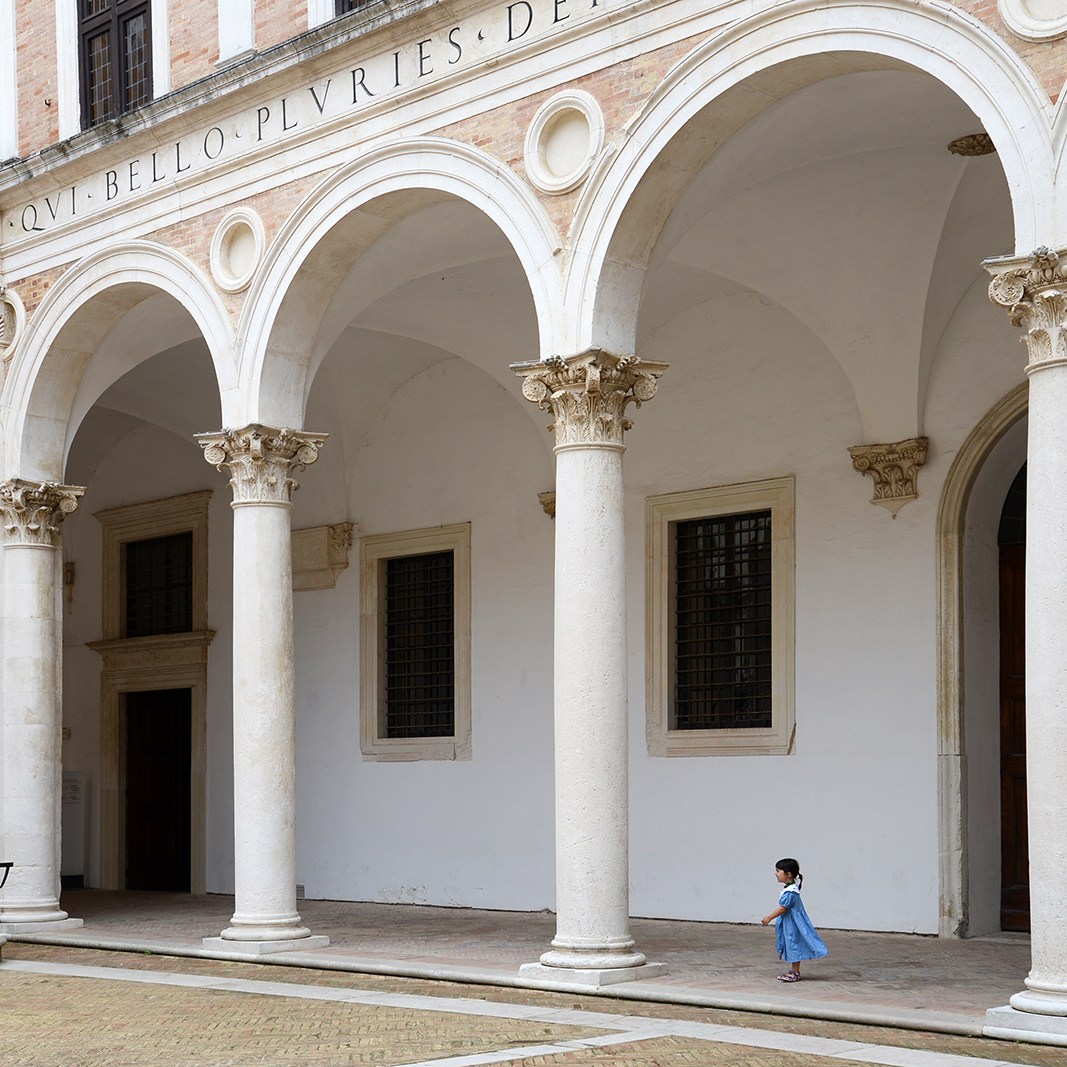
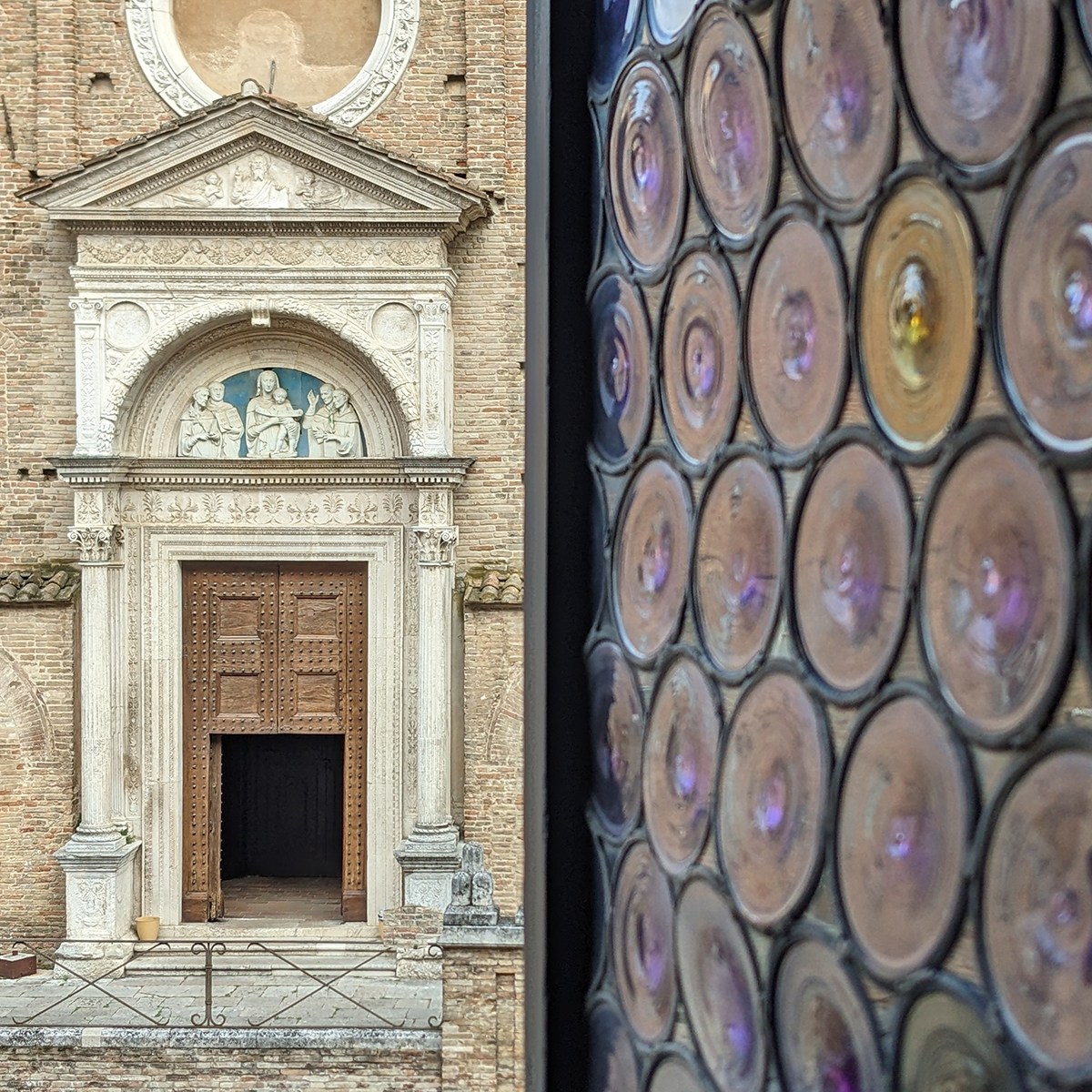
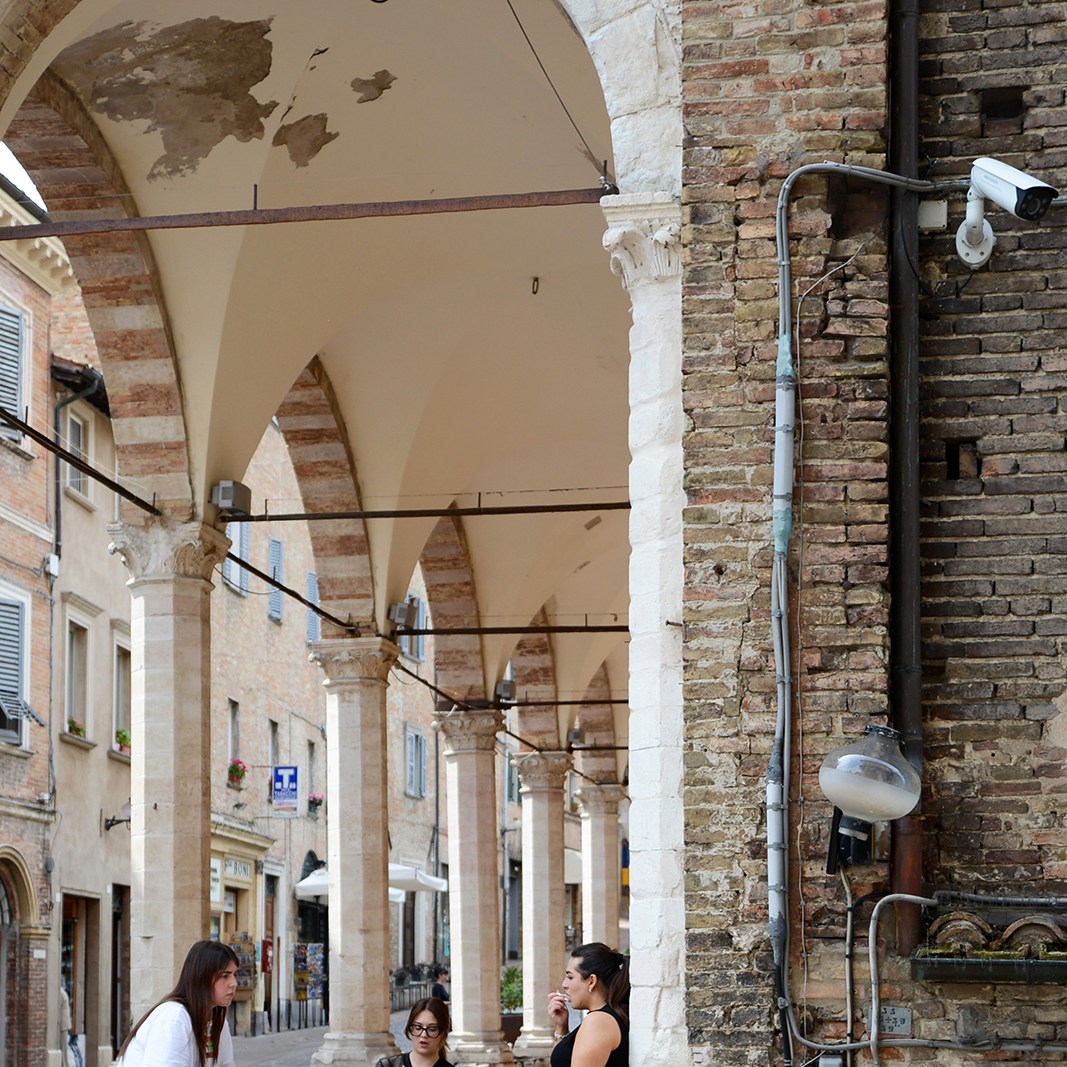
Inside, Urbino, while not exactly untouched — there are teens jamming with bluetooth earbuds, restaurateurs accepting Apple Pay for coniglio in porchetta (roasted rabbit), a security camera uninterested in three college students eating gelato in a vaulted arcade — is, in fact, unchanged in its essence. The Renaissance did more than leave its fingerprints here: It birthed this city whole. The centerpiece is the Palazzo Ducale of Federico da Montefeltro, whose sheer willpower transformed Urbino into a rival of Florence, and though museums and placards now catalog his ambitions, the building itself speaks most eloquently: airy courtyards, elegant arches, staircases coiled with logic and grace.
The Palace’s Galleria Nazionale holds treasures by Piero della Francesca and others, but inevitably the gravitation point becomes Raphael, denizen of that pantheon of Renaissance artists known more widely by one name than by their full name. The local wunderkind once dashed through these alleys on errands, perhaps sketching faces observed in the arcades or out in the alleyways. He would leave Urbino by late adolescence, chasing commissions, fame and fortune first in Florence, then in Venice and Rome, where he became both legend and lament, dying at just 37. But in his boyhood home here on Via Raffaello, you can almost see the youth he might have been: a small room, plastered walls, a replica fresco his father painted. Raphael isn’t the only Renaissance Master with ties to the city. It was in Urbino that Leonardo, in the summer of 1502, entered formally into the patronage of Cesare Borgia, to serve — albeit briefly — not as painter for the Milanese court, but as “Architect and General Engineer,” supporting both civil and military ambitions of the ruthless politician on whom Machiavelli based his how-to guide for tyrants, The Prince.
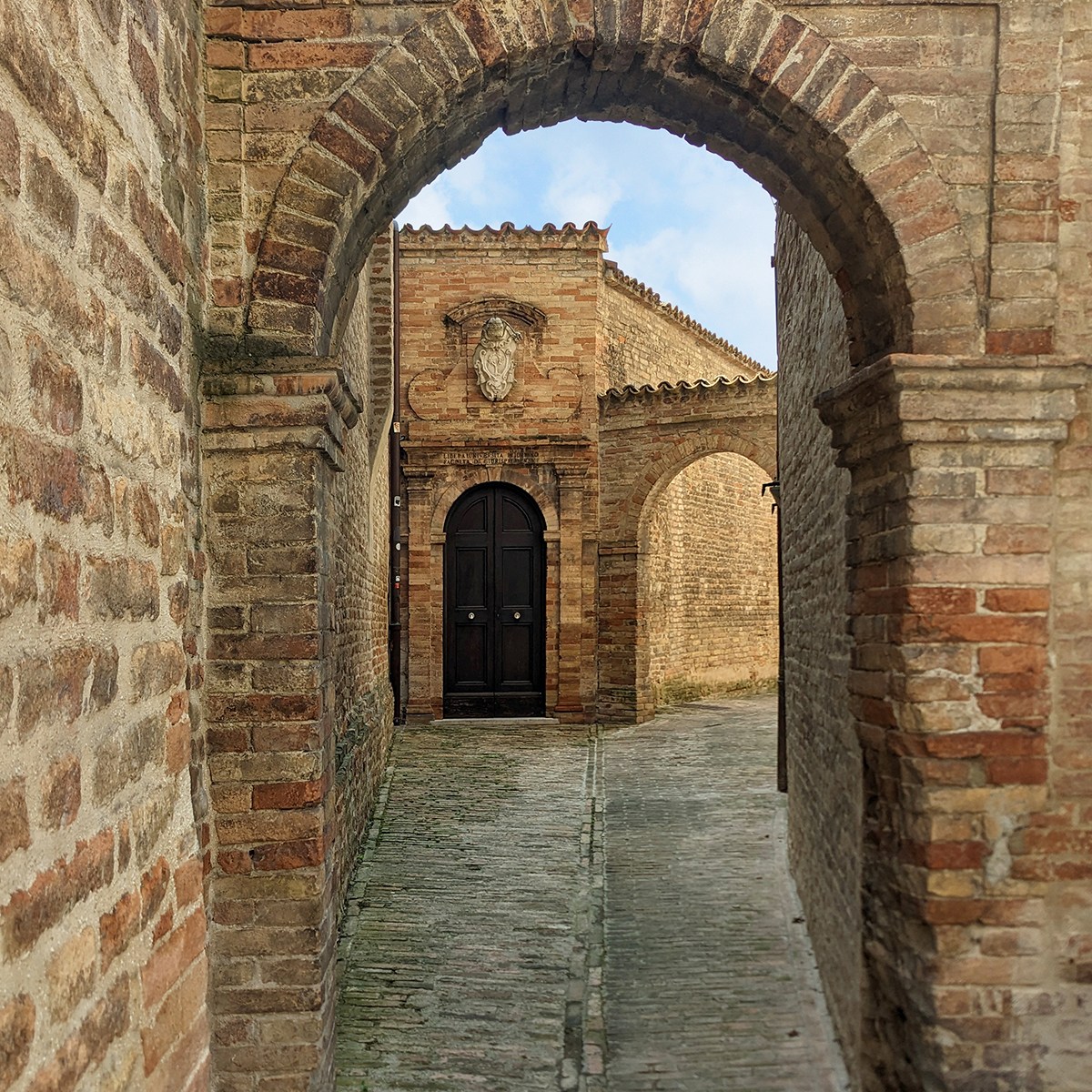
Urbino’s layout resists shortcuts, as each route between two points seems at once the most direct and the most circuitous on disorienting streets that dip suddenly and climb again like questions without answers. Which forces you to explore, in the event you were disinclined, and food is always a strong motivator. Pizza on the piazza won’t itself mark you as a tourist, but a savvier, more regional choice would be crescia, a flatbread folded with pecorino.
The afternoon light angled perfectly onto the façade of San Bernardino’s mausoleum just east of town, where the duke lies entombed, still holding sway over “his city.” We found that perhaps more than the relative scarcity of visitors, this sense of permanence that pervaded Urbino gave the city a serenity one doesn’t experience often in places of such splendor. The drive back down to the coast took a curving hour, the land shifting from halting hills to breezier plains. To the north, Rimini awaited with an entirely different set of stories to tell.
RIMINI
Few, outside of fans of Dante and/or Tchaikovsky (for the latter’s Francesca da Rimini based on the former’s tale of her in his Divine Comedy) or of Mediterranean spring breaks, will recognize the name “Rimini.” The city’s reputation, at least among northern Europeans, is as a stretch of coastline devoted to sunning and carousing, a place of umbrellas lined like dominoes along kilometers of eurotrunk-dotted sand. (Even a friend from Lombardy initially scoffed at my idea of including Rimini in this itinerary, eventually conceding that perhaps the historical center merited a stroll.) But its ancient elements have real gravitas, gravitas that most visitors stride past in flip-flops en route to the lido. That evening, the heat had ebbed when we parked our car and – as authorized by my skeptical amico lombardo – entered the centro storico.
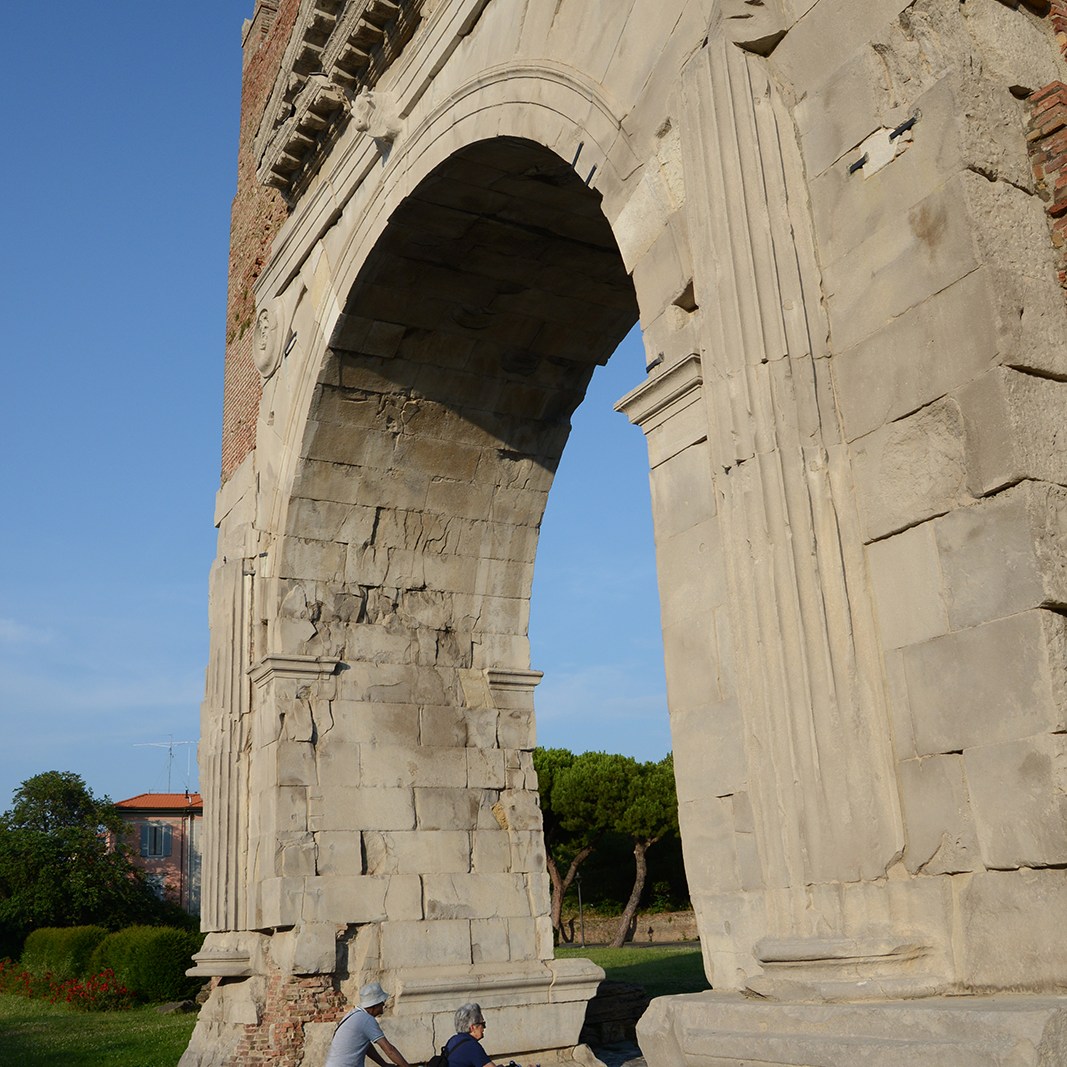
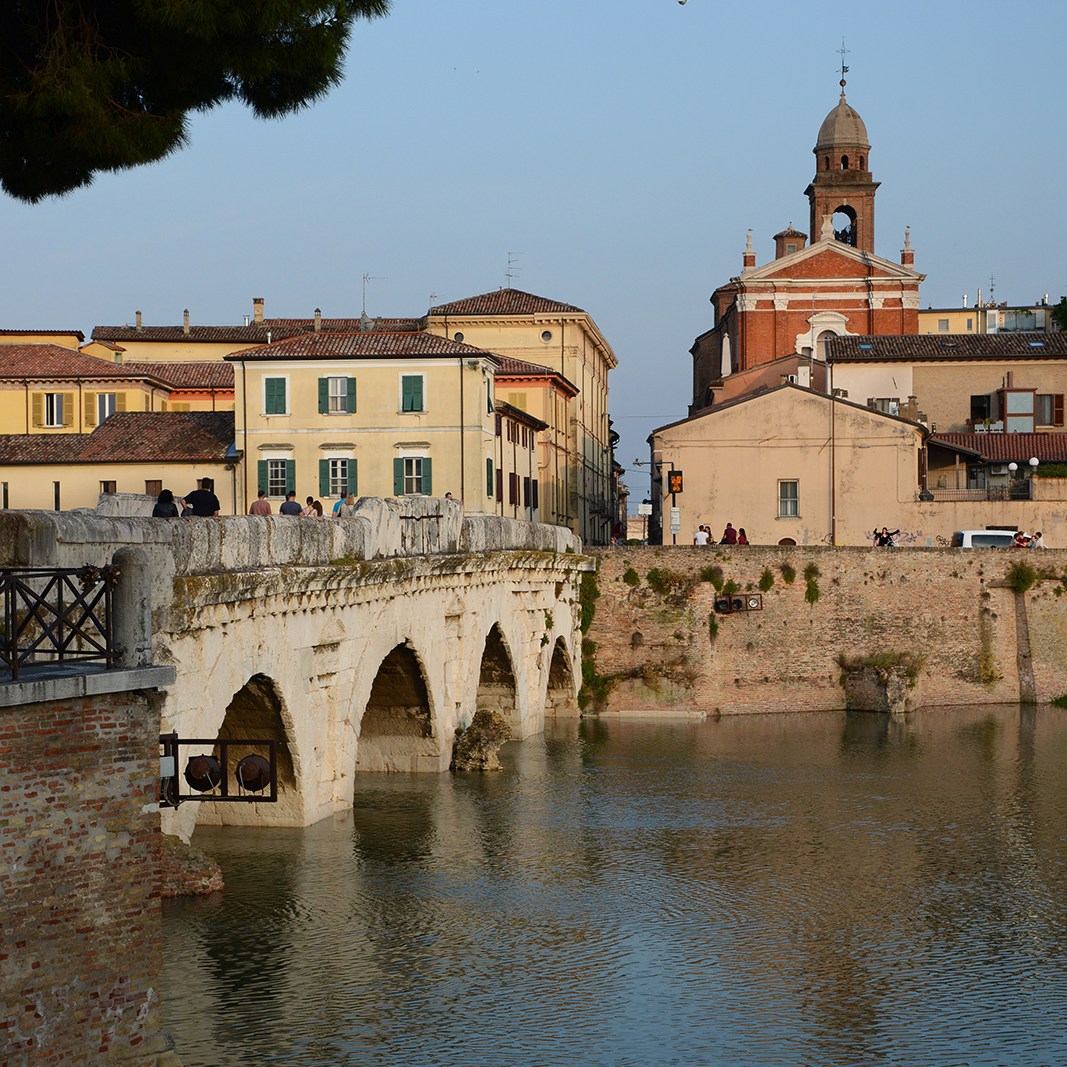
Two structures that bookend the old town teach Rimini’s Roman roots more authoritatively than any textbook. First, the triumphal Arco di Augusto still marks the southern gate of the city after more than two millennia. Then, to the north, is the Ponte di Tiberio e di Augusto, a bridge begun under Augustus and completed by Tiberius in the first century, its five arches stretching across the Marecchia River with a glow warming in the setting sun. Locals sauntered across, their hands skimming the balustrade and their feet traversing the centuries.
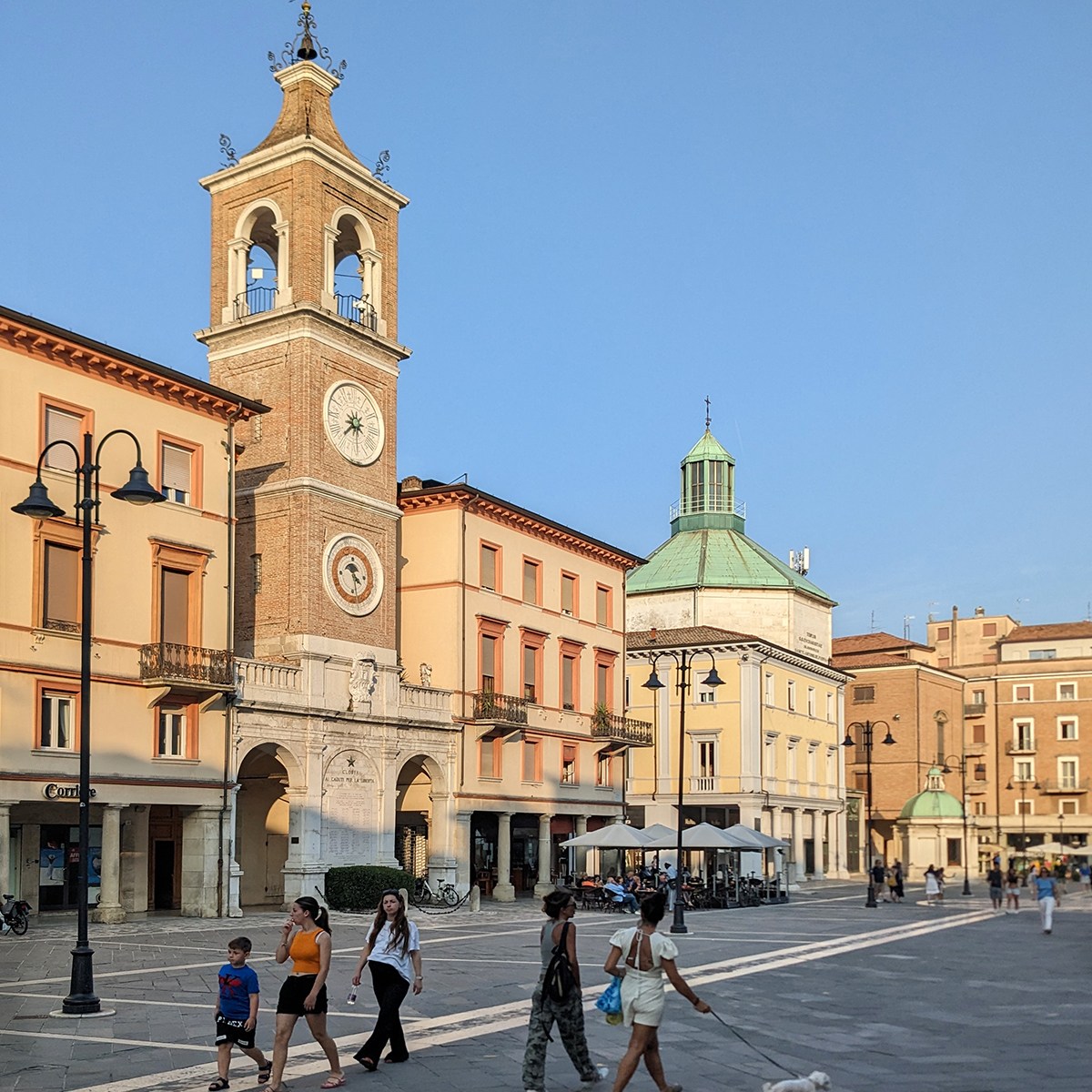
As techno music beats on the nearby beach, Rimini’s heart beats in its piazzas. Piazza Tre Martiri stretches wide, a crossroads since Roman times, whose name (it was formerly Piazza Giulio Cesare, to commemorate the speech he gave here in the forum after crossing the Rubicon) and a plaque honor the three young resistance fighters whom the Nazis hanged here, while a second monument thanks the Allied troops who liberated the city in 1944. Just up the street, Piazza Cavour glows with civic pride, flanked by two 13th-century palazzi, dell’Arengo and del Podestà, their gothic outlines framing the square like frozen shadows. Cafés scatter their tables across the cobblestones, and the square feels alive in a distinctly Rimini way: fashionable and important, yet unassuming.
After a visit to Rocca Malatestiana, Rimini’s striking Renaissance fortress, we continued by twilight the half hour north to Milano Marittima for our lodging. Contrary to its name, this is no Milan; rather it was founded as a seaside resort for wealthy Milanese in the early 20th century, and the name stuck. By the time we arrived, the streets pulsed with a cheerful chaos that was every sight, sound and smell conjured by the term “Italian family beach vacation.” Children chased pallone (soccer balls) and each other beneath palm trees, couples in linen paused by a jazz combo outside a gelateria, and a sequined cubista (professional girls who dance atop dishwasher-sized blocks to energize club crowds) efforted valiantly on the patio of a pub at least two hours before anyone could realistically be expected to follow her lead. Restaurants overflowed, serving seafood platters and chilled verdicchio (a white wine from the Marche region) to multi-generational families who seemed in no rush to end their evening. Well past midnight, our laundry on the balcony clothesline and our heads on our pillows, we could still hear music echoing from beach bars, but it felt celebratory rather than intrusive, like being welcomed unexpectedly into an invitation-only festival.
The next morning, we rode our hotel’s bikes along the Adriatic shore, past early bathers and their colorful chaise lounges. The boardwalk carried us between hotel fronts on one side and beach cabanas on the other, eventually reaching the Canale di Cervia, where sailboats and fishing boats docked in rows as they had for centuries. The salt air here was thicker, brinier, and the water shimmered under gulls looping above. Sun and temperature rising quickly, we followed a shady inland street back to our hotel, our car ready and revving for Ravenna, 45 minutes up the coast.
RAVENNA
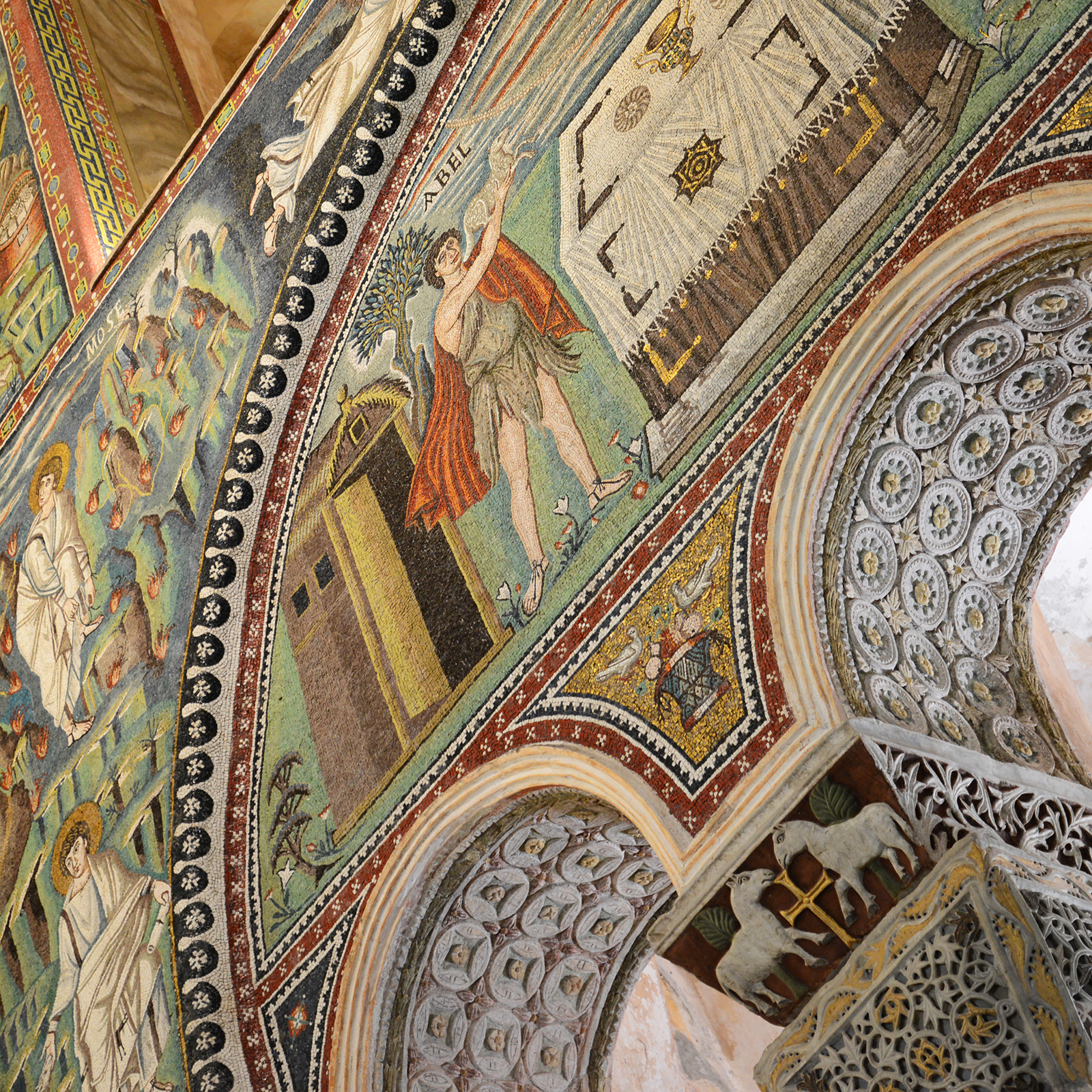
If Urbino is “pure, preserved Renaissance,” Ravenna is “multi-millennial saturation.” Here, empires, faiths and centuries layered upon one another, their remnants fused into churches whose interiors feel like stepping through a portal into Byzantium itself. Once a capital of the Western Roman Empire, later the seat of Theodoric the Great and his Ostrogoths, briefly a Byzantine stronghold, and a literary and scholarly hub during the Renaissance under Venetian and Papal rule, Ravenna absorbed them all, an inheritance reflected in mosaics aflame with blinding golds and rapturous blues. Entering the city, you might not suspect its distinction, as the outskirts sprawl with utilitarian shops, nondescript apartments, traffic roundabouts and a layer of dust. But at its center, whole worlds hide in brick basilicas.
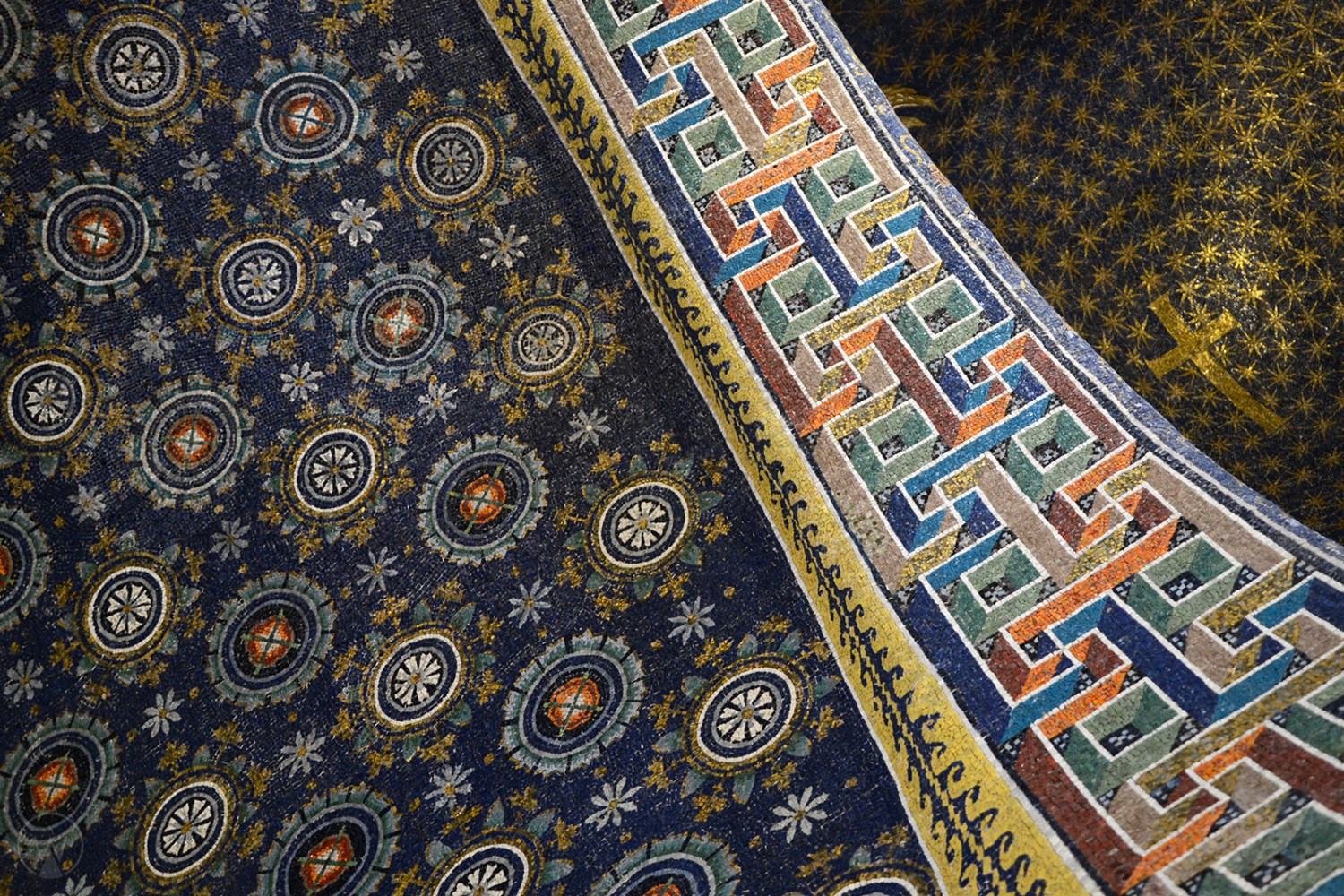
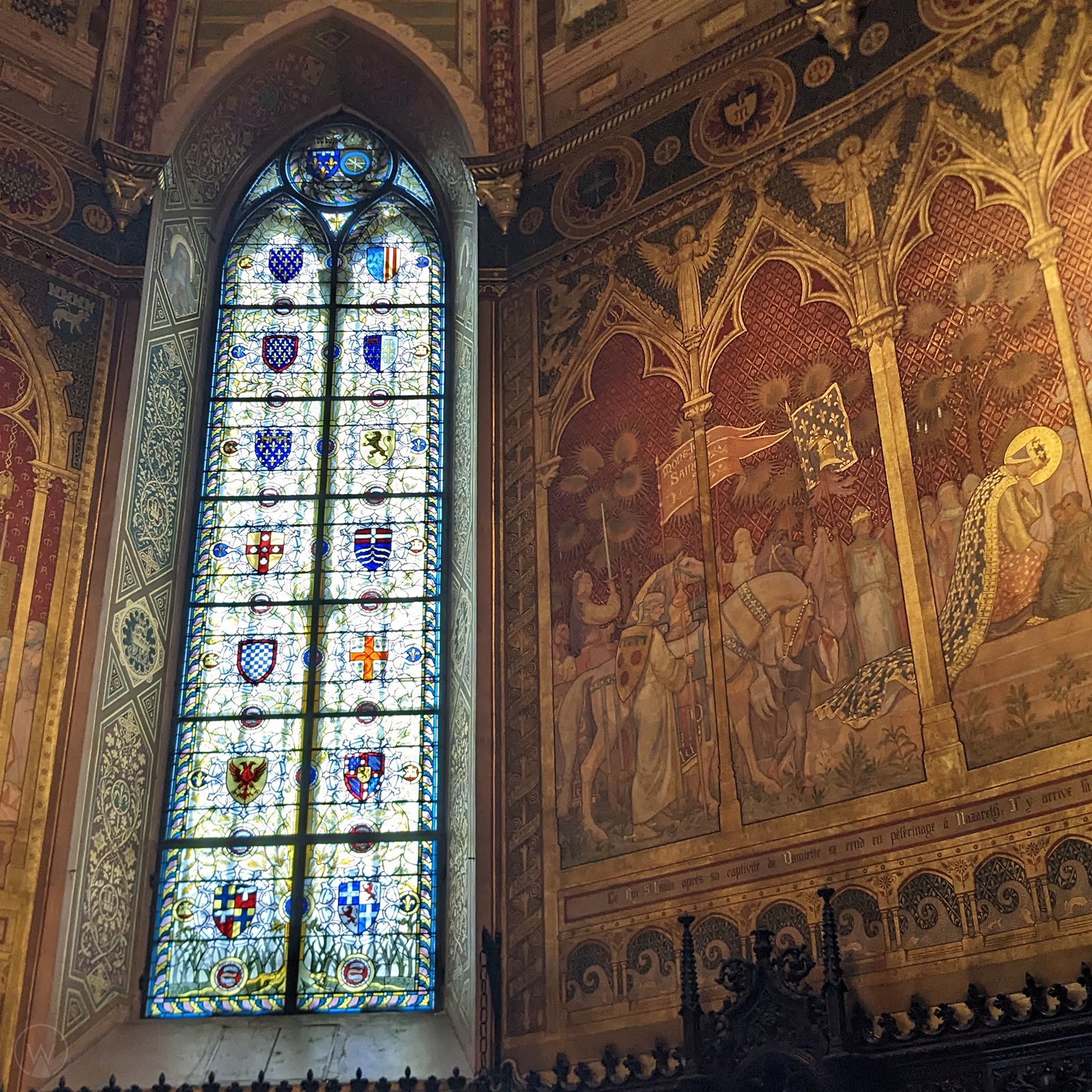
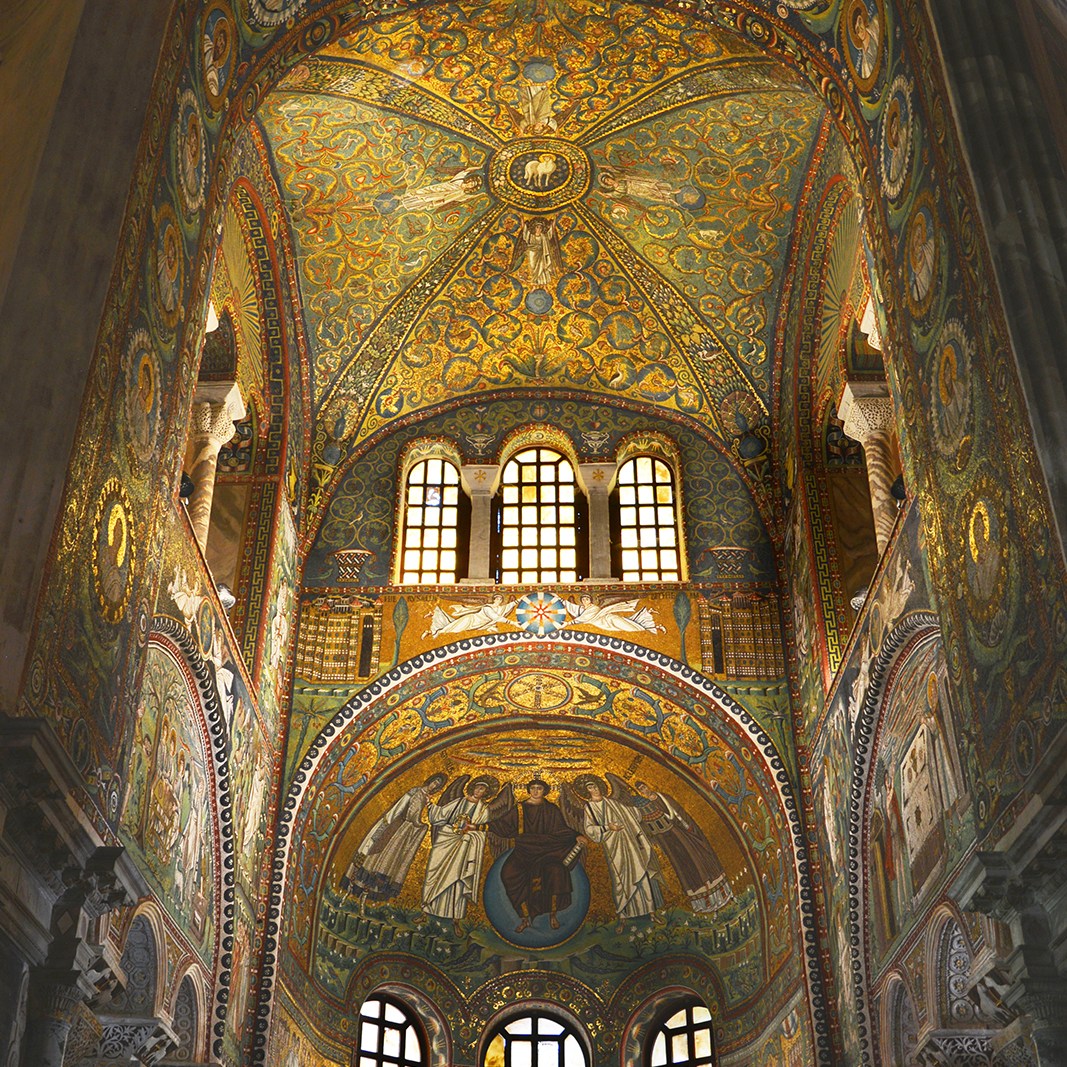
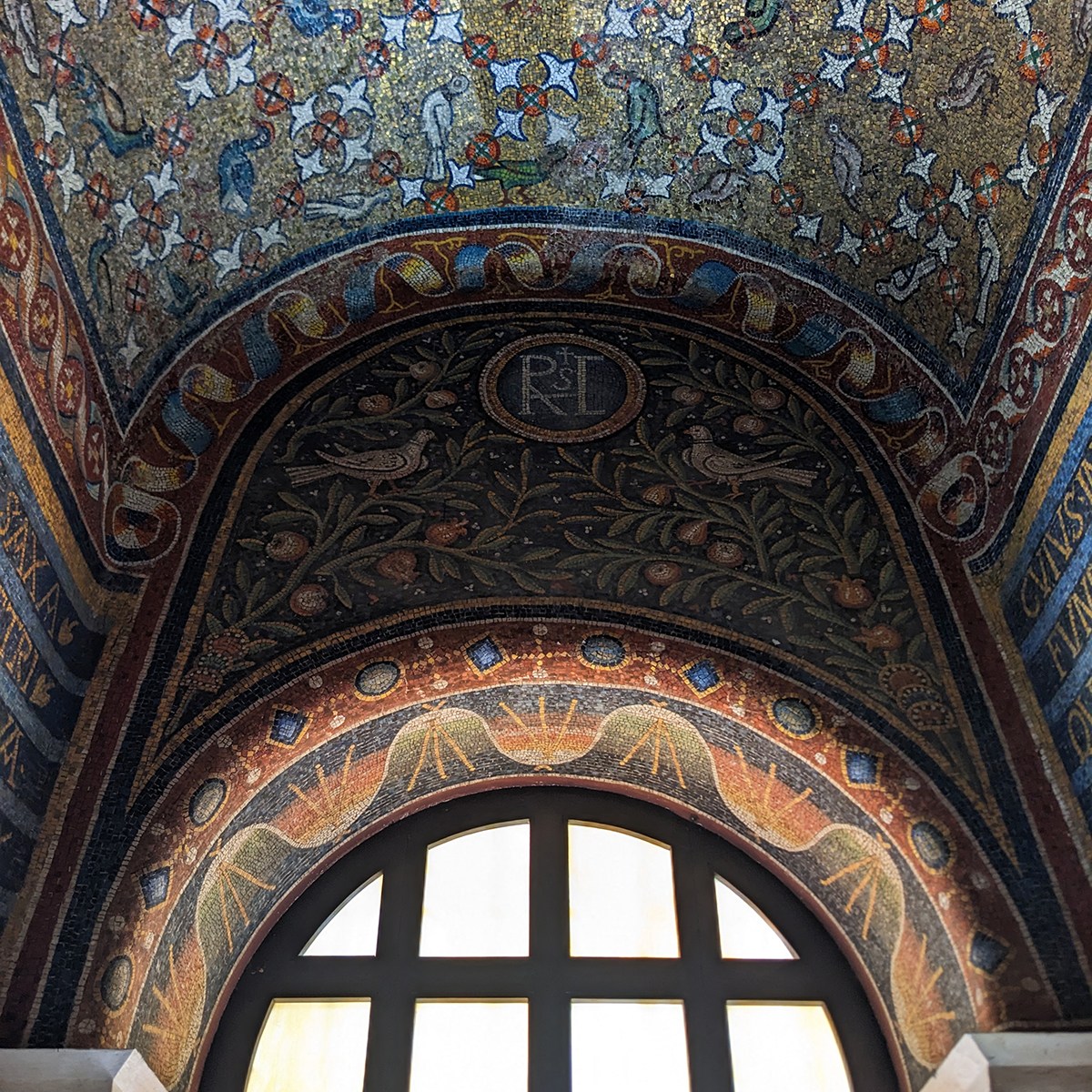
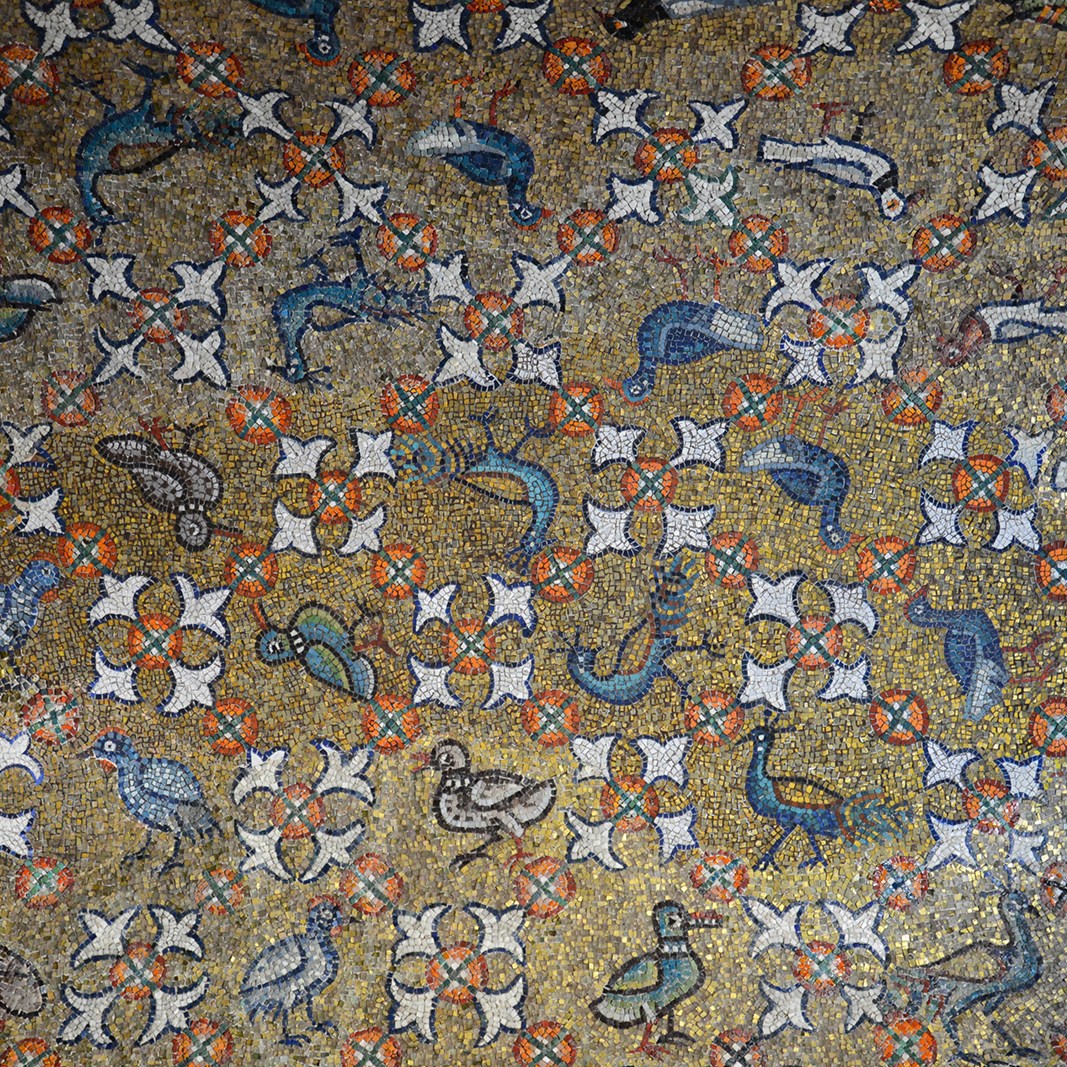
The city’s magnum opus is San Vitale, an octagonal church whose interior seems to defy gravity. An unfathomable array of mosaics pulls your gaze upward, your neck straining as Jesus hovers amidst a cosmos of greens and golds, while Emperor Justinian and Empress Theodora look on, rendered in startling detail, the folds of their robes glimmering with tesserae still sharp after fourteen centuries. Meters away is the Galla Placidia Mausoleum, small and almost easily missed, whose sky-blue ceiling bursts into constellations of mosaicked stars – hundreds upon hundreds of them – with such unrestrained effulgence that to step inside is to float into the firmament itself.
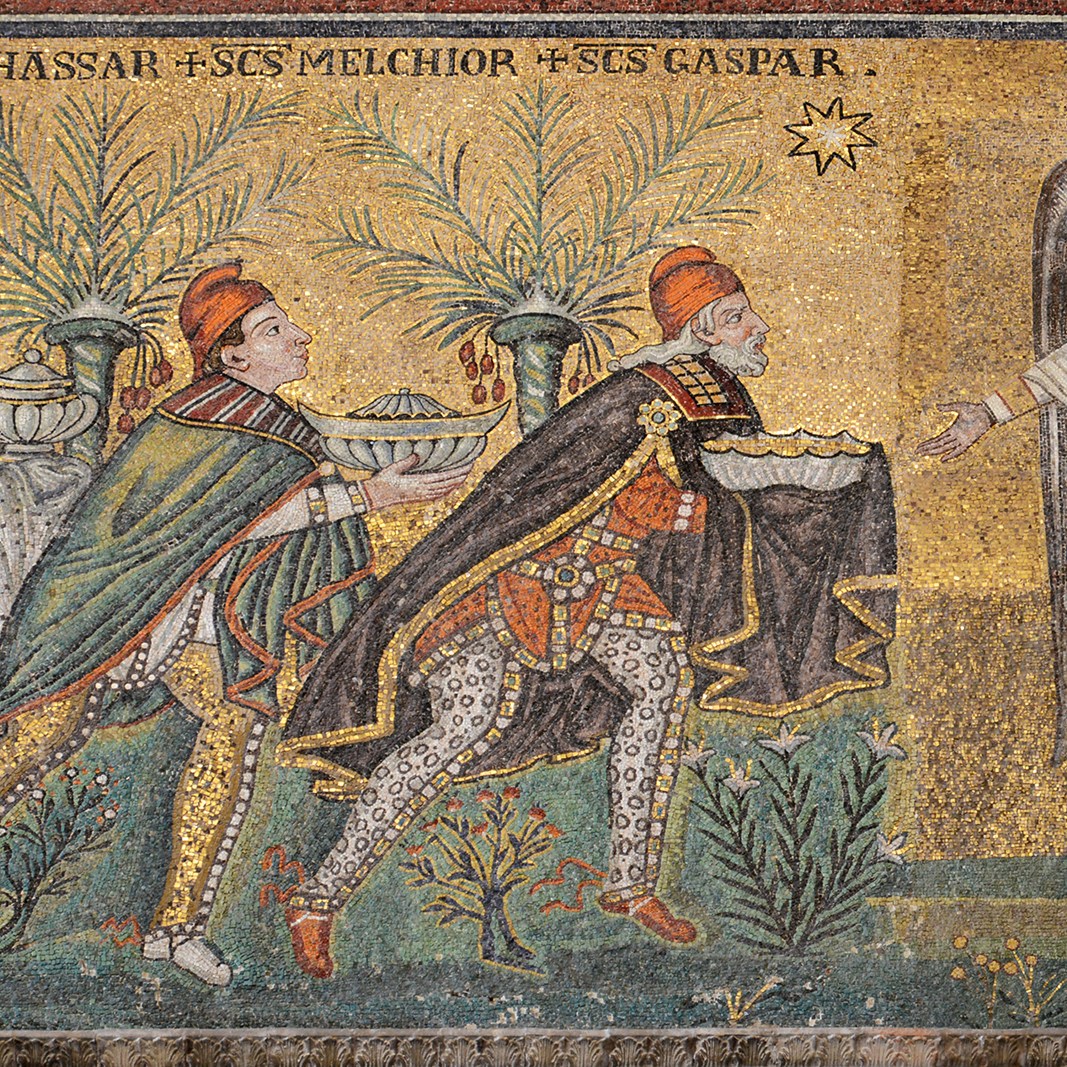
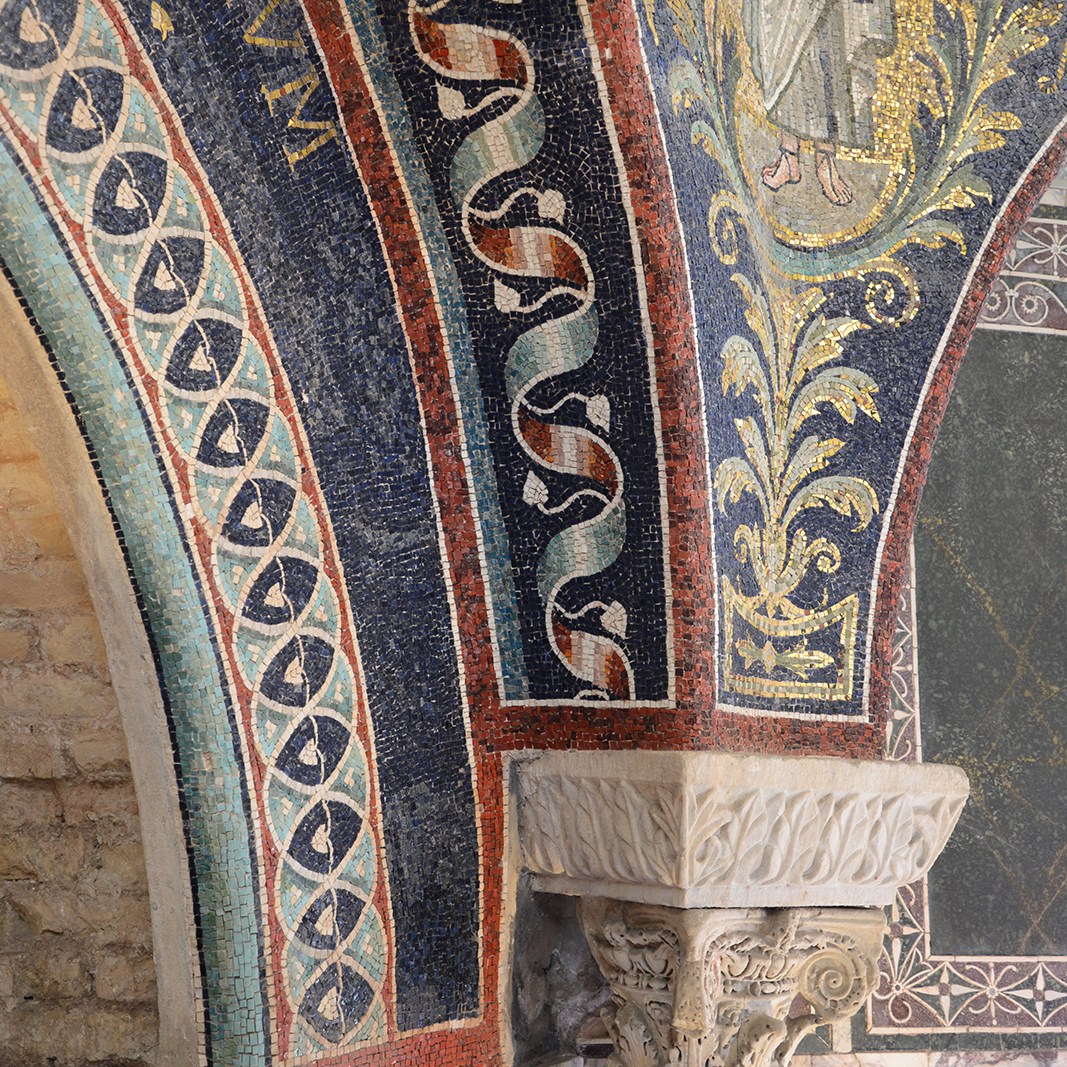
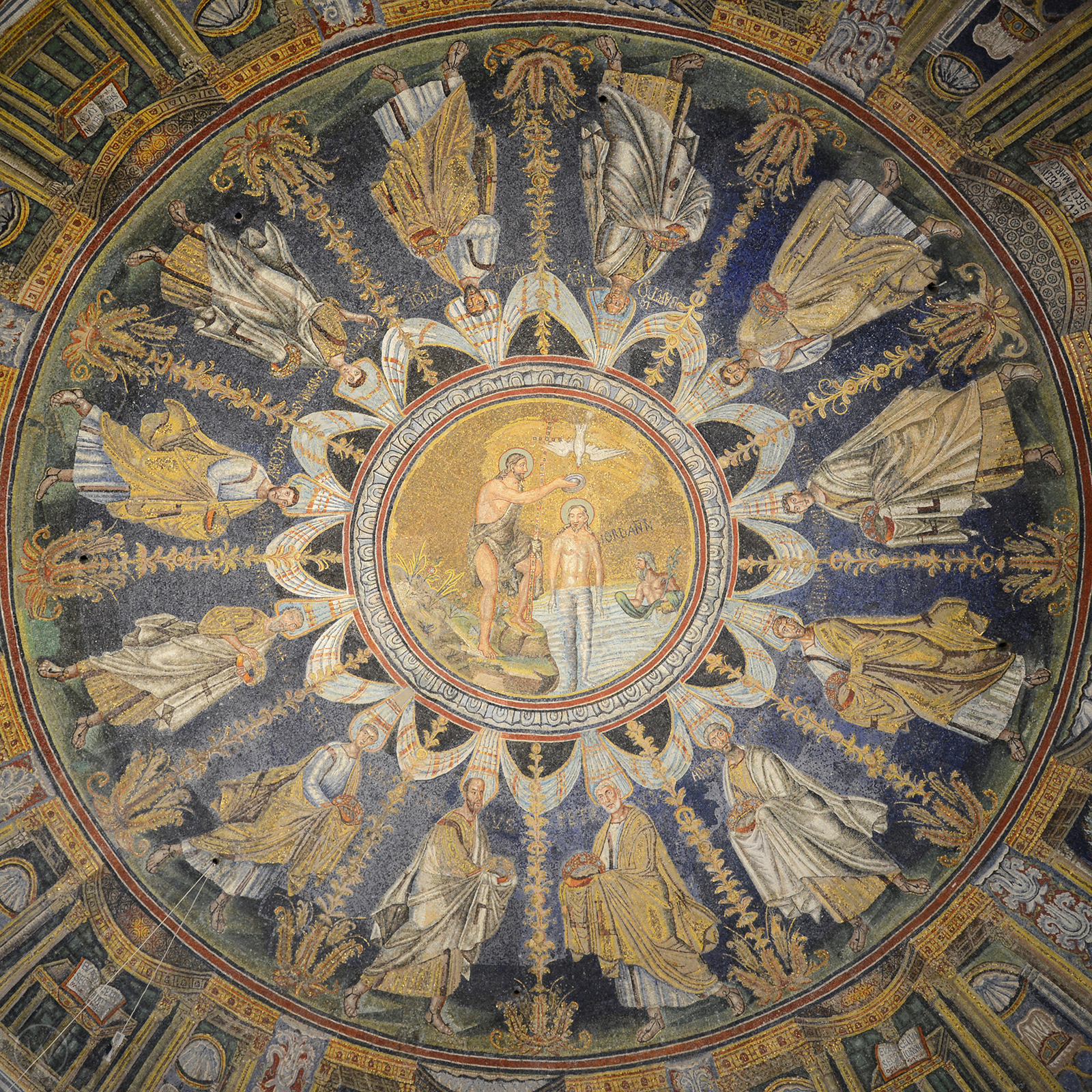
In Sant’Apollinare Nuovo, long processions of saints, martyrs and wise men line the arch-supported upper walls, as if still marching inexorably through history, while Jesus and The Baptist, the apostles and yet more saints encircle the domed ceiling of the Neonian Baptistery, peering down piously, if sternly, on visitors. Together, these monuments — and several others like them, most within easy walking distance of each other — earned Ravenna its UNESCO designation and will give you many marvels to describe to your chiropractor as she adjusts C3 through C5. But with that session back home still a ways off, you can give your neck a rest while you savor the fare at Trattoria la Rustica (Via Massimo D’Azeglio 28) which, despite being on a main thoroughfare for tourists, served one of the most deliciously memorable meals of a trip that didn’t lack for outstanding eats.
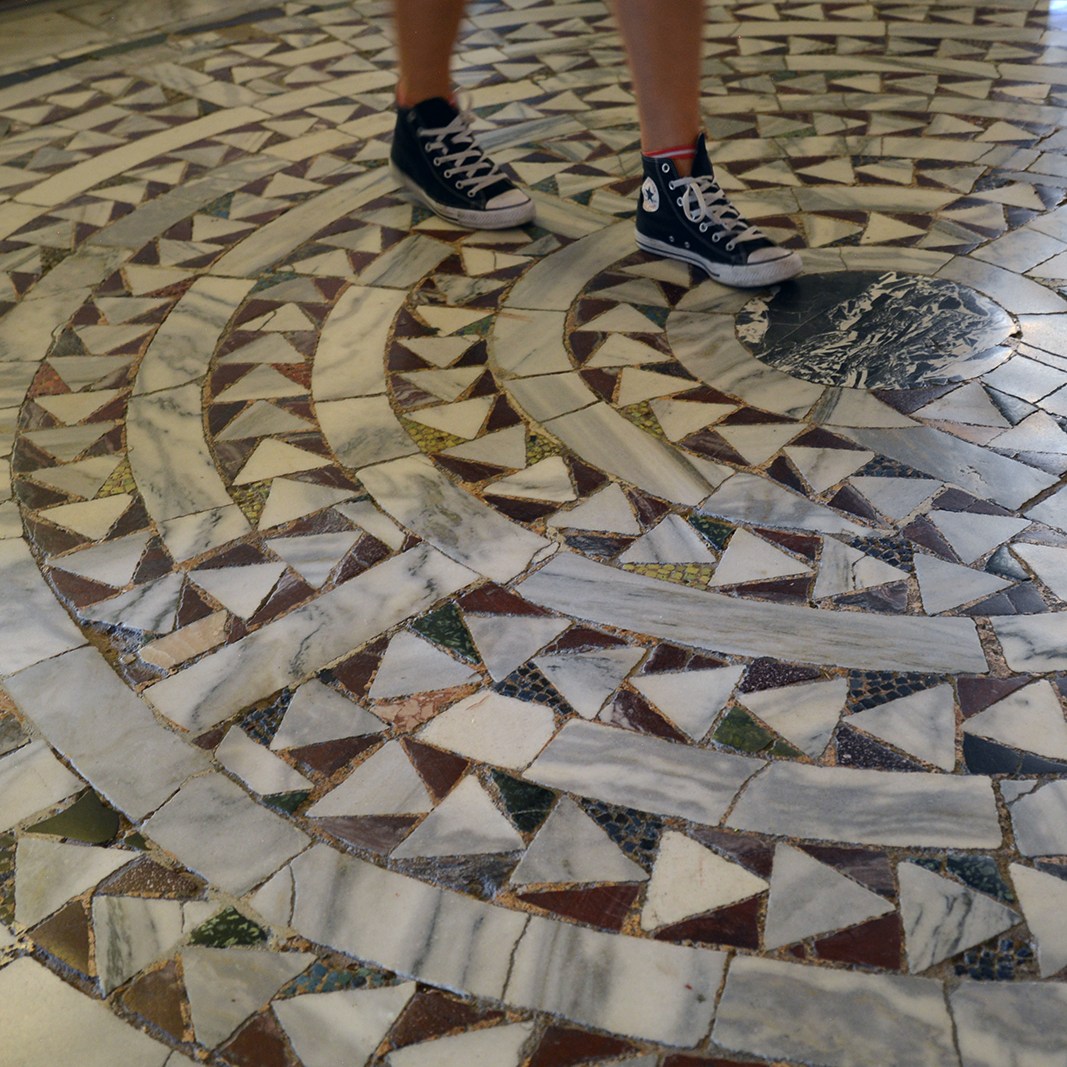
Beyond the churches, Ravenna holds quieter treasures. Mosaics surface even in unexpected corners — a remnant anchored to the wall of a trattoria, or tiles in the floor of a forgotten chapel — making the city feel almost paved in glass. A restored former monastery houses the Museo d’Arte della Città di Ravenna and its extensive collection of mosaics, paintings and sculptures dating back to the 14th century. Down a modest lane rests Durante “Dante” Alighieri, exiled Florentine poet whose Divine Comedy redefined Western literature itself. A remorseful Florence may have tried to claim him back in subsequent centuries, but his tomb here asserts otherwise: a small, temple-like monument where visitors, Italian and foreign alike, still leave flowers and lines of poetry. I lingered at its threshold, imagining him in his political and ideological exile, quill scratching furiously beside flickering candlelight, all the heavens and hells of his imagination spilling forth onto parchment. I left him neither bouquet nor ballad, but an apology for having made it through only a dozen or so cantos of the Inferno before giving up on his epic poem, quietly asking that this failure be offset by my having once played the title role in Gianni Schicchi, Puccini’s opera based on a Florentine fraudster immortalized in the Comedy. I stepped away, comforted by a flicker of hope that Il Sommo Poeta (The Supreme Poet) thought it adequate penance.
By early afternoon, the light struck hard on Ravenna’s façades, the contrast making their alleyways and interiors all the darker and more mysterious. Continuing north for the final leg of our Adriatic journey, we reflected that over these past two days, our drive had traced a kind of pilgrimage, if not solely of faith then of stories: from Loreto’s Holy House and its whispered Marian prayers, to Urbino’s Renaissance poise and Raphael’s ghost in its alleys, to Rimini’s Roman stones layered with memories of conflict and liberation, to Ravenna’s mosaics resplendent in Byzantine gold. These places, collectively situated across barely 200 coastal kilometers, offer ample marvels to rival Italy’s grander circuits yet draw a small fraction of the traffic, and although it may be your four wheels, rather than your real or imagined angels, that carry you along this route, it will feel miraculous.
QUESTIONS FOR READERS
- Have you ever visited Loreto’s Basilica della Santa Casa or undertaken another pilgrimage site in Europe that left a deep impression?
- Beyond Florence, what Renaissance-era towns have you found most captivating or unchanged by time?
- Which “second-tier” Italian coastal cities have surprised you with their historical depth or architectural marvels?
- Do you have a favorite mosaic or sacred space — from Ravenna or elsewhere — that transported you, regardless of whether you are a person of faith?
 WANDERLOOSED