







From the Plaza de Mercado Paloquemao farmers’ market, to the Mercado de Pulgas de Usaquén (a Sunday craft market), to the numerous parks and gardens in between, Bogotá has innumerable attractions that are not in the seventeenth localidad (neighborhood) – and throughout the city, a rainbow of high-quality graffiti adds energetic flair. But if you’ve done any research already, a recommendation to spend most of your “one day in town” on a walking tour of La 17°, nicknamed La Candelaria, won’t surprise you.
MORNING
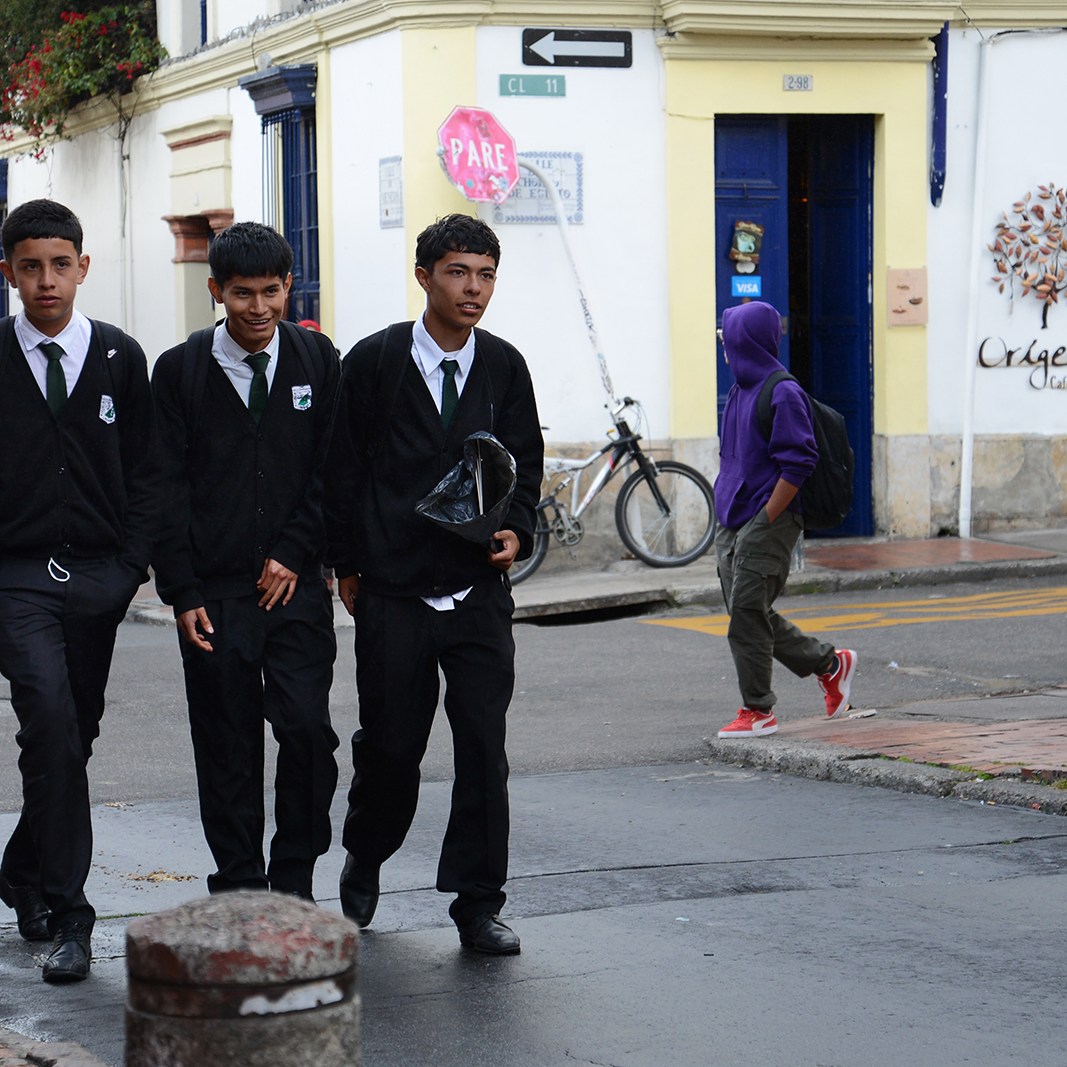
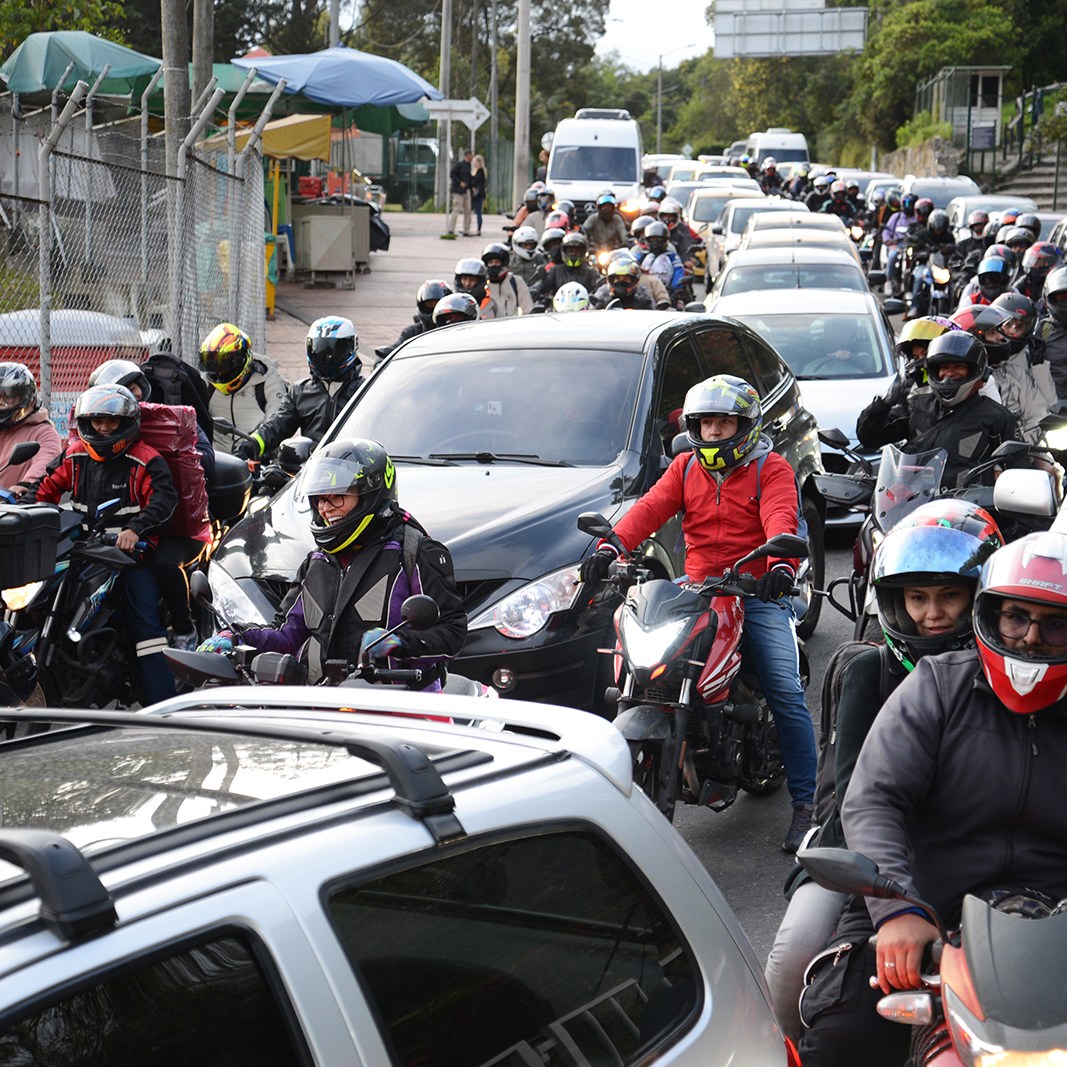
Despite the city’s size, there’s no pressing need for a car in Bogotá, thanks in large part to its world-class TransMileneo bus system. (In fact, the anti-congestion “Pico y Placa” system in place here, as in other major cities in both Columbia and adjacent countries, decreases car utility even further by restricting private vehicle use on alternating days based on license plate numbers.) If you are in a car, park it in one of the several safe and inexpensive parqueaderos (garages) in the general vicinity of Parque Santander.
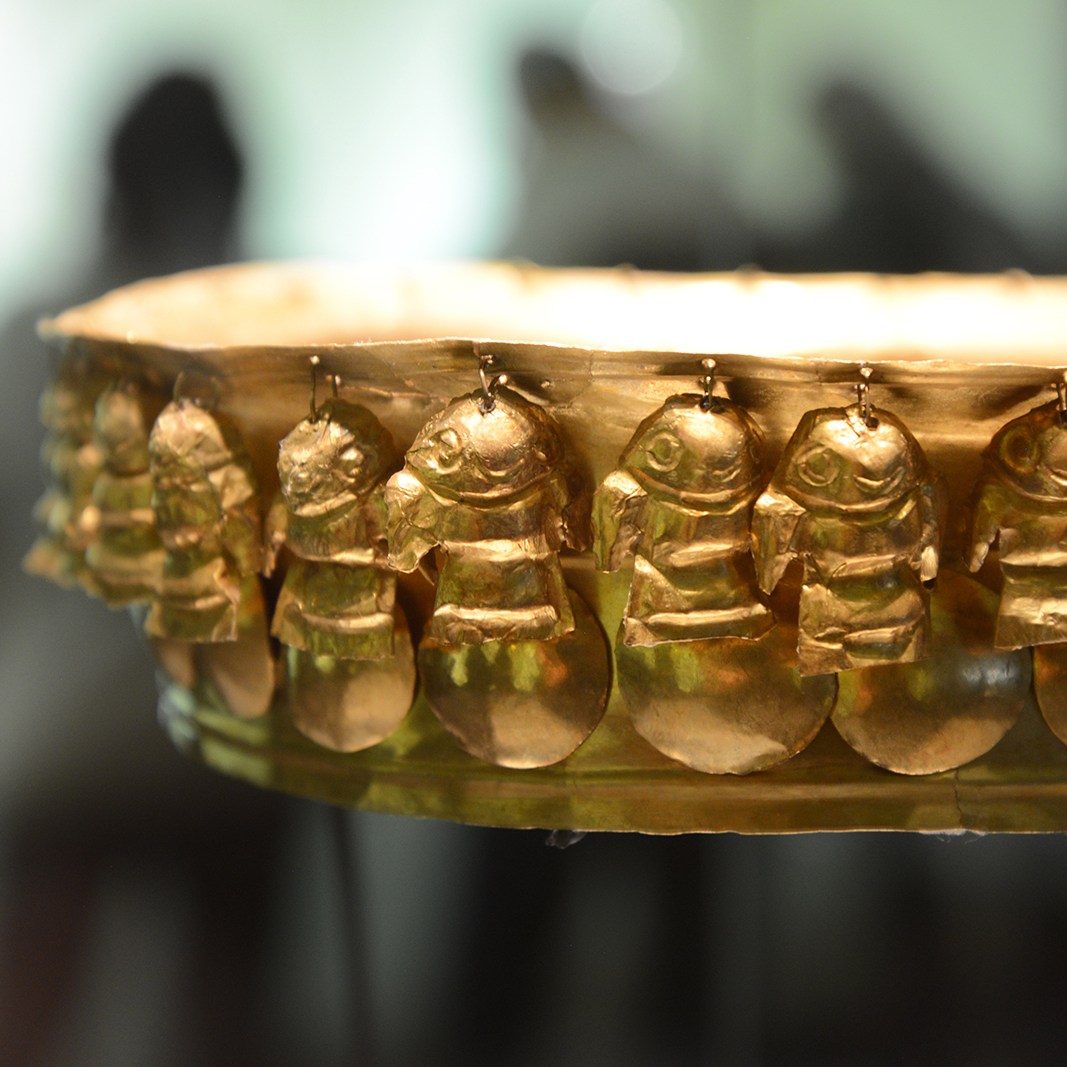
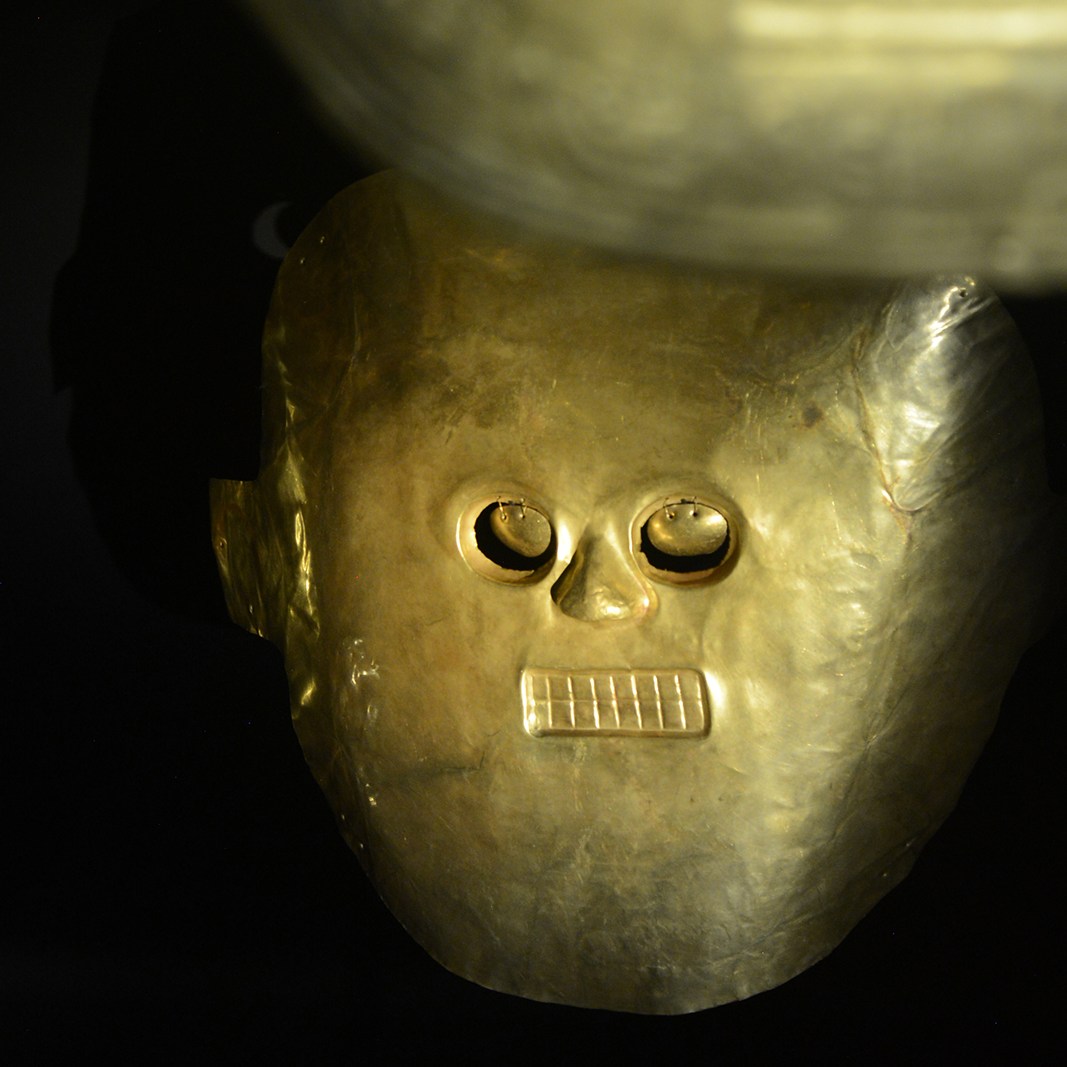
Plan to spend at least two hours at the Museo del Oro (Museum of the Gold), one of several prominent museums held in trust by Columbia’s central bank, and whose name’s use of the definite article del (of the), where de (of) might have sufficed, seems an appropriately flexing indication that this, damas y caballeros, is in fact the gold. The museum showcases an unparalleled collection of more than 55,000 pre-Hispanic gold artifacts, highlighting the intricate artistry of the region’s early indigenous cultures. Most notable among the pieces are the Muisca Raft, a ceremonial object depicting an elaborate golden figure, and the Poporo Quimbaya, a singular work of ritualistic significance. Particularly effective are the multimedia portrayals of ancient metallurgical arts in action and the processes that evolved across generations of trial and error to produce masterpieces such as those on display.
Just across Calle 16 is the Casona del Museo (Mansion of the Museum), whose conspicuous façade beckons visitors to peruse the wares offered by its resident artisans. These are primarily jewelers selling emeralds, as Colombia dominates the global emerald industry, producing more than 70% of the world’s stones. Colombian emeralds are prized for their intense green hues and clarity, so even if you’re not sufficiently educated on gemstones to take home a pricey souvenir, untrained eyes will still enjoy some window-shopping.
The conjoined iglesias (churches) of Veracruz (True Cross) and San Francisco run the length of the block northwest of Parque Santander, the latter being Bogotá’s oldest surviving church. San Francisco’s dark nave obscures the ornate craftsmanship of its pews yet highlights the elaborately gilded altarpiece. Continue for a few blocks southwest along Carrera 7, or Calle Real (Royal Street), the city’s primary pedestrian thoroughfare, passing banks, shops and restaurants, and maybe even some local masters bent over a public chess table.
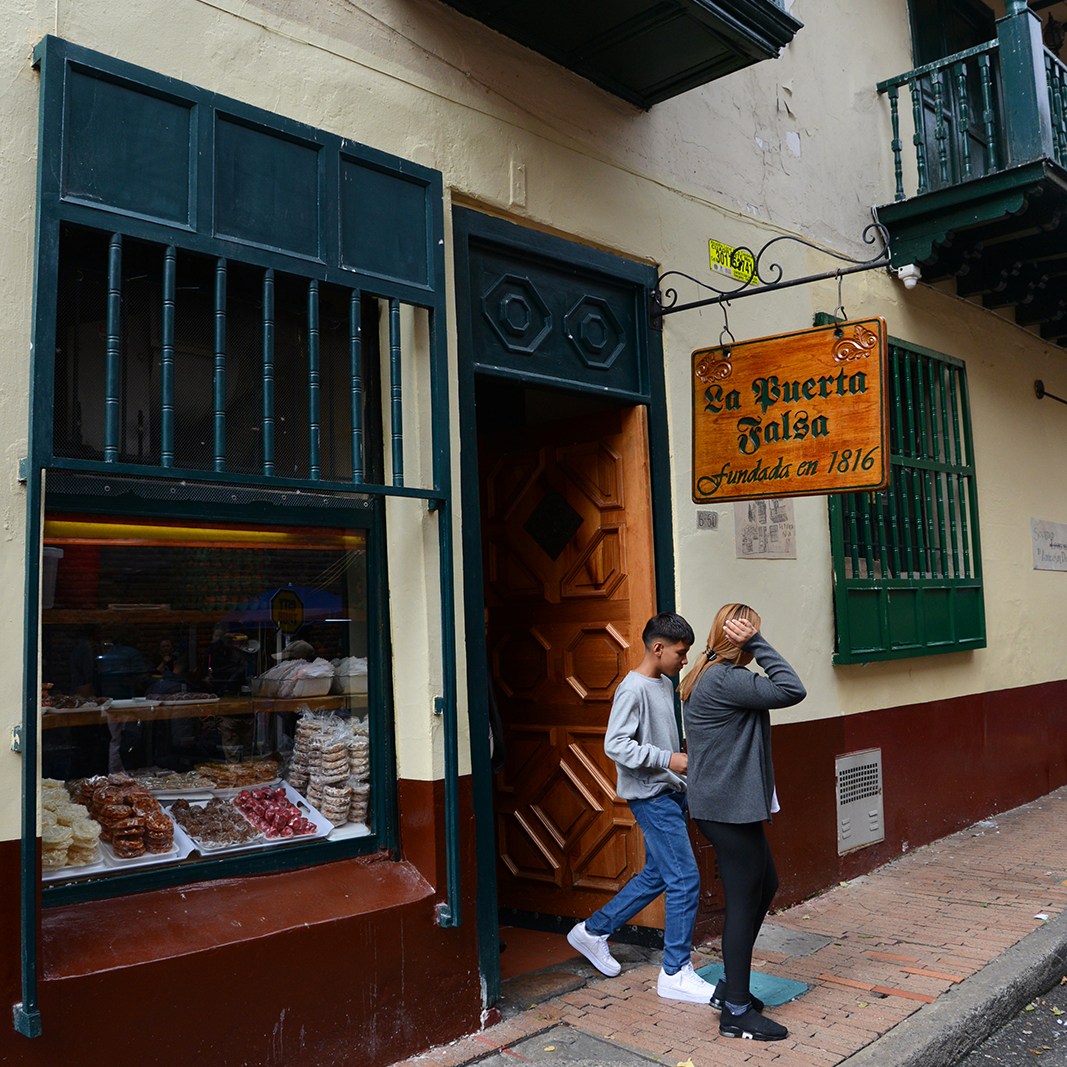
When you reach the corner of Plaza Bolívar, turn left on Calle 11 for lunch at La Puerta Falsa. Founded in 1816, the restaurant acquired its name over time as locals referenced it by its location “near the false door,” meaning a non-working door, installed as a confusing defense against attackers, on the side of the cathedral across the street. In the ensuing centuries, La Puerta Falsa has hosted numerous notable figures, including Bolívar himself, and today is celebrated for its stellar fare of regional staples, including changa (milk and egg soup) and likely the largest and possibly most delicious tamales you’ll ever eat.
AFTERNOON
Emerging from lunch, you may wonder whether the view of Calle 11 along the brick wall of the Catedral Primada has changed much since the building’s construction in the early 19th century. The neoclassical structure features an airy interior adorned with extensive art, Corinthian columns and intricate woodwork, with a striking façade looking over the statue of Simón Bolívar on the plaza that bears his name and where, in 1810, Columbians declared their independence from Spain.
At the plaza’s west corner, you’ll want to tread gingerly (or not) across one of Bogotá’s most colorful streets, Calle 10, which in this block is nicknamed Calle del Divorcio. The name’s origin is unclear (some attribute it to a forced-marriage couple that lived here unhappily yet unable to divorce, others to a women’s jail that was once located on it), but in other blocks the street carries nicknames such as del Mal Ladrón (the bad thief), de la Esperanza (hope) and del Pecado Mortal (mortal sin). One particularly inclined section is called de la Fatiga.
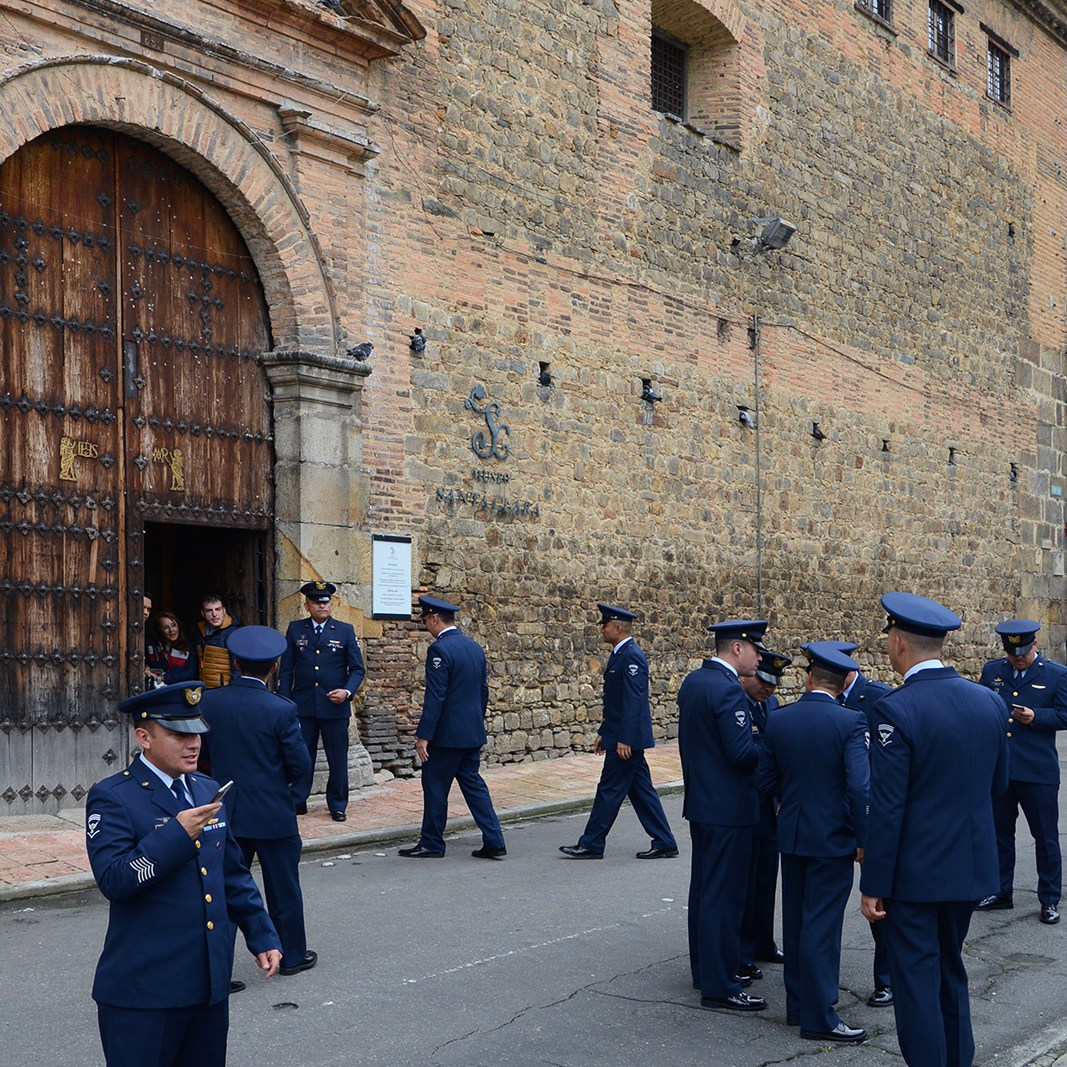
After a simple security check – due to the surrounding government buildings – enter Santa Clara, a 17th-century church whose interior is so ornate that it was deconsecrated and converted into a museum. Before thinking, “Nice, but I doubt Raphael or Titian felt threatened,” consider that much of what you are seeing is the work of indigenous artists who were commissioned to create religious pieces that fused native styles with European influences, these works now representing the cultural syncretism prevalent in colonial Latin America.
The same security guards who let you pass to Santa Clara should now let you step onto Plaza Núñez, flanked by Congreso to the northeast and the presidential residence, Casa de Nariño, to the southwest, and named after Rafael Núñez, who might be described most succinctly as the Columbian Thomas Jefferson. The monument on the plaza is to Antonio Nariño, a key figure in the country’s early revolutionary efforts and advocate for democratic principles. Executed by a Spanish colonial authority firing squad, Nariño was revered as a martyr for liberty and entombed in the nearby cathedral. Also on this compound is a small, octagonal structure dating back to 1803 and housing the continent’s first astronomical observatory.
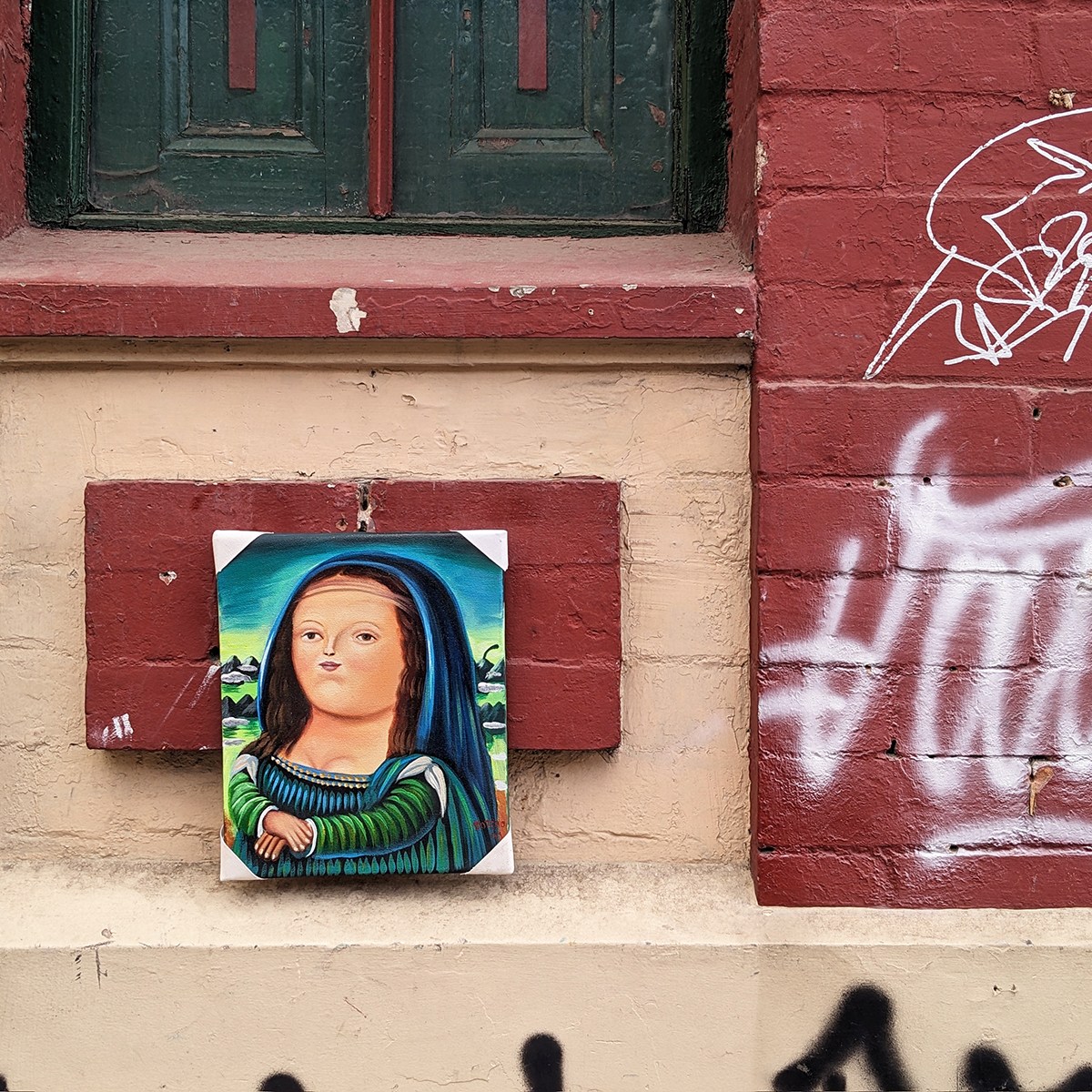
Unless you’re here on a Tuesday, when it’s closed, your next stop is the Museo Botero, named after preeminent Columbian artist Fernando Botero, whose unmistakable style featured exaggerated characters who, largely for satirical perspective, put on the avoirdupois to a degree unmatched even by the fleshy Flemish canvases of Peter Paul Rubens. The museum features more than 100 of the artist’s own works, as well as many by Picasso, Dalí, Monet and others, which he donated to the central bank’s trust on the condition that museum admission would remain free for all in perpetuity.
There are several other museums in the neighborhood that are in the bank’s care, some of them also granting free entrance, such as the Museo Casa de Moneda (Currency Museum). The area uphill from the cathedral also includes the various exhibits within the Centro Cultural Gabriel García Márquez, a complex named for the Nobel laureate and author of renowned novels such as Cien Años de Soledad (One Hundred Years of Solitude), as well as several attractive iglesias, especially Nuestra Señora de la Candelaria. Wandering the localidad that took its name from this church, you may find yourself appreciating its many charms yet thinking that it’s not quite the postcard-perfect colonial nook you’d anticipated. True, and for that you’ll need to visit the mountain villages of Antioquia, several hours northwest of here. But you’ll almost certainly be caught up in La Candelaria’s infectious vibe, especially if you wind down your afternoon with a drink and an empanada on Plazoletta del Chorro de Quevedo, a quaint square that has mastered lively-chill.
EVENING
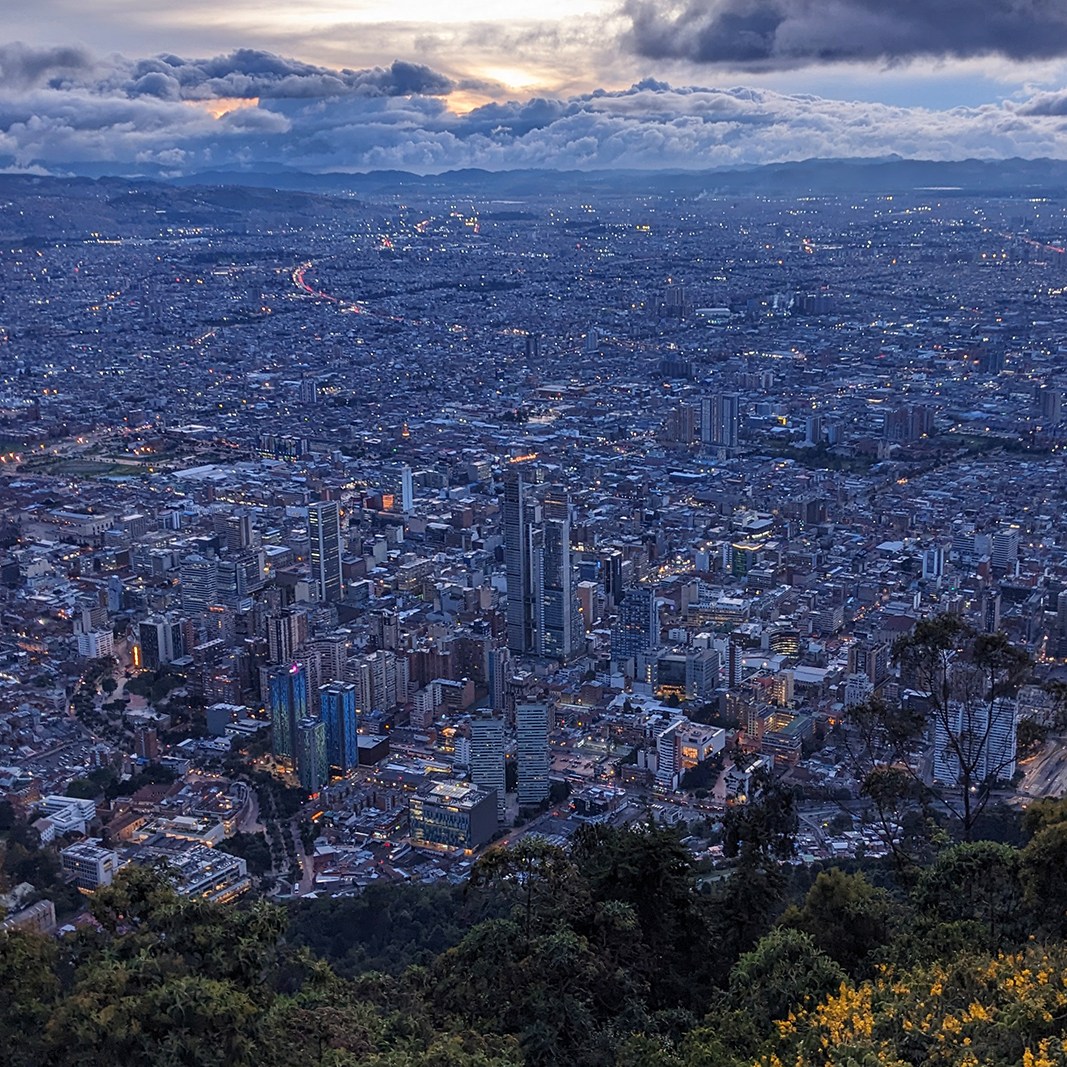
When the shadows from the west grow long, you leave La Candelaria, because, by most accounts, that’s when the shady characters emerge and put visitors at significantly increased risk. Fortunately, Bogotá’s most popular tourist attraction, Monserrate, is nearby, and sunset is an ideal time to visit. Whether you take the teleférico (cable car) or the funicular may depend on the day and time of your visit, because they keep different schedules, but either one will whisk you up to the fresher, cooler air at 3,150 meters (10,300 feet) for a commanding view of the city. Monserrate is a “must-see,” in every sense of the term.
There’s little question as to where to spend the rest of your night: Zona T, Bogotá’s vibrant entertainment district known for its upscale shops, restaurants and nightlife, and whose nickname derives from its T-shaped street layout centered around Carrera 13 and Calle 82. Enjoy some gamberi alla vodka or ossobuco alla milanese in the hip confines of trendy Storia d’Amore, and dance salsa into the early morning hours – things don’t really heat up until midnight – at Quebra Canto, a local favorite.
QUESTIONS FOR READERS
- What other neighborhoods, sites and activities would you recommend for someone with limited time in Bogotá?
- What Latin American cities have your favorite colonial neighborhoods?
- What are some of the best viewpoints overlooking major capitals around the world?
 WANDERLOOSED