






[Note: At the time I published this post, few outside of the Kremlin could have anticipated the horrors that would unfold a few, short months later. I’m choosing to leave this live a) in support of those Russian citizens who either understand and object to their leaders’ actions or have been thoroughly deceived by these men, and b) in the hope that reason, compassion and peace will prevail before one more Ukraininan suffers senselessly, and people around the world will again be able to count Muscovites among their friends. But that’s going to take a long, long time. – A.D.]
For anyone born west of Prague before 1980, the name “Moscow” is singularly rich in mystique, history and connotation. Most of these associations tie directly or indirectly to the twin UNESCO World Heritage Sites of Red Square and the adjoining Kremlin, which, as a result, are at the top of visitors’ lists. As they should be.
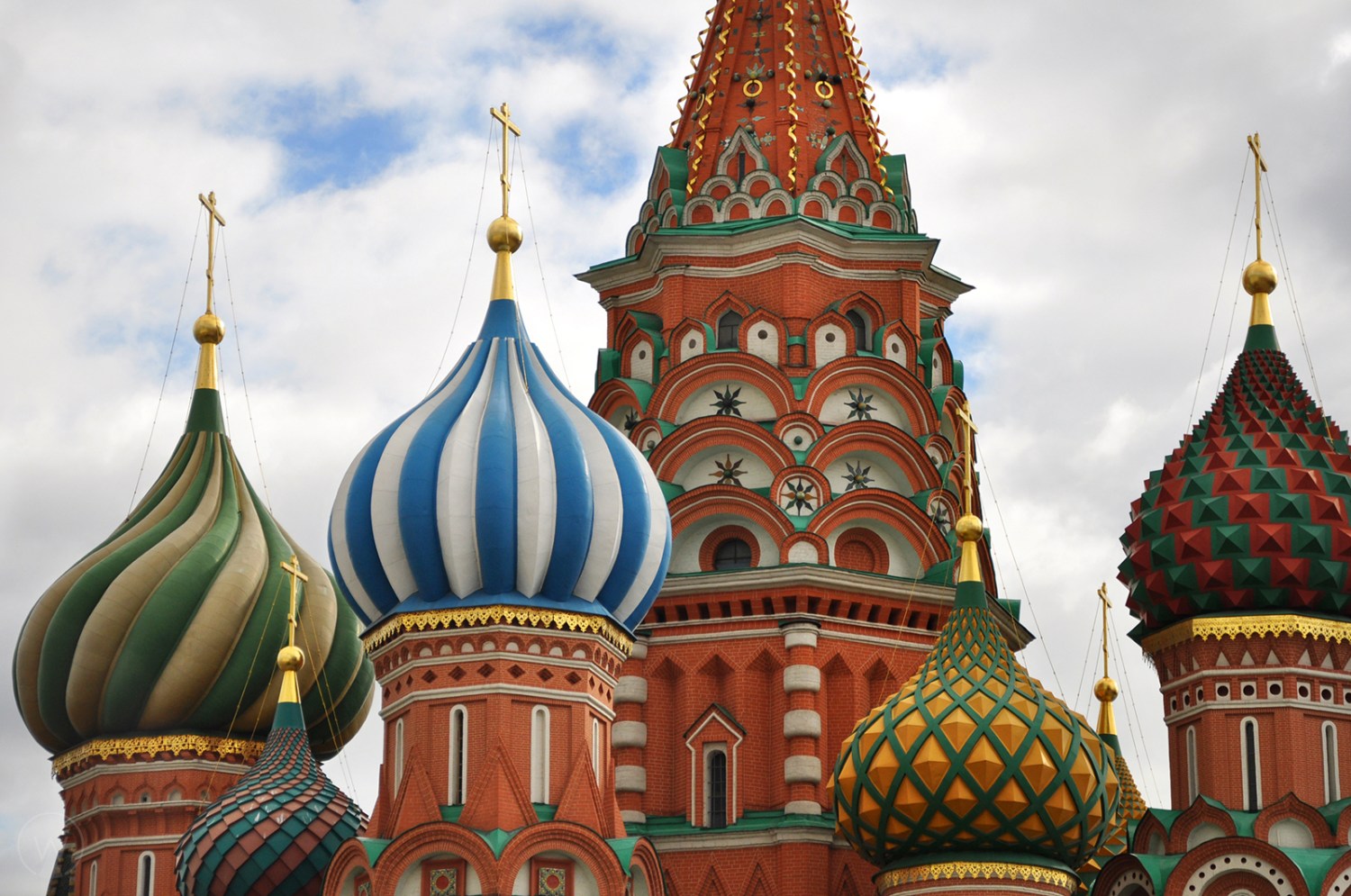
Red Square is one of the world’s most storied and most imposing public spaces, and a stroll across it is likely to stir up a bit more sentiment than one might expect from an 18-acre rectangle of empty land. At the Square’s south end are the colorful, onion-domed spires of St. Basil’s Cathedral, one of the most recognizable religious structures anywhere. For a quarter kilometer along its eastern perimeter stretches GUM, a department store whose glass gallery houses more than a thousand of Russia’s most luxurious shops, a far cry from the era when it bleakly hosted lines of thousands of people shopping from empty shelves. The State Historical Museum’s façade of bold red (naturally) marks the Square’s north end, and Lenin’s Mausoleum rests on the west side.
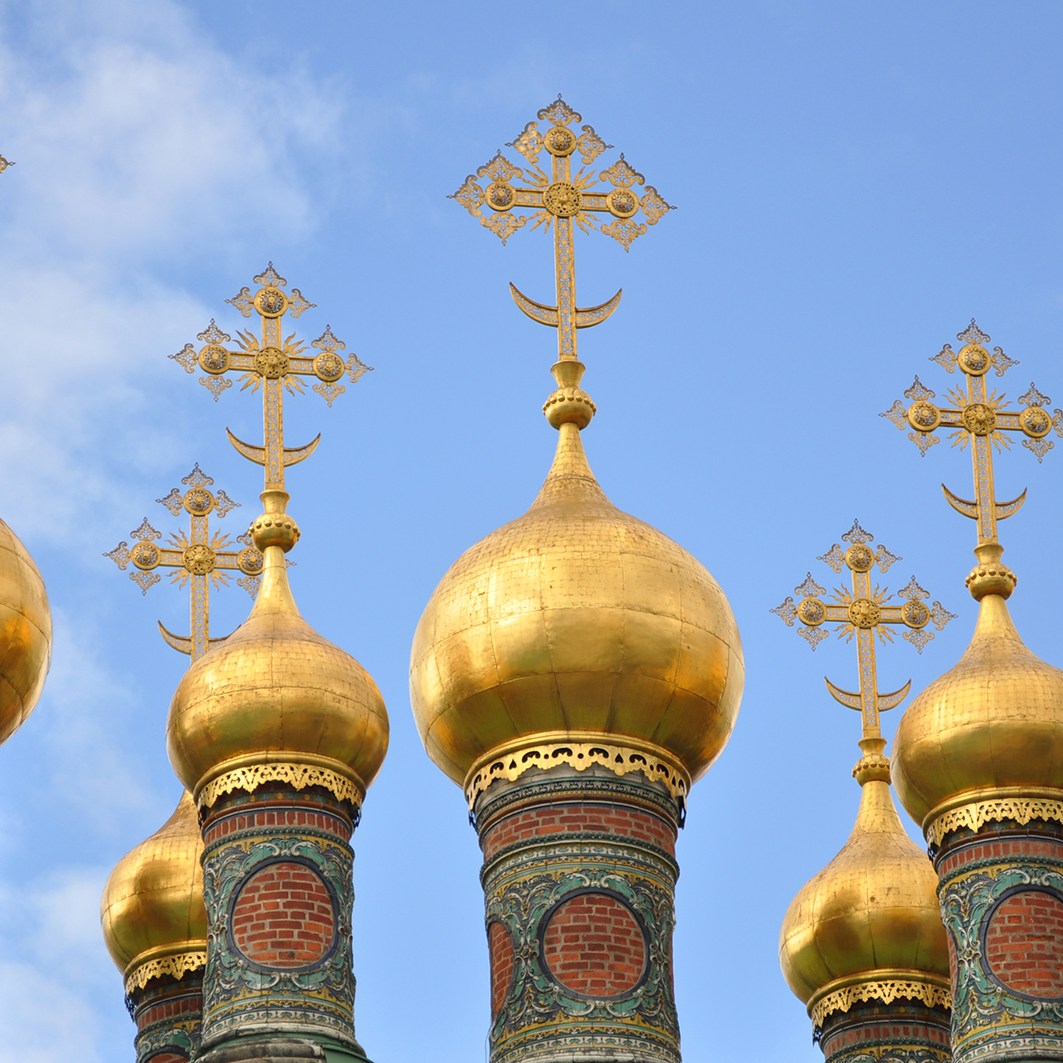
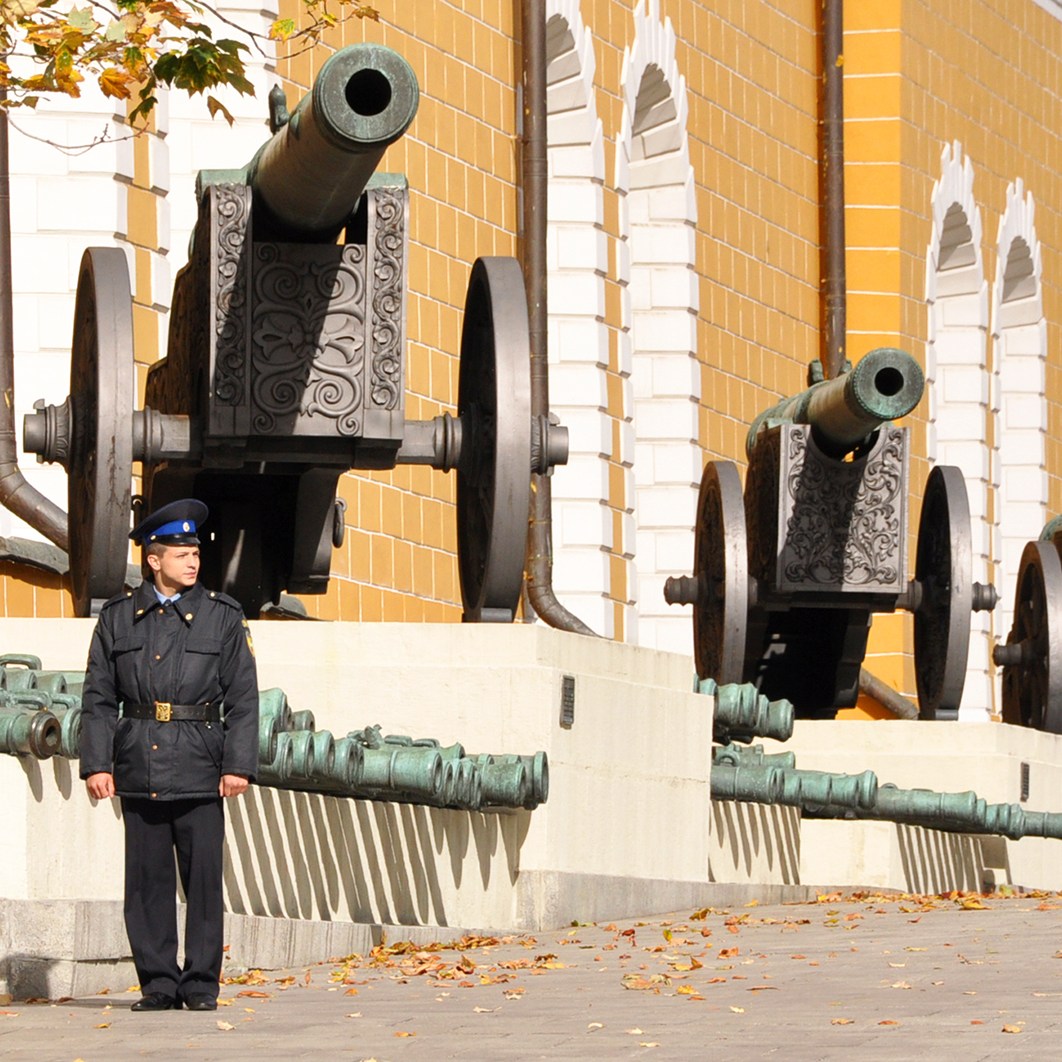
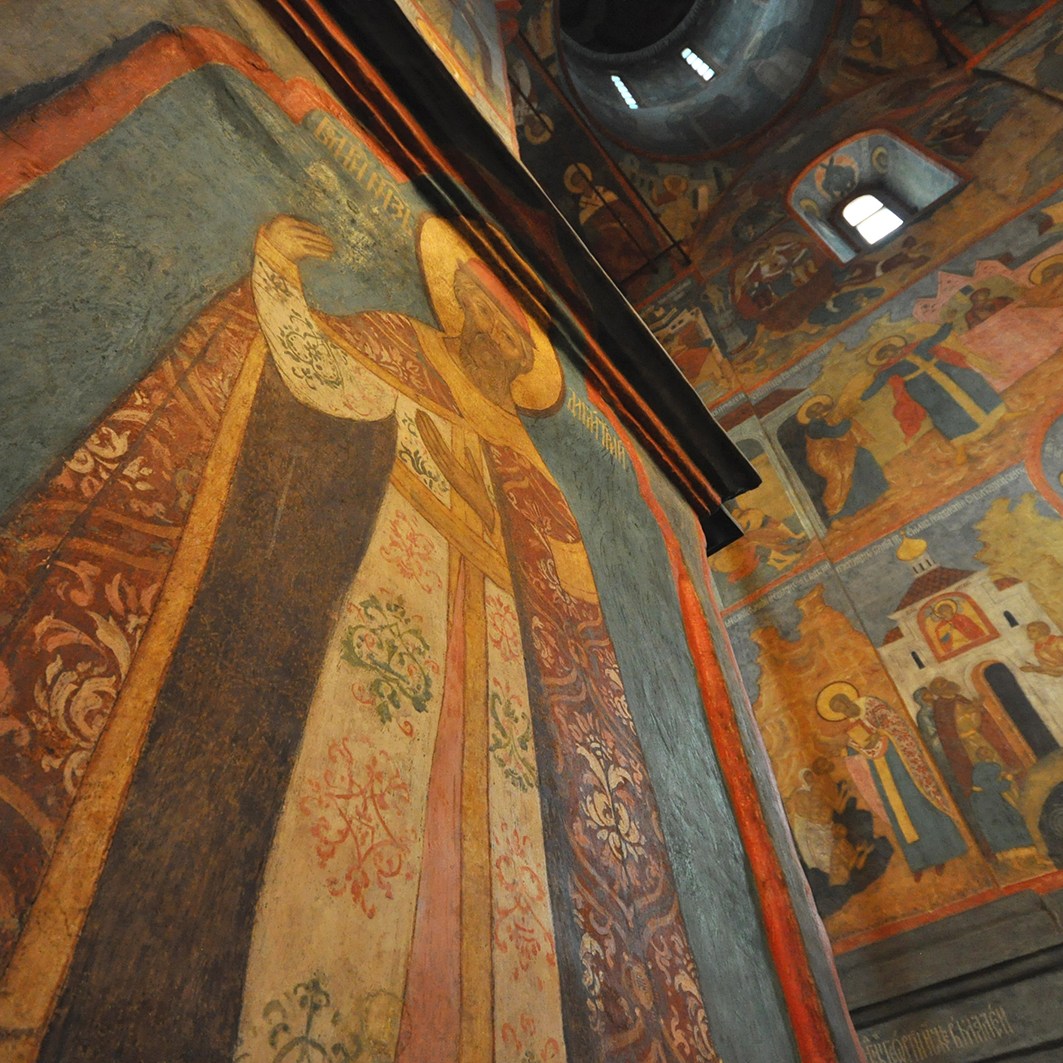
Just beyond the Mausoleum is the fortified Kremlin Complex, seat of Russia’s political power and home to numerous governmental, religious and military buildings, most of which — such as the Armory and the Cathedral of the Assumption — are open to visitors and rival their counterparts in any European capital. A short distance to the north are the Bolshoi Theater and the Lubyanka building, former headquarters of the KGB, while a walk toward the southwest, possibly including the pedestrian-only Arbat Street, leads past the majestic Cathedral of Christ Savior and across the Moskva River to Gorky Park.
Even the most basic Moscow itinerary will include these attractions and amply satisfy visitors’ appetites in the process. And yet nestled less conspicuously among these headliners are numerous sites that might regrettably go unnoticed if not sought out. Here are five of my favorites.
1. KREMLIN DIAMOND FUND
When I shared my plans with a fellow passenger en route to Moscow and mentioned the Armory, she said with a vocal eye-roll, “Of course you’re going to visit the Armory,” then added emphatically, “But once inside, you must visit the Diamond Fund! And you must get there very early.” So it’s the first place I went once my morning train in from Sheremetyevo Airport arrived downtown. I paid the modest Diamond Fund upgrade fee with my Armory admission, then headed up some stairs into a highly secured room in which the ratio of guards to visitors was about 3 to 1.
And what a room! Rows and rows of the legendary tsars’ crowns and scepters sparkling like disco balls, and raw nuggets of pure gold the size of bowling balls. Gem-encrusted icons and religious ritual wares. A diamond twice the carat-weight of the Hope Diamond, gifted in 1829 to Nicholas I by the Shah of Persia as an apology for the massacre of the entire Russian diplomatic contingent in Tehran — a “blood diamond” in the truest sense.
2. HOTEL METROPOL
This sumptuous Nouveau structure with views of the nearby Bolshoi has a history not even Hollywood could have scripted, including, of course, its brief role as barracks for Bolshevik apparatchiks. Eat something — anything — in the Grand Dining Room, taking care not to dribble borscht on your shirt as you stare upward in mouth-agape awe at the elegant stained-glass ceiling.
3. MUZEON PARK OF ARTS
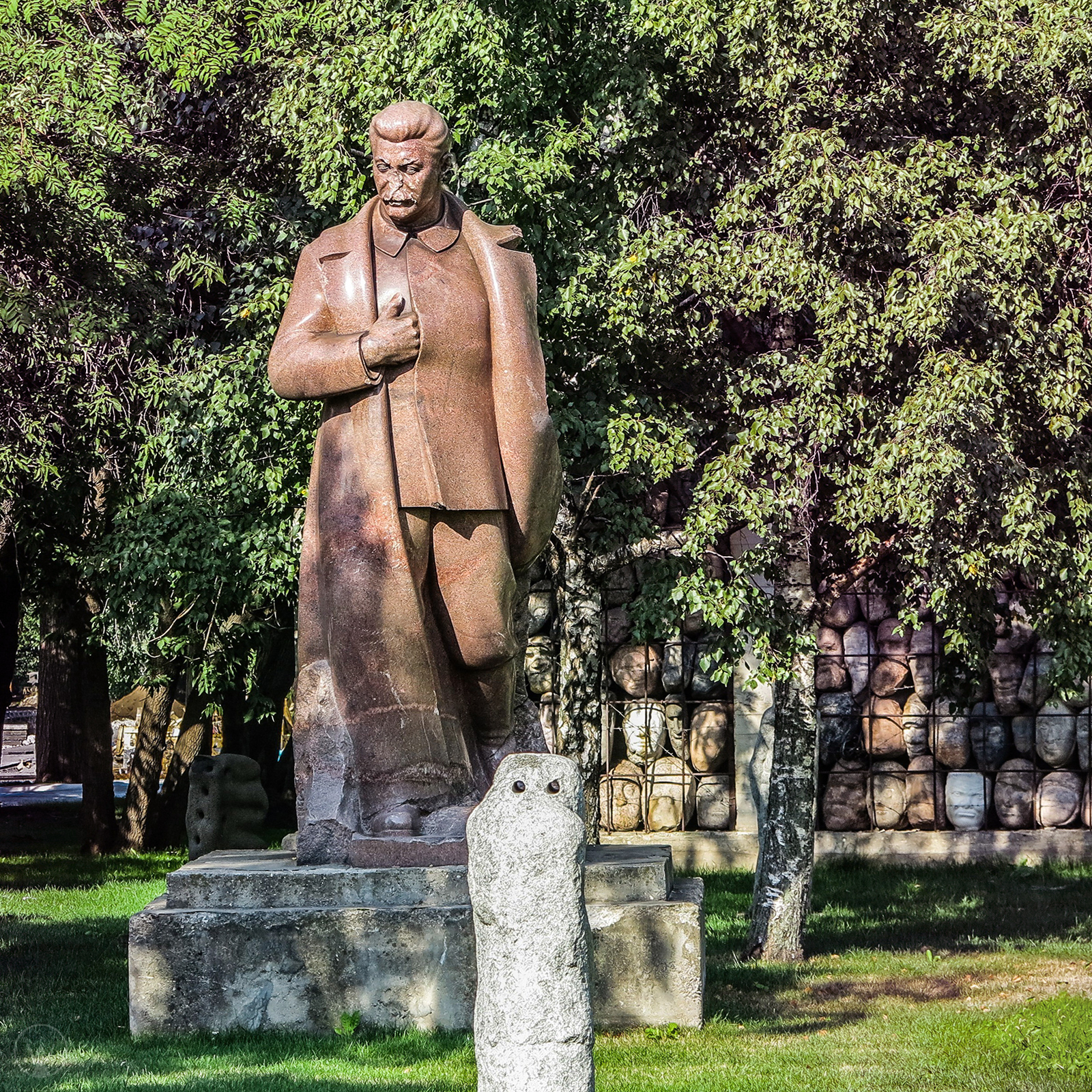
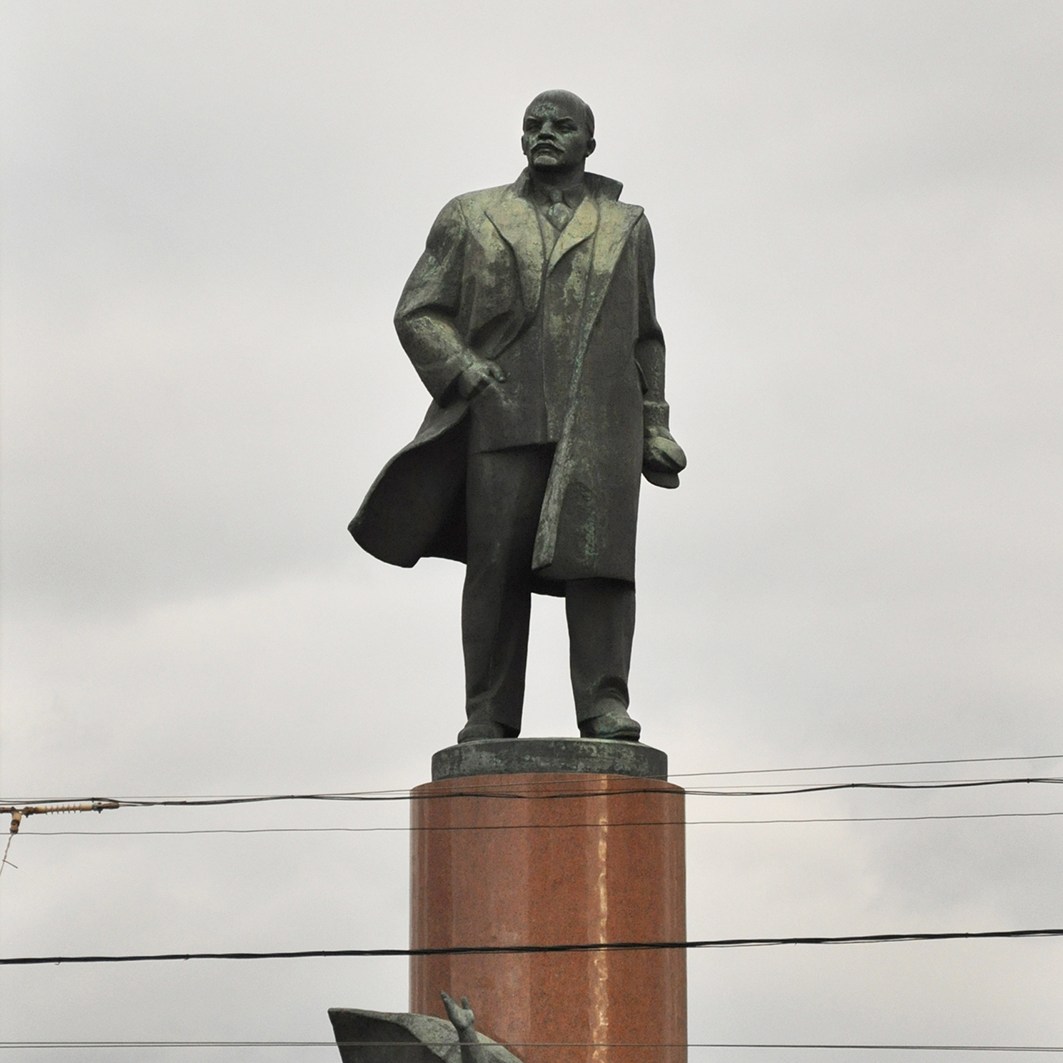
Muscovites figured out a solution for their emblems of a complicated past: Round them up and put them in a little park. What started spontaneously as a dumping ground in 1991 has in subsequent years become a more formal assemblage of relics that will almost make you feel as if you’re right back in the U.S.S.R. Of course this small plot of land just north of Gorky Park on the Muskva’s east bank isn’t a comprehensive repository of all toppled Soviet monuments, but from Lenin to Kalinin to Stalin and everyone in between, the gang’s all here, in pieces.
4. SUBWAY STATIONS
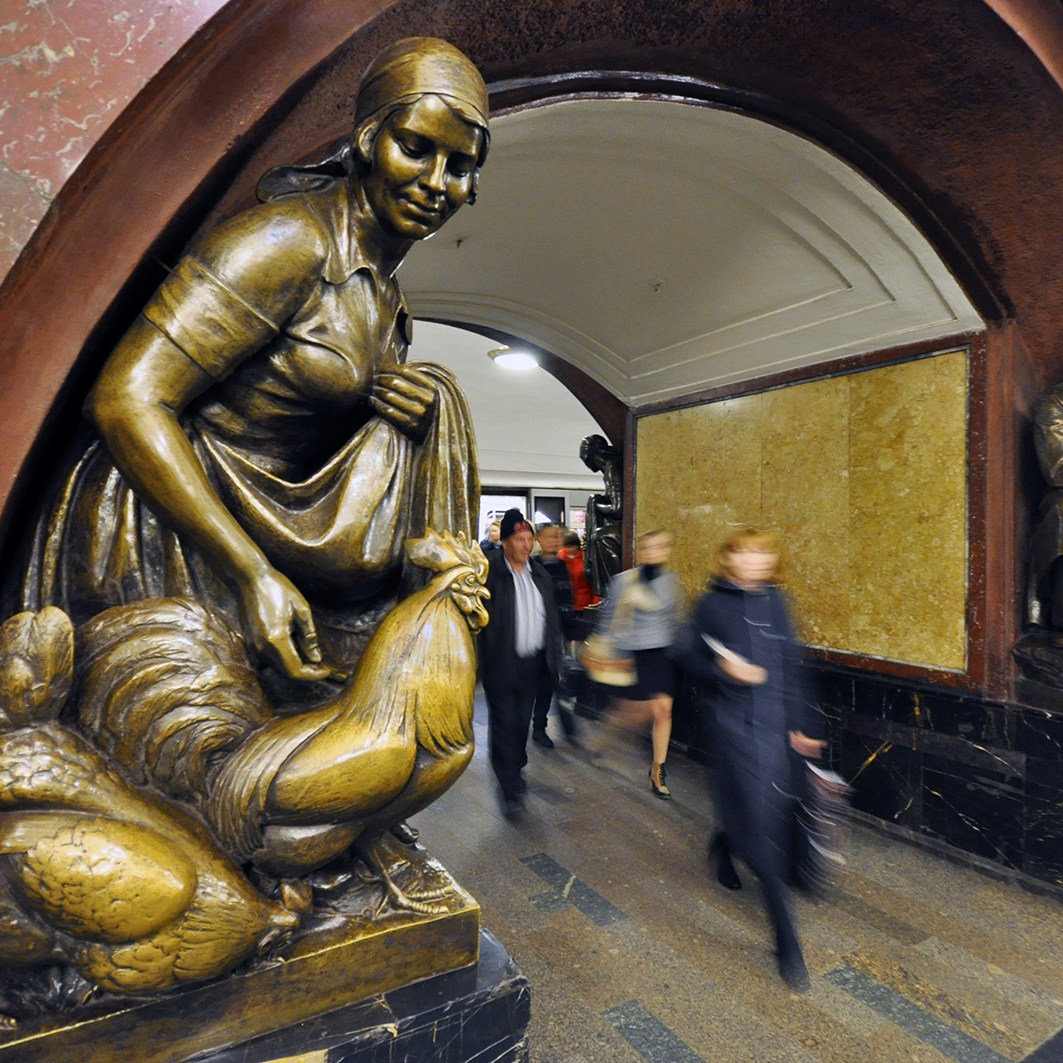
When one thinks of the world’s great subway systems, those that first come to mind are Le Métro de Paris, London’s Tube, the Tokyo Metro and maybe the NYCS, or at least its A-Train. Moscow’s subway doesn’t merely belong on this list; it indulges riders with an architectural feast beyond compare — below ground or above — in its artistry and variety. With 223 stations along twelve lines, it’s hard to choose which ones to visit, so start with these:
- Arbatskaya (Blue Line platform)
- Aviamotornaya
- Kievskaya (Circle Line platform)
- Komsomolskaya (Circle Line platform)
- Mayakovskaya
- Novokuznetskaya
- Novoslobodskaya
- Park Kultury (Circle Line platform)
- Park Pobedy (Blue Line platform)
- Ploschad Revolutsii – rub the bronze dog’s nose for good luck!
- Slavyansky Bulvar
- Taganskaya (Circle Line platform)
- Teatralnaya
5. KOLKHOZ MONUMENT
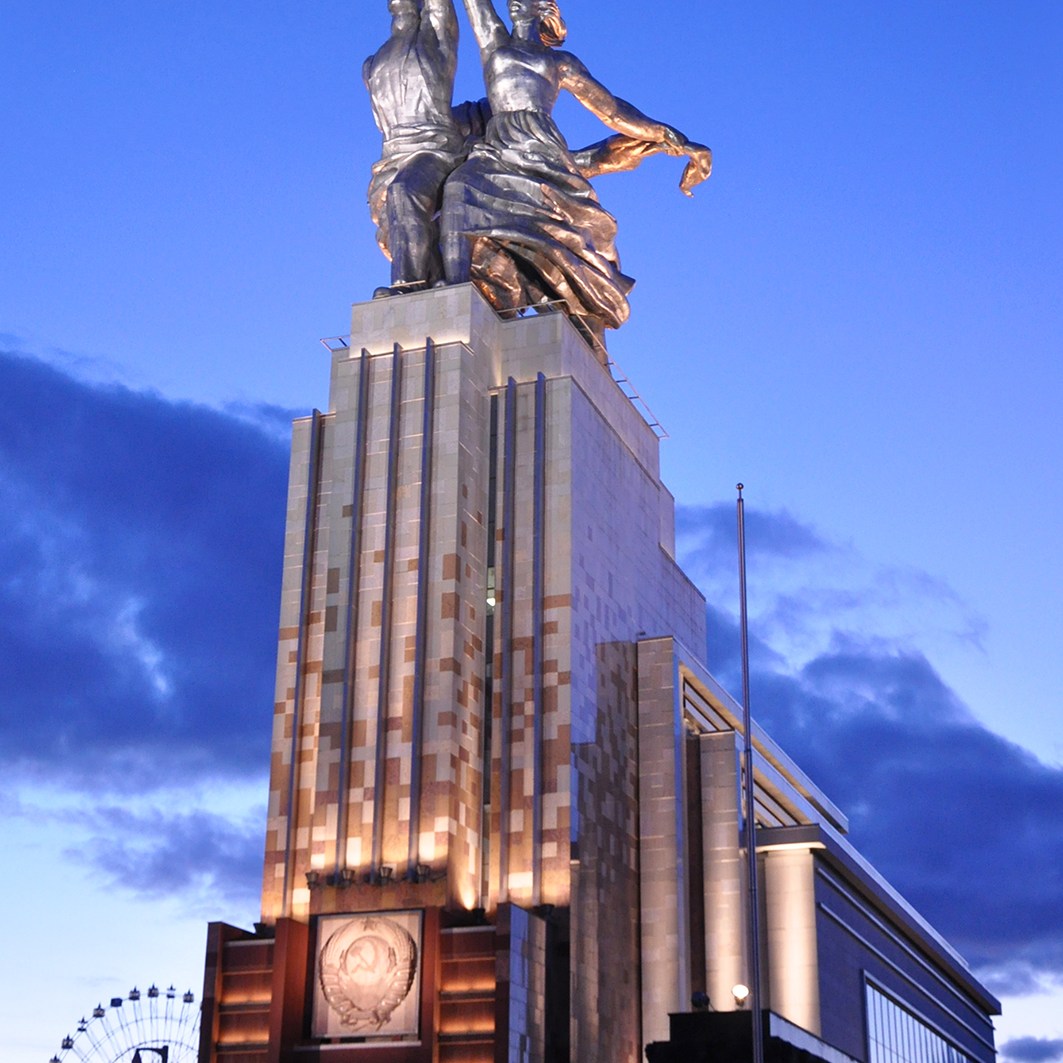
While you’re exploring the subway, take the orange line north from downtown up to the VDNKh stop in the Ostankinsky District. After sneaking a peak at the Cosmonaut Monument to the west (impressive in its own right), walk a few blocks up Prospekt Mira and prepare yourself for some possible self-reflection. Mine was something along these lines: “Wow, I get it! If I’d been surrounded by such idealized monuments, to say nothing of a relentless stream of propaganda as well as that minor detail of the total, systematic stifling of individual freedoms, I might have bought into the program, too.”
The cause of these musings was the magnificent Worker and Kolkhoz Woman monument (kolkhoz means “collective farm”), designed by the prominent Latvian artist and “Queen of Soviet Realistic Sculpture,” Vera Mukhina, for the 1937 World’s Fair in Paris. There, at the base of the Eiffel Tower, the 25-meter marvel in steel and stone faced off against the swastika-topped German exhibition directly across the Trocadero esplanade, the implications of the unsubtly eastward thrust of hammer and cycle held by the colossal couple not lost on the Fair’s attendees.
Today this breathtaking structure still faces the east, albeit a bit southeast, perhaps in tacit acknowledgment that when all the dust settled, those lofty plans of so long ago eventually headed south. Even so, I thought, “Well, if communism gave us this thing of such powerful beauty, maybe it…nah, it was pretty bad.” Making my way back down Mira toward the subway, I was reminded of another worthy vestige of an earlier and very different time, one that has aged imperfectly but somewhat better than its subject matter has:
“Top 10 Ways To Make Communism Fun Again”
(from Late Show with David Letterman, November 16, 1989)
10. Spell it with a K.
9. Have Castro do guest shot on Cosby.
8. Add mechanical shark attraction at Lenin’s tomb.
7. Have Revlon introduce new “Khmer Rouge.”
6. Give everybody red birthmark decals to wear on forehead.
5. Adopt “lovable loser” persona, like the ’61 Mets.
4. Get Skip Gorbachev to do a “Not Your Father’s Oldsmobile” commercial.
3. Hire “The Famous Chicken” to disrupt Politburo meetings.
2. Have Deng Xiao Peng cry during Barbara Walters interview.
1. Less centralized economic planning; more rock and roll!
And as the escalator carried me down toward the platform, I amused myself with the thought that Dave might have also considered, “Have Disney annex Cuba under guise of EPCOT expansion.”
QUESTIONS FOR READERS
- Any other suggestions for a first visit to Moscow?
- What memories or feelings does the name “Moscow” stir in you?
- Where can you get the best borscht in town?
 WANDERLOOSED
How do Americans stay out of Putin’s gulags if they visit?
LikeLike
You’ll need to tell me. Most of what I know about Gulags I learned from Anne Applebaum’s excellent book “Gulag.” I haven’t read Solzhenitsyn’s “Archipelago” yet, and am unfamiliar with what’s happening politically within Russia currently, beyond what western news outlets pick up.
LikeLiked by 1 person
Annie Applebaum is an excellent resource.
LikeLiked by 1 person
https://ukrainetoday.org/?s=applebaum
LikeLiked by 1 person