




“What, we need to be Italian to get in?” Hess rebuffed the comely ragazza who had asked where we were from, as she collected our cover charge for Discoteca Radio Londra in (literally in — it’s a cave in an ancient pile of amphora shards) Rome’s hip Monte Testaccio. This being my first time back in town as anything other than a clueless youngster, as I considered how soave “Come, dobbiamo essere italiani per entrare?” had sounded in my friend’s immaculate Italian, I got a fresh glimpse of the language’s, shall we say, broader potential.
The entirety of Hess’s duties as summer intern at the American Embassy to the Vatican consisted of keeping staff entertained, and each morning scouring a few dozen international papers (that’s what we used back then, kids) for news relating to the Holy See, which he dutifully clipped and glue-sticked to folio-sized briefing sheets for his boss’s boss’s boss, the ambassador. So Hess had a lot of free time. Similarly, the orchestra and technical staff for the production of Le Nozze di Figaro for which I was in town to sing the role of Mozart’s curmudgeonly Dottore Bartolo, were union. Italian union. So I had a lot of free time.
Together, the two of us — well, the three of us, counting his Vespa PX 125, which we certainly must — spent that free time very well. Long before Agent Kujan and the rest of us would learn the unfortunate truth about Keyser Söze, Hess and I sat hillside in the Parco del Colle Oppio for an al fresco screening of I Soliti Sospetti (The Usual Suspects), on a giant screen dwarfed by the Colosseum looming behind it just across the street. We leaped heavenward in a spontaneous rapture when the fountains of the Gianicolo fired up for the morning as we basked, after a night on the town, in dawn’s first beams over the Eternal City, Hess shouting, “R-r-r-r-r-oma, ti aaaaaamoooooo!” We expended considerable effort, and Lire not-a-few, in our self-appointed roles as municipal gelato inspectors.
My enterprising friend had stockpiled some Dolce & Gabbana Pour Homme samples, which we sprinkled so liberally that even a couple of decades later, the smell always takes me back to Rome. Thus properly marinated, we conspired (Hess playing Cyrano to supplement my much-weaker Italian) in coaxing in my direction the attention of Valentina, a lovely violinist in the opera orchestra, and did so with moderate success. Both the apex and the nadir of this joint venture were signaled by Hess’s hardy, Armenian-gutted guffaw that boomed from his nearby hideout when he heard me respond to the incomprehensible, decibellissimo ragings of Valentina’s boyfriend (a boyfriend?!) with a nonplussed, “Dai, parliamo come gentiluomini.” (“Come on, like gentlemen we speaking will.”)
It was Hess who, during that magical summer sojourn, introduced me to the route of this walking tour. It doesn’t stray much from the beaten path, but it does add a tad of depth and delight to a path that deserves to be beaten. In the ensuing decades I’ve prescribed it zealously to (read: imposed it tyrannically upon) every Rome-bound friend, to enthusiastic response. So now I share it with you.
ORIENTATION
The basic route runs from the Pantheon to Piazza Santa Maria in Trastevere and, at about a mile, hardly seems worthy of being called a “tour,” but stick with me. Whether this lasts a couple of hours or all day is up to you, but timing is important, and late-but-not-too-late afternoon is recommended for a few reasons: First, you avoid peak heat. Second, you want to arrive in Trastevere at a time that will allow you to explore a bit and transition to dinner, which, in Italy, never ever begins with a “5” on the clock, and rarely with a “6.” Third, you want the indoor stops along the way, primarily churches, to be open. So it’s a balance that requires you to check some closing times and mind your pace.
PANTHEON AND GELATO
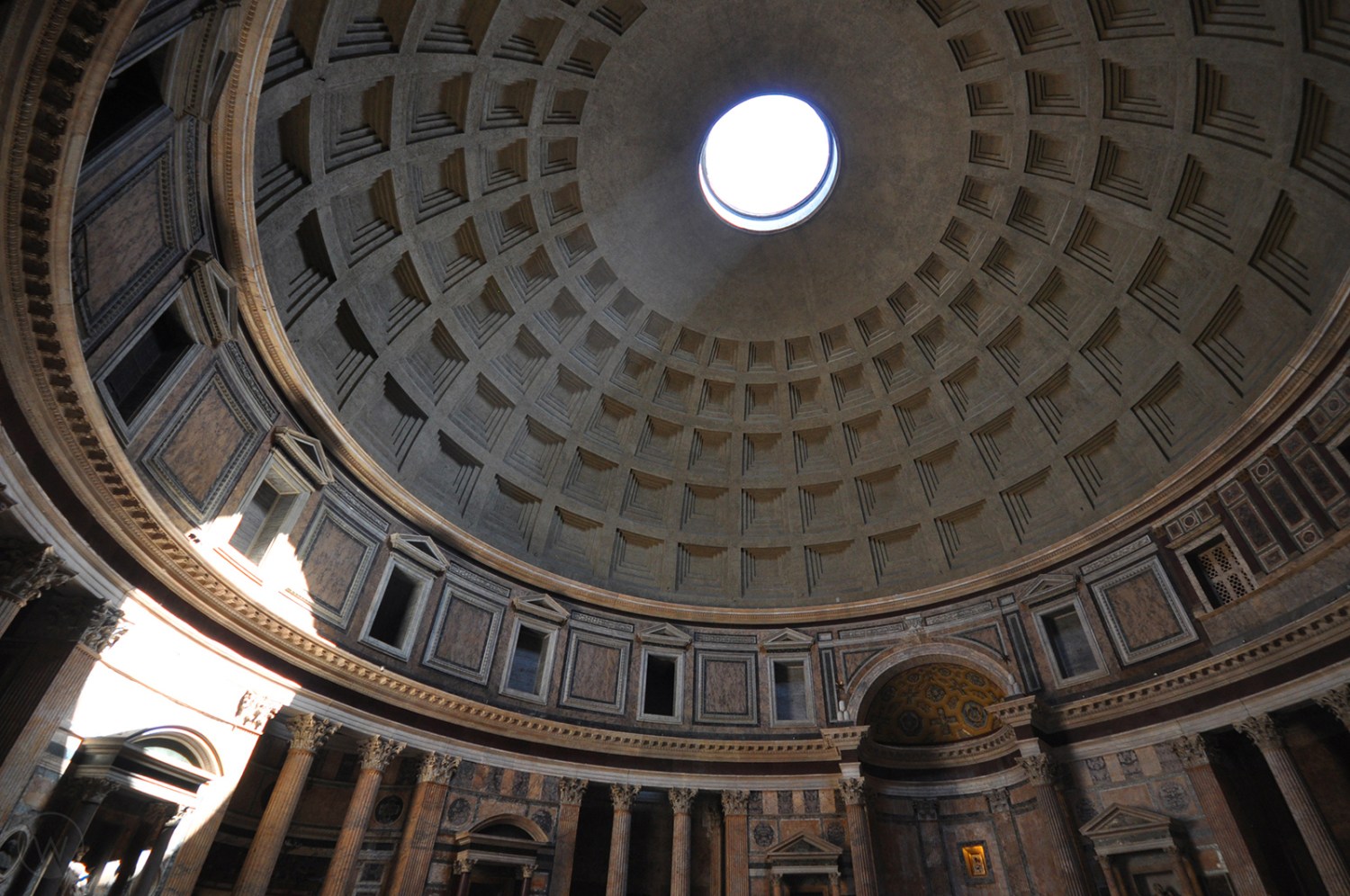
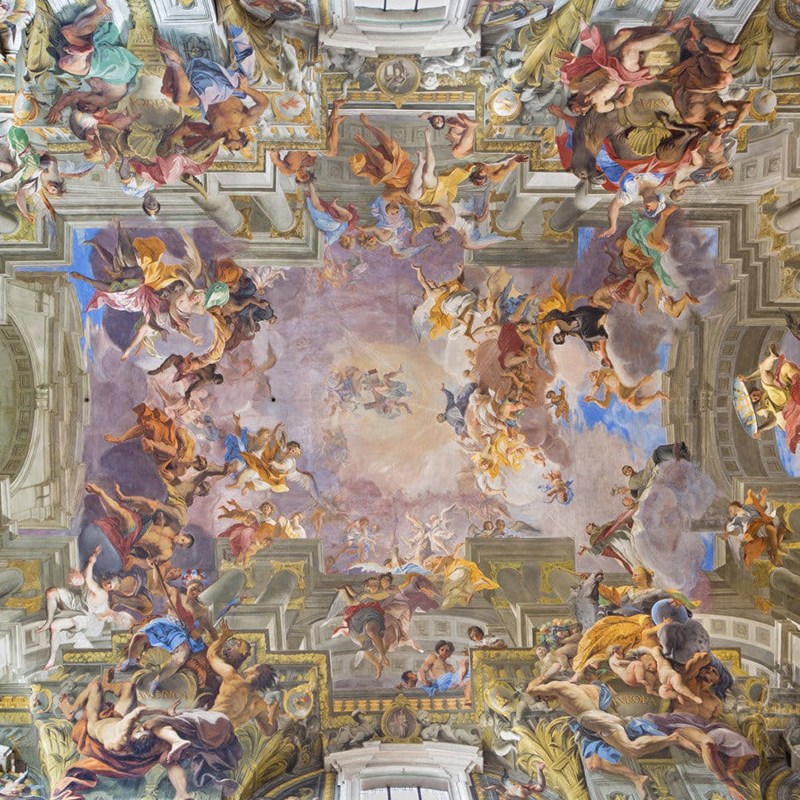
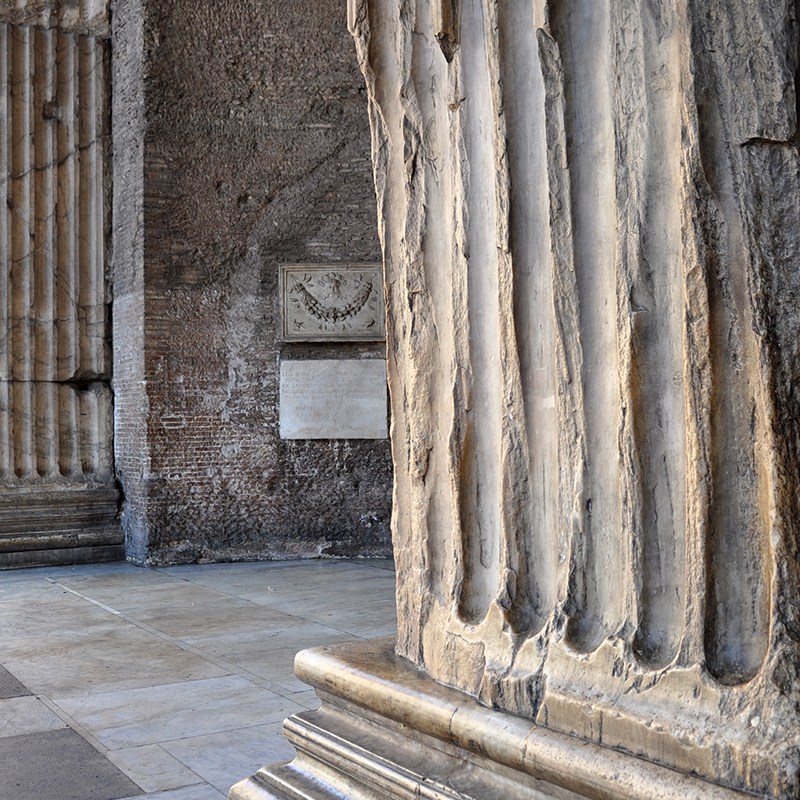
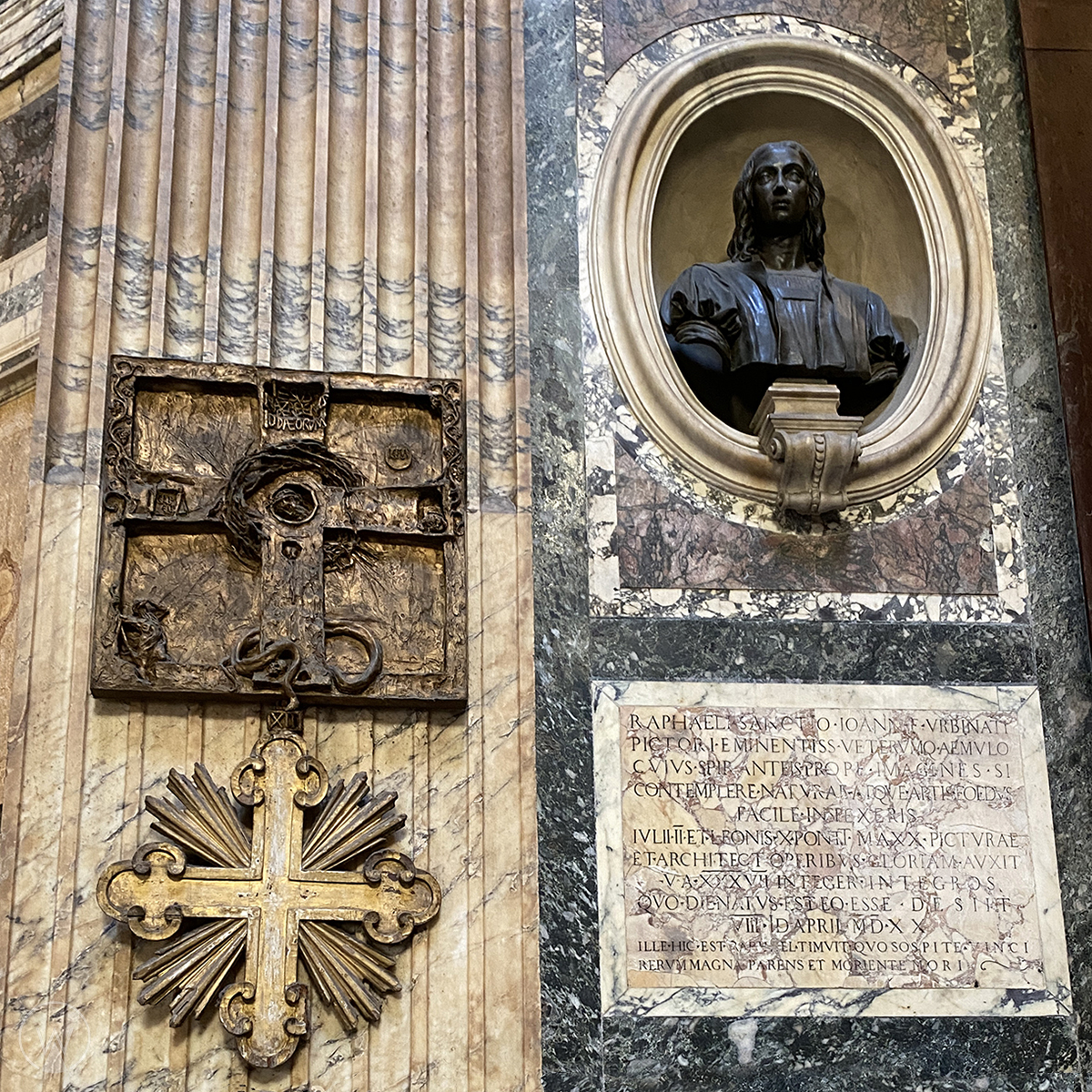
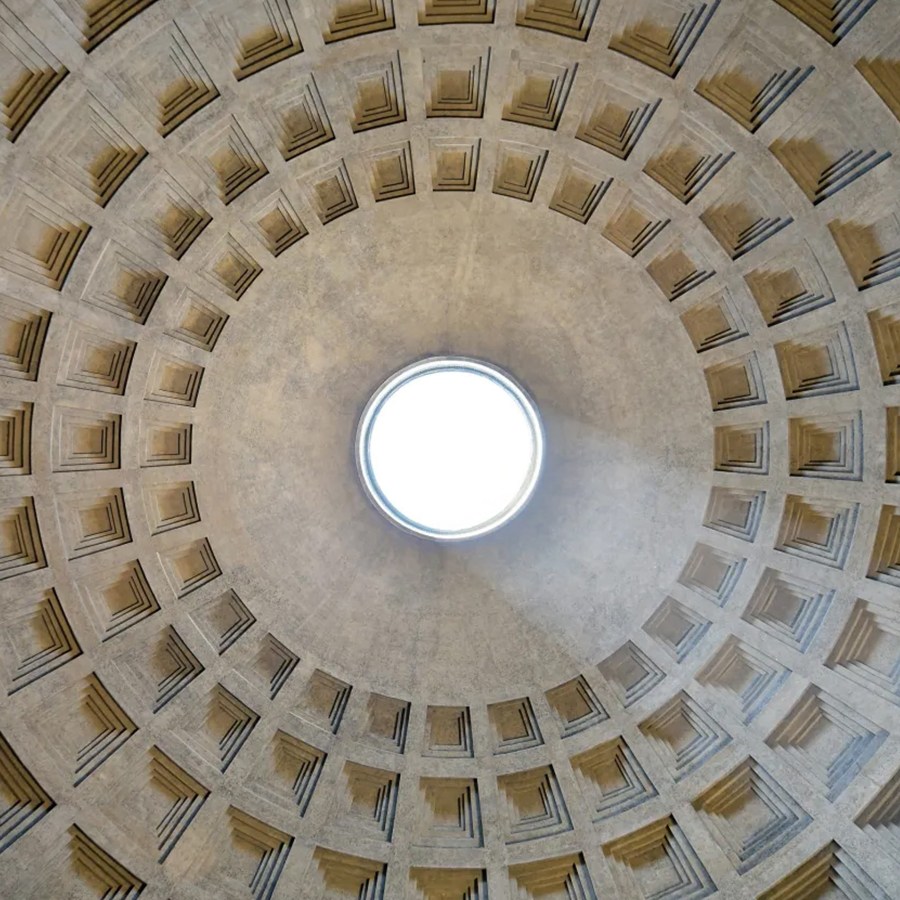
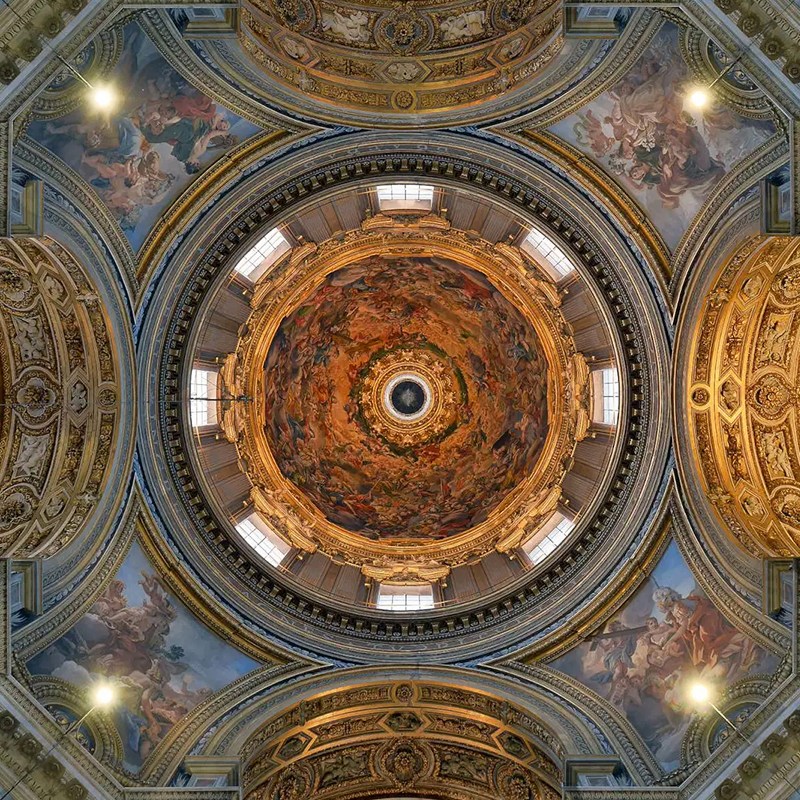
As the most prominent landmark in the vicinity, the Pantheon, whose eight-meter oculus opens to the sky as an enduring marvel of Classical architecture and early concrete construction techniques, is the intuitive starting point for our tour. But as a warmup exercise for our generally-westward walk, do consider cheating a couple of blocks due east to take in the fantastic trompe l’oeil ceiling and dome of Sant’Ignazio di Loyola on Via del Caravita, then zigzaging your way a few blocks diagonally southwest to see what’s left of the ruins of the ancient baths (or “terme”) of Agrippa on Via dell’Arco della Ciambella.
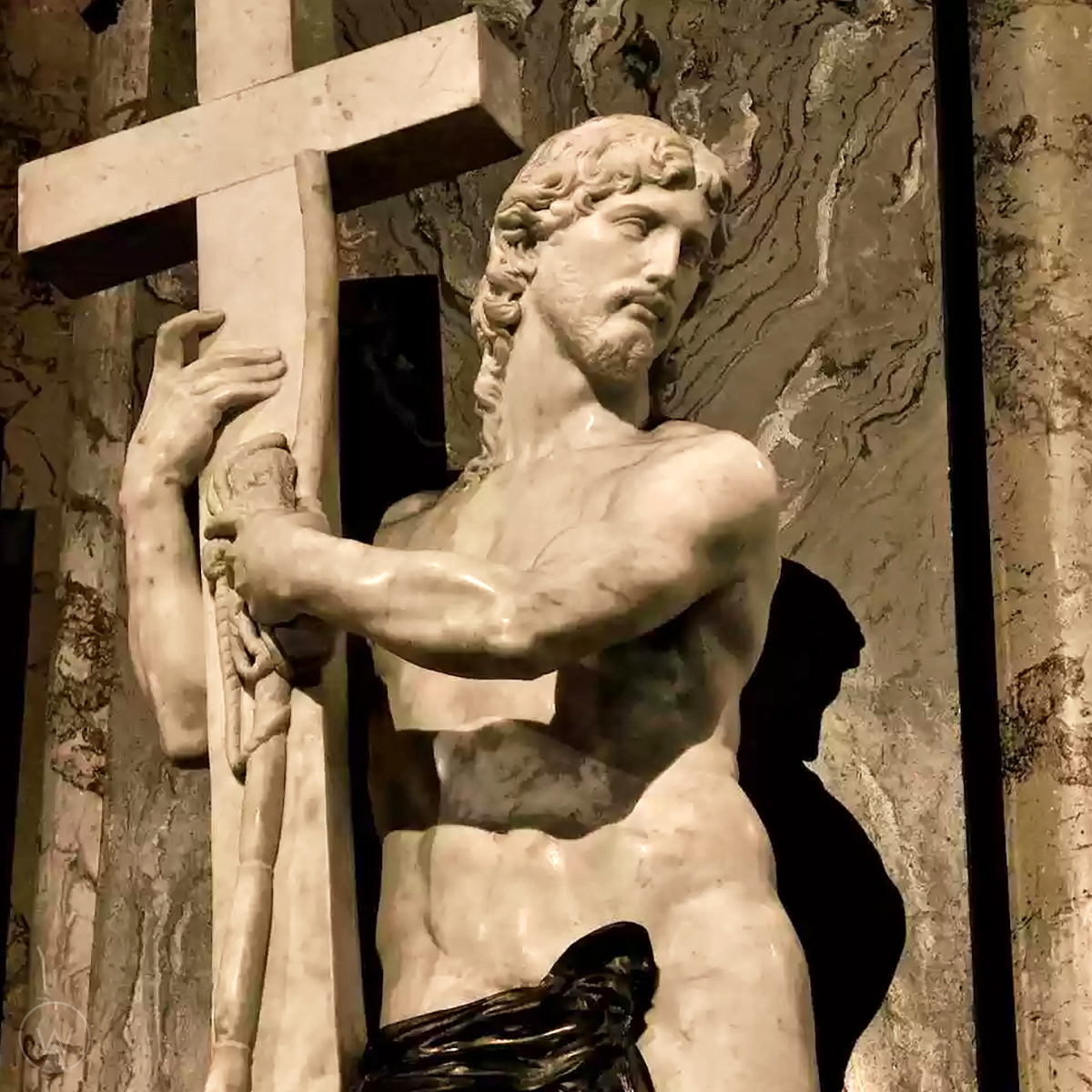
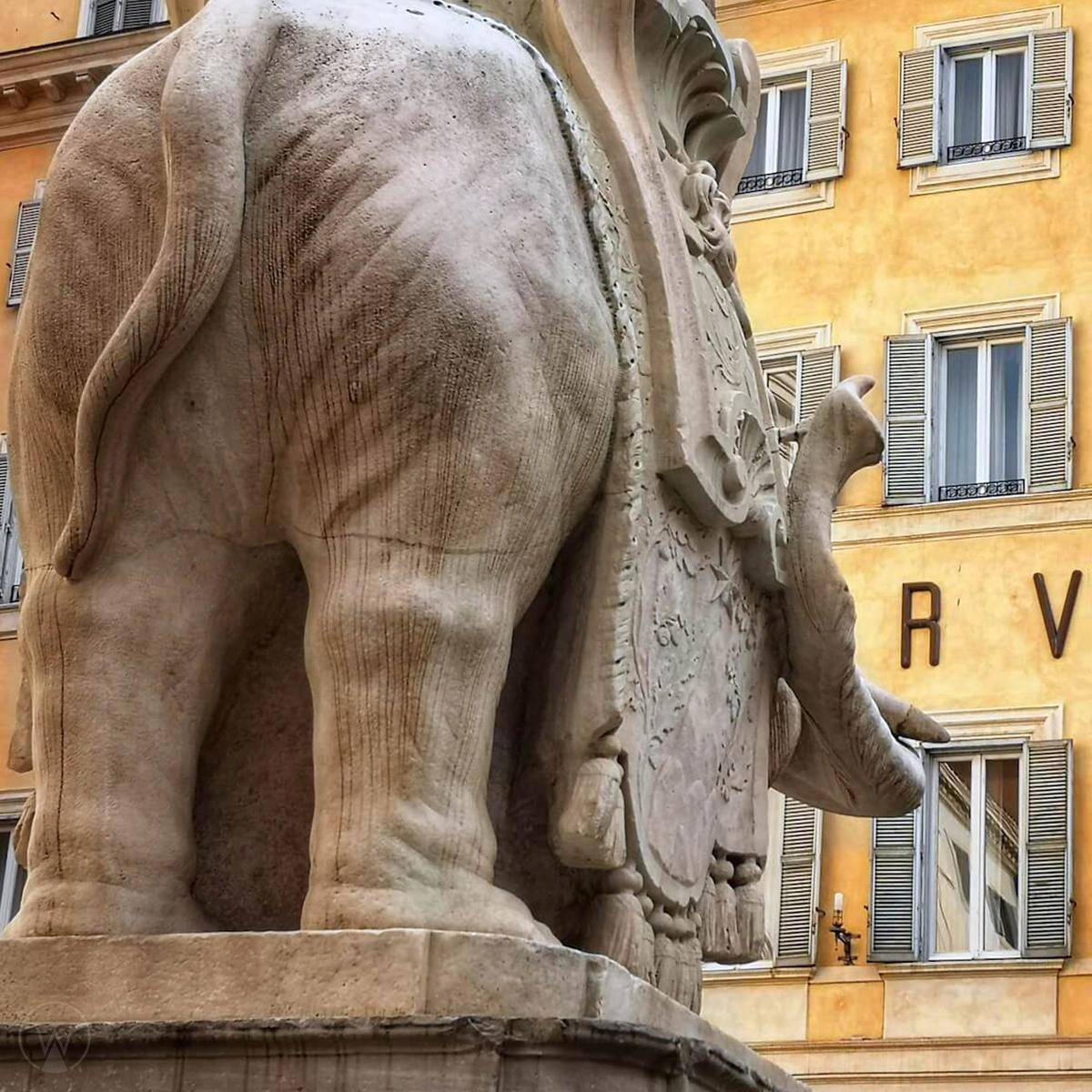
From there, go north toward the Pantheon on Via dei Cestari, stopping at Piazza della Minerva to see the Basilica di Santa Maria sopra Minerva, especially its tranquil chiostro (cloister) and Michelangelo’s Cristo della Minerva (known in English as The Risen Christ, standing left of the main altar). You’re preceded in your visit to this site of two papal conclaves by several notables through the centuries, including the mystic political activist St. Catherine of Siena and the Renaissance master Fra Angelico, both of whom are buried in the basilica. And here in 1633, Galileo Galilei was interrogated by the Inquisition’s tribunal and forced to renounce his “heretical” notion of the Earth’s revolution around the sun. On the plaza itself is the obelisk Diocletian brought back from Egypt and for which Gianlorenzo Bernini fashioned a base of an elephant, to represent strength and wisdom. For reasons on which historians don’t entirely agree, the giant of Baroque sculpture — who also designed St. Peter’s Square — pointed the pachyderm’s exposed and clenched backside toward the adjacent Dominican monastery, ensuring that the friars would enjoy that particular view from their windows in perpetuity.
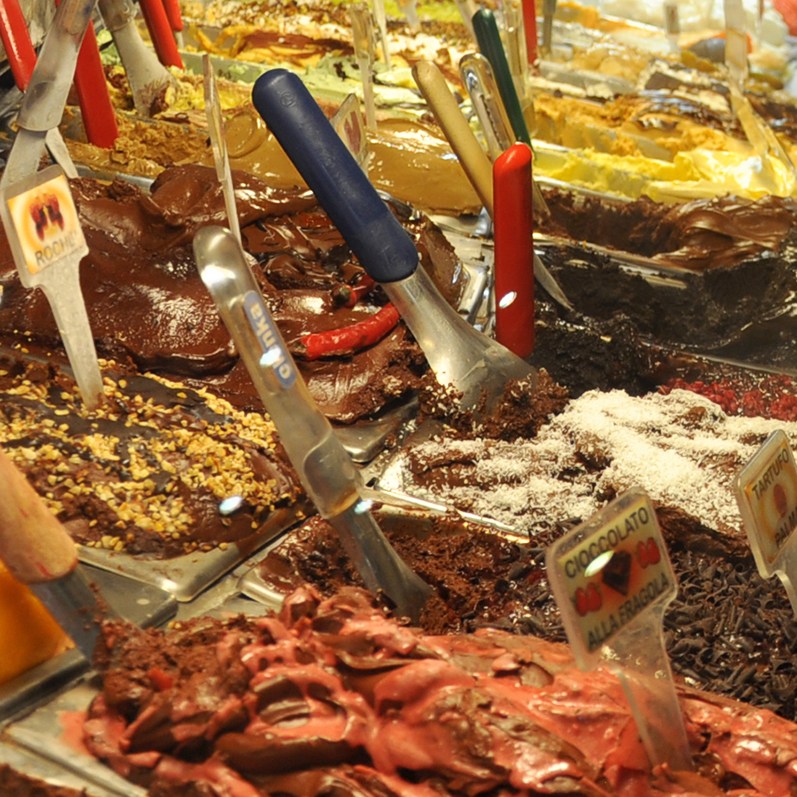
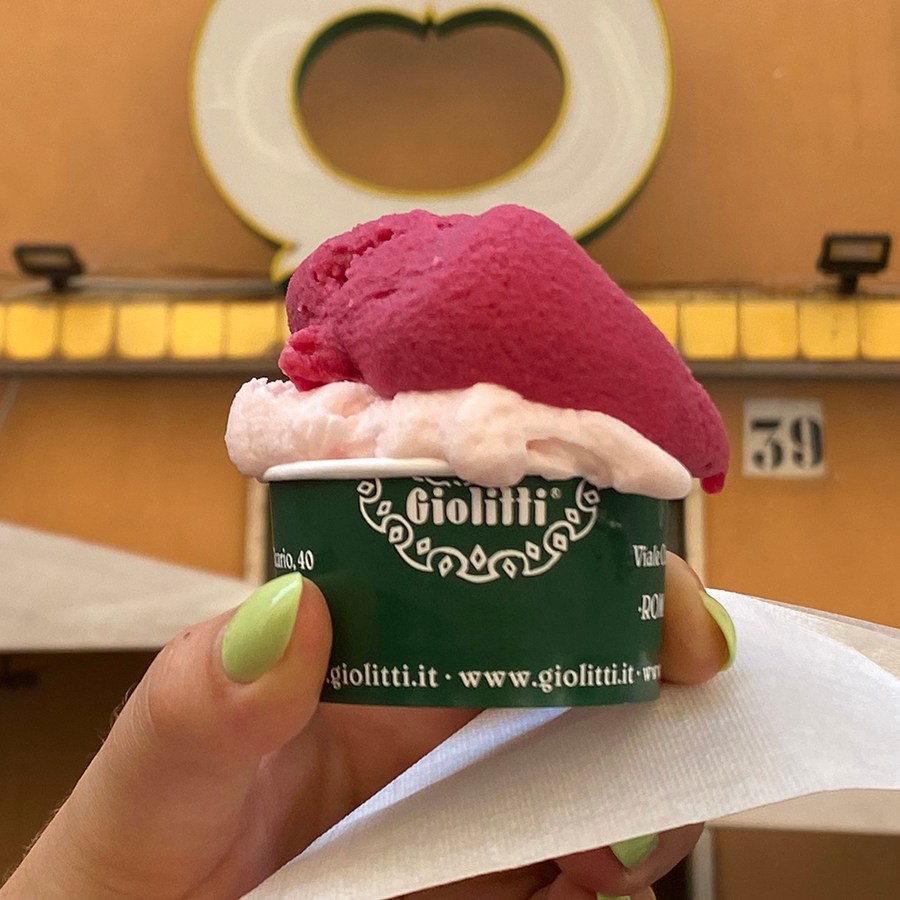
Now back at the Pantheon, take a few steps northward and pause at the base of Ramses II’s obelisk that adorns the fountain in the middle of the Piazza della Rotonda, to make a decision. As your salivary glands may already have alerted you, you’ve entered the gravitational field of two of Rome’s most famous gelaterias: Della Palma at 4 Via della Maddalena, and Giolitti at 40 Via degli Uffici del Vicari. The former will astonish you with its colossal selection, and the latter (founded in 1890 and long-time supplier to the Italian royal family) will charm you with its elegance. Despite my best efforts, I can’t claim to have tried every last Roman gelateria — yet — so I can’t state authoritatively which is “the best.” And there’s a credible argument that small-batch, artigianale (artisianal) purveyors found elsewhere offer a higher-quality product, usually recognizable by their more limited selection being held in closed, steel vats rather than arrayed vibrantly to entice. But don’t hesitate to treat yourself to a few palline (scoops) from one, or both, of these shops.
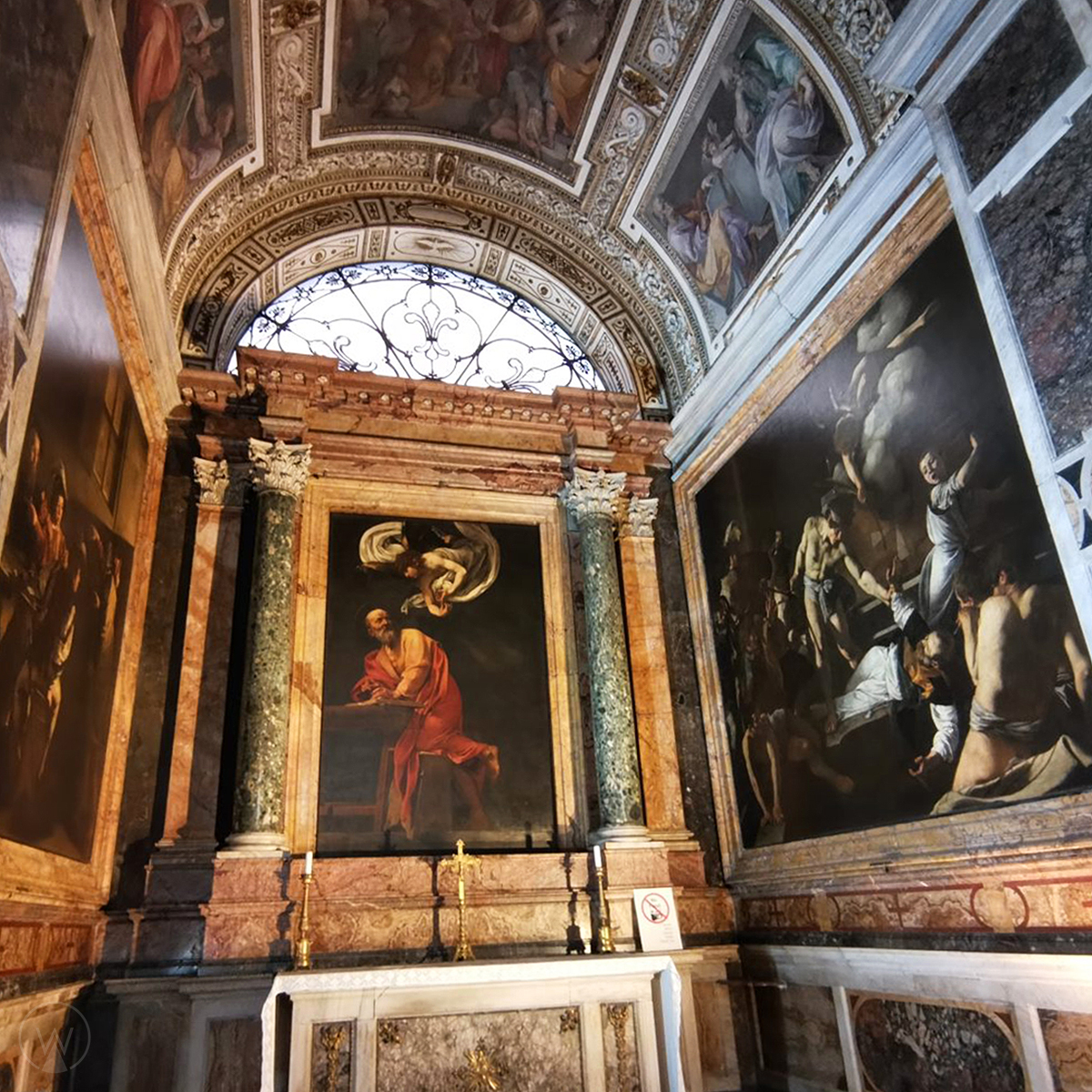
Coni in hands, go west on Via delle Coppelle and note the intersection with Via della Scrofa because you’ll come back here momentarily. A few more paces to your right, on Campo Marzio, you’ll see Sant’Agostino, home to Caravaggio’s Madonna di Loreto (whose English title is Madonna of the Pilgrims, Loreto being an important pilgrimage site associated with Mary due to its possession of the claimed home in which she was born and received the Annunciation). If you liked that, retrace your steps to Via della Scrofa and head south, where immediately on your right you’ll see the façade of San Luigi dei Francesi. Here, in the church’s front left corner, the Contarelli Chapel displays a set of three Caravaggio masterpieces about St. Matthew, allowing you to admire the artist’s signature chiaroscuro (light-dark) technique free of charge.
NAVONA AND GELATO
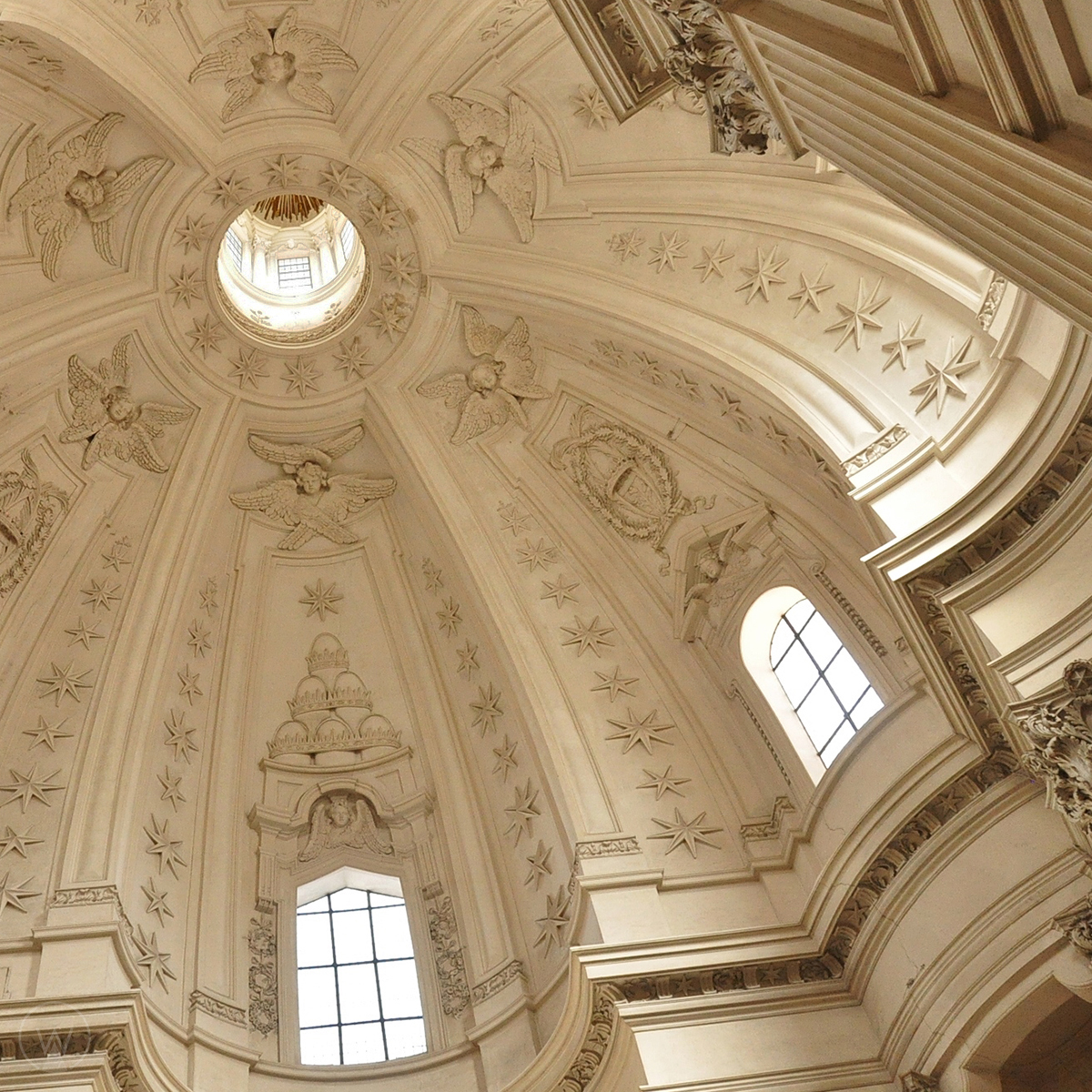
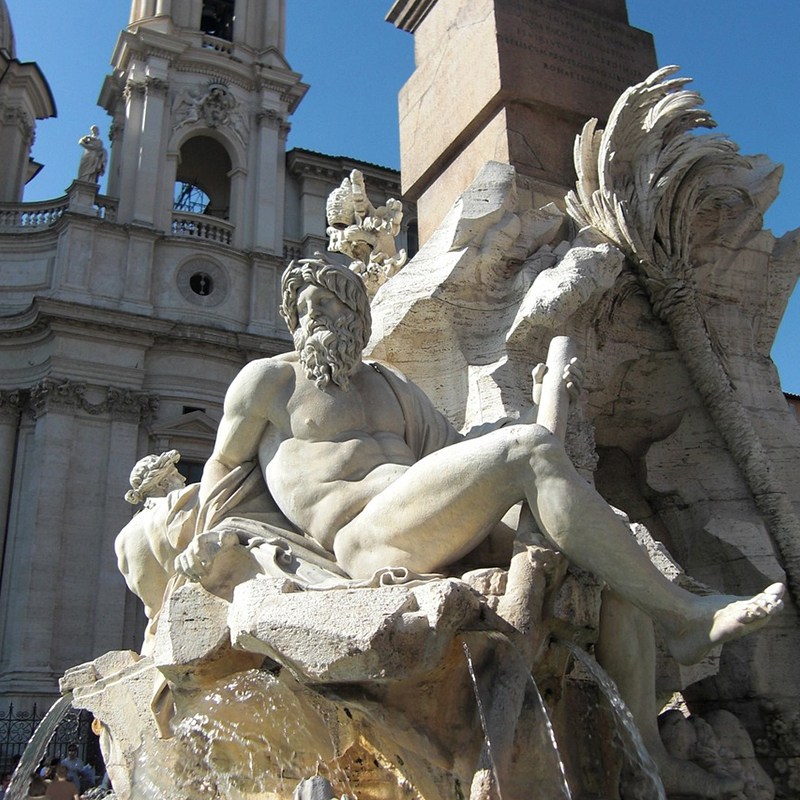
Continue south past Piazza di Sant’Eustachio and step into Borromini’s Sant’Ivo Alla Sapienza, which has a gloriously stark-white Baroque interior that contrasts with the rest of Rome in a manner similar to that of the Vittorio Emanuele II monument, aka Altare della Patria (Altar of the Homeland). Once at Navona, built on the site of the ancient Stadio di Domiziano (Stadium of Domitian, the ruins of which can be visited via a museum entry on the piazza’s northern end), consider a gelato at Tre Scalini — famous more for location than product, yet still tasty. But also consider the cautionary tale of my father, whose Tre Scalini treat once mysteriously exploded as he, resting on the rim of Bernini’s Fontana dei Quattro Fiumi (Fountain of Four Rivers), leaned in for his first lick. Confused, he stared at the cup, looked left and right, examined the bunker-busted stracciatella (chocolate chip) once again, then turned his now-knowing countenance slowly skyward to see the sparrows — or maybe they were some of Rome’s infamous starlings — swirling around the top of the obelisk. He shook his head in resigned dismay, shrugged, prodded the cup’s contents a bit with his wooden mini-spoon, flicked a few spittles toward the ground, and continued with his dessert.
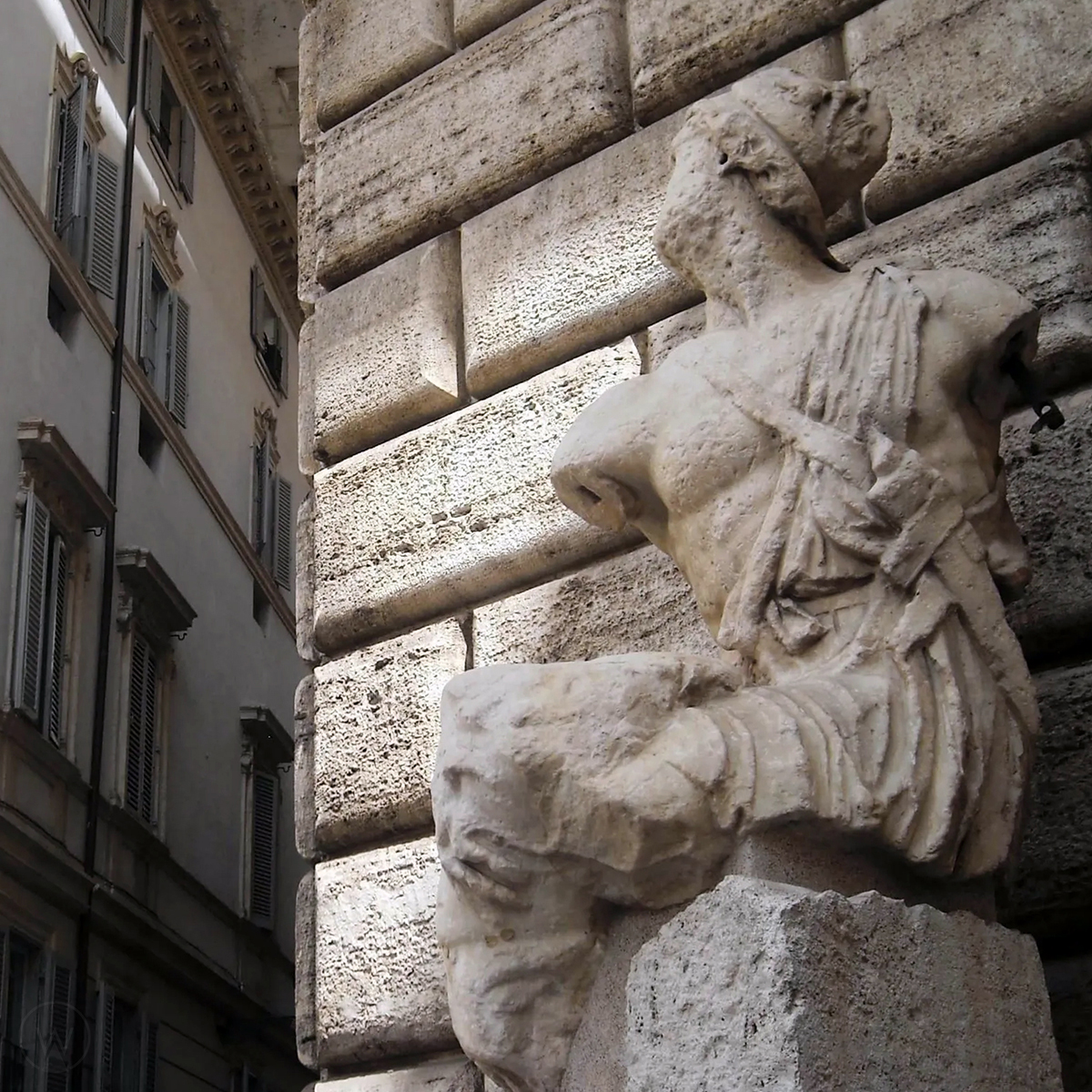
Check out the kaleidoscopic cupola in Sant’Agnese in Agone, and then as you leave Navona from its southwestern corner, watch for the armless Pasquino, who occupies a perch of honor overlooking a piazza that bears his name. Pasquino was the first of Rome’s several “Talking Statues,” known locally as the arguti, or “witty ones,” around whose necks signs have hung in anonymous public protest through the ages. Each of the arguti has a special reputation, and Pasquino, presumably due to his proximity to the Vatican, gained fame for criticizing popes. One pontiff’s death was reportedly commemorated with a pasquinade praising the papal physician as “liberator of the nation, the senate, and the Roman people.” The arguti would sometimes “converse” with each other, and after Napoleonic France annexed Rome and the Papal States, one of the arguti “asked” Pasquino whether all French were thieves. His response: “Not all, but a good part” — a buona parte.
CAMPO DE’ FIORI AND PALAZZI
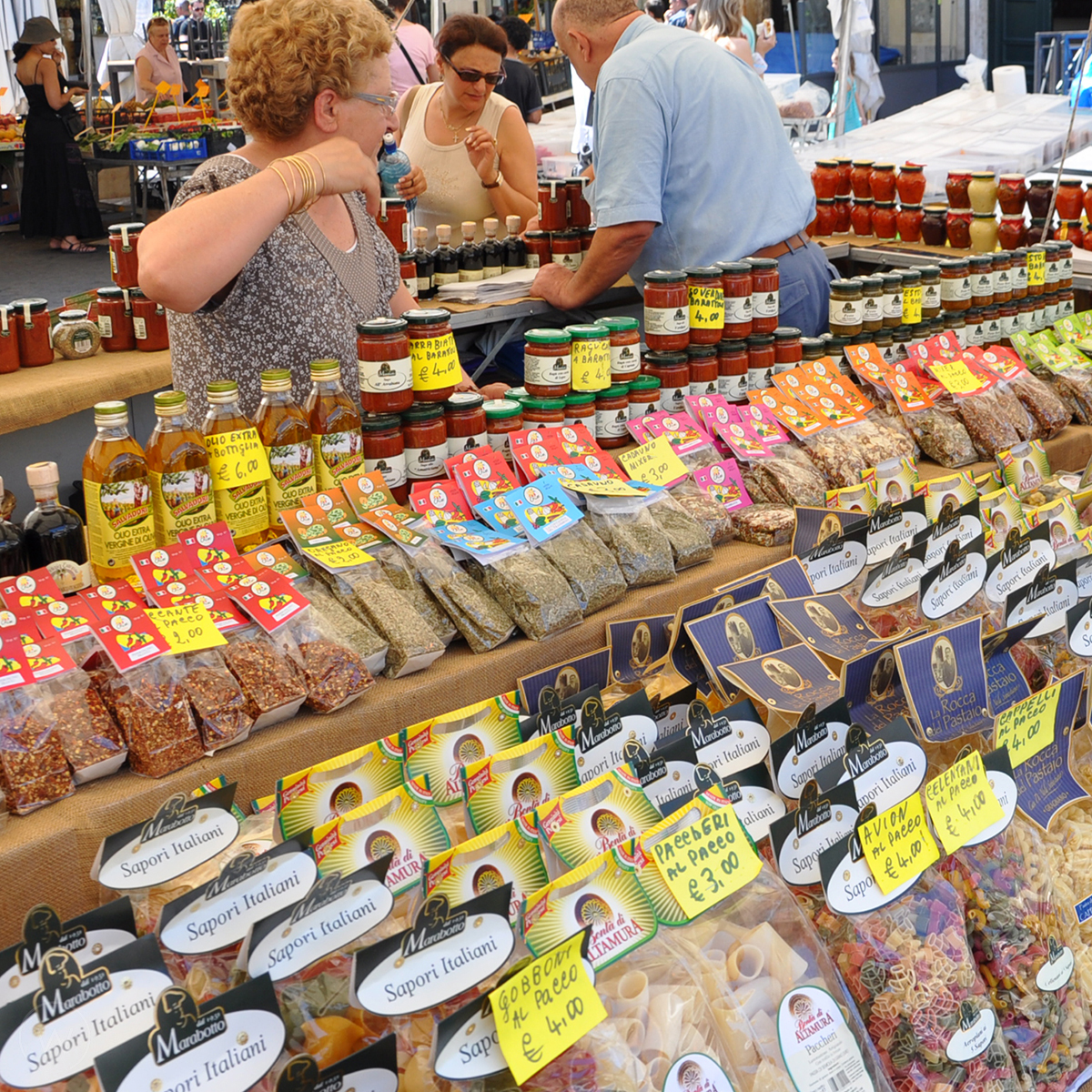
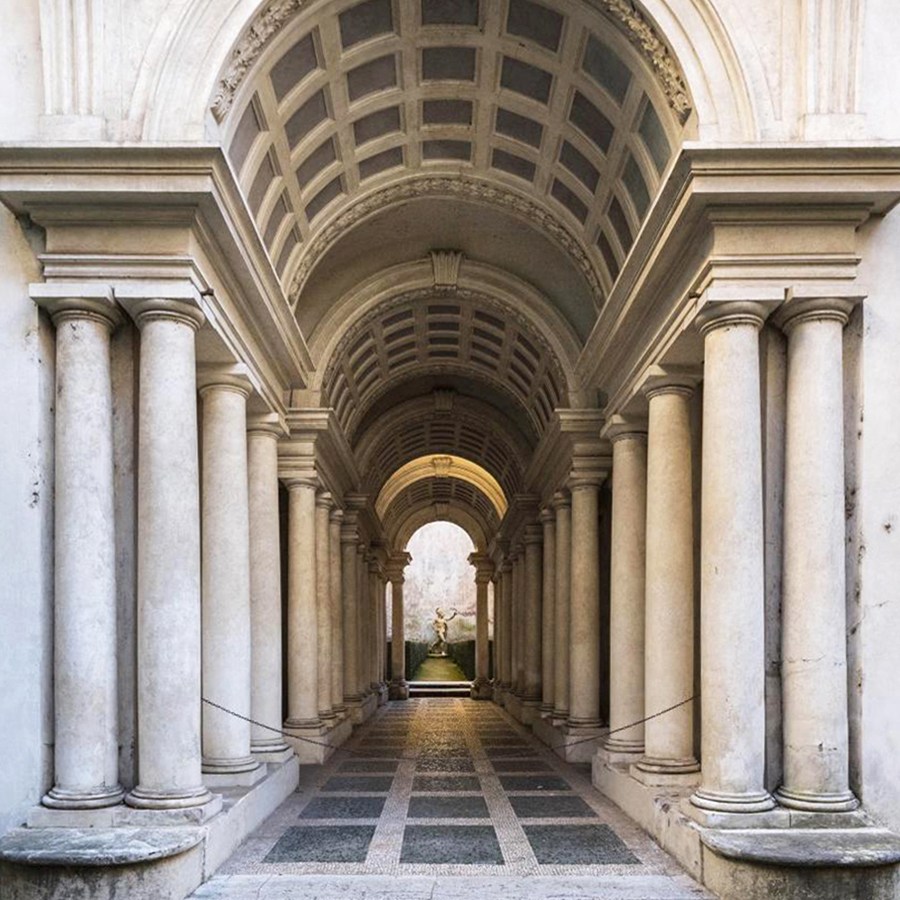
Cross the large street (Corso Vittorio Emanuele III) and go to Campo de’ Fiori, which you may have visited already, ideally in the morning when its market is in fullest splendor. The adjacent Palazzo Farnese is an exceptional example of High Renaissance design, and setting for a crucial scene in Puccini’s Tosca; today it’s on loan to the French as their embassy and is well worth a visit, albeit during very limited open hours. If possible, step into nearby Palazzo Spada to see “Il Perspettivo,” Borromini’s trompe d’oeil that makes a two-foot statue appear to be heroic size. At my last attempt, several years ago, I was able to see it — partially obstructed but satisfactorily — through the double windows on either wall of its adjacent library, without having to go into the museum that for the last twenty-plus years seems to have existed for the sole purpose of making people go through the palace in order to see Borromini’s little gem.
ANCIENT (NON-FORUM) ROME, TRASTEVERE AND GELATO
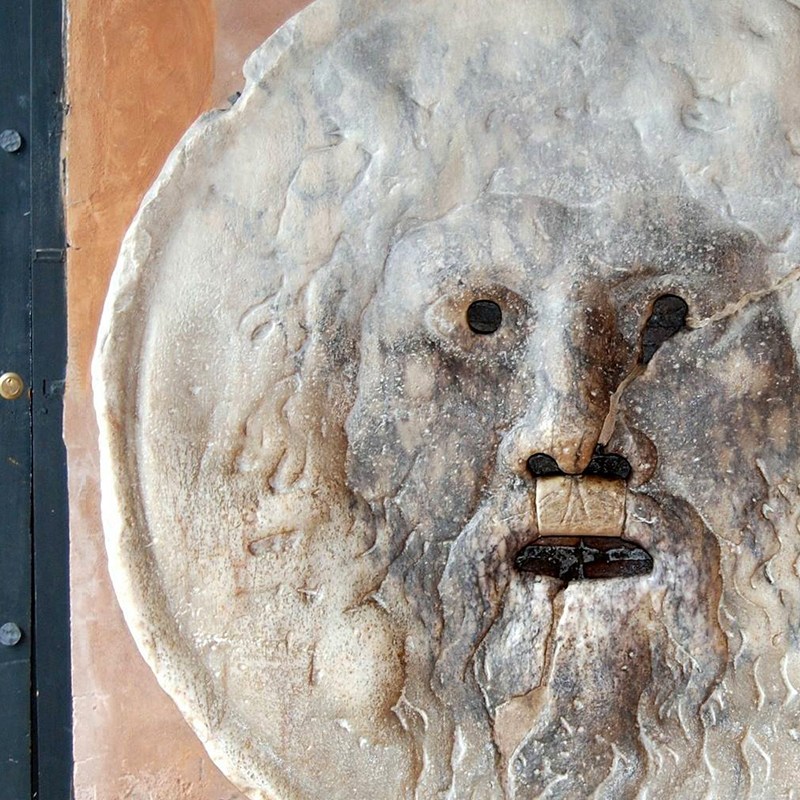
At this point, your energy and watch will dictate whether you proceed directly across the Ponte Sisto footbridge, or make an elongated southeastern loop to see the Tempio Maggiore di Roma (Rome’s largest synagogue), the view of Castello Caetani across Ponte Fabricio (the oldest bridge in town, ca. 62 B.C.E.), Teatro Marcello (an open-air theater founded by Julius Caesar), and the Bocca della Verità (an ancient curiosity of disputed origin that is best appreciated if, before your trip, you and your special someone pair a Chianti with some carbonara and watch Gregory Peck tease Audrey Hepburn here in Roman Holiday). In either case, once you cross the river, you are now in the neighborhood known as Trastevere, or “Across the Tiber,” and will follow either a fairly direct (Via del Moro) or indirect (Via della Lungarina & Lungharetta, etc.) route to your destination, Piazza Santa Maria in Trastevere, upon which stands one of the first churches dedicated to the Virgin Mary.
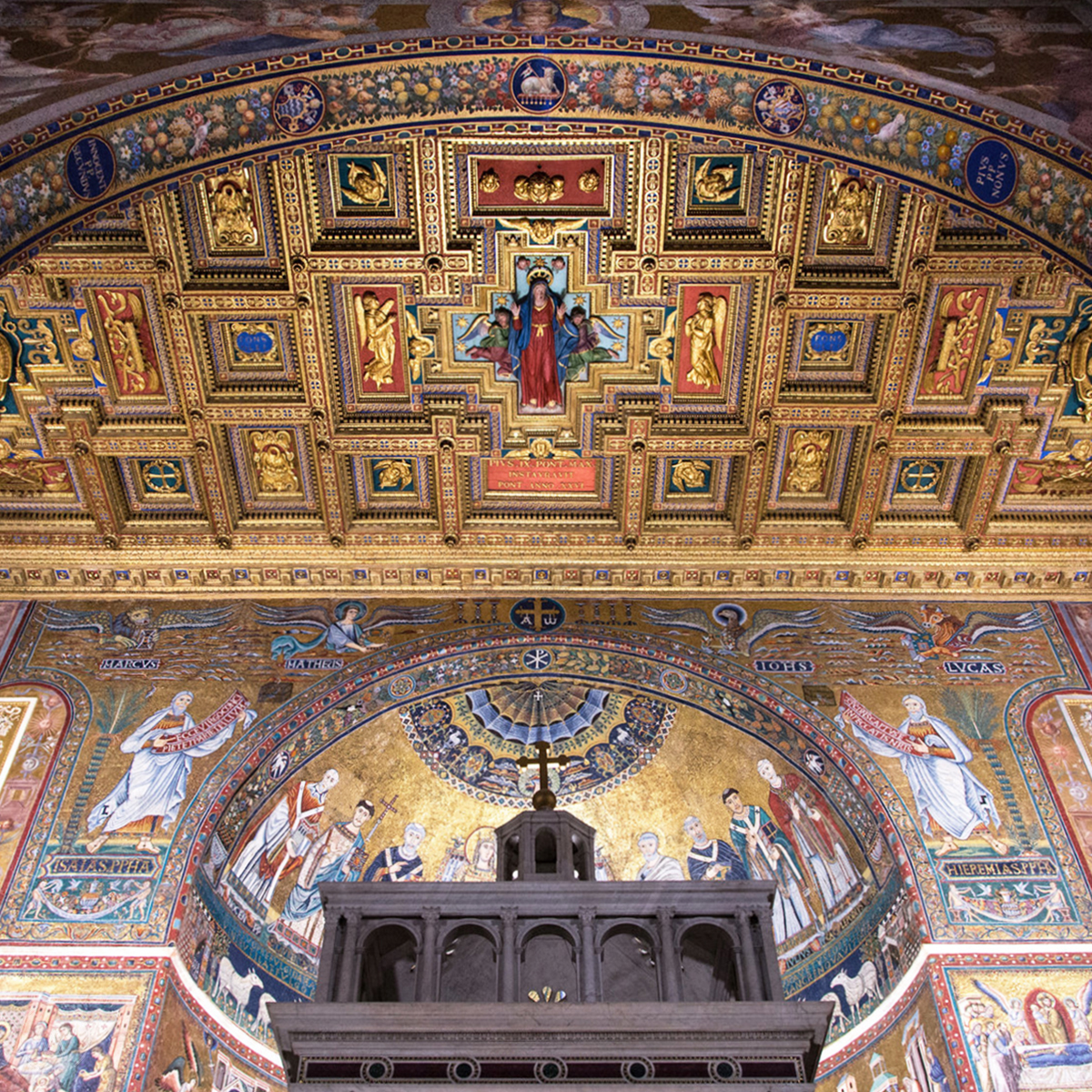
Trastevere fundamentals haven’t changed much since the 14th century, and Piazza Santa Maria is an irrepressibly energetic evening hangout spot, with numerous options for a relaxing and even romantic Italian dinner after you take a look at the opulent, Byzantine-rich interior of Basilica di Santa Maria, which usually remains open late into the evening. If you’ve arrived in Trastevere before proper ora di cena (suppertime), you’ll have no problem killing an hour or two exploring the neighborhood’s numerous gems such as charming Chiesa Santa Maria dell’Orto, or two quiet favorites among the locals: the panoramic views from Chiesa di San Pietro in Montorio (near the Gianicolo but with far fewer visitors), and the streets, as well as the eponymous cortile (courtyard), near Basilica di Santa Cecilia (more low-key than Santa Maria’s vibe). Along the way, stop for my daughter’s favorite gelato flavor, pear ricotta, at Fonte della Salute just off of Piazza Mastai.
As for dining recommendations, I enjoyed La tana de Noantri on Piazza San Egidio, a hundred or so meters northwest of Piazza Santa Maria. Although its reviews haven’t been as strong as those given to some of its neighbors (in fact, a friend who visited more recently says it didn’t survive the pandemic), on my visit that summer many years ago I found its food superb and its location perfect for people-watching from a streetside table. But then again, I may have been distracted — nay, beguiled — by my companion for the evening, Valentina.
QUESTIONS FOR READERS
- Could you recommend a favorite walking tour in another neighborhood?
- What’s your nomination for the best gelato in Rome?
- Any tales to tell from Monte Testaccio or another hot spot on the Roman club circuit, without irritating your significant other?
- In addition to Roman Holiday and La Dolce Vita (or at least the iconic Trevi scene), what movies will help set the right tone for someone’s first visit to Rome?
 WANDERLOOSED